
Building FaçadesThe complete guide
Building Façades, in Plain Language
A façade is far more than a building's outer skin — it is its face, its environmental engine, and its identity. This is the complete, image-rich library: a 42-guide series on why façades matter, every façade type explained, and how to choose, detail and maintain one for India's climate — with real examples throughout.
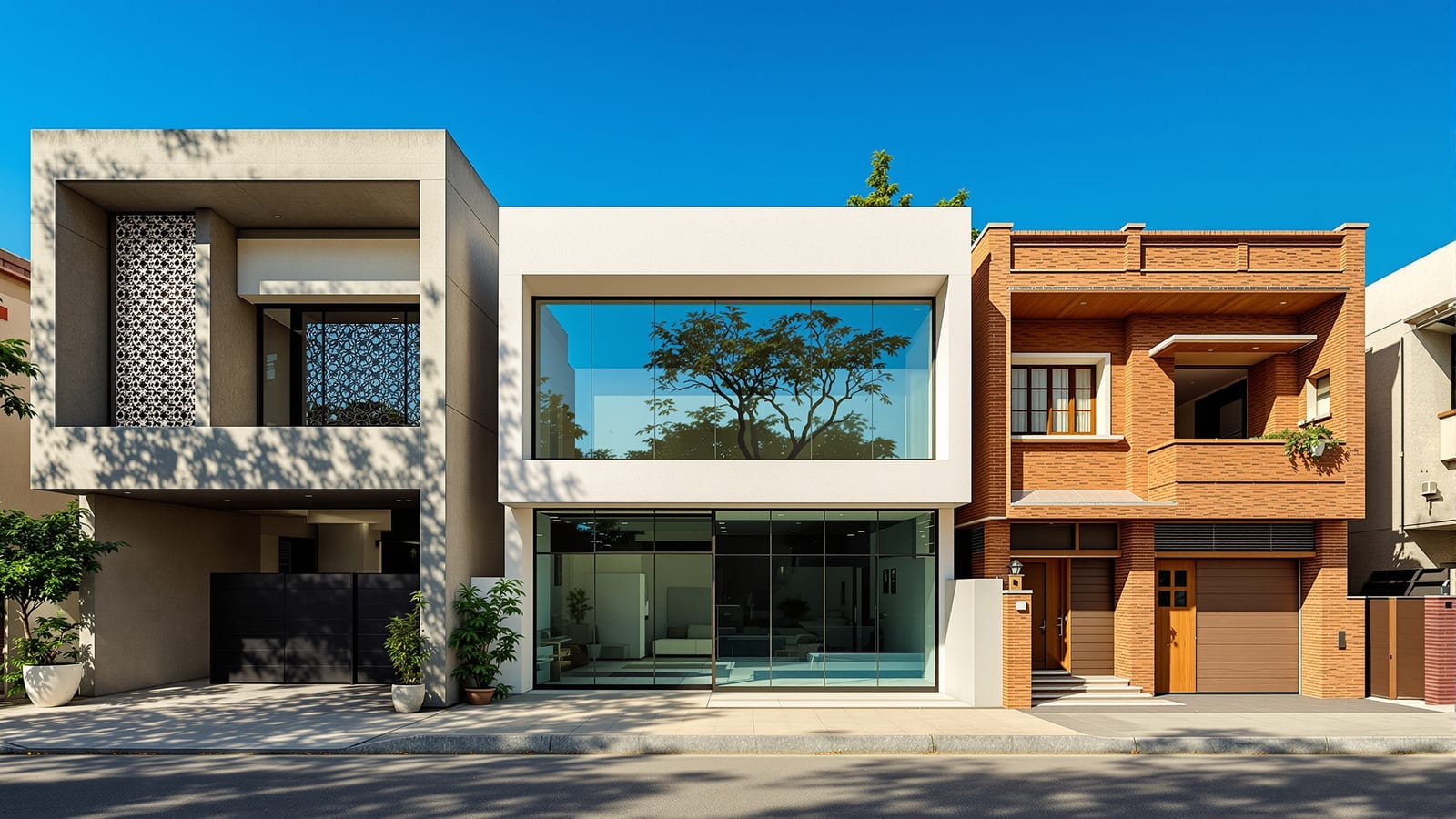
Why Building Facades Matter: The Face, Engine, and Identity of Your Home
A facade is far more than a coat of paint. It is your building's face, weather shield, and energy engine. Learn how the right facade keeps Indian homes cool, dry, quiet, and valuable across every climate zone.
Read itThe big picture
Types, performance, safety & care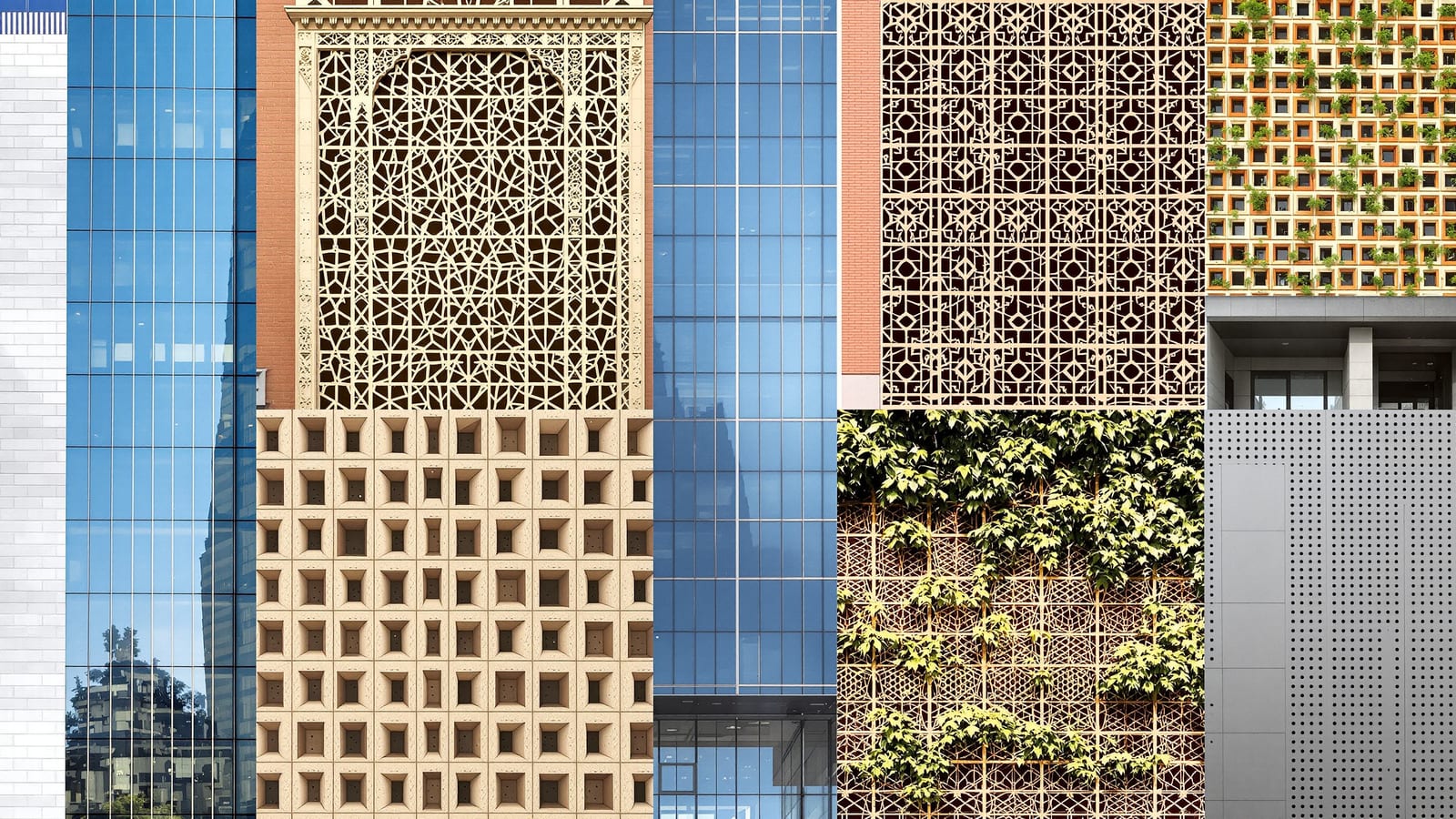 Overview01
Types of Building Facades — A Complete Guide (India)
A complete map of building facade types in India — masonry, glass, metal, terracotta, timber, jaali, green and solar BIPV — classified by material and construction system, with real Indian examples, a popularity ranking and trends to 2035.
 Climate02
Climate-Responsive Facades for India: Designing Your Home's Skin for Your Weather
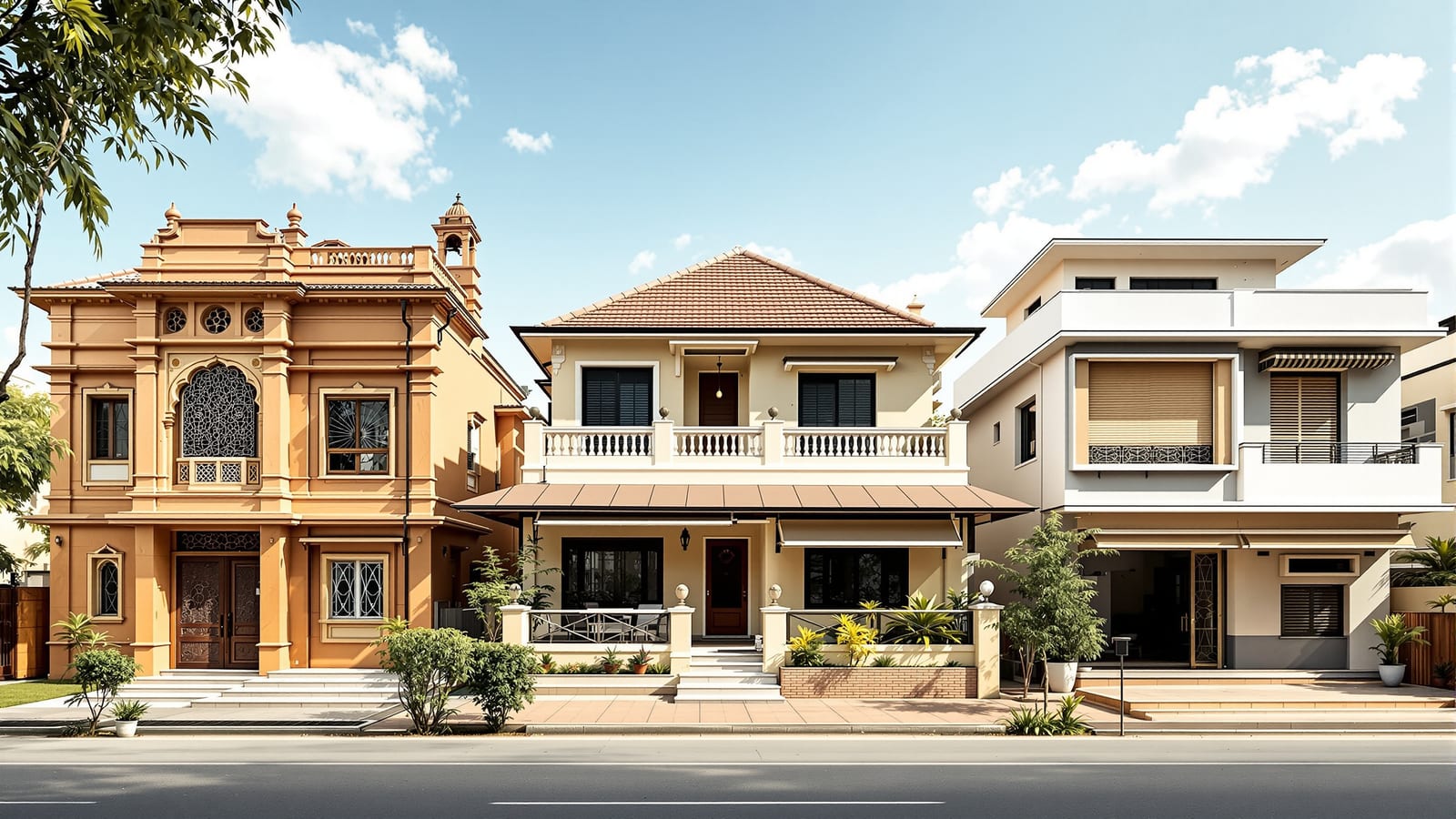
Copy the climate, not the photograph. A homeowner's guide to designing your facade for India's climate zones — hot-dry, warm-humid, composite, cold, and temperate — with orientation, shading, glazing, and colour made simple.
 Energy03
Energy-Efficient Facades in India: How the Building Skin Cuts Your Cooling, Heating & Lighting Bills
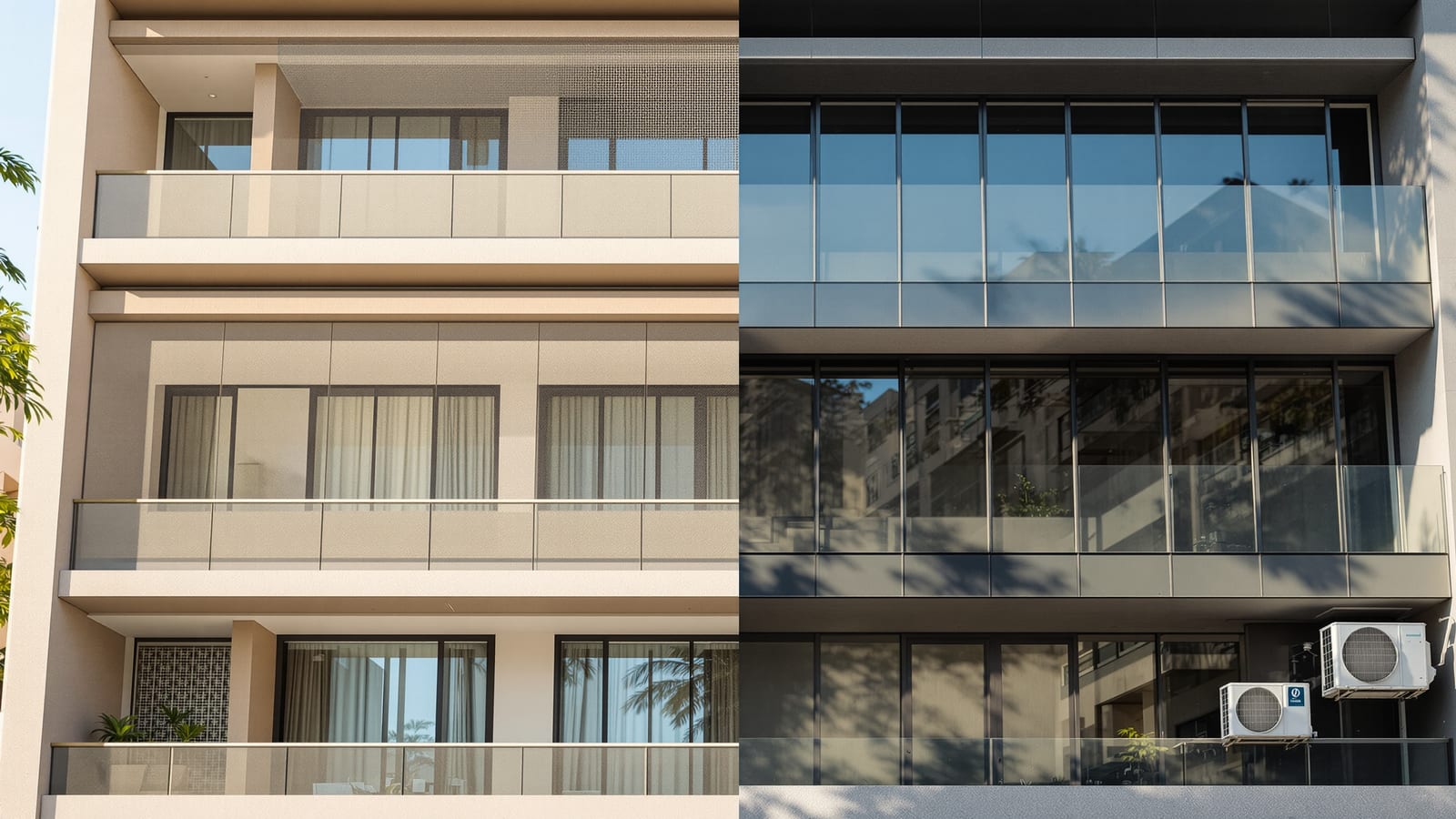
Your facade is the biggest lever you have over how much energy a building burns to stay comfortable. Here are the three levers, the four numbers that matter, what the codes expect, and the honest order: passive shading first, expensive glass last.
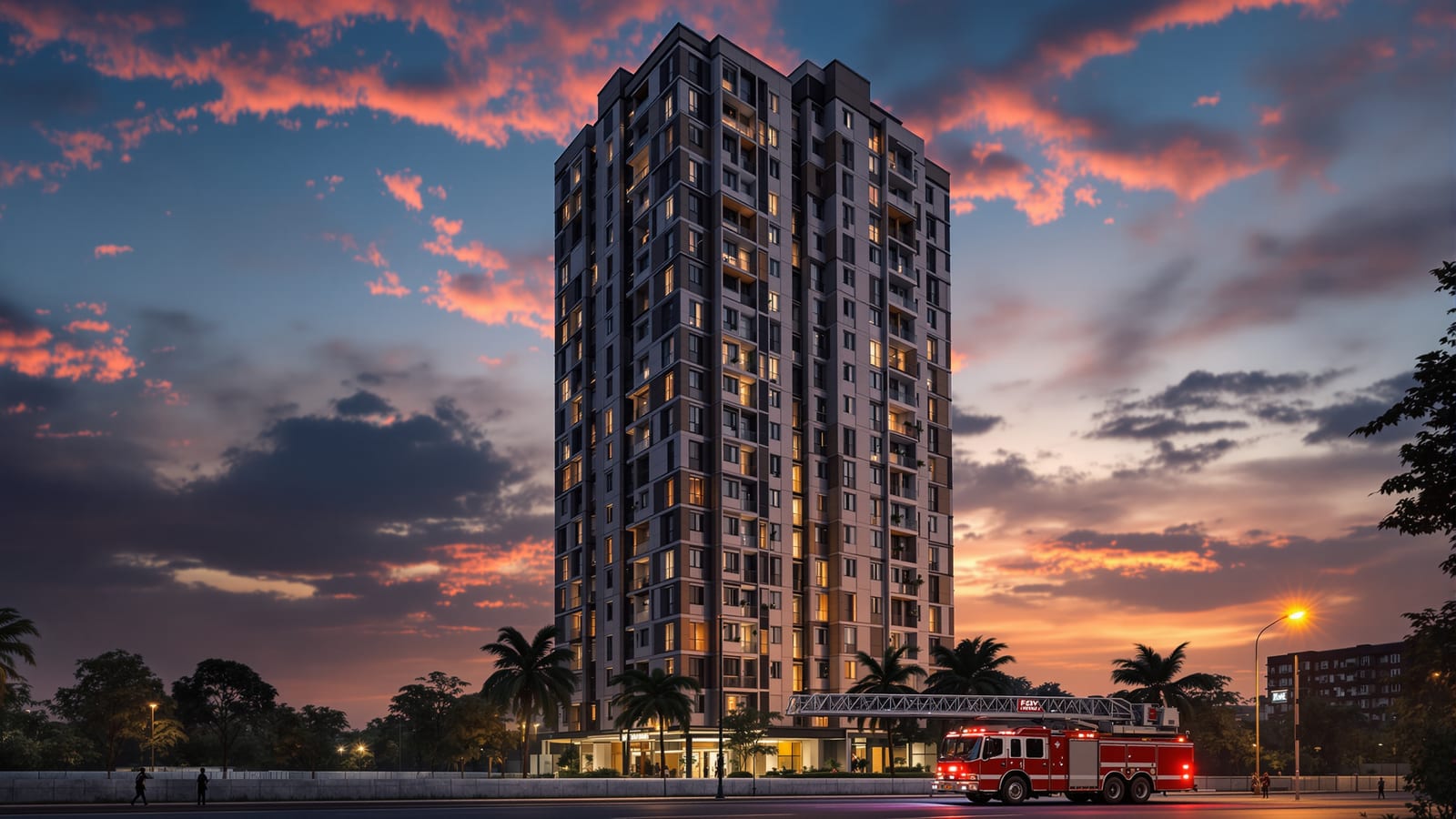 Fire Safety04
Facade Fire Safety and Cladding in India: How the Building Skin Spreads Fire and How to Make It Safe
Why a clad facade can spread fire faster than people can escape, the cladding materials risk ladder, NBC 2016 and IS 17682 in plain terms, and what to check on a clad tower.
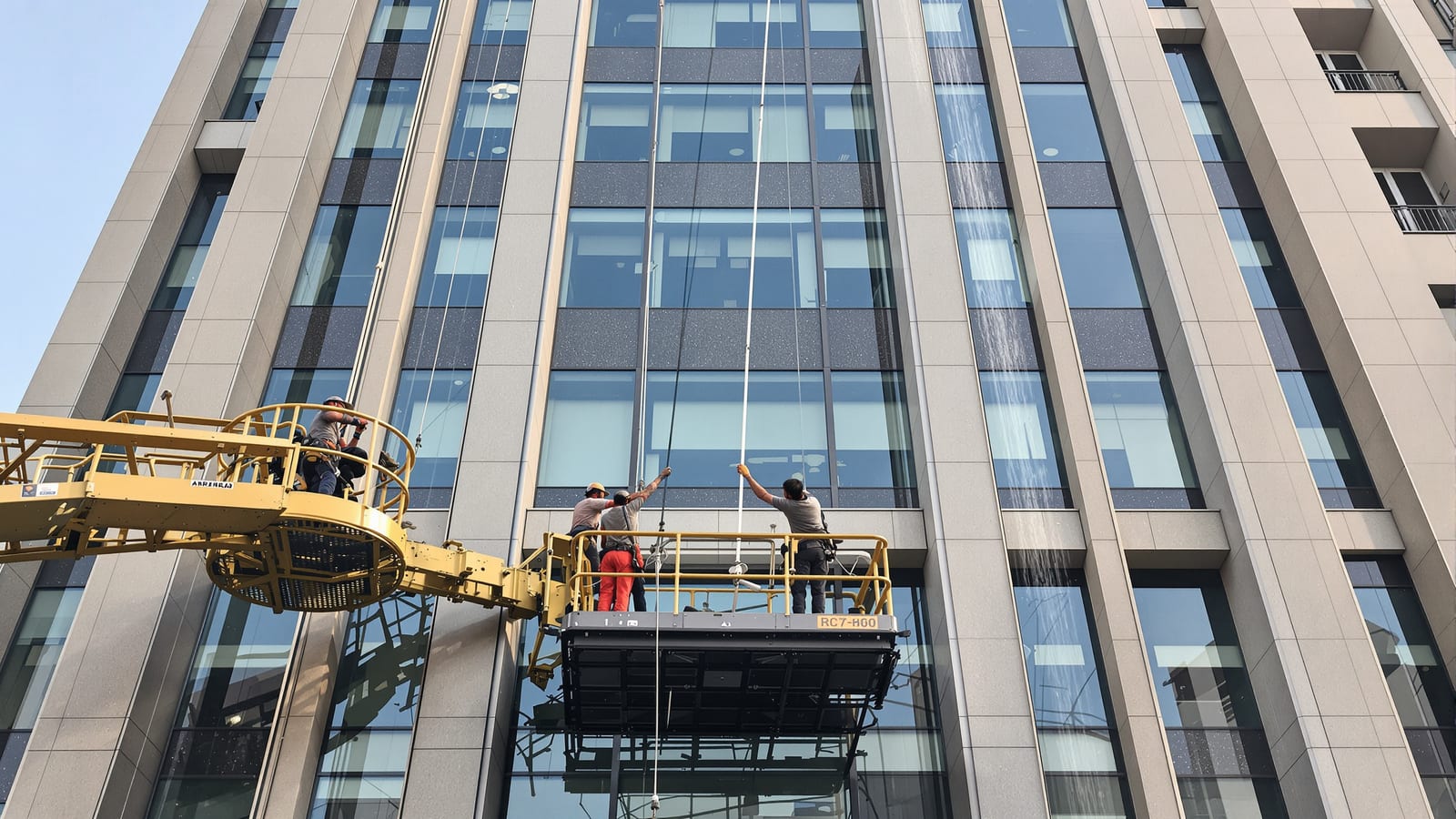 Durability05
Facade Maintenance, Durability & Property Value in India — Keeping the Building's Face Working for Decades
How to keep a building's facade working and valuable for decades in India: what attacks it (monsoon, UV, dust, salt, thermal movement, growth), how each material ages and its upkeep cycle, the water-ingress to spalling failure chain, inspection and access methods, and how facade condition drives resale, rent and property.
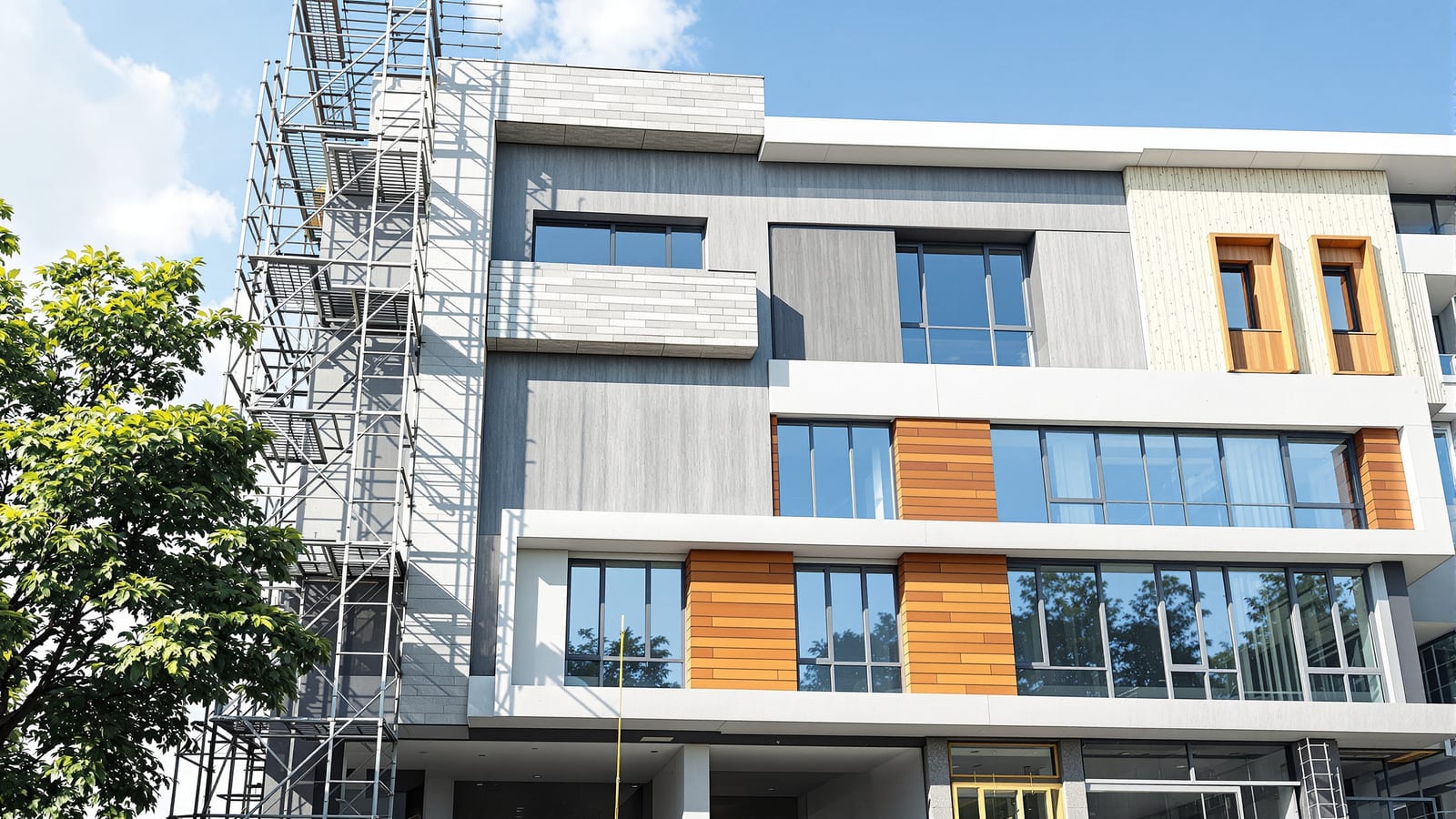 Cost Guide06
Facade Cost in India: A Per-Sq-Ft Cost & Specification Guide (2025-2026)
Honest, current Indian facade cost ranges per sq ft for every major system — render, ACP, stone, glass, terracotta, porcelain, fibre-cement, GFRC — with what drives the high end, the hidden costs (sub-frame, scaffolding, GST), lifecycle economics, and how to budget and compare quotes.
The material families
What the skin is made of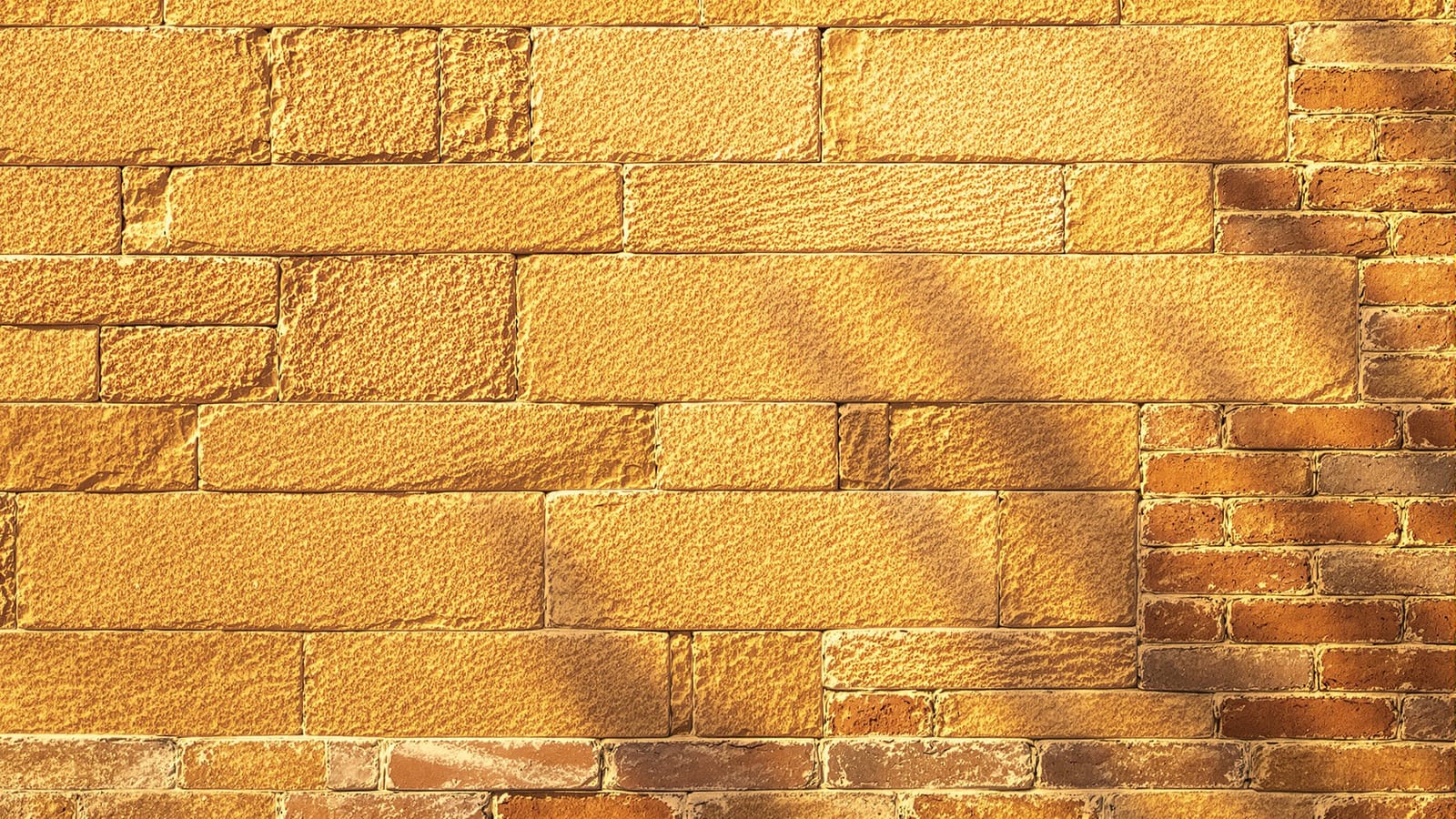 Stone & Masonry07
Stone & Masonry Façades in India: Brick, Stone & Concrete Explained
Brick, stone and concrete are India's timeless, heavy, durable façade family. A plain-language guide to exposed brick, Indian stones, dry stone cladding, exposed concrete and the detailing that makes them last.
 Glass08
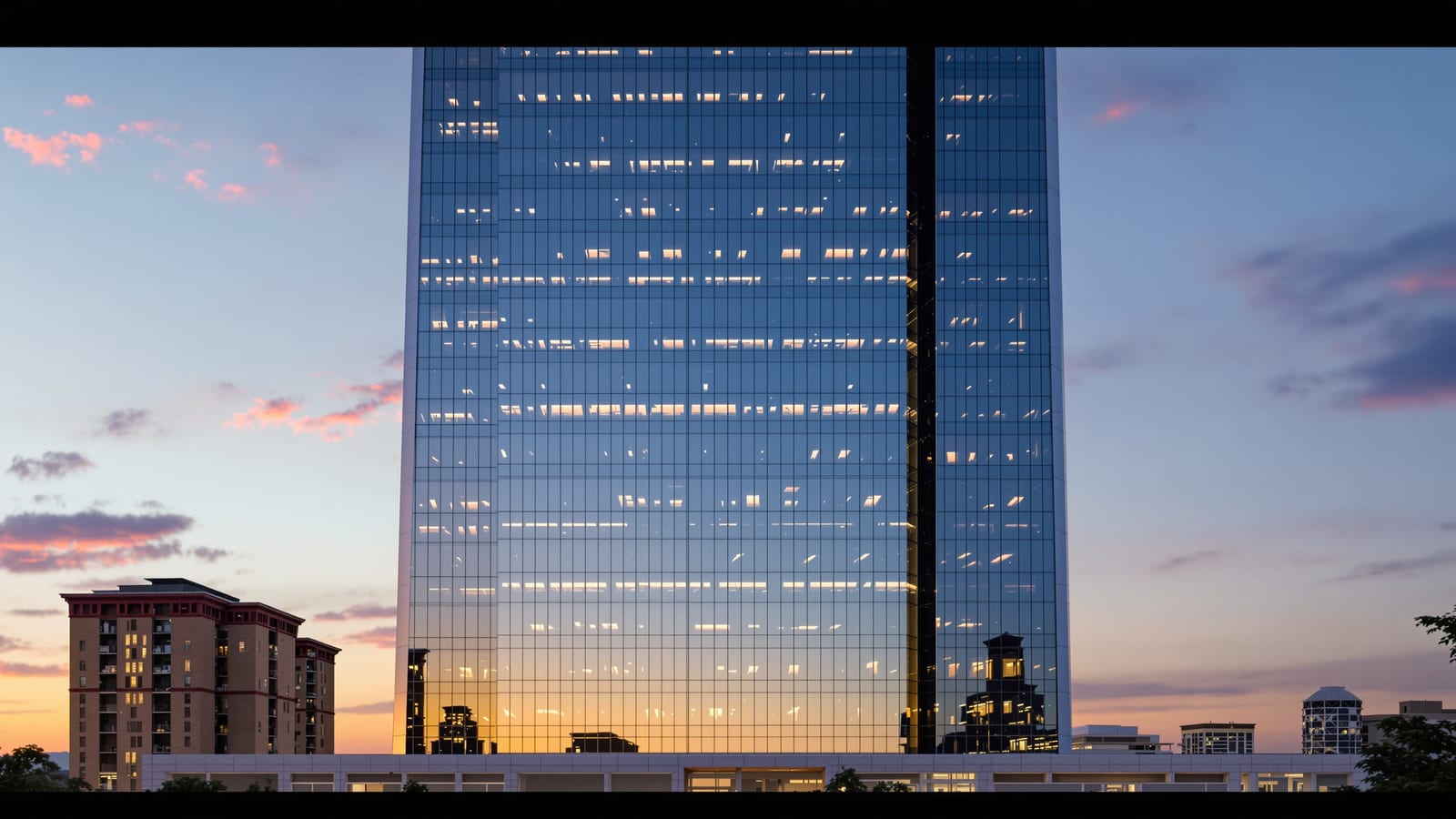
Glass Curtain-Wall & Structural Glazing Facades (India)
How glass curtain-wall and structural glazing facades work — stick vs unitized, spider glazing, DGU and Low-E glass, SHGC, U-value and VLT in plain terms, ECBC limits, and the honest downside of glass in India's heat and glare.
 Metal & ACP09
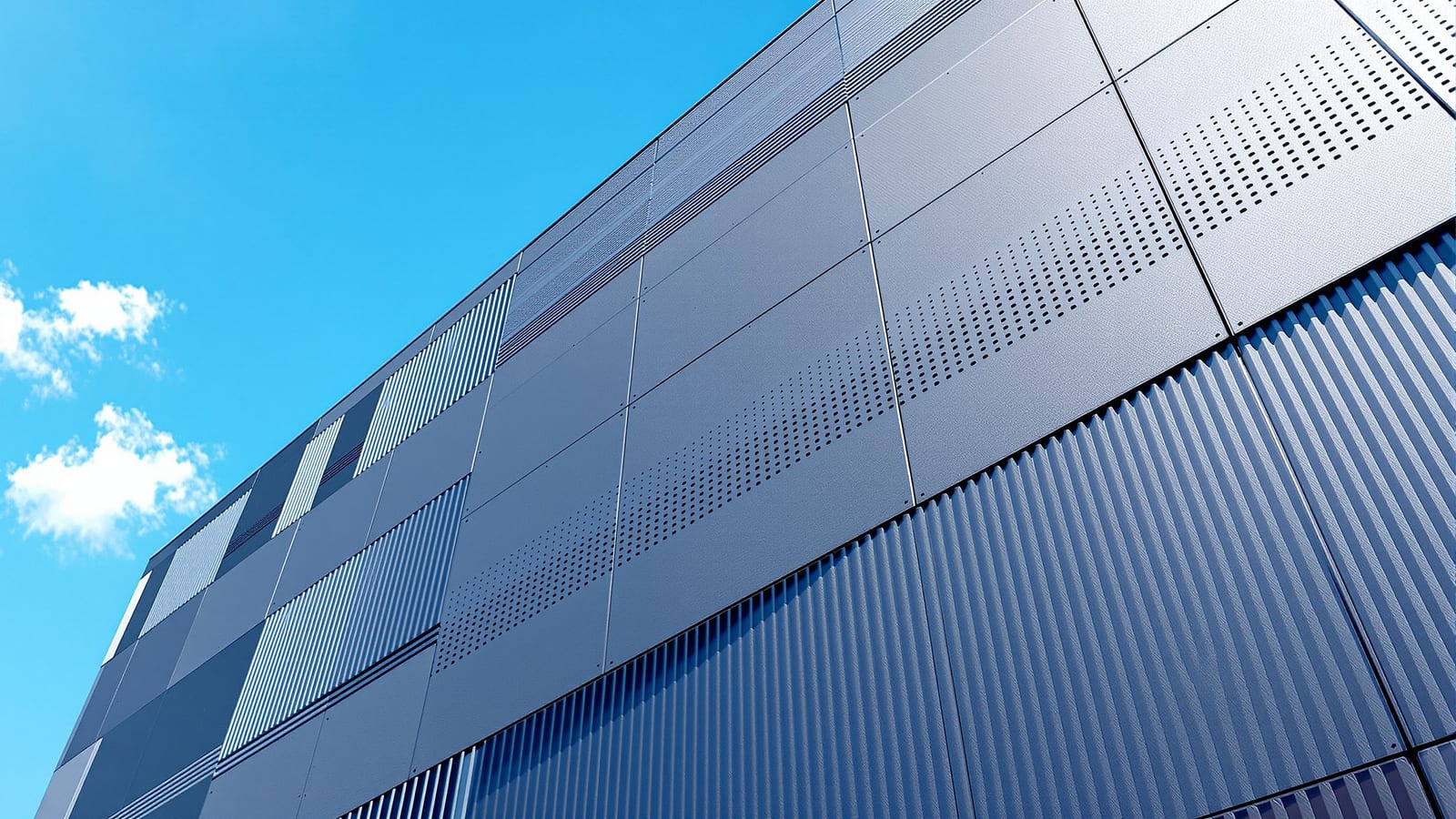
Metal & ACP Facades in India — Appeal, Core Types, and the Fire Lesson
Metal and ACP facades give Indian buildings a fast, affordable modern look — but the core inside an aluminium composite panel decides everything. This honest guide covers the metal family, PE vs FR vs A2 cores, the Grenfell fire lesson, and what NBC 2016 and IS 17682 require.
 Terracotta10
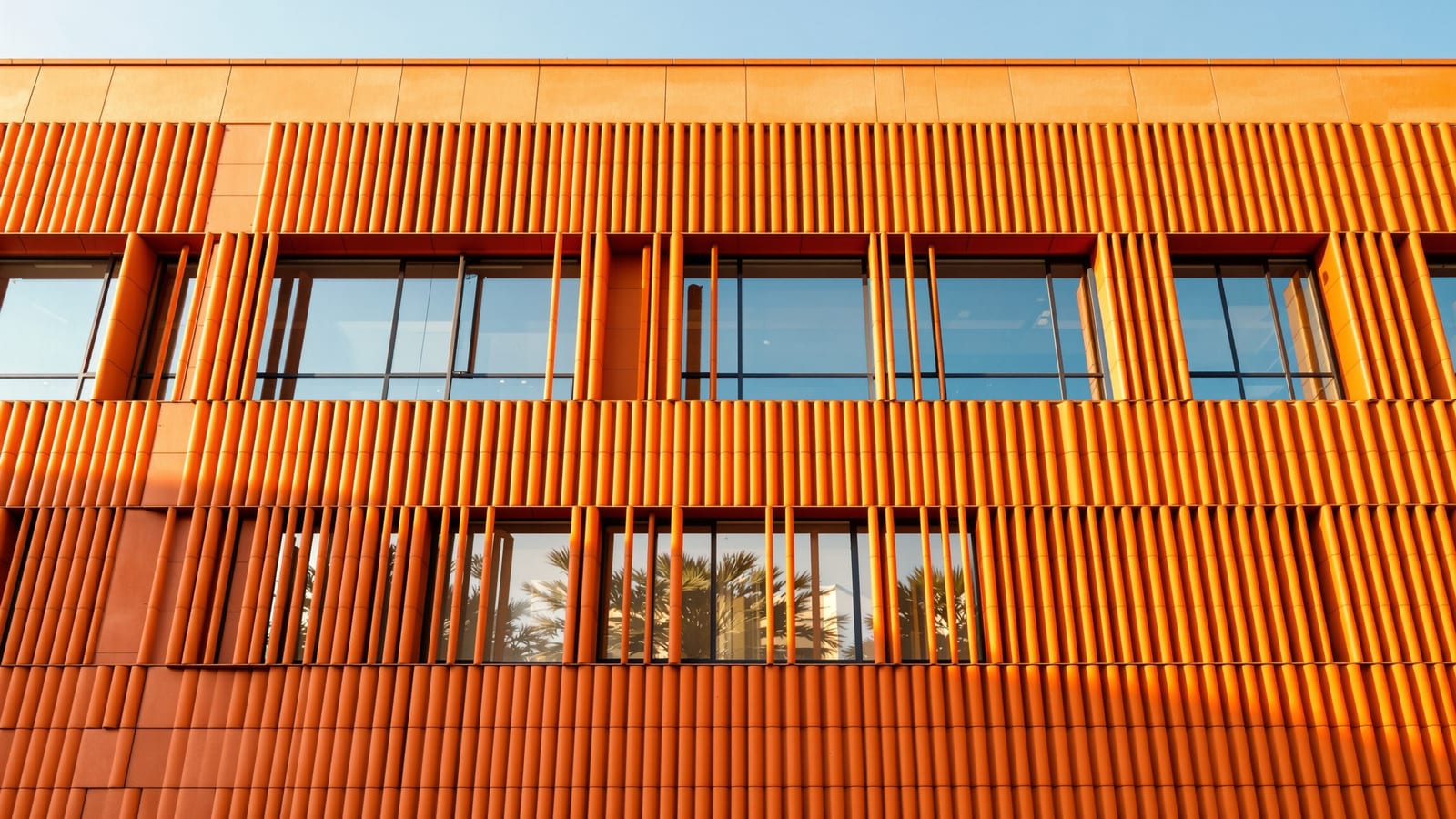
Terracotta & Ventilated Rainscreen Facades in India — Baked Clay That Keeps Walls Dry
Terracotta cladding and the ventilated rainscreen principle explained simply for India: fired-clay panels and baguettes hung over a drained, pressure-equalised cavity that keeps walls dry through the monsoon. Covers the science, hanging system, pros and caveats, India's deep terracotta tradition and real buildings.
 Timber11
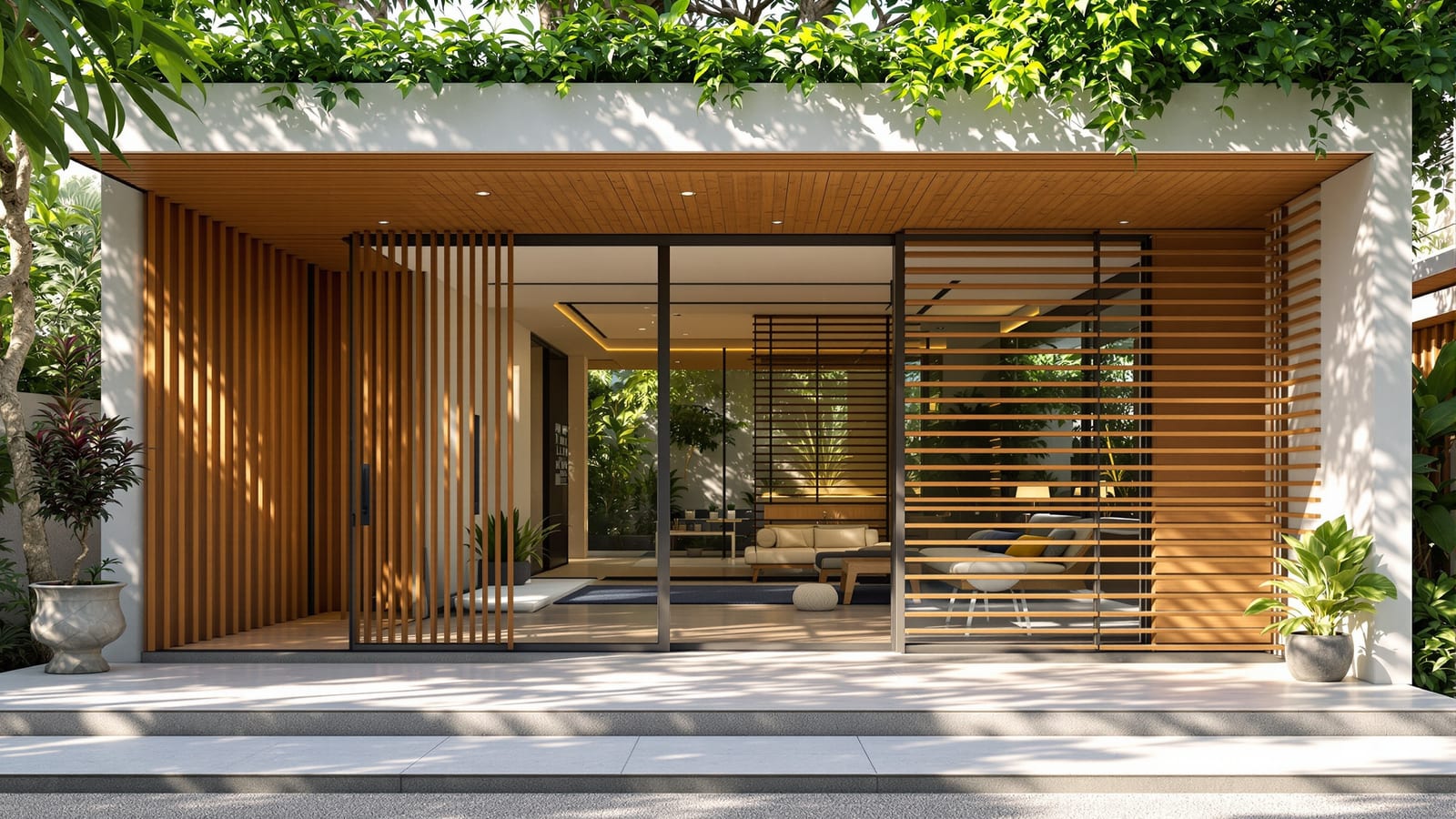
Timber & Natural Facades in India: Wood Cladding That Lasts the Monsoon
Wood cladding brings warmth no other facade can, but in India it must survive monsoon, termites and UV. A practical guide to species, finishes, the ventilated cavity, coast-vs-interior choices and sustainable sourcing.
 Plaster & Render12
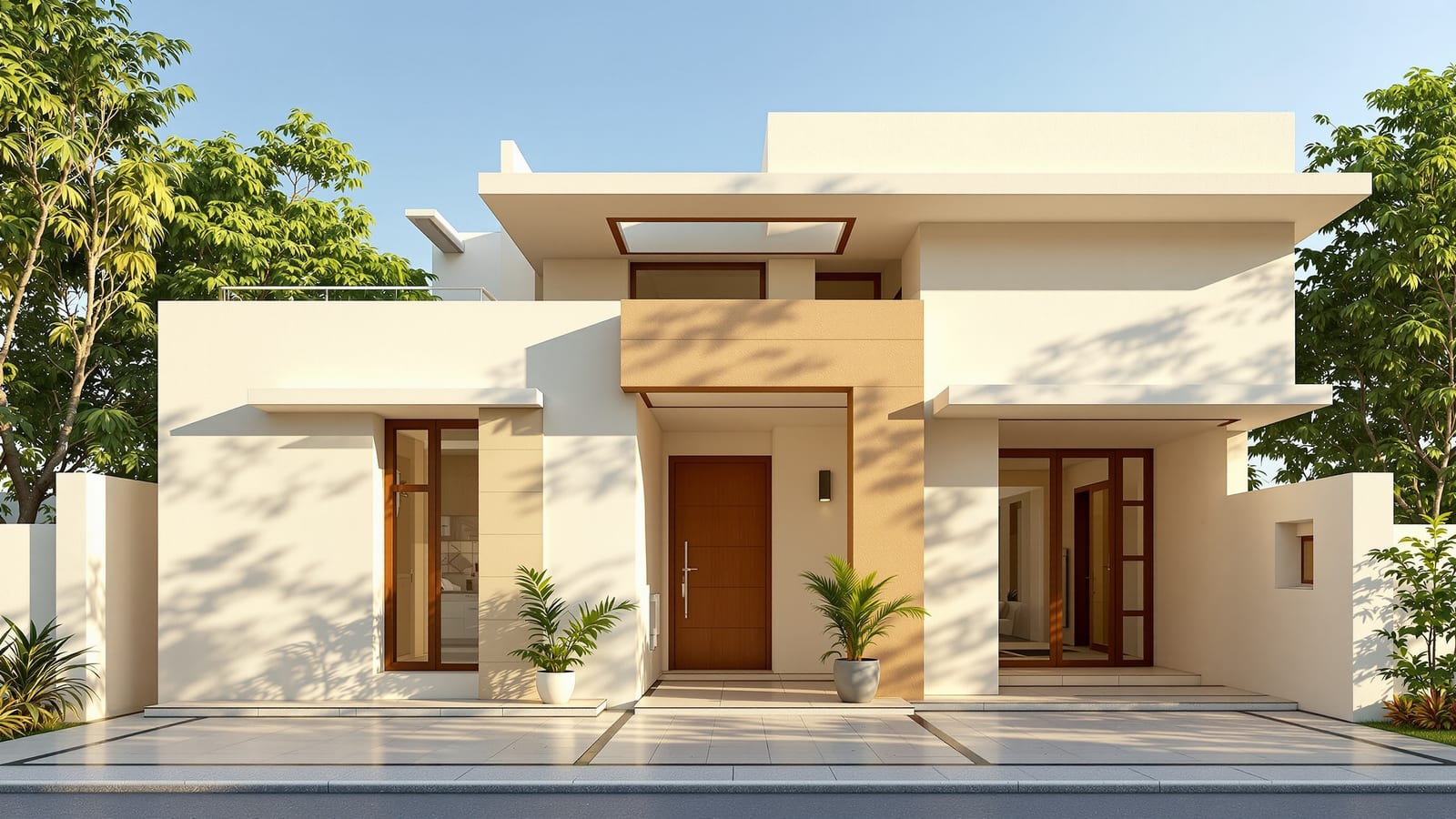
Plaster, Render and Texture-Paint Facades in India: The Honest Guide to the Country's Default Wall Finish
The rendered-and-painted wall is the default skin on most Indian homes. This guide treats it as a real facade system — build-up, textures, weatherproof paints and crack control — and is honest about how it weathers: algae, rain streaks, hairline cracks, efflorescence and fade.
 Exposed Brick13
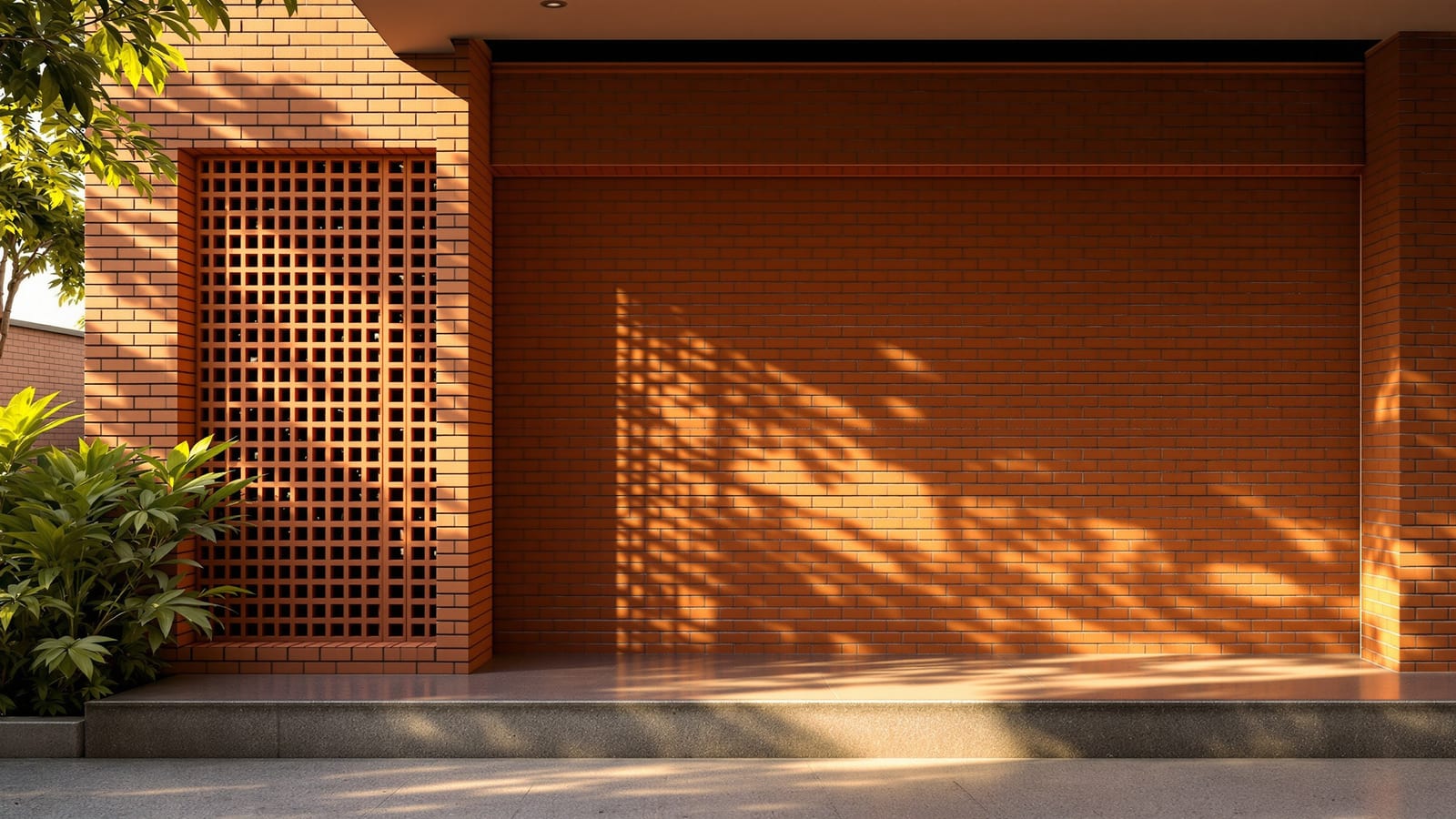
Exposed Brick Facades in India: Bonds, Jaali, Weathering and the Laurie Baker Tradition
Exposed brick as a facade system, not a brick-buying choice: bonds, jaali screens, pointing, veneer-over-RCC, and the honest Indian truth about efflorescence, driven rain and the skilled-mason premium that good brickwork demands.
 Concrete14
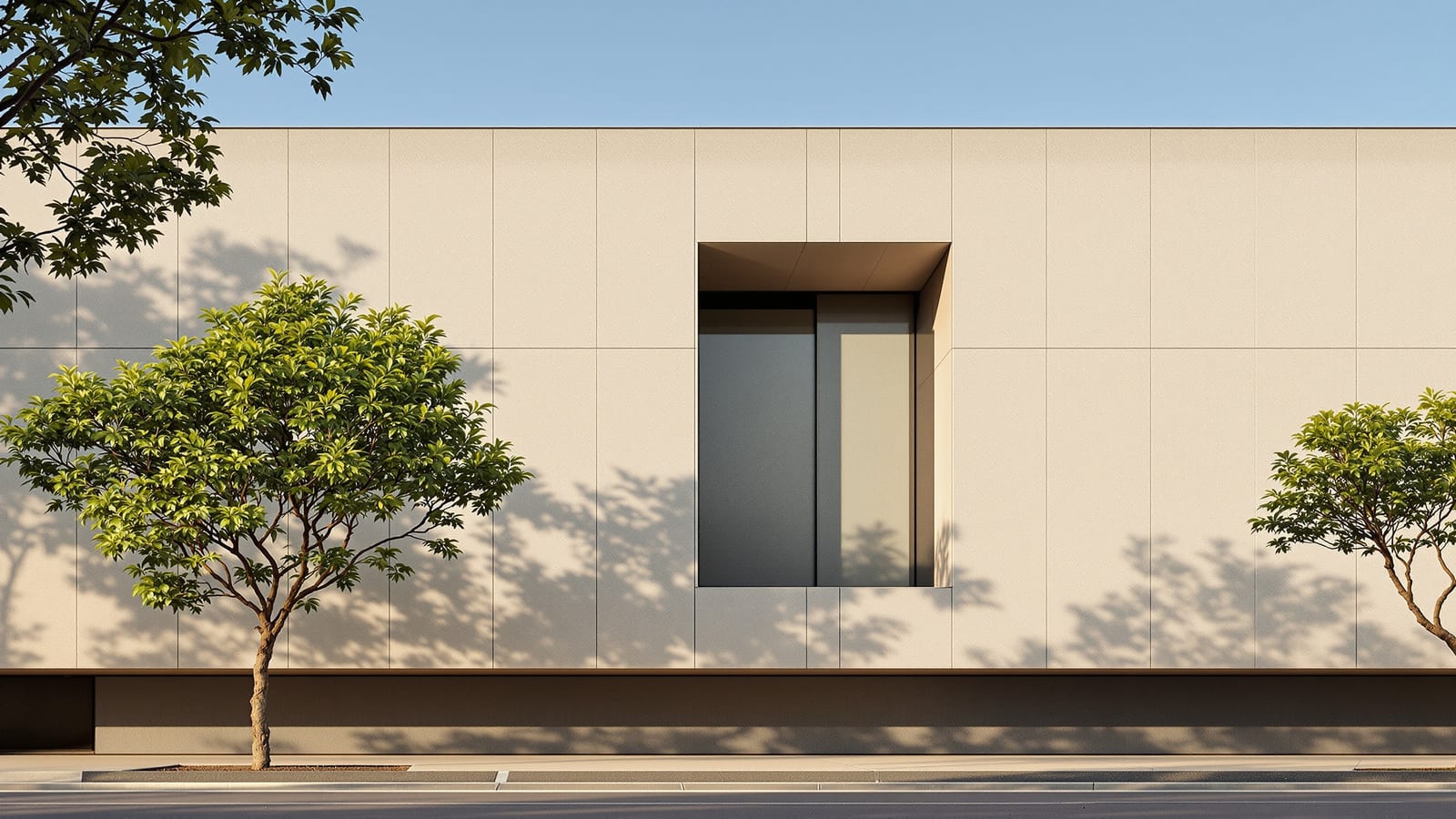
Concrete Facades in India: Fair-Faced, Board-Formed and GFRC Cladding, Honestly Explained
A candid guide to concrete as a facade finish in India: exposed in-situ, board-formed, architectural precast and thin GFRC cladding. How each is formed, weathers and costs — and why off-form concrete is the highest-risk skin on an Indian site.
 Fibre-Cement & HPL15
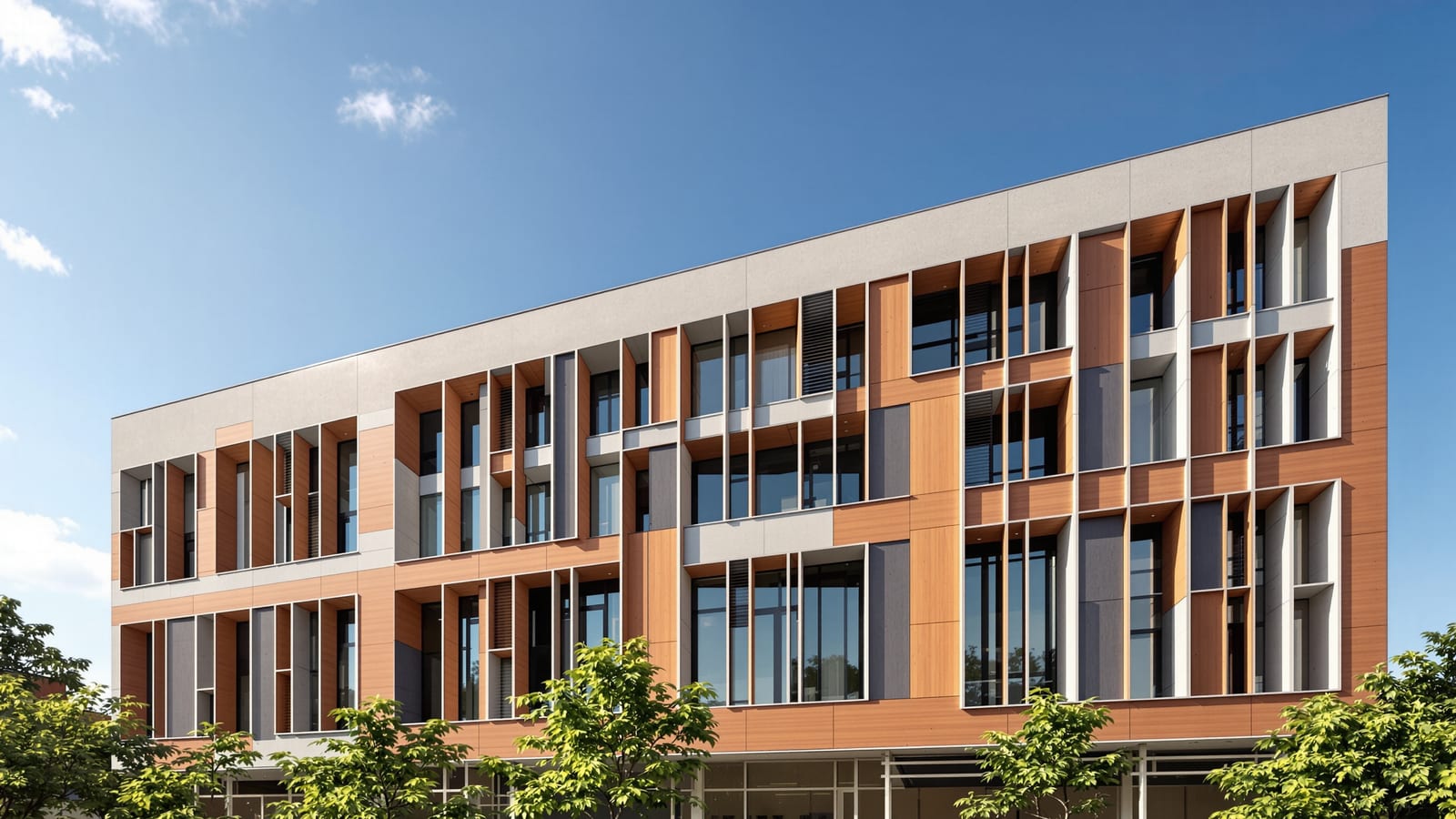
Fibre Cement & HPL Cladding in India: The Affordable Rainscreen Board Guide
A candid India guide to fibre-cement and HPL board rainscreen cladding — what they are, how they hang on a sub-frame, the genuine fire and UV differences, honest cost bands, and why almost every failure is a fixing failure, not a board failure.
 Porcelain & Ceramic16
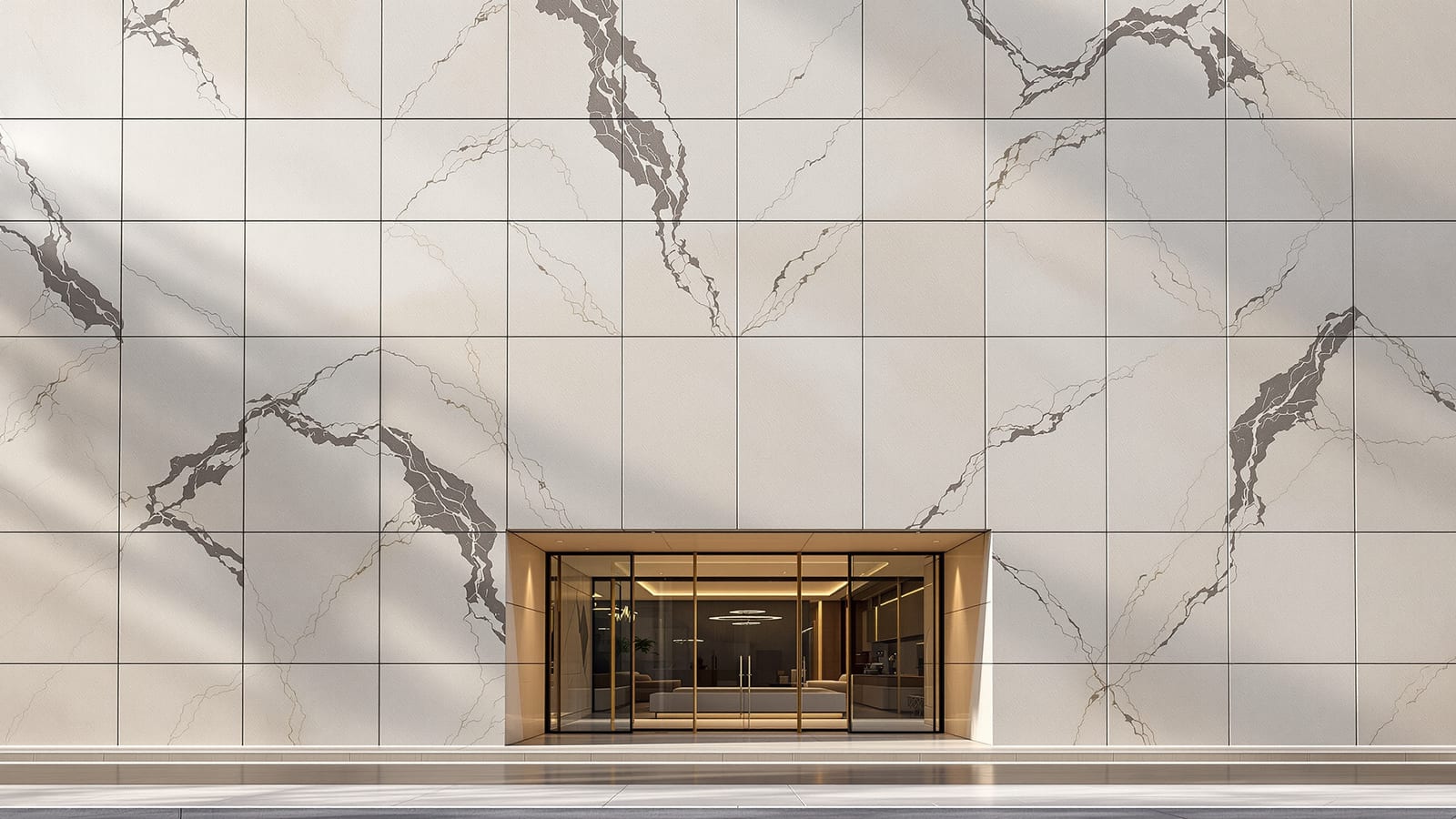
Porcelain, Ceramic & Sintered-Stone Facade Cladding in India: A Practical Guide
How fired porcelain and sintered-stone slabs imitate marble, stone and concrete on Indian facades at lighter weight and lower cost — their near-zero water absorption and UV-stable beauty, and why above pedestrian level they must be mechanically fixed, never adhesive-only.
Systems & innovation
How façades perform and adapt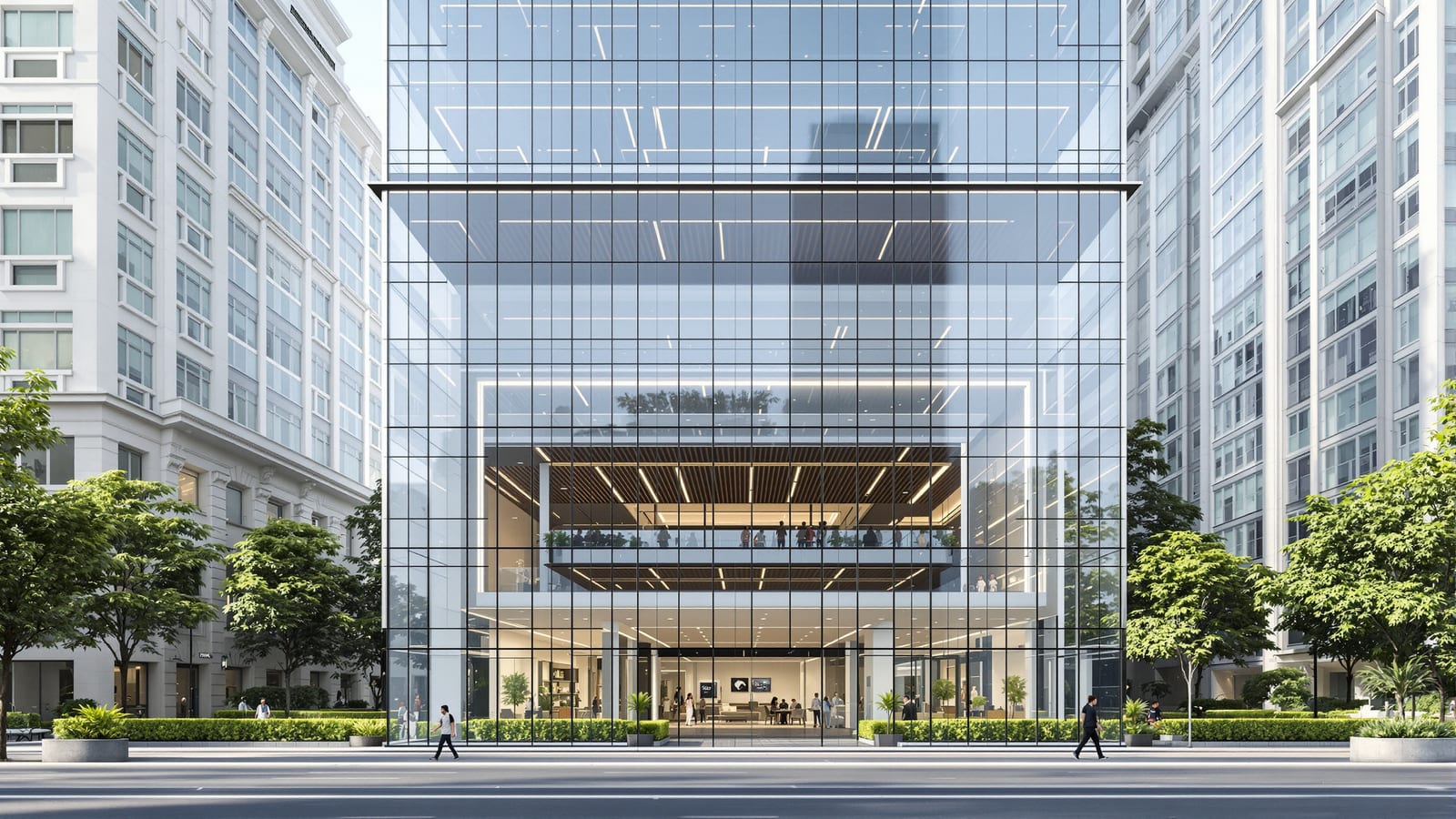 Double-Skin17
Double-Skin & Ventilated Facades in India: The Layered Envelope That Buffers Heat, Noise & Glare
A double-skin facade wraps a building in two layers with a ventilated air gap between them that buffers heat, dampens noise and can drive natural ventilation. Here is how it works, the cavity types, and the honest question for India: does it beat simple shading?
 Jaali18
Jaali & Traditional Indian Façades: India's Original Climate-Smart Screen
The jaali — India's perforated screen of carved stone, terracotta, concrete or metal — filters light, cuts heat, gives privacy and accelerates breeze. A plain-language guide to its history, physics, materials and modern revival.
 Green19
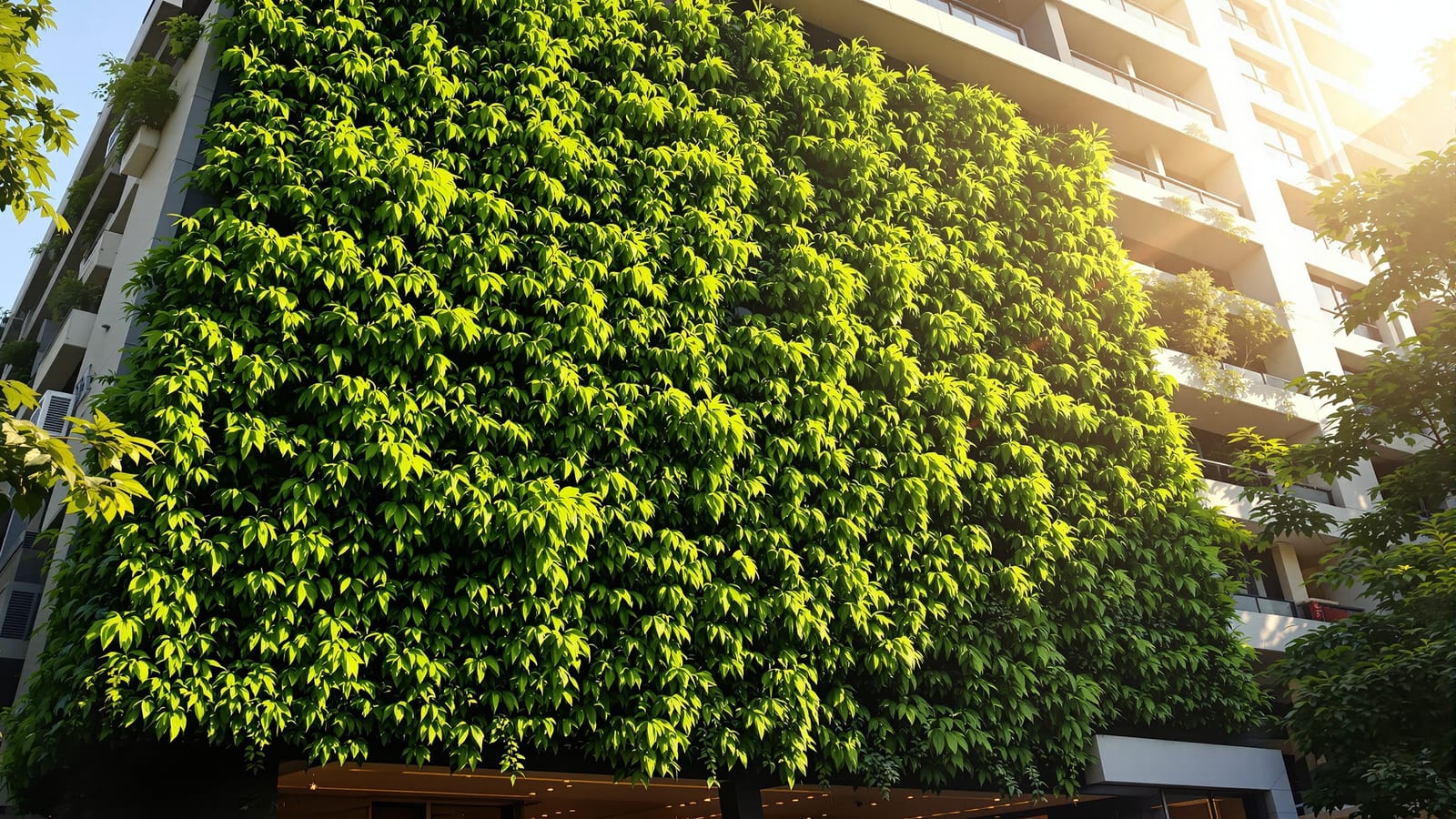
Green & Living Facades in India — Vertical Gardens and Living Walls as a Building Skin
Green and living facades explained plainly for India: the difference between a green facade (climbers on cables/trellis) and a living wall (plants growing in the wall), how each is built and irrigated, real benefits and honest caveats on water, maintenance, cost and plant selection, India-suited species and real buildings.
 Smart & Kinetic20
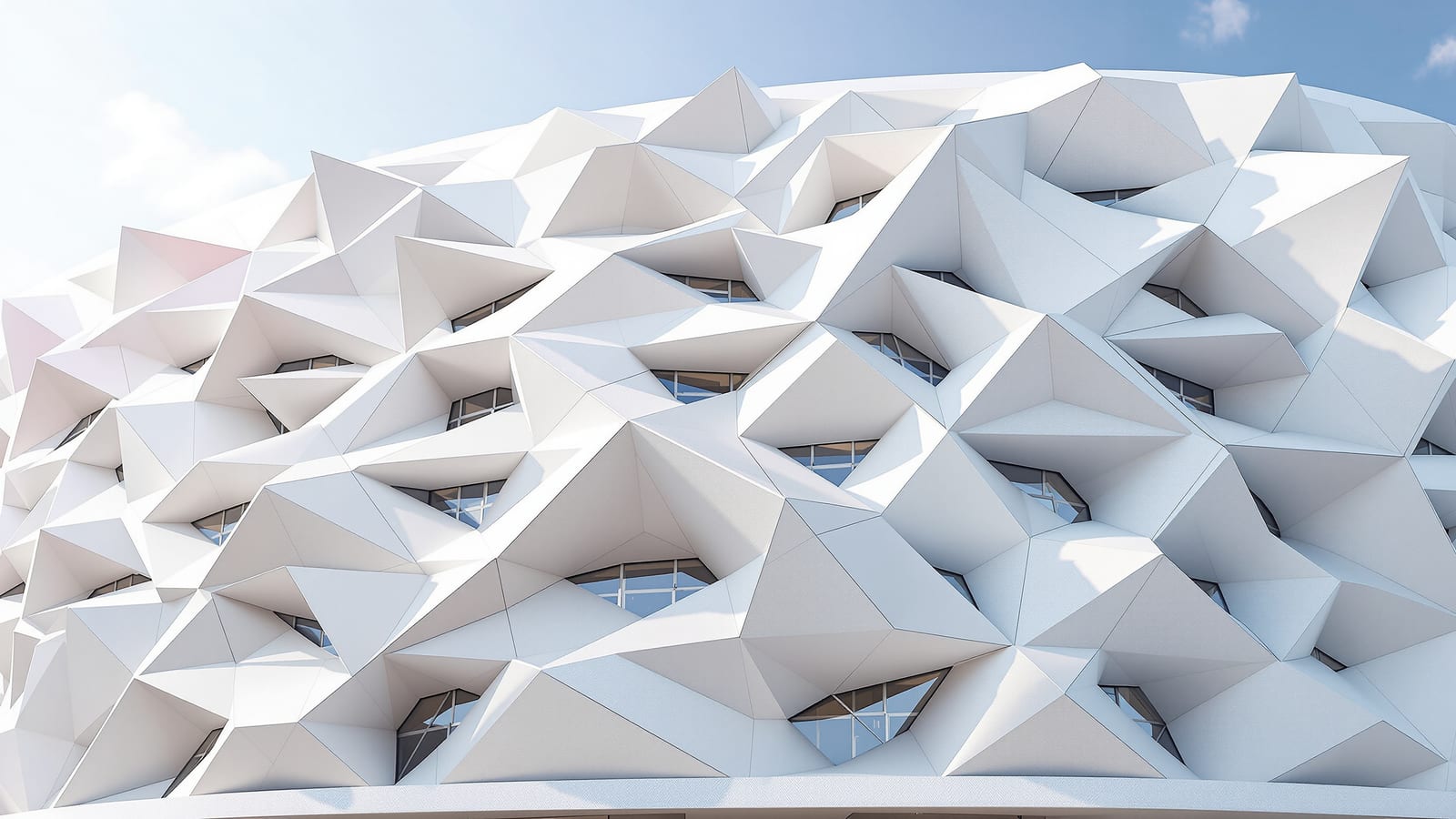
Smart, Kinetic & Parametric Facades in India: Skins That Move, Tint and Respond (And When They Are Worth It)
Parametric, kinetic and smart-glass facades move, tint and respond to the sun. This explains how each works, the sensor-control-actuator loop behind them, real built examples, and the candid India question: when does a facade that moves earn its keep, and when does simple fixed shading win?
 Solar / BIPV21
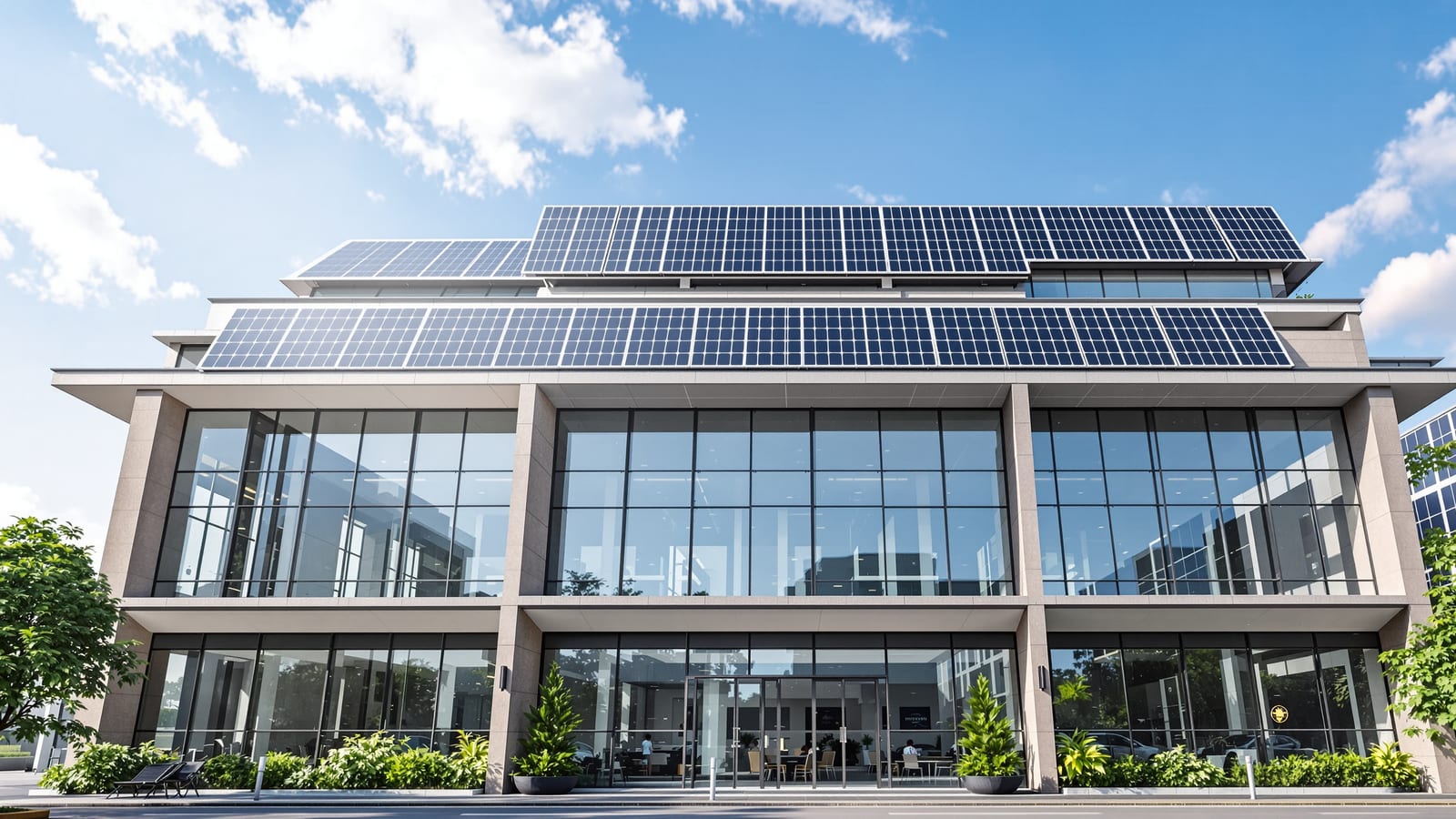
Solar & BIPV Facades in India: When the Building's Skin Makes Its Own Electricity
A solar facade turns a building's skin into its power plant. This honest guide explains BIPV versus bolted-on BAPV panels, the facade forms (PV spandrels, curtain-wall glass, semi-transparent windows, rainscreen cladding), why a vertical wall makes less power than a roof, when it still pays, and the real India cost.
 Brise-Soleil22
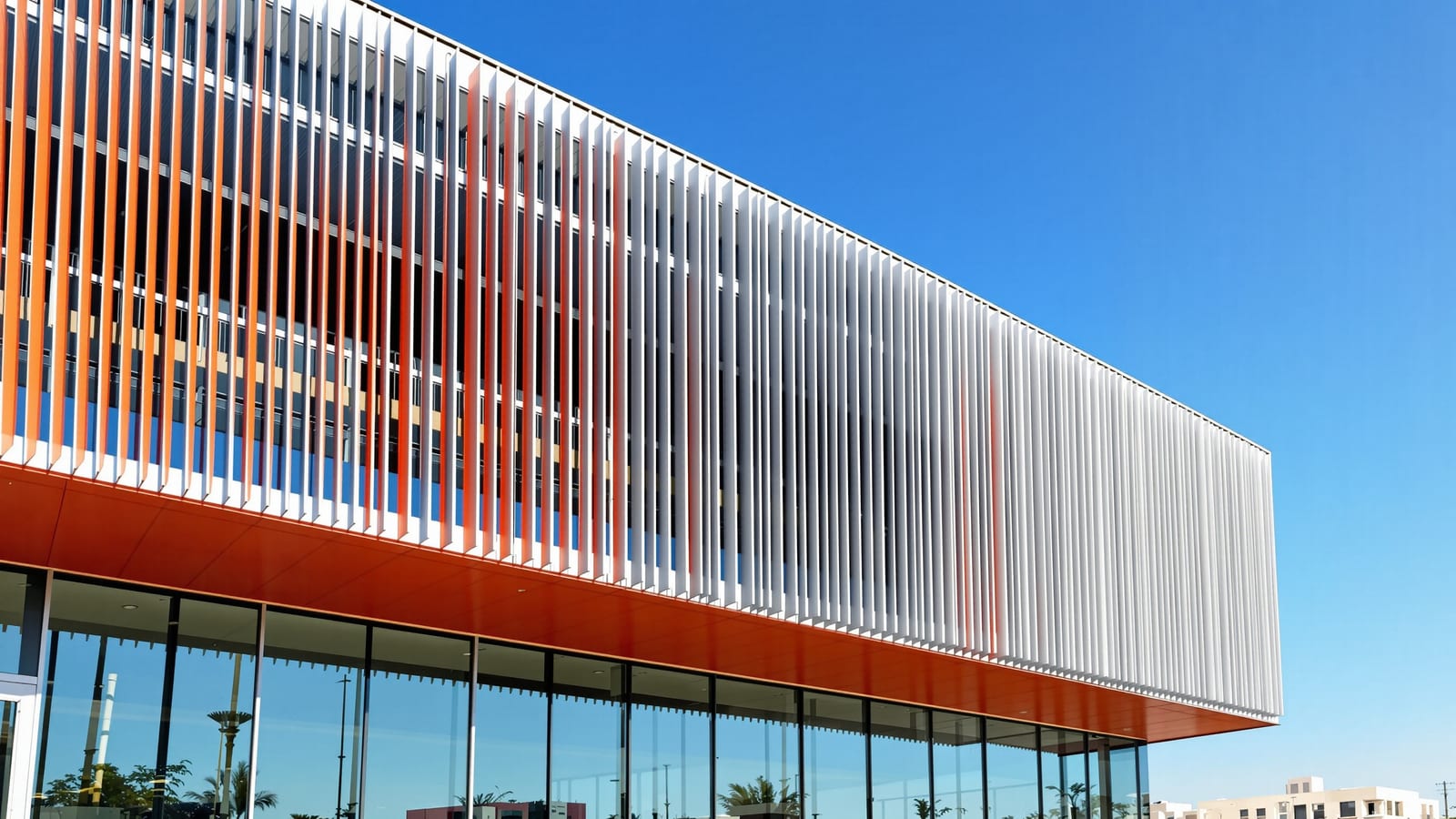
Brise-Soleil, Louvre and Fin Facades in India: Fixed External Sun-Shading That Beats the Heat
Fixed external shading is one of the highest-value passive moves in hot India. Learn why horizontal fins suit south facades and vertical fins suit east and west, how to size an overhang by its cut-off angle, and when a deep chajja beats fancy louvres.
The frontier
Emerging facade science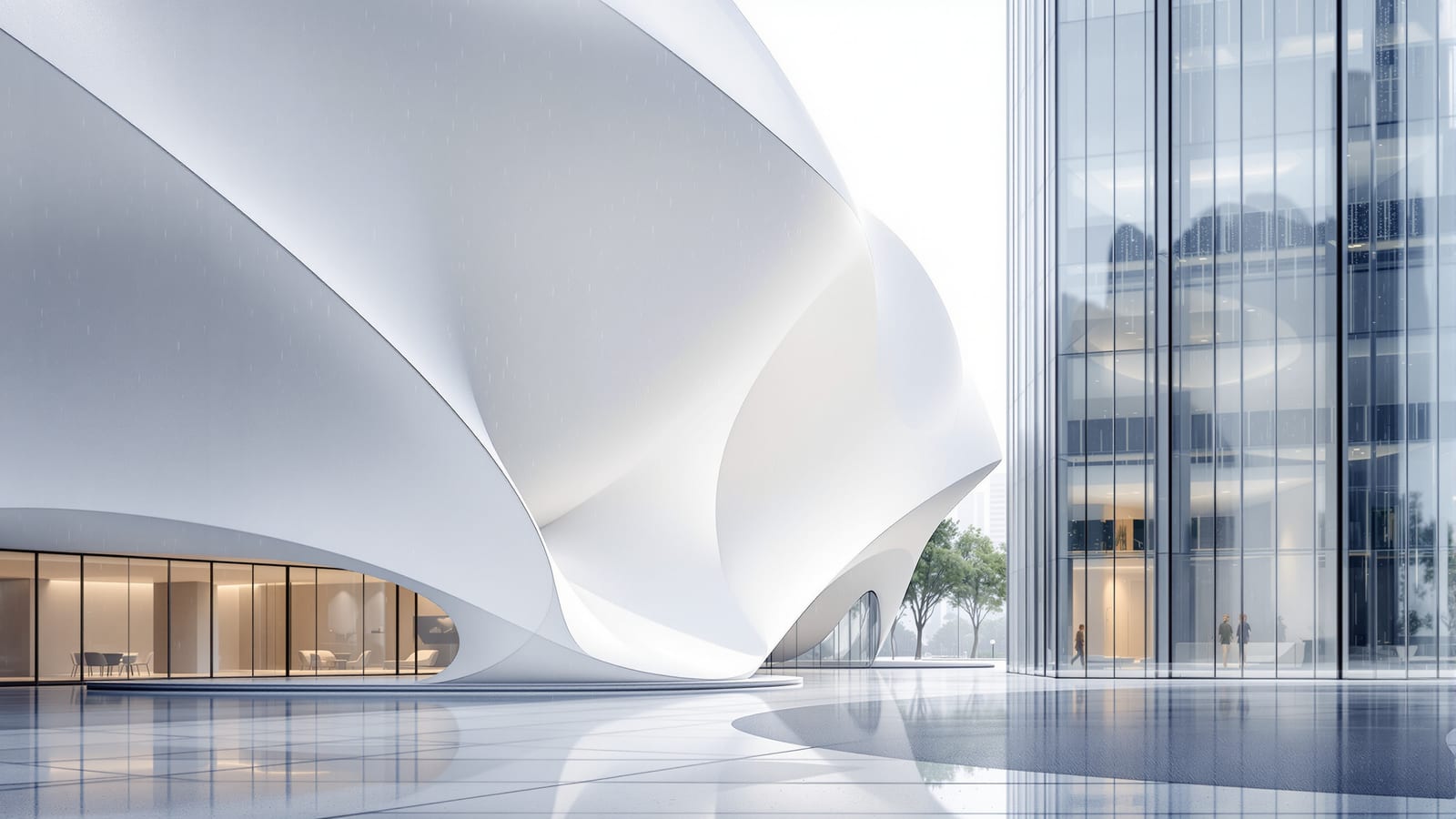 Self-Cleaning23
Self-Cleaning Facades in India: Photocatalytic, Lotus-Effect and Easy-Clean Glass, Honestly Assessed
Can a facade really clean itself? We unpack photocatalytic TiO₂ concrete, lotus-effect superhydrophobic coatings, hydrophilic self-cleaning glass and "smog-eating" panels — with verified buildings, real costs in ₹, and an honest verdict for Indian dust, monsoon and hard water.
 Carbon-Negative24
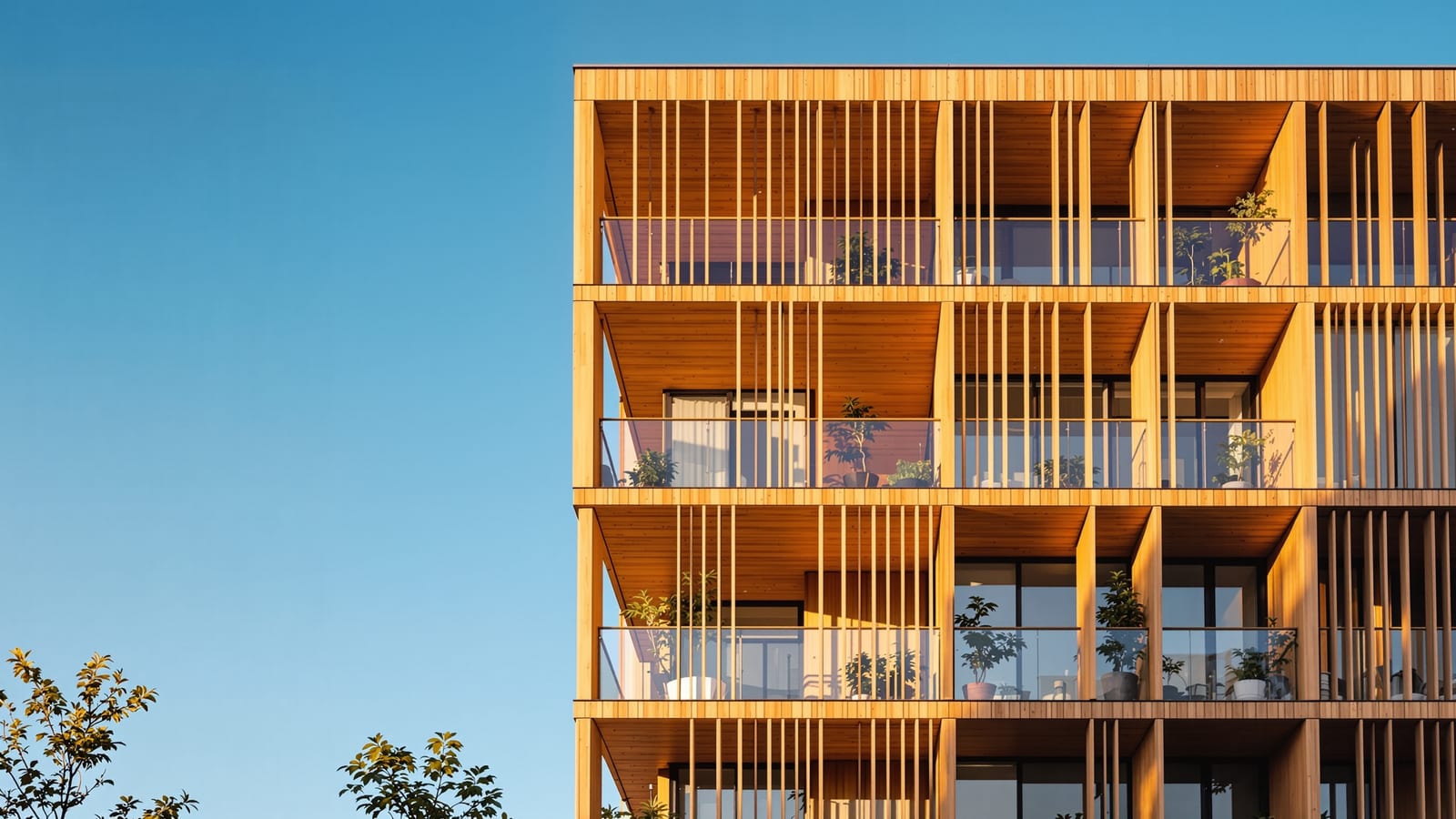
Carbon-Sequestering & Carbon-Negative Materials in India: Can a Building Store Carbon?
Some materials promise to turn your building into a carbon sink, not just a carbon source. We separate genuine storage from marketing — CO₂-mineralised concrete, biogenic hemp and timber, biochar, algae and mycelium — with an honest India verdict on cost, availability and the cement reality.
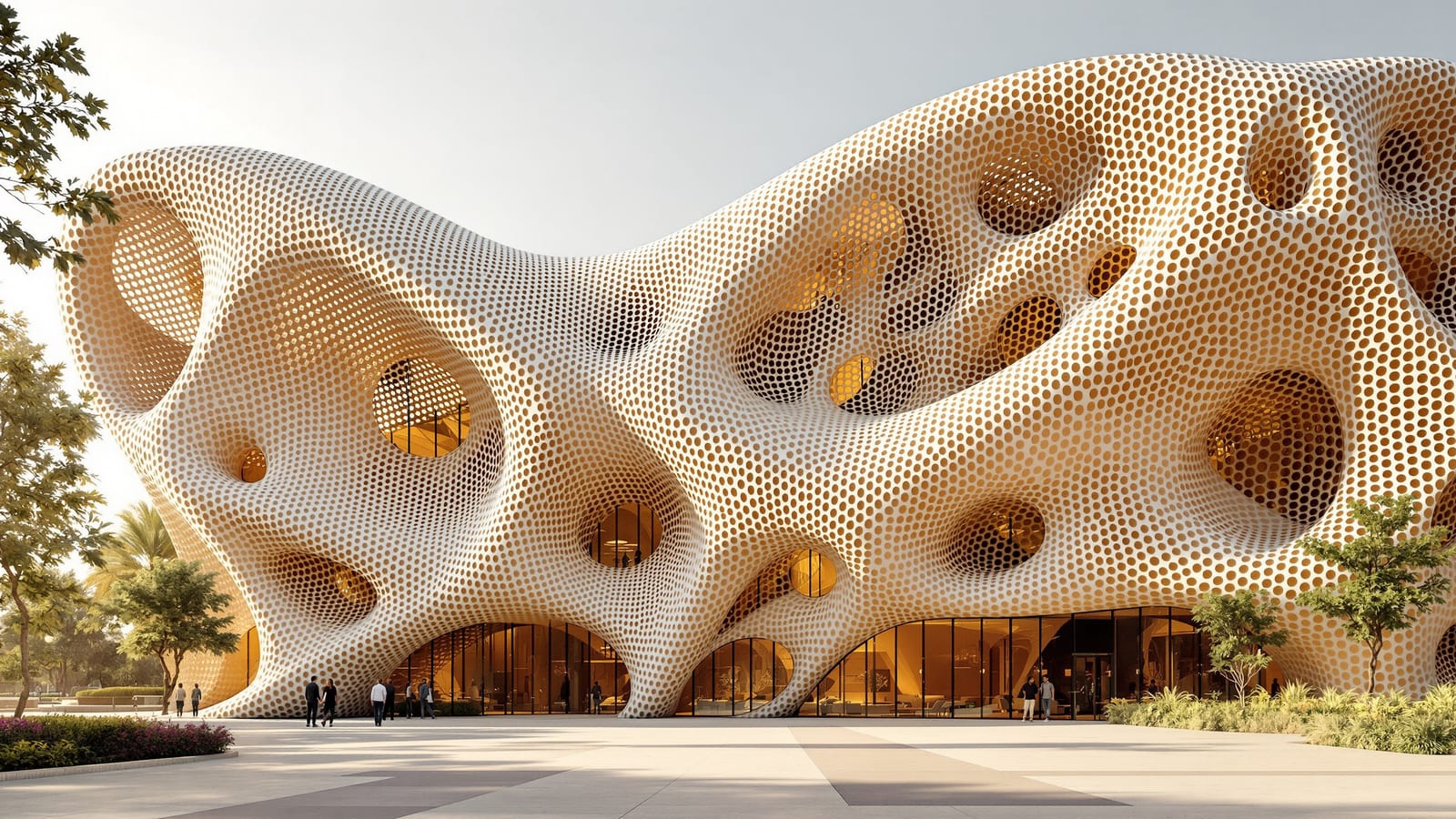 Biomimetic25
Biomimetic and Adaptive Facade Systems in India: How Buildings Borrow Nature's Cooling Tricks
Biomimetic facades copy how nature solves heat, light and airflow — termite mounds, pinecones, the bird-of-paradise flower. We separate true biomimicry from sculptural lookalikes, survey verified buildings, and argue India's vernacular already nails the cheap, proven version.
Masters of the façade
How great architects designed facades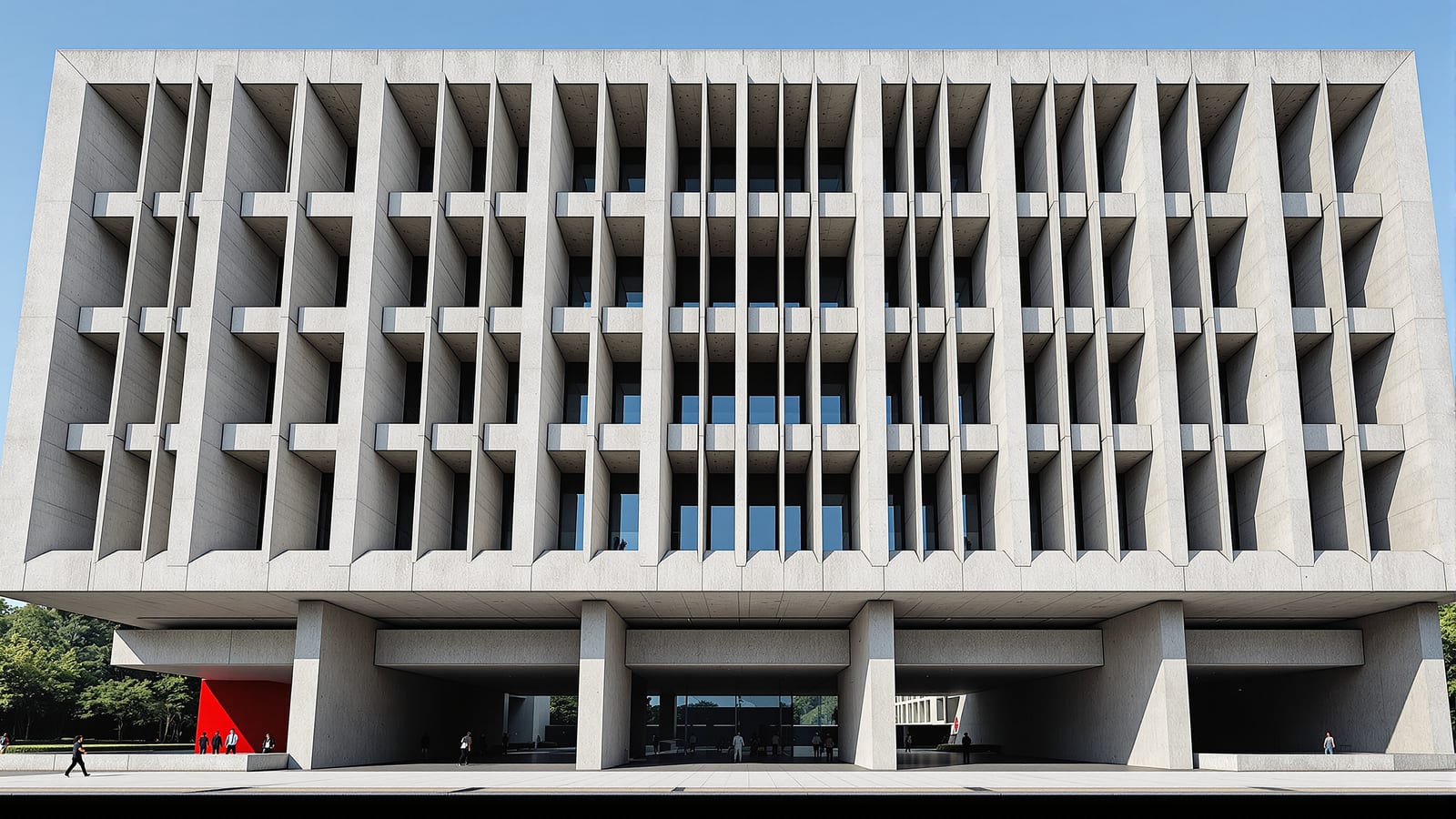 Le Corbusier26
Le Corbusier's Façade Signature: Brise-Soleil, Béton Brut and the Free Façade Explained
How to read a Le Corbusier façade: the brise-soleil he pioneered, béton brut, pilotis, the free façade and ribbon window, the Modulor, and the deep concrete sun-shading he built for India — what works, what weathers badly, and what to borrow.
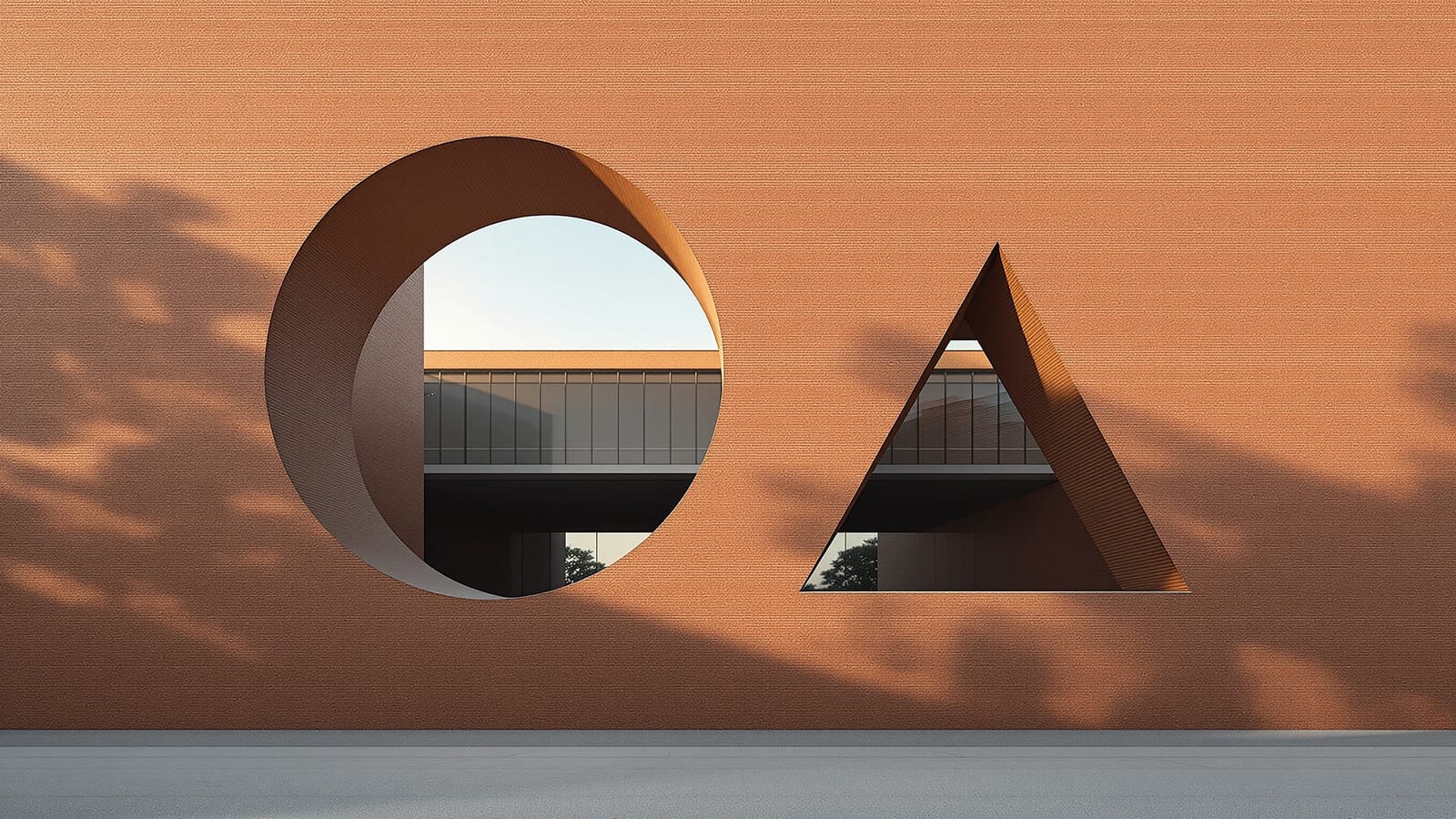 Louis Kahn27
Louis Kahn's Façade Signature: Wrapping Ruins, Brick Arches, and Monumental Light
Louis Kahn's façades wrap a free-standing screen wall — punched with vast circles and triangles — in front of the glass to shade it. From IIM Ahmedabad's brick arches to Dhaka's concrete-and-marble Assembly, here's how his monumental elevations work, and what India can borrow.
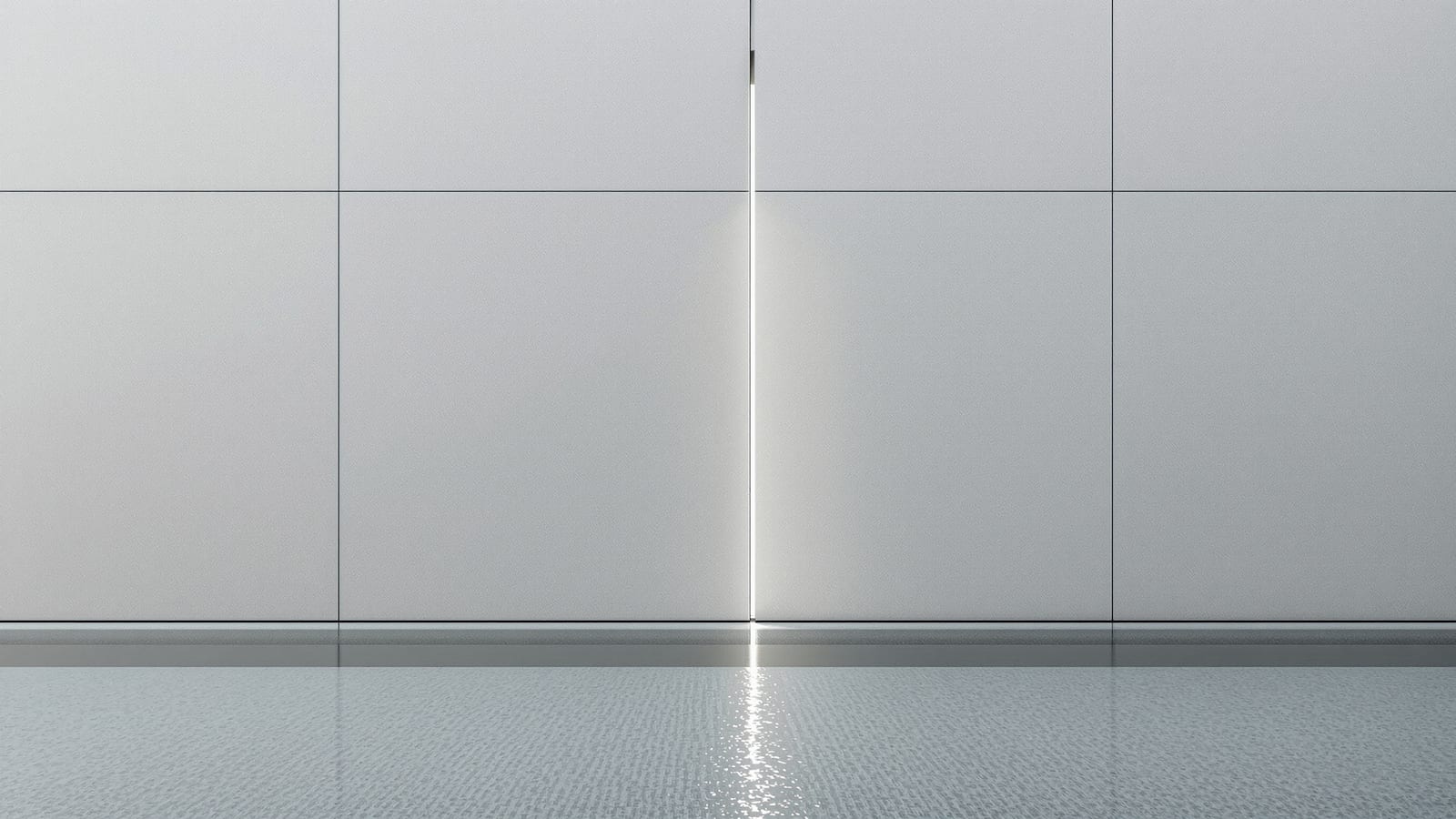 Tadao Ando28
Tadao Ando's Façade Signature: Silky Off-Form Concrete and the Tie-Hole Grid
Tadao Ando's façades are blank, silky planes of fair-faced concrete ordered by a precise grid of tie-holes. We decode how that signature is built, the buildings that prove it, and why India should borrow his discipline, not his bare grey wall.
 Jean Nouvel29
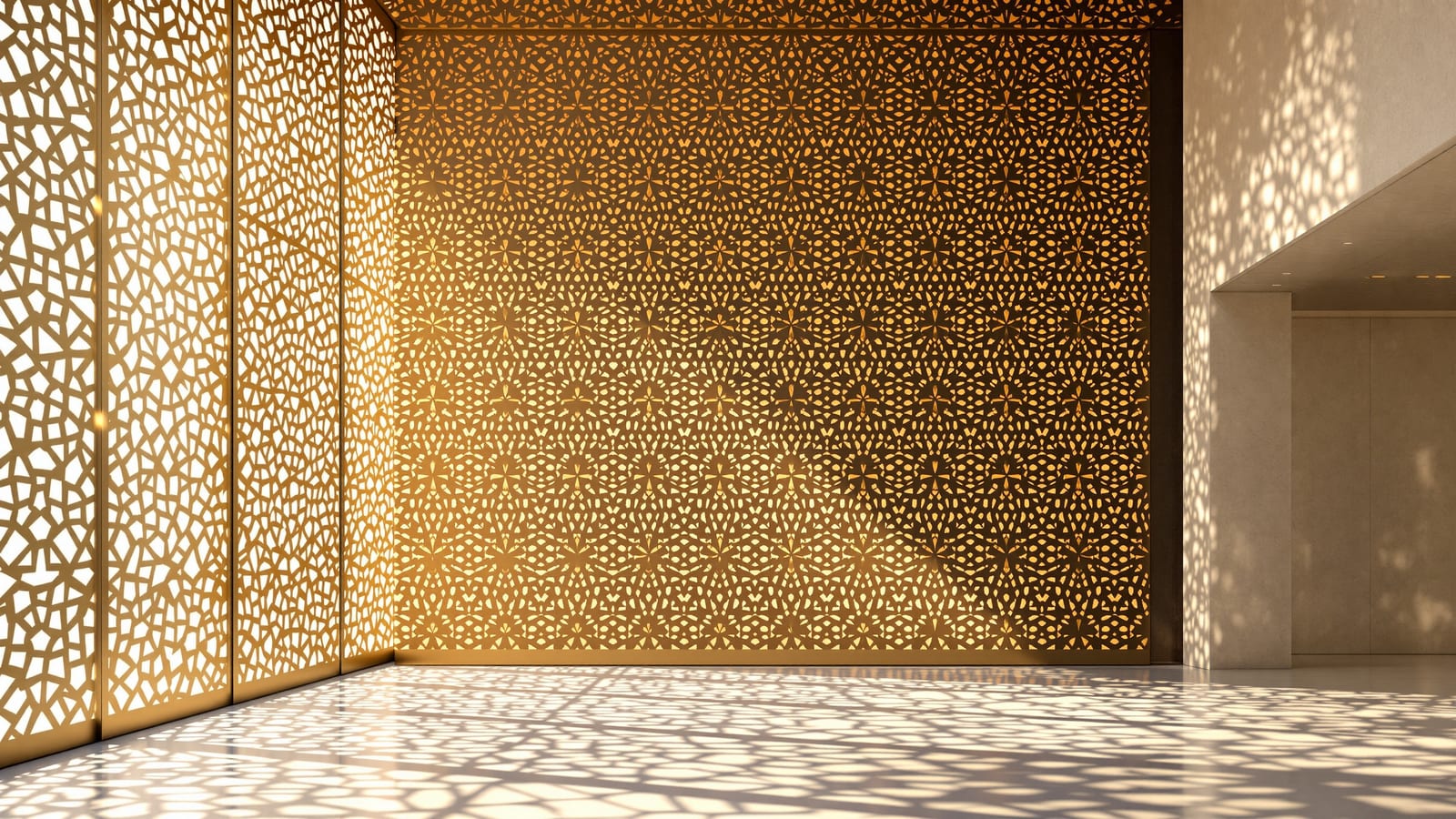
Jean Nouvel's Façade Signature: The Modern Mashrabiya, Light Screens and the Dissolving Skin
Jean Nouvel is the most façade-obsessed architect alive. From the Institut du Monde Arabe's photo-sensitive apertures to the Louvre Abu Dhabi's "rain of light" dome, his screens are descended from the jaali — the right idea for India, executed in ways we should borrow but simplify.
 Norman Foster30
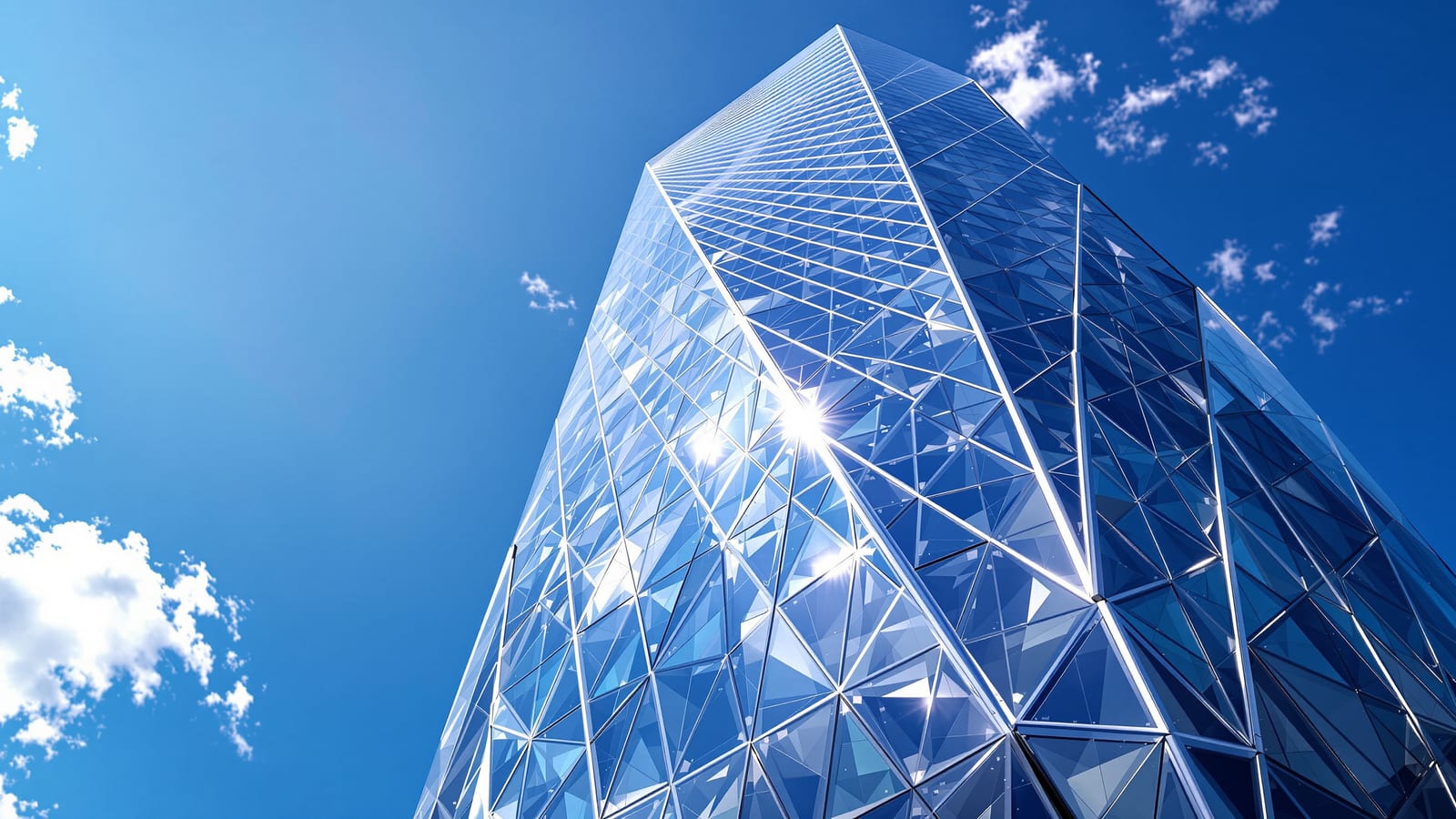
Norman Foster's Façade Signature: The High-Tech Glass Diagrid and the Engineered Skin
Norman Foster made the façade do the work — carrying load as a diagrid, breathing through a double skin, opening up as a public glass dome. A study of his engineered glass envelope, and the discipline India copies the look but skips.
 Herzog & de Meuron31
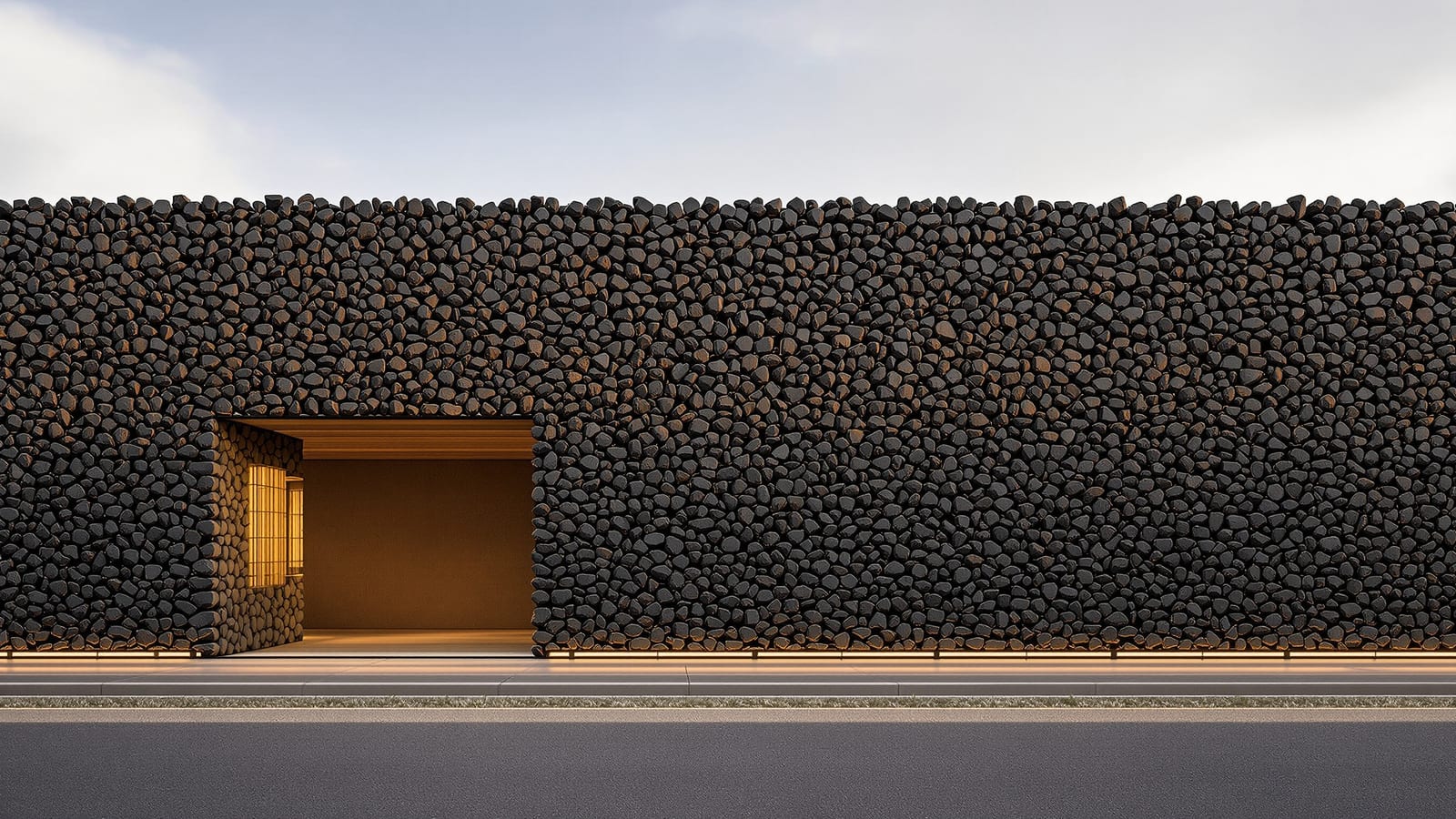
Herzog & de Meuron's Façade Signature: The Architects Who Made the Building Skin Their Life's Experiment
Herzog & de Meuron have no fixed style except an obsession with the building skin. We unpack their gabion stone walls, printed concrete, perforated copper and glowing membranes — and the one idea, the breathing gabion façade, that India can borrow tomorrow.
 Charles Correa32
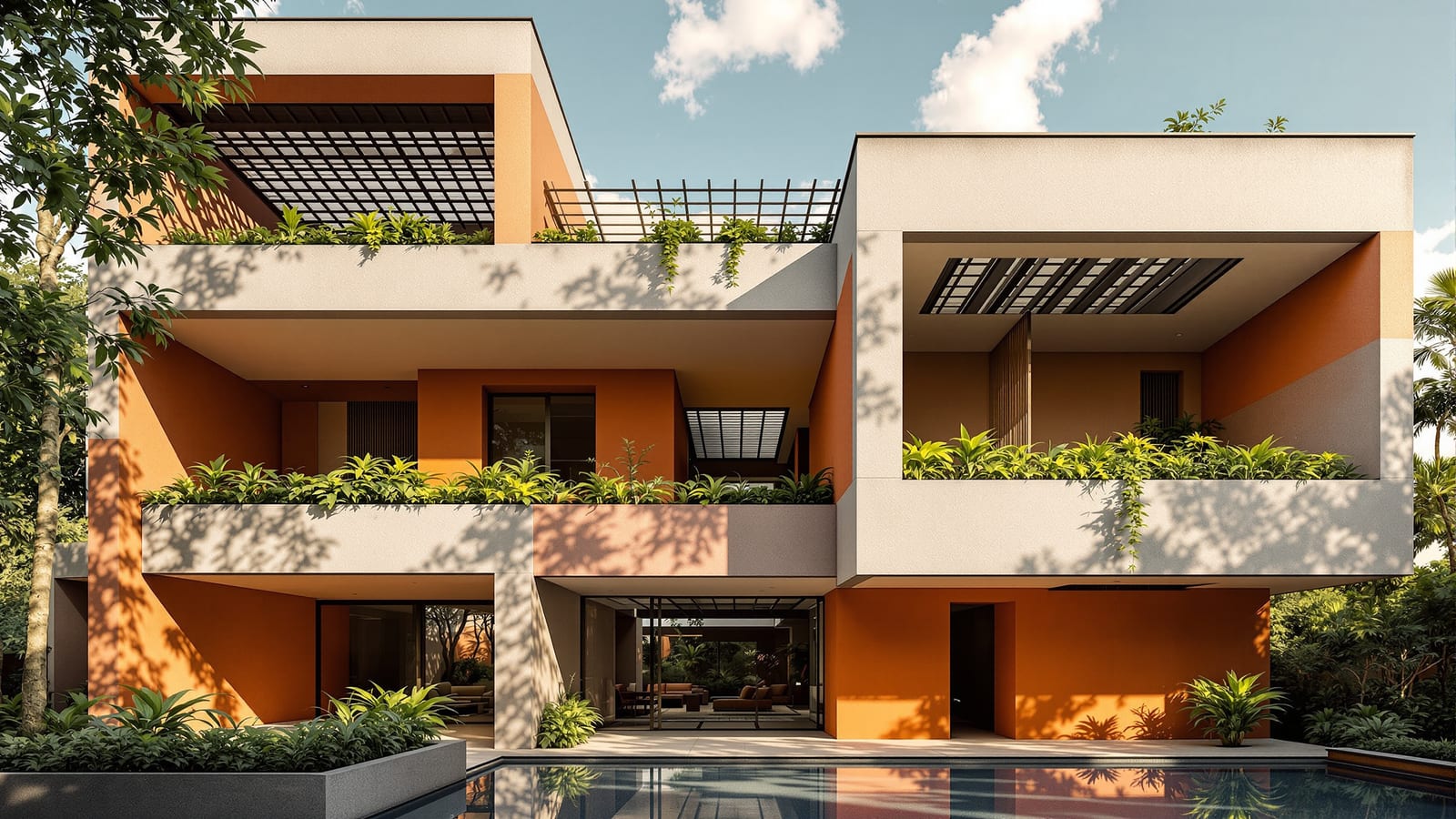
Charles Correa's Façade Signature: How India's Master Made the Climate-Correct Wall
Charles Correa is the master of the climate-responsive Indian façade. His "form follows climate" and "open-to-sky" ideas turn the wall into a deep, shaded, porous climate filter — the exact opposite of the imported sealed glass tower. Here is his façade language, and what it teaches India.
 B. V. Doshi33
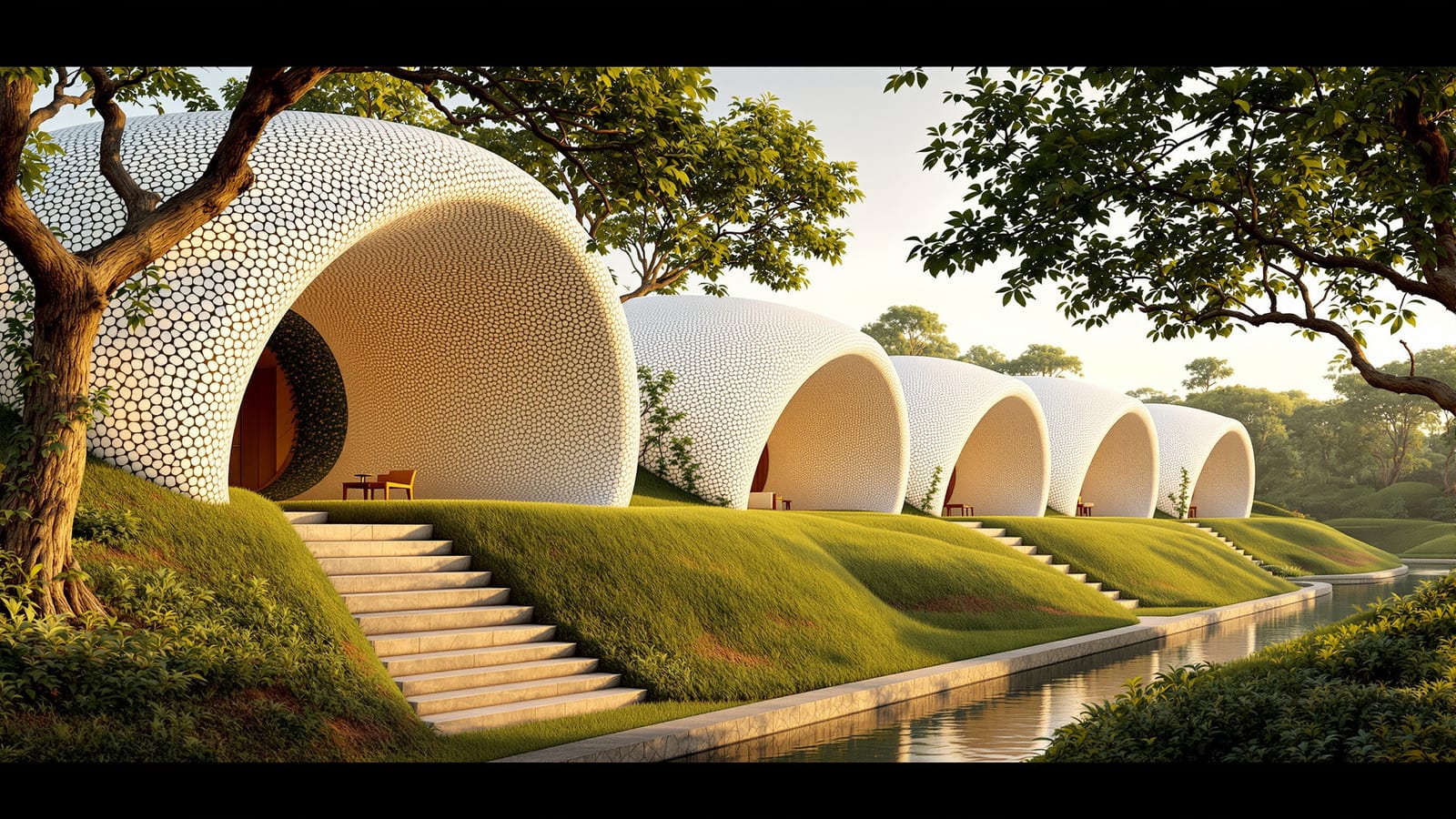
Balkrishna Doshi's Façade Signature: Earth Berms, China Mosaic Vaults and the Building as Landscape
A deep look at B. V. Doshi's façade language — earth-bermed mosaic barrel vaults at Sangath, china-mosaic cladding, the building dissolved into landscape, and the incremental open-framework façades of Aranya. India's blueprint for affordable, climate-correct fronts.
 Laurie Baker34
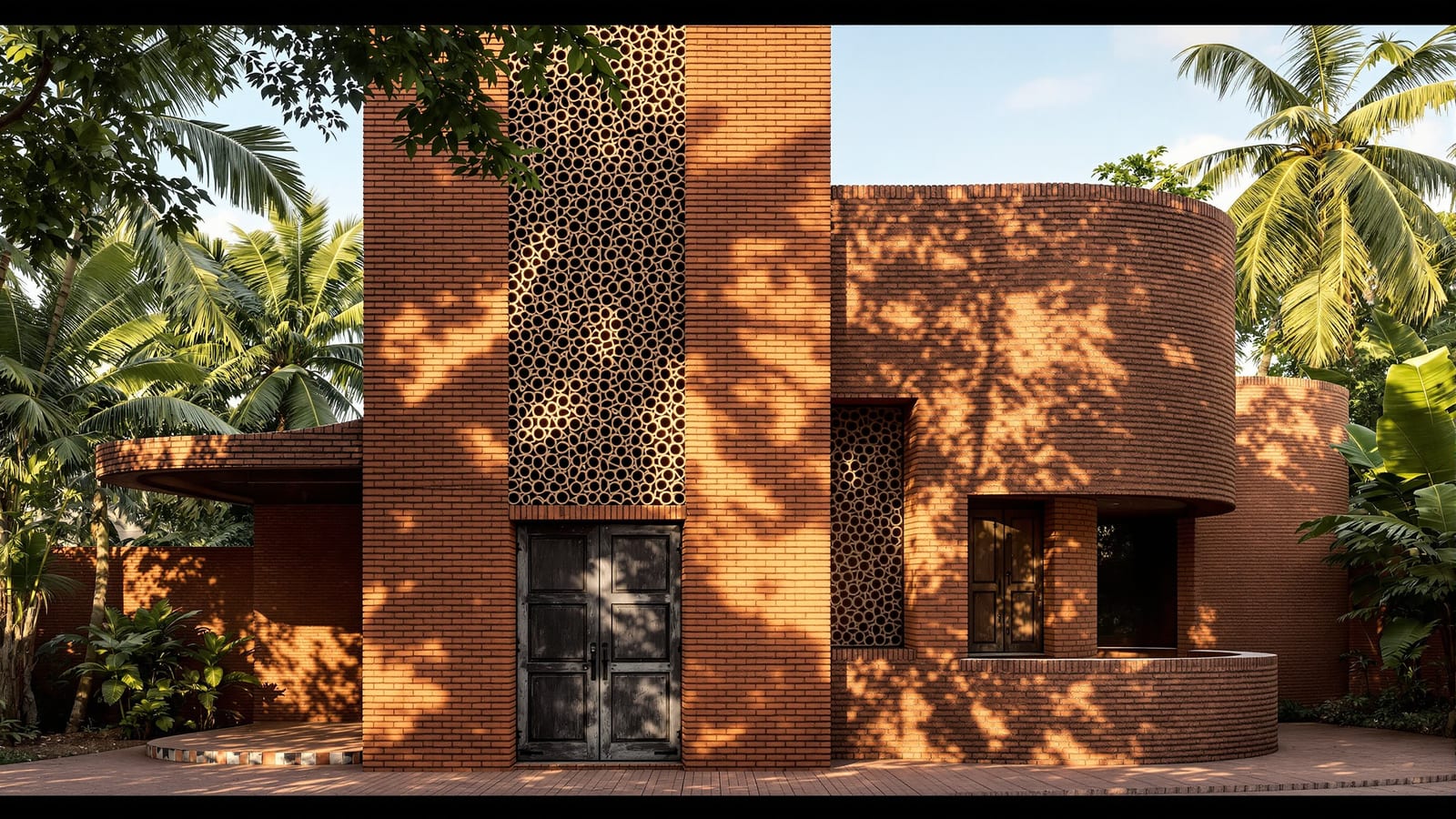
Laurie Baker's Façade Signature: Brick Jaali, Rat-Trap Bond and the Honest Low-Cost Indian Wall
Laurie Baker proved a façade can be finished, insulated, ornamented and breathing for far less money. His exposed brick, brick jaali, rat-trap bond and curved walls are the cheapest route to a genuinely beautiful Indian wall — the opposite of the glass tower.
 Morphogenesis35
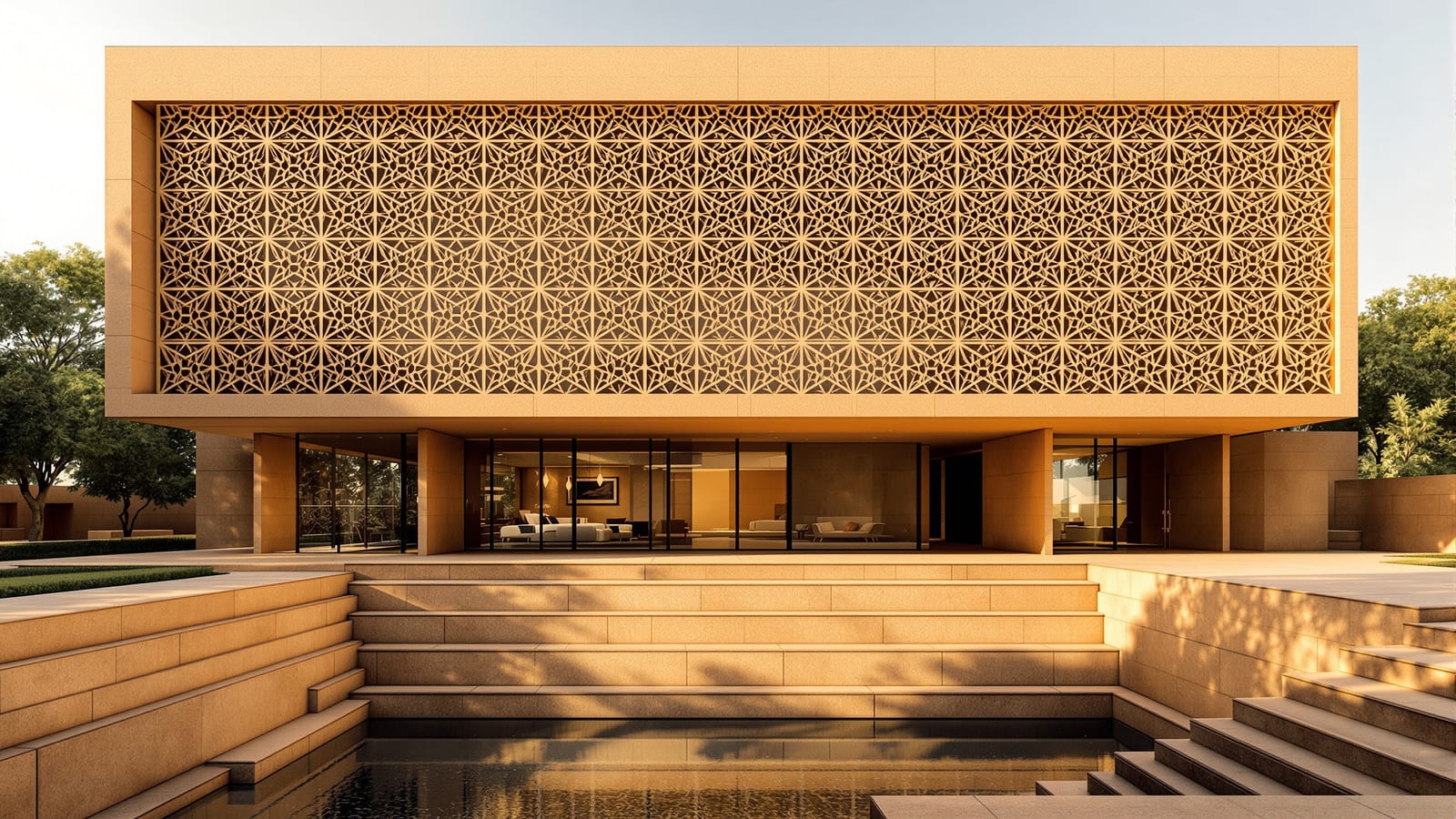
Morphogenesis Façade Design: The Computed Jaali, Breathing Double Skin and Stepwell Cooling of India's Leading Practice
Morphogenesis, founded 1996 by Sonali and Manit Rastogi, is the firm that fused India's climate-and-craft façade tradition with parametric design. This is how their computed jaali, breathing double skin and revived stepwell work — and what it teaches India.
 Mies van der Rohe36
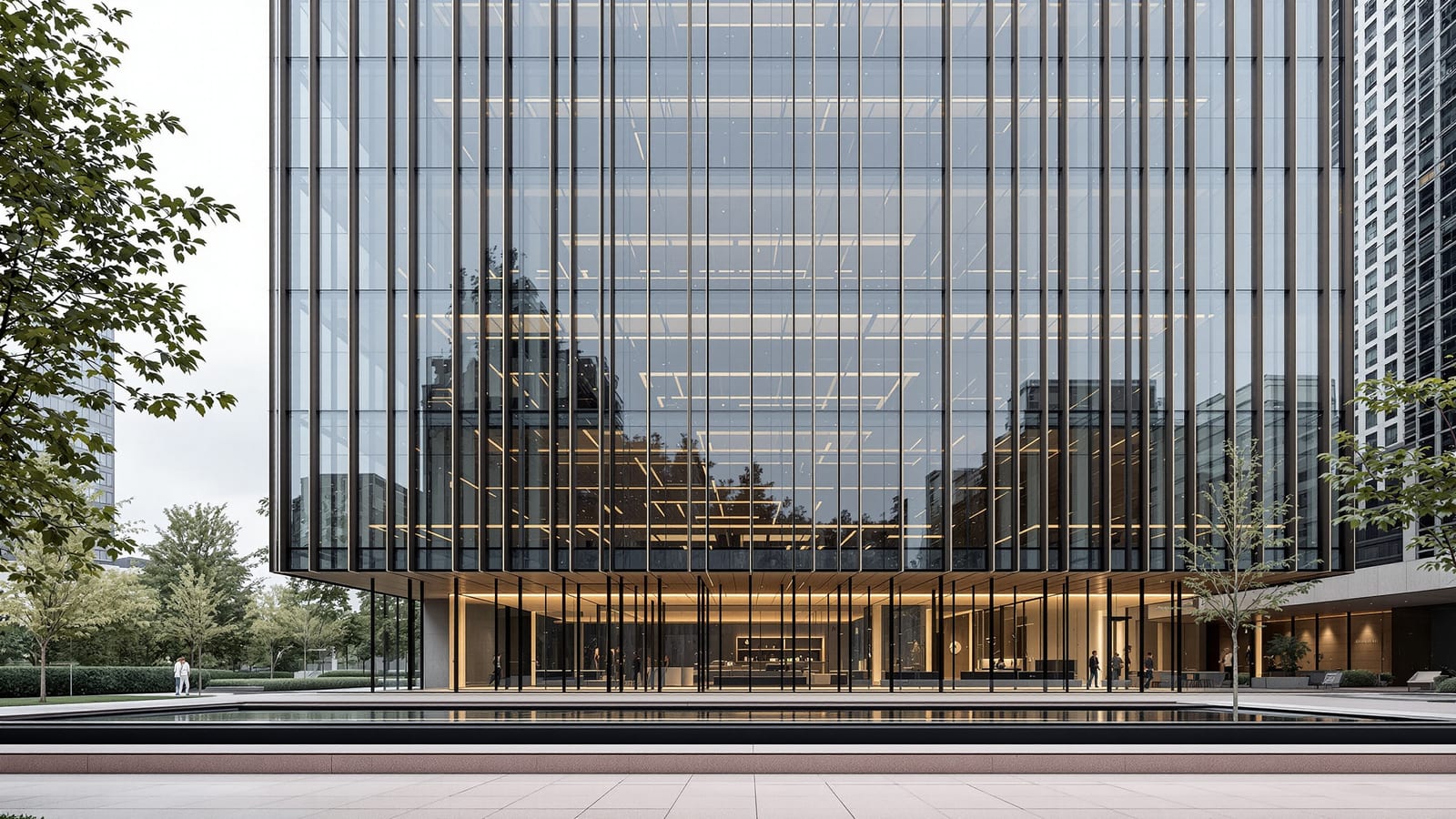
Mies van der Rohe's Façade Signature: The Glass Curtain Wall, the Bronze I-Beam and the Honest Paradox
Mies van der Rohe perfected the glass curtain wall and the modernist glass tower. We unpack his façade language — skin and bones, the expressed bronze I-beam, the disciplined grid — the celebrated honesty paradox, and what it means for India's sun.
 Renzo Piano37
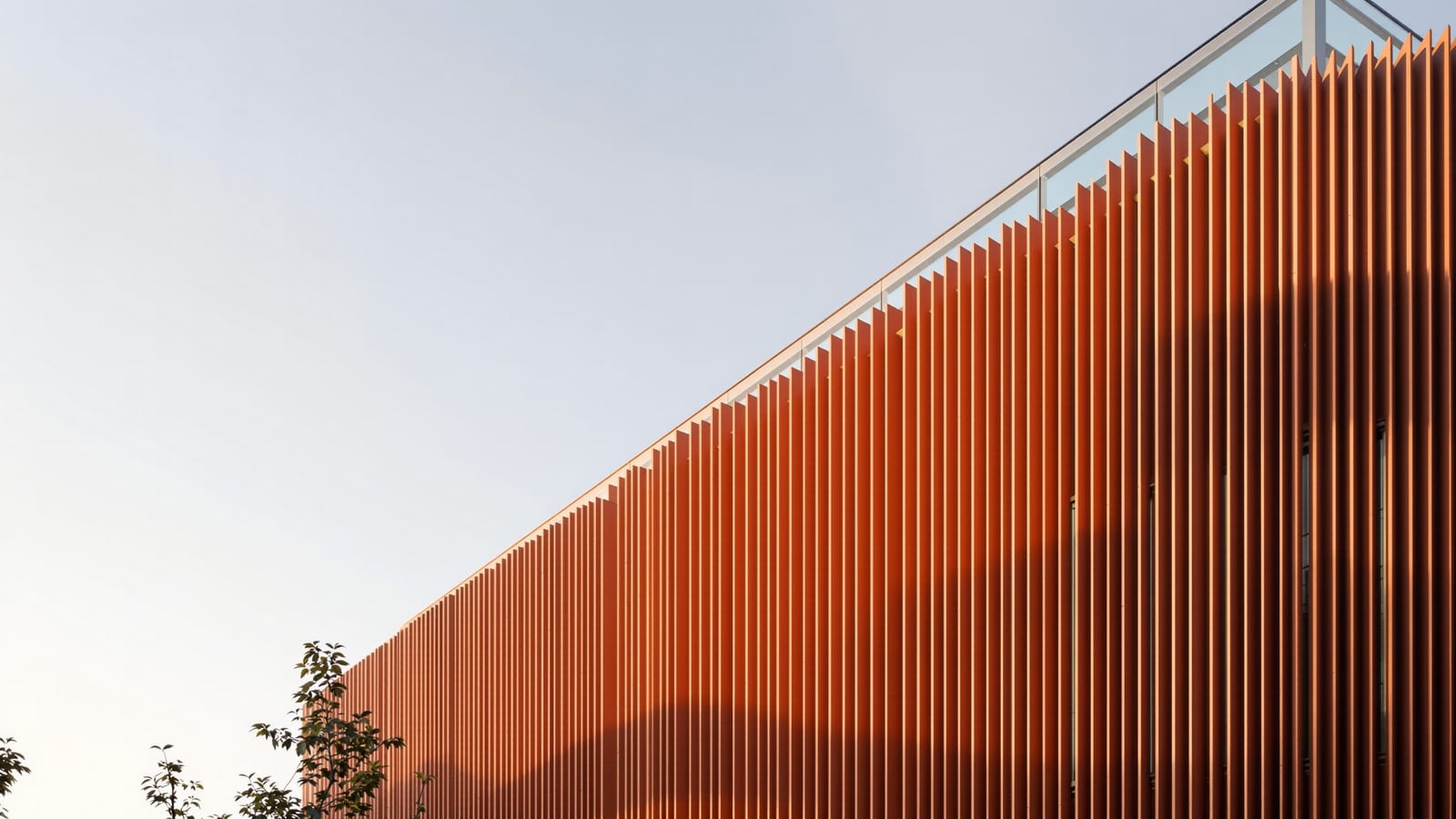
Renzo Piano Façade Design: Terracotta Rainscreens, Lightness, and the Crafted Detail
Renzo Piano made terracotta a modern high-performance cladding, filtered daylight with crafted "leaves," and built façades of refined lightness. We unpack his façade language and the one idea India should steal: the breathing terracotta rainscreen.
 Kengo Kuma38
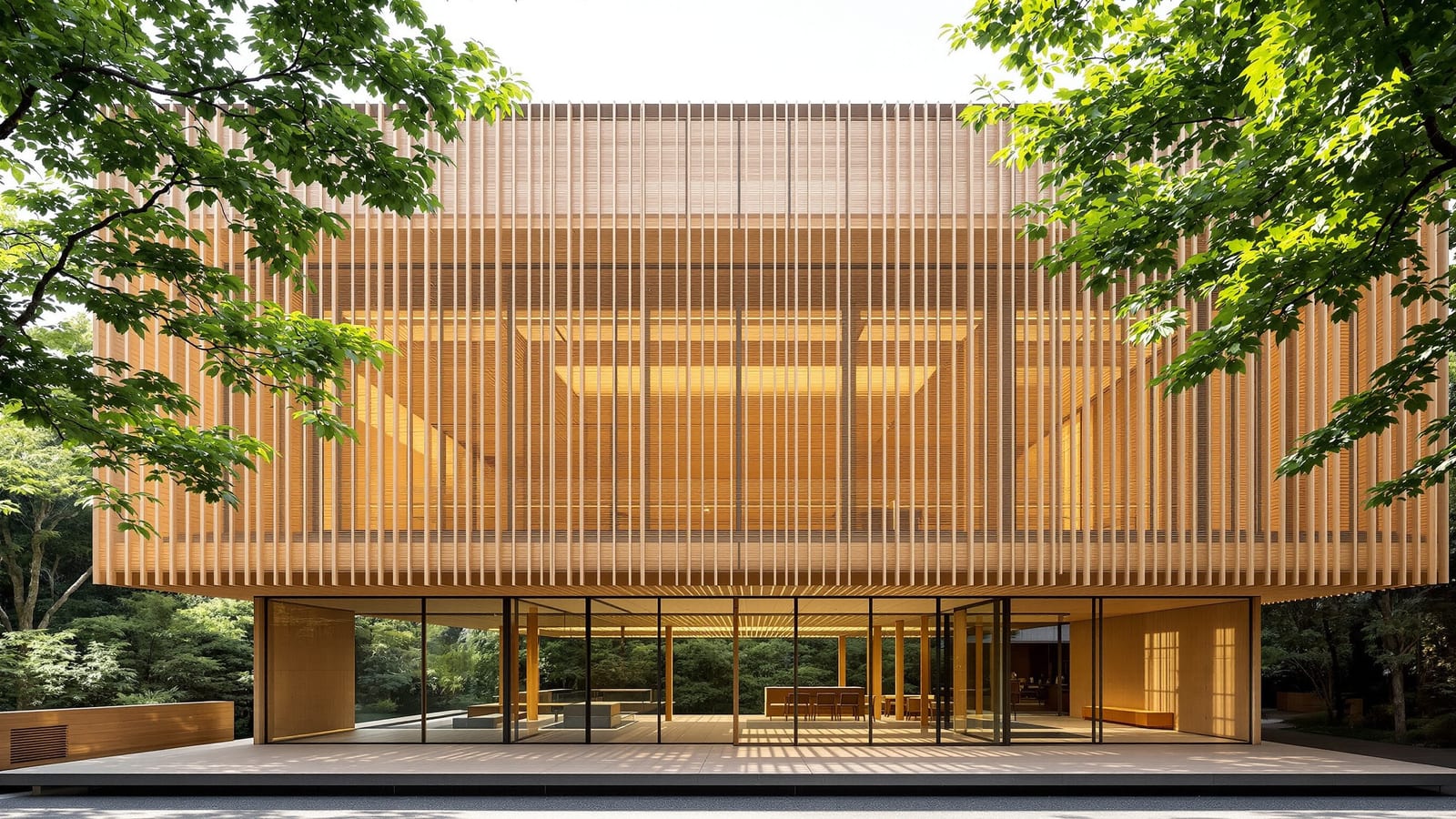
Kengo Kuma's Façade Signature: Anti-Object, Particles, and the Timber Lattice as a Jaali
Kengo Kuma erases the wall by breaking it into particles: fine timber slats, ceramic louvres and stone fins woven into a permeable screen that filters light and breathes. It is, in effect, a jaali in timber — and a lesson India already half-knows.
 Zaha Hadid39
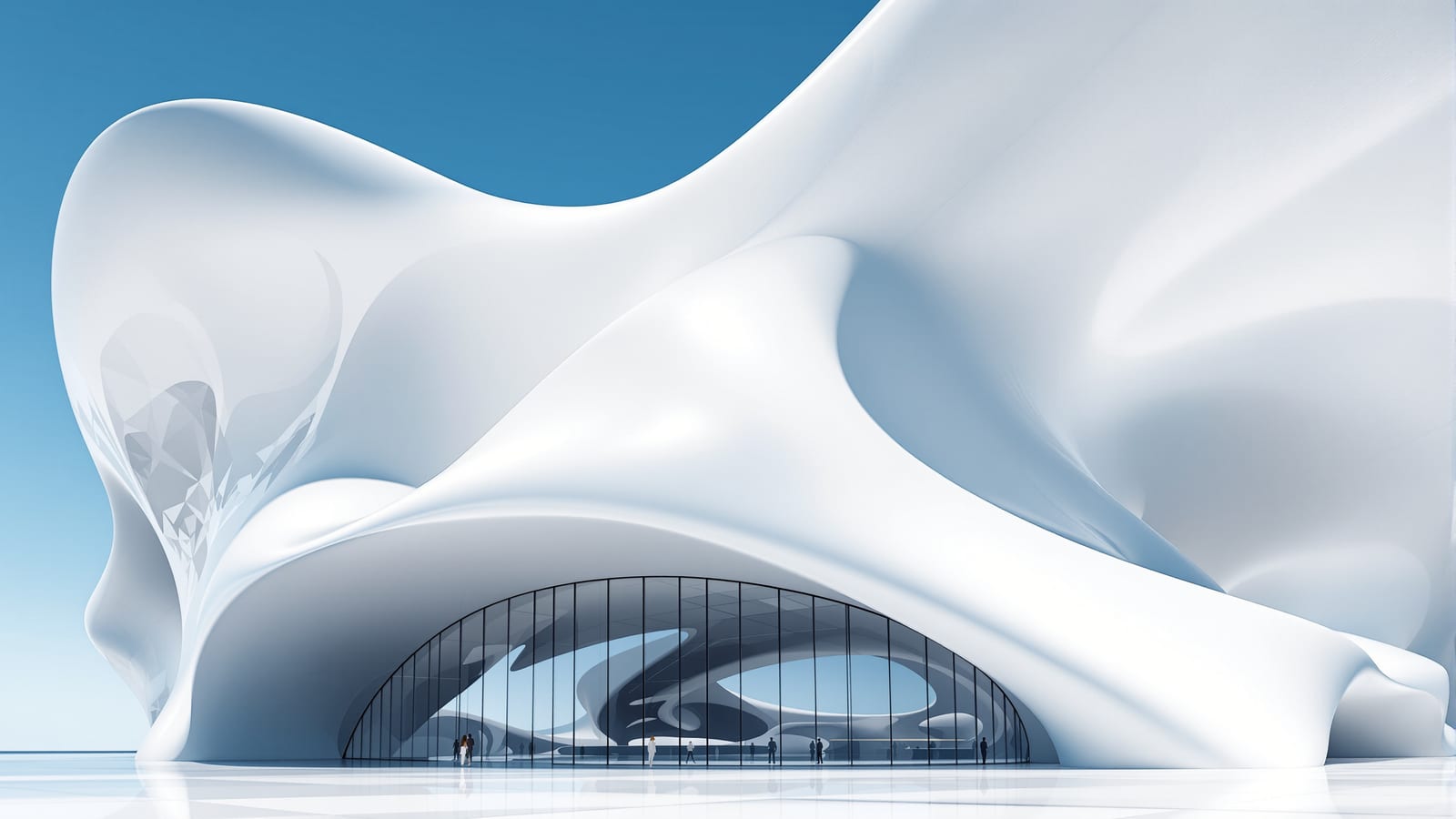
Zaha Hadid's Façade Signature: The Seamless Parametric Skin (And What It Teaches India)
Zaha Hadid made the façade flow as one seamless curved skin. We unpack how it is really built — thousands of unique GFRC panels on a complex sub-frame — and argue India should borrow her parametric method for shade, not copy the climate-poor icon.
 Raj Rewal40
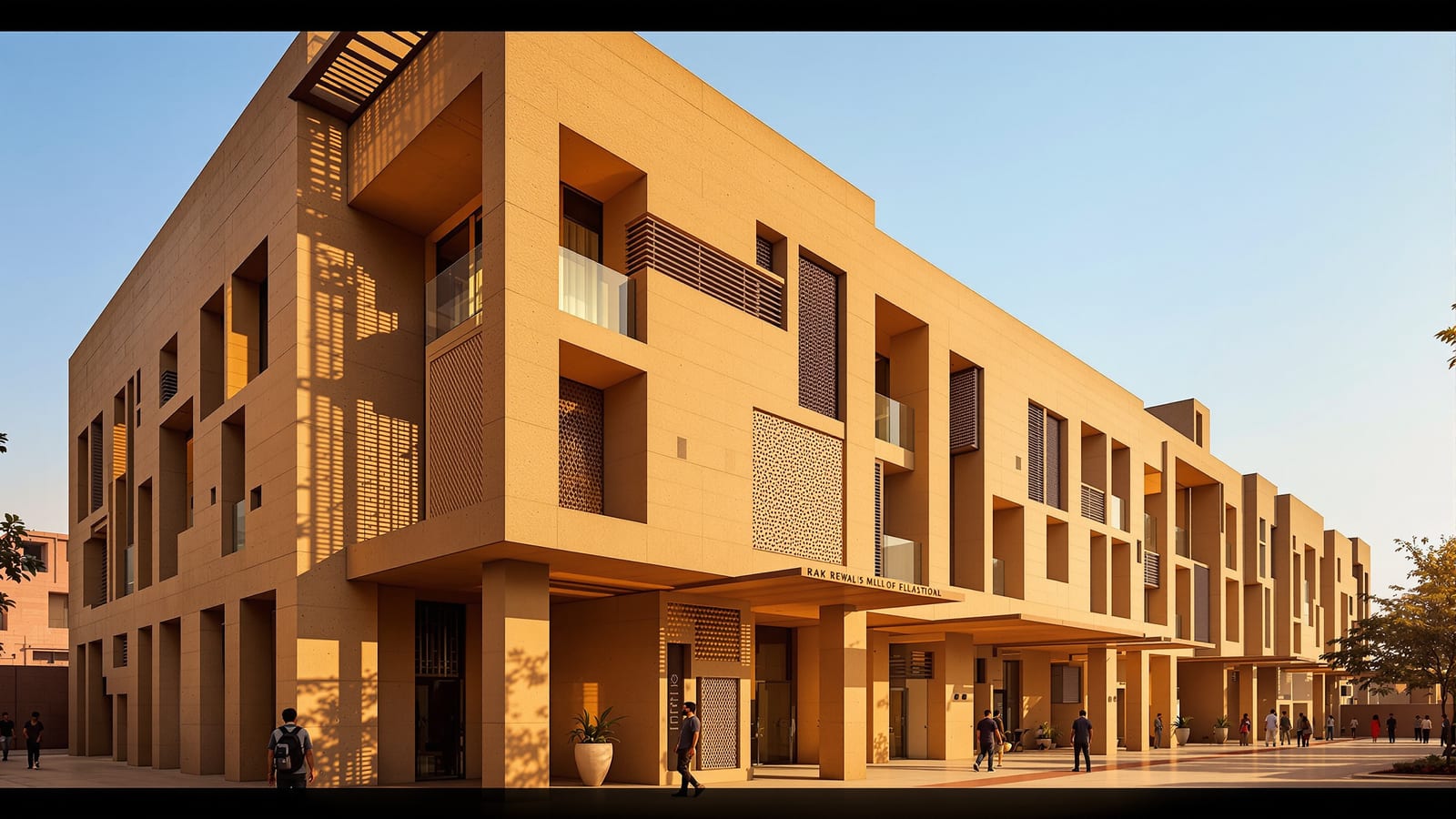
Raj Rewal's Façade Signature: Sandstone, Jaali and the Climate-Rooted Indian Wall
Raj Rewal built a modern Indian façade from buff sandstone, jaali screens, deep reveals and shaded courts — learning from Jaisalmer and Fatehpur Sikri. A climate-correct, culturally-rooted wall, and a cautionary tale in the Hall of Nations demolition.
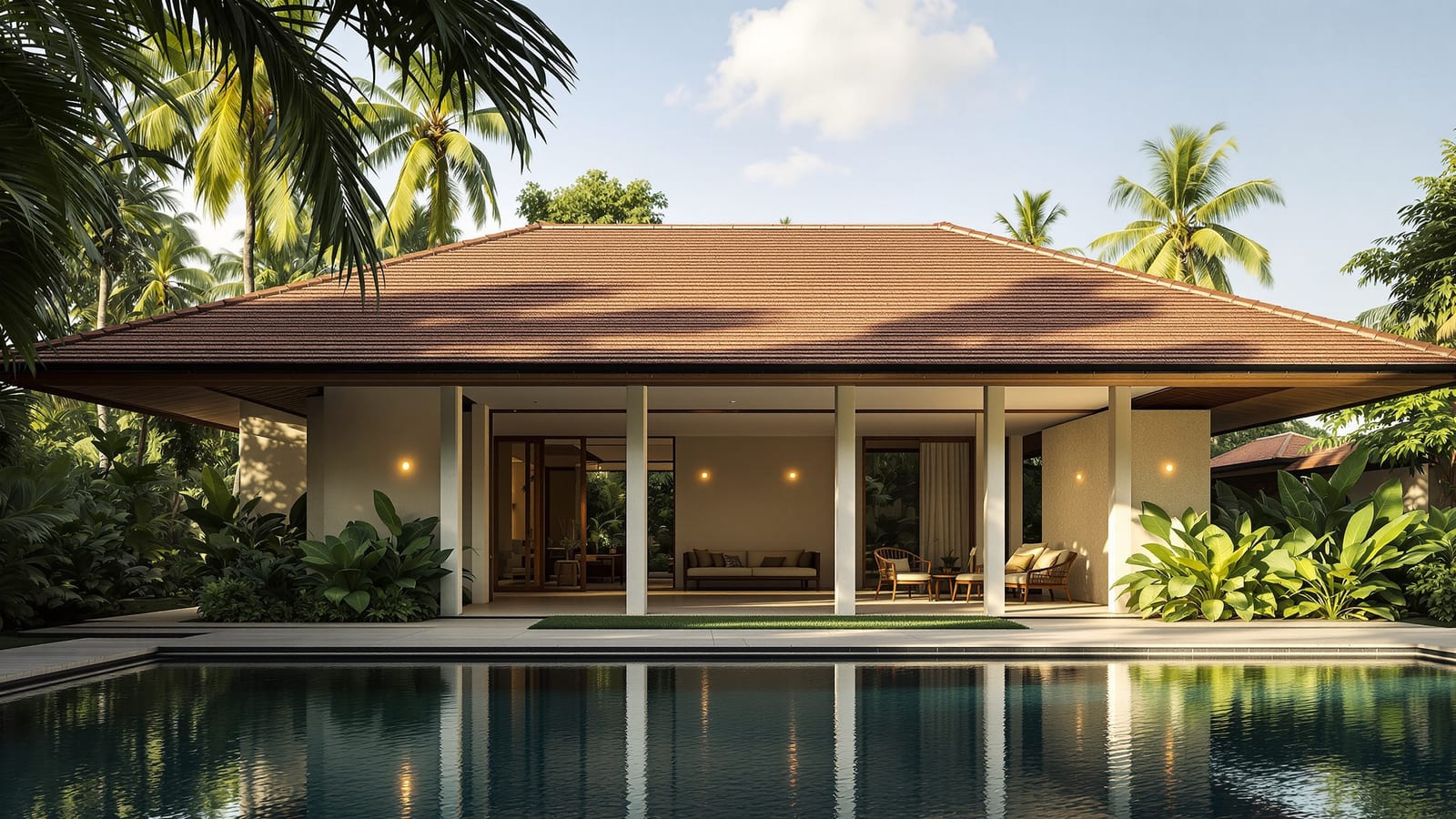 Geoffrey Bawa41
Geoffrey Bawa's Façade Signature: How Tropical Modernism Dissolves the Wall for Humid India
Geoffrey Bawa's great façade idea is to dissolve the façade itself: the building opens to its garden through verandahs, deep eaves, courts and water under a big shading roof, so it breathes — the antithesis of the AC glass box, and the right answer for humid coastal India.