
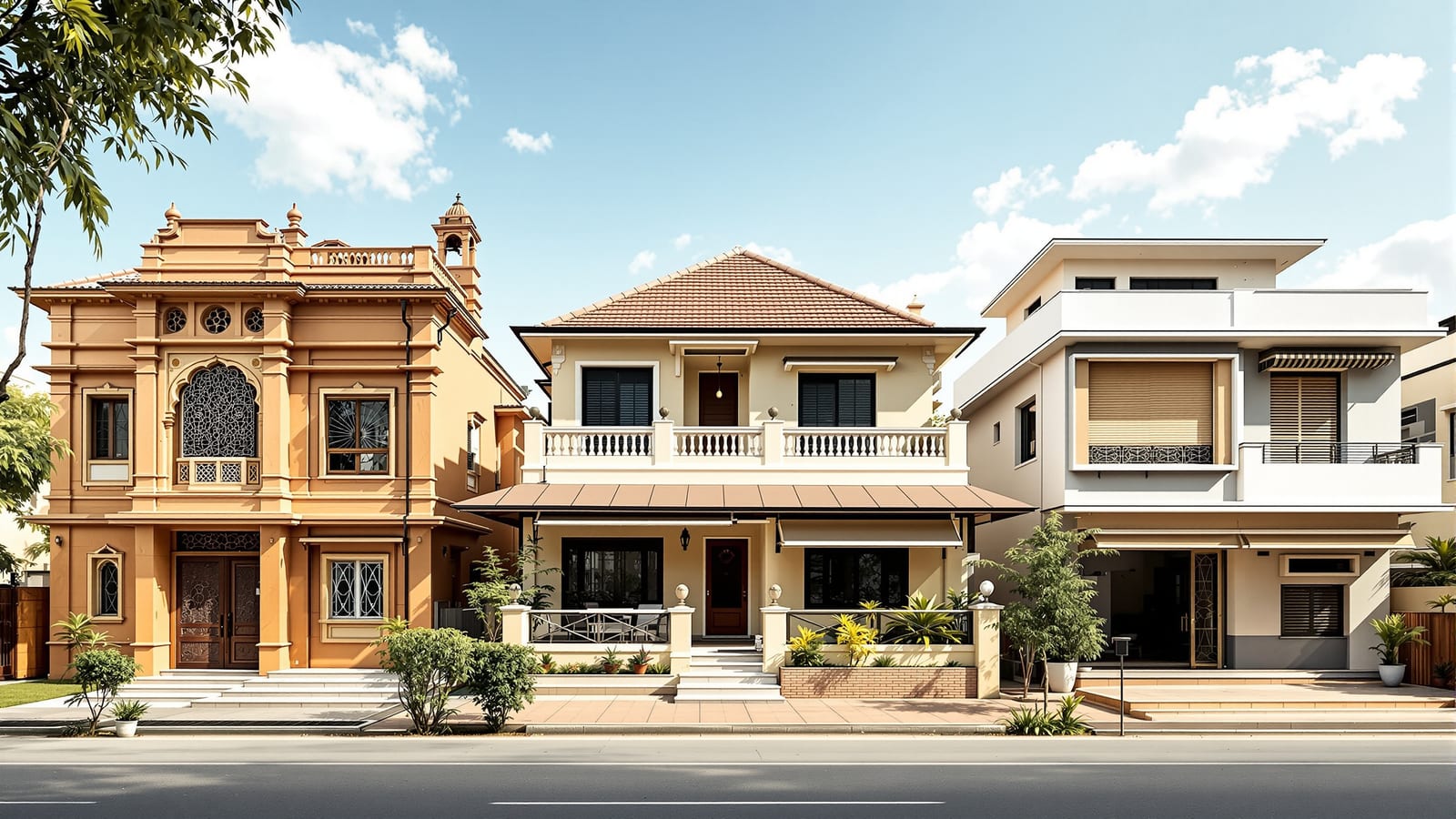
Climate-Responsive Facades for India: Designing Your Home's Skin for Your Weather
A homeowner's plain-language guide to the facade strategy for every Indian climate zone — what your walls, windows, shading, and colours should actually do where you live
There is an old, simple test you can do on any house in India. Stand inside it on the hottest afternoon of the year, switch off the air conditioner, and wait an hour. If the rooms stay bearable, the building skin is doing its job. If the walls feel like a tandoor and you reach for the AC remote in despair, the facade has failed you — and it will keep failing you, on your electricity bill, every single month, for as long as you own the place.
Your facade is your home's primary environmental shield. It is the layer that stands between you and the sun, the rain, the dust, and the wind. The single biggest mistake Indian homeowners make is treating the facade as decoration — choosing it from a photograph of a house in a different city, or even a different country, with a completely different sky. A glass-fronted villa that looks crisp in a Pune magazine becomes an oven in Jaipur. A flat-roofed, large-windowed design that suits Delhi leaks and grows mould in Kochi.
This guide is the homeowner's map to getting it right. It explains India's climate zones in plain language and gives you the facade strategy for each — what your walls, windows, shading, and colours should do where you live. It is the practical companion to our more technical facade design for Indian climates guide; read this one to know what to ask for, and that one for the engineering depth. It sits alongside our broader passive design for Indian climate zones guide, which covers the whole building, not just its skin.
1. Why the facade is your first line of defence
Think of comfort as a battle fought at the wall. Heat wants to get in. In summer, the sun beats on your walls and windows and the heat soaks through; in a cold hill town, your warmth wants to leak out. Your facade decides how much of that exchange happens, and how fast.
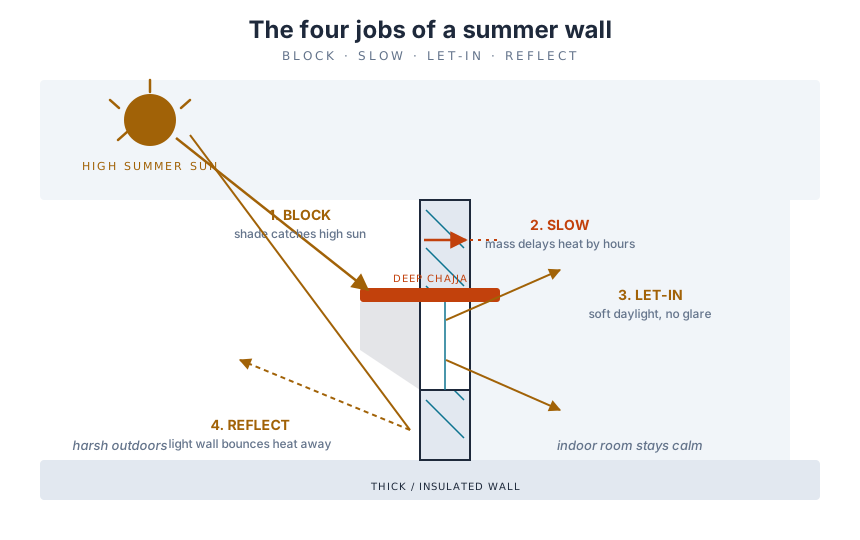
A good climate-responsive facade does four things at once. It blocks unwanted sun before it reaches your glass and walls — shading is cheaper and far more effective than tinting glass afterwards. It slows the heat that does land on the building, using heavy or insulated walls so the indoor temperature does not swing wildly with the outdoor one. It lets in the good stuff — daylight, breeze, and in cold climates the low winter sun — while keeping out glare and driving rain. And it breathes or seals as the climate demands: a humid coast needs air moving through, a cold mountain needs to be airtight.
Match these four jobs to your local weather and the house feels right with the machines switched off. That is the goal. Cooling and heating should be the backup, not the main act. A well-designed envelope cuts a home's cooling and heating demand by a large margin — the gap between a thoughtful facade and a careless one shows up as thousands of rupees a year.
2. Which climate are you actually in?
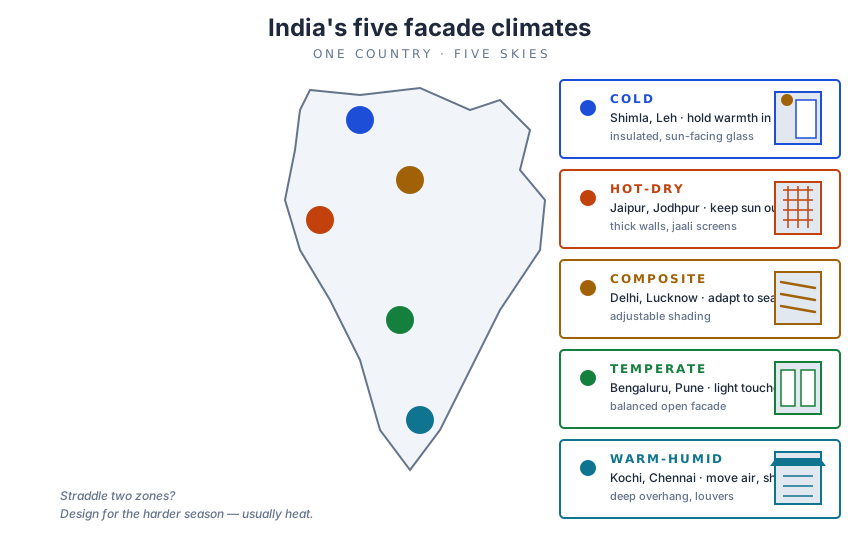
India is not one climate; it is at least five, and the right facade is the one that answers your sky and no one else's. Before you decide a single thing about walls or windows, find your zone. Most of the country falls into these five families, named the way India's building energy code (the ECBC and its residential cousin, the Eco-Niwas Samhita) names them.
| Climate zone | Where in India (examples) | The facade's main job | Core strategy |
|---|---|---|---|
| Hot and dry | Jaipur, Jodhpur, Bikaner, Ahmedabad, inland Gujarat | Keep the harsh sun and hot air out | Thick high-mass walls, small deeply shaded openings, light colours, jaali screens |
| Warm and humid | Kochi, Mangaluru, Chennai, Goa, coastal Karnataka | Get rid of heat by moving air, fight moisture | Large shaded openings, cross ventilation, deep overhangs, breathable moisture-resistant materials |
| Composite | Delhi, Lucknow, Nagpur, Bhopal | Adapt across a hot summer, humid monsoon, and cool winter | Adjustable shading, balanced glazing, mass plus the ability to open up seasonally |
| Cold | Shimla, Leh, Gangtok, Manali | Hold warmth in, capture winter sun | Compact form, insulated sealed walls, smaller openings, glazing facing the winter sun |
| Temperate / moderate | Bengaluru, Pune, parts of the Western Ghats | Stay comfortable most of the year with light touches | Balanced glazing, modest shading, good cross ventilation |
If you straddle two zones — and many places do — design for the harder season. In most of India that means designing against heat first.
3. Hot and dry: build thick, open small, shade deep
If you live in Rajasthan, inland Gujarat, or the dry interior, your enemy is the sun and the scorching daytime air. Daytime temperatures soar; nights cool down sharply. The old havelis of Jaisalmer and Jodhpur solved this centuries ago, and their logic still holds.
Build heavy. Thick masonry walls — traditionally stone or thick brick — soak up heat slowly through the day and release it at night, so your rooms lag behind the brutal afternoon peak. Architects call this thermal mass, and in a hot-dry climate it is your best friend. A thin, lightweight wall in Bikaner heats up almost instantly; a thick one buys you hours.
Open small, and always shade what you open. Big unshaded windows are heat funnels here. Keep openings modest and protect every one of them with a deep chajja (the projecting concrete or stone ledge above a window), fins, or a jaali. The carved stone jaali is the region's masterpiece: it cuts the glare and direct sun while letting a filtered breeze and soft light through, and it gives privacy as a bonus. The Sangath studio and many Ahmedabad homes show how thick walls and shaded openings keep interiors calm without much machinery.
Go light in colour. Pale, reflective external walls bounce away solar heat instead of absorbing it — which is exactly why so many desert towns are painted white and cream. A dark facade in Jaipur is a self-inflicted wound.
Homeowner takeaway: prioritise wall mass and shade over big glass. Spend on a good jaali or deep chajja before you spend on a fancy glass front.
4. Warm and humid: open up, shade hard, let air move
On the Kerala and Karnataka coast, in Goa, Chennai, and Mumbai, the problem flips. It is not just hot — it is sticky. The air is heavy with moisture, the difference between day and night is small, and the monsoon arrives like a wall of water. Here, thick heat-storing walls work against you: they trap warmth you cannot shed. What you need instead is air movement and serious rain protection.
Open wide, but shade everything. Large openings on opposite walls let breeze pass right through a room — cross ventilation, the single most powerful comfort tool on a humid coast. The traditional Kerala home, with its wide verandahs and louvered shutters, is a masterclass: it opens generously to the breeze while the deep sloping roof and overhang keep both sun and slanting rain off the walls.
Build deep overhangs. In the monsoon belt, a shallow chajja is useless. You want generous projecting roofs and eaves that throw rain clear of the walls and windows. This is why the classic sloping tiled roof never went out of fashion in Kerala.
Choose breathable, moisture-tough materials. Damp is the long-term killer here — mould, peeling paint, corroded steel. Favour finishes that let walls dry out and resist water, and detail the joints so rain cannot creep in. Light colours help too, against both heat and visible mildew.
Homeowner takeaway: spend on ventilation, overhangs, and waterproofing detailing. A breezy, well-shaded, well-drained house beats a sealed glass box on this coast every time.
5. Composite and temperate: design for change
Much of India's heartland — Delhi, Lucknow, Nagpur, Bhopal — has a composite climate: a fierce dry summer, a humid monsoon, and a genuinely cold winter, all in one year. There is no single right answer, so the facade has to be adaptable.
The trick is to combine the best of two worlds. Keep enough wall mass and shading to survive the summer, but make the facade able to open up for the monsoon breeze and to welcome the gentle winter sun. Adjustable shading earns its keep here — operable louvers, deep verandahs you can open or screen, or planting that gives summer shade and lets winter light through after the leaves fall. South-facing windows can be shaded by a correctly sized horizontal chajja that blocks the high summer sun but allows the lower winter sun to slip underneath and warm the room.
The Pearl Academy of Fashion in Jaipur is a celebrated composite-and-hot-dry example: an outer jaali skin and a sunken water court keep the building cool in summer, while the design still lets the building work across seasons. At a homeowner scale, the same thinking means a facade that you can adjust rather than one fixed setting fighting the whole year.
Temperate climates like Bengaluru and Pune are the gentlest hand India deals. The weather is comfortable for much of the year, so you do not need heavy mass or extreme measures. Balanced glazing, modest shading on the sun-facing sides, and good cross ventilation are usually enough. The CII-Sohrabji Godrej Green Business Centre in Hyderabad and many Bengaluru green buildings show how light shading and daylight-friendly facades suit a moderate climate without over-engineering.
6. Cold climates: stay compact, seal tight, catch the sun
In Shimla, Manali, Leh, and Gangtok the logic inverts again. Now you are trying to keep warmth in. The traditional homes of the Himalaya are instructive: compact shapes that minimise the surface losing heat, small windows on the cold sides, and thick or insulated walls.
Stay compact and insulated. A sprawling house has more wall area to bleed heat; a compact one holds warmth better. Insulation in the walls and roof — and double glazing — is not a luxury here, it is the difference between a cosy home and a freezing one.
Catch the winter sun. Put your largest windows on the sun-facing side (the south, in India) so the low winter sun pours in and warms the rooms during the day — free heating. The traditional Ladakhi Trombe wall, a sun-facing wall that stores daytime heat and releases it at night, is a beautiful local version of this idea.
Seal against cold wind. Draughts steal warmth. Tight joints, fewer openings on the windward side, and a sheltered entrance all help. Darker walls are acceptable here, since absorbing solar heat is now a benefit, not a curse.
Homeowner takeaway: spend on insulation and good windows, keep the form compact, and aim your glass at the winter sun.
7. Orientation: why each side of your house needs a different facade
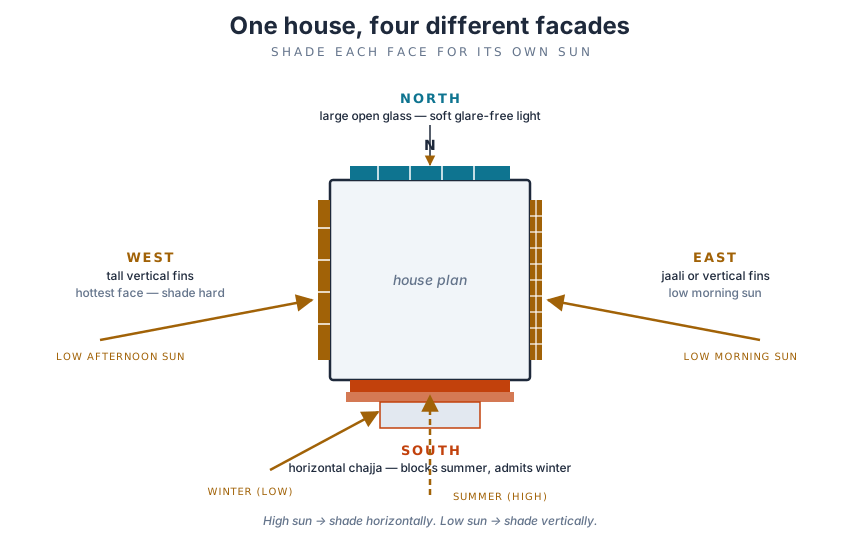
Here is a fact that surprises most homeowners: the four faces of your house meet completely different suns, so they should not be treated identically. Getting orientation right is free — it costs nothing but thought at the planning stage — and it is one of the highest-value decisions you will make.
In India, broadly:
- South gets sun for much of the day, high in summer and low in winter. A horizontal shade — a chajja or overhang — sized correctly will block the high summer sun while letting the welcome low winter sun in. This is the easiest side to control.
- North gets soft, even, glare-free light and almost no direct summer sun. It is the friendliest side for large windows and is a great place for living rooms and study spaces.
- East and West are the troublemakers. The morning (east) and especially the harsh afternoon (west) sun comes in low and almost horizontal, sliding straight under any horizontal chajja. Horizontal shades barely help here; you need vertical fins, louvers, jaali screens, or deep recesses to block low-angle sun. The west wall is the hottest surface on most Indian homes — shade it hard, keep its windows small, and put your less-used rooms (stores, stairs, toilets) against it as a buffer.
8. The toolkit: shading, glazing, colour, and mass
You now know the strategy. Here are the actual tools, in plain language, and how to size them.
Shading devices — match the device to the orientation. A horizontal chajja or overhang works for the south, where the sun is high. Vertical fins and jaali screens work for the east and west, where the sun is low. Adjustable louvers suit composite climates where you want to change with the seasons. A pergola with creepers gives soft, seasonal shade over terraces and courtyards. The rule of thumb: high sun, shade horizontally; low sun, shade vertically.
Glazing ratio (WWR). Window-to-Wall Ratio is simply how much of a wall is glass versus solid. More glass means more daylight and view — but also more heat in and out, and more cost. In hot zones, keep the ratio modest, especially on the east and west. India's residential energy code, the Eco-Niwas Samhita, actively limits how much heat your windows can let in for exactly this reason. The honest homeowner question is not "how much glass can I afford?" but "how much glass can I shade and cool comfortably?"
Colour. In hot climates, light and reflective walls and roofs stay cooler — a striking difference on a sunny day. In cold climates, darker walls help absorb warmth. Cool-roof coatings on a terrace are one of the cheapest comfort upgrades available in hot India.
Thermal mass. Heavy walls (thick masonry, stone) smooth out temperature swings — excellent in hot-dry and composite climates where nights cool down, less useful on a humid coast where nights stay warm and you would rather move air than store heat.
For the full menu of facade materials and systems behind these choices, see our types of building facades overview, and the series foundation, why building facades matter.
What this means for you
If you remember nothing else, remember this: copy the climate, not the photograph. The most beautiful facade from another city can be the worst possible choice for yours.
A short checklist before you finalise any elevation:
1. Name your climate zone — hot-dry, warm-humid, composite, cold, or temperate — and design for the harder season.
2. Shade before you glaze. Decide your overhangs, fins, and jaali first; size them to each orientation. South wants horizontal shades, east and west want vertical ones.
3. Treat each face differently. Big windows to the north, controlled glass to the south, small and well-shaded openings to the hot west.
4. Match mass and colour to climate. Heavy light-coloured walls for hot-dry, breezy shaded openings for humid coasts, insulation and winter-sun glass for cold.
5. Keep glass honest. Only put in as much window as you can shade and cool comfortably.
6. Borrow from the locals. The havelis, the Kerala homes, the hill houses near you already solved this — their logic is free to copy.
Do this and your home will be cooler, drier, quieter, and cheaper to run — without fighting your own walls every month. When you are ready for the engineering detail behind these decisions, our facade design for Indian climates guide takes it further.
Sources
- Bureau of Energy Efficiency, Energy Conservation Building Code (ECBC) and Eco-Niwas Samhita (Residential), climate-zone definitions and envelope/window heat-gain guidance.
- National Building Code of India (Bureau of Indian Standards), orientation, ventilation and solar-control principles.
- Traditional Indian climate-responsive architecture: the havelis of Jaisalmer and Jodhpur (hot-dry); traditional Kerala homes with verandahs and sloping roofs (warm-humid); Himalayan and Ladakhi homes including the Trombe wall (cold).
- Pearl Academy of Fashion, Jaipur (Morphogenesis) — jaali skin and water court for hot-dry/composite cooling.
- CII-Sohrabji Godrej Green Business Centre, Hyderabad — daylight and shading strategy for a temperate/composite setting.
- B. V. Doshi, Sangath studio, Ahmedabad — mass and shading in a hot-dry climate.
Export this guide
Related Guides — Deep-dive reading
Designing a Naturally Energy-Efficient Indian Home
Comfort first, gadgets last — passive design, orientation, insulation, ventilation and the climate wisdom that cuts Indian energy bills
SustainabilityEnergy-Efficient Facades in India: How the Building Skin Cuts Your Cooling, Heating & Lighting Bills
How a building facade drives cooling, heating and lighting energy in India, the three levers of solar-heat-gain control, insulation and daylighting, U-value, SHGC, VLT and WWR in plain terms, ECBC and Eco-Niwas expectations, and real Indian green buildings.
Building FacadesWest-Facing Window Design (India): Taming the Harsh Afternoon Sun
Why the west wall is the hardest orientation to glaze, and how to minimise, shade and layer the defences against the low afternoon sun.
Windows & GlazingRelated Tools — Try Free
Brise-Soleil Visualizer
Interactive horizontal-louvre cut-off angle calculator — sun altitude, louvre depth, and spacing inputs with a live shadow preview. Computes θ = arctan(spacing/depth) for façade shading, ECBC envelope compliance, hospital daylight design, and tropical sun-control detailing.
Sun Shading ToolCross-Ventilation Analyzer
Estimate airflow and air changes per hour (ACH) from room size, window areas, layout, and local wind — with NBC 2016 Part 8 compliance check.
Ventilation CalculatorWindow Orientation Planner
Pick the best window type, glass and shading by wall direction — north, east, south and west.
Window Tool