
Sustainability & Green BuildingsHomeowner literacy
Sustainable Homes, in Plain Language
Not solar panels bolted onto a sealed box — real sustainability begins with design that works with India's climate, and pays you back in lower bills and a healthier home. This is the 16-guide strategy library: what makes a building sustainable, how to design for energy, water, materials and carbon, why it costs less over time, and how a home can even give back to its surroundings.
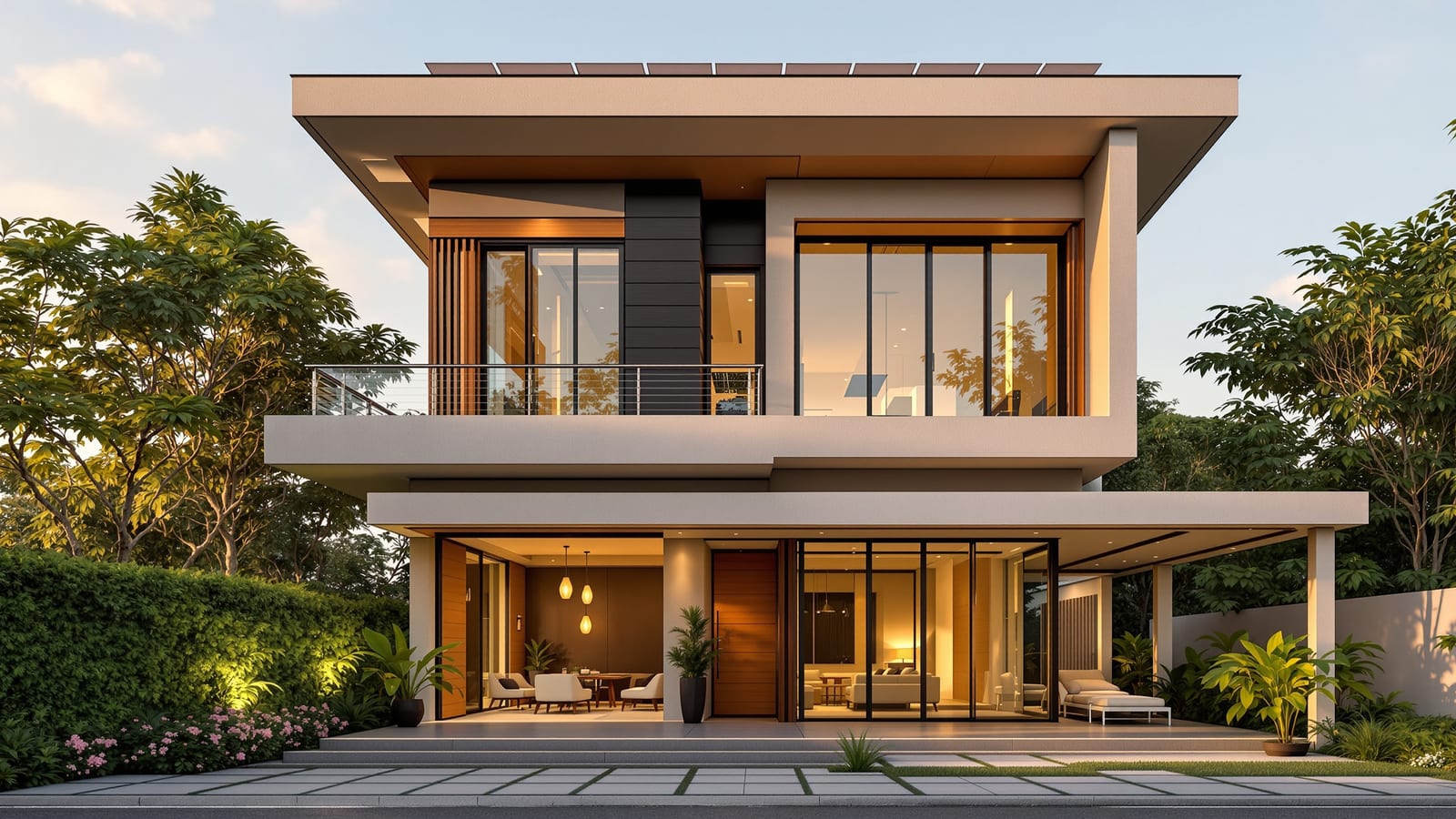
What Makes a Building Sustainable? A Plain-Language Guide for Indian Homeowners
A sustainable building is not a bolt-on gadget. It is early design decisions about shade, orientation, water, materials and durability that keep an Indian home comfortable, cheap to run and long-lasting. Here are the six dimensions and a homeowner scorecard.
Read itDesign with the climate
Passive-first, before the kit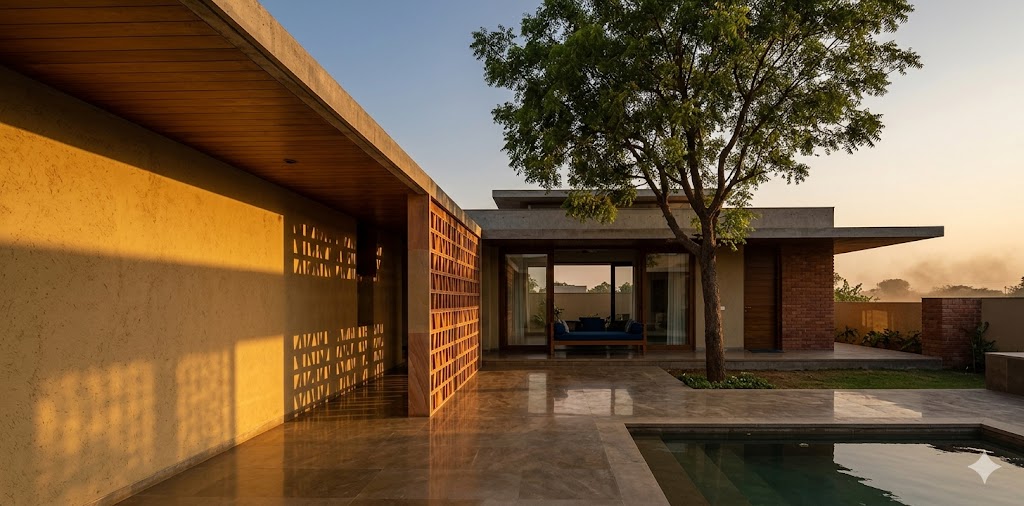 Passive Design01
Passive Design Strategies for Indian Climate Zones
Climate-zone-by-zone passive design reference for Indian architects — NBC 2016's five climate zones, sun-path and shading-mask logic by latitude, ECBC 2017 wall and roof U-value targets, EPI benchmarks per typology, and a strategy toolkit tuned to each zone.
 Climate-Responsive02
How to Design for the Indian Climate
A rigorous climate-responsive guide to design for the Indian climate — NBC 2016 / ECBC 2017 five zones, IMAC adaptive comfort, passive strategies by zone, thermal-mass vs lightweight systems, orientation, roofs, walls, openings, courtyards and when hybrid systems make sense, with tables and references.
 Courtyards03
Courtyard Homes in India — Climate-Responsive Design
A rigorous treatment of courtyard homes in India as a climate-responsive device — stack ventilation physics, daylight penetration, aspect-ratio geometry by zone, field-study performance data, light-well vs true courtyard, contemporary practice from Correa to Studio Mumbai and a fifteen-point specification checklist.
Energy & water
Run on less Energy04
Designing a Naturally Energy-Efficient Indian Home
The cheapest unit of energy is the one your home never needs. This pillar guide shows Indian homeowners how to build an energy efficient home naturally — west-sun orientation, climate-zone strategy, cool roofs, thermal mass, cross-ventilation, BEE-star fixtures, and solar after demand is minimised.
 Solar05
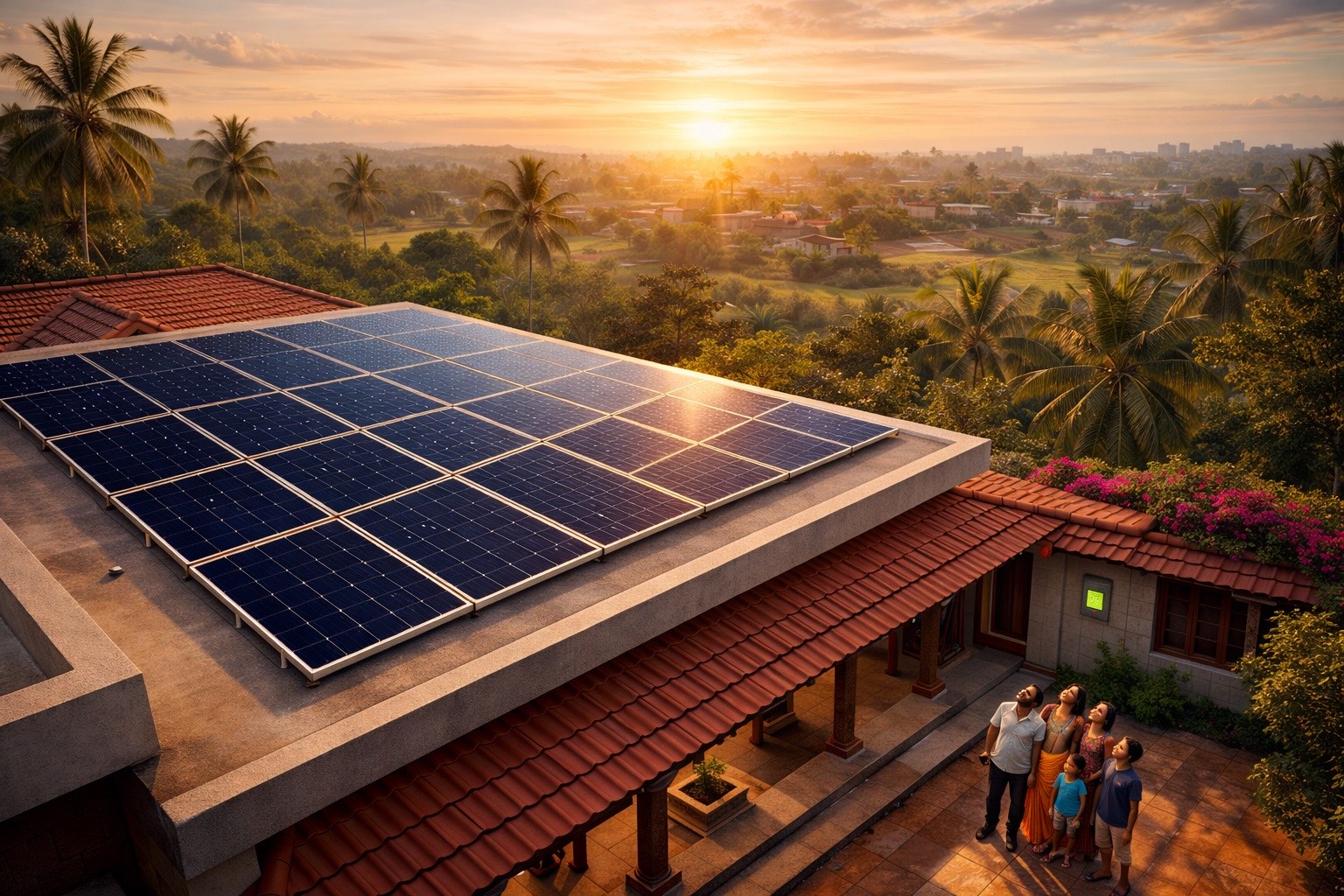
Solar Power for Homes
An in-depth analysis of solar power for homes in India — covering ROI, payback periods, net metering, architectural integration, BIPV, PM Surya Ghar subsidies and global lessons. A practical guide for homeowners, architects and policymakers weighing rooftop solar.
 Net-Zero06
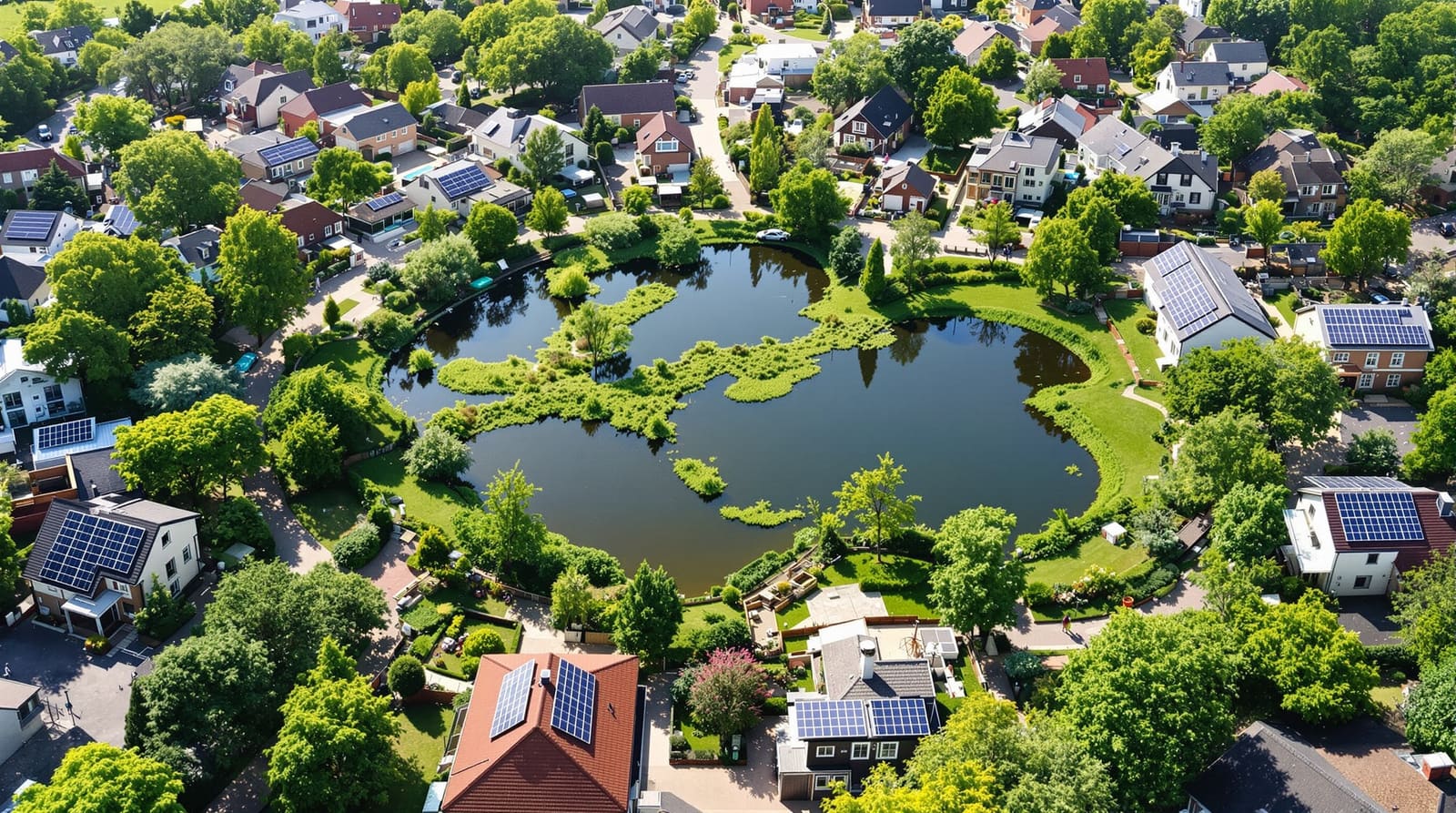
Net-Zero Residential Communities
Net-zero at the community scale, honestly explained — the four net-zeros (energy, water, waste, carbon) and why community scale unlocks what a single home can't, the demand-first principle, shared generation and microgrids, and the honest annual accounting that the monsoon tests.
 Water07
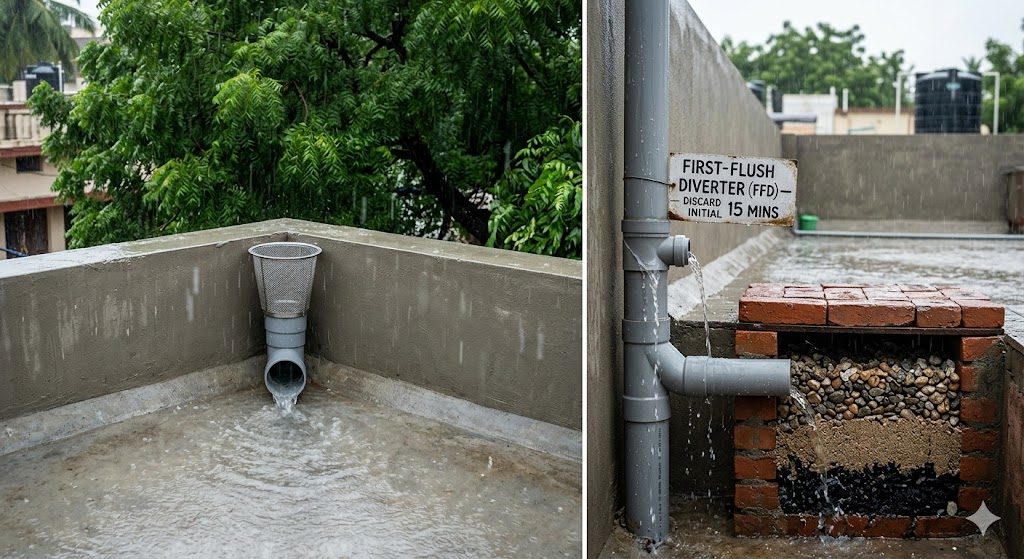
Rainwater Harvesting for Indian Urban Homes
Complete guide to rainwater harvesting in India for urban homes — city-wise regulations, system design, tank sizing, cost analysis with ROI, maintenance schedules and government incentives, backed by rainfall data, system diagrams and cost tables to plan your own RWH setup.
Materials & carbon
What the building is made of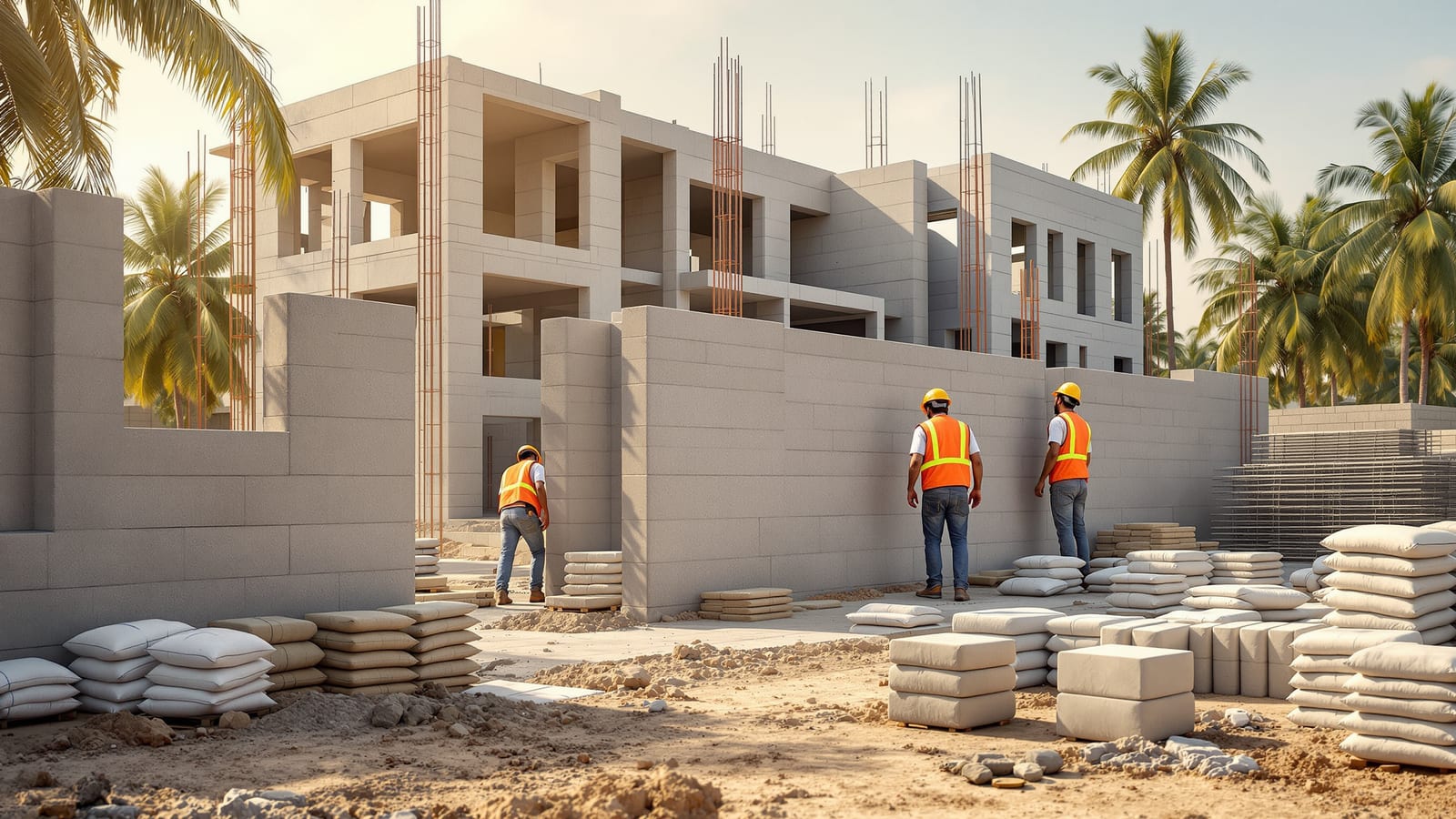 Embodied Carbon08
Embodied Carbon in Construction: Cutting the Carbon Locked Into Your Indian Home
Embodied carbon is the CO2 to make and move your building materials, paid once at construction. Cement, steel and brick dominate it in Indian homes. Learn the lower-carbon swaps, the build-less rule, and what India's codes and ratings say.
 Circular Economy09
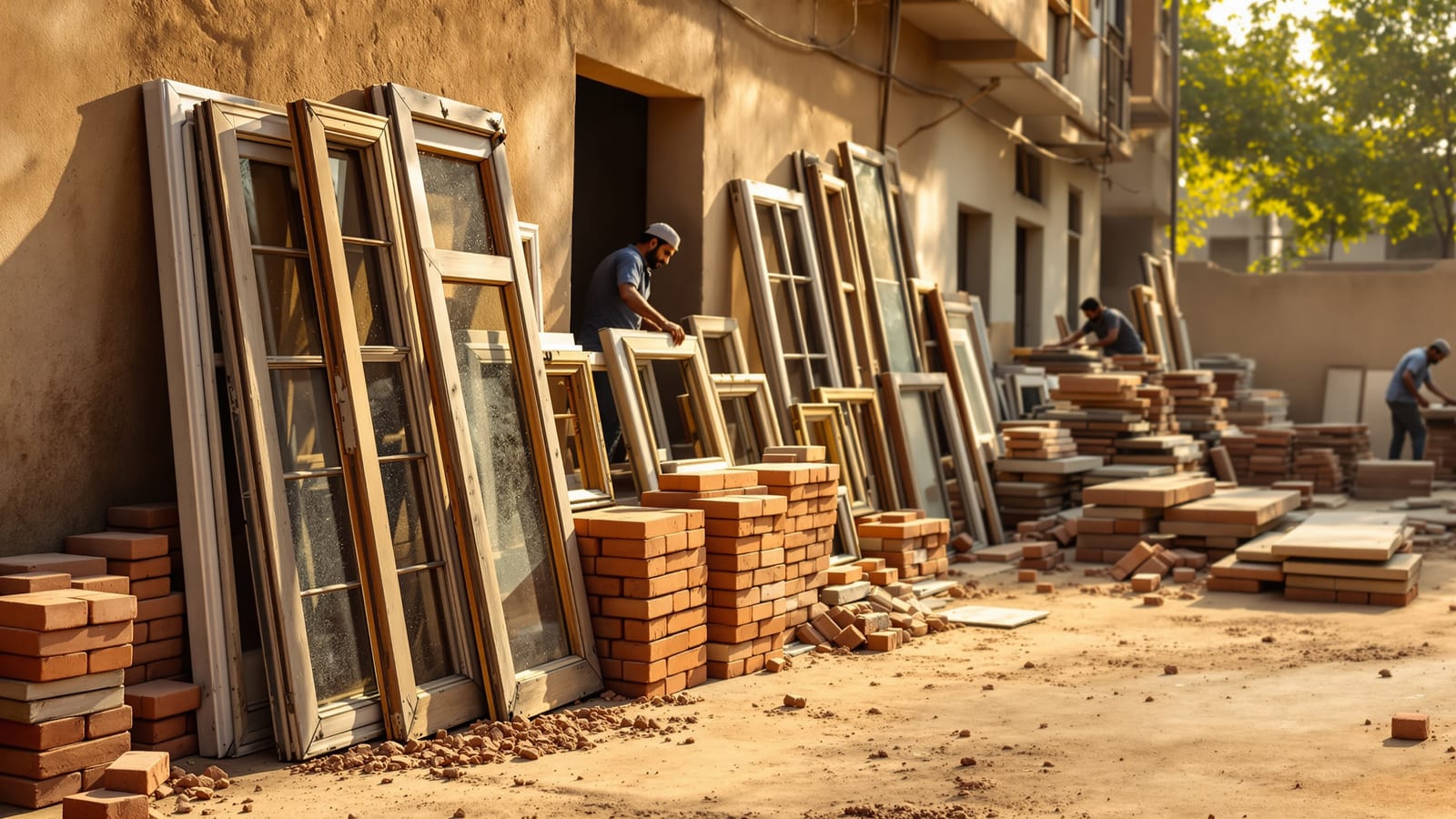
Circular Economy in Construction: A Homeowner's Guide to Building Without Waste in India
Construction is one of India's biggest waste and resource problems. This plain-language guide shows homeowners and small builders how a circular approach, reduce, reuse, recycle and regenerate, keeps materials in use and eases pressure on rivers and dumps.
 Future Materials10
The Future of Green Building Materials in India
A grounded homeowner's tour of the low-carbon, healthier materials reshaping Indian homes — from blended cements, fly-ash bricks and AAC to LC3, CSEB, rammed earth, mass timber, hempcrete and cool roofs — with honest maturity and cost caveats.
 Interiors11
Sustainable Interiors India — A 2026 Working Reference for Eco-Conscious Indian Homes
Sustainability in Indian interiors is mis-framed as luxury — 70% of high-impact moves cost LESS than conventional. This reference covers six dimensions, a 12-category material swap with embodied-carbon savings, room-by-room application, a cost-vs-impact matrix, Indian certifications, three budget tiers and ten greenwashing pitfalls.
Value & giving back
Cost, certification, community & ecology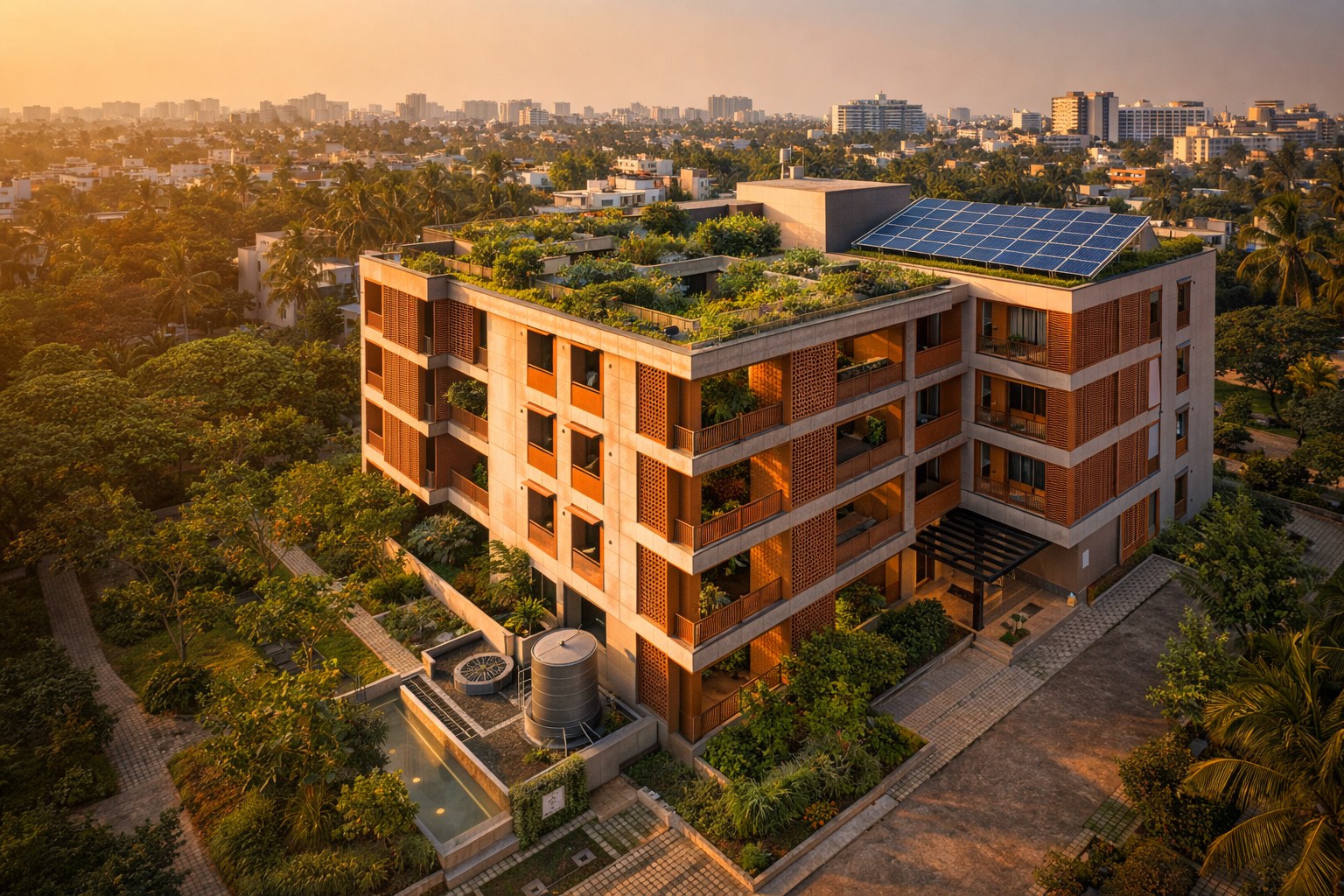 Certifications12
Green Building Certifications in India
A comprehensive comparison of India's three major green building certifications — IGBC, GRIHA and LEED. Covers credit categories, rating levels, costs, timelines, energy and water savings, state incentives and practical guidance for choosing the right certification for your project.
 Cost13
Why Sustainable Buildings Cost Less Over Time
The cheapest house to buy is rarely the cheapest to own. See where sustainable Indian homes save money over 20 to 30 years, the truth about the green premium, honest payback ranges, and how to budget for it.
 Neighbourhoods14
Sustainable Neighborhood Design
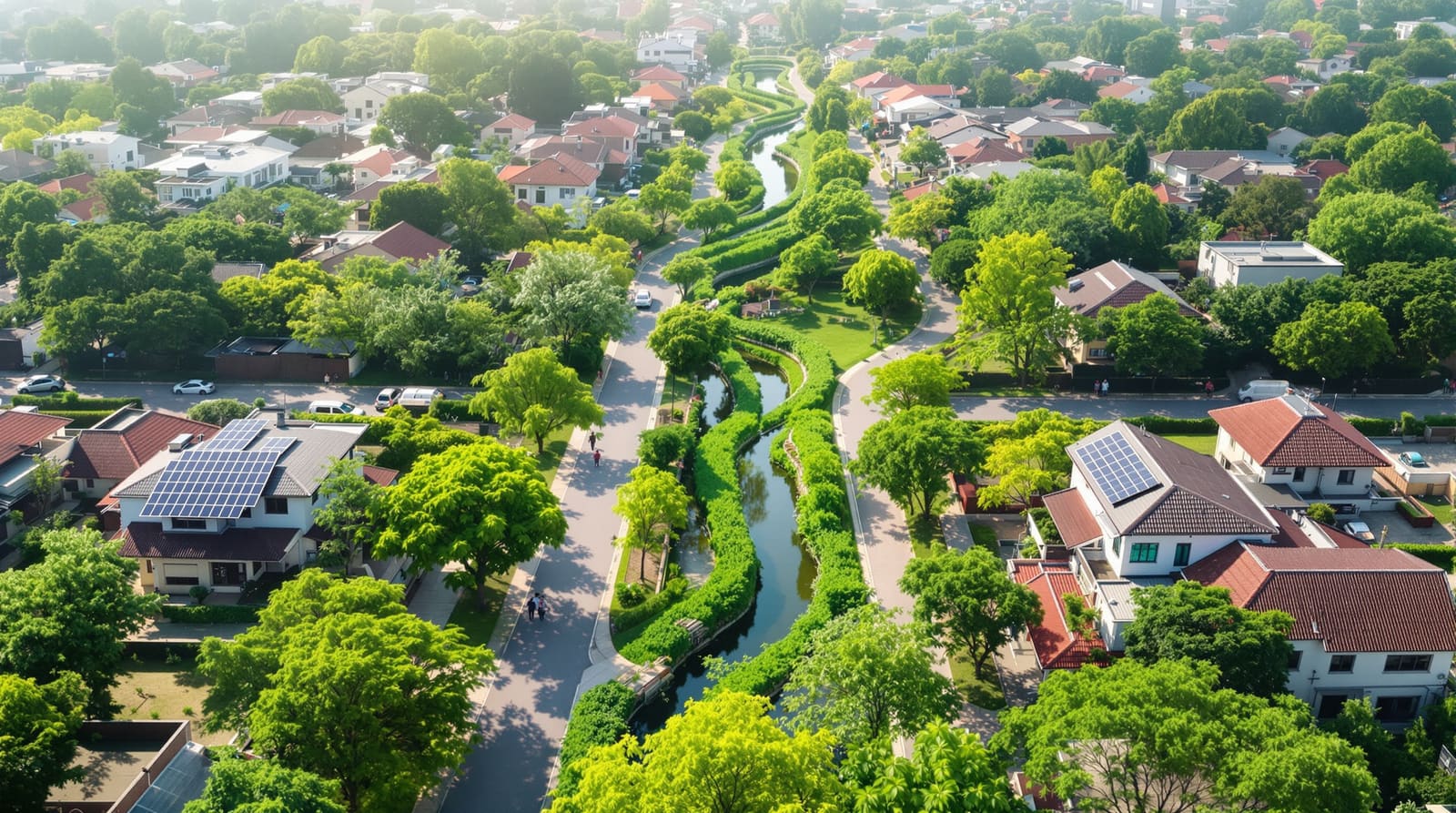
Sustainability at the neighbourhood scale — the shared energy, water, waste, mobility and ecology systems a single green home cannot achieve. The dimensions of a sustainable neighbourhood, the IGBC Green Townships and LEED-ND frameworks, and why social sustainability matters as much as green tech.
 Biodiversity15
How Buildings Can Give Back: Biodiversity and Environmental Health
Most green homes aim to take less. This guide shows how an Indian home can go further and give back, recharging groundwater, cooling its street, feeding pollinators, sheltering birds and closing waste loops, so one plot adds to a healthier neighbourhood.
Go deeper — and the rules behind it
Sustainability is the direction; regulations are the guardrails. For what is actually mandated, see the Building Regulations & Compliance library, and check your project against the India Regulatory Atlas.