Jean Nouvel's Façade Signature: The Modern Mashrabiya, Light Screens and the Dissolving Skin
How the Pritzker-winning architect built an entire practice on the building's skin — light-filtering screens, kinetic apertures and dematerialised glass — and what his brilliant, fragile experiments teach a hot, sunny, dusty India.
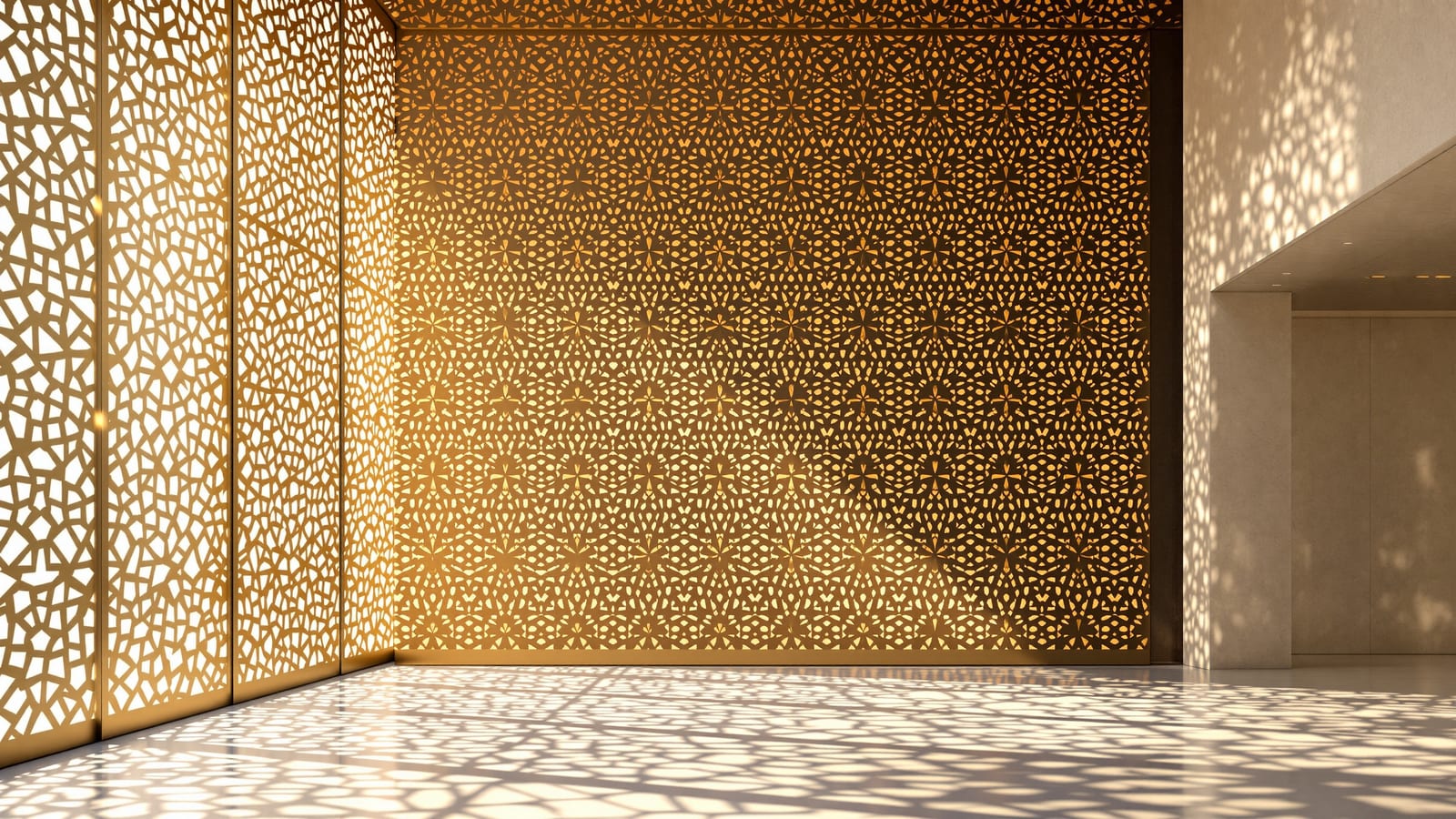
Most architects design buildings and then wrap them in a skin. Jean Nouvel does the opposite. For him the skin is the building — the screen, the veil, the filter through which light enters and the eye reads the architecture. Strip away the famous interiors and the structural gymnastics, and what remains is an obsession with one surface: the façade, treated as a membrane that can breathe, dim, glow, pattern and dissolve.
This is not a minor stylistic tic. It is the whole worldview of a man who won the Pritzker Prize in 2008 with a citation that explicitly refused to grant him a "style" — because, the jury wrote, for Nouvel there is no style a priori; a context (culture, location, programme, light) provokes a different strategy each time. And yet across forty years of deliberately dissimilar buildings, one thread holds: the façade does the talking. It is where he fuses culture, climate and technology into a single perforated, layered, light-filtering plane.
For an Indian reader this is not foreign at all. Nouvel's signature move — a screen that filters harsh sun into soft, patterned, dappled light — is something India invented a thousand years ago and called the jaali. His most celebrated façades are, in essence, high-tech jaalis. That makes him one of the most instructive — and most cautionary — architects we can study.
This is part of our Building Façades series — specifically our Masters of the Façade set, which profiles how individual architects treated the building's skin as the main event. It pairs naturally with our guides on the jaali and traditional Indian façades (the lineage Nouvel modernised), on smart, kinetic and parametric façades (where the Institut du Monde Arabe is the canonical example), and on brise-soleil and louvre façades (the sun-shading family his double skins belong to).
1. The façade as a filter, not a wall
Begin with the core idea. A wall keeps things out. A screen — Nouvel's preferred element — filters. It lets light, air and view pass while editing them: cutting glare to a dappled, filtered light, turning a flat sheet of sun into a moving lacework of bright spots and shade. The technical name for the traditional version is the mashrabiya (the Arab carved-wood lattice projecting from a window) and its Indian cousin the jaali (a perforated stone or masonry screen). Both do the same job: privacy and cool, shaded, indirect light in a hot climate.
Nouvel's entire practice is a series of variations on this one device. Sometimes the screen is mechanical and moves. Sometimes it is a fixed geometric dome. Sometimes it is glass so layered and reflective that the building seems to disappear into its own reflections. But it is always a veil between you and the raw outside — and almost always tuned to light, which he treats as the true material of architecture.
2. The responsive mashrabiya: Institut du Monde Arabe
The building that made Nouvel famous, and the purest statement of his idea, is the Institut du Monde Arabe (Arab World Institute) in Paris, completed in 1987. Its south façade is the technical heart of his whole career — and its cautionary tale.
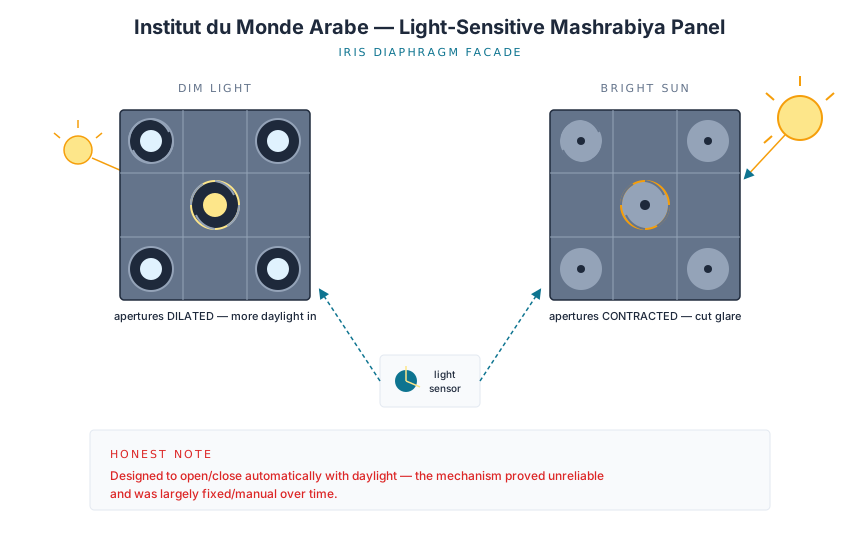
The concept was breathtaking. Nouvel took the mashrabiya — the carved Arab screen — and rebuilt it in high-tech. The south wall is a grid of roughly 240 metal panels, each one a flat field of geometric openings whose centres are diaphragms: mechanical irises exactly like the aperture in a camera lens, made of overlapping metal leaves that can shrink or widen the hole. The panels were photo-sensitive (light-responsive): light sensors would read the brightness outside, and motors would drive every diaphragm open in dull weather to let daylight in, or closed in bright sun to cut glare and protect the interior. The façade would, in effect, blink and breathe with the Parisian sky — an Arab screen motif rendered as a living machine. Across the whole wall this added up to tens of thousands of moving metal leaves. As an idea it is one of the most important façades of the twentieth century: it fused culture (the mashrabiya geometry), climate (automatic solar control) and technology (sensors and motors) into a single plane.
Now the honest part. The mechanism never worked the way the renders promised. The thousands of small motors and articulated arms were finicky; sensors drifted; the moving parts wore and jammed. Within a few years many diaphragms had stopped responding, and the maintenance burden of keeping tens of thousands of tiny mechanisms calibrated proved punishing and expensive. Over time the apertures were largely fixed — set to a position and managed manually rather than dancing automatically with the light. The poetry survives; the choreography mostly does not.
The lesson is not that the idea was wrong. The idea — a culturally-rooted screen that controls sun on the façade — is exactly right. The lesson is that a brilliant concept can be defeated by a fragile execution. The more moving parts a façade has, the more there is to fail, and the more it costs forever. Hold that thought; for India it is the single most important takeaway of this whole guide.
3. The fixed screen reborn: Louvre Abu Dhabi's rain of light
Three decades later, Nouvel returned to the same idea — but this time he removed the machinery. The Louvre Abu Dhabi (2017) is his masterpiece of filtered light, and it works precisely because nothing moves.
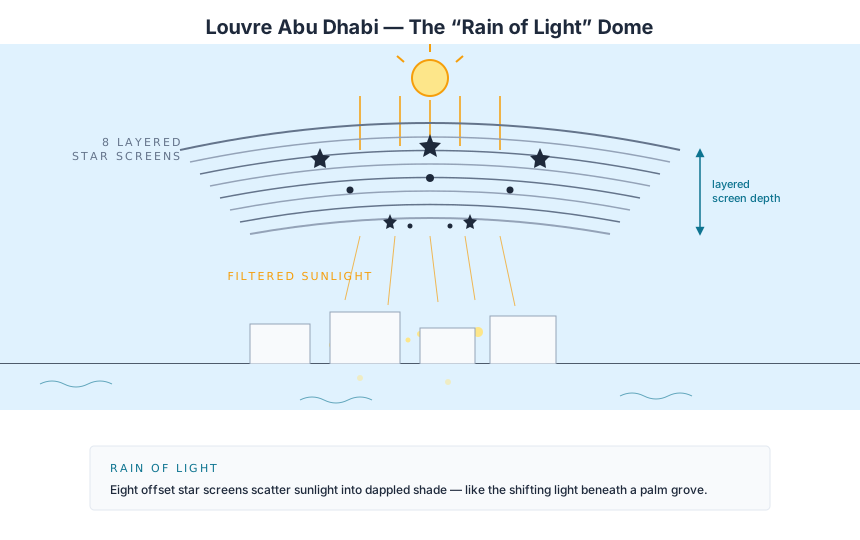
A vast shallow dome, 180 metres in diameter, floats like a parasol over a cluster of white museum buildings and water channels. The dome is not solid: it is built from eight stacked layers of a geometric star pattern (four outer layers of stainless steel, four inner layers of aluminium), each layer at a different scale and angle. Sunlight has to pass through all eight perforated screens to reach the spaces below. By the time it does, it has been broken into thousands of tiny shifting spots of light — an effect Nouvel called the "rain of light." He described the experience as standing under the dappled shade of a palm grove or a leafy tree on a sunny day.
This is a jaali — an enormous one. Same principle as the perforated stone screen of a Rajasthan haveli, scaled up to 180 metres and engineered as a giant static sieve. And crucially, it solves the Institut du Monde Arabe's problem by not being kinetic. The dome does not chase the sun with motors; it simply layers fixed geometry so that the changing angle of the sun itself moves the pattern of light across the floor through the day. The building gets all the magic of a responsive façade with none of the mechanical fragility — because the only moving part is the sun. For a Gulf climate — fierce sun, heat, dust — that is the right answer, and the Gulf climate is very close to much of India's.
4. Dematerialisation: dissolving the building
Not every Nouvel screen is about sun. At the Fondation Cartier in Paris (1994) the screen turns to glass, and the goal flips from filtering light to dematerialisation — making the building hard to see at all.
The Fondation is essentially a set of huge glazed planes. Nouvel pushed sheets of glass beyond the edges of the actual building — free-standing glass screens that frame the famous old cedar tree in the courtyard and reach up past the roofline. The result is deliberate confusion: you cannot tell where the building stops and the sky begins, because the glass reflects clouds, trees and the boulevard while also being transparent. A tree appears to be both inside and outside. The solid volume of the building dissolves into layers of reflection and transparency. This is the façade as a disappearing act — the opposite of a heavy wall, a skin so light it denies you a clear reading of the object behind it.
5. Colour, pattern and the media skin
Nouvel also treats the façade as a canvas for colour, printed pattern and light. The Torre Agbar in Barcelona (2005) — the bullet-shaped tower he described as a geyser bursting from the ground — is the showcase.
Its skin is a double skin with three jobs stacked together. The inner wall is clad in coloured aluminium panels in some twenty-five colours, giving the tower its shimmering reddish-blue body. About 90 cm in front of that hangs a second layer of thousands of glass louvres — glouvres (glass louvres) — tilted at a range of calculated angles to throw off direct sun, acting as a sunshade you can see straight through. And woven into the surface are thousands of independently controlled LED lights, turning the whole tower into a media (LED) façade that can paint moving colour across the building at night. Three façade ideas — coloured skin, glass sun-louvre, light screen — collapsed into one envelope.
6. Living skins and borrowed sunlight
At One Central Park in Sydney (2014), Nouvel collaborated with the botanist Patrick Blanc to wrap the towers in one of the world's tallest vertical gardens — hydroponic veils of tens of thousands of plants climbing the façade, providing green shade, oxygen and a softening of the hard glass.
The second move is the most theatrical sun-trick of his career. A heliostat — a field of motorised mirrors — cantilevers dramatically off the top of the taller east tower. Its hundreds of reflector panels catch sunlight and bounce it down into the gardens and plaza below that would otherwise sit in the towers' own shadow. At night the same structure becomes a hanging artwork of light. It is the inverse of his shading screens: instead of cutting sun out, here he redirects sun in. Note honestly, though — this is bespoke, motorised and maintenance-intensive, the same family of complexity that troubled the Institut du Monde Arabe.
7. Contextualism: no two buildings alike
The thread tying these wildly different skins together is contextualism — Nouvel's refusal of a signature style. The Pritzker jury made this the centre of his 2008 citation: a context interpreted in the broadest sense (culture, location, programme, client, and above all light) drives a different façade strategy for each project. That is why a Parisian institute gets a mechanical Arab screen, an Abu Dhabi museum gets a star-perforated dome, a Barcelona tower gets a coloured LED geyser, and a Sydney block gets a living wall. The discipline is not in repeating a look; it is in always reading the place through its light and answering with the right skin.
8. Signature strategies, side by side
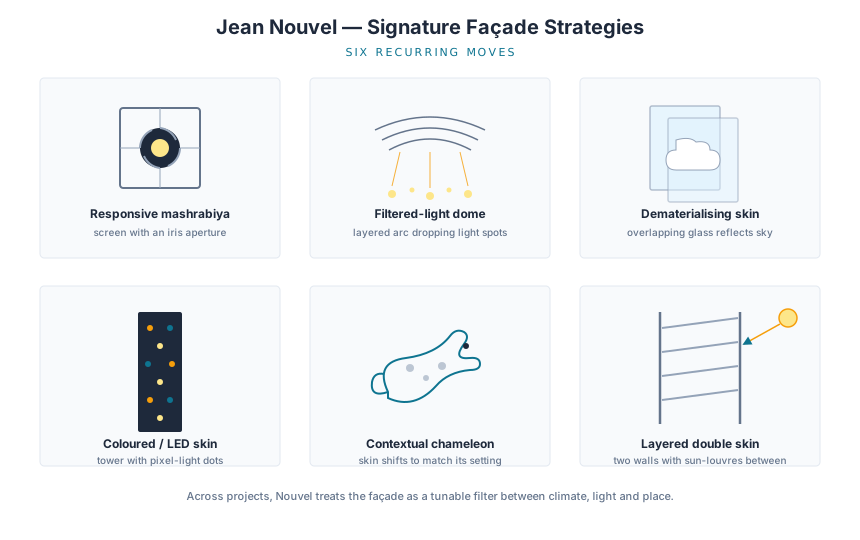
| Strategy | What it is | Building | Why it matters | Lesson for India |
|---|---|---|---|---|
| Responsive mashrabiya | Motorised photo-sensitive diaphragms open/close with daylight | Institut du Monde Arabe, Paris | Culture + climate + tech fused on one wall | Brilliant idea, fragile machine — borrow the screen, drop the motors |
| Filtered-light dome | Eight fixed perforated star layers sieve sun into "rain of light" | Louvre Abu Dhabi | A giant static jaali; no moving parts to fail | Near-perfect for our sun; the sun moves the pattern, not motors |
| Dematerialisation | Layered glass + reflection blur the building's edges | Fondation Cartier, Paris | Façade as a disappearing act | Reflective double-glazing can dazzle and overheat — use with care |
| Coloured / media skin | Coloured panels + glouvres + independent LEDs | Torre Agbar, Barcelona | Sun-control and identity in one double skin | Glass louvres shade well; the LED show is optional luxury |
| Living façade + heliostat | Vertical gardens + motorised mirror redirecting sun | One Central Park, Sydney | Green shade plus borrowed daylight | Green walls need serious irrigation upkeep in our heat |
| Contextual chameleon | Each façade derived from its place and light | All of the above | No fixed style; the site decides | Design the screen for your sun, not a copied look |
9. Real buildings, not renders
Five verified projects, and how the façade actually works:
- Institut du Monde Arabe, Paris (1987). South façade of ~240 metal panels with motorised, light-sensitive camera-iris diaphragms meant to open and close with daylight as a high-tech mashrabiya. Landmark idea; the mechanism proved unreliable and the apertures ended up largely fixed.
- Louvre Abu Dhabi (2017). A 180-metre double dome of eight stacked perforated star-pattern layers (steel outside, aluminium inside) that sieve sunlight into a dappled "rain of light" — a static, motor-free giant jaali for a desert climate.
- Fondation Cartier, Paris (1994). Glass screens pushed beyond the building's edges, layering transparency and reflection so the structure dissolves into sky and trees — the façade as dematerialisation.
- Torre Agbar, Barcelona (2005). A geyser-shaped tower with a double skin: ~25-colour aluminium panels behind thousands of angled glass louvres, plus thousands of independent LEDs forming a media façade.
- One Central Park, Sydney (2014). Towers wrapped in one of the world's tallest vertical gardens (with Patrick Blanc), topped by a cantilevered motorised heliostat that reflects sunlight down into the shaded gardens and plaza.
What it teaches India
Nouvel's central idea is our idea. A layered, perforated, light-filtering screen that turns harsh sun into soft, patterned, dappled shade is precisely the right response to the Indian climate — and it is directly descended from the jaali and the mashrabiya that the subcontinent and the Arab world perfected centuries ago. The Louvre Abu Dhabi dome is, quite literally, a giant high-tech jaali built for a Gulf climate that closely resembles much of India's: brutal sun, heat and dust. When Nouvel filters light through eight layers of star geometry, he is doing in steel what a Mughal mason did in sandstone. Studying him is studying our own tradition handed back to us at the scale of a museum.
But here is the honest line you must not cross. Nouvel's solutions are bespoke, expensive, mechanically complex and maintenance-hungry. The Institut du Monde Arabe is the cautionary tale carved in metal: a façade full of motors and sensors will fail, and it will fail fastest in heat and dust — exactly our conditions. A monsoon will find every seal; our dust will jam every moving leaf; and the budget to keep thousands of mechanisms calibrated does not exist on most Indian projects.
So borrow the principle, not the machinery. The transferable lesson is: a layered, perforated, light-filtering screen; dappled shade rather than glare; culturally-rooted geometry — executed in robust, low-maintenance, fixed form. In Indian dust and monsoon, a well-designed fixed jaali almost always beats a motorised diaphragm. The sun already moves across the sky for free; let the changing sun animate a static screen, exactly as the Louvre Abu Dhabi dome does, instead of paying motors to chase it. Take Nouvel's idea and his climate logic. Leave his budget and his moving parts in Paris.
What this means for you
If you are designing a façade for an Indian home, office or institution and you love what Nouvel does, here is how to convert admiration into a buildable wall:
- Start from the jaali, not from the machine. Decide the pattern and density of your perforated screen first. That alone delivers most of the magic — shade, privacy, dappled light — with zero maintenance.
- Make the sun do the moving. Layer or deepen the screen so the light pattern shifts through the day on its own. You get a "responsive" feel without a single motor.
- If you want a second skin, keep it passive. A fixed brise-soleil or a glass-louvre layer (as at Torre Agbar) shades beautifully and almost never breaks. See our brise-soleil and louvre façades guide.
- Treat anything kinetic as a luxury you must service. Motorised screens, heliostats and LED skins are wonderful and fragile. Budget for their lifetime upkeep before you commit, and read our smart, kinetic and parametric façades guide for the honest trade-offs.
- Root the pattern in your place. Nouvel's discipline is contextualism — derive the geometry from your light and your culture. India has the richest jaali vocabulary on earth; use it. Our jaali and traditional Indian façades guide is the place to start.
Nouvel is the master who proved, again and again, that the façade is where architecture decides how light enters a life. India already knew that. His gift is to show us the idea at full ambition — and his failures show us where to stop.
Sources
- The Pritzker Architecture Prize — Jean Nouvel, 2008 Laureate announcement and jury citation (pritzkerprize.com).
- Institut du Monde Arabe — building description and the photo-sensitive diaphragm façade, including its mechanical unreliability (Institut du Monde Arabe; façade-engineering case studies).
- Louvre Abu Dhabi — official architecture pages on the 180 m dome, eight layers and the "rain of light" (louvreabudhabi.ae; Dezeen).
- Fondation Cartier pour l'Art Contemporain — building description, glass screens and dematerialisation (fondationcartier.com; ArchEyes).
- Torre Agbar / Torre Glòries — coloured aluminium skin, glass louvres and LED media façade (DETAIL; glassonweb.com).
- One Central Park, Sydney — Patrick Blanc vertical gardens and the cantilevered heliostat (Dezeen; designboom; Ateliers Jean Nouvel).
Export this guide
Related Guides — Deep-dive reading
Norman Foster's Façade Signature: The High-Tech Glass Diagrid and the Engineered Skin
How Norman Foster turned the building envelope into structure, climate machine and civic statement — the diagrid crystal, the breathing double-skin, the glazed gridshell — and what his glass towers really demand in Indian heat.
Building FacadesLouvre Abu Dhabi: Jean Nouvel and the Dome That Makes It Rain Light
Ateliers Jean Nouvel's museum-city on Saadiyat Island floats a 180-metre latticed dome over a village of white galleries, filtering the Gulf sun into a 'rain of light'. A deep study of its eight-layer geometry, its four-pier structure, the France-UAE bargain that named it, and the labour questions the shade cannot cover.
The Future of ArchitectureCharles Correa's Façade Signature: How India's Master Made the Climate-Correct Wall
How Charles Correa eroded the flat sealed wall into deep, shaded, porous layers — verandahs, terraces, pergolas and open-to-sky courts — so the Indian façade filters sun and drives air instead of sealing it out.
Building FacadesRelated Tools — Try Free
Brise-Soleil Visualizer
Interactive horizontal-louvre cut-off angle calculator — sun altitude, louvre depth, and spacing inputs with a live shadow preview. Computes θ = arctan(spacing/depth) for façade shading, ECBC envelope compliance, hospital daylight design, and tropical sun-control detailing.
Sun Shading ToolCross-Ventilation Analyzer
Estimate airflow and air changes per hour (ACH) from room size, window areas, layout, and local wind — with NBC 2016 Part 8 compliance check.
Ventilation CalculatorWindow Maintenance Cost Calculator
Estimate annual window upkeep by frame material — yearly, per-window and 5-year cost.
Window Calculator