
Glass Curtain-Wall & Structural Glazing Facades (India)
How all-glass facades really work — stick vs unitized curtain walls, structural and spider glazing, DGU and Low-E glass, and the honest truth about solar heat, glare and cooling bills in the Indian climate.
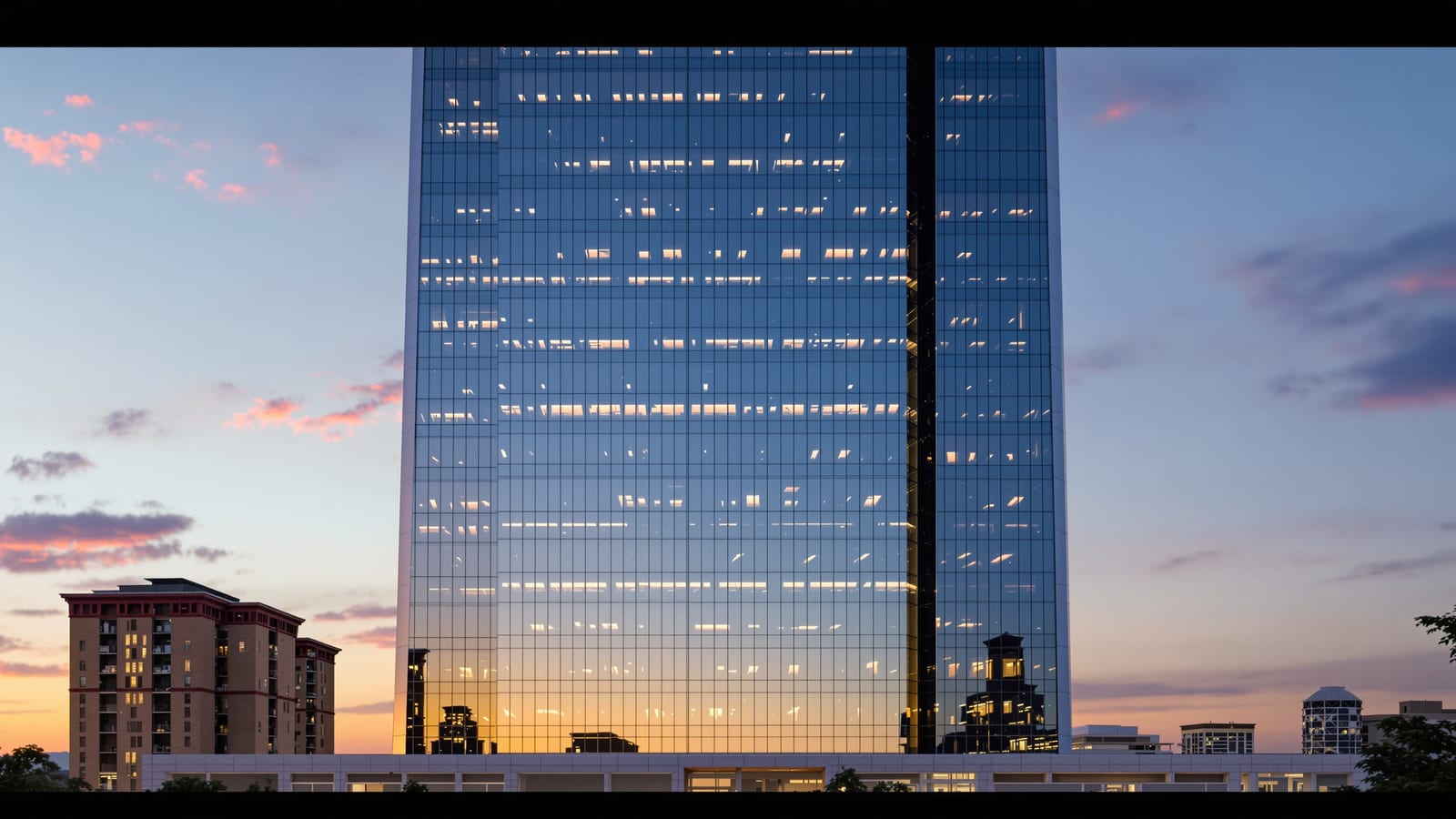
Walk through the business district of any large Indian city - Gurugram's Cyber Hub, Mumbai's Bandra Kurla Complex, Hyderabad's HITEC City, Bengaluru's Outer Ring Road - and one image dominates: the all-glass tower. Floor-to-ceiling sheets of mirror-blue glass, no visible windows, just a smooth skin that reflects the sky. To many people this look simply means "modern", "corporate", "world-class".
It is a beautiful idea, and in the right hands a glass facade is a genuine piece of engineering. But it is also one of the most misunderstood and most over-used systems in Indian construction. A glass skin that works brilliantly in cool, cloudy London can quietly cook a building in hot, sunny Chennai - turning the air-conditioning bill into the single biggest running cost of the building.
This guide explains, in plain language, how glass facades actually work, the difference between the systems you will be quoted for, what the glass specifications really mean, and - honestly - where glass shines and where it cooks in the Indian climate. It is part of our Building Facades series; if you are starting from scratch, begin with the pillar on why building facades matter.
1. What a curtain wall actually is
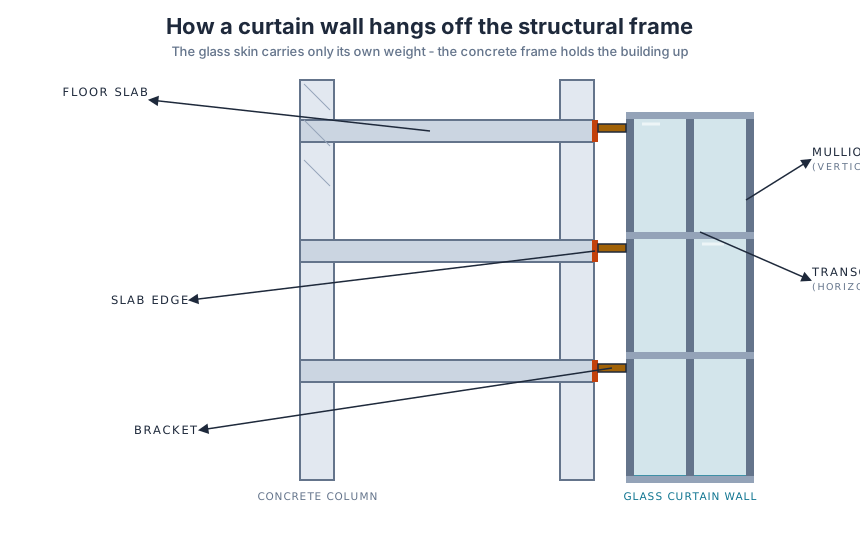
The single most important fact about a glass curtain wall is this: it carries no weight except its own. It does not hold the building up.
A modern tall building stands on a frame - a skeleton of reinforced concrete or steel columns and beams (called the structural frame). The floors, the people, the furniture, the wind load - all of that is carried by the frame. The curtain wall is just a thin outer skin hung off the edge of each floor slab, the way a curtain hangs from a rail. That is exactly where the name comes from.
Because it is non-structural (it only has to carry its own weight plus wind pressure), the curtain wall can be light and almost entirely transparent. It is typically made of an aluminium grid - thin metal frames called mullions (vertical) and transoms (horizontal) - infilled with glass panels. This is why glass facades became possible only on framed buildings; a traditional load-bearing brick or stone wall has to be thick and solid because the wall itself is holding the roof up.
Two practical consequences follow. First, a curtain wall lets you make a building look completely transparent without weakening it. Second - and this is the catch most people miss - that thin glass skin is a very poor barrier against heat. A solid wall blocks the sun; a sheet of glass invites it in. Everything that follows in this guide is, in one way or another, a response to that single problem.
2. Stick system vs unitized system
When a facade contractor quotes you, the first big choice is how the curtain wall is built and installed. There are two families, and the difference matters for cost, speed and quality.
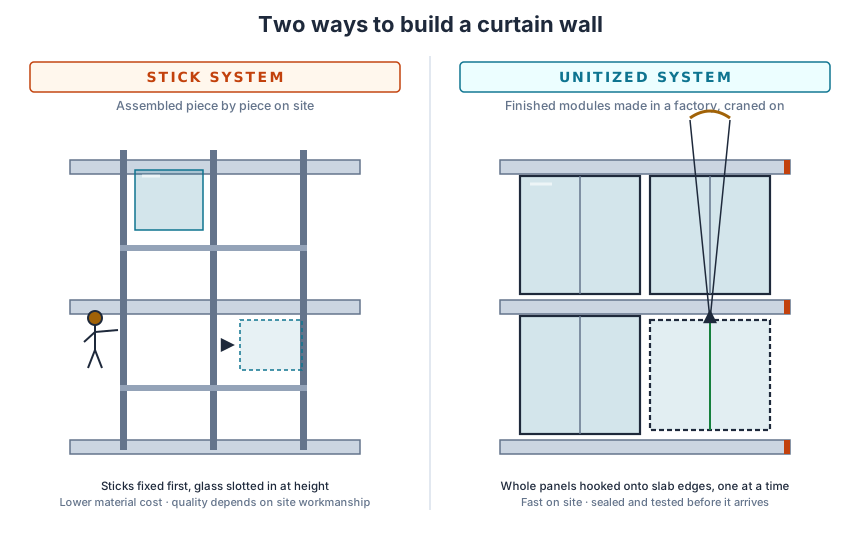
The stick system is assembled piece by piece on site. The aluminium mullions and transoms (the "sticks") are lifted up and fixed to the building floor by floor, then the glass panels are slotted in. It is the older, more flexible method, and it costs less in materials. The downside is that a lot of skilled, weather-tight assembly happens hundreds of feet in the air, exposed to monsoon, dust and the realities of an Indian construction site - so quality and watertightness depend heavily on workmanship.
The unitized system is the opposite philosophy. Large, complete panels - frame plus glass plus seals plus insulation, often one or two storeys tall and a full bay wide - are manufactured in a controlled factory, brought to site finished, and simply hooked onto the slab edges one panel at a time. Most large, high-quality Indian glass towers today are unitized. Hyderabad's Meenakshi Towers, the two 17-storey IT buildings built for Deloitte, are a good documented example of a unitized curtain wall, where the panels were even shaped to give the building rounded corners.
| Factor | Stick system | Unitized system |
|---|---|---|
| Where it is built | Assembled on site, floor by floor | Made as finished panels in a factory |
| Speed on site | Slower - lots of in-place work | Very fast - panels just hooked on |
| Quality control | Depends on site workmanship | Factory conditions, more consistent |
| Watertightness | Harder to guarantee at height | Sealed and tested before it arrives |
| Cost | Lower material cost, more labour | Higher unit cost, less site labour |
| Best for | Low/mid-rise, irregular shapes, tight budgets | Tall towers, fast programmes, premium jobs |
A rough rule of thumb: for a small or mid-rise building with an unusual shape and a careful contractor, stick can be the sensible, economical choice. For a tall tower where speed and a leak-free skin are non-negotiable, unitized is almost always worth the premium.
3. Structural glazing and spider glazing - the frameless look
The cleanest, most expensive end of the glass world tries to make the frame disappear altogether.
In a structural glazing facade, the glass is not held in a visible aluminium pocket. Instead it is bonded to the supporting frame with structural silicone - a special, very strong adhesive sealant engineered to hold the glass and transfer wind load while still flexing. From outside you see an almost seamless sheet of glass with thin dark joints, and no metal frame around each pane. It looks sleek and is popular for corporate headquarters and premium commercial entrances.
Spider glazing (also called point-fixed glazing) goes further still. Sheets of toughened glass are drilled and held at their corners by stainless-steel fittings shaped like a spider's legs, which are in turn bolted back to a slim steel structure or even tensioned cables behind the glass. This is what gives you those dramatic, almost invisible glass walls in airport terminals, atriums and showroom lobbies. India has plenty of examples in mall and airport atriums; many corporate lobbies use it for the double-height entrance even when the tower above uses a normal curtain wall.
Two honest cautions. First, structural-silicone joints are doing a real load-bearing job, so they depend completely on correct material and skilled application - a botched silicone seal is both a leak risk and a safety risk. Second, the glass in these systems is usually toughened (heat-treated to be much stronger), but a very small number of toughened panes can shatter spontaneously years later due to tiny impurities (nickel-sulphide inclusions); good projects specify heat-soaked glass and often laminated glass to manage this. None of this is a reason to avoid the system - it is a reason to insist on a competent specialist and not the cheapest bidder.
4. The glass itself - and why it decides everything
People obsess over the frame system, but in the Indian climate the glass specification matters far more. Plain single glazing is essentially a heat sieve. Serious facade glass is a small, layered piece of technology, and three ideas do most of the work.
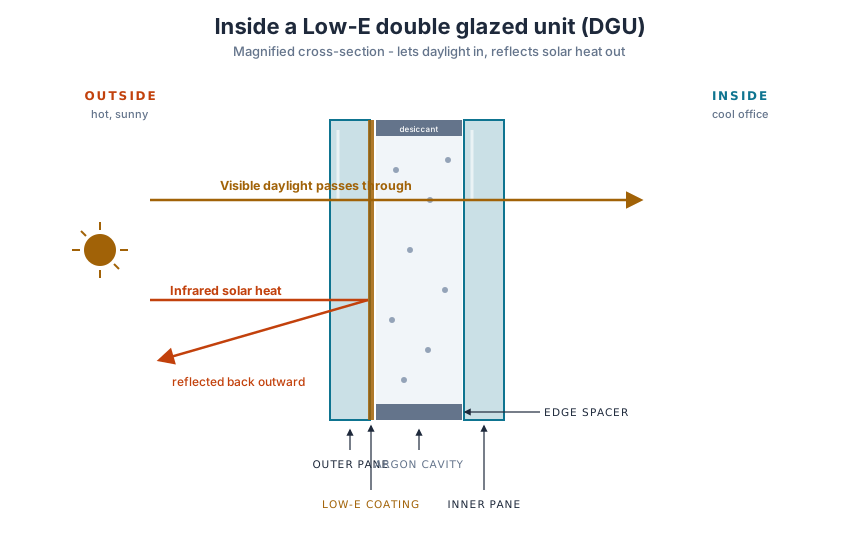
A DGU (Double Glazed Unit, also called an insulated glass unit) is two panes of glass with a sealed gap between them, usually filled with dry air or argon gas and held apart by a spacer around the edge. That still, trapped layer of gas is a poor conductor of heat, so a DGU dramatically slows heat flow compared with a single sheet - much like a double-walled water bottle. Almost any well-built glass facade in India should be a DGU; single glazing on a large Indian facade is a mistake.
A Low-E coating (low-emissivity) is a microscopically thin, invisible metallic layer applied to one of the glass surfaces inside the DGU. It is the workhorse of hot-climate glazing: it lets useful daylight through while reflecting back a large share of the sun's invisible heat (infrared) radiation. A good "solar control" Low-E glass is the difference between a glass building that is bearable and one that bakes.
Reflective glass has a heavier metallic coating that gives the familiar mirror-blue or mirror-grey look and bounces away a lot of heat and light. It controls heat well but can cut daylight harshly and throws strong glare onto neighbours and roads - a real nuisance in dense Indian cities. Fritted glass has a ceramic pattern (dots or lines) baked onto the surface; the pattern blocks part of the sun like a built-in shade while keeping a designed view, and is increasingly used on the sunniest faces.
5. SHGC, U-value and VLT - the three numbers, in plain terms
Every facade glass comes with a datasheet full of numbers. You only need to understand three, and they are the three the building code cares about.
SHGC (Solar Heat Gain Coefficient) is the most important number for India. It is the fraction of the sun's heat that gets through the glass into the room, on a scale from 0 to 1. An SHGC of 0.25 means only a quarter of the solar heat lands inside; an SHGC of 0.7 means most of it does. In a hot, sunny country you want this number low. This single figure, more than anything else, decides your air-conditioning load.
U-value (or U-factor) measures how easily heat conducts straight through the glass when there is a temperature difference - for example, the gap between a 24 degree air-conditioned office and a 42 degree afternoon outside. Lower is better; it is measured in W/m2.K. A single sheet might be around 5.7; a good DGU brings it down towards 1.8 or lower. U-value matters most where the temperature difference is large and sustained.
VLT (Visible Light Transmittance) is the fraction of daylight that comes through, again 0 to 1. Higher VLT means a brighter interior and less reliance on electric lighting - but push VLT up and you usually let more heat and glare in too. The art of hot-climate glazing is getting high VLT with low SHGC: plenty of daylight, little heat. That combination is exactly what modern solar-control Low-E DGUs are designed to deliver, and it is what separates a thoughtful glass facade from a cheap one. We go deeper into this balancing act in energy-efficient facades.
6. The honest downside in India - where glass cooks
Now the part the glossy brochures skip. A glass skin has real, recurring costs in the Indian climate, and pretending otherwise has saddled the country with thousands of overheated, over-air-conditioned buildings.
Solar heat gain and cooling load. India gets intense, near-vertical sun for most of the year. A large area of glass facing east or west collects enormous solar heat in the morning and afternoon, when the sun is low and pours straight in. The air-conditioning then runs harder and longer to fight it. In a poorly specified all-glass office, cooling can become the dominant energy cost for the entire life of the building - a cost paid every single month, long after the facade's good looks are taken for granted.
Glare. Bright sky and reflective floors create harsh glare at desks near the glass, so occupants pull blinds shut - which defeats the daylight the glass was supposed to provide, and means the building runs on electric light behind drawn blinds. Externally, reflective glass towers can dazzle drivers and neighbours, a genuine safety and nuisance issue in crowded Indian streets.
Bird strikes. Highly reflective and transparent glass confuses birds, which fly into facades; in green campuses and near water bodies this is a real and growing concern, and fritted or patterned glass is one of the few effective answers.
Cleaning and maintenance. A glass tower must be cleaned regularly to stay impressive - that means cradles, ropes or gondolas, trained crews, and a real annual budget. Sealants and gaskets age in UV and monsoon and need inspection and eventual replacement. A failed seal lets water and fogging into a DGU. Glass is not a fit-and-forget skin; it is a maintenance commitment for decades.
7. What the code says - ECBC and glazing limits
India does not leave this to taste. The Energy Conservation Building Code (ECBC), administered by the Bureau of Energy Efficiency, sets minimum performance for large commercial buildings, and several states have made it mandatory through their building bye-laws.
Under ECBC's prescriptive (simple checklist) route, the headline limits are:
| ECBC glazing measure | Plain meaning | Prescriptive limit |
|---|---|---|
| WWR (Window-to-Wall Ratio) | How much of the wall is glass | Up to about 40% |
| SHGC | Fraction of solar heat let in | Around 0.27 or lower |
| U-factor | How fast heat conducts through | About 3.0 W/m2.K or lower |
| VLT (minimum) | Daylight must not be choked off | At least about 0.27 |
Note what the WWR limit implies: the simple route effectively assumes a building is mostly solid wall with sensible windows - not a 100% glass box. You can still build a fully glazed tower legally, but then you must prove the whole building's energy use is acceptable through the more demanding "whole building performance" route - which usually forces high-performance glass, shading, and an efficient cooling system to compensate. In other words, the code does not ban glass; it makes you pay for it in performance. (Treat the figures above as indicative and confirm the current edition and your state's adopted version, as numbers are periodically revised.)
8. When glass is right - and when it is overused
Glass earns its place. It is genuinely the right answer when you need a lightweight skin on a tall tower, abundant daylight in deep floor plates, long views (lobbies, restaurants, observation floors, airport terminals), and a fast, factory-built programme. Used with high-performance Low-E DGUs, external shading and a smart orientation, a glass facade can be both stunning and reasonably efficient.
Glass is overused when it becomes the default for any building that wants to look "modern" - especially small offices, showrooms and even homes - on hot east and west faces, with cheap single or non-coated glass, no shading, and no thought for who pays the cooling bill afterwards. The classic Indian failure is the fully glazed small building with reflective glass and a straining split-AC behind every pane.
The intelligent middle path is what most good Indian architects now practise: glass where it adds value, solid insulated wall elsewhere, and the sunniest faces protected by external shading, fins, or a second outer screen. That second-screen idea is its own powerful system - see double-skin and ventilated facades - and the broader logic of tuning the skin to the sun is covered in facade design for Indian climates.
9. Real glass facades worth knowing
Indian glass facades have a clear history. Gurugram's Signature Towers, completed by the Unitech Group in 2008, was one of the early Indian projects to use an advanced reflective-glass curtain-wall system with building-management controls, and it became a marker of the post-liberalisation corporate skyline. Hyderabad's HITEC City grew up around glass: the original Cyber Towers (1999) put a glass IT building on the map, and later projects such as the Meenakshi Towers built for Deloitte show the modern unitized, factory-built approach with rounded corners.
In Mumbai's Bandra Kurla Complex, the financial district is effectively a museum of glass curtain walls - The Capital, with its facade and interiors by James Law (Cybertecture), and the Godrej BKC tower are well-documented examples of high-spec glazed commercial buildings.
Globally, the idea was born in mid-century New York. Lever House (1952) and the Seagram Building (1958), both in Manhattan, are widely credited as the buildings that established the all-glass curtain-wall tower as the language of the modern corporation - the look every Indian business park later borrowed.
What this means for you
If you are commissioning, renting or simply curious about a glass building, hold on to a few simple ideas.
Glass is a skin, not a wall - it lets in light and, unless engineered, heat. The frame system (stick vs unitized) decides cost, speed and quality; unitized is usually better for serious towers. But the glass specification matters even more: insist on a DGU with a solar-control Low-E coating, and ask for three numbers - a low SHGC, a low U-value, and a reasonable VLT.
Be honest about orientation and the running cost. On hot east and west faces, shading or a screen will save more money over the building's life than almost anything else. And remember that a glass tower is a maintenance commitment: cleaning, sealant inspection and eventual reglazing are part of the deal.
Used with care, glass is one of the great materials of modern architecture. Used as a default because it looks impressive, it is one of the most expensive mistakes a building can make in the Indian sun. The goal is not less glass for its own sake - it is the right glass, in the right place, doing a job it is actually good at.
Continue with the overview of facade types, or step back to the pillar on why building facades matter.
Sources
- Bureau of Energy Efficiency, Energy Conservation Building Code (ECBC) 2017 and ECBC 2020 - glazing, WWR, SHGC, U-factor and VLT requirements: ecbc.in and beeindia.gov.in
- Firstgreen Consulting, "Step by Step Calculation of SHGC for ECBC Compliance" - SHGC and prescriptive glazing limits
- Lerch Bates project records - Meenakshi Towers (Hyderabad) unitized curtain wall and Godrej BKC (Mumbai) facade
- CP Kukreja Architects and Unitech Group records - Signature Towers, Gurugram
- WikiArquitectura and project records - The Capital, BKC Mumbai (James Law / Cybertecture)
- Manufacturer and facade-industry technical references on DGU construction, Low-E coatings, reflective and fritted glass, structural silicone glazing and point-fixed (spider) glazing systems
- General architectural history references - Lever House and Seagram Building, New York, as the origin of the curtain-wall tower
Export this guide
Related Guides — Deep-dive reading
Energy-Efficient Facades in India: How the Building Skin Cuts Your Cooling, Heating & Lighting Bills
How a building facade drives cooling, heating and lighting energy in India, the three levers of solar-heat-gain control, insulation and daylighting, U-value, SHGC, VLT and WWR in plain terms, ECBC and Eco-Niwas expectations, and real Indian green buildings.
Building FacadesFloor-to-Ceiling Windows (India): Maximum Light, and the Heat Trade-Off
Full-height glazing for Indian homes — how to win the daylight and view without losing the energy code, comfort or safety.
Windows & GlazingLaurie Baker's Façade Signature: Brick Jaali, Rat-Trap Bond and the Honest Low-Cost Indian Wall
How India's "Gandhi of architecture" turned cheap, honest, climate-wise materials — exposed brick, the perforated brick jaali, rat-trap bond and curved walls — into the most affordable and most beautiful façade in the country.
Building FacadesRelated Tools — Try Free
Brise-Soleil Visualizer
Interactive horizontal-louvre cut-off angle calculator — sun altitude, louvre depth, and spacing inputs with a live shadow preview. Computes θ = arctan(spacing/depth) for façade shading, ECBC envelope compliance, hospital daylight design, and tropical sun-control detailing.
Sun Shading ToolCross-Ventilation Analyzer
Estimate airflow and air changes per hour (ACH) from room size, window areas, layout, and local wind — with NBC 2016 Part 8 compliance check.
Ventilation CalculatorWindow Heat Gain Calculator
Estimate solar heat gain in watts, daily kWh and AC tonnage by window area, orientation, SHGC and shading.
Window Calculator