
Metal & ACP Facades in India — Appeal, Core Types, and the Fire Lesson
Aluminium composite panels and metal cladding are India's favourite modern facade after glass. Here is how ACP is built, why the PE vs FR vs A2 core decides whether it is a finish or a fuel, what NBC 2016 and IS 17682 require, and the real cladding-fire lessons India must heed.
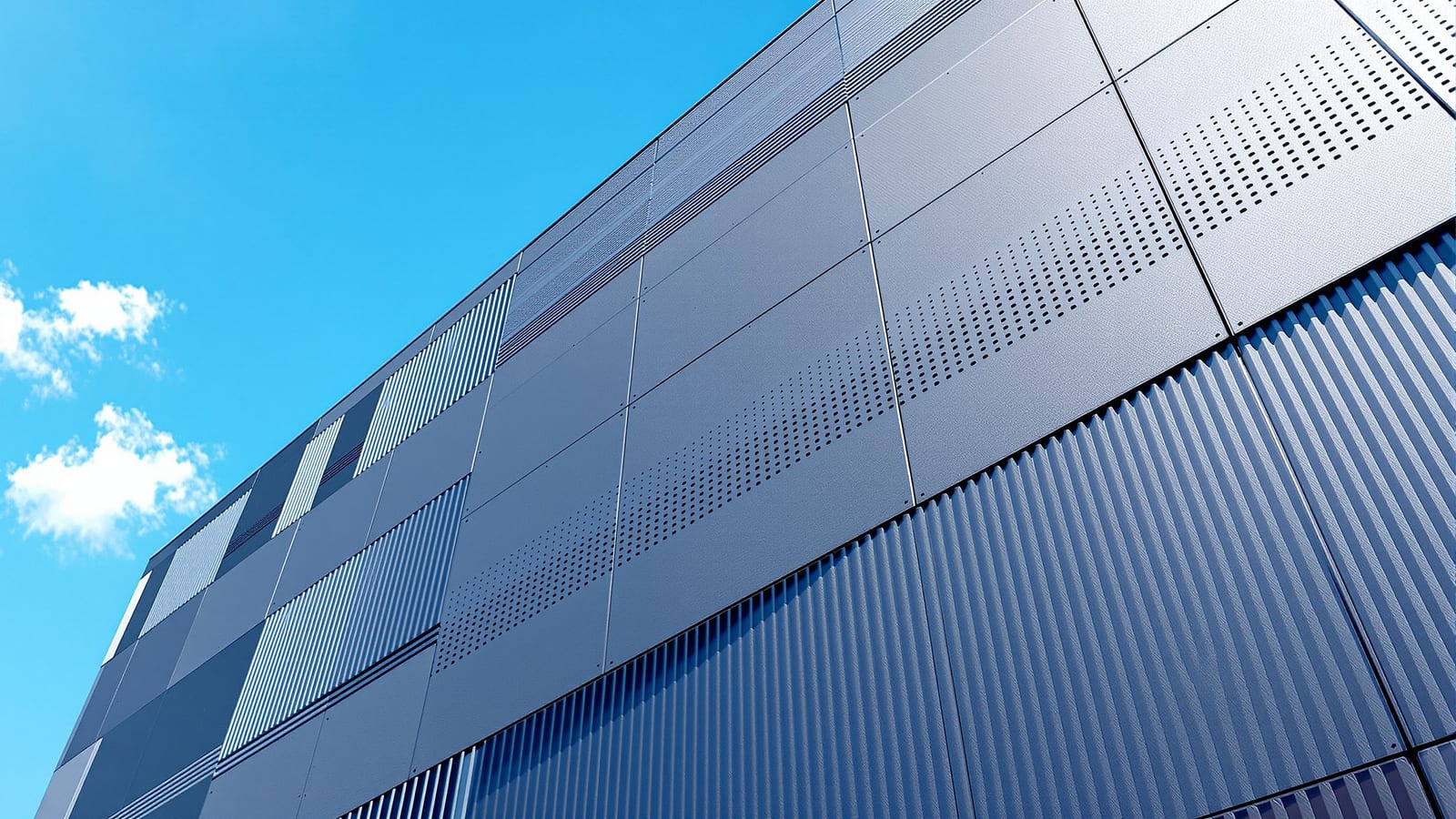
Drive through any Indian city built or refurbished in the last fifteen years and you will see them everywhere: smooth, flat, shiny panels in silver, charcoal, wood-look or candy-bright colours, wrapping showrooms, hospitals, petrol pumps, office blocks and apartment podiums. That is metal cladding, and most of it is ACP — Aluminium Composite Panel. It is the single most popular "modern look" facade material in India after glass, and for understandable reasons: it is light, cheap, fast and comes in any finish you can imagine.
But ACP also carries a serious, sometimes fatal, secret. The wrong kind of ACP is essentially solid plastic wrapped in foil, and on a tall building it can turn a small fire into a tower of flame in minutes. This is not a scare story — it is the documented cause of some of the deadliest building fires of our time. This guide explains the whole metal-facade family honestly: how ACP is made, why the core inside it matters more than anything else, what the law in India now requires, and how to choose so your building looks good without becoming a hazard.
This is part of our facades series. For the big picture, read the pillar why building facades matter and the types of building facades overview. Because fire is so central here, also read the dedicated facade fire safety and cladding guide.
1. The metal facade family — more than just ACP
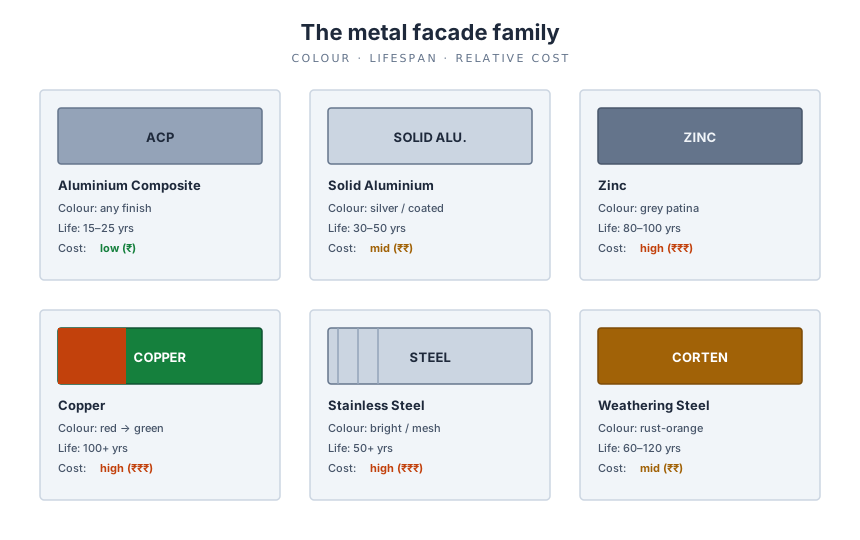
"Metal cladding" is a whole family. ACP is the most common member in India, but it helps to know the others, because each suits a different budget and ambition.
- ACP (Aluminium Composite Panel): two thin aluminium skins sandwiching a core. Light, flat, cheap, endlessly coloured. The workhorse of Indian commercial facades. The core is the whole story (Section 2).
- Solid aluminium sheet: a single thicker aluminium plate, often perforated or folded. No plastic core, so the fire question largely disappears. More expensive and a little heavier than ACP, but increasingly specified for tall buildings precisely because it is safer.
- Zinc: a soft grey metal that develops a self-healing protective patina and lasts 80 to 100 years. Common in Europe; a premium choice in India for boutique and institutional work.
- Copper: ages from bright penny-red through brown to the famous green verdant patina. Beautiful, very long-lived, expensive. Used on temples, museums and signature homes.
- Stainless steel: strong, hygienic, corrosion-resistant; used as mesh, perforated screens or polished panels. Good near the coast where ordinary steel rusts.
- Weathering steel (often called by the brand name Corten): a steel alloy engineered to form a stable rust-coloured surface layer that then protects the metal beneath. Gives a raw, earthy, industrial look. Needs careful detailing so the run-off does not stain pavements below.
The rest of this guide concentrates on ACP, because it is the most used in India and the one that carries real fire risk if chosen carelessly.
2. How an ACP is actually built
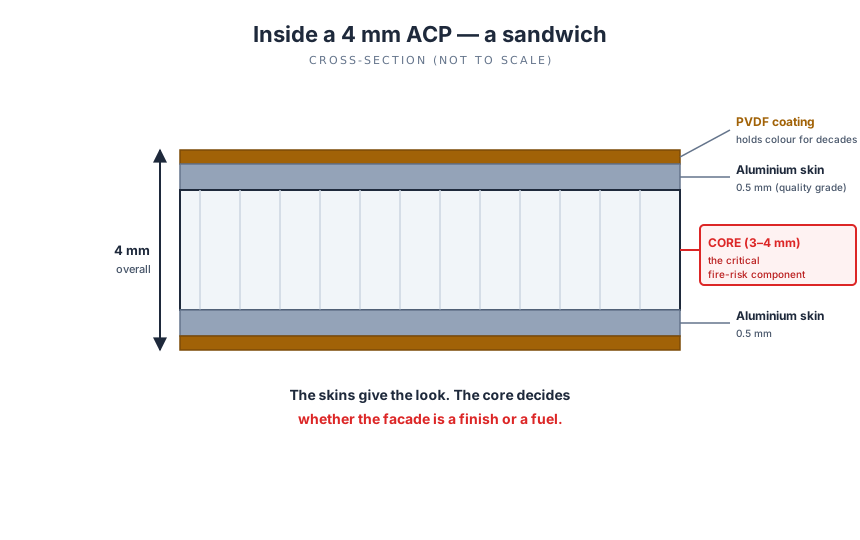
An ACP is a sandwich. Picture two slices of bread with a filling in between — except here the bread is two sheets of aluminium, each typically only about half a millimetre thick (0.5 mm is the quality standard; thinner 0.21 to 0.3 mm "skins" are cheap, dent easily and fail BIS specifications). Between them sits a core, usually 3 to 4 mm thick, bonded under heat and pressure. The whole panel is most commonly 4 mm thick overall.
The aluminium skins are coated. The premium coating is PVDF (polyvinylidene fluoride), which holds its colour for decades; cheaper panels use polyester coatings that chalk and fade faster in Indian sun. The skins give the panel its look, its flatness and its weather resistance.
But the skins are not the danger. The danger is what is in the middle. And this is the one fact every owner, architect and contractor in India must internalise: the core decides whether your facade is a finish or a fuel.
3. The core is everything — PE vs FR vs A2
There are three broad core types, and the difference between them is the difference between a normal building and a death trap.
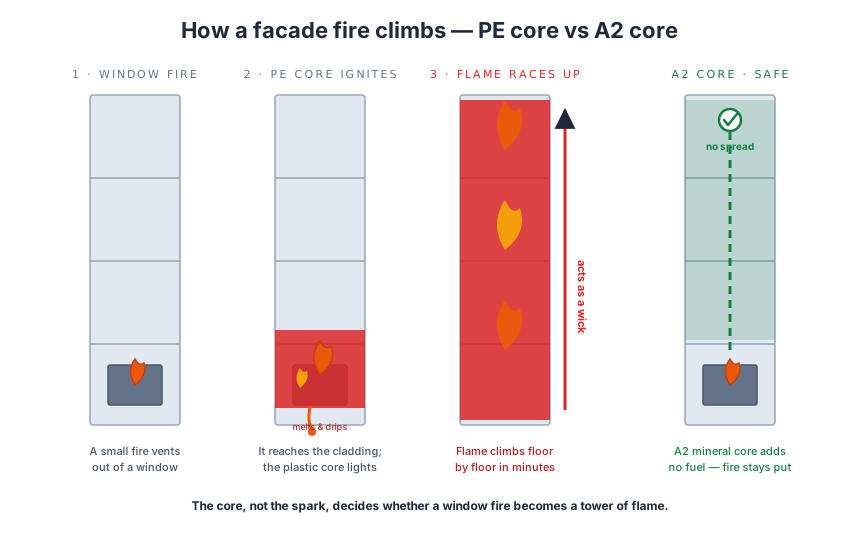
- PE core (plain polyethylene): the core is essentially solid plastic — the same family of material as a milk pouch or a plastic bag, just in sheet form. It is cheap and that is its only virtue. Polyethylene is a hydrocarbon: it burns fiercely, melts, drips burning droplets, and releases enormous heat. On a tall building, a PE-core panel acts like a wick, carrying flame vertically up the facade faster than firefighters can respond. PE-core ACP has no place on any multi-storey building, full stop.
- FR core (fire-retardant, mineral-filled): the polyethylene is heavily loaded with mineral fillers (typically aluminium hydroxide / ATH) so that 60 to 70 percent of the core is non-combustible mineral. It burns far less readily and is often rated to the European reaction-to-fire class B. FR is a genuine improvement over PE, but it is not non-combustible — there is still plastic in there.
- A2 core (limited-combustibility, mineral core): the core is more than 90 percent inorganic mineral, so little is left to burn. It meets European class A2, the "non-combustible for practical purposes" grade. This is what serious specifiers now demand for tall and high-occupancy buildings.
The European reaction-to-fire scale (EN 13501-1) runs A1 (truly non-combustible, like stone or solid aluminium), then A2, then B, C, D, E, F (most combustible). India's BIS standard for ACP, IS 17682:2021, defines the specification and test requirements for Indian panels, and the better Indian manufacturers state their core grade in these terms.
| Core type | What is in the core | Typical fire class | Behaviour in a fire | Where it belongs |
|---|---|---|---|---|
| PE (plain polyethylene) | ~100% plastic | Combustible (class E / F) | Burns, melts, drips, spreads flame up the facade | Nowhere on any storeyed building; only at most low single-storey signage |
| FR (fire-retardant) | ~30% plastic, ~70% mineral filler | Class B (limited) | Resists ignition, slower spread, still contains fuel | Low-rise; minimum acceptable grade for most occupied buildings |
| A2 (mineral core) | >90% non-combustible mineral | Class A2 | Contributes almost no fuel; will not drive facade fire spread | High-rise, hospitals, schools, assembly, any tall or high-risk building |
If you remember nothing else from this guide, remember this table. The look of a PE panel, an FR panel and an A2 panel can be identical. The price difference is real but modest compared to the building cost. The safety difference is the difference between an incident and a catastrophe.
4. The fire lesson, told honestly
The world did not take ACP fire risk seriously until buildings full of people burned. These are real, documented events.
Grenfell Tower, London, 14 June 2017. A 24-storey residential tower had been refurbished with ACM (aluminium composite material) panels with a polyethylene core. A small kitchen fire on a lower floor reached the cladding through a window, and the PE core ignited. Flames raced up the outside of the building, then back in through windows on floor after floor. Seventy-two people died. The official public inquiry concluded that the polyethylene-cored panels were the primary cause of the rapid fire spread and that the cladding did not comply with building regulations. Grenfell became the global turning point that forced governments to ban combustible cladding on tall buildings.
Grenfell was not the first warning. In Melbourne, Australia (Lacrosse tower, 2014), a discarded cigarette on a balcony started a fire that climbed PE-core ACP cladding to the top of a 21-storey tower in minutes — over 400 residents were evacuated and there were, mercifully, no deaths. In Dubai, PE-core cladding drove dramatic, fast-spreading facade fires at the Torch Tower (2015, and again in 2017) and at the Address Downtown hotel on New Year's Eve 2015; again, the cladding's combustible core let flame climb the building's full height. The UAE responded by banning combustible cladding in its 2016 fire code.
What about India? Here honesty matters most. India has suffered terrible building fires — the Kamala Mills complex in Mumbai (2017, 14 dead), Crystal Tower in Parel (2018), the Surat Takshashila coaching-centre fire (2019, 22 students dead). These tragedies were driven mainly by internal failures: blocked exits, missing fire systems, illegal alterations, open shafts acting as chimneys. They are a warning that fire safety is weak in practice, not proof that ACP was the spread mechanism in each case. It would be dishonest to claim otherwise. But the underlying truth is unavoidable: thousands of Indian commercial and residential towers are wrapped in ACP of unknown core grade, much of it the cheapest PE variety, fitted before anyone was checking. India has the same fuel on its buildings that killed people in London, Melbourne and Dubai — it has simply, so far, been luckier. Luck is not a fire strategy.
5. What Indian law and standards now require
Two documents matter.
The National Building Code of India 2016, Part 4 (Fire and Life Safety), published by the Bureau of Indian Standards, is the central reference for fire safety in Indian buildings. It governs how facades and external walls must behave, requires non-combustible construction for the critical elements of tall and high-occupancy buildings, and — through its provisions and subsequent amendments — restricts the use of combustible facade cladding on buildings where fire could spread and trap people. State fire services and municipal corporations enforce these provisions through fire No-Objection Certificates (NOCs); a building cladding that fails them can be refused occupancy or ordered to re-clad.
IS 17682:2021 is the BIS specification for aluminium composite panels themselves. It sets out skin thickness, bond (peel) strength, flatness, weathering and the fire-performance requirements for FR-grade panels. Genuine Indian ACP now carries BIS / ISI certification under the applicable Quality Control Order — and that certification, plus the stated core class, is what you must check before buying. A panel without traceable BIS certification and a declared core grade should be treated as untrustworthy.
What to specify, in plain words:
- For any building above the ground-plus-a-few-floors threshold, for hospitals, schools, hostels, malls and any place people gather or sleep: insist on A2 mineral-core ACP, or use solid aluminium / non-combustible cladding instead.
- Never accept "FR" on the contractor's word alone — ask for the mill test certificate, the BIS certification and the core class in writing.
- Get the fire performance written into the contract and the bill, so a cheaper PE panel cannot be quietly substituted on site (this swap is depressingly common).
- Detail the cavity behind the cladding with fire-stops (cavity barriers) at each floor, so even a compliant facade cannot become a hidden chimney.
6. The genuine appeal — why ACP won India
None of the above means ACP is bad. Chosen well, it is excellent, and it dominates for real reasons.
- Light and fast: at roughly 5 to 8 kg per square metre, ACP loads the structure far less than stone or masonry, and goes up quickly on an aluminium sub-frame — weeks, not months. On a renovation it can transform a tired building's face without touching the structure.
- Any look you want: solid colours, metallics, mirror, wood grain, stone effect, even printed graphics. For a brand showroom or a hospital that wants a clean modern identity, nothing matches it for value.
- Flat and precise: good ACP is dimensionally stable and folds into crisp returns, shadow gaps and clean reveals, giving that sharp contemporary line.
- Weather and maintenance: with a PVDF coating it shrugs off Indian sun and monsoon for 15 to 25 years with little more than periodic washing. Aluminium does not rust.
- Cost: dramatically cheaper than stone, zinc or copper, which is exactly why it spread so fast.
The lesson is not "avoid ACP." It is "buy the right core, and detail it properly."
7. The real-world caveats — oil-canning, de-bonding and water
Even good ACP has honest weaknesses you should plan for.
- Oil-canning: large flat metal panels can show a visible waviness or "ripple" in raked light, like the dent in an oil can. It is a cosmetic effect of thin skins and thermal stress, worse on dark colours and large panels. Thicker skins, smaller panels, stiffening ribs on the back and matte finishes all reduce it.
- De-bonding / delamination: if the bond between skin and core fails — from poor manufacture, ageing or extreme heat — the skins can peel, blister or even detach in high wind. This is one more reason to buy BIS-certified panels with proven peel strength rather than grey-market sheets.
- Water management: ACP is a rainscreen, not a waterproof skin. Water will get behind it. The system must be designed to drain and ventilate the cavity; trapped moisture rots fixings and substrates and breeds the conditions for failure. Poor joint sealing and missing flashings are the most common defect in Indian ACP work.
- Fixings and wind: on tall or coastal buildings, the aluminium sub-frame and fasteners must be engineered for wind suction. Panels have blown off badly detailed facades in storms.
- Dents and repairs: thin-skinned panels dent on impact at ground level. Use thicker skins or a more robust material (solid aluminium, stone) on the lower, reachable storeys.
What this means for you
If you are a homeowner or a building owner: ACP is a fine, affordable way to give a building a clean modern face — but treat the core grade as a non-negotiable safety decision, not a finish choice. For anything taller than two or three storeys, or anywhere people sleep or gather, specify A2 mineral-core panels (or solid non-combustible cladding) and put the fire class in writing on the order. Refuse PE-core ACP anywhere off the ground.
If you already own an ACP-clad building, find out what core is on it. Ask the original contractor for the mill certificate; if no one can tell you, assume the worst and have a fire consultant assess it. Re-cladding is expensive, but it is what saved lives after Grenfell.
If you are a practitioner: you are the last line of defence against the cheap-panel substitution that happens on Indian sites every day. Specify by BIS certification and core class, inspect deliveries, and detail cavity fire-stops at every floor. The look of a building is your reputation; its fire safety is your responsibility.
ACP is not the villain. PE-core ACP on a tall building, fitted without thought, is. Know the difference, and you get all the appeal of metal cladding with none of the nightmare. For the deeper rules on stopping fire at the facade, continue to facade fire safety and cladding, and to see where metal sits among all the options, revisit the types of building facades.
Sources
- Grenfell Tower Inquiry findings on ACM polyethylene-core cladding as the primary cause of fire spread (Grenfell Tower Inquiry; UK Government).
- National Building Code of India 2016, Part 4: Fire and Life Safety — Bureau of Indian Standards.
- IS 17682:2021, Aluminium Composite Panels — Specification — Bureau of Indian Standards.
- EN 13501-1 European reaction-to-fire classification (classes A1, A2, B-F) — reference for ACP core grades.
- Reporting on the Melbourne Lacrosse (2014), Dubai Torch Tower (2015, 2017) and Address Downtown (2015) facade fires, and the UAE 2016 fire-code ban on combustible cladding.
- Indian building-fire reporting: Kamala Mills, Mumbai (2017); Crystal Tower, Parel (2018); Surat Takshashila (2019) — context on India's wider fire-safety enforcement gaps.
Export this guide
Related Guides — Deep-dive reading
Facade Fire Safety and Cladding in India: How the Building Skin Spreads Fire and How to Make It Safe
Why combustible cladding cores and ventilated cavities can turn a facade into a chimney, the materials risk ladder from PE-core ACM to non-combustible A1 or A2, Euroclass and BS 8414, NBC 2016 Part 4 and IS 17682, and what flat owners should check.
Building FacadesBathroom Fire Safety India: NBC 2016 Part 4, Fire-Rated Materials & Electrical Ignition
The bathroom is rarely thought of as a fire risk, yet it hides several: a leaky geyser element, an over-run exhaust-fan motor, cheap flammable PVC panels overhead, and aerosol cans stored beside a heat source. This is an honest, practical reference to fire and life safety in the Indian bathroom — the NBC 2016 Part 4 context that actually applies to homes, the real ignition sources, self-extinguishing false-ceiling and PVC materials, earth-leakage protection as fire prevention, escape considerations, and the carbon-monoxide danger of gas geysers.
BathroomsPorcelain, Ceramic & Sintered-Stone Facade Cladding in India: A Practical Guide
Thin large-format porcelain and sintered-stone slabs can clad a building with the look of marble, concrete or weathered steel at a fraction of stone's weight — but on a facade, the fixing system is a life-safety decision, not a finish choice.
Building FacadesRelated Tools — Try Free
Window Maintenance Cost Calculator
Estimate annual window upkeep by frame material — yearly, per-window and 5-year cost.
Window CalculatorWindow Material Comparison Tool
Compare uPVC, aluminium, wood, steel and composite windows on cost, life, upkeep and insulation.
CompareWindow Cleaning Cost Calculator
Estimate professional window cleaning cost per visit and per year by access and frequency.
Window Calculator