
Smart, Kinetic & Parametric Facades in India: Skins That Move, Tint and Respond (And When They Are Worth It)
Plain-English guide to parametric, kinetic and smart-glass facades: how moving louvers, electrochromic glass and AI-driven envelopes work, real examples like Al Bahar Towers, and the honest India verdict on cost, maintenance and when fixed shading wins.
Some buildings just stand there. A smart, kinetic or parametric facade does something instead: it moves with the sun, tints its own glass to cut glare, or twists its panels through shapes that no human draughtsman could draw by hand. These are the facades that make the news, the ones that look alive. They are also the most over-sold category in the whole business, and a lot of what gets pitched to Indian clients as a futuristic moving skin would be cheaper, calmer and more reliable as a fixed shade.
This guide pulls apart three things that often get lumped together: parametric facades (complex geometry generated by a computer), kinetic facades (panels and louvers that physically move), and smart glass (glazing that changes how much light and heat it lets through). Then it asks the only question that matters for your money: in the Indian climate, with our dust and our monsoon, when does a facade that moves genuinely earn its keep, and when is it a fragile gimmick waiting to seize up?
This is part of our Building Facades series. If you have not read the overview of facade types, start there for the big picture. Because so much of this category leans on software and sensors, it also pairs closely with AI and the future of residential design.
1. Three different ideas that keep getting confused
People say "smart facade" to mean very different things. It helps to separate them before going further, because they have almost nothing in common except the marketing word.
- Parametric is about shape. The facade is designed by writing rules and numbers (parameters) into software, which then generates the geometry. The building usually does not move at all once built. The cleverness happened on the computer.
- Kinetic is about movement. Physical parts of the facade open, close, rotate or slide, usually to track the sun. There are motors, hinges and moving joints involved.
- Smart glass is about transparency. The glazing itself changes state, going from clear to tinted, without anything physically moving. There are no hinges, just a tiny electric current or a temperature change.
A single landmark building might use all three. A normal Indian home or office will, at most, sensibly use one, and often should use none. Keep these three buckets in your head for the rest of this guide.
2. Parametric facades: geometry a computer drew for you
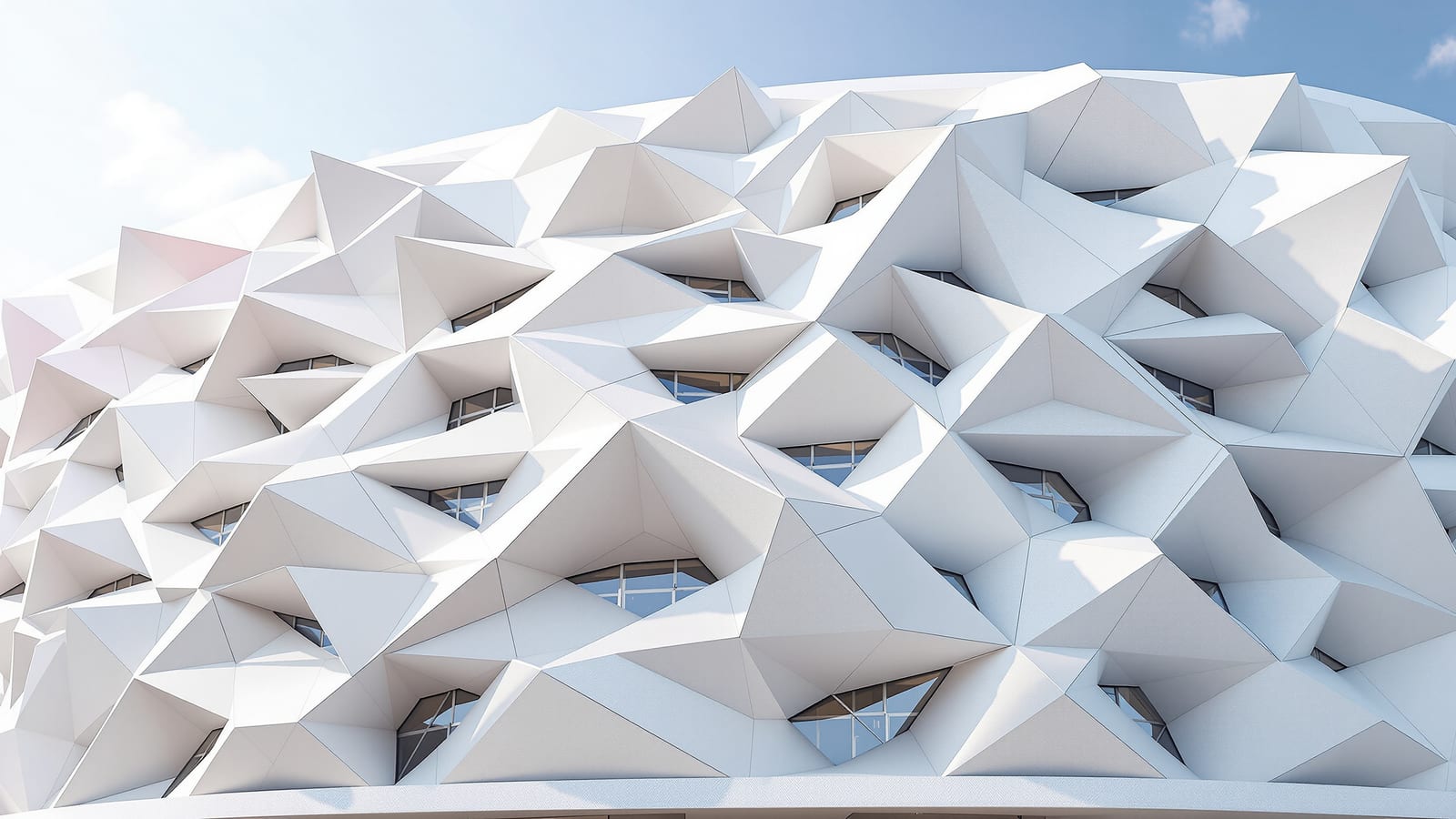
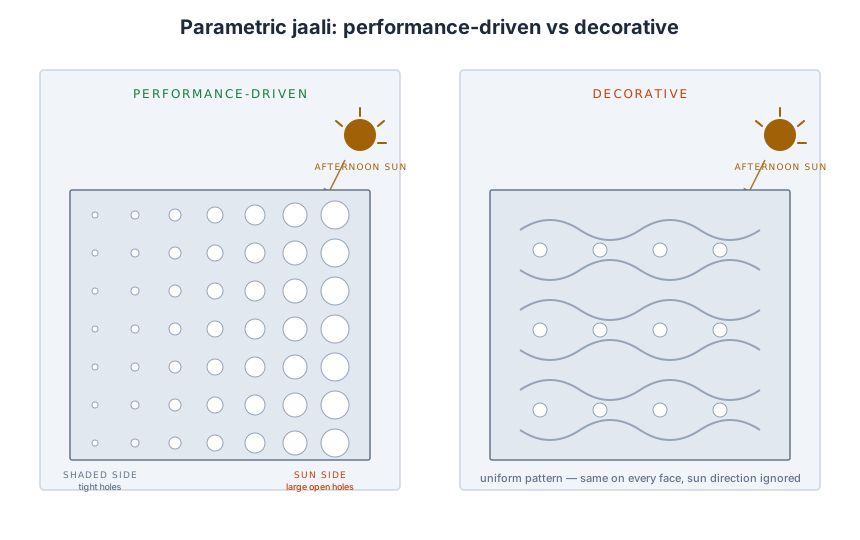
A parametric facade is one whose pattern and shape are generated by an algorithm rather than drawn shape-by-shape. The architect defines rules, such as "make the perforations bigger where the wall faces strong afternoon sun, and smaller where it faces the shaded courtyard," and feeds in parameters like sun angle, view direction and panel size. The software then produces thousands of slightly different panels that follow the rule. Change one number, and the whole pattern updates.
The honest distinction is this. A performance-driven parametric facade uses those rules to do real work: the holes really are bigger where shade is needed, so the geometry is solving a daylight and heat problem. A decorative parametric facade just uses the software to make a swooping, complicated pattern that looks expensive but performs no better than a flat wall, and often performs worse because the odd angles trap dust and complicate waterproofing.
For India this matters. A performance-driven parametric jaali (our traditional perforated screen, with the perforation pattern computed for the specific sun path) is a genuinely good idea that sits squarely in our tradition. A purely sculptural parametric skin of hundreds of unique, custom-bent panels is a budget trap: every panel is different, so replacing a damaged one means a custom order, and the complex joints leak in the monsoon. Beautiful on the render, painful on site.
3. Kinetic facades: skins that move with the sun
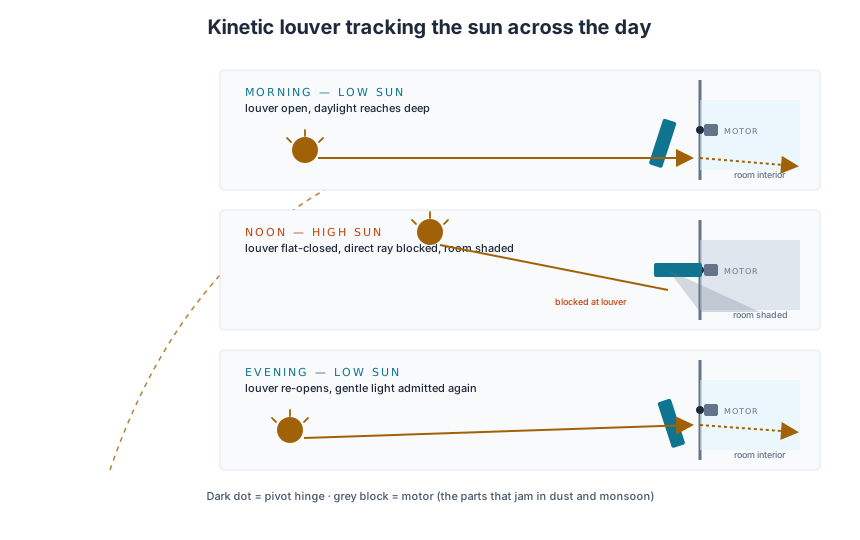
A kinetic facade has parts that physically move. The classic job is shading: louvers, fins, panels or folding screens that open when the sun is weak and close when it is strong, so the building gets daylight in the morning and protection at noon. Some track the sun continuously through the day, like a field of sunflowers; others simply switch between a few set positions.
The appeal is real. A fixed shade has to be a compromise: deep enough to block the harsh noon sun, which means it also blocks gentle winter light you might have wanted. A moving shade can have it both ways, opening up when shade is not needed and closing down when it is. On paper this means better daylight, lower glare and lower cooling load all at once.
The catch is that everything which moves can break. A kinetic facade is, in effect, hundreds of small machines bolted to the outside of a building, exposed to sun, rain, dust and birds, expected to cycle open and shut for twenty years. In the Indian context two things hit hard: monsoon (water in motors and tracks) and dust (which works into hinges and jams them). This is the single biggest reason to be sceptical: a fixed chajja or jaali has no moving parts and lasts the life of the building, while a kinetic system needs an annual maintenance contract that never ends.
4. Smart glass: glazing that tints on demand
Smart glass changes how transparent it is without anything moving. The two kinds worth knowing:
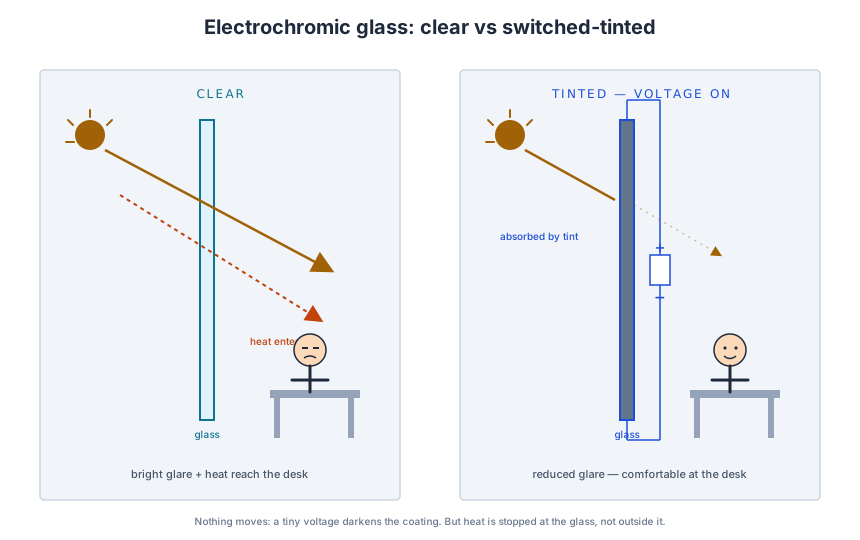
- Electrochromic glass tints when a tiny electric voltage is applied. A thin coating inside the glass darkens, like sunglasses you can switch on, going from clear to a deep tint over a few minutes. Switch the current the other way and it clears again. You, or an automatic system, control it. It uses very little power, only when changing state.
- Thermochromic glass tints by itself when it gets hot. There is no wiring and no control. The coating responds to temperature, so the glass darkens in the heat of the day and clears when it cools. Simpler and cheaper, but you cannot override it, and "hot" is not always the same as "too bright."
Both promise the dream of a glass building that does not cook its occupants: clear for the view and daylight, tinted to kill glare and heat when the sun is strong. For glass-heavy offices this is genuinely attractive, because it attacks the core weakness of glass curtain walls, namely solar gain and glare.
The honest limits for India: electrochromic glass is expensive (several times the cost of good double glazing), it tints to a blue-grey rather than going fully opaque, and even at its darkest it blocks far less heat than an external shade or louver would, because the heat is already at the glass. A basic principle of shading is that blocking the sun outside the glass beats anything you do at or inside the glass. Smart glass is a finishing touch for a building that already has good orientation and external shading, not a substitute for them.
5. How the moving parts actually decide: sensors, control, actuators
A responsive facade, kinetic or smart, is a small control loop, the same idea as a thermostat. Three things work together:
- Sensors are the senses. Light sensors measure brightness; temperature sensors read heat; some systems add rain and wind-speed sensors (high wind means open the louvers flat so they do not tear). Many systems skip a sun sensor entirely and simply calculate sun position from the date, time and location.
- Control logic is the brain. It takes the readings and decides what to do, for example "sun is high on the west face, close those louvers to 70 percent." This can be a fixed rule or, increasingly, a learning system that adjusts over time.
- Actuators are the muscles: the motors that move the louver, or the power supply that tints the glass.
When people say AI-driven or responsive envelope, they usually mean the control logic has been made cleverer: instead of a fixed rule, it predicts (using forecasts and learned patterns) and balances competing goals such as daylight, glare, view and energy at once. This is real and improving, and software is the cheap, low-risk part to get fancy with. The expensive, failure-prone part is always the physical actuators and joints. A sensible reading: be ambitious with the software brain, conservative with the moving muscles.
6. The smart-facade menu, and how each fits India
| Technology | What it is and how it works | Maturity | Honest India fit |
|---|---|---|---|
| Performance-driven parametric screen | Perforation/panel pattern computed from sun path and views; static once built, no moving parts | Mature, widely built | Strong. Extends our jaali tradition; no maintenance penalty. The safe way to be "smart" |
| Decorative parametric skin | Complex custom geometry chosen for looks, hundreds of unique panels | Mature but costly | Weak for most. Dust traps, waterproofing risk, custom-part replacement cost. Landmarks only |
| Kinetic louvers / fins | Motorised shades that rotate or fold to track the sun | Proven on flagship buildings, still niche | Cautious. High wow-factor and real shading gains, but motors and hinges suffer in dust and monsoon; needs lifelong maintenance contract |
| Folding / origami panel facade | Panels that fold open and shut over the whole skin | Mostly experimental / signature | Weak. Spectacular and fragile; for icons with maintenance budgets, not homes |
| Electrochromic (switchable) glass | Glass tints under a small voltage, controllable | Mature product, premium price | Niche. Good for glare on view-critical glass facades; costly and weaker than external shade against heat |
| Thermochromic glass | Glass self-tints when hot, no wiring | Emerging | Niche. Cheap and passive but uncontrollable; useful as one minor layer |
| AI / responsive control layer | Software brain driving louvers or glass using sensors and forecasts | Maturing fast | Promising. The cheapest part to upgrade; only as reliable as the hardware it drives |
| BIPV "smart" solar skin | Facade panels that generate electricity (covered in our solar guide) | Mature and improving | Strong on sunny faces; static, so no moving-part risk |
The pattern is clear. The technologies that are static (parametric screens that actually shade, BIPV) fit India well because they add intelligence without adding things that break. The technologies that move (kinetic louvers, folding panels) carry an ongoing cost and risk that only certain buildings can justify.
7. Real buildings, not renders
These are built, verified projects. Studying real ones is the antidote to the marketing.
- Al Bahar Towers, Abu Dhabi (Aedas Architects, completed 2012). The most famous kinetic facade in the world: two towers wrapped in a dynamic shading screen of folding umbrella-like units, a contemporary take on the Islamic mashrabiya (a traditional perforated screen). The units open and close to track the sun, reported to cut solar gain substantially. It is also a standing lesson in upkeep: a system this complex demands serious, continuous maintenance, exactly the trade-off Indian clients must weigh.
- Kiefer Technic Showroom, Graz, Austria (Ernst Giselbrecht + Partner, 2007). A small office building whose entire south facade is a grid of perforated metal panels that fold open and shut, individually, in changing patterns. A clear, legible demonstration that a fully kinetic skin works at modest scale.
- University of Southern Denmark (SDU), Kolding campus (Henning Larsen Architects, 2014). The facade carries roughly sixteen hundred triangular perforated steel shutters that open and close automatically in response to light and heat sensors. A well-documented working example of a sensor-driven kinetic envelope on a real, occupied academic building.
In India, fully kinetic moving facades on this scale remain rare, which is itself a useful signal about how the climate and maintenance economics play out. What India does have, and does superbly, is the static intelligent screen. The Pearl Academy of Fashion, Jaipur (Morphogenesis) wraps the building in a computed perforated jaali skin held away from the wall, doing the shading job through geometry and a ventilated cavity rather than motors, no moving parts, no maintenance contract. It is arguably the smarter answer for our climate than any motorised system, and it points to where India's real strength lies: making the screen clever instead of making it move.
8. The honest case: cost, maintenance and payback
Here is the candid summary every client deserves before being shown a moving-facade render.
The genuine pros. Adaptive shading that a fixed element cannot match; lower cooling loads and better daylight when tuned well; reduced glare without losing the view; and, undeniably, a powerful wow-factor and brand statement. For a flagship corporate HQ, museum or institution where image is part of the brief and a maintenance budget is guaranteed, these can be worth it.
The real cons. High upfront cost (kinetic systems and electrochromic glass cost several times their static equivalents). Moving parts fail, and in Indian dust and monsoon they fail faster: motors, tracks, hinges and seals all need regular service. When a louver motor dies, that bay is stuck, sometimes closed (dark room), sometimes open (no shade) until a technician comes. Payback on energy savings alone is usually long, often longer than the lifespan of the moving components, which means the business case rarely closes on energy and instead rests on image.
The blunt India verdict. For the large majority of Indian buildings, including almost all homes, simple fixed shading wins. A deep chajja, a verandah, a fixed jaali, a non-moving external louver, a pergola, all block the sun reliably for decades with no electricity, no sensors and no service contract. They are cheaper, calmer, more robust, and they sit in our own tradition. A facade that moves earns its place only where three things are all true: image genuinely matters and is in the budget; the owner has the means and discipline for lifelong maintenance; and a static shade cannot solve the problem (for example a facade that must open for a key view part of the day and shut against glare the rest). Where those do not all hold, the moving facade is a liability dressed as innovation.
What this means for you
If you are building a home, you almost certainly do not want a kinetic facade. The honest, climate-smart, low-maintenance move is a well-designed static shade: deep chajjas, a jaali screen, a verandah, fixed louvers oriented for your sun path. That is the genuinely intelligent residential facade, and it costs a fraction of anything motorised.
If you want one element of real "smart" sophistication, consider a performance-driven parametric screen (a jaali whose pattern is computed for your specific sun) or, on a glass-heavy face where glare is the problem and budget allows, a panel of switchable glass. Both add intelligence without adding things that jam.
If you are a developer or institution drawn to a moving, headline-grabbing facade, go in with eyes open. Budget not just the install but the twenty-year maintenance contract, ask the vendor for service records of an existing installation in a hot, dusty or monsoon climate, and insist that the energy and daylight benefit is modelled, not just asserted. Be ambitious with the control software, which is cheap to make clever, and conservative with the moving hardware, which is expensive when it breaks. Most of all, ask whether a smarter static screen would deliver most of the benefit for a fraction of the cost and risk. Very often, in India, it would.
To place this in the wider picture, read the pillar on why facades matter, the overview of facade types, and, for where the software brain is genuinely heading, AI and the future of residential design.
Sources
- Aedas Architects, project documentation for Al Bahar Towers, Abu Dhabi (kinetic mashrabiya shading screen, completed 2012).
- Ernst Giselbrecht + Partner, Kiefer Technic Showroom, Graz, Austria (dynamic folding-panel facade, 2007).
- Henning Larsen Architects, University of Southern Denmark (SDU) Kolding campus (sensor-driven triangular shutter facade, 2014).
- Morphogenesis, Pearl Academy of Fashion, Jaipur (computed perforated jaali screen with ventilated cavity).
- General references on parametric and performance-driven facade design, electrochromic and thermochromic switchable glazing, and building envelope control systems (sensors, control logic, actuators).
- Studio Matrx Building Facades series: why facades matter, types of facades, glass curtain walls, and AI in residential design.
Export this guide
Related Guides — Deep-dive reading
Energy-Efficient Facades in India: How the Building Skin Cuts Your Cooling, Heating & Lighting Bills
How a building facade drives cooling, heating and lighting energy in India, the three levers of solar-heat-gain control, insulation and daylighting, U-value, SHGC, VLT and WWR in plain terms, ECBC and Eco-Niwas expectations, and real Indian green buildings.
Building FacadesDouble-Skin & Ventilated Facades in India: The Layered Envelope That Buffers Heat, Noise & Glare
What a double-skin facade is, how the ventilated cavity cuts solar gain, noise and glare, the four cavity types, how it differs from a rainscreen, honest India cost and monsoon caveats, plus real examples.
Building FacadesThe Edge, Amsterdam: When the Office Became Software
PLP Architecture and developer OVG turned a Zuidas office block for Deloitte into a networked instrument — a north-facing atrium that breathes, a south facade paved in solar cells, an aquifer for a boiler, and roughly 28,000 sensors wiring every desk to a phone. A deep study of the building repeatedly called the world's smartest, and of the surveillance question its intelligence cannot switch off.
The Future of ArchitectureRelated Tools — Try Free
Brise-Soleil Visualizer
Interactive horizontal-louvre cut-off angle calculator — sun altitude, louvre depth, and spacing inputs with a live shadow preview. Computes θ = arctan(spacing/depth) for façade shading, ECBC envelope compliance, hospital daylight design, and tropical sun-control detailing.
Sun Shading ToolCross-Ventilation Analyzer
Estimate airflow and air changes per hour (ACH) from room size, window areas, layout, and local wind — with NBC 2016 Part 8 compliance check.
Ventilation CalculatorSmart Window ROI Calculator
Estimate payback, annual saving and 15-year ROI of switchable smart glass vs ordinary glazing.
Window Calculator