
Timber & Natural Facades in India: Wood Cladding That Lasts the Monsoon
Wood and natural-material building skins, their warmth and their honest upkeep in the Indian climate
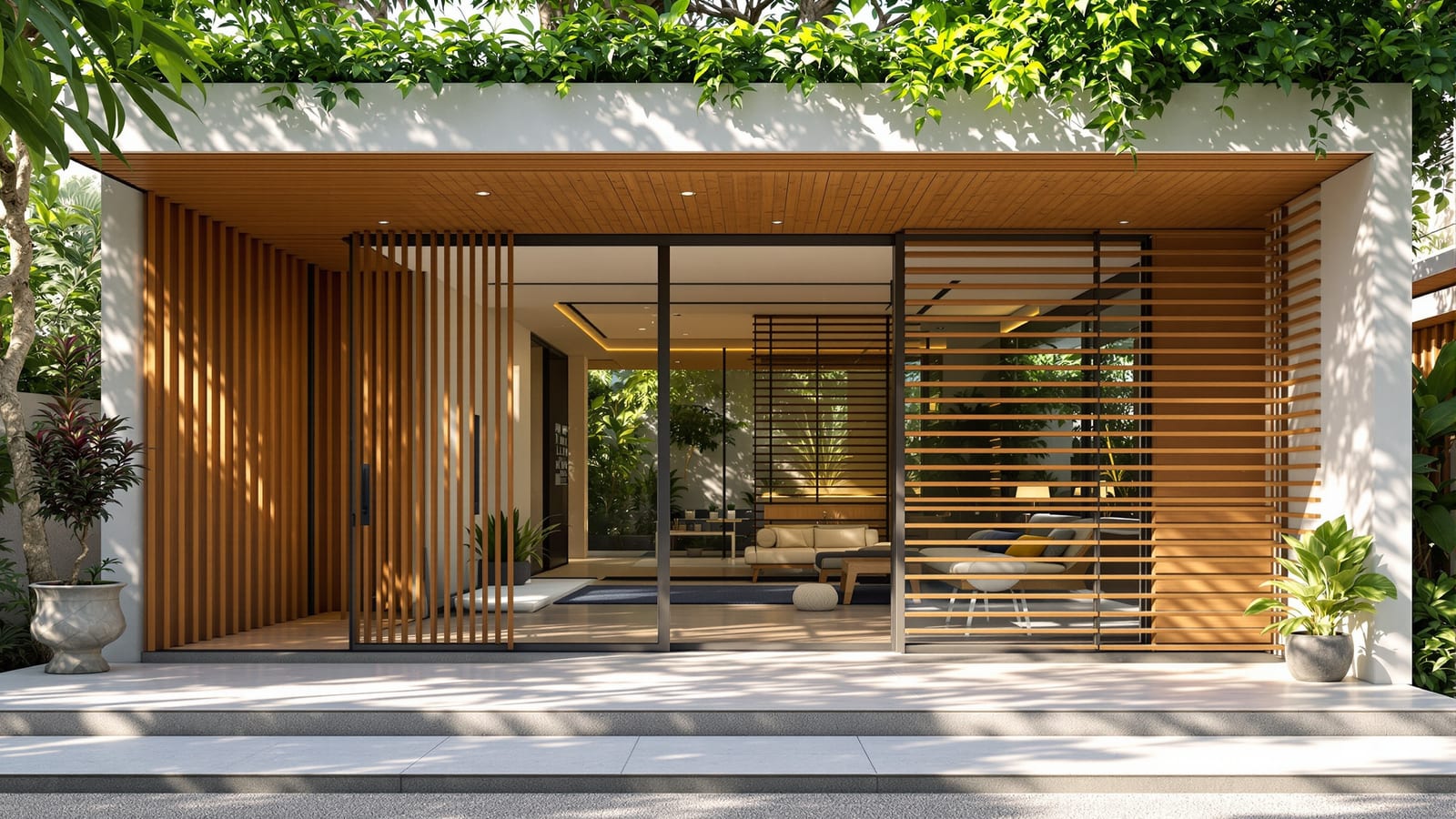
There is a reason a wooden facade stops people on the street. Stone is grand, glass is sleek, but timber is the only common building skin that feels alive and warm to the touch. It carries grain, it ages, it smells faintly of forest on a wet morning. For a country whose oldest homes were timber-framed Kerala nalukettus, Himalayan kath-kuni houses and Chettinad mansions with carved teak, wood on the outside of a building is not a foreign import. It is a homecoming.
But timber is also the one facade material that asks something of you in return. It is organic, which means in the Indian climate it is on a menu: rain wants to swell it, the sun wants to bleach it, termites and borers want to eat it, and fungus wants to live in it. None of this is a reason to avoid wood. It is a reason to choose the right species, detail it honestly, and go in with eyes open about the upkeep. This guide walks through what works on the humid coast versus the dry interior, which products are genuinely durable, and how to build a timber skin that survives the monsoon instead of rotting through it.
This is part of our Building Facades series. If you are new to the topic, start with why building facades matter for the big picture, and keep facade maintenance and durability handy, because with timber the maintenance plan is the design.
1. Why wood, and why it is having a moment in India
A timber facade does three things no other skin does at once. It adds visible warmth and human scale, it is renewable (a well-managed forest grows the next plank), and it carries far less embodied carbon than aluminium, cement or fired clay, because a tree pulls carbon out of the air as it grows. For homeowners chasing a calmer, more natural home, and for architects chasing a lower carbon footprint, wood ticks both boxes. We cover the carbon argument in depth in the future of green building materials.
The catch is honesty. Wood is hygroscopic, which is a fancy word for thirsty. It takes on water from humid air and rain, swells, then dries and shrinks. Repeat that cycle through monsoon and summer for years and untreated wood cups, cracks, greys and eventually decays. Add Indian termites (among the most aggressive in the world) and powder-post borers, and an unprotected softwood facade on the coast can look tired in two monsoons. Everything in this guide is about defeating those four enemies: moisture, UV, fungus and insects.
2. The species and products, from teak to engineered boards
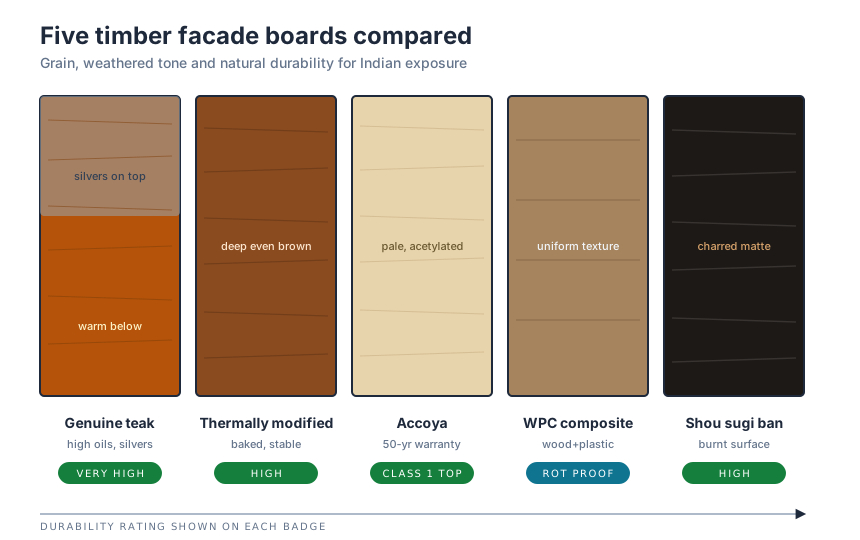
Not all wood is equal. Natural durability is graded by how long the heartwood resists decay and insects on its own. Below is a practical comparison for facade use in India.
| Species or product | What it is | Natural durability | Indian maintenance reality | Indicative relative cost |
|---|---|---|---|---|
| Burma teak (genuine) | The gold standard; high natural oils | Very high (decades untreated) | Very low; can be left to silver. Genuinely scarce and expensive; verify it is legal, not smuggled | Premium-plus |
| Indian / plantation teak | Faster-grown teak, lower oil content | High | Low to moderate; re-oil every 1 to 2 years for colour | Premium |
| Sal | Dense, strong North-Indian hardwood | Moderate to high | Heavy and hard to work; good for structure, less common as thin cladding | Moderate |
| Western red cedar | Light, stable softwood (imported) | Moderate (Class 3) | Needs stain or oil and a vented detail; can grey gracefully | Moderate to high |
| Thermally modified wood (e.g. Thermory, Lunawood) | Softwood baked at 200 C+ to remove sugars and water | High once modified | Very dimensionally stable, rot-resistant; UV still greys it; oil to hold colour | Moderate to high |
| Accoya | Pine acetylated (sugars chemically swapped) so it stops drinking water | Class 1 (top), 50-year above-ground warranty | Excellent in humid and coastal zones; expensive and imported | High |
| WPC (wood-plastic composite) | Wood flour + recycled plastic, extruded boards | Not real wood; very rot and termite resistant | Lowest maintenance; can fade and look plasticky; choose co-extruded grades | Low to moderate |
| Bamboo composite / strand-woven bamboo | Compressed bamboo strands and resin | High (treated) | Renewable and fast-growing; needs proper sealing; quality varies wildly | Low to moderate |
| Reclaimed timber (ship-deck, old beams) | Salvaged old-growth wood | Often high (dense old wood) | Character and low carbon; supply is irregular; check for old fasteners | Varies |
The honest takeaway: if budget is no object on the coast, genuine teak or Accoya. For most real Indian projects the sweet spot is thermally modified wood, plantation teak with a maintenance plan, or WPC where you want fit-and-forget. Avoid cheap, undurable softwoods (ordinary pine, rubberwood) on an exposed facade no matter how good the price looks.
3. Finishes: oil, stain, char, or let it grey
The finish decides both the look and how often you climb a ladder.
Penetrating oil (teak oil, tung, danish, or proprietary decking oils) soaks in and nourishes the wood. It keeps the warm honey colour but is the highest-maintenance route, often a recoat every 12 to 24 months in Indian sun.
Pigmented stain sits as a thin, breathable film with UV-blocking pigment. It lasts longer than oil (3 to 5 years between coats) and the more pigment, the more UV protection, which is why dark stains outlast clear ones outdoors.
Charred wood (shou sugi ban / yakisugi) is the Japanese technique of deliberately burning the surface. The carbon layer resists rot, UV and, to a degree, insects, and gives a dramatic matte-black skin. It is increasingly seen on Indian villas; Architecture Discipline used charred cladding on the Goa Timber Residence. It still needs occasional oiling if you want the deep black to stay even.
Let it weather to grey is the lowest-maintenance philosophy: choose a naturally durable species (teak, cedar, thermally modified), apply nothing, and accept that it will silver over 1 to 2 years. This is honest and beautiful, but the greying is rarely even, especially where rain hits unevenly, so it suits rural and informal settings more than a crisp urban front.
A word of warning: do not use ordinary indoor varnish or PU lacquer outdoors. It forms a hard film that cracks under thermal movement, lets water creep underneath, and then peels in ugly flakes that are miserable to strip back.
4. The detail that makes or breaks it: the ventilated cavity
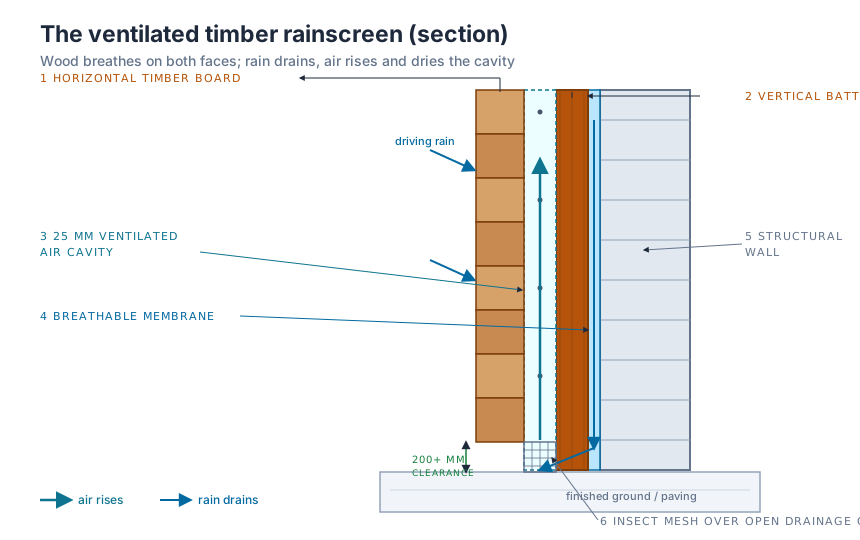
If you remember one technical idea from this guide, make it this: never stick timber flat onto a wall. Wood needs to breathe on both faces. The professional standard is a ventilated rainscreen, the same principle behind a ventilated rainscreen facade, adapted for wood.
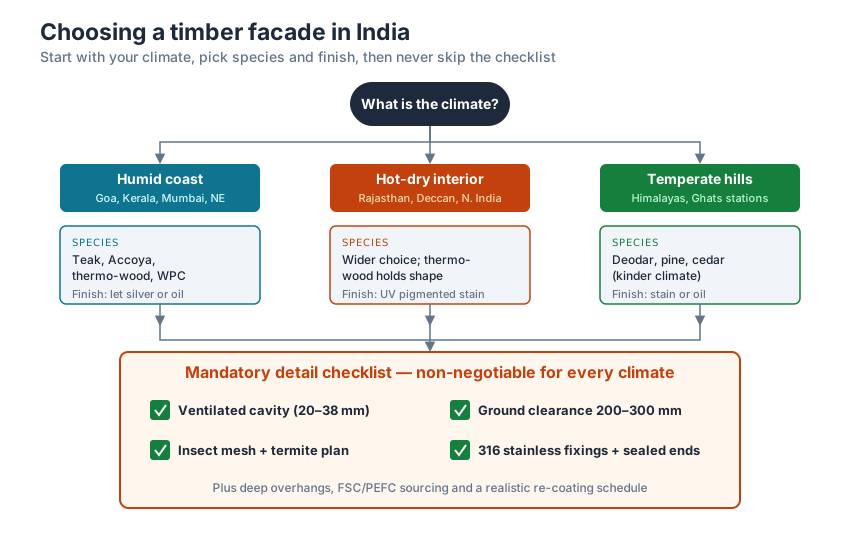
The cladding is screwed to vertical battens fixed over the structural wall, leaving an air gap (typically 20 to 38 mm). Behind the battens is a breathable waterproof membrane. The gap is open at the bottom and top so air rises through it. Any rain that gets behind the boards runs down the membrane and drains out at the base; the moving air dries the back of each board after every shower. This single move is the difference between a facade that lasts thirty years and one that traps water and rots in five.
Other non-negotiable details for India:
- Ground clearance. Keep the bottom of the cladding at least 200 mm (ideally 300 mm on the coast) above finished ground or paving. Splashback and rising damp kill the lowest boards first.
- Insect mesh. Fit a fine stainless or PVC mesh over the open cavity gaps so the breathing slot does not become a wasp hotel or a termite highway.
- Drip edges and overhangs. A generous roof overhang or chhajja keeps most rain off the wall in the first place; it is the oldest and cheapest timber-protection device in Indian architecture.
- End-grain sealing. The cut ends of boards drink water fastest; seal every end-grain cut on site before fixing.
- Stainless or hot-dip galvanised fixings. Ordinary steel screws rust, stain the wood and fail. On the coast, use A4 / 316 stainless.
5. Termites and the monsoon: India-specific defences
Indian conditions are harsh on timber in ways European product brochures gloss over. Two enemies deserve their own plan.
Termites. Subterranean termites travel up from the soil. Defend in layers: a termite-treated soil barrier at construction, physical separation (the ground clearance above), naturally resistant or treated wood, and an annual inspection of the lowest boards and any timber-to-masonry contact. Boron-based timber treatments are effective and far less toxic than older chemicals; pressure-treated or borate-treated boards are worth the premium on any species that is not naturally termite-resistant. WPC and composites sidestep the problem entirely, which is part of their appeal.
Monsoon moisture. The ventilated cavity does the heavy lifting, but orientation matters too. The wall that faces the prevailing monsoon (typically the south-west on the west coast) takes the most driving rain; use your most durable species and deepest overhang there, or switch that elevation to a non-timber skin. Detail horizontal boards so water sheds outward, and never create flat upward-facing ledges where water pools.
6. Coast versus interior: what actually survives where
This is the question that decides everything, and the answer is not the same across India.
Humid coast and high-rainfall zones (Goa, coastal Kerala and Karnataka, Mumbai, the North-East): relentless rain, salt-laden air and year-round humidity. Here, natural durability and stability win. Choose teak, Accoya, thermally modified wood, or composites. The ventilated cavity and stainless fixings are mandatory, not optional. Cedar and softwoods struggle unless very well protected. Expect to re-oil more often if you want to hold colour; many coastal homes simply let durable species silver.
Hot-dry interior (Rajasthan, interior Deccan, much of North India): the enemy flips from water to UV and big day-night thermal swings that crack and check the surface. Moisture is less of a threat, so a wider range of species works, but pigmented stain or oil with strong UV protection becomes the priority, and you will re-coat sun-facing elevations more often than shaded ones. Dimensional stability still matters because the dry heat shrinks boards; thermally modified wood and engineered products hold their shape best.
Temperate hills (Himalayas, Western Ghats hill stations): the traditional home of Indian timber building. Deodar and pine were used for centuries; the climate is kinder, but freeze-thaw and heavy rain in places still demand the cavity detail and a good finish.
The Spice Village resort in Thekkady, Kerala (CGH Earth) is a useful real lesson: it leans on elephant-grass thatch and local timber crafted by the Mannan community, materials chosen because they suit that wet highland climate and can be maintained locally, rather than imported finishes that no one nearby can service.
7. Real Indian timber facades worth studying
These are built, documented projects, not renders, and each teaches something.
- Timber Residence, Vagator, Goa, by Architecture Discipline. Claimed as India's first mass-timber home, with glued-laminated (glulam) portal frames and charred wooden cladding panels facing the Arabian Sea. A clear demonstration that engineered timber and shou-sugi-ban can work on the humid coast when detailed properly.
- Bridge House, Karjat, Maharashtra, by Wallmakers (Vinu Daniel). An inhabited bridge that uses reclaimed ship-deck timber alongside thatch and mud, showing how salvaged old-growth wood gives both character and a low carbon story.
- Spice Village, Thekkady, Kerala, by CGH Earth. A long-running eco-resort built from local timber and thatch with native craft, proof that locally serviceable natural materials are a sustainability strategy in their own right.
- Louvered House, Thrissur, Kerala, by i2a Architects Studio. Wooden louvers as a climate-responsive timber screen, filtering harsh tropical light and rain while keeping the wall behind shaded and ventilated.
- Courtyard house with giant wood louvers, Bangalore, by Kamat & Rozario Architecture. Oversized timber louvers on the street face that double as shading and privacy on a tight urban plot.
Notice the pattern: the successful Indian examples either pick a naturally durable or salvaged wood, protect it with deep shade and ventilation, or use timber as a screen and louver (where it dries fast) rather than a sealed flat wall.
8. Sourcing wood you can be proud of
A timber facade is only genuinely green if the wood was harvested legally and responsibly. India has strict rules on certain species, and illegally logged teak and rosewood do circulate in the market. Protect yourself and the forest:
- Ask for FSC or PEFC certification (chain-of-custody documents that trace the wood to a responsibly managed forest). Reputable suppliers can produce them.
- Be sceptical of cheap "Burma teak." Genuine old-growth Burmese teak is scarce and costly; a bargain price is a red flag for smuggled or mislabelled wood.
- Prefer plantation-grown, reclaimed, or fast-renewing options (plantation teak, certified thermally modified softwood, bamboo composite, reclaimed timber). These take pressure off natural forests.
- Keep your paperwork. For protected species, transit and source documents matter, both ethically and legally.
What this means for you
A timber facade is one of the most rewarding things you can put on an Indian home, and one of the easiest to get wrong. The decision is not really wood or no wood; it is whether you will commit to the package that makes wood last. That package is: the right species for your climate, a ventilated cavity behind the boards, generous ground clearance and overhangs, stainless fixings, a termite plan, and a realistic re-coating schedule you actually intend to keep.
If you want warmth with the least fuss, lean on naturally durable or modified woods (teak, Accoya, thermally modified) and let them silver, or use WPC where maintenance worries you most. If you love the honey glow, accept the oiling cycle. Either way, plan the maintenance before you order the wood, not after the first monsoon, and read facade maintenance and durability alongside this. Where timber feels too demanding for an exposed elevation, mix it: a sheltered timber feature wall plus a hardier skin elsewhere often gives the warmth without the worry. Browse the full types of building facades overview to see how wood sits beside stone, terracotta and brick, and revisit why facades matter for the design fundamentals.
Sources
- Architecture Discipline, Timber Residence, Vagator, Goa, published on ArchDaily and Wallpaper (India's first mass-timber home; glulam frames and charred cladding).
- Wallmakers (Vinu Daniel), Bridge House, Karjat, Maharashtra, published on Designboom and Wallpaper (reclaimed ship-deck timber and thatch).
- CGH Earth, Spice Village, Thekkady, Kerala (local timber and elephant-grass thatch, Mannan craft).
- i2a Architects Studio, Louvered House, Edamuttom, Thrissur, Kerala, published on ArchDaily (wooden louvers for tropical climate).
- Kamat & Rozario Architecture, courtyard house with wood louvers, Bangalore, published on The Architect's Diary.
- Thermory, "Thermally modified wood" and "How does thermally modified wood perform in different climates" (thermal modification and climate performance).
- Accoya, product and durability documentation (acetylation; Class 1 durability; 50-year above-ground warranty).
- Forest Stewardship Council (FSC) and PEFC chain-of-custody certification guidance for responsible timber sourcing.
Export this guide
Related Guides — Deep-dive reading
Designing a Naturally Energy-Efficient Indian Home
Comfort first, gadgets last — passive design, orientation, insulation, ventilation and the climate wisdom that cuts Indian energy bills
SustainabilityLaurie Baker's Façade Signature: Brick Jaali, Rat-Trap Bond and the Honest Low-Cost Indian Wall
How India's "Gandhi of architecture" turned cheap, honest, climate-wise materials — exposed brick, the perforated brick jaali, rat-trap bond and curved walls — into the most affordable and most beautiful façade in the country.
Building FacadesBest Window Material for Monsoon Regions (India): Beating Rain, Swell and Rust
For Kerala, the Konkan, the Northeast, the Western Ghats and Mumbai: which frame shrugs off driving rain, humidity, swelling and rust.
Windows & GlazingRelated Tools — Try Free
Cross-Ventilation Analyzer
Estimate airflow and air changes per hour (ACH) from room size, window areas, layout, and local wind — with NBC 2016 Part 8 compliance check.
Ventilation CalculatorBefore vs After — Cost Reality Check
Compare what you expected to pay vs what you actually paid, category by category.
Reality CheckBrise-Soleil Visualizer
Interactive horizontal-louvre cut-off angle calculator — sun altitude, louvre depth, and spacing inputs with a live shadow preview. Computes θ = arctan(spacing/depth) for façade shading, ECBC envelope compliance, hospital daylight design, and tropical sun-control detailing.
Sun Shading Tool