
Energy-Efficient Facades in India: How the Building Skin Cuts Your Cooling, Heating & Lighting Bills
How a building facade drives cooling, heating and lighting energy in India, the three levers of solar-heat-gain control, insulation and daylighting, U-value, SHGC, VLT and WWR in plain terms, ECBC and Eco-Niwas expectations, and real Indian green buildings.
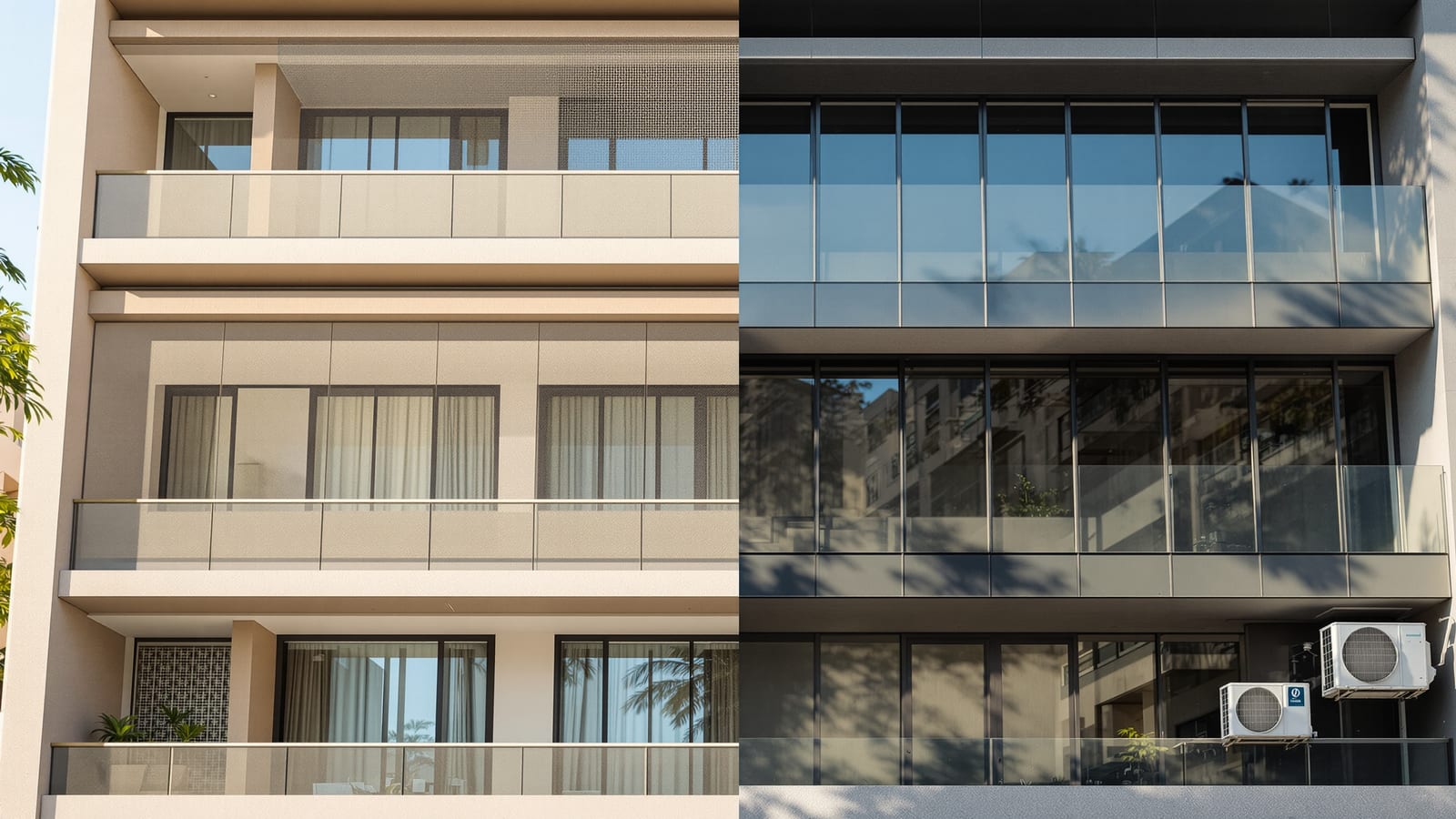
Walk past any new building in an Indian city on an afternoon in May and you can almost feel which ones are fighting their own skin. The glass boxes are roaring with air-conditioning, their bills climbing every summer. The buildings that stay calm and cool have usually done something quieter and cheaper: they shaded their walls, insulated them, and let in daylight without the heat. That is the subject of this guide. Your facade, the outer skin of your home or office, is the single biggest lever you have over how much energy the building burns to keep you comfortable.
In India the stakes are mostly about cooling. For most homes and offices the largest single chunk of the electricity bill is the air-conditioner, and the AC is mostly fighting heat that came in through the walls, the roof and above all the windows. Get the facade right and it has far less to do. International and Indian studies broadly agree that a well-designed building envelope can cut a building's energy demand by roughly 20 to 40 percent compared with a careless one. That is a real range, not a slogan, and where you land in it depends on how much you do and how honestly you do it.
This is part of our Building Facades series. For the big picture of how facades are built and classified, start with types of building facades. Two close siblings are worth reading alongside this one: glass curtain-wall facades, which explains the all-glass building this guide keeps warning about, and climate-responsive facades, which goes deeper into designing for each Indian climate zone. If you want the certification angle, see green building certifications.
1. How the facade actually drives your energy bill
Three kinds of energy use run through every conditioned building, and the facade touches all three.
Cooling. Heat leaks into your building three ways through the skin: it conducts slowly through solid walls, it pours in fast and fierce as sunlight through glass, and it sneaks in through gaps as hot outside air. Every watt that gets in is a watt your AC must pump back out, and pumping heat out costs several times more electricity than the heat itself represents. So a small leak through the facade becomes a large bill at the meter.
Heating. Most of India does not heat much, but the hill states, the far north and parts of the northwest get genuinely cold winters. There the same insulation that keeps summer heat out keeps winter warmth in. A facade that is good at one is usually good at the other.
Lighting. Lights are a smaller slice of the bill, but they matter twice over: the electricity to run them, and the heat they dump into the room for the AC to remove. A facade that brings in good daylight lets you switch the lights off for most of the day, saving on both counts.
The trick that catches people out is that these three pull against each other. A big window brings lovely daylight (good) but also a flood of solar heat (bad) and a path for conductive loss (bad). The art of an energy-efficient facade is balancing them, and the rest of this guide is the three levers you pull to do it.
2. Lever one: control the solar heat before it gets in
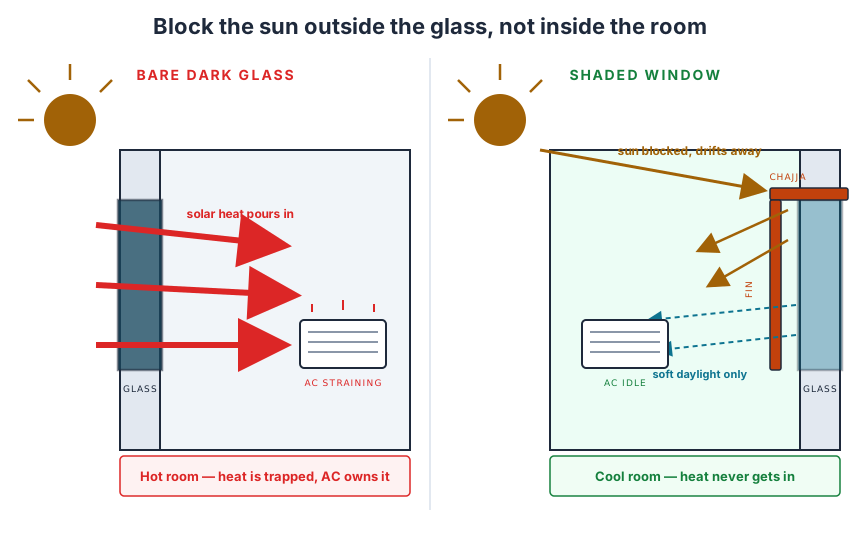
This is the most important lever in India, full stop. Sunlight hitting glass is the fastest, fiercest way heat enters a building, and the cheapest place to stop it is outside the glass, before it ever arrives.
External shading first. A horizontal shade (a chajja or overhang) above a south window, vertical fins beside an east or west window, a jaali screen, a pergola, a deep balcony, a louvre: all of these block sunlight while it is still outside, where the heat it carries simply drifts away on the breeze. This is why traditional Indian buildings are covered in chajjas and jaalis. They are not decoration; they are climate engineering that our ancestors worked out centuries ago. External shading is far more effective than any glass coating, because once sunlight is through the glass and inside the room, the heat is trapped and your AC owns it.
Then better glass. Where you cannot shade, or for the glass that remains exposed, you choose glass that lets light through but blocks heat. Two tools do this: Low-E (low-emissivity) coatings, a microscopically thin metallic layer that reflects infrared heat back outside while letting visible daylight pass, and double-glazed units (DGUs), two panes of glass with a sealed gap that slows heat. Reflective and tinted coatings also cut heat but at the cost of daylight, so they are a blunter tool. The honest order of priority is: shade first, good glass second, because shading is cheaper per unit of heat blocked and never wears out.
Light colours and reflective surfaces. A pale wall or a cool-roof coating reflects sunlight instead of soaking it up. A dark facade can run 15 to 20 degrees Celsius hotter than a light one in the same sun, and that heat conducts inward all evening. Light, reflective external finishes are one of the cheapest energy moves available, especially on roofs and west walls.
3. Lever two: insulate so heat conducts in slowly
Shading stops radiant sun. Insulation slows the steady, all-day creep of heat conducting through solid walls and roof. In a hot Indian summer the outside surface of a wall can sit at 50 degrees or more; insulation is what stops that from arriving inside your bedroom by evening.
Insulated and thermally massive walls. A thick wall, or a wall with an insulating layer, takes much longer to pass heat through. AAC blocks (autoclaved aerated concrete, the light grey blocks full of tiny air bubbles) have become the popular Indian choice because they insulate far better than dense brick or solid concrete while staying cheap and easy to build with. Their trapped air does the work, the same principle as a thermos flask.
Cavity walls. Two leaves of wall with an air gap between them slow heat dramatically, because still air is a poor conductor. The cavity can be left as air or filled with insulation board for even better performance.
Double-skin facades. On larger buildings, a second outer screen with a ventilated air gap behind it can carry away absorbed heat before it reaches the real wall. This is the engineered, big-budget version of the same idea, covered in its own guide.
Reduced thermal bridging. A thermal bridge is a spot where heat takes a shortcut through your insulation, typically an exposed concrete slab edge, a metal frame, or a balcony that runs straight from inside to outside. These cold (or hot) spots quietly leak heat and breed condensation and mould. Good detailing wraps insulation continuously and breaks these bridges, and it is the kind of invisible quality that separates a careful builder from a careless one.
4. Lever three: daylight without the heat or glare
Free daylight is one of the great gifts of a good facade, but it has to be handled, or it turns into glare and heat.
Right-sized openings. Bigger is not better. A window has to be large enough to light the room and no larger, because every extra square metre of glass is extra heat to manage. The professional measure here is the window-to-wall ratio (WWR), the share of the wall that is glass; more on that in the next section.
Light shelves. A light shelf is a horizontal ledge fixed partway up a window. It does two jobs at once: it shades the lower part of the window from direct sun, and it bounces daylight off its top surface deep onto the ceiling, pushing soft, even light far into the room. It is a simple, low-cost device that lets you cut window size without losing daylight.
Glare control. Daylight that hits your eye directly, or reflects off a screen, is glare, and it causes the headaches, squinting and discomfort that make people pull the blinds and switch the lights on, defeating the whole point. The cure is to bring light in high and indirect, through clerestory windows, light shelves, well-placed shading and diffusing glass, so the room is bright but the source is never in your eyes.
Get this right and you light the building for free through the day, save the lighting electricity, save the heat those lights would have dumped, and get the proven comfort and mood benefits of natural light. Get it wrong and you build a greenhouse.
5. The four numbers that matter, in plain terms
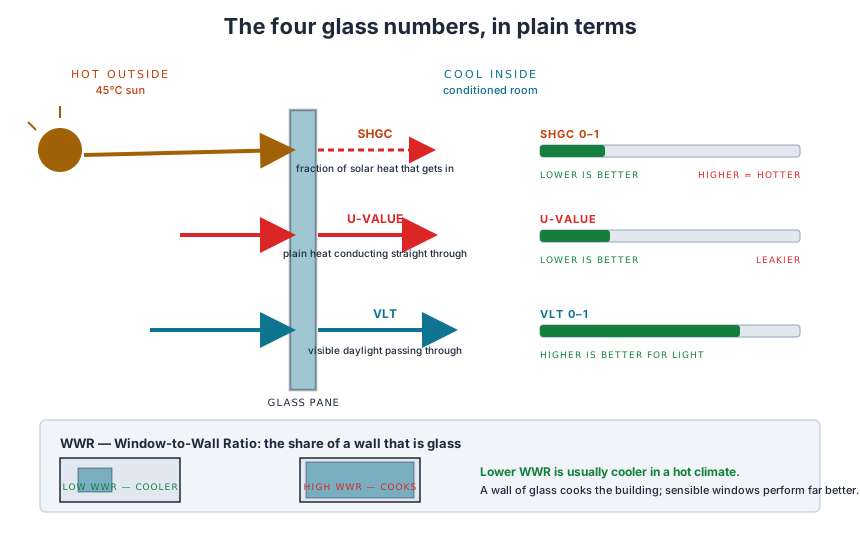
Facade performance comes down to four metrics. You do not need to calculate them, but you must understand them when a glass supplier or architect quotes them, because this is where buildings are won or lost.
- U-value measures how fast heat conducts straight through a wall or window. Lower is better. A single sheet of glass might have a U-value around 5.7; a good double-glazed unit can be under 2. Think of it as how leaky the surface is to plain heat.
- SHGC (Solar Heat Gain Coefficient) is the fraction of the sun's heat that gets through the glass, on a scale of 0 to 1. Lower is better in India. An SHGC of 0.25 means only a quarter of the solar heat hitting the glass comes inside; clear glass might be 0.8. This is usually the single most important glass number for an Indian building.
- VLT (Visible Light Transmittance) is the fraction of visible daylight that gets through, 0 to 1. Higher is generally better for daylighting. The catch is that cheap heat-blocking glass often also blocks light, leaving rooms gloomy. The prize glass has low SHGC but high VLT: it blocks heat but lets light through. This ratio (sometimes called the light-to-solar-gain ratio) is the mark of genuinely good glass.
- WWR (Window-to-Wall Ratio) is the percentage of the facade that is glass rather than solid wall. Lower is usually cooler in a hot climate. A wall of glass looks impressive and cooks the building; a wall with sensible, well-placed windows performs far better.
The single most useful habit: when anyone quotes you a "high-performance" glass, ask for its SHGC, U-value and VLT numbers in writing. Vague adjectives are how poor glass gets sold.
6. What ECBC and Eco-Niwas Samhita expect of your envelope
India does not leave this to good intentions. Two national codes set minimum facade performance.
ECBC (Energy Conservation Building Code) covers commercial buildings above a certain connected load. It sets envelope rules: maximum U-values for walls and roofs, maximum SHGC for windows depending on how much glass you have and your climate zone, and limits that effectively discourage huge unshaded glass walls. The more glass you use (higher WWR), the lower the SHGC you are forced to use, which is the code's polite way of saying "if you insist on a glass building, the glass had better be very good."
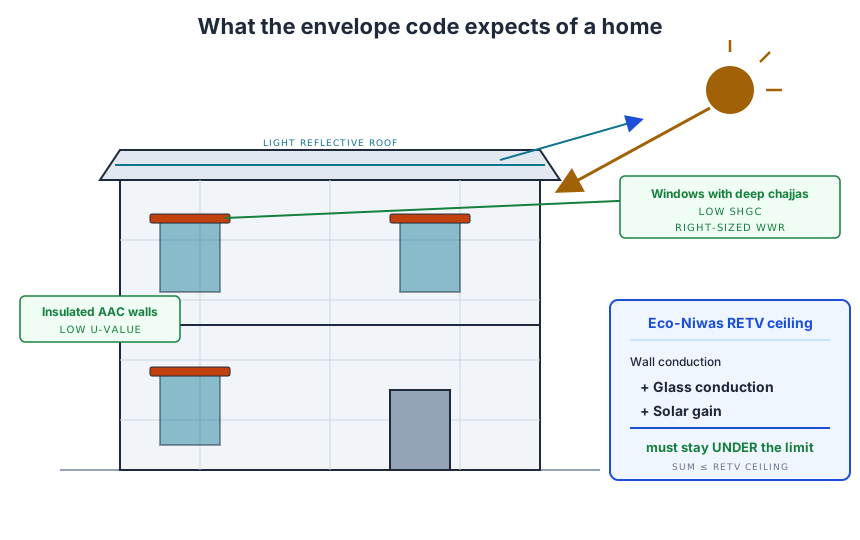
Eco-Niwas Samhita is the residential counterpart, the energy code for homes. It is built around a headline number called the Residential Envelope Transmittance Value (RETV) for most of India, which rolls up wall conduction, glass conduction and solar gain into one figure for the whole envelope, with a ceiling you must stay under. It deliberately rewards the cheap, sensible moves this guide describes: shade your windows, use lighter walls like AAC, keep glass reasonable, and orient the building well. You can hit the target without a single piece of expensive imported glass if you shade and orient cleverly.
The practical point for you as a homeowner or client: these codes exist, larger projects must comply, and even for a small home the Eco-Niwas approach is a free checklist for a cooler, cheaper house. Hitting them also feeds directly into green building certifications like GRIHA, IGBC and LEED, where the facade typically earns a large share of the points.
7. The honest 20 to 40 percent: where the savings really come from
It is worth being straight about that headline figure. A high-performance facade can cut building energy demand by 20 to 40 percent, but the savings are not evenly earned, and the cheap moves do most of the work.
The biggest, cheapest wins come from passive design: orienting the building so the long faces look north and south (easy to shade) rather than east and west (almost impossible to shade in the harsh low morning and evening sun), then shading the windows properly, then keeping the glass area sensible, then using light walls and pale colours. These cost little or nothing extra if decided early, and they often deliver the lion's share of the saving.
The expensive moves, imported Low-E DGUs, double-skin facades, automated shading, deliver real but smaller marginal gains, and only make sense after the cheap moves are done. This is the core message of this guide and the reason every honest facade engineer says the same thing: passive first, glass last. Spending lakhs on triple-glazed glass for an unshaded west wall is pouring money into the worst possible orientation. Spending a fraction of that on a deep overhang and good orientation would have saved more.
| Lever | Specific measure | Typical effect on energy and comfort |
|---|---|---|
| Solar heat gain control | Deep external shading (chajja, fins, jaali) | Largest cheap win; blocks heat before it enters; can cut window heat gain dramatically |
| Solar heat gain control | Low-E double-glazed units (DGU) | Cuts conductive and radiant heat through exposed glass; significant but costly |
| Solar heat gain control | Light colours and cool-roof coatings | Reflects sun; very cheap; cooler surfaces all day, especially roofs and west walls |
| Thermal insulation | AAC blocks instead of dense brick or RCC | Slows conductive heat; cheap and standard in India; cooler interiors |
| Thermal insulation | Cavity wall or double-skin facade | Strong heat reduction; cavity carries heat away; higher cost and detailing |
| Thermal insulation | Breaking thermal bridges (slab edges, frames) | Stops hidden heat leaks and condensation; quality-of-detailing win |
| Daylighting | Right-sized openings and low WWR | Enough light, less heat; the simplest balance lever |
| Daylighting | Light shelves and clerestory windows | Daylight pushed deep into rooms; lights off through the day |
| Daylighting | Glare control (diffusing glass, high indirect light) | Comfortable bright rooms; people actually keep lights off |
8. Indian buildings where the facade did the work
These are real, well-documented Indian buildings, not invented examples.
CII-Sohrabji Godrej Green Business Centre, Hyderabad. When it opened in 2004 it was rated among the greenest buildings in the world (LEED Platinum). A central part of its strategy was the envelope: heavily shaded and insulated walls and well-managed daylight, so the building stayed comfortable while sharply cutting its cooling and lighting energy compared with a conventional office of the same size.
Infosys campuses (Mysuru, Hyderabad, Pune and others). Infosys has been one of India's most public champions of low-energy buildings, and its newer office blocks lean hard on the envelope: shaded facades, sensible window-to-wall ratios, insulated walls and radiant cooling, with several buildings reporting roughly half the energy use of older, more glass-heavy ones. The lesson their own engineers repeat is that they reduced glass and improved shading, not the reverse.
ITC Green Centre, Gurugram. One of the early large LEED Platinum office buildings in India, where a well-insulated, well-shaded envelope was an explicit part of bringing energy use down.
Suzlon One Earth, Pune. A campus designed around climate, with extensive external shading, louvres and daylighting on its facades, widely cited as a flagship of energy-efficient Indian office design.
The common thread is the unglamorous one: across these celebrated green buildings, the facade saved energy mostly by shading and insulating and daylighting well, not by buying the most exotic glass. The expensive technology, where used, sat on top of sound passive design, never instead of it.
What this means for you
If you are building or renovating in India, the order of priority for an energy-smart skin is clear and it is mostly cheap:
- Orient first. If you have any say in the building's footprint, turn the long faces to north and south. This decision is free and it shapes everything after.
- Shade before you glaze. A deep chajja, fins or a jaali on east and west windows will save you more, for less money, than any premium glass. Do this even on a tight budget.
- Keep glass sensible. Right-size windows for light and view; resist the wall-of-glass temptation. Lower window-to-wall ratio means lower bills.
- Insulate the solid bits. AAC blocks, light external colours and a reflective roof are low-cost and pay back fast in cooling.
- Spend on glass last. Once shading and orientation are sorted, then consider Low-E DGUs for the glass that remains exposed, and ask for the SHGC, U-value and VLT numbers in writing.
- Use the codes as a free checklist. Even for a small home, the Eco-Niwas Samhita logic points you straight at the cheapest cooling wins.
Do the cheap things well and you capture most of that 20 to 40 percent saving, you get a quieter, steadier, more comfortable home, and you stop paying every summer for a mistake baked into the walls. The facade is the one part of the building that keeps earning, or keeps costing, for its entire life. Spend your attention there first.
To go deeper, read the climate-responsive facades guide for zone-by-zone strategy, the glass curtain-wall facades guide for the honest truth about all-glass buildings, and green building certifications to see how envelope performance turns into ratings.
Sources
- Bureau of Energy Efficiency (BEE), Energy Conservation Building Code (ECBC) — envelope and glazing provisions.
- Bureau of Energy Efficiency (BEE), Eco-Niwas Samhita (Energy Conservation Building Code for Residential Buildings) — Residential Envelope Transmittance Value (RETV) framework.
- Indian Green Building Council (IGBC) and GRIHA Council — green building rating criteria and envelope credits.
- CII-Sohrabji Godrej Green Business Centre, Hyderabad — building documentation and LEED Platinum case material.
- Infosys Limited sustainability and green-building reports — campus energy-efficiency disclosures.
- ITC Green Centre, Gurugram, and Suzlon One Earth, Pune — published green-building case studies.
- ASHRAE and general building-science references for U-value, SHGC, VLT and window-to-wall ratio definitions.
Export this guide
Related Guides — Deep-dive reading
Designing a Naturally Energy-Efficient Indian Home
Comfort first, gadgets last — passive design, orientation, insulation, ventilation and the climate wisdom that cuts Indian energy bills
SustainabilityFloor-to-Ceiling Windows (India): Maximum Light, and the Heat Trade-Off
Full-height glazing for Indian homes — how to win the daylight and view without losing the energy code, comfort or safety.
Windows & GlazingBrise-Soleil, Louvre and Fin Facades in India: Fixed External Sun-Shading That Beats the Heat
A plain-English guide to fixed external shading — horizontal louvres, vertical fins, eggcrate, baguettes and chajjas — and how to size and orient them by facade direction so they actually stop the sun before it hits your glass.
Building FacadesRelated Tools — Try Free
Brise-Soleil Visualizer
Interactive horizontal-louvre cut-off angle calculator — sun altitude, louvre depth, and spacing inputs with a live shadow preview. Computes θ = arctan(spacing/depth) for façade shading, ECBC envelope compliance, hospital daylight design, and tropical sun-control detailing.
Sun Shading ToolCross-Ventilation Analyzer
Estimate airflow and air changes per hour (ACH) from room size, window areas, layout, and local wind — with NBC 2016 Part 8 compliance check.
Ventilation CalculatorWindow Energy Savings Calculator
Compare standard glazing vs Low-E and DGU windows — annual cooling savings, 10-year savings and payback.
Window Calculator