
Double-Skin & Ventilated Facades in India: The Layered Envelope That Buffers Heat, Noise & Glare
What a double-skin facade is, how the ventilated cavity cuts solar gain, noise and glare, the four cavity types, how it differs from a rainscreen, honest India cost and monsoon caveats, plus real examples.
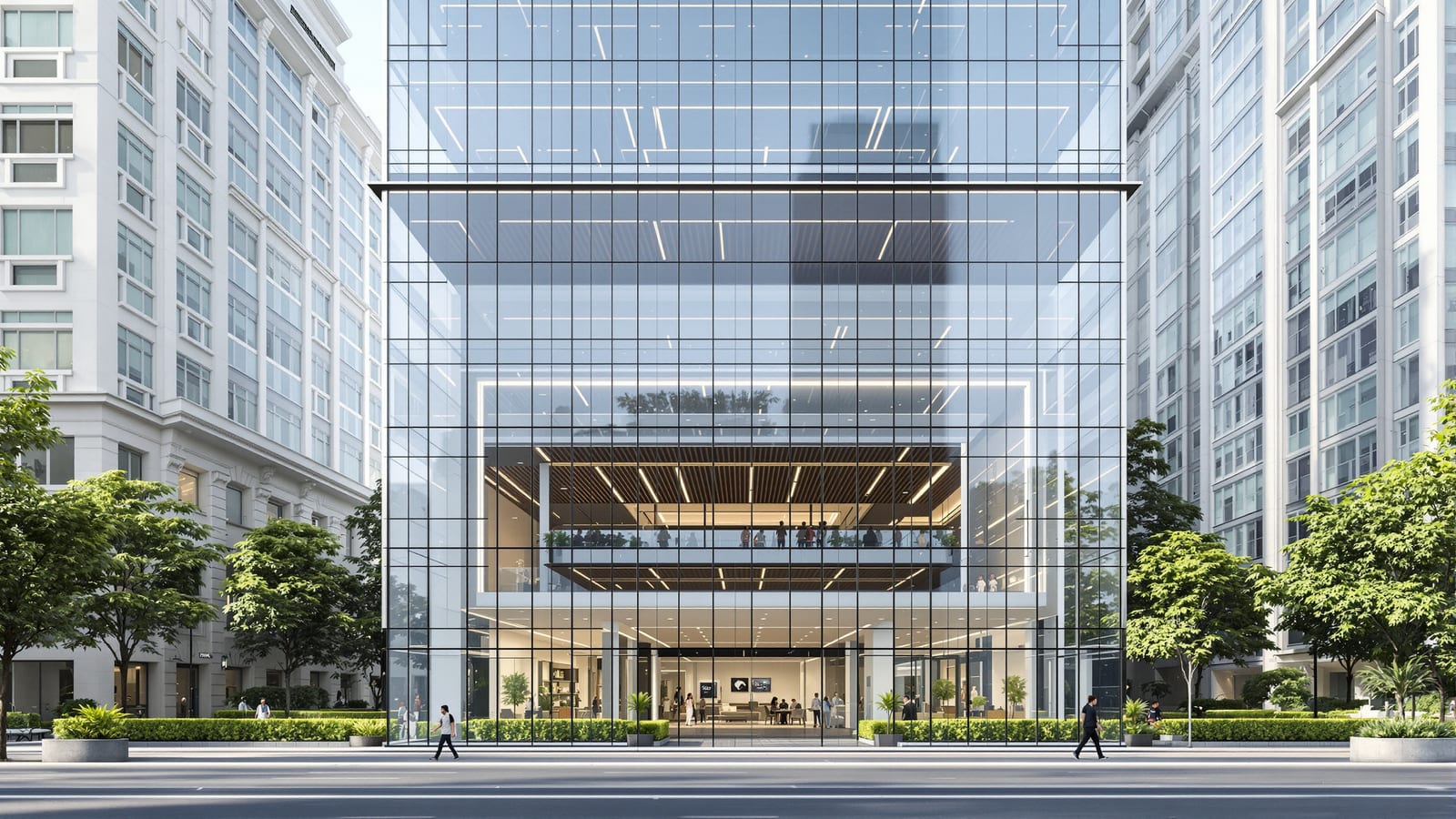
A double-skin facade is, in plain terms, a building wearing two jackets with a gap of air between them. The inner jacket is the real wall you live and work behind. The outer jacket is a second glass (or screen) layer set a little way out in front of it. The slot of air trapped in between is doing the clever work: it buffers the heat of the sun, soaks up street noise, and on a good day it ventilates itself like a chimney, carrying hot air up and out before it ever reaches the office.
It sounds exotic, and in India it still is rare and expensive. But the idea behind it is old and intuitive. Every Rajasthani haveli with a deep jaali screen standing away from the inner wall already understood it: put a sacrificial skin in front, let air move in the gap, and the inside stays cooler. This guide explains how the modern engineered version works, the different ways the cavity is laid out, how it differs from an ordinary rainscreen, and the honest question every Indian client should ask first: will it actually pay off here, or is a good shade cheaper?
This is part of our Building Facades series. If you have not yet read the overview of facade types, start there for the big picture. Two close siblings are worth reading alongside this one: glass curtain-wall facades (the single-skin glass building this technology tries to fix) and energy-efficient facades.
1. What a double-skin facade actually is
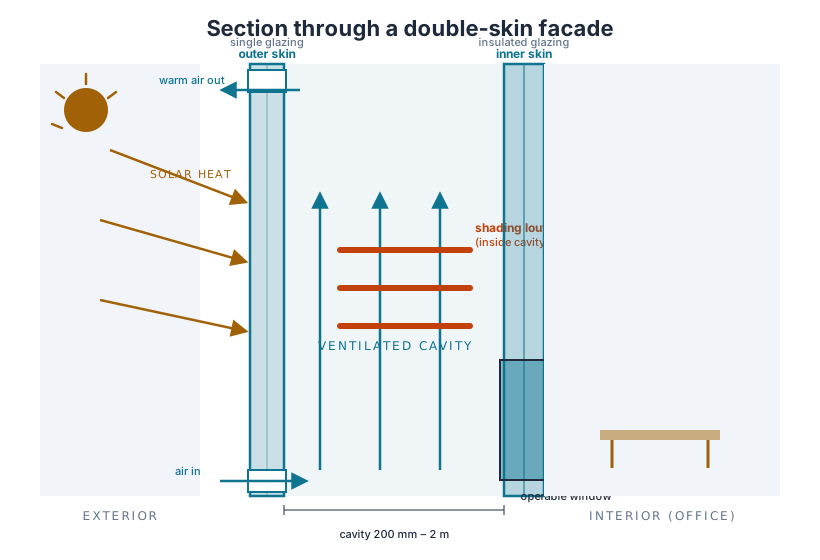
Three parts make a double-skin facade (often shortened to DSF):
- The inner skin is the working wall. Usually it is insulated glazing with operable windows, or a normal glazed curtain wall. This is the layer that keeps weather, heat and noise out, and it is where you put the high-performance double-glazed units.
- The cavity is the air gap between the two skins. It can be as narrow as 200 mm or as wide as a walkway of 1.5 to 2 metres. This gap is the heart of the system.
- The outer skin is a second, usually single-glazed, layer facing the street. It is mostly a weather shield and a buffer. It takes the first hit from sun, rain and noise.
The outer skin is deliberately the weaker, simpler layer. The expensive insulation and sealing happens on the inner skin. The cavity in between is what you tune, and it is what makes a DSF different from just putting two windows close together.
2. The cavity is the whole point: how it ventilates
A sealed air gap is just a very thick window. A double-skin facade earns its name only when the cavity is ventilated, meaning fresh air can move through it. How that air moves defines the two big families.
Naturally ventilated. Vents at the bottom and top of the cavity let air in low and out high. As the sun warms the cavity, the air inside heats up, becomes lighter, and rises. It escapes from the top vents and pulls cooler air in at the bottom. This is the stack effect, the same reason a chimney draws. No fans, no electricity. It is elegant but unpredictable: it depends on sun, wind and outside temperature.
Mechanically ventilated. Fans move air through the cavity on a controlled schedule, sometimes pulling cavity air through the building heating and cooling system. It costs energy to run but it is reliable, which is why tall towers and sealed buildings often choose it.
Within these, engineers talk about how the cavity is used:
- Buffer mode: vents stay shut in cold weather so the warmed cavity acts as insulation (very useful in cold climates, less so in most of India).
- Extract-air mode: stale indoor air is drawn out through the cavity and exhausted at the top.
- Supply-air mode: outside air is drawn in through the cavity, pre-conditioned by the gap, and fed into the rooms.
For hot Indian cities the most valuable trick is the opposite of a chimney that traps heat: you keep the cavity vents open so the gap flushes its own hot air away continuously, before it can cook the inner wall. A trapped, unventilated cavity in Chennai or Nagpur becomes an oven, which is exactly the mistake to avoid.
3. How it cuts heat, noise and glare
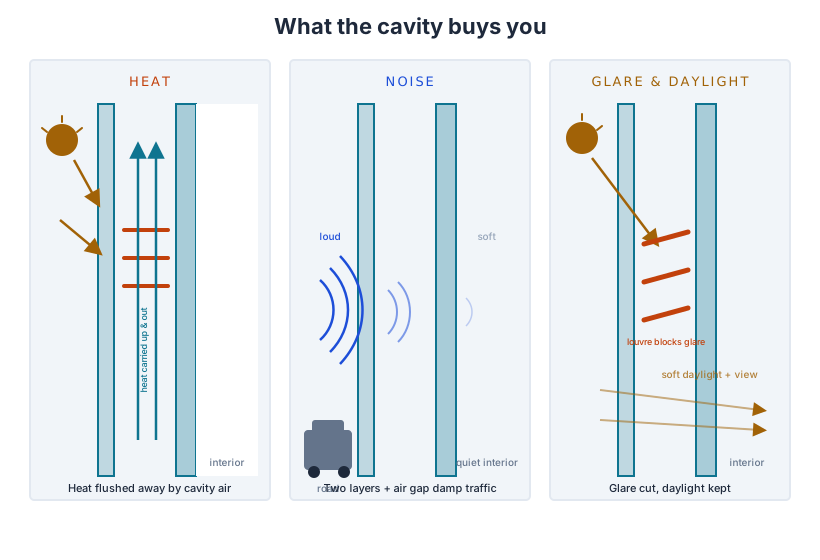
Heat. The sun first strikes the outer skin and the shading devices hung inside the cavity (blinds or louvres live here, protected from rain and dust). Most of the absorbed heat is then carried away by the moving cavity air instead of passing through to the office. Because the hottest surface, the shading, is outside the insulated inner skin, the building cools far less hard. This is the single biggest reason offices choose a DSF: lower cooling load.
Noise. Two layers of glass with an air gap between them is one of the best sound barriers a building can have. For an office on a flyover, near an airport, or on a horn-heavy arterial road, the outer skin can knock down traffic noise dramatically while still allowing the inner windows to be opened for fresh air, something a single sealed window can never do.
Glare and daylight. The shading sits inside the cavity, sheltered, so it lasts and works without darkening the room with curtains. You keep daylight and the view while cutting the harsh, hot glare.
4. Driving natural ventilation (the stack effect)
The cleverest double-skin buildings use the cavity not just to dump heat but to ventilate the rooms themselves. Open the inner windows, and the rising column of warm air in the cavity pulls stale air out of the offices through the top, drawing fresh air in elsewhere. The facade becomes the building lungs.
Berlin GSW Headquarters is the textbook case: its tall west cavity acts as a thermal flue, and for much of the year the building is ventilated and cooled without mechanical air-conditioning. In India this works best in milder, breezier climates and shoulder seasons (Bengaluru, Pune, coastal evenings) and during the long mild months elsewhere. In peak Delhi May or humid Chennai July you will still need air-conditioning, but the facade can stretch the number of hours you do not.
5. The four cavity layouts, in plain terms
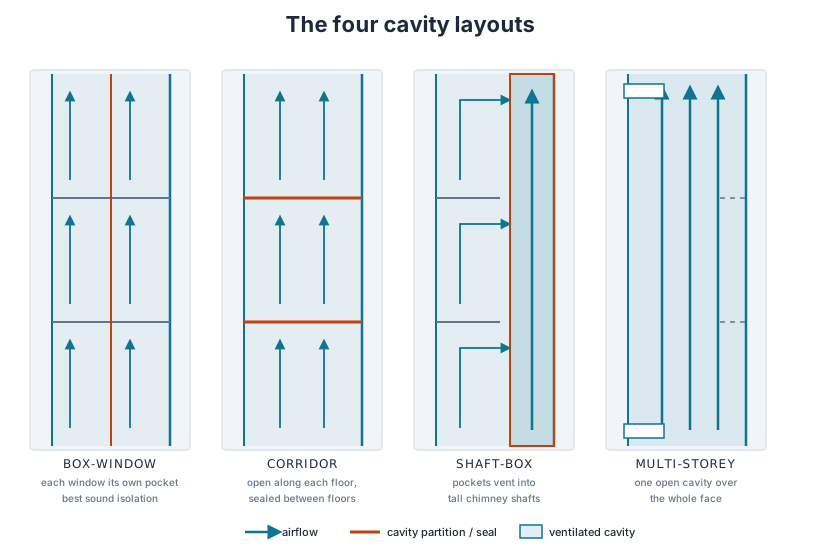
How you divide the cavity, vertically and horizontally, gives four classic types. The choice trades off acoustic privacy, fire safety, draught control and cost.
| Type | How the cavity is divided | Plain-English picture | Best for |
|---|---|---|---|
| Box-window | Boxed off floor-to-floor and side-to-side, one box per window | Each window has its own small ventilated pocket | Best sound isolation between rooms; hotels, noisy sites |
| Corridor | Open horizontally along a floor, sealed between floors | A continuous air corridor wrapping each storey | Mid-rise offices; balances cost and performance |
| Shaft-box | Box-windows feeding into tall vertical shafts | Pockets that vent into a few tall chimneys | Strong stack-driven natural ventilation |
| Multi-storey | One big open cavity spanning many floors | A tall glass atrium-like gap over the whole face | Bold architectural statement; landmark towers |
Box-window gives the best noise and smoke separation between rooms but is the most expensive to build. Multi-storey is the most dramatic and cheapest per square metre, but a single open cavity can carry noise and fire between floors, so it demands serious smoke and fire engineering. Corridor and shaft-box sit sensibly in between, which is why most real projects land there.
6. Double-skin versus a simple rainscreen: not the same thing
People mix these up because both have a gap behind an outer layer. The difference is what the gap is for.
A ventilated rainscreen has a thin, drained-and-ventilated cavity (typically 25 to 50 mm) behind a solid cladding panel, stone, terracotta, fibre-cement or metal. Its job is moisture management: rain that gets past the outer panel runs down the back and drains away, and the slim air gap dries the wall and adds a little thermal benefit. The cavity is too small and the outer layer too solid for it to ventilate rooms or run a stack effect. It is, in effect, a smart waterproofing and insulation strategy.
A double-skin facade has a much deeper cavity (200 mm to 2 m), an outer layer that is usually glazed, and a cavity engineered to move large volumes of air, host shading, and influence the building energy balance. Every double-skin facade is ventilated; not everything ventilated is a double-skin facade.
| Ventilated rainscreen | Double-skin facade | |
|---|---|---|
| Cavity depth | 25 to 50 mm (thin) | 200 mm to 2 m (deep) |
| Outer layer | Solid cladding (stone, terracotta, metal) | Usually glass |
| Main job | Keep water out, dry the wall | Cut solar gain, noise, drive ventilation |
| Hosts blinds/shading? | No | Yes, inside the cavity |
| Drives room ventilation? | No | Sometimes (stack effect) |
| Relative cost | Moderate | High |
If your goal is simply a durable, dry, good-looking wall, a rainscreen is the right and cheaper tool. Reach for a double-skin facade only when you specifically need the heat, noise and ventilation performance.
7. The honest India caveats
This is where a careful client earns their money. A double-skin facade is not automatically a green building.
- Cost. A DSF means roughly two facades instead of one, plus the structure, vents, controls and the shading inside. It is one of the most expensive envelopes you can build. For many Indian offices, the same money spent on better insulated glass plus generous external shading (deep fins, jaalis, brise-soleil) delivers most of the cooling benefit for a fraction of the price. Always price the simpler alternative first.
- The monsoon and dust. Driving monsoon rain and India dust load both find their way into open cavity vents. The cavity, vents and drainage must be designed to shed water and not pond it, or you get leaks and corrosion.
- Cleaning the cavity. This is the quiet killer. A 1.5 m cavity needs people, gantries or walkways to clean two extra glass faces and the shading inside. Dust films on the cavity glass, and over a few monsoons it looks grimy and performs worse. Maintenance access must be designed in from day one, and budgeted forever.
- Does it pay off in hot climates? In cold European cities the buffer cavity saves heating, which is most of the energy bill, so the maths is friendly. In hot-dominated Indian climates the saving is mostly on cooling, and a well-shaded single-skin wall can capture much of that cheaply. A DSF tends to pay off in India only where you also need its other powers: serious noise control, an all-glass architectural look that must still cut cooling, or natural ventilation in a tall building. If you only want lower bills, shade first.
- Fire and smoke. A tall continuous cavity can let smoke and fire travel between floors. Indian projects must address this under the National Building Code with cavity barriers, smoke management and the right materials, especially after the lessons of combustible cladding fires.
8. When a double-skin facade genuinely makes sense
It earns its cost in a few clear situations:
- High-rise offices where wind pressure makes openable single windows impossible, but the protected cavity still lets the inner windows open for fresh air and night cooling.
- Noisy sites next to flyovers, rail lines, airports or arterial roads, where the acoustic gain alone can justify it.
- All-glass corporate buildings that the client insists must look like a glazed tower yet still cut cooling load and glare, the brief a single curtain wall fails.
- Showcase green and net-zero buildings where the facade is part of the sustainability story and the budget supports it.
For a low-rise office in Pune or a school in Coimbatore, deep external shading, a good rainscreen and quality glass will almost always be the wiser spend.
9. Real buildings worth knowing
These are real, documented projects, not invented examples.
- Post Tower, Bonn, Germany (Murphy/Jahn with Werner Sobek, 2002). A 162 m tower wrapped in a filigree double-skin facade that lets it ventilate and cool largely with outside air; widely cited as an early benchmark for low-energy tall buildings.
- GSW Headquarters, Berlin, Germany (Sauerbruch Hutton, 1999). The famous case study: a tall west-facing cavity works as a thermal flue, driving natural ventilation and cooling for much of the year.
- Occidental Chemical Building, Niagara Falls, USA (Cannon Design, 1980). One of the first modern double-skin glass buildings, with a deep cavity used to pre-warm air.
- Pearl Academy, Jaipur, India (Morphogenesis, 2008). The Indian touchstone: a perforated outer jaali skin stands about 1.2 m off the inner wall as a thermal buffer, sized by computational shadow analysis, with drip channels for passive evaporative cooling. It shows the double-skin principle expressed through a traditional Indian screen rather than glass.
- KMC Corporate Office, Hyderabad, India (RMA Architects). A double-skin treatment combining a screening outer layer with planting to soften heat and improve the microclimate, an example of the idea reaching mainstream Indian corporate work.
The lesson across all of them: the building works because the cavity is genuinely ventilated and tuned to its climate, not just because it has two layers.
What this means for you
If you are a homeowner, you will almost never build a true double-skin facade, but you can borrow its logic for free: stand a screen, pergola or jaali a little away from a hot wall or window and let air move in the gap, and you get a slice of the same buffering effect at a tiny fraction of the cost.
If you are a developer or a practitioner, treat the double-skin facade as a precision tool, not a default. Ask three questions in order. Do I have a problem a cheaper external shade plus good glass cannot solve, usually serious noise, an all-glass brief, or tall-building ventilation? Can I afford to clean and maintain two glass skins for the life of the building? Have I designed the cavity to shed monsoon water and stop smoke spread? If all three are yes, a double-skin facade can be transformative. If any is no, spend the money on shading and a rainscreen, and you will likely get a cooler, cheaper, lower-maintenance building.
Either way, the underlying idea, a sacrificial outer layer with moving air behind it, is one of the most powerful in facade design, and one India has practised in stone for centuries.
Next, compare this with the building it tries to improve in glass curtain-wall facades, and see the wider toolkit in energy-efficient facades.
Sources
- Different Types of Building Facades (Studio Matrx internal source brief), sections 6 and 17.
- ArchDaily, "How Do Double-Skin Facades Work?"
- Wikipedia, "Double-skin facade" (Occidental Chemical Building, cavity ventilation modes, facade typologies).
- WikiArquitectura and Sauerbruch Hutton, GSW Headquarters, Berlin.
- Werner Sobek and Transsolar project pages, Post Tower, Bonn.
- Dezeen and Morphogenesis, Pearl Academy of Fashion, Jaipur.
- Constrofacilitator and Architect and Interiors India, coverage of Indian facade projects including KMC Corporate Office, Hyderabad.
Export this guide
Related Guides — Deep-dive reading
Energy-Efficient Facades in India: How the Building Skin Cuts Your Cooling, Heating & Lighting Bills
How a building facade drives cooling, heating and lighting energy in India, the three levers of solar-heat-gain control, insulation and daylighting, U-value, SHGC, VLT and WWR in plain terms, ECBC and Eco-Niwas expectations, and real Indian green buildings.
Building FacadesDesigning a Naturally Energy-Efficient Indian Home
Comfort first, gadgets last — passive design, orientation, insulation, ventilation and the climate wisdom that cuts Indian energy bills
SustainabilitySmart, Kinetic & Parametric Facades in India: Skins That Move, Tint and Respond (And When They Are Worth It)
Plain-English guide to parametric, kinetic and smart-glass facades: how moving louvers, electrochromic glass and AI-driven envelopes work, real examples like Al Bahar Towers, and the honest India verdict on cost, maintenance and when fixed shading wins.
Building FacadesRelated Tools — Try Free
Brise-Soleil Visualizer
Interactive horizontal-louvre cut-off angle calculator — sun altitude, louvre depth, and spacing inputs with a live shadow preview. Computes θ = arctan(spacing/depth) for façade shading, ECBC envelope compliance, hospital daylight design, and tropical sun-control detailing.
Sun Shading ToolCross-Ventilation Analyzer
Estimate airflow and air changes per hour (ACH) from room size, window areas, layout, and local wind — with NBC 2016 Part 8 compliance check.
Ventilation CalculatorAcoustic Privacy (STC) Visualizer
Indian healthcare acoustic visualizer — compare wall assemblies and noise sources, see received SPL after STC attenuation, and check FGI 2018 / IS 1950 / NABH speech-privacy compliance with live dual-canvas waveform.
Acoustic Tool