
B.Arch CurriculumFree, forever
A tribute to Amogh N P
Architectural Design I
The foundation studio — where everything else comes together and you actually design. Learn the culture of studio, the iterative design process, how to read a brief and a site, how to learn from precedent, and how to grow a concept into a presented scheme. Built to connect with the Drawing course, the Theory course and our design tools.
Course byAmogh N P· Architect & interior designer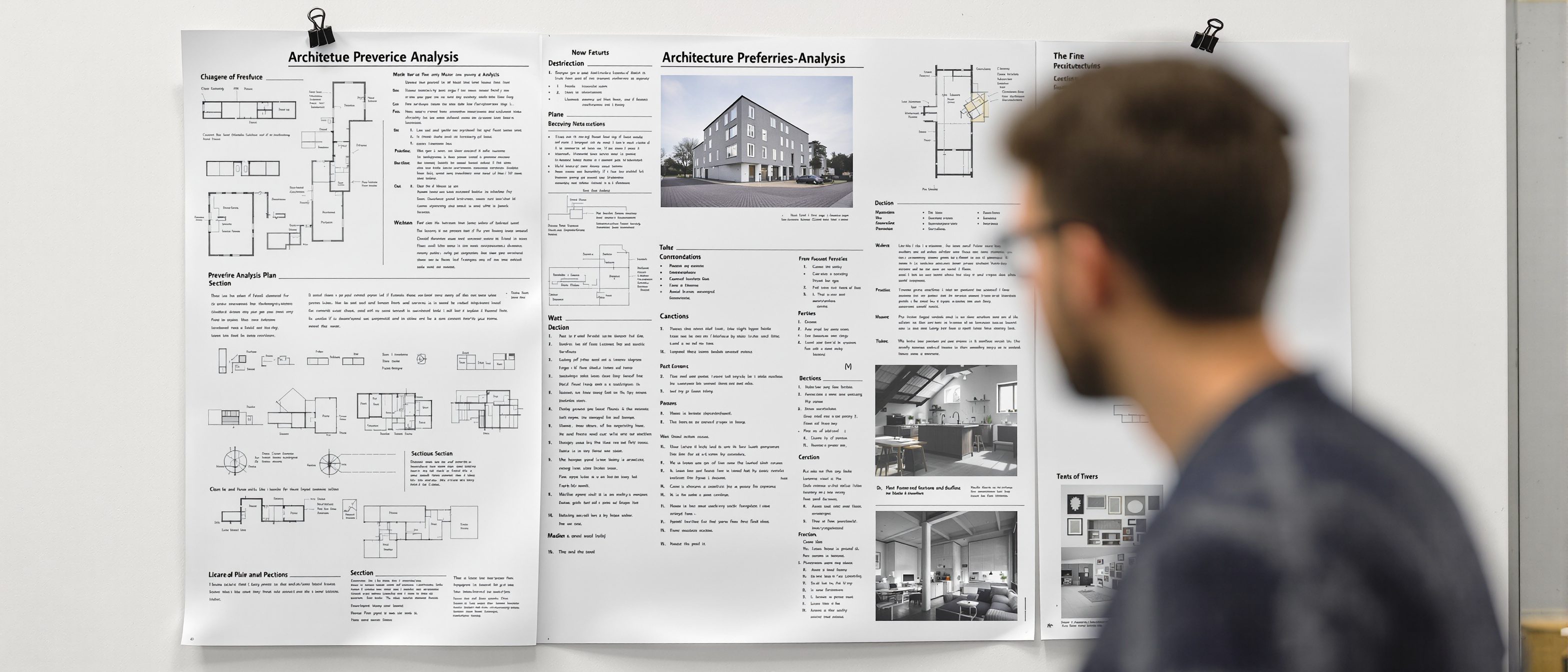
The studio path
5 units · 5 liveA studio is learned by doing — but these lessons give you the map: how studio works, how to design, and how to present. All five are live.
Unit 1 — What is Design Studio?
LiveStudio as signature pedagogy; reflection-in-action; the desk crit, the pin-up and the jury; studio culture and wellbeing.
Unit 2 — The Design Process
LiveThe iterative loop; wicked problems and framing; divergent and convergent thinking; the Double Diamond and the RIBA stages.
Unit 3 — The Brief, Site & Programme
LiveReading the brief; architectural programming; bubble diagrams and adjacency; site and context analysis.
Unit 4 — Precedent Study
LiveWhy and how to analyse existing buildings — parti, circulation, structure, light — and learn without copying.
Unit 5 — Concept to Form & the Crit
LiveConcept → bubble → parti → massing → plan; the presentation drawings, model and board; the jury and self-assessment.
Foundation studio briefs
Studio is a doing subject. Here are six original starter exercises to actually attempt — each teaches a core skill. Work them in sketches and models; upload to a tutor or self-assess with the rubric in Lesson V.
Abstract composition
Balance, rhythm, proportion in three dimensions
Compose a balanced 3-D composition from a small kit of pure volumes (cube, cylinder, plane). No function — just form and the design principles.
The nine-square grid
Structure, served & servant space, circulation
Organise space within a 3×3 structural grid — the classic first-year exercise. Explore wall, column, plane and void.
A space for one act
Brief → concept → model on a real (small) site
Design a tiny single-purpose pavilion — a reading nook, a tea kiosk, a bus stop — responding to a given small site.
A dwelling for a character
Programming from a user's life
Design a small dwelling for a specific imagined person (a potter, a writer). Let their daily activities generate the programme.
Transform a precedent
Applying a formative idea
Take the parti of a precedent you have studied and re-apply it to a new small brief on a new site.
The threshold
Experience, procession, light
Design the entrance and transition between two spaces — how arrival is choreographed and felt.
Your studio toolkit
Studio pulls together everything else on the platform. These are the courses, tools and guides to keep open beside your drawing board.
Course outcomes
What you will be able to doUnderstand the culture of the design studio — the desk crit, the jury, and learning by doing.
Apply a structured, iterative design process to a small architectural problem.
Read and interrogate a brief, and analyse a site and its programme.
Analyse architectural precedents and draw transferable lessons from them.
Develop a concept into a resolved scheme and present it through drawings, model and crit.
The author
Amogh N P
Architect, interior designer, and creative polymath. Studio Matrx began in his notebooks — his vision of design made honest, useful, and open to everyone. Its Academy is written and taught in his memory, and free, forever.
More about Amogh →Enter the studio.
Where drawing, theory and tools become design. Start with how studio works — then learn to design in it.
The curriculum is free, forever