
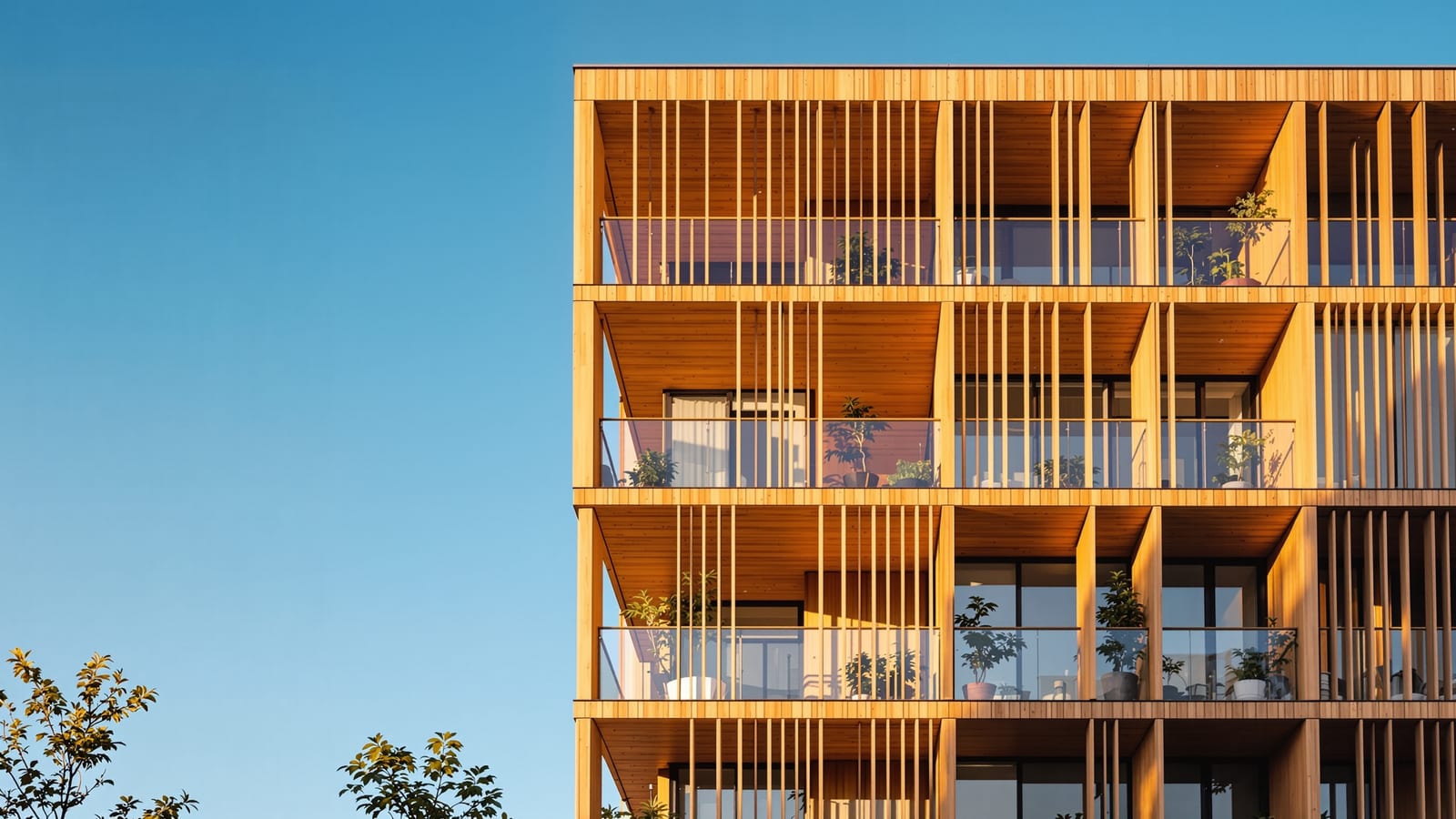
Carbon-Sequestering & Carbon-Negative Materials in India: Can a Building Store Carbon?
A candid, greenwash-free guide to the materials that claim to lock CO₂ into walls and structure — CO₂-cured concrete, hempcrete, biochar, mass timber, algae and mycelium — and what an Indian homeowner or practitioner can actually build with today.
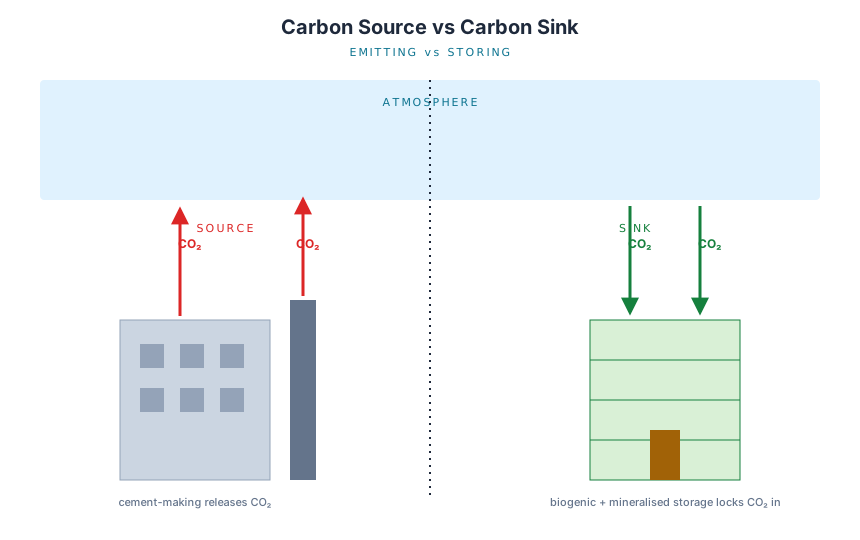
For roughly two centuries we have treated buildings as carbon emitters and left it at that. You make cement by cooking limestone at 1,400 degrees, the limestone gives up its CO₂, and that gas goes into the sky and stays there. Steel, glass, aluminium, fired brick — all of it arrives on site already carrying a debt of emissions that no amount of solar panels will ever fully repay. The construction sector is not a footnote in the climate story; cement alone is about 8 percent of global CO₂ emissions, and concrete is the second most-used substance on Earth after water.
But there is a stranger, more hopeful idea hiding inside material science: what if a wall could be a carbon sink rather than a carbon source? What if the hemp in your insulation, the timber in your beams, or even the CO₂ captured from a factory chimney could be locked permanently into the fabric of the building — so that the act of constructing actually pulls carbon out of the atmosphere and parks it in your house for fifty years? That is the promise of carbon-sequestering and so-called carbon-negative materials. It is a real promise. It is also one of the most aggressively greenwashed corners of the building industry, and most of what gets marketed as carbon-negative is nothing of the sort.
This is part of our Building Facades series, where we look hard at the skin and structure of buildings — what they are made of and what that costs the planet. It is a close cousin of our guide to embodied carbon in construction, but it asks a fundamentally different question. That guide is about emitting less — choosing materials that are less bad. This guide is about the rarer, more remarkable claim: materials that actively store carbon, turning your building into a vault. Knowing the difference is the whole game, so let us define our terms carefully and refuse to be sold a render.
1. The three things people mean when they say "low carbon"
Almost every conversation about green materials collapses three very different ideas into one fuzzy phrase. Pull them apart and the marketing falls away.
(a) Lower-carbon (less bad). The material still emits CO₂ to make — it just emits less than the conventional version. Blended cements with fly ash, a recycled-content steel, an efficient brick: all good, all worth doing, but none of them stores any carbon. The atmosphere still ends up with more CO₂ than before; just slightly less than the alternative. This is the overwhelming majority of "green" building products, and it is where India's biggest real wins live.
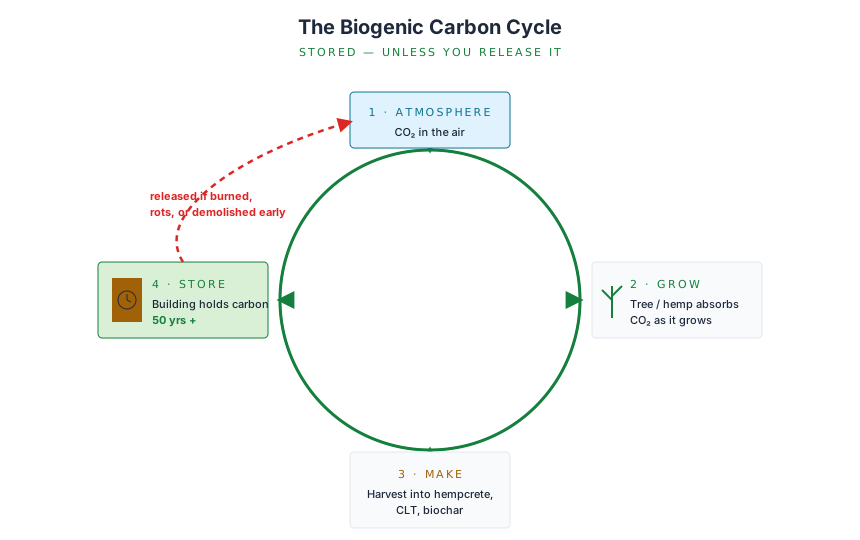
(b) Carbon-storing / biogenic. "Biogenic carbon" means carbon that a living thing — a hemp plant, a tree, bamboo — pulled out of the air through photosynthesis while it grew. That carbon is physically held inside the material. Build a wall with it and keep that wall standing, and you have removed CO₂ from the atmosphere for as long as the wall stands. Hemp, timber, bamboo, straw and biochar all work this way. This is genuine storage — with a crucial asterisk we will get to.
(c) CO₂-mineralised (captured carbon locked into concrete). Here you take CO₂ — often captured from an industrial source — and chemically react it with a cement or aggregate so it turns into solid, stable calcium carbonate (the same stuff as limestone). The carbon is now a rock, permanently. CarbonCure and Solidia work this way. It is real and it is permanent, but as we will see, the quantities are small relative to what cement-making emits in the first place.
Hold these three apart and you can read any product datasheet honestly.
2. Carbon-neutral vs carbon-negative — and why the word "negative" is abused
Carbon-neutral means the material's whole life cycle — extraction, manufacture, transport, end-of-life — nets out to roughly zero CO₂. Carbon-negative means it nets out below zero: making and using it removed more carbon than it released.
The honest test is the full life-cycle assessment (LCA), measured cradle-to-grave, not cradle-to-gate. A hempcrete brochure that says "carbon-negative" while quietly counting only the CO₂ the plant absorbed — and ignoring the lime binder, which is itself fired from limestone and re-emits CO₂ — is cheating. A concrete that "eats CO₂" during curing but emitted ten times more making the cement is not negative; it is slightly-less-positive. Whenever you see "carbon-negative," ask three questions: negative over what boundary, counting which binder, and for how long does the storage last? If the seller cannot answer cleanly, assume the claim is inflated.
3. Permanence — the asterisk that breaks most claims
Biogenic storage only counts if the carbon stays out of the atmosphere. Burn the timber, let the hemp wall rot in a landfill, or demolish the building in fifteen years and skip the wood, and the stored carbon comes straight back out. A tree that grew for sixty years can release its carbon in an afternoon of fire.
This is why serious LCA practitioners are cautious about "biogenic carbon credits." Storage is only as durable as the building. A CLT tower that stands a century, is maintained, and is eventually disassembled and reused is a genuine carbon store. A timber pavilion that is composted after one summer (like the mycelium tower we will meet) stored nothing in the long run — it was never meant to. CO₂-mineralised concrete is the most permanent of all, because the carbon is now literally a mineral and will not off-gas. Permanence is not a detail. It is the difference between sequestration and a temporary loan.
4. The big comparison — what actually stores carbon, and is it buildable in India?
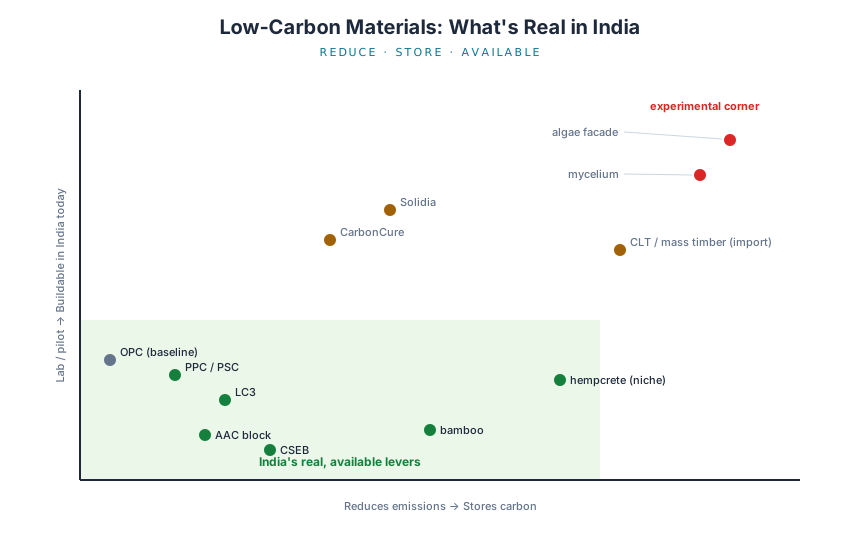
| Material | Mechanism: stores or reduces? | Order-of-magnitude CO₂ effect | Maturity | Honest India availability |
|---|---|---|---|---|
| Blended cement (fly ash PPC / GGBS PSC) | Reduces (less clinker) | ~30–40% lower emissions vs OPC | Mainstream | Widely available now; PPC/PSC already dominate. The real lever. |
| LC3 (limestone calcined clay cement) | Reduces | Up to ~40% lower vs OPC | Commercialising | Indian Standard IS 18189:2023 exists; pilot-proven at IIT Delhi/TARA; early commercial supply emerging. |
| CarbonCure (CO₂ injected into ready-mix) | Stores (mineralised) + reduces | ~7–15 kg CO₂ stored per m³; enables mix savings | Commercial (N. America) | Not deployed in India yet; technology, not a product you buy here today. |
| Solidia cement (CO₂-cured precast) | Stores + reduces | Up to ~30% lower making; CO₂ cured; claims up to ~70% total cut | Commercial (precast, limited) | Lab/precast scale globally; not available in India. |
| Biochar in concrete | Stores (biogenic) | Locks plant carbon; small dosages today | Research / early pilot | CSIR-CBRI and academic research active; not a commercial product yet. |
| Hempcrete (hemp + lime) | Stores (biogenic), non-structural | Net ~110–165 kg CO₂ stored per m³ (claimed) | Niche-commercial | Built in India (Uttarakhand); hemp cultivation legal only in a few states. Specialist, costly, infill only. |
| Mass timber / CLT | Stores (biogenic), structural | A tonne of dry timber holds roughly a tonne+ of CO₂ | Commercial abroad | Genuine store, but India lacks supply chain, code maturity, certified glulam/CLT. Import-dependent. |
| Bamboo / CSEB | Stores (bamboo) / reduces (CSEB) | Bamboo: biogenic; CSEB: avoids firing | Traditional + modern | Available, Indian, underused. Practical low-carbon options. |
| AAC blocks | Reduces (lighter, less material) | Lower than fired brick | Mainstream | Widely available; a sensible default masonry. |
| Algae bioreactor facade | Generates energy/biomass | Captures CO₂ into biomass, harvested as fuel | Experimental / pilot | Not buildable in India; one pilot exists worldwide. |
| Mycelium panels | Stores (biogenic), temporary | Tiny; compostable | Experimental | Indian startups exist for packaging; not a building product. |
The single most useful row in that table, for India, is the first two — and we will come back to why.
5. CO₂-mineralised concrete: real, permanent, and smaller than it sounds
This is the most genuinely permanent technology, so it deserves a clear-eyed look. CarbonCure injects a precise dose of captured CO₂ into ready-mix concrete during batching. The CO₂ reacts within seconds with calcium ions to form solid calcium carbonate embedded in the matrix, which also nudges up early strength so producers can trim a little cement. Stored CO₂ is roughly 7 to 15 kilograms per cubic metre, with more when paired with reclaimed wash water.
Now do the arithmetic honestly. A cubic metre of structural concrete contains perhaps 300–400 kg of cement, and each kilogram of cement carries roughly 0.6–0.9 kg of CO₂ to make. So that cubic metre emitted on the order of 200–350 kg of CO₂ before any "curing" — and CarbonCure stores back maybe 10–15. It is a real, permanent reduction of a few percent, and at the scale of global concrete that adds up. But it is a reduction, not a reversal. Calling CO₂-injected concrete "carbon-negative" is the most common overstatement in this field.
Solidia goes further by changing the cement chemistry to a low-lime calcium silicate that is fired at lower temperature with less limestone (cutting making-emissions up to ~30%) and is then cured with CO₂ instead of water, locking in up to ~300 kg of CO₂ per tonne of cement. Solidia claims up to a ~70% total footprint cut versus conventional concrete. The catch: it cures with gaseous CO₂ in a chamber, so it suits precast products, not poured-in-place structures — and it is not commercially available in India.
6. Biogenic storage: hemp, timber, biochar, bamboo
This is where carbon is grown from thin air and parked in the building.
Hempcrete — hemp shives bound with lime — is the poster child. Manufacturers claim a net 110–165 kg of CO₂ stored per cubic metre over the building's life, partly from the plant's biogenic carbon and partly from the lime slowly re-absorbing CO₂ as it carbonates. Note the honesty caveats: the lime binder itself emitted CO₂ when it was burned, the "negative" figure depends on counting biogenic absorption, and hempcrete is an insulating infill — it cannot carry structural load. It is real and it works, but it is a wall filler, not a frame.
Mass timber / CLT (cross-laminated timber) is the most structurally serious carbon store. Dry wood is roughly half carbon by mass, so a CLT-framed building locks tonnes of CO₂ into its bones. The flagship towers are real: Mjøstårnet in Brumunddal, Norway (85.4 m, completed 2019) and Ascent in Milwaukee, USA (86.6 m, 2022) — certified among the world's tallest timber buildings, with a concrete core and floors but extensive CLT above. These are not renders; people live and work in them. The honest caveat: the store only counts if the building lasts and the forest is genuinely regrown, and timber must be detailed against fire, moisture and termites.
Biochar is charcoal made by heating biomass without oxygen (pyrolysis); the carbon that the plant pulled from the air becomes a stable solid that resists decay for centuries. Mixed into concrete or plaster, it both stores carbon and can improve internal curing. Research — including widely cited work proposing carbon-negative concrete with substantial biochar content, and work at India's CSIR-CBRI — is promising, but dosages in practice today are small and it is not yet a product you can order by the truckload.
Bamboo deserves a mention India keeps forgetting: it is fast-growing, genuinely biogenic, structurally capable when engineered, and indigenous. Together with compressed stabilised earth blocks (CSEB), which avoid the firing emissions of clay brick, these are the unglamorous, locally available carbon-sensible choices that almost never make the magazine covers.
7. Algae and mycelium: real, but pilots — not products
Two experiments get cited constantly, and both are real — which is exactly why we must be precise about what they are.
The BIQ House in Hamburg (IBA 2013), with Arup, SSC and Colt's SolarLeaf facade, wrapped a four-storey residential building in 129 glass bioreactor panels — about 200 m² — filled with live microalgae. Sunlight grows the algae, which are harvested as biomass for energy and double as dynamic shading; the system supplied a meaningful share of the building's thermal demand. It is genuinely the world's first bio-reactive facade. It is also, more than a decade on, essentially a one-off pilot. It captures CO₂ into biomass that is then used for energy — so it is closer to a solar-bio energy system than a permanent carbon store.
Hy-Fi by The Living (David Benjamin), engineered with Arup, rose at MoMA PS1 in New York in 2014: a roughly 12-metre tower of about 10,000 bricks grown from mycelium (mushroom roots) binding corn-stalk agricultural waste, with no firing and near-zero process emissions. At the end of summer the whole thing was composted. It is a beautiful proof that you can grow a building material from farm waste — and a clear demonstration that this kind of biogenic store is temporary by design. Mycelium today is a real commercial material for packaging and acoustic panels; it is not a load-bearing facade you can specify for a Mumbai apartment.
8. The honest case — cost, availability and the cement reality in India
Here is the part the brochures skip. India does not build like Norway. We build in reinforced cement concrete — RCC frames, brick or block infill — at enormous volume and tight cost. India's cement carries a higher clinker factor than the global average (around 0.75 versus roughly 0.63), which means more emissions per tonne, and the cement sector is one of the country's largest industrial emitters.
That reality cuts two ways. It means the exotic materials — algae facades, mycelium panels, CO₂-cured Solidia — are simply not buildable here today at any sensible cost. CarbonCure is a technology that has to be installed at a batching plant; it is not deployed in India. Mass timber has no domestic CLT supply chain, limited code support and would mostly be imported. Hempcrete is real in India — pioneers have built the country's first hempcrete homes in Uttarakhand — but hemp cultivation is legal in only a few states, supply is thin, and it remains a specialist, premium, non-structural choice.
But the same cement-heavy reality also tells you where the genuine, available lever is, and it is not glamorous: blended and lower-carbon cement. Portland Pozzolana Cement (PPC, with fly ash) and Portland Slag Cement (PSC, with GGBS) already cut emissions 30–40% versus pure OPC and are sold in every market in India today. LC3 — limestone calcined clay cement, championed in India by Dr. Shashank Bishnoi at IIT Delhi with TARA and Prof. Karen Scrivener's group at EPFL — uses about 50% clinker, 30% calcined clay, 15% limestone and 5% gypsum, cuts CO₂ up to ~40%, now has its own Indian Standard (IS 18189:2023), and uses clays that are abundant across India. That is the unglamorous, country-scale win. And note one genuinely good-news footnote: India's vast stock of existing concrete slowly re-absorbs CO₂ as it carbonates over decades — at the national scale, tens of millions of tonnes a year. Small per cubic metre, large in aggregate.
On permanence and cost together: biogenic storage is only as durable as the building and the maintenance behind it, and most truly carbon-negative materials carry a price premium and a thin supply chain. None of this means do nothing. It means be honest about which lever is big and available — and not let an algae render distract you from specifying a blended cement.
What this means for you
If you are a homeowner: you almost certainly cannot build an algae house or a CLT tower in India this year, and you should treat any builder who promises "carbon-negative concrete" with friendly scepticism — ask them to define the term. What you can do is real and meaningful. Specify a blended cement (PPC or PSC, ideally LC3 where available) rather than plain OPC. Use AAC blocks or CSEB instead of fired brick. Consider bamboo where it suits the design. If you are in a hemp-licensed state and building a small project, hempcrete infill is a genuine biogenic option worth pricing. Above all, build something durable and maintainable — because the most carbon-negative building is the one that never has to be demolished and rebuilt.
If you are a practitioner: keep one eye on CarbonCure, Solidia, LC3 scaling, and engineered timber, because the supply chains will mature. But specify for India as it is today. The biggest carbon decision you make on most projects is the cement, the structural efficiency (use less concrete), and the building's lifespan — not an exotic facade. Sequestration is a beautiful idea. In India, right now, reduction is the honest workhorse, and the two should never be confused.
Sources
- CarbonCure Technologies — CO₂ mineralisation in concrete (process and stored-CO₂ figures).
- Holcim / Solidia — CO₂-cured low-carbon cement technical documentation.
- Peer-reviewed life-cycle work on the carbon storage and sequestration potential of hempcrete.
- Project records and architectural press for Ascent, Milwaukee and Mjøstårnet, Norway (mass-timber towers).
- Arup — SolarLeaf, the world's first bio-reactive facade (BIQ House, Hamburg, IBA 2013).
- ArchDaily and project documentation — Hy-Fi, the compostable mycelium tower at MoMA PS1 (The Living, 2014).
- Research literature on biochar-augmented carbon-negative concrete; CSIR-CBRI and Indian academic work on biochar and alternative binders.
- RMI and EPFL/TARA literature on Limestone Calcined Clay Cement (LC3); Indian Standard IS 18189:2023.
- Indian press on the country's first hempcrete homes in Uttarakhand.
- Industry analyses placing cement at roughly 8% of global CO₂ emissions; studies estimating CO₂ re-absorbed by India's in-service concrete through carbonation.
Export this guide
Related Guides — Deep-dive reading
Compressed Stabilised Earth Blocks (CSEB): A Specify-and-Select Guide for India (2026)
What CSEB is - local soil plus a small percentage of cement or lime, compressed in a press and cured, never kiln-fired - its low-carbon and thermal-mass strengths, its real limits around soil, quality control and water, and how it compares with fired clay brick and fly-ash brick. A specify-and-select guide.
Building MaterialsHempcrete in India: The Carbon-Negative Bio-Composite Wall, Decoded (2026)
What hempcrete really is - hemp shiv plus a lime binder plus water - and how to specify it honestly for Indian eco and passive homes: its breathable, carbon-negative, non-combustible strengths, its non-load-bearing reality, and the licensing, supply and cost hurdles that keep it niche.
Building MaterialsIn-Vitro and Grown-Material Habitats: The Building That Is Cultivated, Not Constructed
From mushroom-brick towers to bacteria-cemented blocks and speculative dwellings grown from living cells, a cluster of experiments asks a genuinely new question: what if we stopped mining and manufacturing our buildings and started farming them instead? A deep study of grown architecture — its biology, its structural limits, and the honest gap between the manifesto and the load path.
The Future of ArchitectureRelated Tools — Try Free
Rainwater Tank Sizer
How big should your rainwater tank be? Computes annual harvest, recommended tank capacity in litres, water-bill savings, and payback — for 10 Indian cities.
RWH CalculatorWindow Material Comparison Tool
Compare uPVC, aluminium, wood, steel and composite windows on cost, life, upkeep and insulation.
CompareBefore vs After — Cost Reality Check
Compare what you expected to pay vs what you actually paid, category by category.
Reality Check