
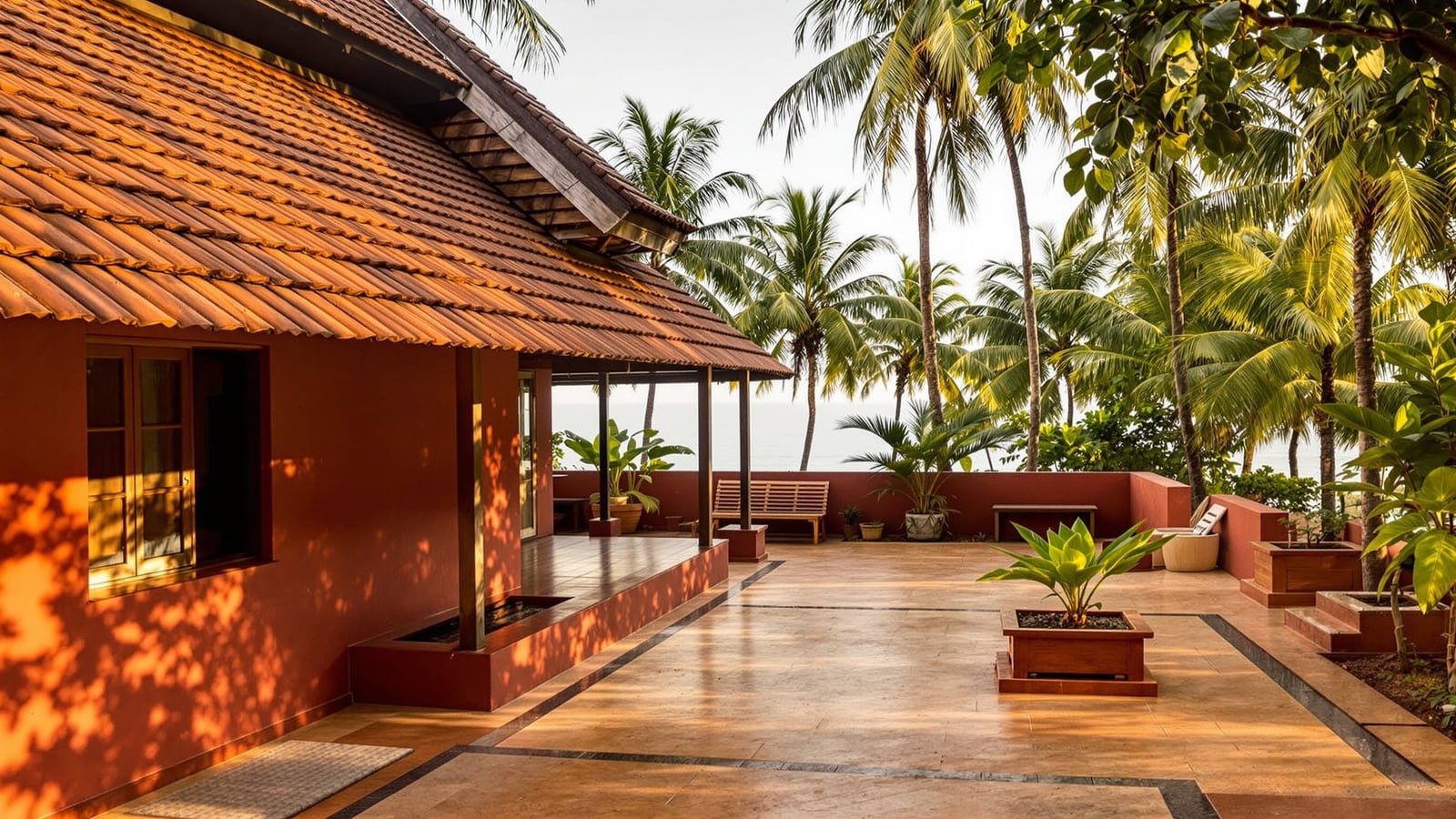
Konkan Homestays: The Coastal Maharashtra Playbook
The Konkan homestay is a laterite house under a Mangalore-tile roof, an otti verandah, a courtyard and an orchard of coconut, areca and Alphonso mango a few steps from a quiet beach. This playbook covers the house as product, Malvani food, the monsoon that tests every roof, the coastal-zone rules, and Maharashtra's homestay, B&B and agro-tourism routes.
The Konkan coast is Maharashtra's slow lane: a long strip of red earth, quiet beaches and river mouths between the Sahyadri ghats and the Arabian Sea. Its homestay sells something the crowded resort belts cannot — a family house in a coastal village, with a laterite body, a tiled roof, an otti verandah to sit on, a courtyard, and an orchard of coconut, areca, kokum and Alphonso mango out back. The market is close at hand: Mumbai and Pune families drive down for long weekends, and the ghats in between add a second, green, monsoon-weekend product. This playbook covers the house, the food, the climate, and the coastal and licensing rules. Read it with the regional overview and the design guide; the neighbouring Goa playbook covers the same coast in a sharper, busier market.
Scope. Editorial good practice, not legal advice. Maharashtra Tourism runs several registration routes (homestay, the MTDC Bed & Breakfast scheme, agro-tourism and others), and land-use, local-body, fire and Coastal Regulation Zone (CRZ) layers sit on top — see the Licence Finder and confirm with Maharashtra Tourism / MTDC. Figures are indicative.
Where the Konkan homestay works
| The draw | Typical guest | |
|---|---|---|
| Dapoli, Harnai, Murud (Dapoli) | Closest real Konkan to Pune and Mumbai; beaches, dolphin trips, Harnai fish auction | Weekend families, first-timers |
| Guhagar, Velneshwar | Long, empty beaches, temple villages, areca orchards | Couples, quiet-seekers |
| Ganpatipule, Ratnagiri | The Ganpatipule temple and beach, Alphonso country, forts | Families, pilgrims, mango-season visitors |
| Tarkarli, Devbag, Malvan | Clear water, snorkelling and scuba, Sindhudurg sea fort, the Karli river mouth | Young groups, activity travellers |
| Vengurla and the far south | Unhurried villages, cashew and coconut, an easy hop to Goa | Repeat Konkan travellers, slow travellers |
| Sahyadri ghats near Mumbai/Pune | Waterfalls, mist, forts and farm stays a few hours' drive away | Monsoon weekenders |
The south (Sindhudurg) leans activity and beach; the north (Ratnagiri, and Raigad closer to Mumbai) leans family weekends and short drives. Match the product to the pocket rather than copying a resort.
The Konkan house is the product
The traditional Konkan house is a clear, honest answer to heavy rain and humid heat — and guests feel that as character.
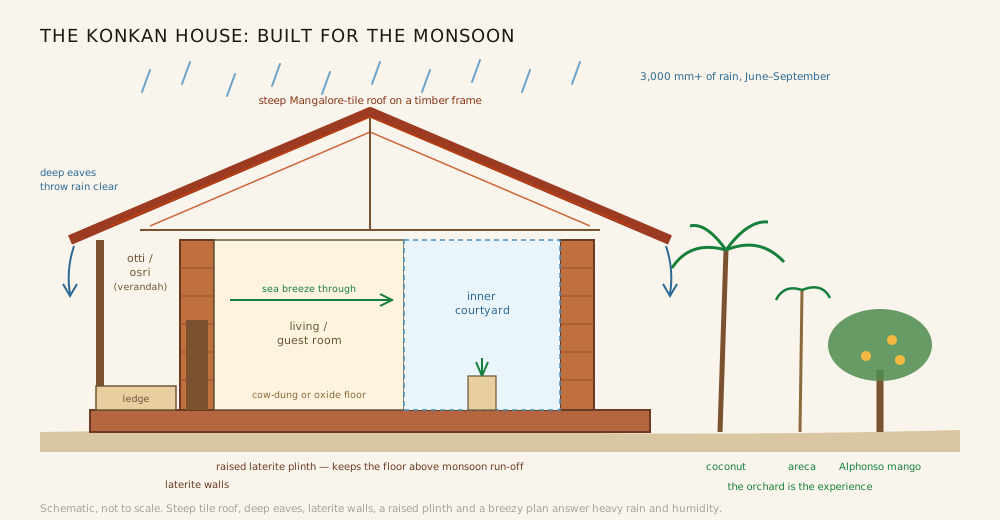
- Laterite walls. The red, porous stone of the coast, cut into blocks straight from the ground. Thick laterite walls hold coolness, but the stone drinks water — so it needs a good lime plaster or a breathable finish and a sound roof above it.
- The steep Mangalore-tile roof. Clay tiles on a timber frame, pitched steeply with deep eaves to shed torrential rain and keep it off the walls. Loose tiles and rotting battens are the single biggest maintenance item.
- The otti / osri. The covered front verandah with its built-in ledge — where the household sits, talks and receives visitors. For a guest it is the best seat in the house: morning tea, monsoon rain, evening conversation.
- The courtyard and tulsi vrindavan. An inner or front court for light, air, drying and ritual, with the tulsi planter at its heart.
- Cow-dung and oxide floors. Traditional cow-dung-washed or red-oxide floors are cool underfoot and deeply local; keep one in a sitting space as a story, and give guest rooms an easy-clean, damp-tolerant floor.
- The orchard as experience. Coconut, areca, kokum, cashew and Alphonso (hapus) mango are not scenery — they are the activity: a walk through the wadi, plucking, a mango-season stay in April–May.
Keep the character and add comfort discreetly: a clean, ventilated bathroom with good falls, mosquito-proofing, reliable hot water, a fan and, where needed, air-conditioning that is felt not seen. For a new build in the idiom, browse House Plans and engage a local architect who knows laterite and timber.
Malvani food is the hook
On the Konkan, the meal is often the reason guests return. Malvani and Konkani home cooking — fish curry with kokum or coconut, fried surmai and bangda in a rava crust, sol kadhi, kombdi vade, rice bhakri, ukadiche modak at festival time, and a vegetarian Konkan thali for those who want it — is a product in its own right. Serve it as a family meal at the otti, offer a market or fish-auction walk, and say clearly what is home-cooked and what is bought in. Mind food-safety basics (an FSSAI registration where meals are sold — see the registration guide).
Monsoon: the roof, the walls, the salt
The Konkan monsoon is among the heaviest in India — roughly 3,000 mm or more a year, most of it between June and September, often in long, wind-driven spells. Combine that with salt air and high humidity, and maintenance becomes the job.
- Roof first. Inspect and re-lay tiles, replace cracked tiles and rotten battens, and clear valleys and gutters before June. A single leak ruins a room for the season.
- Walls and damp. Keep laterite protected with lime plaster or a breathable coat; a raised plinth, good drainage away from the house and a damp-proof course keep floors dry.
- Salt-air corrosion. Near the shore, steel grilles, fittings, fans and AC units corrode fast — specify stainless or galvanised hardware, coated outdoor units, and plan for replacement.
- Mould and linen. Cross-ventilate, run dehumidifiers in closed rooms, and rotate linen and mattresses — guests forgive rain, not a musty room.
Season: two products, not one
The beach season runs roughly October to May, with peaks at Diwali, Christmas–New Year and the mango season (April–May); Ganeshotsav brings a wave of returning families in August–September. The monsoon closes the sea — water sports stop and the coast goes quiet — but it opens a second product: green or monsoon tourism, with waterfalls, mist and paddy fields, strongest in the ghats and on weekends. Price the beach peak properly, build a lower-priced monsoon-weekend offer, and use the slack weeks for roof and wall work. Model both in the ROI Calculator and cost the setup in the Setup Cost Estimator.
CRZ: the coast has its own rulebook
Much of the Konkan's best land is within the Coastal Regulation Zone, governed by the CRZ Notification, 2019 and administered in the state by the Maharashtra Coastal Zone Management Authority (MCZMA) through approved Coastal Zone Management Plans.
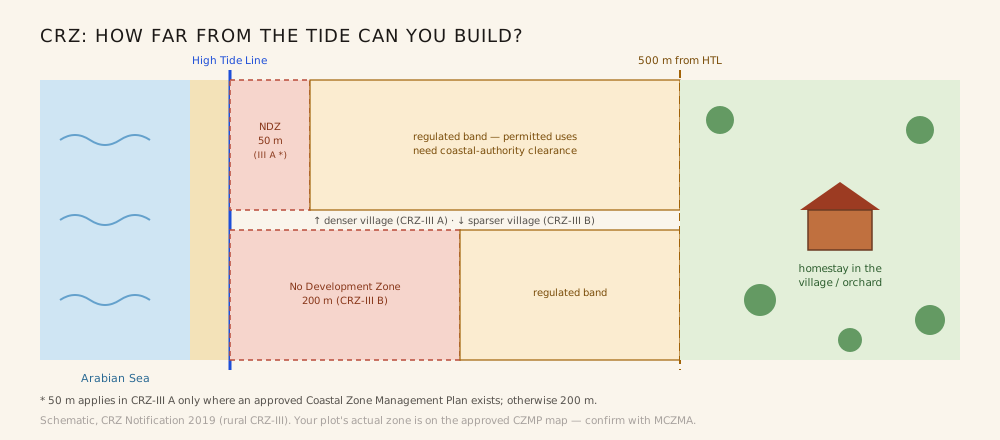
In broad terms, rural coastal land (CRZ-III) carries a No Development Zone landward of the high tide line — 50 m in denser CRZ-III A areas where an approved plan applies, 200 m in CRZ-III B — with further regulated uses out to 500 m, and separate rules for creeks, mangroves and ecologically sensitive areas. Repairs to existing traditional houses and many fisherfolk and community dwellings are treated differently from new construction. This is genuinely technical: do not buy or build near the shore without checking your plot on the approved CZMP map and taking advice from a local architect and the coastal authority. A homestay in an existing village house set back in the orchard is usually the far simpler path.
Licensing: which Maharashtra route?
Maharashtra offers more than one door, and the right one depends on your house and land — confirm current terms with Maharashtra Tourism / MTDC before you apply.
- Homestay registration (Tourism Policy 2024). The Department of Tourism lists a homestay policy with online registration through its MAITRI single-window portal; the host family typically lives on the premises.
- MTDC Bed & Breakfast scheme. The long-running scheme for owner-run B&Bs in a family home, with a small cap on rooms or beds.
- Agro-Tourism Policy (2020). For farmers and farm owners offering stays and farm experiences — a natural fit for an orchard house; the policy eases some land-use requirements for small units.
- Mahabhraman scheme. MTDC's umbrella for experiential, village and farm-based tourism units.
On top sit the gram panchayat or municipal permission, property tax, police intimation of guests (Form C for foreign guests), fire safety, FSSAI if you sell food, and GST once turnover crosses the threshold. A separate Udyam (MSME) registration is optional, not a precondition for hosting. Start with the Licence Finder and the registration guide, and see how to start a homestay for the full sequence.
Key takeaways
- The Konkan homestay's product is the village house — laterite walls, a steep tile roof, the otti, a courtyard and an orchard of coconut, areca and Alphonso — plus Malvani home cooking.
- The market is the Mumbai–Pune weekend drive: Dapoli and Ratnagiri for families, Tarkarli–Malvan for activity, the ghats for monsoon weekends.
- The monsoon (3,000 mm+) and salt air make roof, wall and hardware maintenance the core job — do it before June.
- Run two products: an Oct–May beach-and-mango season and a lower-priced green-monsoon offer.
- CRZ limits building near the shore (NDZ 50 m or 200 m in rural areas) — check the approved CZMP map and defer to the coastal authority.
- Choose the right state route — homestay, MTDC B&B, agro-tourism — and confirm current terms with Maharashtra Tourism / MTDC.
References
- Maharashtra Tourism Policy 2024 and the Department of Tourism's homestay, Bed & Breakfast and agro-tourism registrations (maharashtratourism.gov.in; MAITRI single-window portal) — authoritative for eligibility, fees and room caps; confirm current terms with Maharashtra Tourism / MTDC.
- Maharashtra Agro-Tourism Policy, Government Resolution of 28 September 2020 (Tourism Department).
- MoEFCC, Coastal Regulation Zone Notification, 2019 — CRZ-III A / III B No Development Zones; Maharashtra Coastal Zone Management Authority and approved CZMP maps.
- India Meteorological Department — Konkan and Goa sub-division rainfall normals.
- Konkan vernacular architecture — laterite masonry, Mangalore-tile roofs, the otti / osri verandah and courtyard as responses to heavy rain and humid heat.
Indicative and location-dependent. Studio Matrx is a not-for-profit guide; this is educational content, not legal, coastal-zone or tax advice. Confirm registration with Maharashtra Tourism / MTDC, check CRZ status with the coastal authority, and engage a local architect and CA before you build or open.
Export this guide
Related Guides — Deep-dive reading
Madhya Pradesh Homestays: Forest, Village & Heritage-Town Stays
India's heartland sells tiger forests, living villages and quiet heritage towns — and the homestay version is a mud-walled, tile-roofed house on a forest fringe, or a family home above the Narmada ghats. This playbook covers MP Tourism's rural homestay programme, buffer-zone siting rules, the earth-and-tile vernacular, and an honest season plan.
HomestaysRoofing for Heavy Monsoon Areas
Kerala, the Konkan coast, the Western Ghats and the North-East get some of the heaviest rain on earth. A plain-language, India-grounded guide to designing and detailing a roof that sheds it fast, throws it clear of the walls, drains it away and never lets it in.
RoofingCoastal Karnataka Homestays: Mangaluru, Udupi, Gokarna & the Canara Coast
The Canara coast pairs quiet beaches and river estuaries with some of South India's great pilgrim temples, a living Tulu Nadu culture and one of the country's finest fish thalis. This playbook covers the three coastal districts, the guthu mane and Mangalorean house as product, design for a 4,000 mm monsoon and salt air, the coastal-zone rules, and the pilgrim-versus-backpacker season.
HomestaysRelated Tools — Try Free
Cross-Ventilation Analyzer
Estimate airflow and air changes per hour (ACH) from room size, window areas, layout, and local wind — with NBC 2016 Part 8 compliance check.
Ventilation CalculatorHomestay Licence Finder
Pick your state for the homestay registration picture — room caps, residence rules and fees — plus the three compliance layers every host needs.
Licence FinderHomestay Setup-Cost Estimator
Estimate the one-time cost of setting up a homestay — rooms by fit-out level, renovation, shared spaces, licence and working capital.
Homestay Setup