
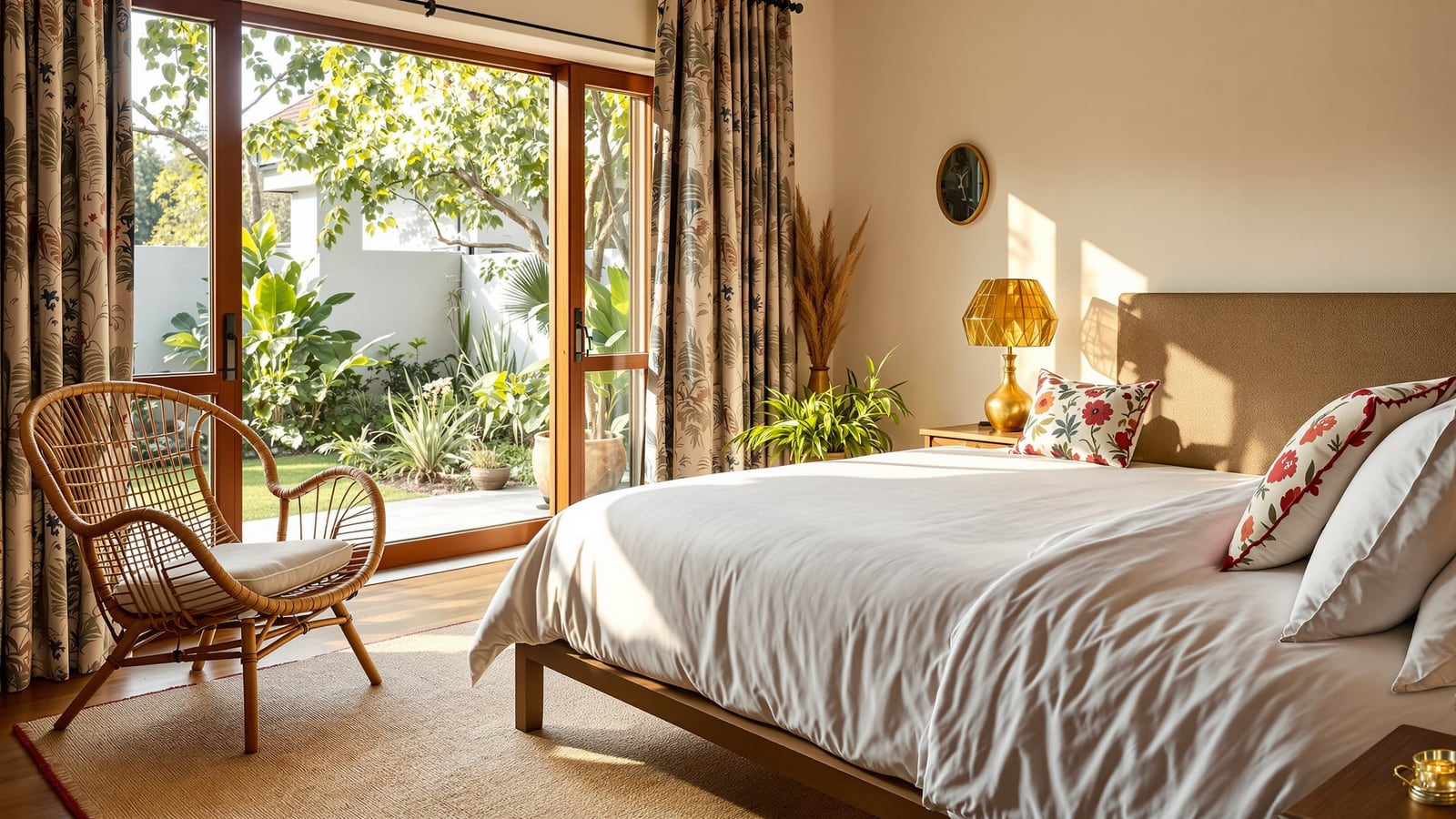
Designing Your Home as a Homestay: Rooms, Privacy & Regional Character
A homestay is a design problem before it is a business. This guide covers the decisions that make guests book and return — zoning host from guest so both can relax, guest-room and bathroom standards, carrying your region's character into the space, accessibility, and the safety that quietly underpins it all.
A homestay is a design problem before it is a business. Guests do not book a spreadsheet; they book a feeling — of a comfortable, characterful place where they can relax and still feel looked after. Get the design right and the economics in our profitability guide take care of themselves, because good design is what lifts your reviews, your rates and your occupancy all at once. This guide covers the decisions that matter, in roughly the order you should make them, from zoning the house down to the small touches that earn five stars.
Scope. This covers design and planning decisions. Anything that touches structure, plumbing, electrical work, waterproofing or fire safety should be executed by qualified professionals and must meet your local building and fire-safety codes. Treat dimensions here as indicative good practice, not regulation.
Start with zoning: give host and guest each their own world
The most important decision in a homestay is not a colour or a bed — it is the line between the family's world and the guest's world. The magic of a homestay is sharing a home; the failure of one is a guest who feels like an intruder or a host who has lost their house. The resolution is a plan that lets each retreat.
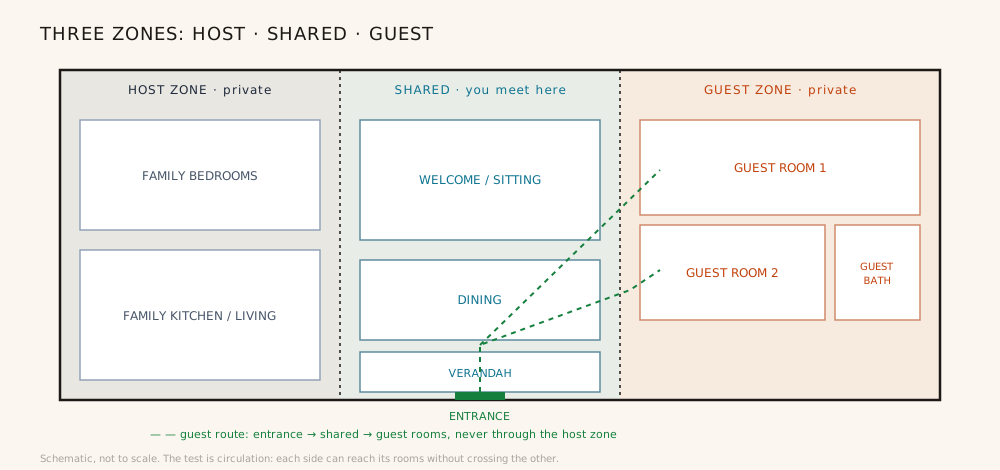
Aim for three zones: a private host zone the family keeps for itself; a shared zone — the verandah, sitting and dining space where host and guest meet over a cup of tea; and a guest zone of bedrooms and, ideally, a dedicated guest bathroom. The test is circulation: a guest should be able to reach their room, the bathroom and the shared space without ever walking through the family's private rooms, and vice versa. This is the same "make room for everyone" thinking we explored across a whole magazine issue — see The Path of a Guest for how circulation is read through a home. Where a full separation is impossible, use thresholds, a separate entrance, or even a sliding screen to signal the change. For a worked, buildable example of this zoning, see the homestay house plan — an owner suite, three ensuite guest rooms and a shared verandah, with an interactive floor plan.
The guest room: get the essentials right first
Spend on the things a guest's body touches before anything decorative. The hierarchy is clear.
| Priority | What guests actually judge |
|---|---|
| The bed | A genuinely good mattress and clean, quality linen — the single biggest driver of reviews |
| Storage & surfaces | Somewhere to unpack, hang clothes, set down a phone and a cup, and charge devices bedside |
| Light & air | Layered lighting (not one harsh tube), a reading light, good ventilation, blackout for sleep |
| Quiet | Separation from kitchen noise, the road and other guests; soft surfaces that absorb sound |
| A sense of place | One honest regional detail — not a generic hotel look |
A reliable fast Wi-Fi connection now sits almost alongside the bed in importance, especially for the remote-working guest. Everything else — the art, the cushions, the styling — matters, but only after these are right.
The bathroom: where stays are quietly won or lost
Nothing sinks a homestay review faster than a poor bathroom. It does not need to be large or luxurious; it needs to be clean, dry, well-lit and well-sorted. Reliable hot water, strong ventilation to beat damp and mould, a non-slip floor, good storage for toiletries, plenty of hooks and towel rails, and genuinely good lighting at the mirror. A dedicated guest bathroom is worth a great deal; where guests must share the family's, plan the circulation so it never crosses a bedroom, and keep it impeccable. For the technical side — waterproofing, ventilation, fittings — lean on the bathroom design guides.
Carry your region into the room
This is where a homestay beats a hotel, and where so many throw the advantage away with beige anonymity. Guests travel for a sense of place; give it to them honestly through local materials, craft and climate-wise detail rather than kitsch.
| Region | Vernacular cues that feel authentic |
|---|---|
| Kerala & the coast | Warm timber, sloping tiled roofs, verandahs, indoor plants, cane and coir |
| Rajasthan | Local stone and lime, jharokha windows, block-printed textiles, lantern light, jaali screens |
| Goa | Cane and rattan furniture, vibrant Athangudi-style tiles, shaded balcãos, bright shutters |
| The hills (HP, Uttarakhand) | Deodar wood, stone, warm wool textiles, snug rooms, sun-facing glazing |
| Coorg & plantations | Timber and tile, deep verandahs over the estate, earthy tones, open fires |
| North-East | Bamboo and cane craft, timber, woven textiles, light open structures |
The verandah deserves special mention: across India it is the great in-between space — the shaded threshold where a home opens to a guest — and a good one is often a homestay's most-loved room. A jaali or screen, similarly, is climate-wise and beautiful, filtering harsh sun and dust while letting breeze and soft light through.
Design for everyone — accessibility and ageing guests
A homestay that works for an older parent, a guest recovering from an injury or a wheelchair user simply reaches more travellers, and the moves are cheap when planned: a step-free or ramped entrance to at least the guest zone, a roughly 900 mm clear doorway, a bathroom with a curbless shower and a grab bar (or firm backing to add one later), good glare-free lighting and reachable switches. Even one genuinely accessible room is a strong differentiator. Audit the whole house with our Accessible-Home Scorecard — it flags the critical, hard-to-retrofit items first.
Safety is part of the design
Hospitality carries a duty of care, and much of it is designed in, not bolted on: working smoke and gas-leak alarms, a fire extinguisher the host knows how to use, clear and unobstructed exits, safe electrics with an RCCB, non-slip wet-area floors, and a small first-aid kit. Above a size threshold a fire NOC is mandatory — part of the compliance covered in how to start a homestay. Build safety in from the plan and it costs little; retrofit it after an incident and it costs everything.
The small touches that earn five stars
Once the essentials are right, it is the inexpensive, specific generosity that lifts a stay from good to memorable: fresh flowers from the garden, a welcome tray of tea and local snacks, a hand-written note, a folder of genuine local recommendations, good blackout and good coffee, umbrellas by the door, a torch for power cuts, and spotless, fragrant linen. None of these costs much. All of them say the same thing a guest came for — that a real person, in a real home, was glad they came.
Key takeaways
- Zone first: give the family a private world, the guest a private world, and a warm shared one between — with circulation so neither crosses the other.
- Spend on the bed, the bathroom, light, air and quiet before anything decorative; add fast Wi-Fi to the essentials.
- Carry your region's character in honestly through local materials and craft — it is the homestay's edge over a hotel.
- Design for accessibility and safety from the plan, not as an afterthought; audit with the Accessible-Home Scorecard.
- Finish with small, specific generosity — the touches only a resident host can give.
References
- Panero & Zelnik, Human Dimension and Interior Space, and standard anthropometric guidance — for comfortable room, door and bathroom clearances (indicative good practice).
- Universal-design and aging-in-place principles — for the accessibility recommendations; confirm against your local accessibility code.
- Your local building and fire-safety codes, and qualified professionals — for any structural, plumbing, electrical, waterproofing or fire-safety work.
Indicative good practice. Studio Matrx is a not-for-profit guide; this is educational content. Have all structural, plumbing, electrical and fire-safety work done by qualified professionals to your local codes.
Export this guide
Related Guides — Deep-dive reading
Designing Adaptable & Universal-Design Homes
Accessibility, Aging-in-Place, and the Multi-Stage Family — Code, Anthropometrics, and Plan-Stage Discipline for Indian Residential Architects
Room PlanningBathroom Planning for New Homes in India: Get It Right Before You Build
The bathroom decisions you cannot undo once the slab is cast — location and stacking, sunken vs non-sunken slabs, waterproofing, and the plumbing, electrical and ventilation you must coordinate with the civil work, stage by stage.
BathroomsBarrier Free Shower India: Curbless Zero-Threshold Roll-In Showers (2026)
The curbless, zero-threshold shower with no kerb to step or wheel over: the recessed slab and linear drain that contain water without a lip, whole-wet-area waterproofing, fold-down seat and grab bars, wheelchair transfer and turning space, anti-slip floors, aging-in-place logic and real rupee costs — planned before the slab is cast.
BathroomsRelated Tools — Try Free
Cross-Ventilation Analyzer
Estimate airflow and air changes per hour (ACH) from room size, window areas, layout, and local wind — with NBC 2016 Part 8 compliance check.
Ventilation CalculatorApartment Furniture Size Chart
Standard furniture dimensions for Indian apartments — sofas, beds, tables, dining, storage.
Reference ChartHomestay Licence Finder
Pick your state for the homestay registration picture — room caps, residence rules and fees — plus the three compliance layers every host needs.
Licence Finder