Tropical Architecture in India — Climate, Vocabulary, Vernacular & Modern Practice
The Three Tropical Climate Zones, Eight Signature Vocabulary Elements, Six Regional Vernaculars, Material Palette & Modern Lineage
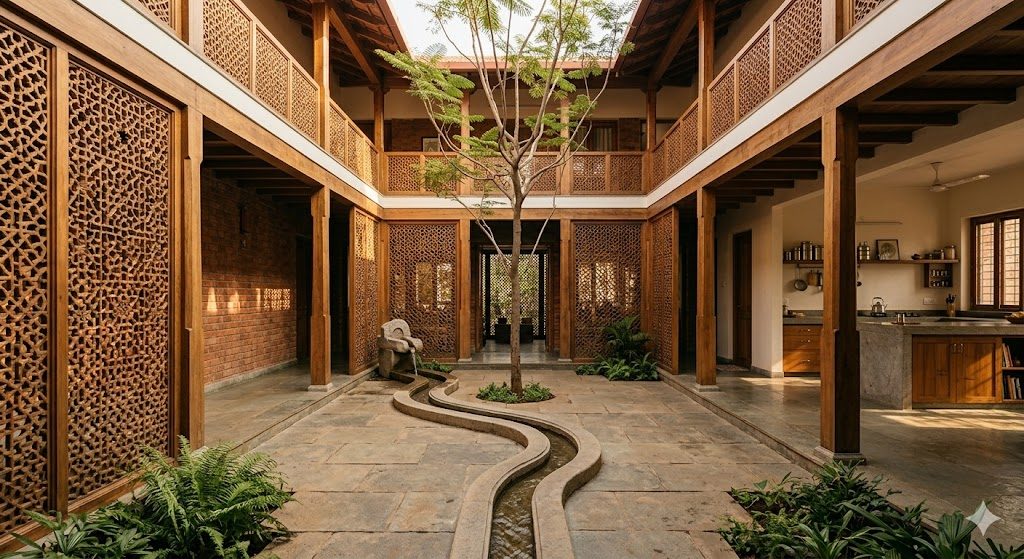
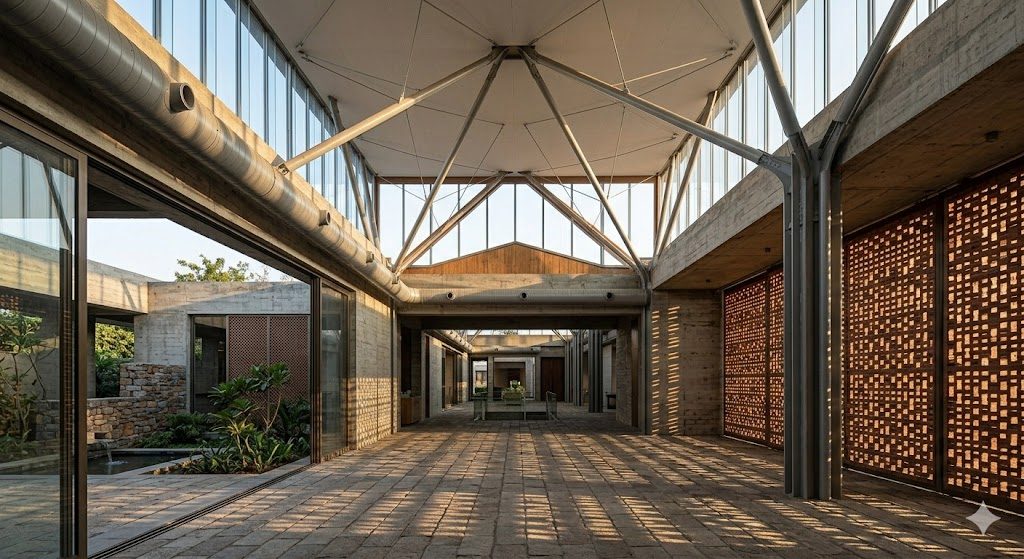
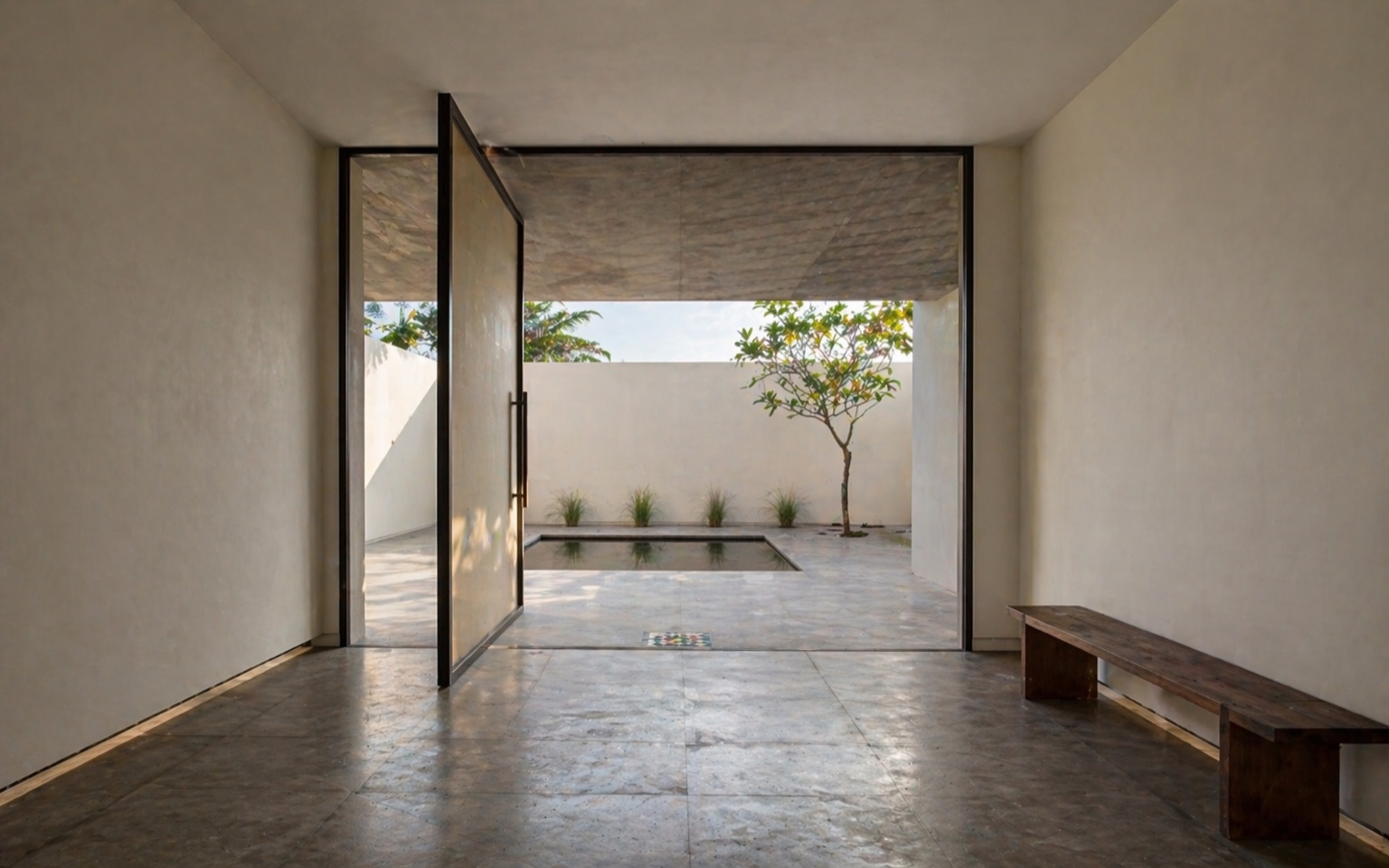
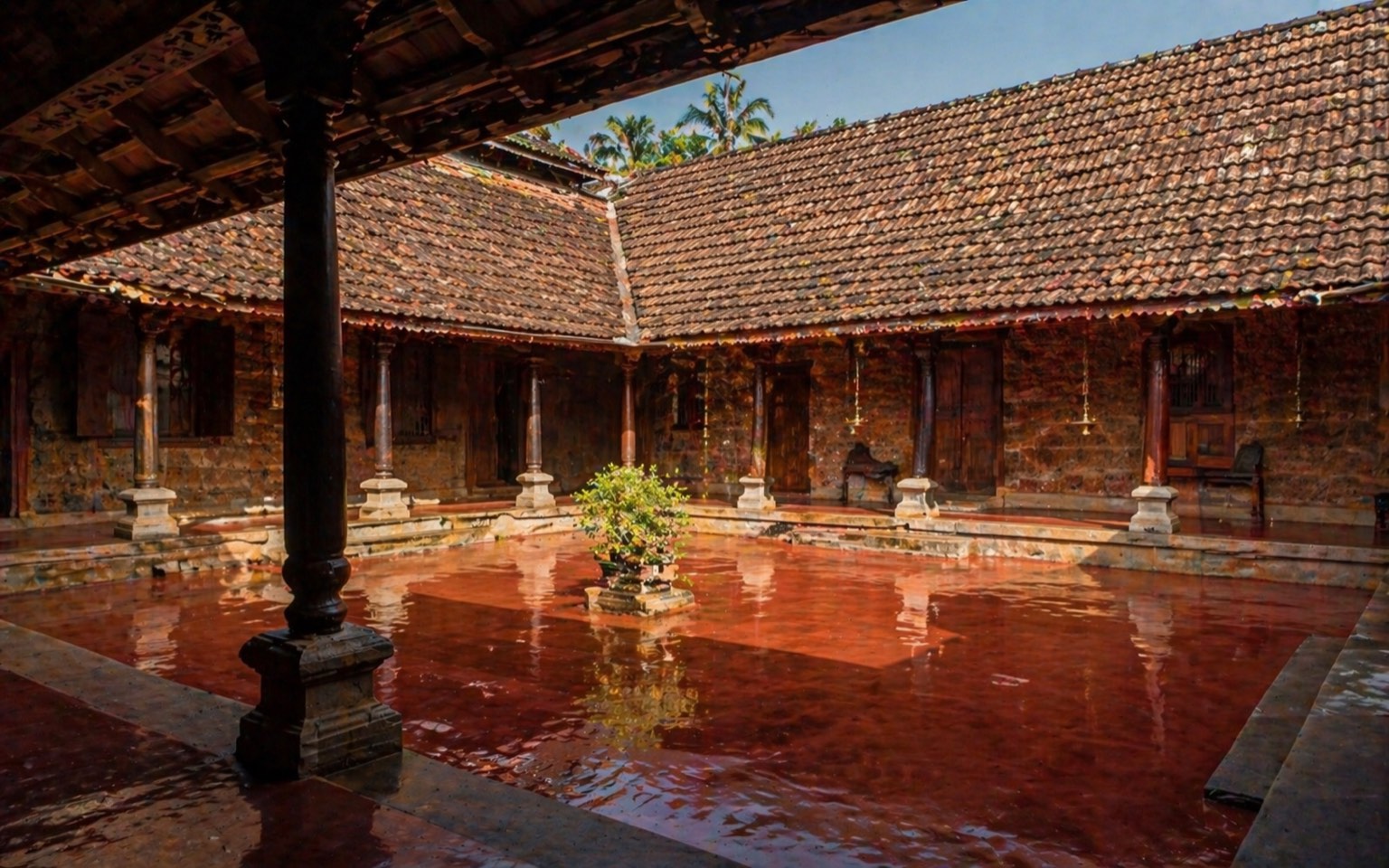
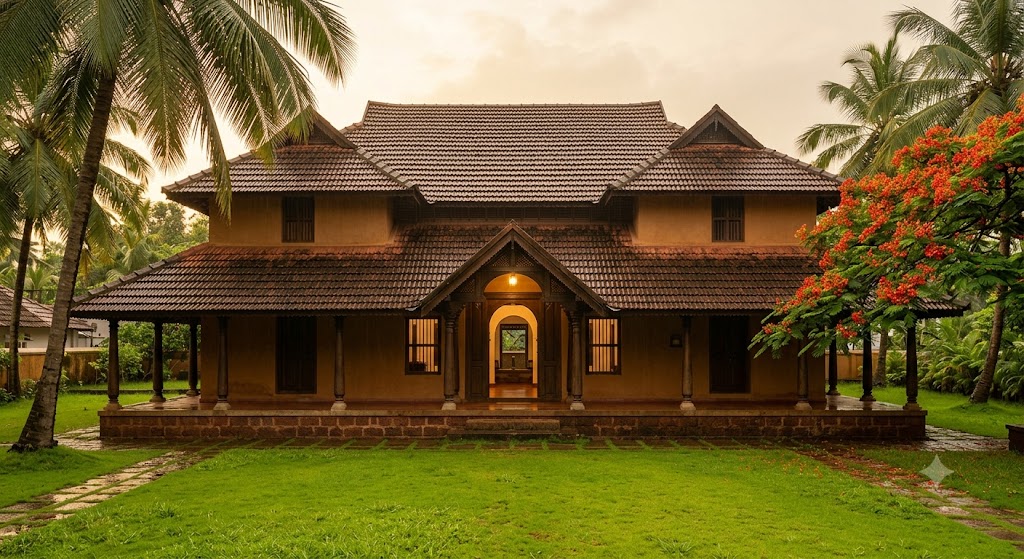
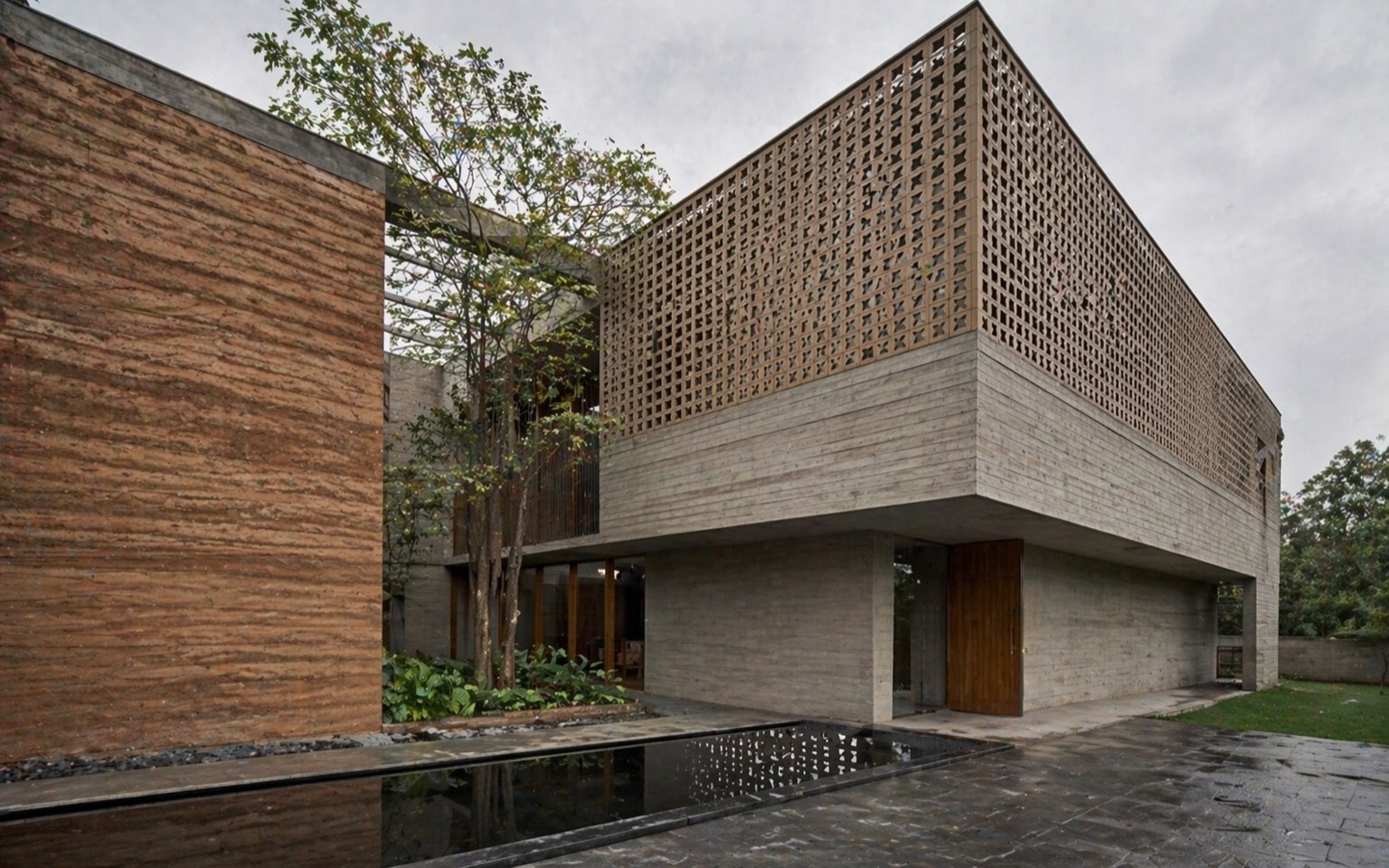
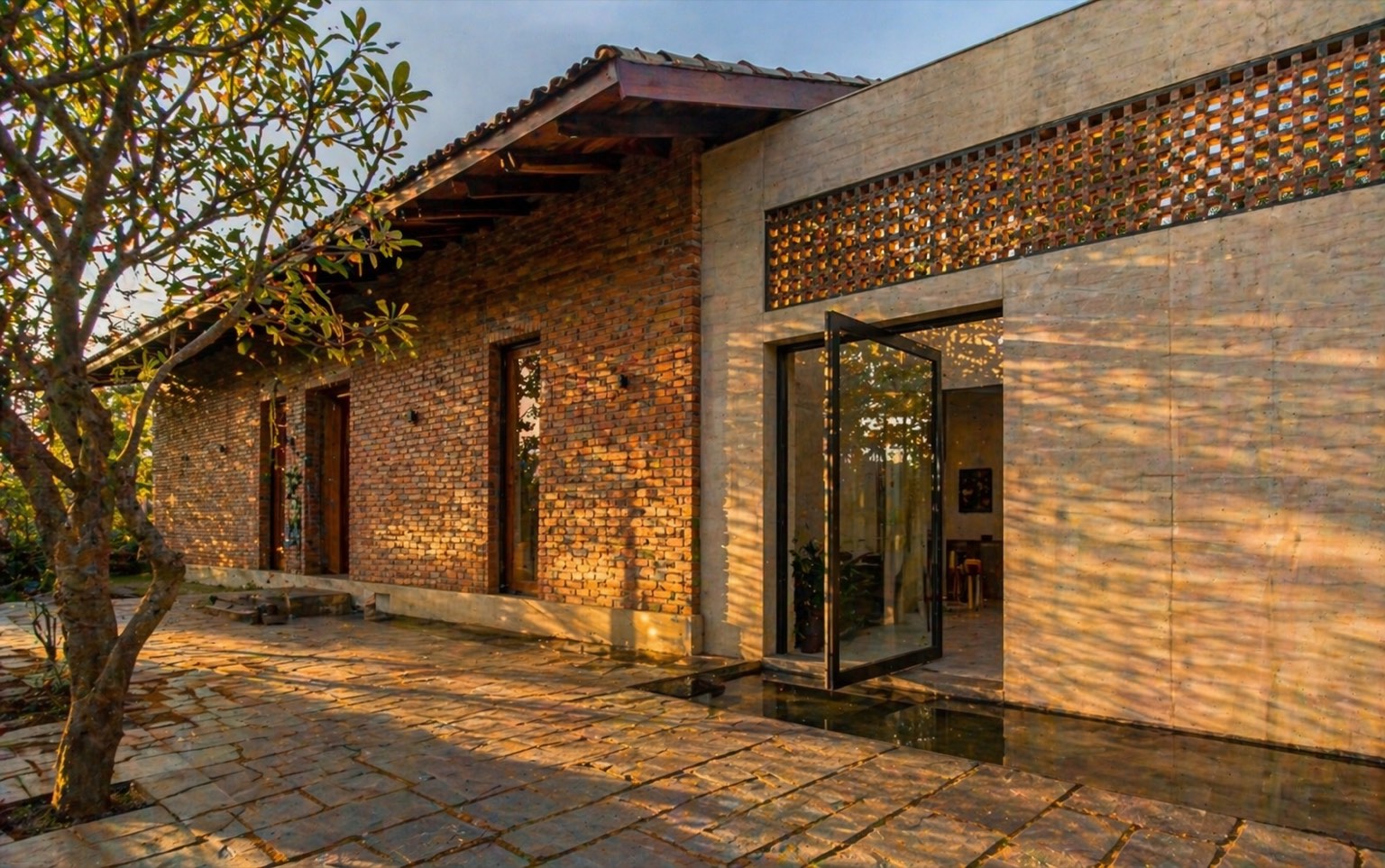
The working architect-led reference for designing tropical residential architecture in India — covering India's three tropical climate zones (Warm-Humid coastal, Tropical Savanna Deccan, Tropical Wet North-East) with rainfall humidity and temperature characteristics for each, the eight signature vocabulary elements that define tropical building (deep verandah, pitched roof, raised plinth, jaali and louvre screen, courtyard or breezeway, deep eaves overhang, cross-ventilation in every room, tropical foliage canopy) with the climate physics behind each, six regional vernacular variants (Kerala Tharavadu with nadumittam courtyard, Goa Indo-Portuguese with balcao, Konkan stepped-roof bungalow, Bengali bari, Tamil Agraharam, Naga long-house), a fifteen-material palette suited for humid heat (laterite, red oxide, kota, IPS, Burma teak, Mangalore tile, lime plaster, oxide pigment, athangudi tile, coir, bamboo, treated hardwood) with materials to avoid (mild steel, marble coastal, plastic laminate, gypsum board), the lineage from Geoffrey Bawa through Charles Correa Doshi to today's practitioners (Khosla Associates, SPASM, Studio Lotus, Wallmakers, Biome, Stapati, Cadence, Funktion, Architecture BRIO), seven common tropical-design mistakes, sustainability and energy savings, and a pre-construction checklist for owners commissioning tropical work.
30 min readAmogh N P
Read Guide →