
Retail & Store DesignVolume 1 · Issue 4 · September 2026
Retail & Store Design
Designing shops that attract, guide and sell — why a store is a selling machine you can walk into and a brand made physical; understanding the shopper and the business; store planning, layout and the decompression zone; the storefront, window and entrance; fixtures, display and visual merchandising; the customer journey, fitting room and checkout; atmosphere and the senses; the store as brand and experiential retail; retail typologies (fashion, grocery, F&B, pop-ups, malls); back-of-house, POS and operations; and delivery, rollout and sustainable retail. Commercial and India-rooted, for architects, interior designers and students — treating metrics as figures to calibrate, and deferring binding fire, accessibility, signage and systems specifics to the codes, specialists and the brand's design standards.
Course byAmogh N P· Architect & interior designer11 modules · 44 lessons · ~15 hrs · 44 of 44 lessons live

 Module 0 · Why Retail Design Sells
0.1 · A Store Is a Selling Machine You Can Walk Into
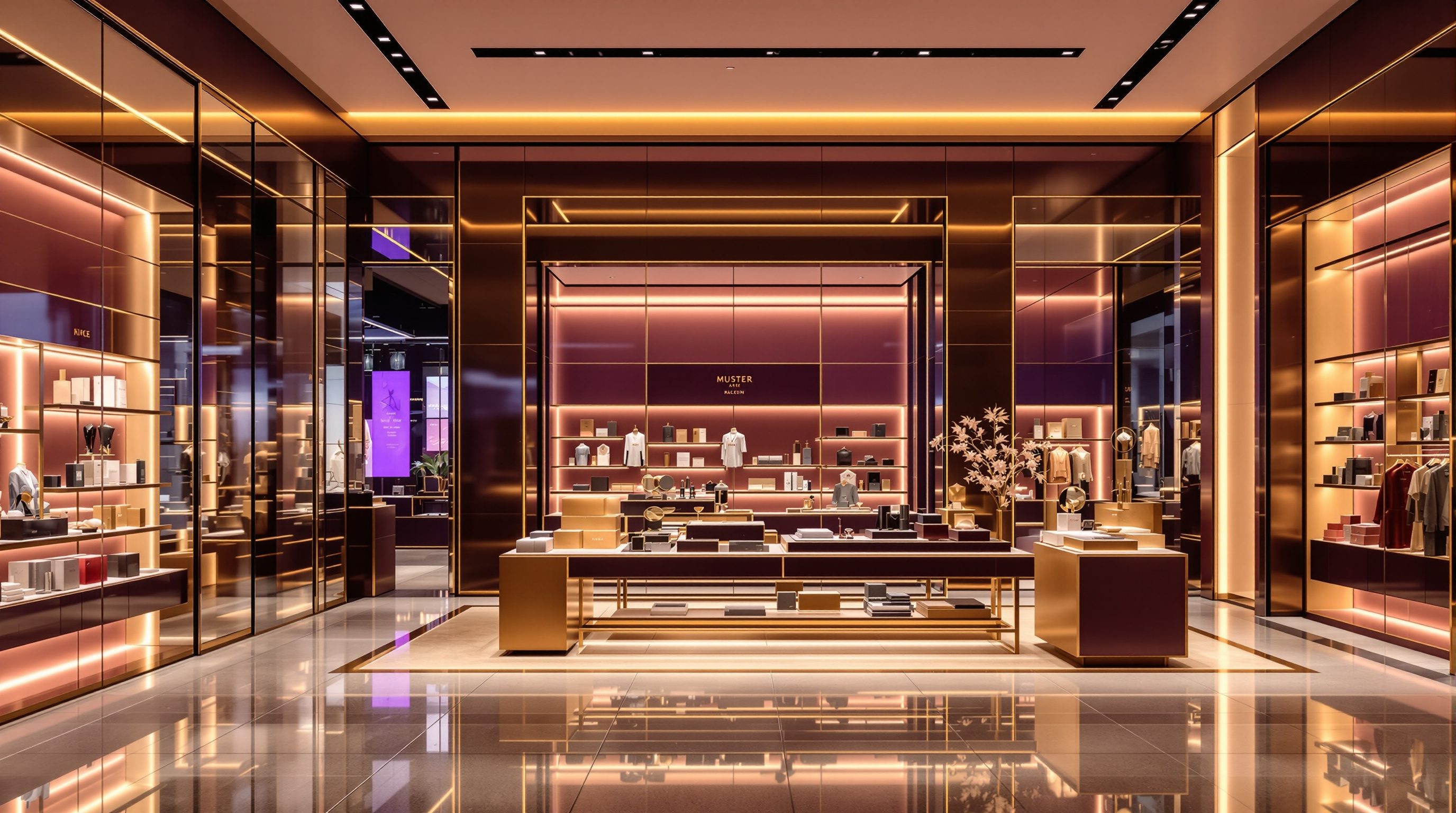
Retail design is not decorating a pretty shop - it is engineering a space that attracts shoppers, guides them past the merchandise and helps them buy, while expressing a brand and earning its keep on costly space.
Read itStart with Module 0 — Why Retail Design Sells
Free · open0.1 · A Store Is a Selling Machine You Can Walk Into
Open0.2 · The Shopper Journey
Open0.3 · Types of Retail & Their Briefs
Open0.4 · Designing in the Age of Online
Open0.✓ · Mastery check: Why Retail Design Sells
OpenWhat this course covers
The through-line- 1Understanding Retail & the Shopper. Design starts with the shopper and the business: how shoppers actually behave, the retail brand and its customer, the hard business of retail, and omnichannel and the connected store.
- 2Store Planning & Layout. The plan that makes a store work: layout types and circulation, the decompression zone and entrance flow, zoning and merchandise adjacencies, and space productivity and sales per square foot.
- 3The Storefront & Entrance. Drawing people in from the street: the shopfront and facade, the window display, the entrance and threshold, and signage and the storefront brand.
- 4Merchandising & Display. Showing the goods so they sell: fixtures and fittings, the principles of display, visual merchandising, and the power wall and focal points.
The full course ahead
11 modules · 44 lessons11 modules and 44 lessons, from the foundations through to practice — each lesson with a three-tier read, a hands-on workshop, hand-drawn figures and a scored mastery check.
0Module 0 · Why Retail Design Sells
LiveBefore any plan: why a store is a selling machine you can walk into, not just a decorated box; the shopper journey the whole design serves; the types of retail and their very different briefs; and why physical stores matter more, not less, in the age of online.
Module 0 · Why Retail Design Sells
LiveBefore any plan: why a store is a selling machine you can walk into, not just a decorated box; the shopper journey the whole design serves; the types of retail and their very different briefs; and why physical stores matter more, not less, in the age of online.
1Module 1 · Understanding Retail & the Shopper
LiveDesign starts with the shopper and the business: how shoppers actually behave, the retail brand and its customer, the hard business of retail, and omnichannel and the connected store.
Module 1 · Understanding Retail & the Shopper
LiveDesign starts with the shopper and the business: how shoppers actually behave, the retail brand and its customer, the hard business of retail, and omnichannel and the connected store.
2Module 2 · Store Planning & Layout
LiveThe plan that makes a store work: layout types and circulation, the decompression zone and entrance flow, zoning and merchandise adjacencies, and space productivity and sales per square foot.
Module 2 · Store Planning & Layout
LiveThe plan that makes a store work: layout types and circulation, the decompression zone and entrance flow, zoning and merchandise adjacencies, and space productivity and sales per square foot.
3Module 3 · The Storefront & Entrance
LiveDrawing people in from the street: the shopfront and facade, the window display, the entrance and threshold, and signage and the storefront brand.
Module 3 · The Storefront & Entrance
LiveDrawing people in from the street: the shopfront and facade, the window display, the entrance and threshold, and signage and the storefront brand.
4Module 4 · Merchandising & Display
LiveShowing the goods so they sell: fixtures and fittings, the principles of display, visual merchandising, and the power wall and focal points.
Module 4 · Merchandising & Display
LiveShowing the goods so they sell: fixtures and fittings, the principles of display, visual merchandising, and the power wall and focal points.
5Module 5 · The Journey Through the Store
LiveGuiding the shopper to buy: the path and sightlines, destination, impulse and adjacency, the fitting room, and the checkout and point of sale.
Module 5 · The Journey Through the Store
LiveGuiding the shopper to buy: the path and sightlines, destination, impulse and adjacency, the fitting room, and the checkout and point of sale.
6Module 6 · Atmosphere & the Senses
LiveWhat makes a shopper feel and stay: lighting the merchandise, materials, colour and finishes, sound, scent and the sensory store, and the atmosphere that carries the brand feeling.
Module 6 · Atmosphere & the Senses
LiveWhat makes a shopper feel and stay: lighting the merchandise, materials, colour and finishes, sound, scent and the sensory store, and the atmosphere that carries the brand feeling.
7Module 7 · Brand, Identity & Experience
LiveWhere the store becomes the brand: the store as brand, experiential and destination retail, storytelling and theming, and flagships, standard stores and concessions.
Module 7 · Brand, Identity & Experience
LiveWhere the store becomes the brand: the store as brand, experiential and destination retail, storytelling and theming, and flagships, standard stores and concessions.
8Module 8 · Retail Typologies
LiveEvery retail type has its own rules: fashion and apparel, grocery, supermarket and convenience, food and beverage retail, and pop-ups, showrooms and malls.
Module 8 · Retail Typologies
LiveEvery retail type has its own rules: fashion and apparel, grocery, supermarket and convenience, food and beverage retail, and pop-ups, showrooms and malls.
9Module 9 · Back-of-House, Operations & Tech
LiveThe engine behind the sales floor: the stockroom and back-of-house, technology and the point of sale, staff, service and operations, and security and loss prevention.
Module 9 · Back-of-House, Operations & Tech
LiveThe engine behind the sales floor: the stockroom and back-of-house, technology and the point of sale, staff, service and operations, and security and loss prevention.
10Module 10 · Delivery, Rollout & the Future
LiveFrom one concept to many stores and beyond: the store concept and prototype, rollout, fit-out and delivery, sustainable retail, and the future of retail and becoming a retail designer.
Module 10 · Delivery, Rollout & the Future
LiveFrom one concept to many stores and beyond: the store concept and prototype, rollout, fit-out and delivery, sustainable retail, and the future of retail and becoming a retail designer.
The author
Amogh N P
Architect, interior designer, and creative polymath. Studio Matrx began in his notebooks — his vision of design made honest, useful, and open to everyone. Its Academy is written and taught in his memory, and free, forever.
More about Amogh →