
 Lesson 4.3
Lesson 4.3 · Merchandising & Display
Visual Merchandising
When the principles of display are coordinated across the whole store, planned by season and driven by data, they become a discipline in their own right - visual merchandising, one of retail's most direct sales levers
A single good display sells a shelf. Visual merchandising coordinates every display in the store, changes them by the season, and measures what each one sells - turning a craft into a sales machine.
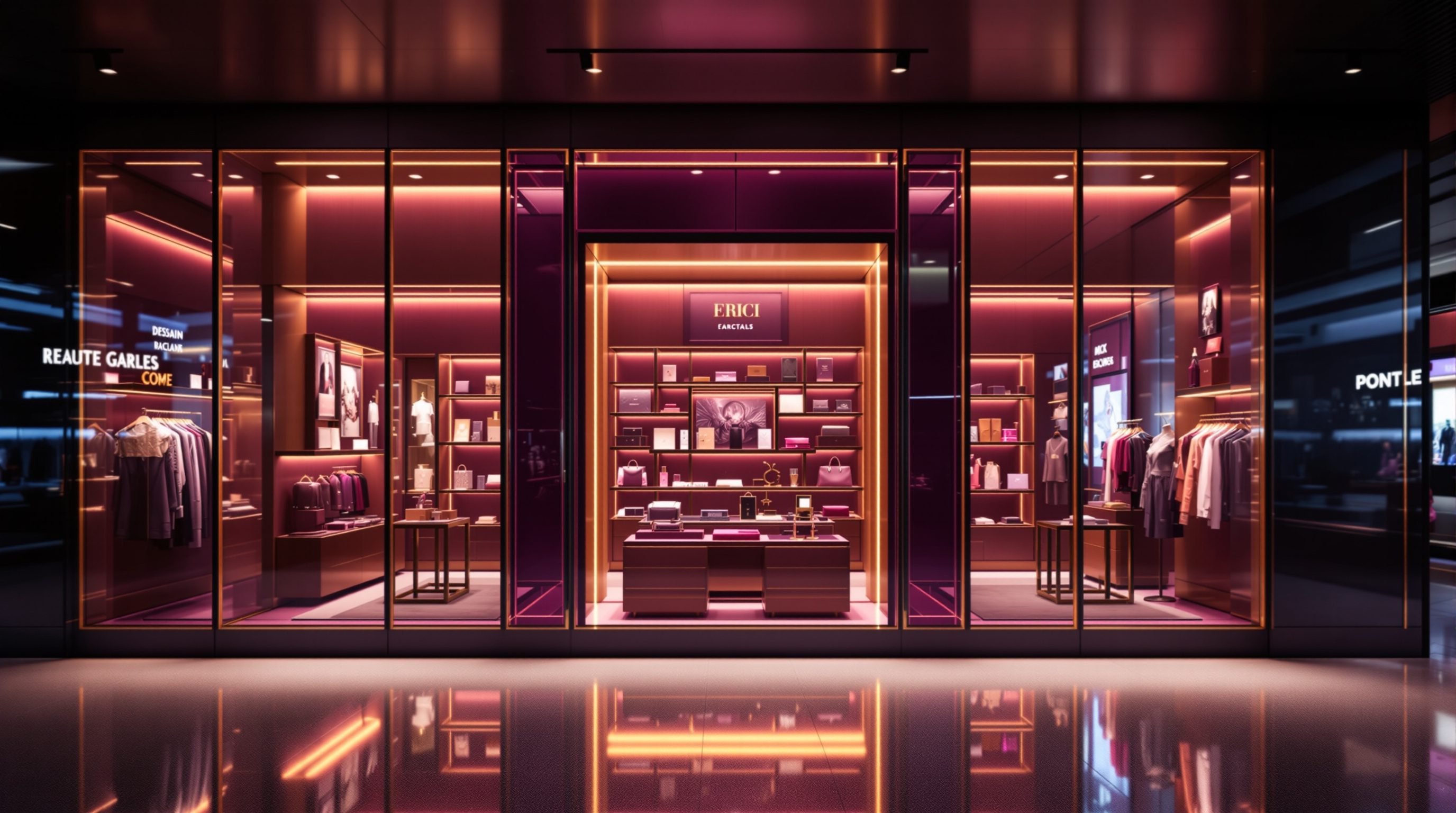
Take the principles of display - grouping, the pyramid, the edit - and now imagine applying them not to one shelf but to an entire store, and not once but on a rolling calendar of seasons, festivals and launches, all tied to a single story, all planned in advance, and all measured by what they actually sell. That is visual merchandising: display grown into a discipline, and one of the most direct, measurable sales levers a retailer has. VM is why a store looks completely different in October than in July, why the window, the power wall and the tables all seem to be telling the same story, and why the same product chain-wide sits in exactly the same spot on the shelf in every branch.
Visual merchandising is where the craft of display meets the machinery of retail. On one side it is deeply creative - themes and stories, styled mannequins, seasonal drama, the art of keeping a space fresh so regulars always find something new. On the other it is rigorously systematic - the planogram that specifies every facing, the calendar that schedules every change, the data that tells you which display sold and which did not. The best visual merchandising holds both: it is beautiful and it is accountable, storytelling that you can read on the sales report. This lesson shows how VM is planned, executed and measured - themes and change, cross-merchandising, the planogram, mannequins and styling, and the endless job of keeping it fresh - and why, done well, it is a sales driver you can dial.
Theme + calendar + cross-merch + planogram + styling + upkeep. Creative AND accountable. A dial on sales.
Themes, stories and the art of the seasonal change
The first thing that lifts visual merchandising above individual display is that it works with a theme or story that ties the whole store together. Rather than each table and wall doing its own thing, a season's VM gives them a shared subject - a colour story, a mood, a way of living, a campaign - so that the window, the power wall, the feature tables and the mannequins all feel like chapters of one thing. A 'coastal summer' story might run blues and whites, natural textures, linen and swimwear across every touchpoint; a festive story might run gold, colour and celebration through the whole floor. The theme makes the store legible and immersive at once: the shopper senses a coherent world, not a warehouse, and coherence reads as quality and care.
The second defining feature is change. A store that looks the same every visit goes invisible to its regulars and stale to everyone; visual merchandising exists to keep it moving. The store is re-dressed to a rhythm - new seasons, sale periods, product launches, campaigns and, crucially in India, the dense calendar of festivals, from the great festive-and-wedding peak through the year's many regional occasions. Each change refreshes the space, signals 'something new here', gives shoppers a reason to return, and - most commercially - rides the moments when people most want to buy. A festive window and floor put up at the right moment is not decoration; it is the retailer meeting demand at its peak.
Getting this right is a planning discipline as much as a creative one. VM teams work to a merchandising calendar mapped months ahead: what story runs when, what stock it needs, when each change is installed (usually overnight or before opening, so shoppers meet the new store fresh), and how it connects to marketing and online. The creativity - inventing the story, styling it beautifully - sits inside this schedule. And the whole cycle is a reason physical retail endures: an ever-changing, story-led, seasonally alive store is an experience a static website struggles to match, and a well-run VM calendar is one of the surest ways to keep a shop feeling fresh, cared-for and worth the trip. The theme gives it meaning; the change gives it life.
One story across the whole store, changed to a calendar. Fresh = a reason to return, and to buy now.
Cross-merchandising - selling the combination
One of visual merchandising's most reliable sales moves is cross-merchandising: placing complementary products together so that buying one suggests buying the others. The shirt displayed with a tie and a belt; the sofa styled with cushions, a throw and a side lamp; the pasta shelved beside the sauce, the parmesan and the wine; the tent shown with the sleeping bag and the stove. Each pairing does the shopper a genuine service - it completes the thought, answers 'what goes with this?', and saves them a hunt - while lifting the retailer's basket size, the average value of a purchase, which is one of the core metrics VM is judged on. Done well, cross-merchandising feels like helpful suggestion, not upselling.
Cross-merchandising works because it sells the combination and the outcome, not the isolated item. A shopper who came for a shirt and sees it styled into a whole look can picture the outfit and often buys more of it; a shopper choosing a sofa who sees it dressed into a room buys the cushions and lamp that make the picture. This is the display principle of 'show it in use' turned into a deliberate selling system: the styling that helps the shopper imagine also bundles the sale. It is why room-sets, styled mannequins and 'complete the look' displays are such workhorses, and why the goods placed around a hero are chosen as much for what they sell alongside it as for themselves.
There is craft in doing it honestly and well. Good cross-merchandising pairs things that genuinely go together and genuinely help - real, useful combinations the shopper is glad to be shown. The line into bad practice is pairing by pure margin rather than relevance, cluttering a clean display with unrelated add-ons, or nudging shoppers toward things they do not need; that erodes trust and, over time, sales. The best test is the shopper's gratitude: would they thank you for the suggestion when they get home? In India's fast-growing lifestyle and D2C retail, cross-merchandising is doing heavy lifting - teaching shoppers how to combine and style products, building the bigger basket, and turning a single-item errand into a considered, complete purchase. Sell the combination, serve the shopper, and the basket grows on its own.
The planogram, mannequins and styling - execution and consistency
Creativity is only half of visual merchandising; the other half is disciplined, consistent execution, and its central tool is the planogram. A planogram is a precise diagram of a fixture or bay that specifies exactly which product sits where, how many facings (side-by-side units) each gets, and at what height - turning display judgement into a repeatable, auditable instruction. Planograms let a chain execute the same shelf identically in every store, put priority and high-margin lines in the strike zone by design, allocate space to products in proportion to how they sell, and - crucially - test and tune the shelf by data: change the planogram, watch what happens to sales, keep what works. The planogram is where merchandising craft meets the discipline of rollout (Module 10), and it is why grocery and pharmacy shelves look considered rather than random.
Mannequins and styling are the expressive end of execution, especially in fashion. A well-styled mannequin is one of the hardest-working salespeople in the store: it shows the garment on a body, demonstrates fit and drape, proposes a complete look, and lets the shopper picture wearing it - selling the outfit, not the item. Styling is a real skill - posing, layering, accessorising, keeping the look current and aspirational yet achievable - and it extends beyond mannequins to every styled table, plinth and room-set. Consistent, confident styling across the store signals a brand that knows what it is doing; sloppy or dated styling undermines even good product.
Holding creativity and consistency together is the everyday reality of VM, and it is largely governed by the brand's visual-merchandising standards - a guidebook that tells every store how windows are dressed, how mannequins are styled, how planograms are set and how the current campaign is installed, so the brand looks coherent across dozens or hundreds of stores while still allowing local judgement. This is what lets a chain feel like one brand everywhere and still respond to a particular store's space and market. For the designer, the lesson is that a beautiful VM concept only counts if it can be executed consistently and maintained by ordinary store staff, day after day - so design VM that is as robust and repeatable as it is creative, and specify the tools (planograms, guidelines, styling kits) that make good execution the easy default.
Keeping it fresh, and VM as a measurable sales driver
The unglamorous truth of visual merchandising is that its enemy is entropy. A display that was perfect on installation degrades by the hour: shoppers pick it over, facings empty, sizes sell through, a folded stack collapses, a mannequin ends up half-dressed, a sign goes crooked. A store that is not actively maintained looks tired, picked-over and uncared-for within days, and a tired store sells less - shoppers read a messy, gappy display as 'nothing good left' and a neglected store as a neglectful brand. So a huge part of real VM is not the grand seasonal install but the daily discipline of upkeep: replenishing, refolding, restyling, tidying, filling gaps and keeping every display as sharp as the day it went up. Great VM concepts fail in practice not because they were badly designed but because nobody kept them fresh.
What makes all this worth the effort is that visual merchandising is one of the most directly measurable sales levers in retail. Because you can change a display and watch the result, VM is accountable in a way much of design is not: retailers track how a feature display, an end-cap, a window or a re-planogrammed shelf moves sales, dwell and basket size, and they tune accordingly. A well-merchandised store visibly outsells a poorly merchandised one with the same stock in the same space - which is why VM is a serious commercial function, not window-dressing, and why the discipline earns its own teams, budgets and standards. Done well, VM is a dial the retailer can turn on sales.
The designer's job is to build stores and systems in which good VM is possible and sustainable: fixtures that support the moves, feature zones and windows that can carry the stories, lighting that can be re-aimed for each change, planograms and guidelines that make consistent execution the default, and enough back-of-house and staff time designed in to keep it all fresh. Treat VM as the sales engine it is - creative and accountable, seasonal and systematic, beautiful and maintained - and calibrate its benchmarks (basket size, sell-through, change frequency) to the specific brand, format and market, as figures to tune rather than rules. Visual merchandising, at its best, is storytelling you can read on the sales report - and a store designed to let it run is a store built to keep selling.
VM degrades by the hour - upkeep IS the job. And you can read it on the sales report: a dial on sales.
Brand visual-merchandising standards
Windows, mannequins, planograms, campaign installs
Branded and chain retail runs VM to a detailed brand guidebook so every store looks coherent. Apply the principles within those standards. Module 10.
Honest merchandising & consumer protection
Truthful styling, relevant cross-merchandising, real pricing
Style and pair honestly to serve the shopper, never to mislead or clutter for margin. Follow consumer-protection norms; deceptive VM is poor practice.
Access, egress & safe installs (NBC 2016)
Clear widths, windows, overnight change work
Feature displays and windows must not block egress or access; installation work must be safe. Defer binding dimensions to the code and specialists. Module 2.
Workshop - plan a season of visual merchandising
Visual merchandising is best understood by planning a change yourself. In this workshop you will take a store and a real upcoming moment - a season, a festival, a launch - and plan a coordinated VM programme for it, from theme to execution to how you would measure it.
A store you know, an upcoming retail moment and paper to sketch. No software needed - this is planning and judgement.
Goal: plan a coherent, measurable VM change for a real store and moment
Inputs: a store you know + an upcoming season/festival + this lesson + paper
Time: ~50 minutes
- 1Pick the STORE and the MOMENT (a festive peak, a new season, a launch) and define one clear THEME or story - a colour, a mood, a way of living - that could tie the whole store together for it.
- 2Map the TOUCHPOINTS: sketch how the theme plays out across the window, the power wall, two or three feature tables and the mannequins, so they all read as chapters of one story.
- 3Design CROSS-MERCHANDISING: choose three complementary pairings or 'complete the look' groupings that genuinely help the shopper and would lift the basket - and note why each is honest, not just margin-led.
- 4Plan EXECUTION and FRESHNESS: outline a rough planogram or styling note for one feature, say when and how the change installs (overnight, before opening), and list the daily upkeep it will need to stay sharp.
- 5Define SUCCESS: state which metrics you would watch to judge whether this VM change worked (basket size, sell-through of the featured lines, dwell, footfall) and what result would tell you to keep or drop each element.
You’ll walk away with
A one-to-two-page VM plan for a real store and moment: the theme, how it plays across the touchpoints, three honest cross-merchandising moves, an execution-and-upkeep note, and the metrics you would judge it by.
Three altitudes on the same idea
Read the band that fits you — or all three.
Visual merchandising is not your daily craft, but the store you design either enables it or strangles it. Protect the VM engine in the plan: reserve strong window zones and a proper power wall, keep the sightlines that let seasonal stories be seen, design flexible lighting (track and power) that can be re-aimed for each change, and provide the back-of-house space and access that let staff install and maintain displays without disrupting trade. For a rollout, bake these VM affordances into the prototype so every store can run the brand's calendar, not just the flagship. Coordinate lighting and power with the specialists, keep egress and clear widths around feature displays compliant with the code, and design for the constant change VM demands.
Visual merchandising lives at the heart of your work, spanning fixtures, display, lighting and the whole felt atmosphere. Design the store as a VM instrument: feature zones, windows, plinths and walls that can carry seasonal stories; fixtures flexible enough to re-dress endlessly; lighting that can be re-aimed for each change. Enable cross-merchandising with adjacencies and room-sets, and create the tools - planograms, styling guidelines, mannequin schemes - that let ordinary staff execute consistently and keep it fresh. Balance the creative (theme, styling, drama) with the systematic (repeatable, maintainable, on-brand), and work within the client's VM standards. Style honestly, design for daily upkeep, and treat VM as the measurable sales driver it is.
Visual merchandising is the most visible retail discipline - you can study a whole VM programme just by revisiting one store across a year. Watch a shop change through the seasons and festivals: spot the theme tying each change together, the cross-merchandised pairings lifting the basket, the styled mannequins selling the look, and the freshness (or staleness) of the upkeep. Look for the planogram logic on a grocery shelf - the facings, the strike-zone placement - and imagine the diagram behind it. Learn to see VM as both creative and accountable: a story you can enjoy and a sales lever you can measure. It is one of the clearest routes into retail as a career, and it rewards a sharp, curious eye.
“Visual merchandising is the decorative side of retail - making the store and windows look pretty, dressing mannequins and putting up seasonal displays because it looks nice and festive.”
Do it yourself
No tools needed - reason it through.
- 1What does a theme or story add to a store's merchandising, and why is regular change essential rather than optional?
- 2Explain cross-merchandising with an example, and how it serves the shopper while lifting basket size - and where it tips into bad practice.
- 3What is a planogram, what does it specify, and why is it central to consistent, data-tuned execution across a chain?
- 4Why are styled mannequins and room-sets such effective sellers, and what does 'design VM that ordinary staff can maintain' mean?
- 5Why is 'keeping it fresh' a core part of VM, and in what sense is visual merchandising a measurable sales driver?
The one line to carry out
Peer-reviewed journals & authoritative standards
- 01Visual merchandising — Wikipedia - Visual merchandising, 2026.
- 02Planogram — Wikipedia - Planogram, 2026.
- 03Merchandising — Wikipedia - Merchandising, 2026.
- 04Mannequin — Wikipedia - Mannequin, 2026.
- 05Retail design — Wikipedia - Retail design, 2026.
VM works everywhere in the store, but not every surface carries equal weight. Next we turn to the places that pull hardest - the power wall the shopper meets first and the focal points that draw the eye and feet deeper.
The author
Amogh N P
Architect, interior designer, and creative polymath. Studio Matrx began in his notebooks — his vision of design made honest, useful, and open to everyone. Its Academy is written and taught in his memory, and free, forever.
More about Amogh →