
 Lesson 6.3
Lesson 6.3 · Atmosphere & the Senses
Sound, Scent & the Sensory Store
A store is felt through every sense, not just seen - the music and soundscape tuned by brand and daypart, a signature scent, the touch of materials and goods, all composed into one atmosphere, and all to be used honestly and with care
You remember a great store as a feeling, not a layout. That feeling was built as much by what you heard and smelled as by what you saw.
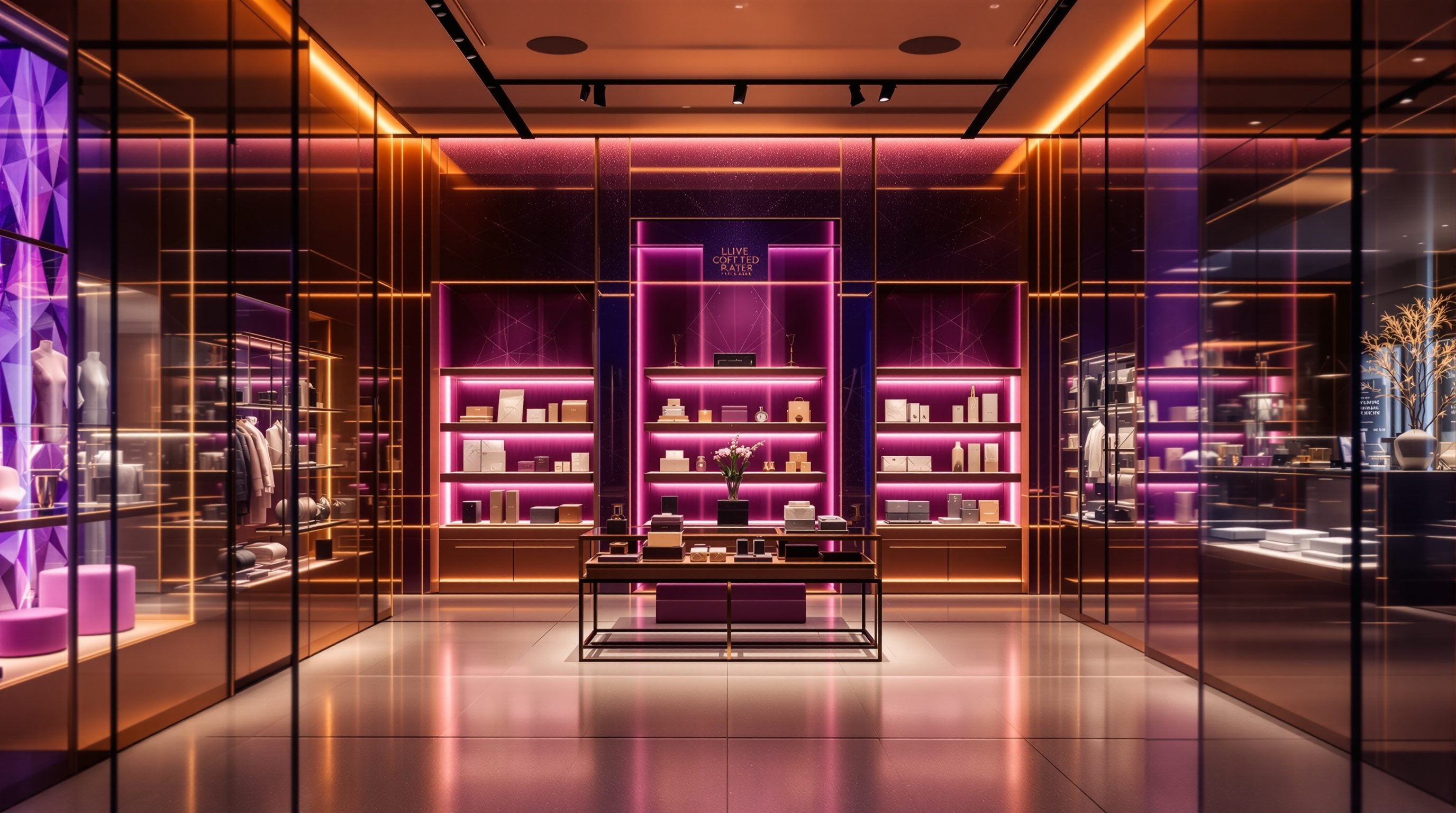
Close your eyes in a store you love and you will find it is not only a picture in your memory - it has a sound and a smell. The particular music, the hush or the buzz, the signature scent that hits you at the door, the feel of a fabric or a floor underfoot: these are as much a part of the store's atmosphere as its light and materials, and often more memorable, because smell and sound reach the emotional brain directly and lodge there. A store is a fully multisensory environment, and the senses you cannot see - hearing and smell above all - are among the most powerful and most neglected tools a retail designer has.
This power comes with a responsibility this lesson takes seriously. Sound and scent work partly below conscious awareness, which is exactly why they can shape mood and behaviour - and exactly why they can tip into manipulation if used cynically or carelessly. The through-line of this course holds here as everywhere: good retail design serves the shopper and sells by serving, it does not manipulate, and sensory design is where that line must be drawn most carefully and most honestly. This lesson covers music and soundscape tuned by brand and daypart, the signature scent, the multisensory store where the senses combine, and - crucially - the real, often-overstated evidence and the ethics of sensory retail.
Sound: genre/tempo/volume/daypart. Scent: subtle, honest, allergy-aware. Touch: invite it. Congruence beats intensity. Serve, never manipulate.
Music and soundscape by brand and daypart
Sound is the sense retailers most commonly and deliberately design, and the most carelessly abused. Done well, the store's music and soundscape set the emotional tempo, reinforce the brand's personality, mask dead silence or unpleasant noise, and subtly influence the pace at which people move and browse. Done badly, they drive shoppers out of the door faster than almost anything else. The first discipline is that music must be chosen for the brand and its customer, not the staff or the designer: a youth streetwear brand, a luxury jeweller, a family supermarket and a wellness spa-like beauty store need completely different sonic worlds, and each should feel like an audible version of the brand, reinforcing everything the light, materials and goods are saying.
The second discipline is genre, tempo and volume, each a lever. Genre carries the brand's identity and signals to the customer whether they are in the right place. Tempo influences pace - slower music tends to slow people down and encourage lingering and browsing (valuable where dwell helps sales, as in fashion or hospitality-style retail), while faster, brighter music tends to lift energy and movement (useful at busy peaks or in high-turnover formats). Volume is the most abused variable of all: loud music can energise and signal a young, high-energy brand, but pushed too far it exhausts shoppers, makes conversation and service impossible, and sends people out - the opposite of what the store wants. The level must match the brand and, critically, respect the shopper.
The third discipline is daypart: a sophisticated store does not play one playlist all day. It varies the music through the day and week to match the flow of shoppers and the mood of the hour - calmer and softer in quiet morning hours to encourage relaxed browsing, brighter and more energetic at busy midday or weekend peaks, warmer and more relaxed in the evening. Beyond music, the fuller idea is soundscape: the whole sonic environment, including the deliberate use of quiet (a hushed, calm luxury boutique sells through near-silence as surely as a club-like store sells through volume), the masking of harsh mechanical noise, and the acoustic design of the space itself - hard, reflective surfaces make a store loud, echoing and stressful, while softer, absorbent materials calm it, which ties sound directly back to the materials of Lesson 6.2 and to the acoustic design the architect and an acoustics specialist handle. The benchmarks here - tempos, volumes, daypart schedules - are illustrative starting points to calibrate to the specific brand, format and market, never fixed rules.
Music for the brand + the shopper, not the staff. Genre, tempo, volume, daypart. Quiet is a soundscape too. Loud drives people out.
Signature scent and the power of smell
Smell is the most emotionally direct and most memory-laden of all the senses, because the olfactory system is wired straight into the parts of the brain that handle emotion and memory, bypassing much of the conscious, rational filtering that sight and sound pass through. This is why a scent can trigger a vivid memory or a strong feeling in an instant, and why smell is such a potent - and such a double-edged - tool in retail. A well-judged scent can make a store feel welcoming, clean, luxurious, fresh or distinctively itself; a bad or overpowering one can repel shoppers instantly and is very hard to escape once noticed.
The most basic job of scent design is simply removing the bad and ensuring the pleasant: a store that smells musty, stale, of damp, of cleaning chemicals or of the previous customer has a real problem, because unpleasant smells register as poor quality and even poor hygiene and drive people away. Good ventilation and cleanliness come first (a services and operations matter as much as a design one). Beyond that, many categories have a natural, honest scent that is itself a selling tool and should be celebrated rather than masked - the smell of fresh bread in a bakery, coffee in a cafe, leather in a shoe shop, fresh flowers, spices in a food hall. These authentic scents are powerful precisely because they are real and connected to the goods.
At the more deliberate end is the signature scent: a specific fragrance, often custom-blended, diffused consistently through a store (or a whole chain) to become part of the brand's identity - so recognisable that customers associate it with the brand and even feel they are inside it the moment they smell it. Used with restraint and taste, a signature scent can be a beautiful and coherent part of an atmosphere, especially for fashion, beauty, hospitality and luxury brands. The cautions are serious, though. Scent must be subtle - a scent you consciously notice and find strong is usually already too much; it should be a background note, not a cloud at the door. It must be appropriate to the brand and the goods. It must respect that a meaningful share of people are sensitive to, allergic to or simply dislike strong fragrances, and that ventilation, health and sometimes local rules govern what can be diffused - matters to coordinate with the services consultant and check against any regulations and the brand's standards. And it must be honest: scent used to mask a genuinely poor product or environment, or pumped so aggressively that it overrides a shopper's judgement, crosses from atmosphere into manipulation. The honest aim is a store that smells, quietly and appropriately, like the best version of itself.
The multisensory store - when the senses combine
The real power of sensory design is not in any single sense but in all of them working together, because a shopper does not experience light, then material, then sound, then smell as separate channels - they experience one fused, felt atmosphere, assembled by the brain from every sense at once. This is the central idea of the multisensory store and of sensory branding: sight (light, colour, materials), sound (music and soundscape), smell (scent), touch (the feel of materials underfoot and under hand, and the crucial ability to handle and try the goods), and sometimes taste (samples, a cafe, tastings) all combine, and the atmosphere that results is far more than the sum of its parts.
The governing principle of multisensory design is congruence: the senses must all tell the same story, reinforcing one brand feeling rather than contradicting each other. A calm, premium, minimalist store with soft warm light, quiet natural materials, gentle slow music and a subtle clean scent is powerful because every sense says the same thing - this is calm, considered and premium - and the shopper feels it deeply without analysing it. The same store with loud aggressive music or a cheap chemical smell would be jarring and incoherent, because one sense would be fighting the others, and the brain reads that clash as wrongness even when the shopper cannot name why. Congruence, not intensity, is what makes a multisensory atmosphere work: a quiet, coherent store beats a loud, contradictory one every time.
Touch deserves special emphasis because it is the sense that physical retail has and online shopping fundamentally lacks - and therefore a large part of why the store still matters (Module 0 and Module 7). The tactile qualities of the store (a solid door handle, a warm timber counter, a soft rug in a lounge area) and, above all, the ability to pick up, feel, try on and test the actual merchandise are among physical retail's strongest cards. A store that invites touch - open displays, things you can handle, fabrics you can feel, products you can try - converts better and satisfies more than one that locks everything away, and designing for touch (at a comfortable height, reachable, invitingly presented) is a real and often underused part of sensory retail. The designer's task across all the senses is the same: compose them deliberately and congruently into one atmosphere that expresses the brand and makes the shopper want to stay, handle the goods and buy - which is exactly the synthesis the final lesson of this module builds on.
Congruence beats intensity. All senses tell one brand story. Touch is physical retail's trump card over online - invite it.
The honest evidence and ethics of sensory retail
Sensory retail is surrounded by bold, confident claims - that a particular scent lifts sales by a precise percentage, that a specific tempo increases spend, that playing the right music makes people buy more wine - and a responsible designer must treat these claims with healthy scepticism. The honest position is that there is real evidence that atmosphere and the senses affect mood, dwell time and behaviour in stores, and that this is a genuine, studied field; but much of the specific, dramatic, single-number marketing claim is overstated, context-dependent, hard to replicate, or drawn from small or commercially funded studies. Effects are usually real but modest, highly dependent on the brand, the category, the culture and the shopper, and not the magic levers some vendors sell. The design implication is to use the senses thoughtfully and congruently to build a genuinely better atmosphere - and to be sceptical of anyone promising a precise sales uplift from a scent or a playlist. Treat every such figure as illustrative and unproven until shown otherwise, and calibrate to your own brand and market.
The deeper issue is ethics, and it matters most precisely where the tools work partly below conscious awareness. Because scent and sound can shape mood without the shopper noticing, they can be used to serve the shopper - a more pleasant, calming, coherent, enjoyable environment - or to manipulate them - to mask a poor product, to override judgement, to pressure or disorient. The course's through-line draws the line clearly: good retail design serves the shopper and sells by serving; it does not manipulate, and manipulative sensory tactics are bad practice. A scent that makes a genuinely fresh bakery smell wonderful serves everyone; a scent pumped to disguise stale goods deceives. Music that makes a store pleasant to be in serves shoppers; music weaponised purely to disorient or rush people does not. The ethical test is simple and worth applying to every sensory decision: is this making the experience genuinely better and more honest for the shopper, or is it trying to override their judgement? Design for the former.
There are practical and regulatory dimensions too. Music in a store generally requires the appropriate licences and rights - a real operational and legal matter to handle properly, not to ignore. Scent diffusion touches on health, allergies, ventilation and sometimes local rules. Volume can stray into noise nuisance. And accessibility matters: strong scent, loud sound and intense sensory environments can exclude or distress people with sensitivities, allergies or sensory conditions, so a considerate designer keeps sensory intensity humane and, increasingly, provides calmer options. These binding specifics - music licensing, health and ventilation rules, noise and accessibility standards - are deferred, as ever, to the current regulations, the relevant specialists and the brand's standards. The designer's job is to compose a rich, coherent, honest sensory atmosphere that serves the shopper and expresses the brand, and to do it within those limits and with genuine care.
Music licensing & rights
Licences and rights to play music in a commercial space
A real legal and operational requirement - handle via the proper licences and the brand's arrangements, not informally. Defer specifics to the rules and a specialist.
Acoustics, noise & ventilation
Reverberation, noise nuisance, air-handling for scent and freshness
Design intent here; binding acoustic, noise and ventilation values from an acoustics and MEP specialist and the code (NBC 2016). Modules 2, 9.
Scent, health & accessibility
Allergies, sensitivities, diffusion safety, sensory inclusion
Keep scent subtle and sensory intensity humane; respect allergies and sensory conditions. Defer health and accessibility specifics to the guidelines and specialists.
Sensory sales-effect claims
Dramatic scent/music sales-uplift figures
Treat as illustrative and unproven as of 2026 - effects are usually modest and context-dependent; calibrate to your brand and market, never trust a vendor's single number.
Workshop — audit a store with your eyes closed
Because we design so visually, the heard and smelled atmosphere is easy to ignore. In this workshop you will deliberately audit a store through its non-visual senses, test its congruence, and apply the ethical line to its sensory choices.
A shop you know and a notebook - and your ears and nose. This is about learning to perceive and judge the non-visual atmosphere, not to measure decibels or specify diffusers.
Goal: a one-page multisensory and ethics audit of a real store
Inputs: a shop you can recall or visit + this lesson + a notebook
Time: ~45 minutes
- 1Audit the SOUND: what music (genre, tempo, volume) is playing, does it fit the brand and the hour, and does it invite you to linger or push you out? Note the soundscape too - is the space calm or echoing, and is quiet being used deliberately?
- 2Audit the SMELL: does the store smell of anything? Is it the honest smell of the goods, a subtle signature scent, something unpleasant, or nothing at all? Is any scent a background note or a cloud at the door?
- 3Audit TOUCH: can you pick up, feel and try the merchandise, and are the materials you touch (handles, counters, floor) pleasant? Note where touch is invited and where it is blocked.
- 4Test CONGRUENCE: do sight, sound, smell and touch all tell the same brand story, or does one sense clash with the rest? Name the strongest and weakest sense in the atmosphere.
- 5Apply the ETHICS test: for each deliberate sensory choice, ask whether it genuinely improves the experience for the shopper or tries to override their judgement - and note anything that crosses the line, plus the binding items (licensing, ventilation, accessibility) to defer.
You’ll walk away with
A one-page multisensory audit: the store's sound, smell and touch, a verdict on whether the senses are congruent, the strongest and weakest sense, and an honest ethics check on its sensory choices with the binding items flagged.
Three altitudes on the same idea
Read the band that fits you — or all three.
You set the acoustic and servicing conditions that make good sensory design possible or impossible. The hard or soft surfaces you specify, the volume and shape of the space, and the acoustic separation from noisy plant and neighbours decide whether a store is calm or echoing and stressful before a single speaker is switched on - so coordinate acoustics with an acoustics specialist early, especially in hard-surfaced, high-ceilinged or food-and-beverage spaces. The ventilation and air-handling you plan govern whether scent and fresh air work and whether diffusion is safe and compliant. For multi-store rollout, help set the acoustic and servicing baselines the sensory concept relies on. Defer binding acoustic, ventilation, health and noise standards to the specialists and code, and leave the music and scent curation to the brand and interior designers.
Composing the heard and smelled atmosphere - and fusing it with the seen one - is a rich and underused part of your craft. You help shape the music and soundscape brief (genre, tempo, volume, daypart) to the brand and shopper, the signature or natural scent strategy, the invitation to touch and try the goods, and above all the congruence that makes every sense tell one brand story. Work with the materials and acoustics so the space sounds as it should, coordinate scent with the services and health limits, and design touch into open, reachable, invitingly presented displays. Hold the ethical line - serve the shopper, never manipulate - and be sceptical of dramatic sensory sales claims; defer music licensing, health, ventilation, noise and accessibility specifics to the specialists and the brand's standards.
Start paying attention to what you hear and smell in stores, not just what you see - and notice how much it shapes how you feel. Ask: what is the music doing here - what genre, how loud, how fast, and does it fit the brand or drive me out? Does the store smell of anything, and is it the honest smell of the goods, a subtle signature scent, or something unpleasant? Can I touch and try the products, and does that make me want them more? Do all the senses tell the same story, or does one clash with the rest? And keep the ethics in mind: is this atmosphere genuinely making my experience better, or trying to push me? You are not expected to specify acoustics, diffusers or music licences yet; you are expected to understand that a store is felt through every sense, that congruence beats intensity, and that sensory design must serve the shopper honestly.
“Sensory retail is a proven science: pump in the right signature scent and play the scientifically correct music and you will reliably boost sales by a known percentage - it is one of the most powerful and dependable tools a store has.”
Do it yourself
No tools needed - reason it through.
- 1Explain how music's genre, tempo, volume and daypart each work as a retail lever, and why volume is the most abused.
- 2Why is smell such a powerful and double-edged tool, and what should a designer do before ever adding a signature scent?
- 3What does 'congruence' mean in multisensory design, and why does it usually beat intensity?
- 4Why is touch physical retail's strongest card against online shopping, and how do you design for it?
- 5State the ethical test for any sensory decision, and give one honest use and one manipulative use of scent.
The one line to carry out
Peer-reviewed journals & authoritative standards
- 01Architectural acoustics — Wikipedia — Architectural acoustics, 2026.
- 02Scent marketing — Wikipedia — Scent marketing, 2026.
- 03Sensory branding — Wikipedia — Sensory branding, 2026.
- 04Consumer behaviour — Wikipedia — Consumer behaviour, 2026.
We have now built the atmosphere sense by sense - seen, heard, smelled and touched. The final lesson of the module draws them together: how light, material, sound and scent fuse into one felt atmosphere that expresses the brand and moves the shopper to dwell and spend.
The author
Amogh N P
Architect, interior designer, and creative polymath. Studio Matrx began in his notebooks — his vision of design made honest, useful, and open to everyone. Its Academy is written and taught in his memory, and free, forever.
More about Amogh →