
 Lesson 6.4
Lesson 6.4 · Atmosphere & the Senses
Atmosphere & the Brand Feeling
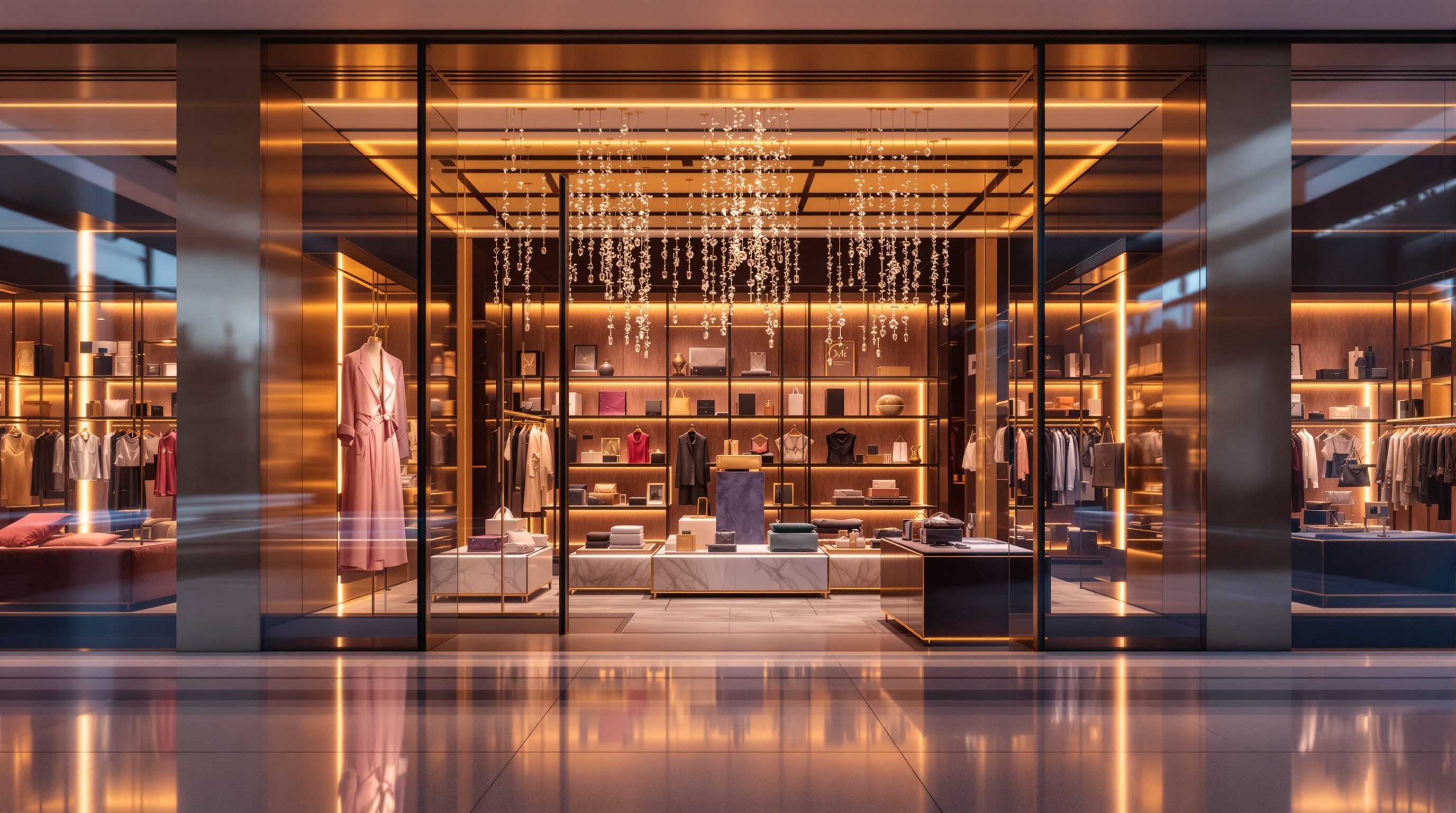
Light, material, sound and scent are not separate decisions but one instrument - and played together they create the single felt atmosphere a shopper reads instantly as the brand, the thing that makes them want to stay, trust the store and buy
You cannot point at a store's atmosphere, yet it is the first thing you feel and the last thing you forget. It is every sensory decision, added up.
Ask someone why they love a particular shop and they rarely mention the light levels, the floor finish, the music genre or the scent. They say it feels right - calm, or exciting, or warm, or them. That feeling is the store's atmosphere, and it is not one more design element to add alongside light and materials and sound; it is the sum of all of them, the single felt result of every sensory decision in the building working together. Atmosphere is the most important output of this whole module, and arguably of retail design as an art, because it is what a shopper actually experiences - not light and material and sound as separate channels, but one fused, emotional impression that they read, in an instant and below conscious thought, as the brand.
This closing lesson of the module is a synthesis. Having built the atmosphere layer by layer - lighting the merchandise (6.1), the materials, colour and finishes that frame it (6.2), and the sound, scent and touch that complete it (6.3) - we now step back and design atmosphere as a whole: how the layers fuse into one felt thing, how that felt thing expresses the brand, how it measurably affects dwell and spend on the commercial scoreboard, and how to design it deliberately and honestly - naming the one feeling the store must give, tuning every sensory layer to it, and keeping the goods the hero and the shopper genuinely served.
Atmosphere = the sum, designed as a whole. Name the feeling, tune every sense, keep goods the hero, serve honestly. The felt store.
Atmosphere is the sum - where the senses fuse into one felt thing
The central insight of this lesson, and of the module, is that atmosphere is not a separate ingredient but an emergent whole - the single felt result of light, material, colour, sound, scent and touch all working at once. A shopper never experiences these as a list; the brain fuses every sensory input into one continuous impression of what this place is like and how it makes them feel, assembled instantly and mostly unconsciously. This is why you cannot design atmosphere by designing the parts in isolation and hoping they add up. A beautiful lighting scheme, a tasteful material palette and a well-chosen playlist can still produce a store that feels subtly wrong if they were not designed to fuse into the same feeling - and, conversely, a modest store where every sensory decision pulls in one direction can feel wonderful and unmistakably branded on a small budget.
The principle that governs this fusion is the one introduced in the last lesson and now raised to the level of the whole store: coherence. Every sensory layer must tell the same story, express the same brand feeling, and reinforce rather than contradict the others. When the light, the materials, the colour, the sound, the scent and the touch all say calm and premium, the shopper feels calm and premium, deeply and without analysis. When one layer is off-key - aggressive music in a serene space, a cheap finish in a luxury room, a harsh light over soft materials, a clashing scent - the brain registers the dissonance as wrongness even when the shopper cannot name the culprit, and the whole atmosphere is undermined by the single weakest, loudest or most contradictory element. Atmosphere is therefore only as strong as its coherence, and a designer's most important atmospheric skill is holding every sensory decision to one feeling.
This is also why atmosphere is the true meeting point of all the course's threads. It is where the selling machine and the brand made physical become one experienced thing: the atmosphere is simultaneously the most powerful expression of the brand a customer encounters (Module 7) and a direct lever on whether they stay and buy. It fuses the seen (the lit, framed merchandise), the heard and smelled (the soundscape and scent), and the felt (the materials and the goods in the hand) into the emotional reality of the store. Designing it well is the art that sits on top of all the technique in this module: not just lighting the goods and choosing the finishes and picking the music, but composing them all into one deliberate, coherent, brand-true feeling.
Atmosphere = the sum, not a part. One off-key sense spoils the whole. Coherence is the master skill.
Atmosphere and behaviour - dwell, comfort and spend
Atmosphere is not only an aesthetic or emotional matter; it connects directly to the commercial scoreboard this course insists on, which is why it earns its place as a serious design discipline rather than a decorative luxury. The clearest link is through dwell time: a store with a pleasant, comfortable, coherent atmosphere makes shoppers want to stay longer, and longer dwell, in most retail formats, correlates with more browsing, more exposure to merchandise, and a greater chance of buying and of buying more (the connection runs through the path and impulse logic of Module 5). An atmosphere that is stressful, harsh, confusing or unpleasant does the opposite - people leave sooner, buy less, and are less likely to return. In this sense atmosphere is a driver of the dwell, conversion and basket metrics the whole store is judged on.
The mechanism is emotional and about comfort and trust as much as stimulation. A good atmosphere makes shoppers feel comfortable, relaxed and in the right place, which lowers their guard, encourages exploration, and disposes them to enjoy the experience and trust the store and its goods. It also shapes the perceived value of the merchandise: the same product feels more desirable and worth more in an atmosphere that signals quality and care, and cheaper and less trustworthy in one that feels harsh or neglected - so atmosphere quietly supports price and margin as well as volume. And it drives the softer but vital outcomes of satisfaction, memory and return: a store that felt good is one a shopper remembers warmly and comes back to, which in an age of online convenience is much of why they make the trip at all (Module 0).
Two disciplines keep this honest. First, the evidence, as the last lesson stressed, is real but modest and context-dependent: atmosphere genuinely affects behaviour, but not by the dramatic, precise margins sometimes claimed, and the effect depends heavily on brand, category, culture and shopper - so treat any specific uplift figure as illustrative and calibrate to your own market. Second, the goal is to influence behaviour by genuinely serving the shopper - a more pleasant, comfortable, enjoyable store that people choose to stay in - not by manipulation. A good atmosphere sells more because it makes the experience better, and that alignment of the shopper's interest and the retailer's is, once again, the heart of good retail design. The commercial case for atmosphere is strong precisely when it is made honestly: design a store people love to be in, and they will stay longer, trust it more, value its goods more highly, buy more and come back - which is the whole commercial point, achieved by serving rather than pushing.
Designing atmosphere to express the brand
If atmosphere is the sum of the senses and a lever on behaviour, the practical question is how to design it deliberately rather than hoping it emerges. The single most useful discipline is to name the one feeling the store should give before designing any of its parts. Every strong retail atmosphere can be captured in a few words that come straight from the brand and its customer: serene and precise; warm, abundant and festive; cool, clean and clinical; raw, authentic and independent; energetic and youthful; quiet, crafted and luxurious. This named feeling is the atmosphere brief, and it is derived from the brand strategy (Module 1 and Module 7), not invented for its own sake. Without it, the sensory decisions have nothing to cohere around and tend to drift into the designer's personal taste; with it, every decision has a clear test.
With the feeling named, the designer then tunes every sensory layer to it, consciously and together rather than one at a time. The light (level, contrast, warmth, drama), the materials and colour (palette, texture, restraint), the sound (genre, tempo, volume, quiet), the scent (presence, character, subtlety) and the touch (the feel of surfaces and the invitation to handle the goods) are each set to express that one feeling and to reinforce the others. A serene, premium feeling calls for low ambient light and high-contrast accents, a restrained natural palette, soft slow music or near-silence, a subtle clean scent, and tactile natural materials - each layer chosen because it says the same thing. A warm, festive, abundant feeling (think of a store dressed for Diwali, or a lively bazaar-inspired brand) calls for the opposite settings, again all pulling together. The craft is this conscious coordination of every layer toward one coherent feeling, which is exactly the coherence the first section demanded.
Throughout, two constraints from earlier in the module hold firm. The atmosphere must keep the merchandise as the hero (Lesson 6.2): the feeling is the frame around the goods, not a performance that upstages them, and an atmosphere so strong it overshadows what is for sale has failed its commercial job. And it must be honest, humane and accessible (Lesson 6.3): it serves the shopper rather than manipulating them, stays within the comfort of the many people with sensory sensitivities, and defers the binding acoustic, lighting, ventilation, health and accessibility specifics to the specialists and codes. The Indian context offers rich, specific atmospheres to design toward - the warmth and colour of festive retail, the sensory abundance of the bazaar, the calm of a premium crafts boutique, the cool efficiency of a modern supermarket - each a distinct named feeling that light, material, sound and scent can be tuned to express. Name the feeling, tune every layer to it, keep the goods the hero and the shopper served: that is how atmosphere is designed, not left to chance.
Name the ONE feeling first. Tune every layer to it. Goods stay the hero. Honest, humane, brand-true.
Module synthesis - the felt store
This module, Atmosphere and the Senses, has built the felt store layer by layer, and it is worth drawing the threads into one picture. We began with light (6.1) as the number-one tool to make goods desirable - layered into ambient, accent and feature, made to sell through contrast, sparkle and true colour rendering, and spent on the window, the hero wall, the path and the fitting room. We framed the lit goods in materials, colour and finishes (6.2) - the tight, coherent palette that signals brand and price, survives heavy footfall and frequent refit, and, above all, stays a quiet frame so the merchandise is the hero. We completed the sensory world with sound, scent and touch (6.3) - music and soundscape tuned by brand and daypart, a subtle or honest scent, the crucial invitation to handle the goods, all composed congruently and used honestly, never to manipulate. And in this lesson we have seen that all of these fuse into one felt atmosphere that expresses the brand, moves the shopper to dwell, trust and spend, and must be designed deliberately by naming the one feeling and tuning every layer to it.
The through-line of the whole course runs straight through this module. Atmosphere is where the store as a selling machine and the store as a brand made physical become a single experienced thing: the atmosphere is the brand felt in the body, and it sells precisely by making the shopper comfortable, engaged and willing to stay - selling by serving, not by pushing. It runs, as ever, on a commercial scoreboard (dwell, conversion, basket, return), and the case for investing in atmosphere is strongest when it is made honestly, because a store people genuinely love to be in is the one that performs. And it keeps the course's disciplines: benchmarks like accent ratios, refit cycles, tempos and sensory effects are illustrative figures to calibrate to the brand, format and market, and the binding specifics - lux and emergency lighting, fire and slip performance of finishes, acoustics, ventilation, music licensing, health and accessibility - are deferred to the current codes (NBC 2016 and the rest), the relevant specialists, and the brand's own design standards.
Carry forward a simple, powerful idea: a store is felt before it is analysed, and that feeling is the atmosphere you composed from light, material, sound and scent. Design the feeling, not just the parts; make every sense tell one brand story; keep the merchandise the hero and the shopper honestly served; and you will have learned the art that sits on top of all the technique in this module. The next module takes this felt, branded atmosphere and asks the larger question it points to: how the whole store becomes the brand, and how experiential and destination retail turn a shop into a place people choose to visit.
Environmental compliance of the atmosphere
Lighting, fire, acoustics, ventilation, accessibility together
You own the felt intent; every binding value across lighting, fire, acoustics, ventilation and access defers to NBC 2016, the current standards and the relevant specialists. Modules 2, 3, 9.
Atmosphere & behaviour evidence
Dwell, comfort and spend effects of atmosphere
Real but modest and context-dependent as of 2026 - treat any specific uplift figure as illustrative, calibrate to the brand and market, and make the commercial case honestly.
Serve-not-manipulate & accessibility
Honest, humane, inclusive sensory intensity
Atmosphere must serve the shopper and stay within the comfort of people with sensory sensitivities - not manipulate or overwhelm. Defer accessibility specifics to the guidelines.
Brand atmosphere standards
A chain's prescribed feeling, palette, light, music and scent
Branded and rolled-out retail defines much of the atmosphere - design within the brand's standards so the feeling reproduces store to store. Modules 7, 10.
Workshop — name the feeling and write the atmosphere brief
Atmosphere is designed, not stumbled upon, and the discipline starts with naming the one feeling and tuning every sense to it. In this capstone workshop for the module you will write an atmosphere brief for a real or imagined store and test it for coherence, commerce and honesty.
A chosen brand and a notebook. This capstone is about composing a whole atmosphere deliberately and honestly from every sense - no software, samples or measurement needed.
Goal: a one-page atmosphere brief for a store, tuned across every sense
Inputs: a real or chosen brand + this module (6.1-6.4) + a notebook
Time: ~50 minutes
- 1Name the ONE feeling: in a few words drawn from the brand and its customer, state the single feeling the store should give (e.g. serene and precise; warm, abundant and festive; raw and authentic). This is your atmosphere brief.
- 2Tune every layer to it: write one line each for LIGHT (level, contrast, warmth, drama), MATERIAL and COLOUR (palette, texture, restraint), SOUND (genre, tempo, volume, or quiet), SCENT (presence and character) and TOUCH (surfaces and the invitation to handle goods) - each chosen to express that one feeling.
- 3Test COHERENCE: check that every layer tells the same story and flag any that would clash; name the element most likely to go off-key and how you would hold it in line.
- 4Test COMMERCE and the hero rule: say how this atmosphere would lift dwell, comfort and spend honestly, and confirm it keeps the merchandise the hero rather than upstaging it.
- 5Test HONESTY and limits: confirm the atmosphere serves the shopper rather than manipulating, stays humane and accessible for sensory-sensitive people, and list the binding items (lighting, fire, acoustics, ventilation, licensing, access) to defer to specialists and code.
You’ll walk away with
A one-page atmosphere brief: the named feeling, every sensory layer tuned to it, a coherence check, an honest commercial and hero-rule check, and an ethics-and-limits check with the binding items flagged for the specialists.
Three altitudes on the same idea
Read the band that fits you — or all three.
You set the spatial and environmental envelope in which atmosphere is composed - and for chains, the baselines that let a brand feeling be reproduced store to store. Volume and ceiling height, daylight and the shopfront, acoustics, servicing and the structural rhythm all shape the feeling before the fit-out begins: a tall, daylit, hard-surfaced shell and a low, intimate, absorbent one produce utterly different atmospheres. Coordinate lighting, acoustics, ventilation and daylight with the specialists so the intended feeling is achievable and compliant, and for rollout help define the environmental and material baselines the brand atmosphere depends on. Hold the binding lighting, fire, acoustic, ventilation and accessibility specifics to the codes and consultants, and leave the fine tuning of the felt atmosphere to the interior and brand designers.
Composing the single felt atmosphere from light, material, sound and scent is the summit of your craft in retail - the art that sits on top of all the technique. Your job is to name the one feeling the brand should give, tune every sensory layer to it consciously and together, and hold the whole store to coherence so no off-key element undermines the rest. Keep the merchandise the hero, design the atmosphere to genuinely serve the shopper and lift dwell and comfort honestly, and work the senses into one brand-true experience that a shopper reads instantly. Coordinate the binding lighting, acoustic, ventilation, health and accessibility specifics with the specialists and the brand's standards, and treat every sensory benchmark as a figure to calibrate, not a rule.
Practise reading and naming the atmosphere of every store you enter - it is the best way to learn the art this module teaches. Walk in and ask: what is the one feeling this store gives me, in a few words? Then work backwards - how do the light, the materials and colour, the sound and scent, and the touch each contribute to (or fight) that feeling? Is every sense telling one brand story, or is one off-key? Does the atmosphere make me want to stay, and does it keep the goods the hero? And is it honest and comfortable, or manipulative and overwhelming? You are not expected to specify environmental systems or prove sales effects yet; you are expected to understand that a store is felt as one thing before it is analysed, that the feeling is composed from every sense, and that designing that feeling deliberately, coherently and honestly is the heart of retail atmosphere.
“Atmosphere is the soft, finishing touch of retail design - the nice ambience you add at the end once the real work of layout, fixtures and lighting is done. It is pleasant but not really measurable or central.”
Do it yourself
No tools needed - reason it through.
- 1Explain why atmosphere is the emergent sum of the senses rather than a separate design element, and why coherence matters so much.
- 2How does atmosphere connect to the commercial scoreboard - name the behaviours it influences and the mechanism.
- 3Describe the 'name the one feeling, then tune every layer to it' method for designing atmosphere deliberately.
- 4Why must a strong atmosphere still keep the merchandise the hero and serve the shopper honestly?
- 5Summarise how light (6.1), materials (6.2) and sound, scent and touch (6.3) each feed into the felt atmosphere of a store.
The one line to carry out
Peer-reviewed journals & authoritative standards
- 01Sensory design — Wikipedia — Sensory design, 2026.
- 02Sensory branding — Wikipedia — Sensory branding, 2026.
- 03Customer experience — Wikipedia — Customer experience, 2026.
- 04Experience economy — Wikipedia — Experience economy, 2026.
- 05Retail design — Wikipedia — Retail design, 2026.
Atmosphere is the brand felt in the body - which points to the module that follows. Next, in Brand, Identity & Experience, we ask how the whole store becomes the brand, and how experiential and destination retail turn a shop into a place people choose to visit.
The author
Amogh N P
Architect, interior designer, and creative polymath. Studio Matrx began in his notebooks — his vision of design made honest, useful, and open to everyone. Its Academy is written and taught in his memory, and free, forever.
More about Amogh →