
 Lesson 0.4
Lesson 0.4 · Why Retail Design Sells
Designing in the Age of Online
The screen did not kill the store - it killed the dull box of shelves, and left physical retail to become what online can never be: a place to touch, try, be served and belong, and a brand you can walk right into
Online did not kill the store. It killed the dull box of shelves - and set free everything a store can do that a screen never will.
For years the smart money said physical retail was finished. If anything can be bought online, cheaper, and delivered tomorrow, why would anyone build - or design - a shop? The high street would empty, the phrase retail apocalypse would come true, and store design would become a quaint craft with no future. It is exactly the doubt a student entering this field should confront head on, because if it were true, the rest of this course would be a museum tour. It is not true - and understanding precisely why is one of the most important things a retail designer can know today.
Here is the reframing this lesson offers. Online did not kill the store; it killed one kind of store - the box of shelves whose only job was to hold stock in rows and hand it over - because that job a screen does better. But the moment shopping becomes about touching and trying, about stepping inside a brand, about being served by a person, or simply about going out into the world with others, the screen falls short and the physical store becomes irreplaceable. Online has not diminished physical retail design; it has purified and raised it. The store now has to earn the trip - and that makes designing one harder, more creative and more valuable than ever. This lesson closes Module 0 by making the case, and setting up the discipline that follows.
Earn the trip. Touch, immerse, serve, gather - and be showroom, fulfilment and brand-builder at once.
The store did not die - the dull box did
For a decade the story told about physical retail was a funeral. E-commerce would swallow the high street, the phrase retail apocalypse entered the language, and every closed shop seemed to confirm it. If anything can be bought online, cheaper and delivered to the door, why would anyone design physical stores at all? It is a fair question, and this lesson answers it directly, because the answer shapes everything about how you design retail now. The short version: the store did not die. What died was one particular kind of store - the dull box of shelves whose only job was to hold stock in rows - and its death has made physical retail design more demanding, more creative and more important, not less.
The reality behind the apocalypse headline is more interesting than the headline. Online shopping did take over a huge slice of retail - but a specific slice: the routine, the price-driven, the predictable repurchase, the commodity you already know you want. A phone case, a printer cartridge, the same detergent as last month - these need no store, and a screen serves them better. That is exactly the trade the dull box of shelves used to do, and losing it hollowed out the stores that did nothing more. But the moment shopping is about touching, trying, discovering, experiencing, being advised, or simply going out into the world, the screen falls short and the physical store comes into its own. Far from killing the store, online has purified its purpose: it stripped away the transactions a store was never needed for and left the ones only a store can do well.
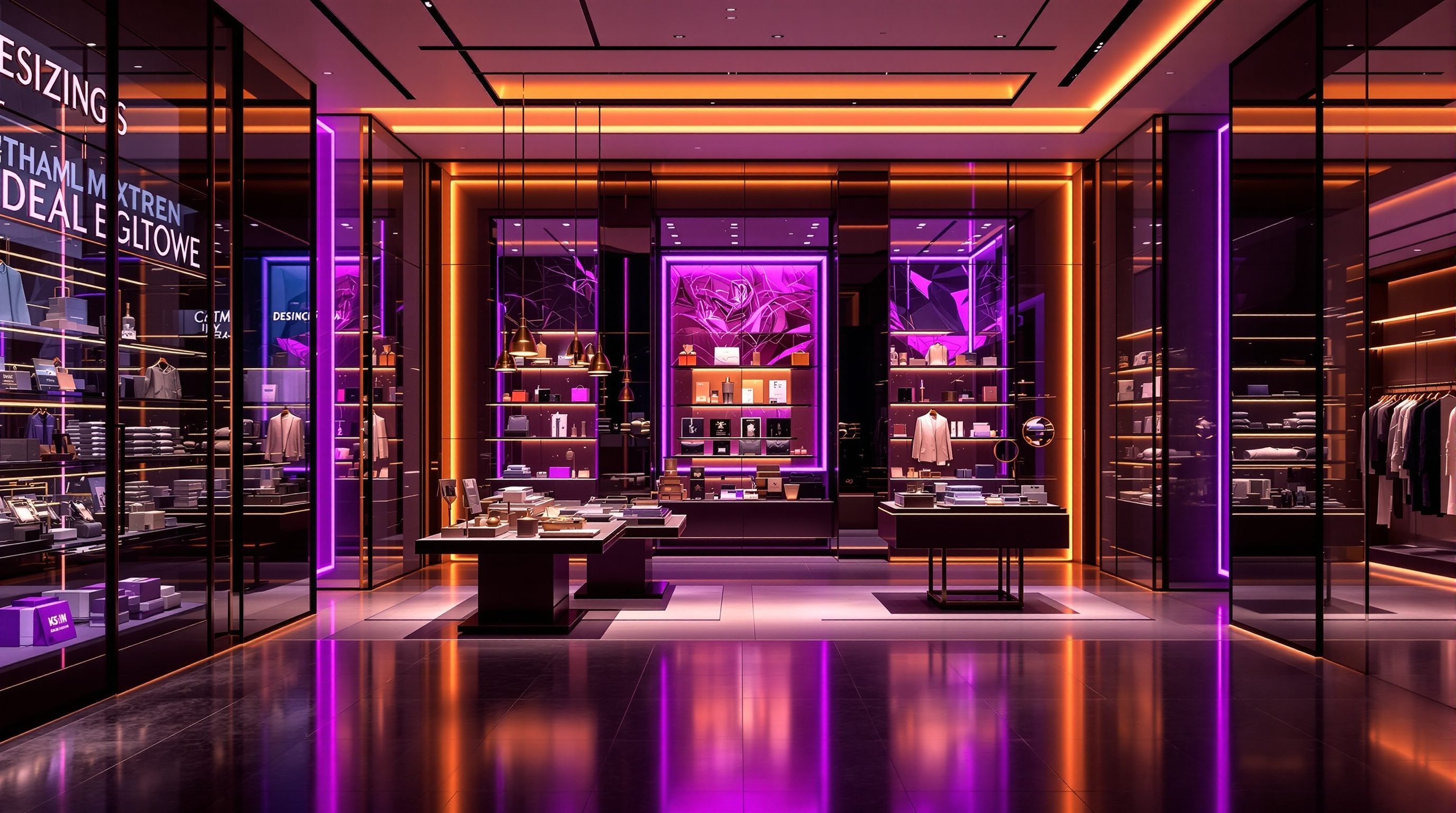
This is why the best physical retail today is more vivid than it has ever been - flagship stores that are destinations, brand worlds you step inside, showrooms that let you try, cafes and events that draw a crowd. The commercial evidence backs it: online-born D2C brands, having grown up on the web, are opening physical stores in large numbers, because they have learned that a store does things for a brand and a customer that no website can. The designer's task has been raised, not removed. A store can no longer justify itself just by being where the stock is; it has to earn the trip. That is harder, and far more interesting, work - and it is what this final lesson of Module 0 is about.
Online killed the box of shelves, not the store. What is left is the interesting part - earn the trip.
What online cannot do
If the store must now earn the trip, the place to start is with what a physical store can do that a screen simply cannot. There are four, and each is a design opportunity.
Touch and try. A screen can show and describe, but it cannot let you feel the weight of a fabric, the fit of a jacket, the taste of a cheese, the response of a device in your hand. For a great deal of what people buy, that physical certainty is decisive - it is the difference between hoping and knowing - and it is why fitting rooms, testers, demos and tasting counters convert so powerfully. The store is where the risk of buying comes down because the shopper can experience the thing before they commit. An immersive brand. Online, a brand is a web page and a logo; in a store, a brand is a world you walk into and stand inside - its materials, light, sound, scent, staff and story all around you at full scale. As lesson 0.1 put it, the store is a brand made physical, and that three-dimensional, sensory brand encounter is something a screen can only gesture at. It is the single biggest reason online brands come offline.
Service. A store puts a knowledgeable human in front of the shopper - to advise, reassure, fit, recommend, solve a problem, and add the warmth of being looked after. Good service closes sales a website loses to doubt, and builds the relationship that brings a customer back. A social outing. Shopping has always been partly a pleasure and a social act - going out, together, into the world, seeing and being seen, making a day of it. A screen is solitary; a store, a street and a mall are social places, and the outing itself is part of what people come for, especially in a culture like India where the market, the mall and festive shopping are shared, joyful, family events. Put these four together and the pattern is clear: the store endures by being everything a screen is not - tactile, immersive, human and social. Design that leans into these, and the trip earns itself; design that ignores them and just stacks stock is designing the very box that online has already replaced.
The store's new roles in a connected world
Understanding why the store endures leads to a more practical question: what jobs does a physical store now do inside a world where shopping happens across many channels at once. Because the store is no longer the only place a brand meets its customer - there is the website, the app, social media, reviews, delivery - and the modern shopper moves fluidly between them all. This is omnichannel (lesson 1.4): one customer, one journey, many channels, and the store is one powerful part of it, with several new roles.
The store as showroom. Increasingly the store is where people go to see, touch and try, even if they then buy online or have it delivered - the physical space does the convincing and the digital channel does the transaction. Some formats lean all the way into this, holding little or no stock and existing purely to let people experience the product. The store as fulfilment. The store is also a logistics node: click-and-collect, where people order online and pick up in store; ship-from-store, where the shop doubles as a local warehouse for fast delivery; and easy returns. These blur the line between shop and stockroom and change how you plan back-of-house and the counter. The store as brand-builder. Perhaps the most valuable role of all is one that does not even show up as a sale in the store: the physical space builds the brand, and that lifts sales everywhere, including online - the so-called halo effect, where opening a store raises web sales in the same area. A flagship may lose money as a shop and still be worth every rupee as the brand made physical.
The store as media and community. Stores host events, launches, workshops, classes and experiences - they become content and community, places that give people a reason to come and a story to share, which feeds the whole omnichannel system. The consequence for the designer is that you can no longer design the store as a sealed selling box measured only by its own till. You are designing one node in a connected system, which may be judged by what it does for the brand and for sales across every channel - and which must physically accommodate collection, returns, events and experience alongside straightforward selling. The store has more jobs than ever, and designing for all of them is the new craft.
Showroom, fulfilment, brand-builder, media - one node in an omnichannel journey, not a sealed till.
Designing for the age of online
What does all this mean for how you actually design. It raises the bar, in three concrete ways. First, design for experience, not just stock. If the trip must be earned, the store has to offer something worth leaving home for - atmosphere, discovery, the chance to touch and try, service, an event, a beautiful and memorable environment. This is the heart of experiential retail (Module 7), and it pushes the designer from arranging merchandise to crafting an experience people choose to come to. The dull box of shelves is not an option; the question on every project is now, why would someone come here rather than tap a screen, and the design must answer it. Second, integrate the digital and the physical. The store sits inside an omnichannel journey, so it must physically support collection points, returns, ship-from-store, in-store screens and staff with devices, and connect cleanly to the online stages on either side. A store designed as if online did not exist is already out of date.
Third, measure the store by its true contribution. A store that serves as showroom, fulfilment point and brand-builder cannot be judged by its own sales per square foot alone - it may be earning its keep through the online sales it drives, the returns it saves, the brand it builds and the halo it casts. Understanding this changes what counts as a successful store, and it is why the flagship that loses money as a shop can be the smartest investment a brand makes. As always, treat the figures - halo effects, showroom conversion, the economics of fulfilment - as illustrative and to be calibrated to the specific brand, format and market, and defer the binding specifics of any new use you add (a cafe, an events space, a collection counter, extra egress and accessibility) to the current codes, the specialists and the brand standards.
That closes Module 0. We have reframed the store as a selling machine you can walk into and a brand made physical; mapped the shopper journey the whole design serves; walked the spectrum of formats and their briefs; and seen why physical retail matters more, not less, in the age of online. The through-line is one idea: a store sells by serving a real person, expresses a brand in three dimensions, and earns its keep on costly space - and in the online age it must do all three well enough to be worth the trip. With that foundation, Module 1 turns to the ground the whole discipline stands on: understanding the shopper and the business of retail itself.
New uses trigger new code (NBC 2016, bye-laws, licences)
Cafes, events spaces, kitchens, collection counters
Experiential and omnichannel additions bring their own egress, accessibility, kitchen and licensing rules - defer every binding value to the current code and the specialists. Modules 7, 8, 9.
Omnichannel & halo economics
Showroom conversion, halo effect, fulfilment costs
Illustrative figures for how a store contributes beyond its own till - calibrate to the specific brand, format and market, never copy a figure. Modules 1, 7.
Brand experience standards
The brand's defined in-store experience and omnichannel service
Experiential and connected-store design is usually governed by the brand's own standards - design within them. Modules 7, 10.
Workshop — why does this store earn the trip?
The test of a store in the age of online is simple: would you make the trip for it, or could a screen do the same job? In this workshop you will judge a real store against that test, and identify how its design does - or fails to do - what online cannot.
A store you can visit or recall and a sheet of paper. This is about judgement, not measurement.
Goal: a judgement of whether and how a store earns the trip
Inputs: a store you can visit or recall + this lesson + paper
Time: ~45 minutes
- 1Pick a store and ask the blunt question first: could you get the same thing, as well or better, online? Write a one-line honest answer.
- 2Score it on the four things online cannot do - touch and try, immersive brand, service, social outing - noting for each how the design delivers it or misses it.
- 3Identify any omnichannel roles the store plays - showroom, click-and-collect or returns, brand-building, events or media - and how well the design supports each.
- 4Name the store's single strongest reason-to-visit, and its biggest wasted opportunity - the thing it could do that a screen cannot, but does not.
- 5Write a one-paragraph verdict: does this store earn the trip, and the one design change that would most make it worth leaving home for.
You’ll walk away with
A one-page verdict on whether a real store earns the trip - its score on the four things online cannot do, its omnichannel roles, its strongest draw and biggest missed chance, and the single highest-impact change. Keep it; it is how you will judge every store from now on.
Three altitudes on the same idea
Read the band that fits you — or all three.
The omnichannel store changes the brief the architect builds to. The shell must now accommodate roles the old box never did: generous, welcoming space for experience and events; a rethought back-of-house and counter for click-and-collect, returns and ship-from-store, which turn the shop into a local logistics node; and the flexibility to host launches and change often. A flagship may be judged as a brand and media asset, not by its own sales, which can justify ambitious, expensive architecture. Design the shell to support experience and fulfilment together, coordinate the added uses (cafe, events, collection) with the retail designers, and defer the egress, accessibility, kitchen and servicing specifics those new uses trigger to the current codes and the specialists.
The age of online is, quietly, the great opportunity for the interior designer, because experience is now the point. When the trip must be earned, the felt environment you craft - atmosphere, discovery, the invitation to touch and try, service moments, a memorable and beautiful world - is exactly what makes people come and what keeps a brand alive across every channel. Design for experience, not just merchandise display; weave in the physical touchpoints of the connected store (collection, returns, in-store digital) without letting them clutter the experience; and remember the store may be measured by the brand it builds and the online sales it lifts, not by its own till alone. This is experiential retail, and it is your craft at its most ambitious (Module 7).
Do not believe the story that store design has no future - it has never been more alive, and this lesson tells you why. The stores worth studying today are the ones that earn the trip: the flagships that are destinations, the brand worlds you step into, the showrooms that let you try, the cafes and events that draw a crowd. Notice how the best physical stores do what your phone cannot - let you touch, immerse you in a brand, serve you, and give you a day out - and notice how online-born brands keep opening them. You are entering the field at its most interesting moment. You are not expected to run an omnichannel strategy; you are expected to understand why physical stores endure, and to design ones worth leaving home for.
“E-commerce has made physical stores obsolete - designing shops is a declining, backward-looking field with little future.”
Do it yourself
No tools needed - reason it through.
- 1What kind of retail did online genuinely replace, and what does it mean to say it killed 'the dull box of shelves' rather than the store?
- 2Name the four things a physical store can do that a screen cannot, and give a design device that delivers each.
- 3Explain three new roles the store plays in an omnichannel system, with an example of each.
- 4What is the halo effect, and why does it mean a store cannot always be judged by its own sales per square foot?
- 5How should the age of online change the way you design a store, in three concrete ways?
The one line to carry out
Peer-reviewed journals & authoritative standards
- 01E-commerce — Wikipedia — E-commerce, 2026.
- 02Omnichannel — Wikipedia — Omnichannel, 2026.
- 03Experience economy — Wikipedia — Experience economy, 2026.
- 04Retail apocalypse — Wikipedia — Retail apocalypse, 2026.
With the case for the store made, Module 1 turns to the ground beneath the whole discipline: how shoppers actually behave, what a retail brand and its customer really are, the hard business of retail, and the connected, omnichannel store.
The author
Amogh N P
Architect, interior designer, and creative polymath. Studio Matrx began in his notebooks — his vision of design made honest, useful, and open to everyone. Its Academy is written and taught in his memory, and free, forever.
More about Amogh →