
 Lesson 10.1
Lesson 10.1 · Delivery, Rollout & the Future
The Store Concept & Prototype
Before a brand builds a hundred stores it must get one idea right - a store concept developed into a repeatable design system, then built once as a prototype or pilot to test and refine on real shoppers before a single rupee is spent multiplying it
A brand never designs a hundred stores. It designs one idea well, then learns to repeat it.
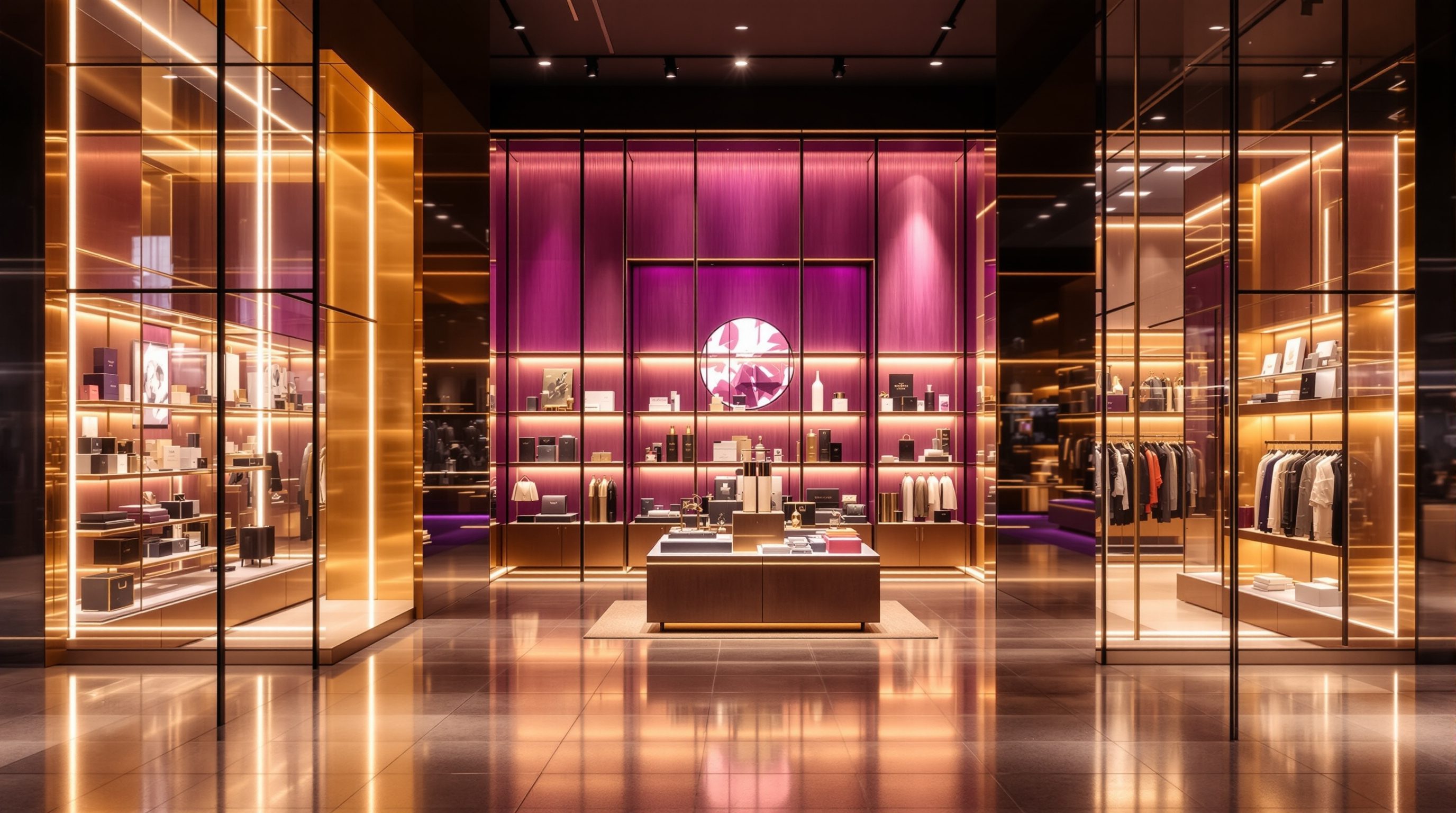
Walk down any high street and you can tell, at a glance, which shops belong to the same brand - the same light, the same materials, the same feel, whether you are in Mumbai or Manchester. That consistency is not luck and it is not drawn store by store. Behind it is a single carefully developed thing called a store concept: the brand made physical, worked out once, in detail, as a repeatable design system - and then, crucially, built for real as a prototype or pilot store and tested on actual shoppers before the brand commits to rolling it out.
This is where retail design shifts from designing a space to designing a system that designs spaces. A concept is not one beautiful shop; it is the kit-of-parts, the rules and the look that will assemble into any site, large or small, on a tight budget and a fast programme, dozens or hundreds of times. And because a mistake baked into a concept is a mistake repeated at scale, the smartest money a retailer spends is on a prototype: build one, trade it, watch the shoppers, measure the sales and the flow, fix what the real world reveals - and only then multiply it. Get the one right, and the hundred follow.
Design one idea well, prove it once, repeat it a hundred times. That is concept work.
A concept is a brand made physical - and repeatable
A store concept is the complete design idea for a retail brand's stores, worked out once so it can be built many times. It is not a single shop that happens to look nice; it is the brand translated into space, light, material, fixtures, graphics and the shopper journey - and captured in a form that can be reproduced across a whole fleet. When a D2C brand that grew up online decides to open physical stores, or when a chain refreshes its look, the first and most important piece of work is not a lease or a site; it is the concept.
Think of it as the physical expression of everything the earlier modules taught. The concept fixes how this brand does its window and storefront (Module 3), how it lays out and zones a store (Module 2), how it shows merchandise and merchandises visually (Module 4), how it lights and finishes the space and makes it feel (Module 6), and how the whole thing tells the brand's story (Module 7). All of that, which a one-off store resolves for a single address, the concept must resolve in a way that holds true anywhere - a 60 square metre high-street unit, a 300 square metre mall shop, a flagship - because the same brand will trade from all of them and must feel like itself in each.
That is why a concept is fundamentally a design system, not a drawing. A one-off interior can be bespoke to its walls. A concept has to be a set of standard modules and rules flexible enough to fit many different shells yet disciplined enough that every store reads unmistakably as the brand. The best concepts are like a brand's physical Lego: a defined set of parts - a wall-bay module, a display table, a cash counter, a lighting kit, a material and colour palette, a signage family - plus a rulebook for assembling them. Give that kit and those rules to a store anywhere, and out comes a store that is recognisably, reliably the brand, built fast and on budget. Designing that kit, and the rules that govern it, is the real craft of concept work - and it is a very different skill from designing one lovely room.
A concept is not one pretty shop - it is a kit-of-parts plus a rulebook that makes many shops, each unmistakably the brand.
What a concept must resolve
A store concept has a demanding brief, because everything it leaves vague becomes a problem repeated across every store. Before it is signed off, a good concept resolves several things at once.
The brand and the customer. First and hardest: what is this brand, physically, and who is it for? The concept must make the brand's positioning, personality and price level legible the moment a shopper steps in - through materials, light, density and tone - and pitched exactly at its target customer (Module 1). A concept that is merely handsome but does not say *this brand, for this shopper* has failed at its first job.
The commercial model. The concept must sell. It has to hit a sales-per-square-foot ambition, expose merchandise well, support the range the brand actually carries, and work to a build cost the business can afford to repeat - a concept that only works as a lavish flagship cannot be rolled out. It must also be honest about the trade-offs between experience space and selling space.
Flexibility across sites. It must flex across the real estate the brand will occupy - different sizes, frontages, floor shapes, ceiling heights and countries - while staying recognisably itself. This is the hardest engineering problem in the concept: a kit modular enough to fit anything, disciplined enough to look like one brand.
Buildability, durability and operations. It must be buildable quickly by local contractors, durable enough to survive heavy public use and frequent refit, and it must work for the staff and operations behind it (Module 9) - stockroom, till, deliveries, cleaning. A concept that looks beautiful but cannot be built fast, cannot take a knock, or makes staff's lives hard will fail in the field.
The standards that carry it. Finally, the concept must be captured as brand design standards - the rulebook a rollout team and external fit-out contractors will build from. Binding specifics it touches - fire and egress, accessibility, signage permissions, structural and services capacities - it does not fix itself; it defers them to the current codes (NBC 2016, accessibility guidelines, local bye-laws) and the specialist consultants, store by store. The concept sets the design intent; the code and the consultant set the binding numbers.
The prototype and the pilot store
No concept survives first contact with a real shopper unchanged, which is why the single smartest thing a retailer can do before rolling out is to build one - a prototype, or a trading pilot store - and learn from it. The logic is simple and unforgiving: a flaw in the concept costs once when you find it in a prototype and a hundred times when you find it after you have built a hundred stores. Prototyping is cheap insurance against an expensive, repeated mistake.
There are two related things here. A prototype is often built away from the public - a full-size mock-up of key elements, or even a complete test store in a warehouse - to check that the design builds as drawn, that fixtures work, that the light does what it should, that the materials look and wear as intended, and that the whole thing can actually be constructed to the cost and programme claimed. A pilot store (or lead store) goes further: it is a real, trading store, open to the public, that runs the new concept in the wild before the wider rollout. It is the truest test there is, because only real shoppers, real staff and real sales reveal whether the concept works.
What do you watch for? Everything the scoreboard and the shop floor tell you. Does the layout draw shoppers through as intended, or do they miss a whole zone? Do the fixtures hold and present the real range, or is a shelf too short for the actual product? Is the light flattering the goods or glaring off them? Are sales per square foot and conversion where the model assumed? Can staff restock, serve and run the till smoothly, or does a queue build? Does it take the knocks of a week's trading? You observe, you measure, you ask the staff - and then the crucial move: what the pilot teaches loops back into the concept. You refine the kit, fix the rules, adjust the cost, and only then commit to rollout. Brands often run a pilot for a season precisely so that the version they multiply is the improved one, not the first guess. Build one, prove it, then build the hundred.
A mistake in a prototype costs once; the same mistake in a rollout costs a hundred times. Prototype first.
From concept to fleet - the designer's shift in mindset
Designing a concept asks a different mindset from designing a single store, and making that shift is the lesson's real takeaway. The one-off designer optimises for this site and this client; the concept designer optimises for the whole fleet, most of whose stores they will never see. That changes how you think about almost everything.
You design for the average and the awkward site, not the ideal one - because the kit has to work in a narrow unit with a column in the wrong place as well as in the perfect rectangle. You design for the local builder, not the master craftsperson - because a hundred stores will be built by a hundred different contractors, so the details must be robust, clearly documented and hard to get wrong. You design for durability and refit - because the concept will be knocked about and refreshed, and a finish that cannot be cleaned or replaced cheaply is a liability multiplied across the fleet. And you design for the people who will deliver it: the rollout team, the procurement team and the fit-out contractors who will build from your standards, lesson 10.2's subject, need a concept that is documented, costed and unambiguous.
There is also a balance to hold that runs through this whole module: consistency versus local adaptation. A fleet must be consistent enough to read as one brand, yet able to breathe a little for a local market, a heritage shopfront, a different climate or a festive season. The concept should decide, deliberately, what is fixed (the brand-critical elements that must never vary) and what may flex (the bits a local site or market can adapt) - a distinction we will carry straight into rollout. In India that flex matters a great deal: a single concept may have to sit in a cramped high-street unit in one city and a gleaming mall in another, cope with very different climates, and still feel right for a local festive calendar - so the rules about what may adapt are as important as the kit itself. Hold all this, and a concept becomes what it should be: not a museum piece built once, but a living, repeatable idea that lets a brand be itself, reliably and profitably, in every store a shopper walks into - the selling machine, standardised without being deadened.
Brand design standards (the concept rulebook)
What is fixed vs what may flex; the kit-of-parts and assembly rules
For rolled-out retail the brand's own design standards govern much of the design - author them clearly so a fit-out team anywhere can build to them. Modules 7, 10.
Fire, egress & accessibility (NBC 2016, access guidelines)
Occupant load, exits, barrier-free access - per site
The concept sets design intent; binding values are resolved store by store with the current code and a fire / accessibility specialist. Principles here only.
Retail metrics & benchmarks
Sales per sq ft target, build cost per store, fixture density
Illustrative starting points as of 2026 - calibrate the concept's targets to the specific brand, format and market, never copy a figure. Modules 2, 4.
Workshop - write a one-page store concept
The way to understand a concept is to try to write one. In this workshop you will develop a brief store concept for a real or imagined brand - not a finished design, but the thinking a concept must resolve and the kit it would need - and decide what you would test in a pilot.
A notebook and a brand you can picture. This is about concept thinking and the fixed-vs-flex judgement, not finished drawings - rough sketches are fine.
Goal: a one-page store concept and a pilot test plan
Inputs: a brand you know or invent + this lesson + a notebook
Time: ~60 minutes
- 1Name the brand and its customer in two sentences: what it sells, its positioning and price level, and who it is for. Everything physical must express this - write it down first.
- 2Sketch the kit-of-parts: list 5-7 standard elements the concept needs (e.g. a wall-bay module, a display table, a cash counter, a lighting kit, a material and colour palette, a signage family) and one line on what each must do for the brand.
- 3Decide what is FIXED and what may FLEX: list the brand-critical elements that must never vary across stores, and the elements a local site, market or festive season may adapt. This distinction is the heart of a concept.
- 4Test it against two very different sites: a small high-street unit and a larger mall store. Note one way the kit would have to flex for each - and flag where your concept currently breaks.
- 5Write a pilot test plan: name three things you would build a prototype or pilot store to check (e.g. does the layout draw shoppers through, do the fixtures hold the real range, are sales per square foot on target) and how you would measure each before committing to rollout.
You’ll walk away with
A one-page store concept: the brand and customer, a kit-of-parts, a fixed-vs-flex list, how it flexes across two sites, and a three-point pilot test plan. Keep it - lesson 10.2 rolls exactly this kind of concept out across many stores.
Three altitudes on the same idea
Read the band that fits you — or all three.
Concept work is where the architect's systems thinking pays off most, because a concept is an architecture of parts and rules, not a single building. You are often the one who sets the shell logic the concept must flex across - frontage, depth, floor-to-floor, structure, core and back-of-house - and who turns the design intent into a documented, buildable system for many different sites. Think in modules, tolerances and a clear rulebook: what is fixed, what may flex, how the kit copes with an awkward unit or a heritage facade. Build or champion a prototype to prove buildability, cost and programme before rollout, and defer binding fire, egress, structural and accessibility specifics to the current codes and the consultants, store by store.
The concept is your chance to design a brand's entire physical language - and then to make it repeatable, which is the harder, rarer skill. You define the fixtures, the display system, the materials and colour palette, the lighting kit, the atmosphere and the graphics family that will read as the brand in every store. Design for the real range and the average site, not a perfect one; specify for durability and easy refit; and capture it all as clear brand design standards a fit-out team can build from anywhere. Use the prototype and pilot to test your fixtures, light and finishes against real product and real shoppers, then fold what you learn back into the kit before it multiplies.
This is the lesson where retail design stops being about one shop and becomes about systems - a genuinely different and valuable way to think. Train yourself to spot it: walk into two branches of the same brand and notice what is identical (the kit and the rules) and what quietly changed for the site. That is a concept at work. Understand the core idea - a concept is a brand made physical and repeatable, a kit-of-parts plus a rulebook, proven once in a prototype or pilot before it is rolled out. You are not expected to document a full brand standard yet; you are expected to grasp why a brand designs one idea well and repeats it, and why building and testing a prototype first is the smartest money in retail.
“A store concept is just the design of a really good-looking shop - once you have designed one beautiful store for the brand, you simply build the same thing again everywhere.”
Do it yourself
No tools needed - reason it through.
- 1Explain why a store concept is a 'design system' rather than a single beautiful shop, and what a kit-of-parts is.
- 2Name four things a good store concept must resolve before it is signed off.
- 3What is the difference between a prototype and a pilot store, and what does each test?
- 4Why is building a prototype before rollout described as 'cheap insurance' - what is the cost it avoids?
- 5A concept must balance consistency against local adaptation. Give one element you would keep fixed across a fleet and one you would let flex, and say why.
The one line to carry out
Peer-reviewed journals & authoritative standards
- 01Prototype — Wikipedia - Prototype, 2026.
- 02Retail design — Wikipedia - Retail design, 2026.
- 03Flagship store — Wikipedia - Flagship store, 2026.
- 04Brand — Wikipedia - Brand, 2026.
- 05Service design — Wikipedia - Service design, 2026.
A proven concept is worthless until it is built - many times, fast, and on brand. Next we take the concept out of the studio and into the field: rolling it out across many stores, the fit-out process and trades, procurement at scale and delivering on time.
The author
Amogh N P
Architect, interior designer, and creative polymath. Studio Matrx began in his notebooks — his vision of design made honest, useful, and open to everyone. Its Academy is written and taught in his memory, and free, forever.
More about Amogh →