
Kashmir Homestays: Houseboats & the Wooden House Playbook
Kashmir offers two homestay products found nowhere else in India: the carved cedar houseboat on Dal and Nigeen lakes, and the timber-laced village or old-city home in Gulmarg, Pahalgam, Sonamarg and Srinagar. This playbook covers the houseboat tradition and its conservation rules, the earthquake-wise taq and dhajji dewari house, keeping guests warm through a snow winter, and J&K's homestay registration.
Kashmir has two homestay products that no other region in India can copy. The first is the houseboat — a carved house of cedar and walnut moored on Dal or Nigeen lake in Srinagar, a family business often handed down for generations. The second is the Kashmiri home stay — a room in a timber-laced village house in Gulmarg, Pahalgam or Sonamarg, or in an old Srinagar mohalla, with a kangri by the bed and noon chai in the kitchen. Both sell the same thing: Kashmiri hospitality inside Kashmiri craft. This playbook covers both, and the cold that shapes them. It sits alongside the hill-homestay playbook and the regional overview; for the higher, drier cold to the east, see the Ladakh and Spiti guide.
Scope. Editorial good practice, not legal or structural advice. Homestays in J&K register with the Department of Tourism under the J&K Home Stay Policy and the J&K Registration of Tourist Trade Act; houseboats sit under tourism and lake-conservation rules of their own. Kashmir is a high-seismic region, so any build or retrofit needs a qualified structural engineer. Rules change — confirm with J&K Tourism and see the Licence Finder. Figures are indicative.
Product one: the houseboat
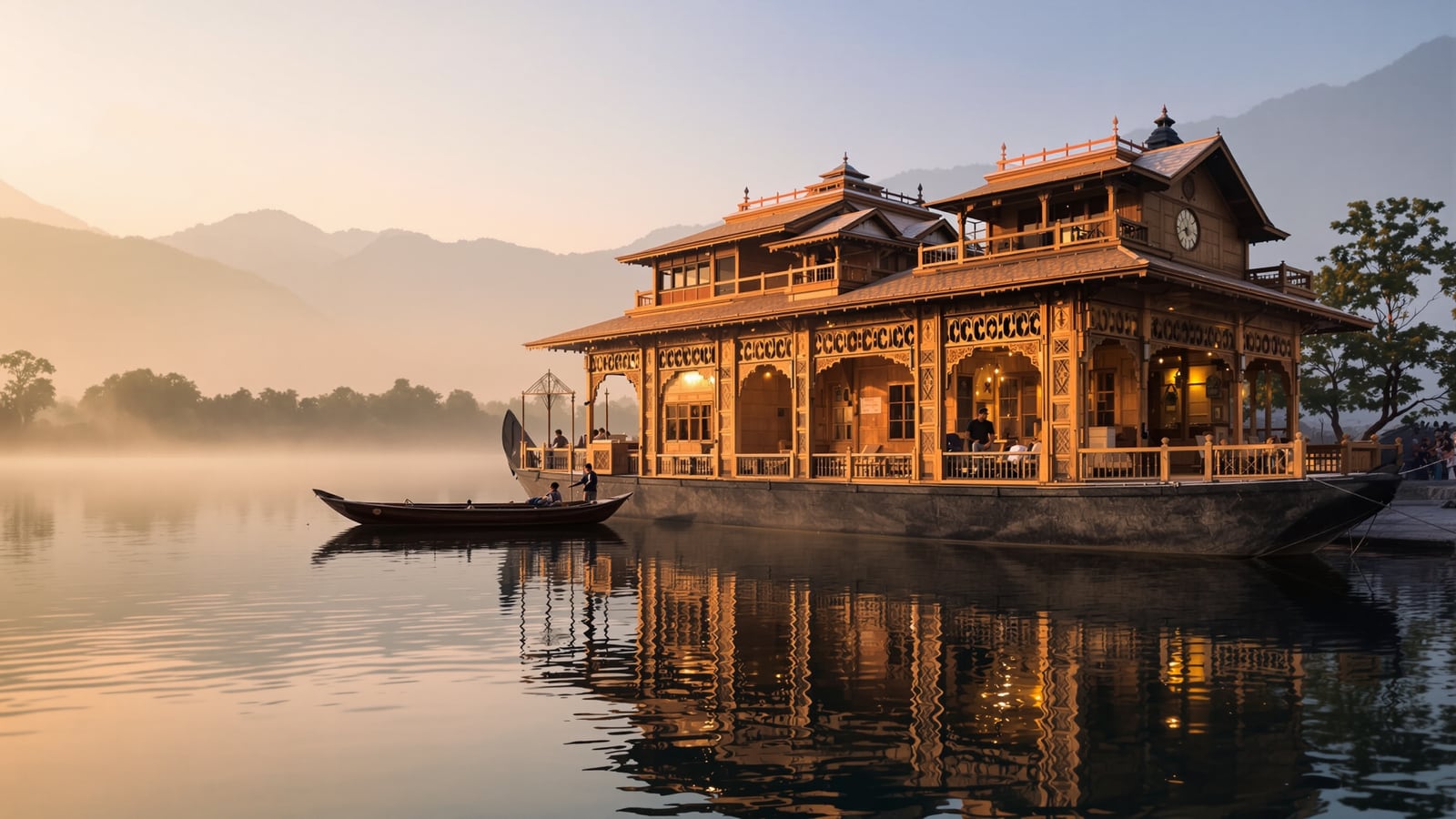
The houseboat is Kashmir's signature stay. A traditional boat has a deodar (cedar) hull, a carved front verandah on the water, a sitting room under a geometric khatamband ceiling, walnut furniture and screens, a dining room, and two to four bedrooms with bathrooms down a side corridor. A shikara takes guests to the shore. Most boats are run by families who live on a smaller "doonga" boat or a house nearby and cook for guests themselves. That family tie is the product, so keep it.
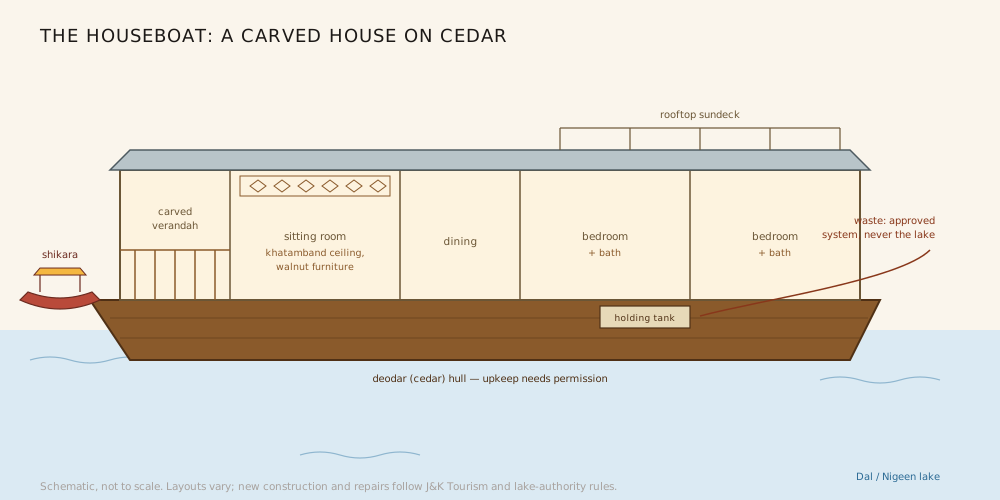
This is a regulated, finite stock. Building new houseboats on the Srinagar lakes has long been restricted. For years repairs were also tightly limited, and boats aged and sank. In 2021 the J&K government brought in a repair-and-renovation policy: the owner applies, a tourism-department committee surveys the boat, and a higher committee grants permission. Owners report that the process can take many months. The Houseboat Owners Association estimates that a few hundred boats are still in service, down from more than a thousand a few decades ago. Lake-conservation rules, now run by the J&K Lake Conservation and Management Authority, also control waste disposal, mooring, and building near Dal Lake. So the realistic way in is to inherit, buy or lease an existing licensed boat, not to build one. Confirm the boat's registration and repair status with J&K Tourism before any money changes hands.
Running one well:
- Sanitation first. Guests and the lake both notice. Use whatever waste system the lake authority currently approves, such as a holding tank, bio-digester or shore connection, and never discharge into the water.
- Fire and safety. A timber boat with heaters is a fire risk. Fit extinguishers and smoke alarms, use safe heaters, keep life jackets on the shikara, light the gangway at night, and post a clear evacuation plan.
- Repair the craft, do not replace it. Walnut carving, khatamband and papier-mâché are the reason people book. Restore them with local karigars inside whatever permission you hold.
Product two: the Kashmiri village and town home
On land, the homestay is a family house in a meadow town (Gulmarg, Pahalgam, Sonamarg) or in old Srinagar. Its vernacular is some of the most earthquake-wise building in South Asia. Most of the Kashmir Valley is in Seismic Zone V under IS 1893 (Part 1):2016, and parts are in Zone IV. A 2025 revision of the map was later withdrawn, so ask your engineer which edition applies.
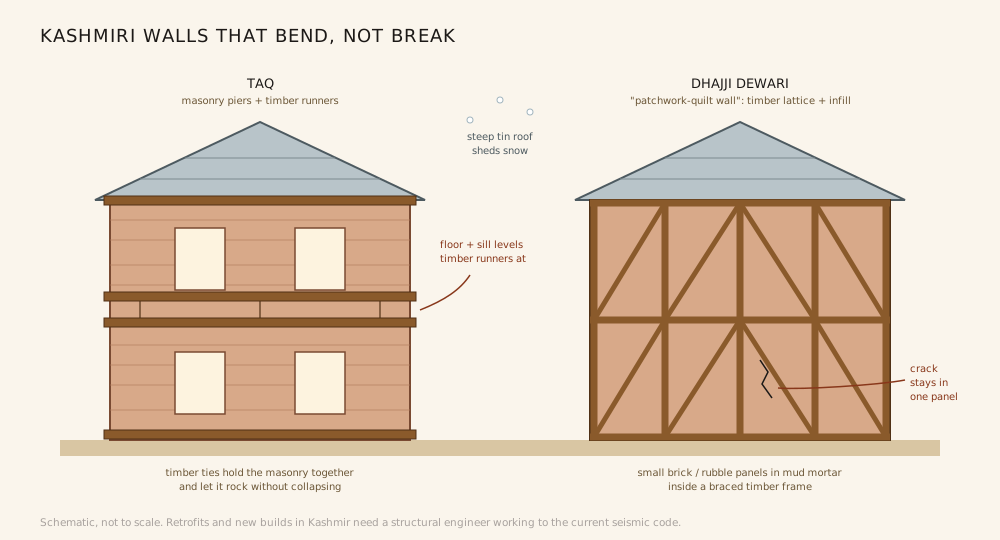
- Taq. Load-bearing brick or stone masonry with horizontal timber runners laid into the wall at floor and sill levels. The timber holds the masonry together, so the wall can rock in a quake without falling apart.
- Dhajji dewari. A braced timber frame with small panels of brick or rubble set in mud mortar. Cracks stay inside each panel, and many of these houses stood through the 2005 earthquake while rigid buildings around them failed.
- Roofs for snow. Steep pitched roofs, once birch-bark and earth and now mostly corrugated tin, so snow slides off.
- The interior craft. Khatamband ceilings, papier-mâché panels, walnut furniture, and the projecting wooden bay window (dub) where guests sit with tea and watch the street.
When you extend or convert a house, keep the timber-laced system rather than adding a rigid concrete storey on top of old masonry. That mix can perform badly in an earthquake. Have a structural engineer check it, and see the design guide for room standards.
The cold is the design brief
Kashmir winters bring snow and sub-zero nights, and many homes still rely on bukharis (wood or kerosene stoves), electric heaters and the kangri, a wicker-wrapped clay firepot kept under the pheran. Some older homes have a hamam, a stone floor heated from below by a wood fire, which makes a memorable winter room. For guests:
- Insulate before you heat. Insulate the roof and the walls on the snow side, fit double-glazed or well-sealed windows, add thick rugs (namda and gabba) on wooden floors, and use heavy curtains.
- Heat safely. Ventilate every room with a stove or kangri and fit carbon-monoxide alarms. Never leave a kangri in a guest's bed, and give guests a short, friendly briefing on how to use it.
- Plan for power cuts and frozen pipes. Winter supply can be uneven, so budget for backup power, insulated pipes and tanks, and a reliable hot-water system. Cost it in the setup estimator.
Four seasons, four guests
Kashmir has a rare four-season demand curve, which is a strong advantage for a homestay:
| Season | Draw | Who comes |
|---|---|---|
| Spring (Mar–Apr) | Tulip garden in Srinagar, almond blossom | Families, honeymooners |
| Summer (May–Aug) | Meadows of Pahalgam, Sonamarg, Gulmarg; cool escape from the plains | Peak domestic families; Amarnath Yatra period around Pahalgam and Sonamarg |
| Autumn (Sep–Nov) | Golden chinar, harvest, clear skies | Photographers, slower travellers |
| Winter (Dec–Mar) | Snow, skiing at Gulmarg, houseboats in the cold | Snow-seekers, skiers |
Fill the shoulder weeks with experiences such as a Wazwan dinner, a craft walk through papier-mâché, carpet or walnut workshops, a dawn shikara ride to the floating vegetable market, or a trek. Then run your numbers in the ROI Calculator.
Registration, and guest safety
J&K's Home Stay Policy (2022, promoted again in 2025) covers owner-occupied homes with one to six guest rooms that meet safety, hygiene, water and power standards. It also adds a bed-and-breakfast route for a secondary home. You apply online on the J&K Tourism portal and register under the J&K Registration of Tourist Trade Act. Houseboats register separately under houseboat rules. Fees, documents and inspection steps change, so confirm them with J&K Tourism and the registration guide.
On safety, stick to facts. Send guests the current official travel advisories, local police and tourism helplines, and any route or weather closures, such as snow on the Srinagar–Sonamarg road. Foreign guests are registered through Form C as usual. Kashmir's hospitality is famous, and guests trust a host who gives them clear, current information.
Key takeaways
- Kashmir offers two unique products: the carved houseboat on Dal and Nigeen, and the timber-laced village or old-city home.
- Houseboats are a finite, regulated stock. New construction is restricted and repairs need tourism-department permission, so inherit, buy or lease a licensed boat, and treat lake sanitation as non-negotiable.
- Taq and dhajji dewari are earthquake-wise systems for a Zone IV–V region. Keep them when you extend, and involve a structural engineer.
- Winter is the design brief. Insulate first, heat safely, fit CO alarms, and plan for power cuts and frozen pipes.
- Use the four-season demand curve, and register under the J&K Home Stay Policy (1–6 rooms). Confirm current rules with J&K Tourism.
References
- J&K Department of Tourism: Home Stay Policy (2022, with later updates), the online registration portal, and registration under the J&K Registration of Tourist Trade Act. This is the authoritative source for room caps, fees and inspections.
- J&K Houseboat repair-and-renovation policy (2021) and the J&K Lake Conservation and Management Authority, for houseboat permissions, mooring and waste rules on the Srinagar lakes.
- IS 1893 (Part 1):2016, Criteria for Earthquake Resistant Design of Structures (BIS). The proposed 2025 revision was withdrawn and the 2016 edition reinstated.
- Kashmiri vernacular architecture: taq and dhajji dewari timber-laced construction and their performance in the 2005 earthquake, khatamband, dub bay windows and hamam heating.
- A structural engineer and a local conservation architect, before altering any timber-laced house or carrying out a permitted houseboat repair.
Indicative and subject to change. Studio Matrx is a not-for-profit guide, and this is educational content, not legal, structural or safety advice. Confirm registration and houseboat rules with J&K Tourism, and engage a qualified structural engineer for any build or retrofit.
Export this guide
Related Guides — Deep-dive reading
Ladakh & Spiti Homestays: The Cold-Desert Playbook
In the high cold desert of Ladakh and Spiti the homestay is not a business model borrowed from elsewhere — it is how villages have long hosted travellers. This playbook covers the passive-solar mud house that keeps guests warm at minus twenty, water-free dry toilets, altitude and acclimatisation, a short summer season with a winter counter-season, and the permits and rules that apply.
HomestaysHimalayan Slate Roof: Slate, Timber and the Kath-Kuni Tradition of the Hills
The mountain roofs of Himachal, Uttarakhand, Kashmir and the wider Himalaya - heavy stone slate and split timber shingles on deodar frames, sitting on interlocked kath-kuni wood-and-stone walls - the snow, cold and earthquake logic that shaped them, and how an owner respects, repairs or reinterprets one today.
RoofingHow Earthquake Zones Affect Your Home's Design
What India's seismic zones mean for an ordinary homeowner — finding your zone, the features that make a house earthquake-resilient, the soft-storey danger, and the questions to ask before you build or buy.
Structural SafetyRelated Tools — Try Free
Home Building & Interior Cost Calculator — 20 Cities
Construction + interior costs for 20 Indian cities across kitchen, wardrobes, flooring, painting, ceiling.
Cost CalculatorFalse Ceiling Cost Estimator
Live ₹/sqft across 8 ceiling types — POP, gypsum, designer, metal, PVC, wooden — with cove and spot lighting for 20 Indian cities.
Cost CalculatorBathroom Renovation Cost Calculator
Cost to renovate an existing bathroom with a replace-vs-keep model — demolition, re-waterproofing, tiles, fittings and the money saved by keeping items.
Bathroom Calculator