
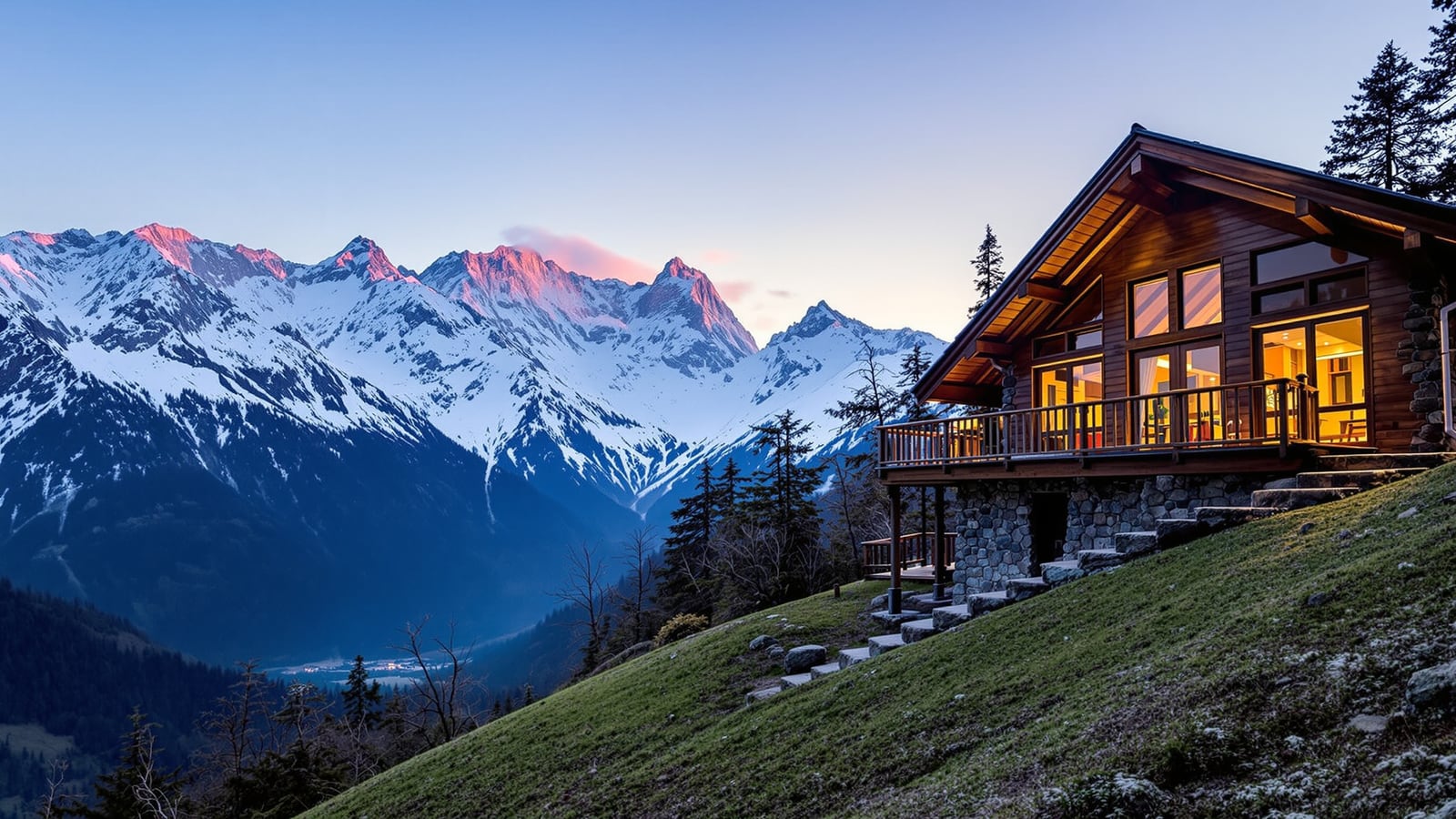
Hill Homestays: The Himachal & Uttarakhand Playbook
From a riverside room in Tirthan to a stone house in Spiti, the hill homestay sells the mountain itself. This playbook covers the cold-climate design that keeps it warm and standing, building into a slope, the winter and water realities others forget, and the guest and seasons of a Himalayan stay.
A hill homestay sells something a plains hotel never can: the mountain on the doorstep. From a riverside room in the Tirthan Valley near the Great Himalayan National Park, to apple-country Kotgarh, to a thick-walled house in the high cold desert of Spiti, Himachal and Uttarakhand's homestays run from the backpacker's budget dream to premium boutique stays — but they share one design master: the cold, and the mountain conditions that come with it. Get that right and you have a stay people return to for years. This playbook covers it; pair it with the design guide and the economics guide.
Scope. Editorial good practice, not legal or structural advice. Hill building carries real seismic, slope-stability and snow-load considerations that need a qualified engineer; Himachal's Home Stay Rules 2025 and Uttarakhand's 2026 registration rules apply — see the Licence Finder. Figures are indicative.
Design master number one: keep it warm
Everything in a hill homestay bends to the cold. The traditional Himalayan house already knows how — thick walls of stone and mud, timber (deodar) for its warmth and workability, small rooms that hold heat, and the living spaces turned to the winter sun. Carry that forward with modern comfort:
- Insulate properly — walls, roof and floor. An uninsulated concrete box at altitude is miserable to heat and expensive to run; it is the commonest mistake in new hill builds.
- Face the glazing south to the low winter sun, and keep north-side openings small. Let the sun do the daytime heating; this is free and it works.
- Keep guest rooms snug — smaller volumes warm faster and hold heat. Provide genuinely warm bedding, a reliable heat source (an efficient wood-burner, a bukhari, or safe electric heating) and hot water that does not fail on a cold morning.
- Thermal mass on the sunny side — a stone or masonry wall that soaks up the day's sun and releases it into the evening steadies the temperature.
Build with the slope, not against it
Hill sites are steep, and the house that works steps into the slope rather than perching on stilts above it. Terracing the building down the hillside gives each level its own ground contact, shelters the uphill side, and opens the downhill side to the view and the sun.
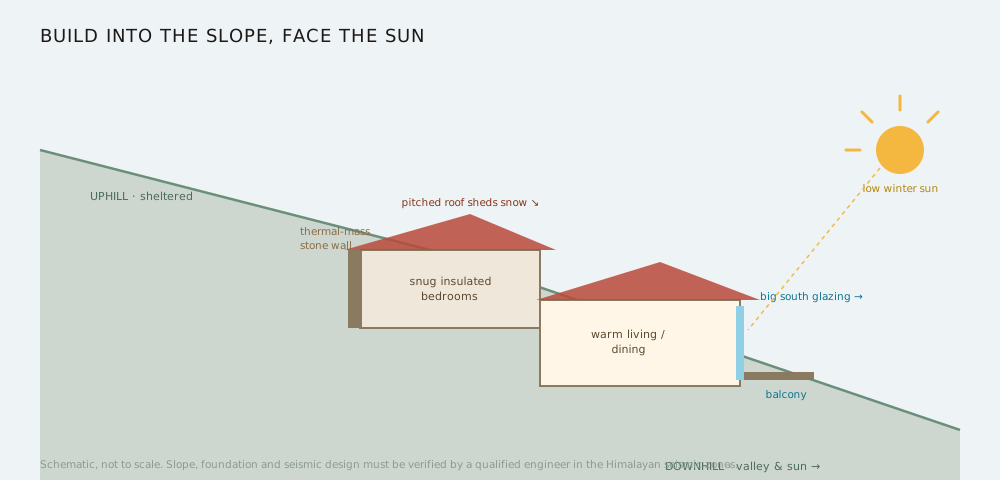
Set the served, insulated rooms against the sheltered uphill face, open the warm living spaces and glazing to the downhill, sun-facing side and the view, and give the roof a pitch that sheds snow clear of entrances and paths. A balcony or sit-out facing the valley becomes the stay's signature spot. Always get the slope stability, foundations and seismic design checked by an engineer — the Himalaya is a high seismic zone, and a beautiful view is no substitute for a safe structure.
The realities the brochure forgets
Three mountain facts decide whether guests love or curse their stay, and hosts who plan for them win the reviews:
- Water that freezes. Lag and protect pipes and tanks; plan for frozen or failed supply in deep winter, and keep hot water genuinely reliable.
- Roads that close. Landslides and snow cut access; keep a stock of essentials, be honest with guests about reaching you, and factor isolation into your season.
- Altitude. In Spiti and the high valleys, acclimatisation is real — advise guests, go gently on arrival-day plans, and know basic altitude-sickness signs. Power and connectivity are often intermittent; a battery backup and clear "patchy network" honesty in the listing prevent bad reviews.
The guest, and the seasons
Hill guests are trekkers, backpackers, remote workers and families escaping the plains' heat. Village homestays are famously good value and sell on warmth and authenticity; premium stays sell on view, comfort and a great host. Two seasons carry the year — the spring-to-early-summer window (March–June), when the plains bake and the hills are perfect, and the autumn clarity (September–November). Snow draws a distinct winter guest to accessible spots, while deep winter closes the high valleys. As ever, build the budget on the honest blended occupancy — and note that Uttarakhand (up to 8 rooms, ₹1,000, five-year validity under its 2026 rules) and Himachal (revised 2025 rules, home-stay vs premier tiers) both actively encourage homestays. Model it in the ROI Calculator.
Key takeaways
- The design master is cold: insulate thoroughly, face glazing to the winter sun, keep rooms snug and provide reliable heat and hot water.
- Step the house into the slope — sheltered, thermal-mass uphill side; warm, glazed, sun-facing downhill side; a snow-shedding roof — and have an engineer check slope, foundations and seismic design.
- Plan for the mountain realities: freezing water, closing roads, altitude and patchy power — and be honest about them in the listing.
- Guests are trekkers, remote workers and heat-escaping families; value and authenticity win at the budget end, view and comfort at the premium.
- Peak is spring–early-summer and autumn, with snow a winter draw; both Himachal (2025 rules) and Uttarakhand (2026 rules) encourage homestays — check the Licence Finder.
References
- Himachal Pradesh Home Stay Rules 2025 and Uttarakhand Tourism & Travel Business Registration Rules 2026 — authoritative for room caps, fees and conditions; see the state portals and the Licence Finder.
- Himalayan vernacular architecture — stone-and-timber (kath-kuni and related) building, thermal mass and sun-facing living spaces as a cold-climate response.
- A qualified structural/geotechnical engineer — essential for slope stability, foundations and seismic design in the Himalayan seismic zones.
Indicative and state-dependent. Studio Matrx is a not-for-profit guide; this is educational content, not legal or structural advice. Have slope, foundation and seismic design verified by a qualified engineer, and confirm licensing with your state.
Export this guide
Related Guides — Deep-dive reading
Himalayan Slate Roof: Slate, Timber and the Kath-Kuni Tradition of the Hills
The mountain roofs of Himachal, Uttarakhand, Kashmir and the wider Himalaya - heavy stone slate and split timber shingles on deodar frames, sitting on interlocked kath-kuni wood-and-stone walls - the snow, cold and earthquake logic that shaped them, and how an owner respects, repairs or reinterprets one today.
RoofingVernacular Architecture of Ladakh: Building Warmth in a Cold Desert
How thick earthen walls, a south-facing rabsal sun-room, a layered flat roof and the heat of stabled animals turn a -30°C Trans-Himalayan desert into a warm home.
Vernacular ArchitectureRoofing for Cold & Snow Regions
In the Himalaya and high hills — Kashmir, Himachal, Uttarakhand, Ladakh, Sikkim and the North-East highlands — a roof has two jobs at once: shed the snow so it never piles into a crushing load, and hold the winter’s heat inside. A plain-language guide to steep pitch, snow load, heavy insulation and the ice-dam problem.
RoofingRelated Tools — Try Free
Cross-Ventilation Analyzer
Estimate airflow and air changes per hour (ACH) from room size, window areas, layout, and local wind — with NBC 2016 Part 8 compliance check.
Ventilation CalculatorHomestay ROI Calculator
Model occupancy, rate, OTA commission vs direct bookings and running costs to see a homestay's real monthly profit, margin and payback.
Homestay ROIWindow Cost Calculator
Estimate window price plus installation by type, frame material, size, glass and quantity.
Window Calculator