
Rajasthan Heritage Homestays: The Haveli Playbook
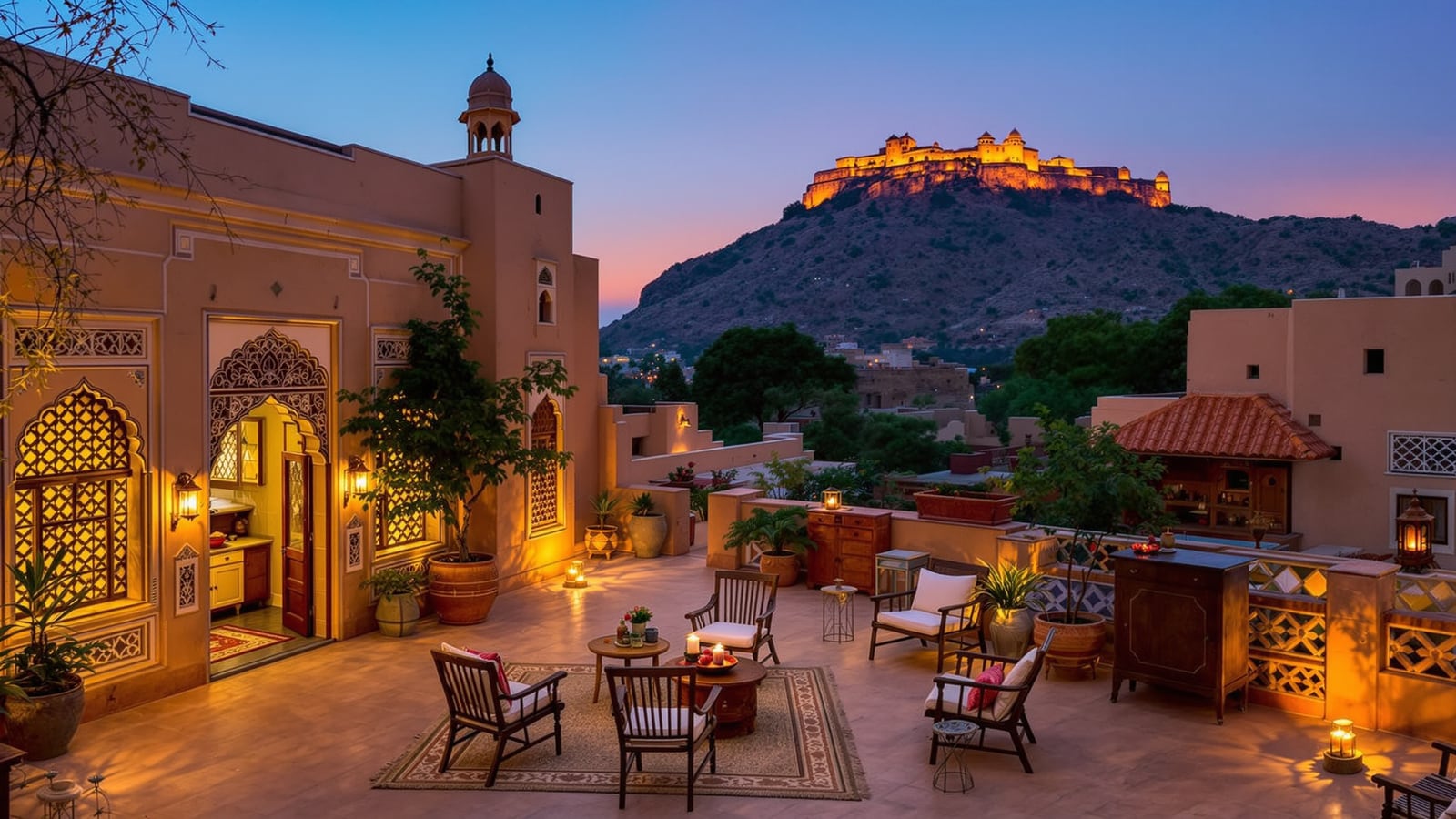
Rajasthan sells romance and history, and the homestay version is the family haveli — stone and lime, jharokha and jaali, a courtyard and a rooftop under the fort. This playbook covers the heritage draw, the centuries-tested passive cooling that answers brutal heat and dust, and the sharp winter season of a desert stay.
Rajasthan sells two things no spreadsheet captures — romance and history — and the homestay version delivers them straight: a few rooms in a family haveli, a restored heritage house in Udaipur, Jaipur, Jaisalmer, Jodhpur or a painted Shekhawati town. The guest does not want a hotel here; they want to sleep inside the story, under a fort, around a courtyard, with a rooftop dinner as the sun goes down. The good news for a host is that the Rajasthani vernacular is not just beautiful — it is some of the most sophisticated passive-cooling architecture on earth, evolved over centuries to make a desert liveable. This playbook covers both halves: the heritage experience, and the climate design. Pair it with the design guide and the regional overview.
Scope. Editorial good practice, not legal advice. Rajasthan's Homestay (Paying Guest House) Scheme 2026 (up to 8 rooms, single-window) and the local and fire layers apply — see the Licence Finder. Restoring a genuine heritage structure carries conservation and structural questions for specialists. Figures are indicative.
Sell the heritage — honestly
The haveli homestay's product is character: carved stone, frescoed walls, a courtyard, antique furniture, a family's history. Lean into it rather than modernising it away — guests pay a premium for authenticity. The craft is to add genuine comfort (good beds, reliable hot water, clean modern bathrooms discreetly inserted) without erasing the heritage that is the whole draw. Restraint is the skill: a modern bathroom behind an old door, air-conditioning that is felt not seen, a rooftop set simply for dinner against the fort. Where the structure is genuinely old, bring in a conservation architect — bad restoration destroys value and can be unsafe.
The vernacular is a desert cooling machine
Rajasthan's heat is brutal and its dust relentless, and the traditional haveli answers both with passive moves that cost nothing to run — the opposite of sealing a glass box and air-conditioning it hard.
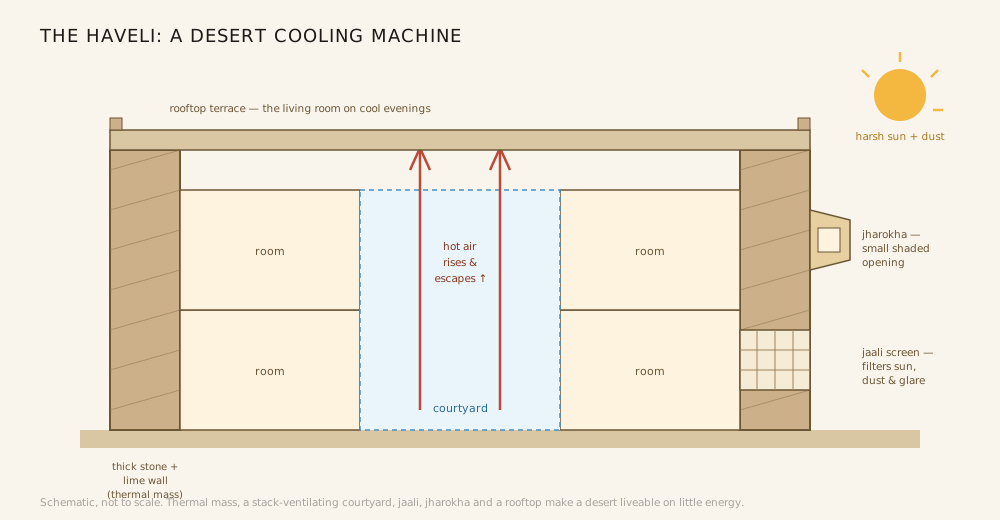
- Thick stone-and-lime walls. High thermal mass soaks up the day's heat and releases it slowly at night — the room stays cool through the afternoon.
- The courtyard. An open central court shades itself for much of the day, lets hot air rise and escape (a stack effect), and gives a cool, private heart to the house.
- Jaali and jharokha. Carved stone screens and projecting windows filter the harsh sun and dust while letting breeze and soft, patterned light through — climate control and beauty in one move.
- Small, shaded openings and a usable rooftop. Keep west and south openings small and shaded; the flat roof becomes the living room in the cool evenings, under the stars and the fort.
Design with these and a Rajasthan homestay stays comfortable on far less energy — which the guest feels as authenticity and you feel as a lower bill.
The guest, and a sharp season
The haveli guest is a heritage and wedding traveller, Indian and foreign, often on a Golden-Triangle or Rajasthan circuit, who values story and character over gloss. The season is as sharp as the architecture: a crisp, busy October-to-March winter when the desert is perfect, and a punishing, near-empty summer (April–June) when temperatures pass 45 °C. Plan for that trough hard — price into the winter peak, keep a strong working-capital reserve, and consider closing or deep-maintenance in the worst summer weeks rather than running near-empty. Model it in the ROI Calculator.
Key takeaways
- The haveli homestay's product is heritage and character — add modern comfort discreetly without erasing the history that is the draw; use a conservation architect for genuinely old structures.
- The Rajasthani vernacular is a passive-cooling machine: thick thermal-mass walls, a stack-ventilating courtyard, jaali and jharokha, small shaded openings and a rooftop — design with them and run cool on little energy.
- The guest is a heritage / wedding traveller who wants story over gloss.
- Season is a sharp Oct–Mar winter peak and a brutal, near-empty summer — price into the peak, reserve hard, and consider summer closure.
- Rajasthan's 2026 scheme allows up to 8 rooms via single-window approval — confirm via the Licence Finder.
References
- Rajasthan Homestay / Paying Guest House Scheme 2026 (Rajasthan Tourism) — authoritative for room caps (up to 8), single-window process and fees; see the state portal and the Licence Finder.
- Rajasthani vernacular architecture — haveli courtyards, thick lime-and-stone walls, jaali, jharokha and rooftop living as hot-dry passive-cooling responses.
- A conservation architect and structural engineer — essential before restoring or altering any genuine heritage haveli structure.
Indicative and state-dependent. Studio Matrx is a not-for-profit guide; this is educational content, not legal or conservation advice. Confirm licensing with Rajasthan Tourism, and engage a conservation architect for heritage structures.
Export this guide
Related Guides — Deep-dive reading
Vernacular Architecture of Rajasthan: The Haveli, the Jharokha & Building for the Desert
How thick stone walls, inward courtyards, jharokhas and jaali screens turned the brutal heat and cold of the Thar into a liveable home.
Vernacular ArchitecturePassive Cooling Strategies for Indian Homes
How to keep a home cool without (much) air-conditioning — the climate-smart design that cuts bills and heat
Design EducationDesigning a Naturally Energy-Efficient Indian Home
Comfort first, gadgets last — passive design, orientation, insulation, ventilation and the climate wisdom that cuts Indian energy bills
SustainabilityRelated Tools — Try Free
Cross-Ventilation Analyzer
Estimate airflow and air changes per hour (ACH) from room size, window areas, layout, and local wind — with NBC 2016 Part 8 compliance check.
Ventilation CalculatorRainwater Tank Sizer
How big should your rainwater tank be? Computes annual harvest, recommended tank capacity in litres, water-bill savings, and payback — for 10 Indian cities.
RWH CalculatorWindow Cleaning Cost Calculator
Estimate professional window cleaning cost per visit and per year by access and frequency.
Window Calculator