
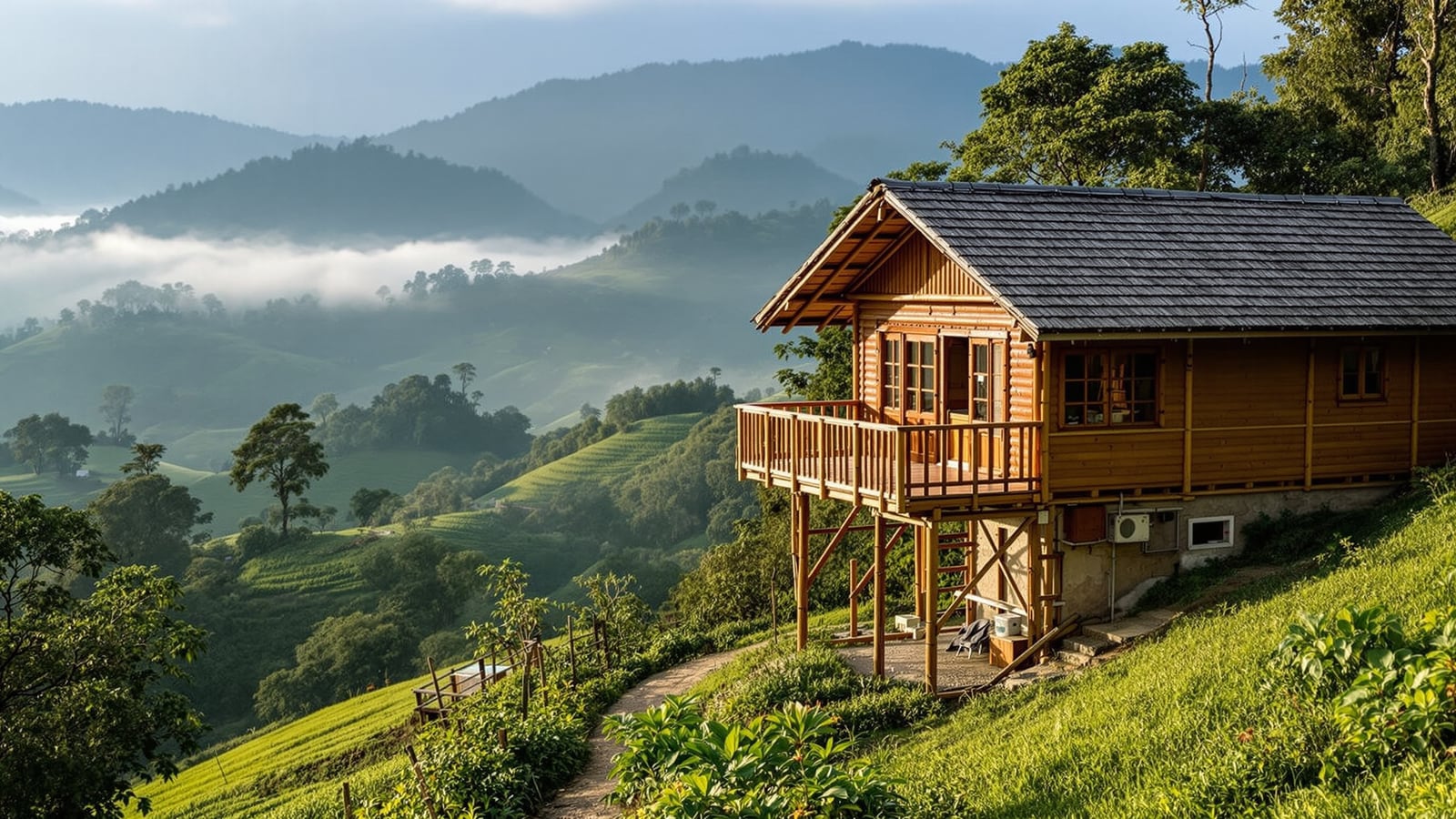
North-East Homestays: The Community & Village Playbook
The fastest-emerging, most community-rooted homestay region in India — Khasi villages, Sikkim hillsides, Arunachal and Nagaland. This playbook covers the community model, the light bamboo-and-timber vernacular, the remoteness that is both the draw and the constraint, and the extra registration layers the North-East adds.
The North-East is the fastest-emerging homestay region in India, and the most community-rooted. From a Khasi village near Mawphlang's sacred forest or spotless Mawlynnong, to a Sikkim hillside, an Arunachal valley or a Nagaland morung village, the homestay here is woven into living culture rather than bolted onto a view. The draw is exactly that: remoteness, authenticity, extraordinary landscape and a genuine welcome into a way of life — living root bridges, treks, food, weaving, festivals. For a host, that is a gift and a discipline, because the region rewards building lightly and honestly and punishes importing a plains-city aesthetic. This playbook covers the community model, the vernacular, the access reality and the extra rules. Pair it with the design guide and the regional overview.
Scope. Editorial good practice, not legal advice. Beyond the homestay scheme, several North-East states add mandatory tourist registration and some areas need inner-line or protected-area permits — check carefully via the Licence Finder and the state portal. Figures are indicative.
The product is community, not just a room
The North-East homestay's real product is belonging for a few days — eating with the family, joining village life, being shown the land by someone who belongs to it. Many of the best are explicitly community homestays, run village-wide so tourism income spreads and the culture is protected rather than performed. Lean into this: the host and the village are the experience, far more than thread-count. It also means a duty of respect — follow local custom, ask before photographing people and sacred sites, employ and buy locally, and keep guest numbers within what the village and the ecology can carry. Get this right and word-of-mouth, the region's strongest channel, does the marketing for you.
Build light, build local
The North-East vernacular is light-framed, breathable and renewable — the opposite of a heavy concrete block, and far better suited to seismic, high-rainfall hills.
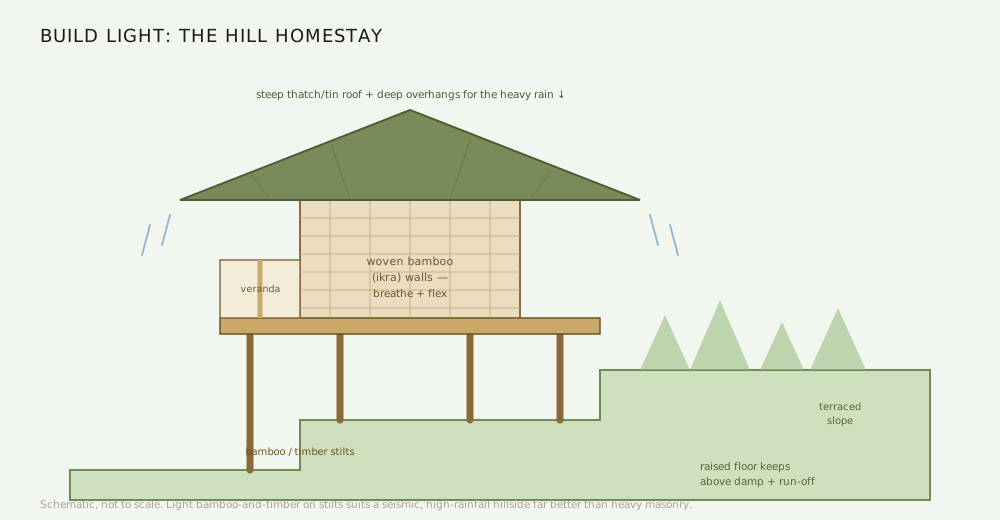
- Bamboo, cane and timber. Local, renewable, fast to build and naturally handsome; woven bamboo (ikra/ekra) walls breathe in the humidity and flex in a tremor far better than brittle masonry.
- Raised floors and stilts on slope. Lifting the structure keeps it above damp and run-off, suits a terraced hillside with minimal cut-and-fill, and gives a sheltered under-space.
- Steep roofs with deep overhangs. The region's rainfall is among the heaviest on earth; a pitched thatch or tin roof with generous eaves sheds it and shelters the walls and veranda.
- The veranda and big views. A covered veranda is the living room and the viewpoint; frame the landscape, which is the greatest amenity you have, and keep interiors warm and simple.
Design this way and the house is cheaper, greener, more earthquake-sensible and more authentic — everything the North-East guest came for — than an imported RCC box.
The guest, access, and a dry season
The North-East guest is the experiential and responsible traveller — trekkers, birders, culture-seekers, photographers, increasingly younger Indians — who values authenticity over polish and will forgive simplicity but not inauthenticity. The real constraints are access and connectivity: roads are long and weather-dependent, the nearest airport or railhead can be hours away, and mobile and internet coverage is patchy, so set expectations honestly and treat reliable information and a good pickup as part of the offer. Several states add rules on top of the homestay scheme — Meghalaya, for instance, has introduced mandatory tourist registration, and some areas need inner-line or protected-area permits — so check before you host. Season is broadly the dry October-to-April window, with a wet, quiet monsoon; model your own occupancy in the ROI Calculator.
Key takeaways
- The product is community and belonging, not just a room — many of the best are village-run community homestays; host with respect and keep numbers sustainable.
- Build light and local: bamboo, cane and timber, raised floors, steep deep-eaved roofs and a view-framing veranda suit the seismic, high-rainfall hills far better than concrete.
- The guest is the experiential, responsible traveller who rewards authenticity and forgives simplicity.
- Access and connectivity are the real constraints — set expectations honestly and make a good pickup and clear information part of the offer.
- The North-East adds extra layers — mandatory tourist registration in states like Meghalaya and inner-line/protected-area permits in some areas; confirm via the Licence Finder.
References
- State tourism homestay schemes and tourist-registration rules (Meghalaya, Sikkim, Nagaland, Arunachal Pradesh, Assam and others) — authoritative for registration, permits and fees; see the state portals and the Licence Finder.
- North-East vernacular architecture — bamboo, cane and timber (ikra/ekra) construction, raised floors and steep roofs as a seismic, high-rainfall response.
- Responsible and community-based tourism principles — for host conduct, local benefit-sharing and carrying-capacity; confirm local custom and rules directly.
Indicative and state-dependent. Studio Matrx is a not-for-profit guide; this is educational content, not legal advice. Confirm licensing, registration and permits with the relevant state tourism department, and treat rates and seasons as indicative.
Export this guide
Related Guides — Deep-dive reading
Vernacular Architecture of North-East India: Bamboo, the Morung & Building for Earthquakes
How the high-rainfall, earthquake-prone hills of the North-East produced lightweight bamboo-and-timber houses that sway instead of crack — from the Assam-type house and the chang ghar to the Naga morung and Meghalaya's living root bridges.
Vernacular ArchitectureRoofing for Heavy Monsoon Areas
Kerala, the Konkan coast, the Western Ghats and the North-East get some of the heaviest rain on earth. A plain-language, India-grounded guide to designing and detailing a roof that sheds it fast, throws it clear of the walls, drains it away and never lets it in.
RoofingSharma Springs: How IBUKU Made Bamboo Grow Six Storeys Tall
Elora Hardy and IBUKU's bamboo villa above the Ayung River valley in Bali is the tallest bamboo house in Indonesia — a lotus-shaped structure grown from a single grass, designed through physical models rather than drawings, and a serious argument that the fastest-growing plant on earth belongs in the future of building.
The Future of ArchitectureRelated Tools — Try Free
Cross-Ventilation Analyzer
Estimate airflow and air changes per hour (ACH) from room size, window areas, layout, and local wind — with NBC 2016 Part 8 compliance check.
Ventilation CalculatorHomestay ROI Calculator
Model occupancy, rate, OTA commission vs direct bookings and running costs to see a homestay's real monthly profit, margin and payback.
Homestay ROIStamp Duty Calculator — All Indian States
Stamp duty + registration charges for all 28 states and 8 UTs — gender concessions, urban/rural variants, metro cess built in.
Stamp Duty