
 Lesson 4.2
Lesson 4.2 · Designing the Space
The Guest Room
Before a single cushion, get six things right, in order - because guests judge a room by what their body touches, not by what a listing photo shows.
Guests do not remember your cushion fabric. They remember whether they slept well, found a plug by the bed, and had Wi-Fi that worked.
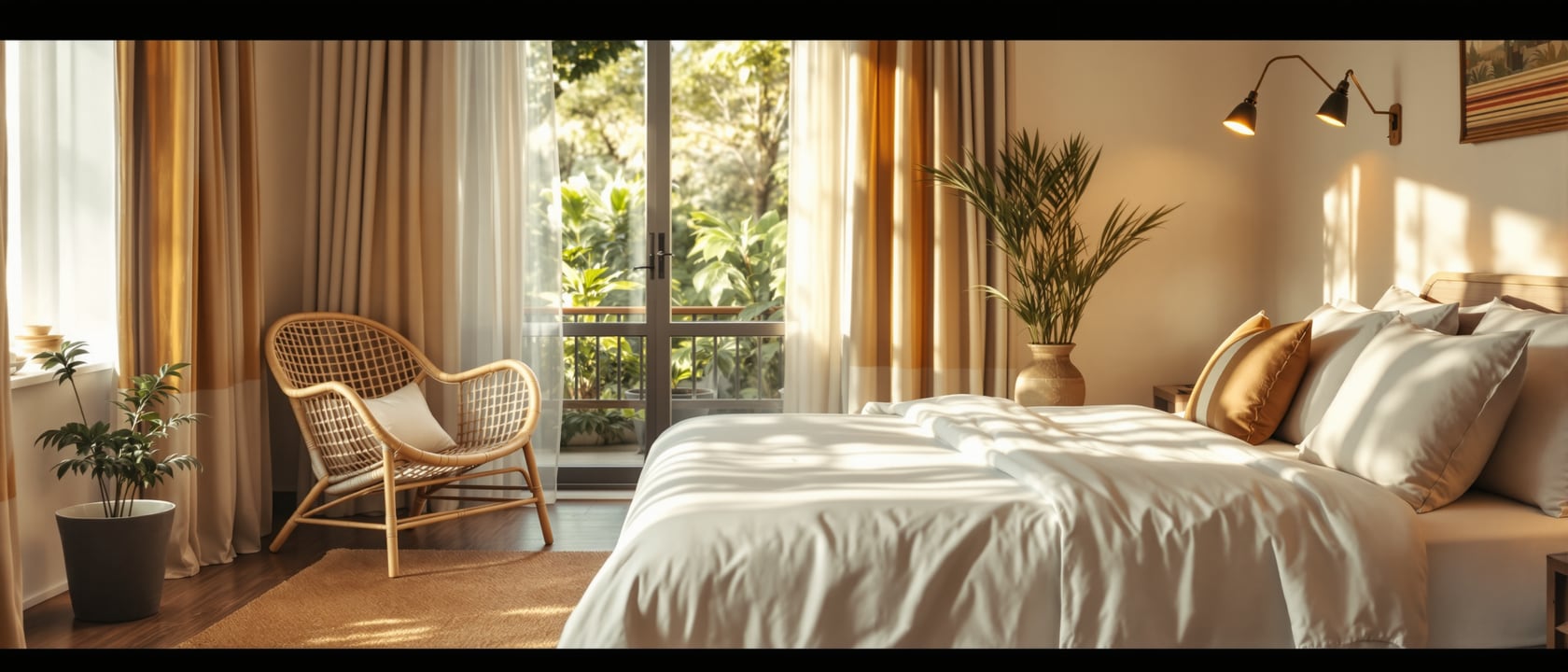
Walk into almost any guest room that has earned a string of five-star reviews and you will notice something a photograph rarely captures: it is not the most decorated room, it is the most considered one. A genuinely good mattress under plain white linen, a lamp exactly where a tired traveller's hand reaches, a window that actually opens, a Wi-Fi password printed somewhere obvious - these are unglamorous, and they are precisely what separates a loved homestay room from a disappointing one. Decoration photographs beautifully and gets the booking click; comfort and function are what earn the return visit and the honest five stars.
This lesson sets out the real order to spend in, because most first-time hosts get the sequence backwards - they buy the art and the throw cushions before the mattress is actually good, and then wonder why the reviews mention a stiff back rather than the lovely wall hanging. There are six layers to get right, roughly in the order guests judge them: the bed and linen, storage and surfaces, light and air, quiet, Wi-Fi, and only then a sense of place. Spend down that list in order and your limited budget goes exactly where the reviews are actually won.
Bed, storage, light and air, quiet, Wi-Fi, then character - in that order, every time, regardless of budget size.
The hierarchy, and why the order matters
Think of the guest room as six layers stacked on top of each other, each one more visible and more decorative than the one below it, but each one less important to a guest's actual experience. At the base: the bed and linen - the single biggest driver of good or bad reviews, because a guest spends more hours in contact with the mattress than with any other object in the room. Next: storage and surfaces - somewhere to actually unpack, hang clothes, and set down a phone, a book and a cup of tea. Then light and air - layered lighting rather than one harsh overhead tube, a window that opens, genuine ventilation and the option of real darkness for sleep. Fourth, quiet - distance and sound separation from the kitchen, the road, other guests. Fifth, Wi-Fi - now close to a basic expectation rather than a bonus. And only at the top, a sense of place - the one honest regional detail that tells a guest where in India they actually are.
The order matters because most owners have a limited setup budget and a strong temptation to spend it on the most visible, most photographable layer first. A beautifully styled room with a lumpy mattress earns a booking from the listing photo and loses a star in the review two days later; a plain but genuinely comfortable room earns fewer double-takes on the listing and far more five-star write-ups. Our full guide to [homestay design and guest rooms](/guides/homestay-design-and-guest-rooms-india) sets out this same hierarchy in table form - use it alongside this lesson when you plan your own room.
A beautiful room with a bad mattress gets the booking and loses the review. Spend bottom-up, not top-down.
Bed and linen: the single biggest driver of reviews
If you take only one instruction from this entire lesson, make it this one: buy the best mattress your setup budget genuinely allows, and keep it dressed in simple, immaculately clean linen. A reasonable, comfortable queen mattress in India runs roughly ₹12,000-25,000 depending on type and city, and it is worth stretching your budget here over almost any other single purchase in the room, because a guest's body will notice a bad mattress within the first ten minutes of lying down, and no amount of styling recovers from that first impression.
Linen matters almost as much as the mattress itself, and the good news is that it does not need to be expensive to be excellent - it needs to be plain, crisp, white or pale, and genuinely clean every single changeover, with no exceptions for a 'quick turnaround.' Crisp white or pale linen also does real practical work: it hides nothing, so any staining or wear shows up immediately and gets dealt with, whereas a busy patterned sheet can quietly hide the very problems that would otherwise prompt you to replace it. Keep at least two full linen sets per bed in rotation so a same-day changeover is never a scramble, and add one extra blanket or quilt folded visibly at the foot of the bed - guests in hill, plantation and winter-cold regions notice this small gesture especially.
Pillows deserve their own line in the budget, because a tired guest notices a flat, lumpy or oddly-shaped pillow almost as quickly as a bad mattress, and it is one of the cheapest items on this entire list to get right. Offer at least two pillows per guest of genuinely different firmness where you can - a softer and a firmer option - since guest preference varies enormously and a single fixed pillow satisfies only some of your guests by chance. Replace pillows and mattress toppers on a sensible cycle rather than waiting for a visible failure; a mattress protector used consistently from day one extends the life of your single biggest purchase in this room by years, and is a trivial cost against that saving.
Storage, light, air and quiet
Once the bed is right, the next layer is practical: storage and surfaces. A guest who cannot find anywhere to put their suitcase down, hang a jacket, or set a phone and a glass of water beside the bed will feel subtly unsettled for their entire stay, however nice the room otherwise looks. A simple wardrobe or even a few sturdy hooks, a low luggage rack or bench, and a proper bedside table with at least one accessible charging point solve most of this at modest cost.
Light and air come next. Avoid relying on a single harsh ceiling tube as the only light source; layer it with a warmer ambient light, a dedicated reading lamp within arm's reach of the bed, and good task lighting near any mirror or desk. Ventilation matters just as much as lighting - a window that genuinely opens, a working ceiling fan, and in warmer regions, cross-ventilation planned at the zoning stage covered in Lesson 4.1. For sleep quality, proper blackout curtains or blinds are a small spend with an outsized effect, particularly for guests adjusting to a new time zone or simply wanting to sleep past sunrise.
Quiet is the layer owners most often underestimate, because a room can look finished and still sit directly above a noisy kitchen, beside a busy road-facing wall, or next to another guest room with thin partitioning. Where you cannot move the room, soft furnishings - a rug, heavier curtains, upholstered furniture - absorb sound cheaply; where you can choose, place the quietest, most private room in the house as your guest room, and keep a noisier room for family use, exactly the zoning logic from Lesson 4.1 applied one level deeper.
Wi-Fi and a sense of place - noticed last, remembered longest
Wi-Fi has moved, within a few short years, from a pleasant extra to something close to a basic expectation, especially for business travellers, remote workers and anyone travelling with family who wants to video-call home. In a larger or more spread-out home, a single router in the living room often cannot reach a guest room reliably; a modest mesh Wi-Fi extender, costing a few thousand rupees, is one of the cheapest fixes available against one of the most common guest complaints. Print the network name and password clearly and leave it visibly in the room - do not make a tired guest hunt for it or ask the family awkwardly at 11pm.
Only once all five layers below it are genuinely right should you turn to a sense of place - the one honest, specific regional detail that tells a guest where in India they actually are: a local textile as a throw, a piece of regional craft, a single well-chosen photograph of the landscape outside, locally made soap. This is where your home's character, covered in depth in Module 5, earns its place - but it is deliberately last in this hierarchy, because a characterful room on top of a bad mattress or no Wi-Fi earns comments about the decor and one star off the overall rating anyway. Read almost any five-star homestay review and you will notice the pattern: two lines about clean sheets and reliable Wi-Fi, one line, almost in passing, about how lovely the room looked. Spend in that same order and your limited budget works exactly as hard as your guests will notice.
One practical note on sequencing across a season rather than a single room: if you are fitting out several guest rooms at once and the budget does not stretch to finishing all six layers in every room simultaneously, finish one room completely through all six layers before starting the next, rather than doing the bed and linen in every room first and the lighting or Wi-Fi later. A single genuinely complete room you can confidently list and host in today earns real reviews sooner than three half-finished rooms that are not yet bookable at all, and the income from that first room helps fund the next one properly.
Thread count
A rough measure of linen quality; higher is not always better, but genuinely clean, crisp cotton or cotton-blend sheets matter more than the number itself
Prioritise cleanliness and a plain, pale colour over a marketed thread-count figure.
Blackout
Curtains or blinds that block essentially all outside light
A small spend with an outsized effect on sleep quality and review language.
Mesh Wi-Fi
A small network of linked routers or extenders that carries a signal reliably through a larger or multi-room home
A cheap fix for the single most common complaint in spread-out or older homes.
Sense of place
An honest, specific regional detail - a textile, a craft piece, a view - that tells a guest where they actually are
Deliberately the last layer to spend on, covered in depth in Module 5.
Workshop - audit your guest room against the hierarchy
This is a hands-on audit of the room you actually intend to let, scored honestly against the six-layer hierarchy, so you know exactly where your next rupee of setup budget should go.
Your own guest room, a notebook, and your phone to check the Wi-Fi signal at the bedside.
Goal: an honest, layer-by-layer score of your actual guest room
Inputs: the room itself, a notebook, thirty minutes
Time: ~30 minutes
- 1Lie on the actual bed for a few minutes as a guest would, and honestly rate the mattress and pillow comfort - do not rate the look of the bedspread.
- 2Check your linen rotation: do you genuinely have at least two full clean sets per bed ready at all times?
- 3Stand in the room and count the surfaces and storage a guest can actually use - a suitcase spot, a hanging spot, a bedside surface with a reachable plug.
- 4Test the lighting at night: switch on only the room's lights and check whether there is a genuine reading light within arm's reach of the bed, plus one other light source.
- 5Open the window, run the fan, and check the blackout curtains or blinds fully closed in daylight - note any gaps.
- 6Stand in the room with your phone and check the actual Wi-Fi signal strength; if it is weak, note a mesh extender as a near-term purchase before anything decorative.
You’ll walk away with
A six-line honest score sheet for your guest room (bed/linen, storage, light/air, quiet, Wi-Fi, sense of place) with one concrete next purchase identified for the weakest layer.
Three altitudes on the same idea
Read the band that fits you — or all three.
For you, the owner-host, this lesson is a spending order, not a shopping list. Before you buy a single decorative item, confirm the mattress, the linen rotation, the lighting layers, the ventilation, and the Wi-Fi signal in the actual room are all genuinely good - walk in as a tired guest would at 11pm and check each one yourself. Only once those are settled should any budget go toward the sense-of-place layer; it is the cheapest layer to add later and the most expensive one to lead with.
If you are briefing or designing a guest room for a client, resist leading with the mood board. Start the brief with the mattress specification, the linen plan, the lighting layout (ambient, reading, task) and the ventilation strategy, and only introduce regional character and styling once those are confirmed and budgeted. A beautifully specified room that skips a genuine blackout solution or places the bed under a noisy shared wall will under-perform in reviews regardless of how well it photographs.
If you are starting from nothing, build your guest room in this order: mattress and linen first, a bedside table with a plug within reach second, a working lamp and an openable window third, then Wi-Fi, and only then one personal touch that says something true about your home. You do not need a large budget to get all six layers right - you need the discipline to spend on them in this order rather than the order that looks best in a listing photo.
“The guest room should be decorated and styled first, because that is what sells the booking in the listing photos.”
Do it yourself
No tools needed - reason it through for your own room.
- 1List the six layers of the guest room hierarchy in the order you should spend on them.
- 2Why is the bed and linen layer considered the single biggest driver of reviews?
- 3Name two practical items that make up the 'storage and surfaces' layer.
- 4Why does Wi-Fi now sit close to the top of most guests' expectations, even though it is low in the spend hierarchy?
- 5Why is 'a sense of place' deliberately placed last in the hierarchy, rather than first?
The one line to carry out
Peer-reviewed journals & authoritative standards
- 01Homestay - the home-based lodging model and guest expectations — Wikipedia, 2026.
- 02Bed and breakfast - the host-present, home-based room model — Wikipedia, 2026.
- 03Designing Your Home as a Homestay: Rooms, Privacy & Regional Character — Studio Matrx, 2026.
- 04Hospitality industry - service standards and guest experience expectations — Wikipedia, 2026.
Once the room itself is right, the next room in the house carries even more weight with reviewers - the guest bathroom, where more stays are quietly won or lost than anywhere else.
The author
Amogh N P
Architect, interior designer, and creative polymath. Studio Matrx began in his notebooks — his vision of design made honest, useful, and open to everyone. Its Academy is written and taught in his memory, and free, forever.
More about Amogh →