
 Lesson 10.3
Lesson 10.3 · Practice, Delivery & Career
Implementation & Phasing
The hard years between the plan and the city, and how to keep quality through them
Where good plans go to die
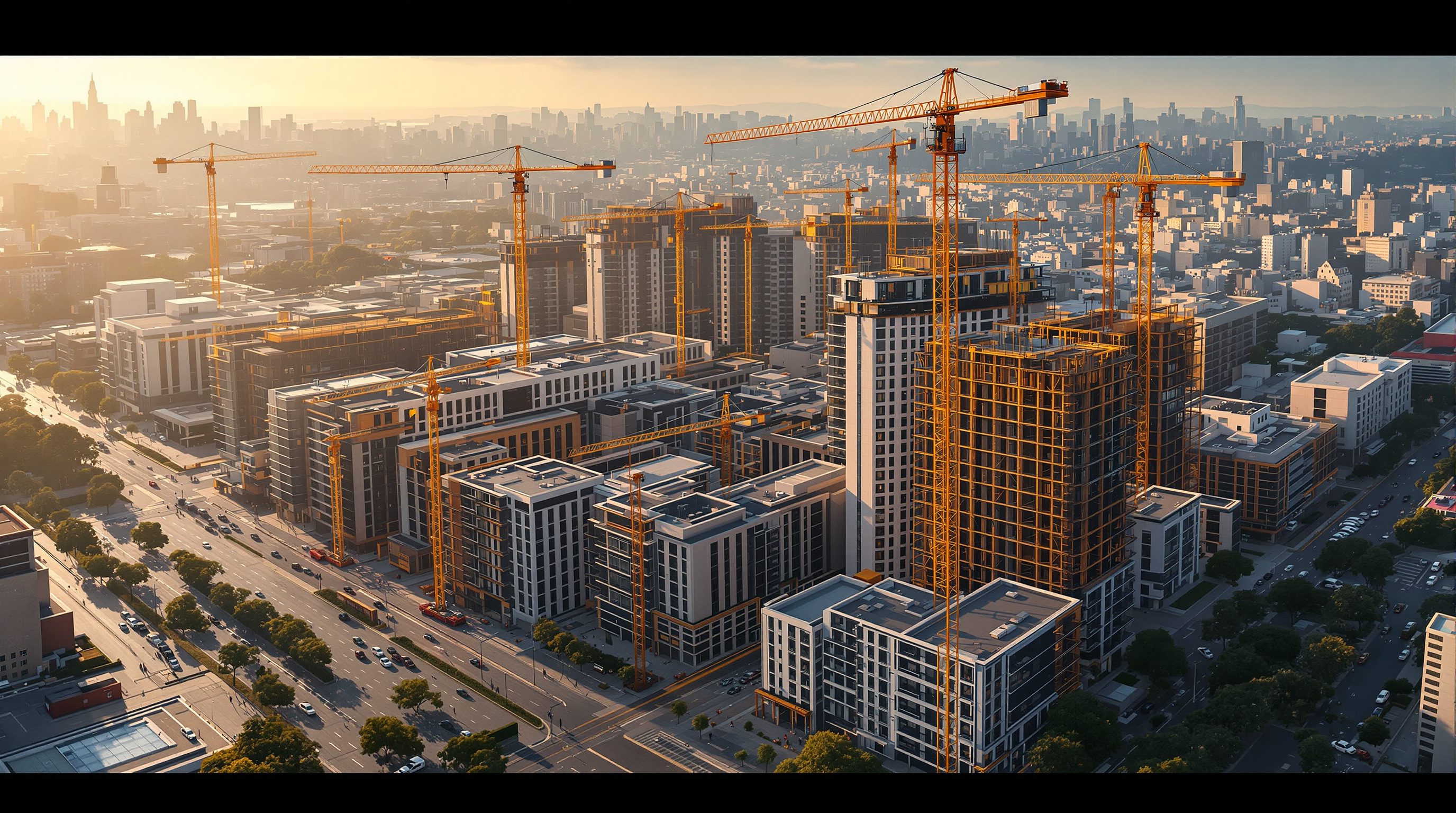
The visioning is done, the framework adopted, the code written and the ribbon photographed. Now comes the part no render shows: fifteen years of infrastructure, viability, land assembly and half-built phases, delivered by dozens of hands who never met the original designer. This is where cities are actually won or lost.
The park is always the first thing offered up to save the budget, and the first thing everyone misses when it is gone.
A plan is a promise about time
Every ambitious urban plan makes an unstated promise: that a great many decisions, taken by a great many people over a great many years, will somehow add up to the coherent place the drawing shows. That promise is extraordinarily hard to keep. A large regeneration or new-settlement scheme is not built in one go by one builder; it is delivered over ten, twenty, sometimes forty years, through booms and busts, changes of government, shifts in the market, and a rotating cast of developers, contractors and officials. The original designer is usually long gone before the last block rises. Between the seductive masterplan and the finished city lies a long, unglamorous valley of implementation, and it is here, not in the design studio, that most fine plans quietly die. They die not because the vision was wrong but because nobody planned the delivery as carefully as they planned the form. This is the humbling lesson that separates the mature urban designer from the talented student: the discipline is only half about what should be built, and fully half about how it will actually get built, by whom, in what order, paid for how, and held to what standard when the enthusiasm has drained away. To design without a delivery strategy is to write a cheque you have no means to cash. This lesson is about learning to cash it: phasing, infrastructure, interim uses, land, money, the delivery vehicle, and the machinery that protects quality across the decades.
Phasing and infrastructure-first
The single most important delivery decision is the order of building, the phasing, and the golden rule is infrastructure-first. A place cannot function until the bones are in: the trunk roads and public transport, the water supply and sewerage, the drainage and power. If housing races ahead of infrastructure, as it so often does on the Indian urban fringe, you get the familiar dystopia of gleaming towers on unmade roads with tankered water and no sewage treatment, a pattern the AMRUT and Smart Cities missions were partly created to correct. Getting the sequence right means front-loading the enabling infrastructure, which is expensive and unglamorous and produces no immediate revenue, which is exactly why it is so often skimped. But phasing is more than pipes. The deeper art is to phase so that every stage is a decent place in its own right, not merely a fragment waiting for a future that may never arrive. A well-phased scheme delivers a complete piece at each step: a first phase that already has a street with shops, a usable park and enough population to support them, so that early residents inhabit a place rather than a permanent building site. Barcelona's 22@ district and Ahmedabad's riverfront both show phasing where each completed reach stands on its own while pointing to the next. The figure shows the principle: infrastructure and a public anchor lead, complete neighbourhood pieces follow one by one, and each phase is designed to be lovable even if the next is delayed. Phasing is where design intent meets cash-flow reality, and the designer who cannot phase cannot deliver.
Meanwhile uses and the interim city
Because delivery takes years, there is always an in-between condition, land that is assembled but not yet built, phases waiting their turn, sites stalled by a downturn. The unimaginative response is to fence these off as dead ground, which blights the emerging place and signals abandonment. The sophisticated response is the meanwhile use, sometimes called interim or temporary use: deliberately programming vacant land and buildings for uses that need little investment and can move on when construction begins. A cleared site becomes a pop-up market, a community garden, a cricket net, a food-truck yard, a temporary park, an events space. Meanwhile uses do real work: they keep the place alive and safe during the long delivery, they let the emerging community form an early identity, they test what uses the place wants before anything is built permanently, and they generate goodwill and even modest revenue. London's King's Cross regeneration famously used its granary square and temporary venues to build a destination years before the permanent buildings were complete, so that the finished district inherited a public already in the habit of coming. In the Indian context, where large land parcels can sit idle for years between acquisition and construction, meanwhile uses are an underused tool that could turn dead time into placemaking. The mindset shift is to treat the interim not as an embarrassing gap to be hidden but as a legitimate, designed phase of the place's life, one that shapes how the permanent city will eventually be loved.
Land assembly and viability
Two forces decide whether anything gets built at all: control of the land and the arithmetic of viability. Land assembly is the problem of gathering enough contiguous, developable land to deliver a coherent scheme, and in urban India, where ownership is often fragmented into thousands of small holdings tangled in disputed titles, it is frequently the hardest single obstacle. The blunt instrument is compulsory acquisition, which is slow, contentious and, since the reforms to land acquisition law, expensive. The more elegant Indian answer is the town-planning scheme or land-pooling model, pioneered in Gujarat and Maharashtra, in which landowners contribute their scattered plots to a pool, the authority lays out roads, services and public space, and each owner receives back a smaller but fully serviced final plot, usually worth more than their original unserviced holding. The scheme becomes largely self-financing because the deducted land and the uplift pay for the infrastructure. Viability is the second gate: the hard test of whether the value the scheme creates, the sale and rental value of the homes, shops and offices, can cover the cost of the land, the infrastructure, the construction, the finance and a reasonable developer return. If it cannot, no private capital moves and the plan stays on paper, however beautiful. Viability is not the enemy of good design; it is the reality within which good design must work, and understanding it is what lets a designer argue credibly for the park and the wide footpath by showing where the value to pay for them will come from. The designer who dismisses viability as someone else's problem forfeits the argument before it begins.
The delivery vehicle
Someone has to drive delivery, hold the land, raise the money, procure the infrastructure, dispose of plots to builders, enforce the code and keep the vision alive across the decades, and that someone is the delivery vehicle. This is the organisational engine of implementation, and its design matters as much as the design of the plan. Options range widely. A development authority may deliver directly, as the DDA does in Delhi. A dedicated special-purpose vehicle may be created for a single project, as the Sabarmati Riverfront Development Corporation was in Ahmedabad, a company owned by the municipal corporation, focused entirely on delivering one scheme with commercial discipline and public accountability. Under the Smart Cities Mission, each city set up a special-purpose vehicle to deliver its projects, a model that speeded delivery but also drew criticism for sidelining elected municipal bodies. Public-private joint ventures share the load and the risk between a public land-and-powers partner and a private capital-and-delivery partner. Each model trades off speed, accountability, commercial discipline and democratic legitimacy differently, and there is no single right answer, only a right answer for a given project's scale, risk and politics. The urban designer is rarely the one who chooses the vehicle, but must understand it deeply, because the vehicle's incentives, its funding model, its time horizon, its answerability, will shape every compromise made to the plan over the years of delivery. A brilliant framework handed to a weak or misaligned delivery vehicle will be eroded; the same framework in a capable, well-governed vehicle can be protected and even improved.
Why good plans fail, and how to keep quality alive
It is worth naming plainly why good plans fail, because the failure modes are recurrent and largely avoidable. They fail when infrastructure lags housing and the place never functions. They fail when phasing produces permanent half-built fragments rather than complete pieces. They fail when viability was never tested and the numbers never worked. They fail when the delivery vehicle is weak, underfunded or captured by short-term interests. They fail when land could not be assembled and the scheme was built in disconnected patches. And, most insidiously, they fail through slow erosion of quality: each individual compromise, a park shrunk here, a frontage cheapened there, a street width trimmed to save cost, seems reasonable in isolation, but together they hollow out the place until the built result bears little relation to the promise. Guarding against this slow erosion is one of the urban designer's most important long-term duties, and the tools for it are precisely the framework and code from the process lesson, now doing their real job. The design code is the quality control that outlives the designers: because the rules are written and adopted, a plot sold to a builder in year fifteen is still bound by the frontage, height and materials the original vision required. Design review, an independent panel that assesses each proposal against the code and the vision, is the second guardrail, catching erosion before it is built. Together, code plus review is how a place keeps faith with its own plan across a generation of delivery. The lesson for the designer is sobering and empowering at once: your best defence against your plan's decay is not a more beautiful drawing but a more robust code and a well-run review, the humble instruments that keep quality alive long after the excitement is gone.
Town-planning scheme / land-pooling (state TCP Acts)
Assembling and servicing fragmented land while returning serviced plots to owners
The Gujarat and Maharashtra model that makes land assembly largely self-financing; confirm the mechanism in the applicable state Act.
AMRUT and Smart Cities Mission (MoHUA)
National missions funding urban infrastructure and area-based development
Provide project capital and delivery vehicles (SPVs); note they supply capital, not the recurring revenue to operate what is built.
Design review and adopted design codes
Ongoing quality control of proposals through the delivery period
An adopted code plus an independent review panel is the standard mechanism for protecting quality across many hands and years.
Phase a real site for delivery
Take a framework or masterplan (real or one from an earlier lesson) and design a credible phasing and delivery strategy for it.
The framework drawing, tracing paper or a simple diagramming tool, a basic viability checklist
Choose a site of at least a few hectares with a known framework, or use the framework you produced in an earlier module workshop.
- 1Draw a phasing diagram of at least three phases, showing what infrastructure and public anchor come first and why each phase is a decent place on its own.
- 2Propose two meanwhile uses for land awaiting later phases, and say what each would achieve.
- 3Identify how the land will be assembled and name one viability risk that could stall delivery.
- 4State which delivery vehicle you would recommend and how you would use a code plus design review to protect quality to the end.
You’ll walk away with
A phasing plan plus a one-page delivery strategy naming the vehicle, the funding logic, the meanwhile uses and the quality-control mechanism.
Three altitudes on the same idea
Read the band that fits you — or all three.
As the architect delivering a plot within a larger scheme, you meet implementation as the design code and the design review panel that will assess your building. Treat them as allies rather than hurdles: they are what guarantee that the neighbours who build after you will hold the same line you did, so your good building is not later marooned among cheap ones. Understand the phasing too, because a building completed in a stalled phase must still work as a decent edge to a temporary void.
For the urban designer, implementation is where your discipline is truly tested. Design the delivery as carefully as the form: phase so every stage is a lovable place, put infrastructure first, program the meanwhile uses, and understand land assembly and viability well enough to defend the public realm in the numbers. Above all, build the guardrails, a robust code and an active design review, because they are what protect quality through the long years when you are no longer in the room.
The core idea to internalise early is that a plan is a promise about time, kept or broken over years by many hands. To make it real, find a large scheme in your city that has been under construction for years and visit it: look at what was built first, what still sits empty, and how the early phases feel to be in. Nothing teaches phasing like walking through a half-delivered plan.
“Once the masterplan is approved and construction starts, delivery is just a matter of building the drawing.”
Do it yourself
Quick checks before you move on.
- 1State the infrastructure-first rule and why it is so often broken on the urban fringe.
- 2Give two reasons meanwhile uses are worth programming during the delivery gap.
- 3Name the two guardrails that keep quality alive across many hands and years.
Pulling it together
Peer-reviewed journals & authoritative standards
- 01Ministry of Housing and Urban Affairs, AMRUT and urban infrastructure — MoHUA, Government of India, 2022.
- 02Smart Cities Mission, area-based development and delivery vehicles — Smart Cities Mission, Government of India, 2022.
- 03Urban Land Institute, development delivery and viability — Urban Land Institute, 2023.
- 04National Institute of Urban Affairs, urban delivery and reform resources — National Institute of Urban Affairs, 2022.
You now understand the whole arc, from vision to built city. The final lesson turns from the work to the worker: the many routes into urban design, where the field lives and grows, and a closing charge to you.
The author
Amogh N P
Architect, interior designer, and creative polymath. Studio Matrx began in his notebooks — his vision of design made honest, useful, and open to everyone. Its Academy is written and taught in his memory, and free, forever.
More about Amogh →