
 Lesson 9.3
Lesson 9.3 · Ethics, IP, Bias & Limits
Honest Disclosure to Clients
Labelling AI imagery, and never letting a render promise more than it can
A render can lie without a single false word.
You never say 'this is buildable' or 'I drew every line' - but a glossy AI image can let a client believe both, and silence is its own kind of claim. Trust is the asset a practice actually runs on, and one oversold render can spend it all. This lesson is about the three quiet ways an AI image misleads, and a simple, professional standard for making sure yours never does.
You never said 'buildable'. The render said it for you. Correct it out loud.
Three ways an AI image can mislead
An AI image rarely deceives with a stated falsehood. It deceives by letting an impression form that you never corrected, and there are three impressions to watch.
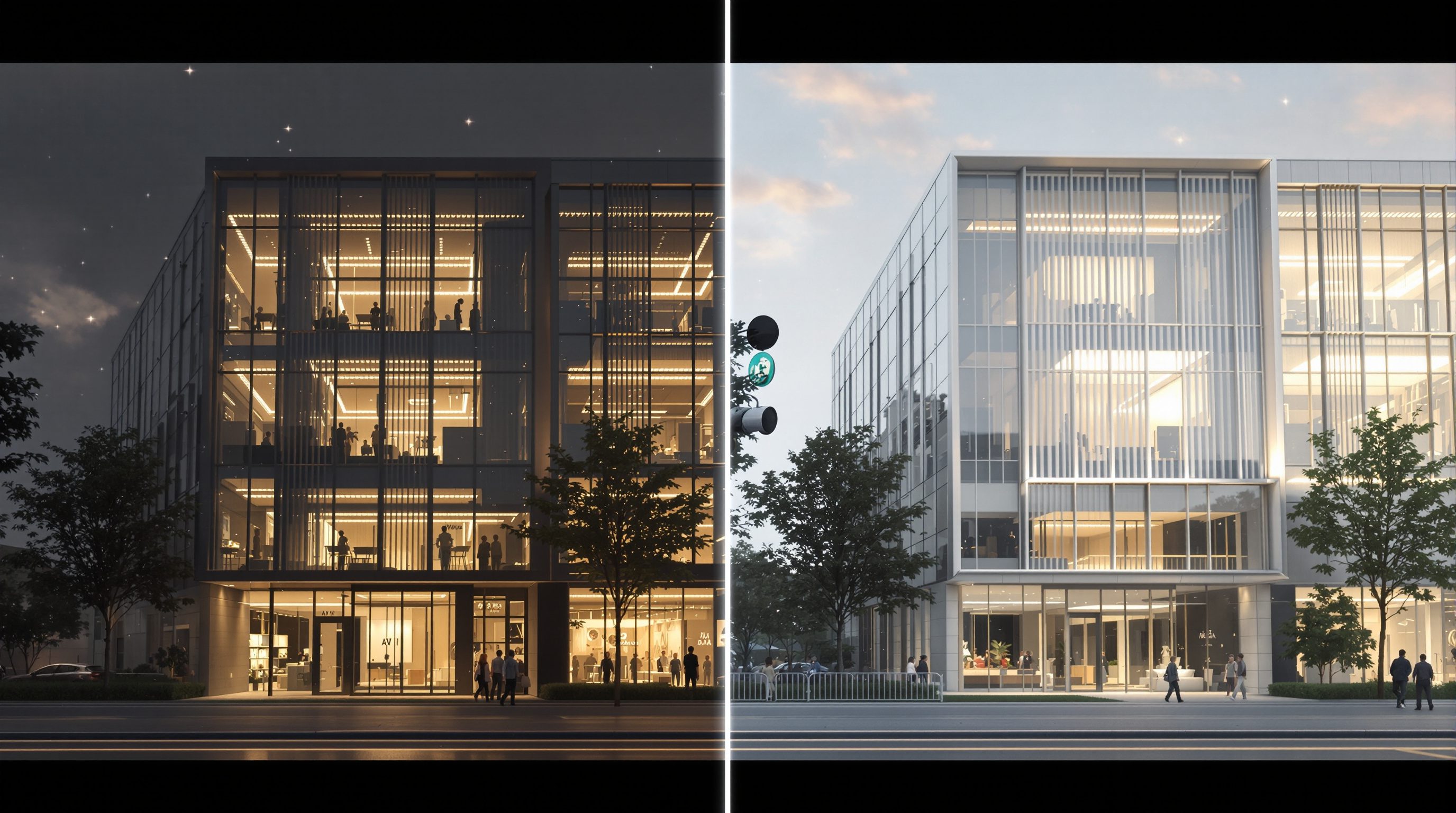
The first is buildability. A photoreal render carries the visual grammar of a finished, resolved building - crisp materials, confident light, a sense that this exists. A client reads that grammar as a promise: this is real, this is costed, this can be built as shown. But an AI image is appearance without structure, program or code (Module 0.1, and Lesson 9.4 next). If you let the render's polish stand in for a resolution you haven't done, the client is planning around a building that may not survive contact with an engineer or a budget.
The second is authorship. Hand a client a striking image and the natural assumption is that it flowed from your own hand and mind, line by line. The truth is usually more mixed - your design direction, your selection and editing, but an AI-assisted rendering. That's not shameful, but letting the client believe you drafted every pixel misrepresents both your process and, quietly, your skill claim.
The third is rights. A client who commissions an image tends to assume it is clean - fully theirs, free of anyone else's copyright, safe to splash on a hoarding. As Lesson 9.1 showed, that assumption may not hold: provenance and ownership are live questions. Letting the client believe the image is legally simple, when it isn't, hands them a risk they never agreed to take.
Notice the common thread: in all three, the deception is an uncorrected impression, not a lie you told. Which means the fix is equally simple - correct the impression, out loud, before it hardens.
Three impressions: buildable, mine, clean. Correct each before it hardens.
Labelling AI imagery
The most basic act of disclosure is a label, and the craft is in making it clear without making it clumsy. The goal is that no one who sees the image mistakes what it is.
The simplest reliable form is a short caption travelling with the image wherever it goes: 'AI-generated concept image' or 'AI-assisted visualisation - concept stage, not a construction drawing'. The exact words matter less than three properties: the label is visible (on or beside the image, not buried in a footnote nobody reads), plain (a client, not a colleague, must understand it), and attached (it stays with the image when it's forwarded, screenshotted or dropped into a deck - because images travel without their context).
When you disclose depends on the exposure. Internal exploration you never send needs no label. A concept shown to a client needs one. A public, firm-branded, or marketing image needs the clearest label of all, because its audience is widest and its context is thinnest. This mirrors the exposure ladder from Lesson 9.1 - the further an image travels from your explanation, the more the label has to carry on its own.
There's a tone question too, and it's worth getting right. A label is not an apology and not fine print engineered to be missed. Present AI use as a normal, competent part of modern practice - 'here's an AI-generated concept exploring the massing' - and the client reads confidence, not evasion. Designers who hide the label, or shrink it to unreadability, train clients to distrust them the day it's discovered. Designers who state it plainly build the opposite. The label is small; the habit it signals is not.
Not overselling buildability
Of the three, buildability is where the real damage happens, because a client makes decisions on it - budgets, timelines, expectations set with their own family or board. So this deserves more than a label; it deserves an explicit conversation.
The core move is to name the stage every time. An AI image almost always represents a concept - a direction, a mood, a test of massing or material - not a resolved, constructible design. Say so: 'This is a concept image to agree the direction; the buildable design, with real structure, dimensions and cost, comes after.' That single sentence resets the client's reading of the polish from 'this is the building' to 'this is where we're heading'.
Be specific about what the image cannot promise, because vagueness here is where trouble grows. An AI render does not guarantee that the structure stands up, that the spans are real, that it meets fire or building code, that services and drainage resolve, that the dimensions are true, or that it can be built for any particular figure. You don't need to recite all of that every time, but the client should understand the category: a beautiful image is not a costed, compliant design, and the gap between them is real work still to come.
There's a positive framing that keeps this from feeling like hedging. Position the AI image as doing the job it's genuinely good at - aligning on intent early, fast, cheaply - so everyone commits to a direction before the expensive, careful design work begins. Framed that way, honesty about its limits actually raises the client's confidence, because it shows you know exactly what the tool is for and where your own expertise takes over. Overselling buildability, by contrast, sets a trap that springs later - when the engineered, costed design differs from the seductive render, and the client feels something was taken away.
Name the stage. A concept image is a direction, not a building.
Authorship, credit and rights
Honesty about who made the image, and about its legal standing, completes the picture - and both are quieter obligations that professionals get right without being asked.
On authorship, the honest account is usually a partnership: the design intent, the judgement about what's good, the selection and the editing are yours; the rendering is AI-assisted. Say it that way and you claim exactly what you did - which is considerable - without overclaiming the craft of the pixels. This protects you as much as the client: if you present AI work as fully hand-drawn and it's later obvious it wasn't, the discovery costs you far more trust than the disclosure ever would have. Clients rarely mind that you used a powerful tool well; they mind being misled about it.
On rights, carry forward Lesson 9.1 into how you talk to the client. Don't assure them an image is free of all copyright questions when that's genuinely unsettled. For anything sold, licensed onward, or firm-branded, use commercial-safe generation and clean sources, and if the client's plans depend on owning or trademarking the image, tell them that ownership of AI-assisted work is a live legal question they should take to their lawyer. You're not giving legal advice; you're flagging a real consideration rather than papering over it.
Underneath all of this is a single professional principle that predates AI entirely: a designer holds a duty of honesty to the person who trusts and pays them. AI doesn't change the duty; it just adds three new places - buildability, authorship, rights - where the duty applies. Meet it in all three and AI becomes something a client trusts you to use. Fail it in any one and the tool becomes the thing that broke the relationship, which is a waste, because the tool was never the problem - the silence was.
A disclosure standard for your practice
Good intentions leak; a standard doesn't. The professional move is to turn all of the above into a small, repeatable checklist you run before any AI image reaches a client, so honesty doesn't depend on remembering to be honest in a busy week.
Six checks cover it. Label - the image is marked as AI-generated where the client sees it. Stage - you've said this is a concept, not a resolved buildable design. Author - authorship is stated honestly: your direction, AI-assisted rendering. Rights - sources are clean and the tool's provenance suits the use. Gap - you've named what the image can't promise: structure, cost, code, dimensions. Record - the disclosure is written down, in the proposal or caption, not just said once and forgotten.
Baking these into your templates does two things. It protects the client, who now makes decisions on an accurate understanding of what they're looking at. And it protects you - a written, consistent disclosure is your evidence of good practice if a dispute ever arises, and it quietly signals competence on every single deliverable. Firms that adopt a standard like this find it becomes invisible: clients simply expect the honest framing, and it stops being a conversation and starts being how the practice works.
End on the reframing that makes the whole lesson stick. Disclosure is not a confession that you cut a corner; it is evidence that you know exactly what your tools do and where your own responsibility begins. The designer who says 'here's an AI concept to align our direction - the buildable, costed design follows, and it's my responsibility' sounds more expert, not less. Honesty about the tool is, in the end, a demonstration of mastery of it.
Six checks in the template. Honesty that doesn't depend on remembering.
Plain, attached AI label
A visible, jargon-free caption that travels with the image
'AI-generated concept image' on or beside the visual, not buried in a footnote - because images get forwarded without their context.
Stage disclosure ('concept, not construction')
Naming that the image is a direction, not a resolved buildable design
The single most important disclosure, because clients make budget and timeline decisions on buildability.
Honest authorship statement
Your design direction + AI-assisted rendering, stated plainly
Claims exactly what you did without overclaiming the craft of the pixels; protects you if the process is later obvious.
The six-check disclosure standard
Label, Stage, Author, Rights, Gap, Record - baked into templates
Turns honesty into a repeatable process so it doesn't depend on remembering in a busy week; doubles as evidence of good practice.
Workshop - write your disclosure standard
You'll draft the actual language and label you'd attach to a real client deliverable, turning the six checks into words you could paste into a proposal tomorrow. No generation required.
A document. Optionally, one of your own AI renders to write a real caption for.
Goal: a reusable client-disclosure kit
Inputs: one imagined client deliverable (e.g. a concept render for a house)
Time: ~35 minutes
- 1Pick a deliverable and its exposure level (concept shown to client, or public marketing image) - this sets how strong the disclosure must be.
- 2Write the visible LABEL you'd attach to the image - one plain sentence a non-designer understands, that stays with the image if forwarded.
- 3Write the STAGE + GAP sentence: name that it's a concept and list what it can't promise (structure, dimensions, code, cost).
- 4Write the AUTHORSHIP line: state honestly your role vs the AI's, in one sentence you'd be comfortable saying to the client's face.
- 5Assemble all of it, plus a rights note and a 'where this is recorded' line, into a six-check block you could paste into a proposal template.
You’ll walk away with
A reusable disclosure kit: a short image label, a stage/gap sentence, an honest authorship line, and a six-check block for your proposal template.
Three altitudes on the same idea
Read the band that fits you — or all three.
Your renders drive client decisions with real money and real expectations behind them, so buildability disclosure is not optional courtesy - it's risk management. Name the stage on every concept image, state plainly what it can't promise about structure, code and cost, and put the disclosure in writing in the proposal, not just in the meeting. A consistent, documented standard protects the client's planning, protects the practice if a dispute arises, and reads as the confidence of someone who knows exactly where the render ends and the engineering begins.
Interior renders are seductive and travel fast - onto Pinterest boards, into family group chats - so an unlabelled concept can set an expectation you never intended. Attach a plain 'AI-assisted concept' label that stays with the image, be honest that finishes, dimensions and costs are still to be resolved, and use commercial-safe generation for anything you publish. Clients love that you use powerful tools; they only mind being misled about what the pretty image actually guarantees.
Disclosure habits are portfolio and interview gold - they show you understand professional responsibility, not just software. Label AI-assisted images in your portfolio, be ready to explain your actual process honestly (your direction, AI rendering), and practise the six-check standard on your student work now. Reviewers and employers trust a graduate who is straight about their tools far more than one who lets a slick render imply skills they can't yet back up in a construction set.
“Disclosing that I used AI makes me look less skilled, so it's better to stay quiet.”
Do it yourself
No tool needed - reason it through.
- 1Name the three impressions an AI image can create that a designer must correct.
- 2What are the three properties a good AI label must have?
- 3Why is buildability the most important of the three to disclose explicitly?
- 4Rewrite this into an honest authorship statement: 'I designed this house' (for an AI-assisted render).
- 5List the six checks in the disclosure standard from memory.
The one line to carry out
Peer-reviewed journals & authoritative standards
- 01Bommasani, R., et al. - Evaluating the Social Impact of Generative AI Systems in Systems and Society — arXiv preprint, 2023.
- 02U.S. Copyright Office - Copyright and Artificial Intelligence (human authorship and AI-assisted works) — United States Copyright Office, 2026.
- 03WIPO - Artificial Intelligence and Intellectual Property — World Intellectual Property Organization, 2026.
- 04Adobe Firefly - FAQ (commercial-safe use and disclosure practices) — Adobe Inc., 2026.
Disclosure rests on one hard fact we've kept naming: an AI image is not a building. The final lesson makes that fact the whole subject - why renders aren't constructible, the responsibility only a human carries, and the real environmental cost of the tool you're choosing to use.
The author
Amogh N P
Architect, interior designer, and creative polymath. Studio Matrx began in his notebooks — his vision of design made honest, useful, and open to everyone. Its Academy is written and taught in his memory, and free, forever.
More about Amogh →