
 Lesson 9.4
Lesson 9.4 · Computational Workflow
Mass Customization
Making every part unique at close to the cost of one - the economics, and the limits
For a century, difference cost more than sameness. When the machine just reads a different file, that law breaks.
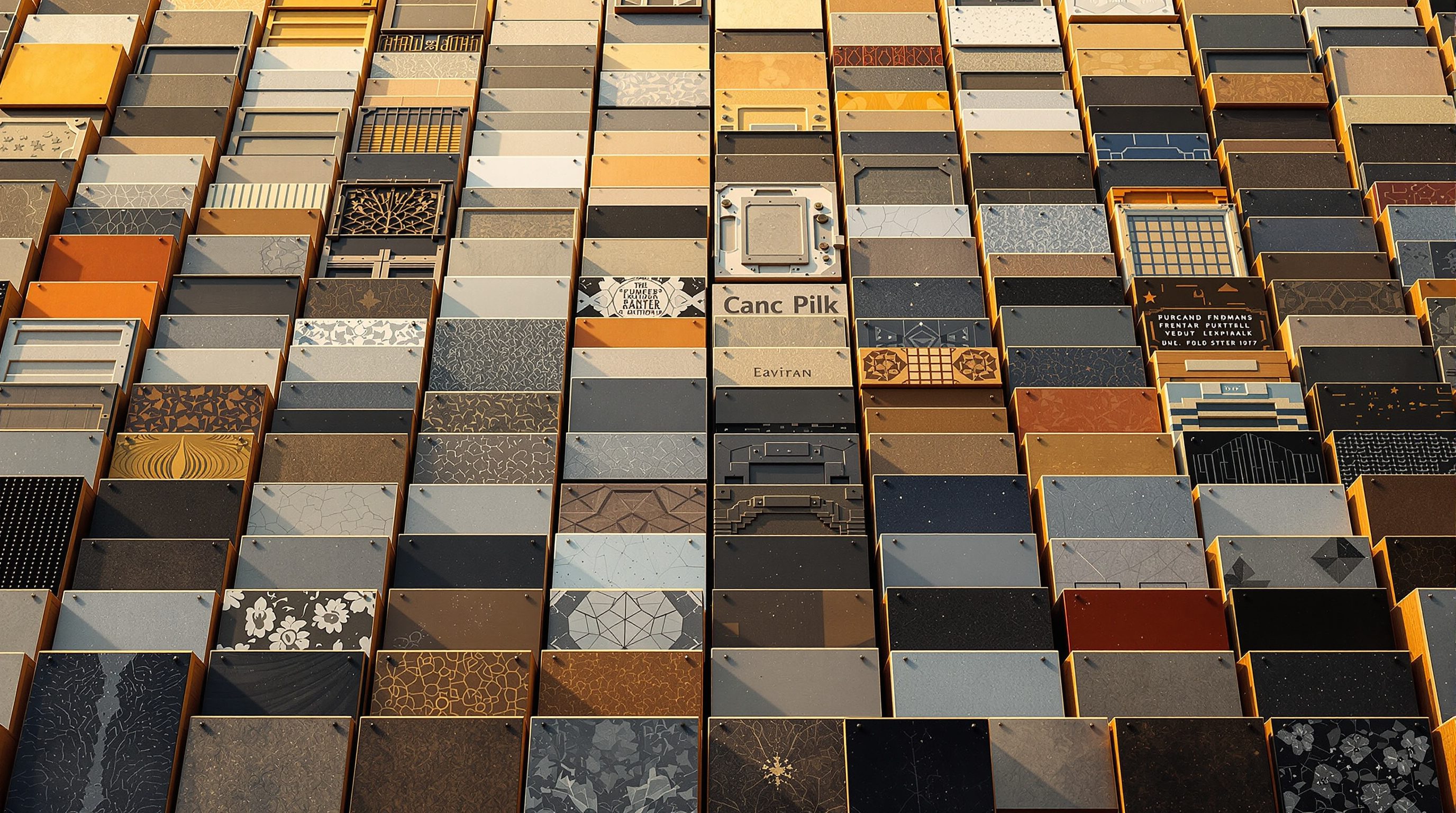
Craft could make anything unique - slowly, expensively, one skilled pair of hands at a time. Mass production made things cheap - but only by making them all identical. Between them sat a chasm: variety cost money.
Mass customization bridges it. Because a machine simply reads a file, and a parametric definition can generate a thousand different files as easily as one, making a thousand different parts costs almost what a thousand identical ones would. This lesson is the economic payoff of the whole module - and an honest look at what still does not get cheaper.
Variety is free; quantity is not. Let parts differ where difference does work.
Every part unique, at the cost of one
Gather the module's threads and they knot into one economic idea: mass customization - producing goods to individual specification at close to mass-production cost. For most of industrial history you chose one or the other. Craft gave you the unique, the made-to-measure, the perfectly-fitted, but slowly and expensively, one skilled pair of hands at a time. Mass production gave you cheapness and volume, but only by making everything identical - the whole logic of tooling, moulds and assembly lines rewards sameness and punishes difference. Between them sat a chasm: variety cost money.
Digital fabrication bridges it. Because the machine simply reads a file, and a computational definition can generate a thousand different files as easily as one, making a thousand different parts costs almost the same as making a thousand identical ones. The setup is shared; only the data changes. That is the whole trick, and it inverts a century of manufacturing intuition. Bespoke stops being a luxury reserved for the rich or the prototype; non-repetition becomes affordable at scale. A facade where every panel answers its own patch of sky, a set of wardrobes each cut to its own alcove, a product fitted to one body - all become ordinary rather than extravagant.
Craft = unique but slow. Mass production = cheap but identical. Mass customization = both.
The economics, honestly
Draw the cost curves and the difference is stark. In conventional manufacturing, unit cost falls sharply with volume of identical parts, because heavy fixed costs - a steel mould, a stamping die, a production line - amortise over the run; but every variant restarts that cost, a new mould, a new setup. So conventional cost rises steeply with variety. In digital fabrication the picture flips: there is little variant-specific tooling, changeover between a part and its neighbour is near zero (load a different file), so unit cost is roughly flat regardless of variety. Two hundred different panels cost about what two hundred identical ones would.
The two curves cross. For a large run of truly identical parts - a million bottle caps - the mould still wins decisively; digital fabrication cannot touch injection moulding on cost-per-part at that volume. But the moment you need variety, or the volume is modest, digital pulls ahead, because it carries no penalty for difference. The honest reading is not 'digital is cheaper' - it is 'digital is indifferent to variety, and conventional is not'. Choose by asking two questions: how many, and how different? High volume and identical favours the mould; variety, or small runs, favours the file. Most architecture and interiors - moderate quantities, high uniqueness - sit squarely in digital's sweet spot.
The parametric-plus-fabrication pairing
Mass customization needs two capabilities married, and this module has built both. Fabrication supplies the indifference to variety - a machine that cuts a different file for the same cost. Parametric design supplies the variety itself, and crucially at the scale required: you cannot hand-draw a thousand unique panels, but a definition can generate them from rules and inputs, and - as lesson 9.1 showed - emit each one labelled, nested and machine-ready. Neither half suffices alone. Fabrication without parametric variation just makes the same part cheaply; parametric variation without fabrication just makes a thousand drawings nobody can build affordably. Together they make non-repetition genuinely producible.
The examples are already around us. In building: panelised facades where each unit is tuned to sun, view or structure; timber and steel structures with every member sized to its load; acoustic panels whose perforation follows a room's response. In interiors: made-to-measure joinery cut per alcove, custom screens, one-off light fittings. In products, mass customization is mature - dental aligners printed per patient, custom insoles and eyewear, hearing-aid shells, prosthetics scanned and fitted to one body. What unites them is the same pairing: a parametric model that varies per input, feeding a fabrication process that does not care that every output differs.
Parametric makes the variety; fabrication makes variety affordable. You need both halves.
A worked comparison
Make it concrete with a facade of 600 panels. Route A, identical: design one panel, and mass-produce 600 - a mould or a stamping setup, then cheap repetition. Fixed tooling might be steep, but per-part cost is tiny, so at 600-off the identical route is cheap if the design tolerates 600 of the same panel. Route B, all-different, each panel tuned to its facade position: a parametric definition generates 600 unique geometries and emits 600 labelled, nested cut files; a CNC or robot cuts them. There is no per-variant tooling, so the 600th unique panel costs about what the first did - but each still takes its own cut time, its own handling, its own place on site.
Compare them and the real trade-offs surface. If the design truly needs only one panel repeated, Route A wins on cost - do not reach for digital to make sameness. If the design's value is the variation - performance, or the read of a facade that shifts across its surface - Route B delivers what a mould simply cannot, at a cost premium that is far smaller than craft would demand. The decision is not technical bravado; it is whether the variation earns its keep. Sometimes the honest answer is that a rationalised design with a handful of panel types, mass-produced, beats 600 unique ones - a judgement the earlier module on rationalising geometry sharpens.
Ask first: does the variation earn its keep? If not, repeat a few types and mass-produce.
The limits — what does not get cheaper
Mass customization is powerful, not magic, and the limits are exactly the costs that do not vanish with variety. Fabrication time still scales with part count - 600 unique panels take 600 panels' worth of machine hours, whether alike or not; variety is free, but quantity is not. Assembly and logistics may even get harder: 600 different panels must each go to one correct place, so labelling, sorting, sequencing and installation carry a real overhead that 600 identical panels do not - put the wrong unique panel up and it will not fit. Quality assurance multiplies: you cannot inspect one part and clear the batch when every part differs, which is exactly why the digital-twin and sensing loops of this module matter. Documentation and data become load-bearing - lose the definition or the part-ID scheme and a pile of unique components is a puzzle.
And two honest boundaries. For genuinely high-volume identical goods, conventional manufacturing remains cheaper - mass customization competes on variety, not on beating a mould at sameness. And variety must serve a purpose: uniqueness for its own sake produces expensive novelty and an assembly headache without a payoff. The mature use of mass customization is disciplined - let parts differ where difference does work (fits a body, answers the sun, meets a load) and standardise everywhere else. Used that way, it is one of the most quietly transformative ideas in the field: the end of the old law that difference must cost more.
There is a design-culture point hiding in the economics, too. When variety was expensive, standardisation was a virtue forced by cost, and repetition became a language of modern architecture partly because it was cheap. Mass customization removes the cost argument for sameness, which is liberating and dangerous in equal measure: it means repetition and difference are now both design choices to be justified on their merits, not defaults set by the factory. The mature designer treats that freedom as a responsibility - reaching for variation when it performs or means something, and for standardisation when calm, economy or buildability ask for it, rather than letting the machine's indifference decide the architecture.
Mass customization
Individual specification at near mass-production cost
The economic payoff of digital fabrication; competes on variety, not on beating a mould at high-volume sameness.
Batch size one
Economically producing a run of unique parts
Each part its own file; the setup is shared, so the unit cost stays about flat as variety rises.
Tooling / changeover cost
Fixed cost of a mould or setup, and switching between parts
High and variant-specific in conventional manufacturing; near zero in digital, which is why variety is cheap.
Parametric + fabrication pairing
Generating variety and making it affordable
Parametric supplies the variation at scale; fabrication supplies the indifference to it - you need both halves.
Rationalisation
Reducing unique parts to buildable, sensible types
The discipline that decides whether variation earns its keep; sometimes a few standard types beat hundreds of unique ones.
Workshop — cost a customized run against an identical one
Put numbers on the trade-off at the heart of mass customization, so the decision becomes evidence, not enthusiasm. Paper and arithmetic only.
None but paper, a calculator and rough rates (machine time, sheet cost, labour). Real quotes from a fabricator sharpen it if you can get them.
Goal: decide, with numbers, when variety is worth it
Inputs: a panelised element you can imagine making (facade, screen, ceiling), and rough machine/material rates
Time: ~40 minutes
- 1Define the element and a run size - say 200 panels for a facade - and describe what the variation would do if the panels differed (respond to sun, view, structure, acoustics).
- 2Cost Route A (identical): estimate the fixed tooling/setup for one repeated design plus a low per-part cost, and total it over the run.
- 3Cost Route B (all-different, digitally fabricated): near-zero variant tooling, but per-part cut time and handling for every unique piece; total it over the run.
- 4Add the costs that scale with count regardless of route - assembly, labelling, QA, documentation - and note where Route B carries extra (sorting unique parts to their one place, inspecting each).
- 5Make the call and justify it: does the variation earn its keep, or would a rationalised handful of panel types, mass-produced, serve better? State the volume-and-difference logic behind your answer.
You’ll walk away with
A one-page comparison of an identical versus a customized run for one element: rough totals for each route, the count-scaling costs noted, and a justified decision framed by 'how many, and how different'.
Three altitudes on the same idea
Read the band that fits you — or all three.
Mass customization is why non-repetitive architecture became buildable. A facade where every panel answers its own sun and view, members each sized to their load, acoustic surfaces tuned to a room - all producible because a parametric definition generates the variety and fabrication is indifferent to it. Wield it with judgement: let parts differ where difference does real work, standardise elsewhere, and remember that a rationalised handful of types can beat hundreds of unique ones. Structure and compliance stay with your engineer.
This is made-to-measure at scale. Joinery cut per alcove, screens and panels each unique, fittings personalised to a client - all at a cost far nearer the off-the-shelf than craft ever allowed, because the CNC does not care that every part differs. The catch is downstream: unique parts must each reach their one correct place, so labelling, sequencing and install discipline matter. Use variety where the client feels it; repeat where they never will.
Understand the economics, not just the slogan. Be able to draw the two cost curves - conventional rising with variety, digital flat - and say where they cross and why. Know that mass customization needs both halves: parametric design to generate the variety, fabrication to make it affordable. And be honest about the limits: fabrication time, assembly, QA and documentation all scale with count. That balanced grasp - the power and the price - is what makes an answer sound expert rather than hyped.
“With digital fabrication, custom is basically free - you may as well make everything unique.”
Do it yourself
No machine needed - reason it through.
- 1In one sentence, what does mass customization make possible that neither craft nor mass production could?
- 2Why is digital unit cost roughly flat across variety while conventional cost rises with it?
- 3Name the two capabilities that must be married for mass customization, and what each contributes.
- 4Give two costs that still scale with part count even when variety is free.
- 5When does conventional manufacturing still beat digital, and what question decides it?
The one line to carry out
Peer-reviewed journals & authoritative standards
- 01Mass customization — Wikipedia, 2026.
- 02Design for manufacturability — Wikipedia, 2026.
- 03Iwamoto, L. — Digital Fabrications: Architectural and Material Techniques — Princeton Architectural Press, 2009.
- 04Grasshopper — Algorithmic modeling for Rhino — Robert McNeel & Associates, 2026.
- 05The Fab Foundation — the global Fab Lab network — Fab Foundation, 2026.
That completes the computational workflow - one definition that designs, makes, verifies, adapts and customizes. The course now turns from the model to the material and the wider practice that carries these ideas into the world.
The author
Amogh N P
Architect, interior designer, and creative polymath. Studio Matrx began in his notebooks — his vision of design made honest, useful, and open to everyone. Its Academy is written and taught in his memory, and free, forever.
More about Amogh →