
Sigiriya, the Lion Rock — a Field Note from Sri Lanka
A field note from Sri Lanka's dry zone, where a fifth-century king built a garden that runs on gravity, a cliff full of painted women and a palace in the sky on top of a two-hundred-metre rock — and where the honest story turns out to be bigger than the legend.
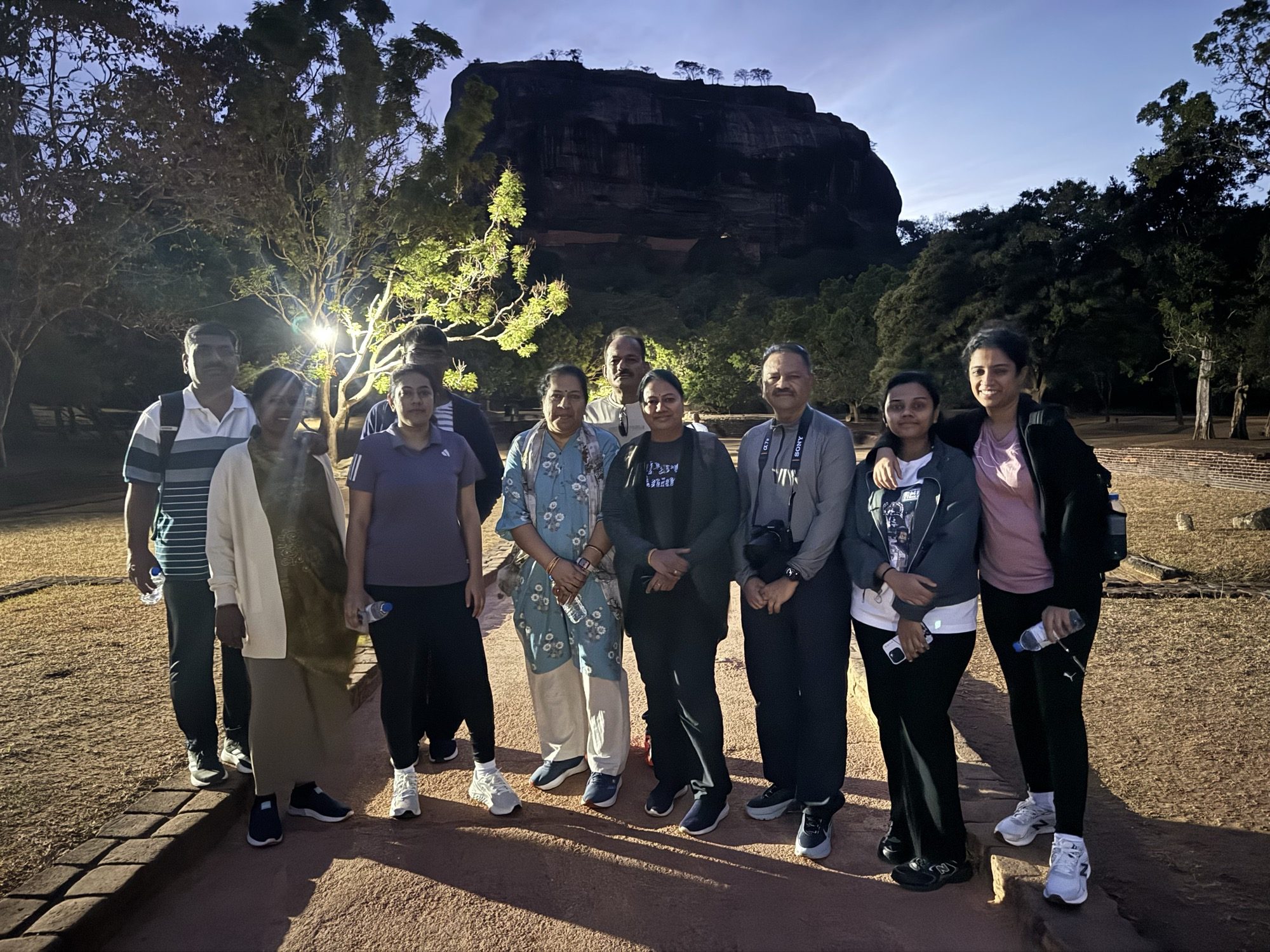
You see it long before you reach it. Driving in across the dry-zone plain of Sri Lanka's Cultural Triangle — paddy, scrub, the occasional tank glinting between the trees — a single block of rock stands up out of the flatness like a clenched fist, sheer on every side, close to two hundred metres of dark stone with nothing around it tall enough to argue. Sigiriya announces itself the way very few buildings can, because it was a mountain before it was ever architecture, and the architecture only made it stranger.
I had come to Sri Lanka for other reasons, but I gave Sigiriya a full day, and I would happily give it more. This is a field note, not a guide — we already have a careful guide to the place in our Architectural Wonders chapter, and I will send you there for the history done properly. What follows is simply what I saw, in the order the site reveals it, written by someone who cannot look at a thing like this without wanting to know how it works.
And the first thing to understand about Sigiriya is that it is not a building at all. It is a whole designed landscape — gardens, moats, causeways, a painted cliff and a summit in the sky — arranged as a single composition that you read by walking through it and, finally, up it. A king tried to make an entire world on and around one rock. Whatever else it was, it was an act of making room on a scale that still stops you where you stand.
The rock from the plain
The approach is the design. You do not stumble onto the rock; you are walked toward it, along a dead-straight axis through symmetrical gardens, so that the whole way in, your eye is pulled to the summit. The western precinct is laid out with a discipline that would satisfy any formal garden anywhere — moats and ramparts enclosing a mirror-image plan, water held on both sides of the path, the rock placed at the end of the view like the last word of a sentence.
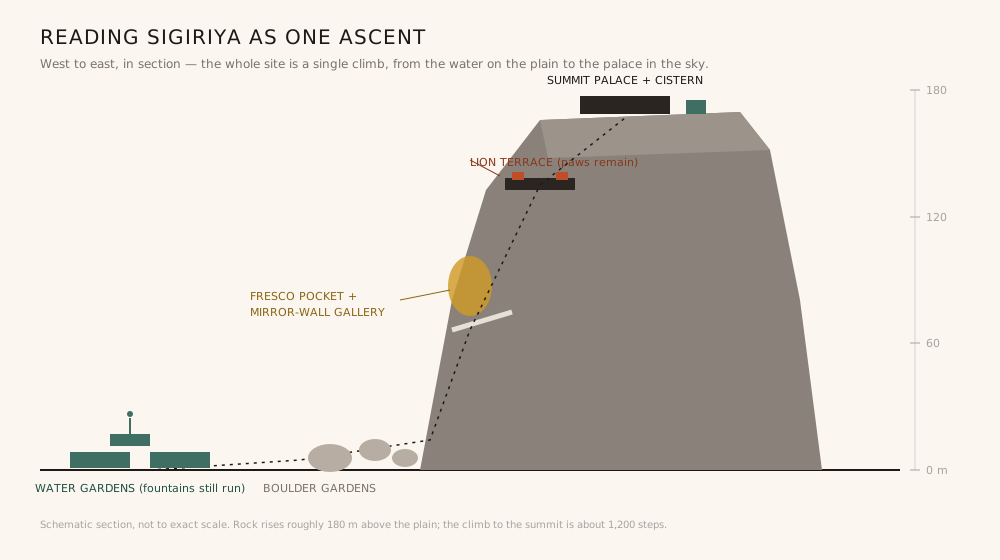
It rises around a hundred and eighty metres above the plain. At the base the works are human-scaled — pools, terraces, pavilions — and then the ground gathers itself into the boulder gardens, where the architecture stops pretending to be separate from the rock and simply uses it: natural caves given drip-ledges, cisterns cut into living stone, great boulders that once carried brick pavilions on their backs. By the time you reach the foot of the final cliff you have already climbed through three kinds of garden, and you have not yet begun the part everyone comes for.
Gardens that still know the way down
Here is the thing that made me stop and simply look. In the symmetrical garden nearest the entrance are shallow limestone fountains — and in the wet season, when the moats are full, they still run. Not reconstructed, not pumped. The same fountains, fed the same way they have been fed for something like fifteen hundred years.
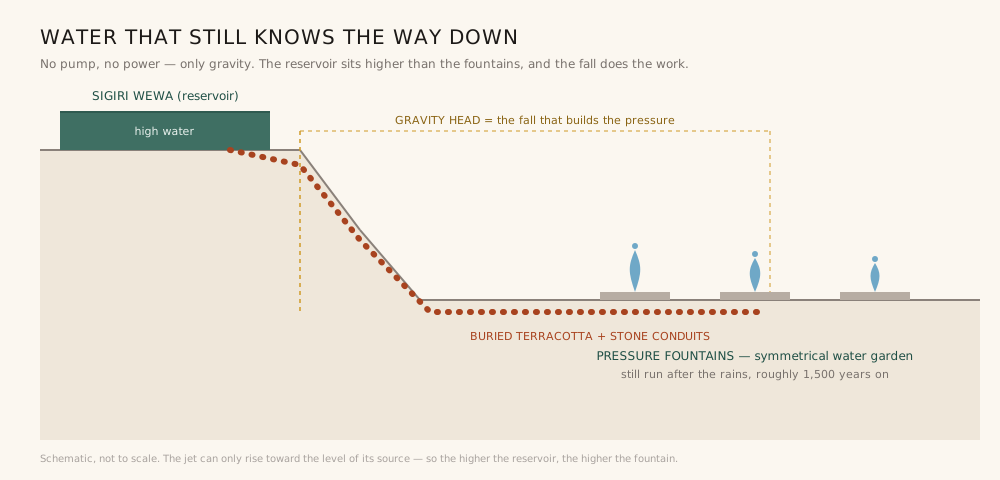
The trick is entirely gravity, and it is beautifully plain. Water was gathered in reservoirs and moats set higher than the garden — the great Sigiri Wewa tank among them — and led downhill through buried conduits of terracotta and dressed stone. Because the source sits above the fountains, the water arrives under pressure, and a jet can rise back toward the level it fell from. No pump, no power, nothing to wear out but the pipe itself. The builders understood head and pressure as working quantities, and they made a garden that performs on rainfall alone.
No pump, no power, nothing to wear out but the pipe — a garden that performs on rainfall alone.
That is the part that stays with an architect. We are trained to think of hydraulics as a service: something buried, grudged, kept out of sight. At Sigiriya the water is the architecture. The moats defend and cool and mirror the sky; the fountains turn a walk into a performance; the whole lower site is a machine for moving water that also happens to be one of the loveliest gardens on earth. It is sustainability not as a label stuck on afterwards, but as simply the only way they knew how to build.
The maidens, and the wall that answered them
Halfway up the western face, reached by a spiral stair bolted to the cliff, is a sheltered pocket of rock, and in it the famous frescoes — the 'cloud maidens', bare-shouldered figures rising out of painted cloud, carrying flowers. There may once have been as many as five hundred of them across a vast span of the rock face. Around twenty survive, and standing in front of them, out of the wind, you understand at once why people have climbed a mountain to see them for fifteen centuries.
But the detail I loved most is just past them, and it is a piece of architecture, not painting. The path along the cliff runs beside the Mirror Wall — a parapet finished in a lime plaster once polished until it genuinely reflected. And for centuries, visitors could not resist it. Between roughly the seventh and eleventh centuries they scratched verses into that gleaming surface — more than eighteen hundred of them recorded — small poems addressed to the painted women, to the view, to the climb. They are among the oldest graffiti in the subcontinent: essentially a visitors' book twelve hundred years deep.
A wall so beautiful that people wrote poems to it — and the poems are now part of the record. The building generated its own literature.
The story everyone tells
Every guide tells the same story, and it is a magnificent one. In the late fifth century, the chronicle says, a prince named Kashyapa seized the throne of Anuradhapura from his father, King Dhatusena — walling the old king up to die — and then, fearing the revenge of his exiled brother Moggallana, abandoned the traditional capital and built himself an impregnable refuge on top of this rock. A palace in the sky for a king who could not sleep. When Moggallana finally came, years later, Kashyapa rode down to meet him on the plain, was deserted by his army, and took his own life. The sky-palace passed to monks and was slowly forgotten.
It is a near-perfect story — guilt, grandeur, a fortress built out of fear — and it reaches us chiefly through the Culavamsa, the later part of the island's great Pali chronicle. For most of the twentieth century it was treated as plain fact, and the whole site read through it: the pleasure-palace of a doomed, patricidal king.
And the record that argues back
Honesty is the house style here, so it is worth saying that the stones do not entirely agree with the story. For one thing, Sigiriya was occupied long before Kashyapa and long after him: the caves around the base carry Brahmi inscriptions and cut drip-ledges from centuries earlier, when this was a Buddhist monastic refuge — and after the king's death it returned to being a monastery for something like eight hundred years. A good deal of what survives is monastic, not royal.
Some scholars have gone further, pointing out that the 'fortress' is not very fortified and the 'pleasure-palace' not very defensible — and arguing that the real Sigiriya may have been conceived less as a frightened king's bunker than as a deliberate royal city, even a sacred landscape built to a cosmological plan. The debate is genuine and unsettled, and I am certainly not the person to settle it. But it changed how I walked the site. Once you stop forcing every stone to serve the legend, the place becomes larger, not smaller — a rock that has been a hermitage, a capital, a monastery and a wonder by turns, for two thousand years.
Stop forcing every stone to serve the legend, and the place becomes larger, not smaller.
The lion, and the last climb
The final ascent begins at a terrace that gives the whole site its name. Once, the stairway to the summit rose up through the body of a colossal brick-and-plaster lion — you climbed into the mountain through the beast's mouth, between its paws. The lion is long gone; the paws remain, two enormous masonry forefeet flanking the start of the stairs, each about the length of a car. Even as a fragment it tells you the scale of the ambition — Sigiriya is usually read as Sinhagiri, the Lion Rock.
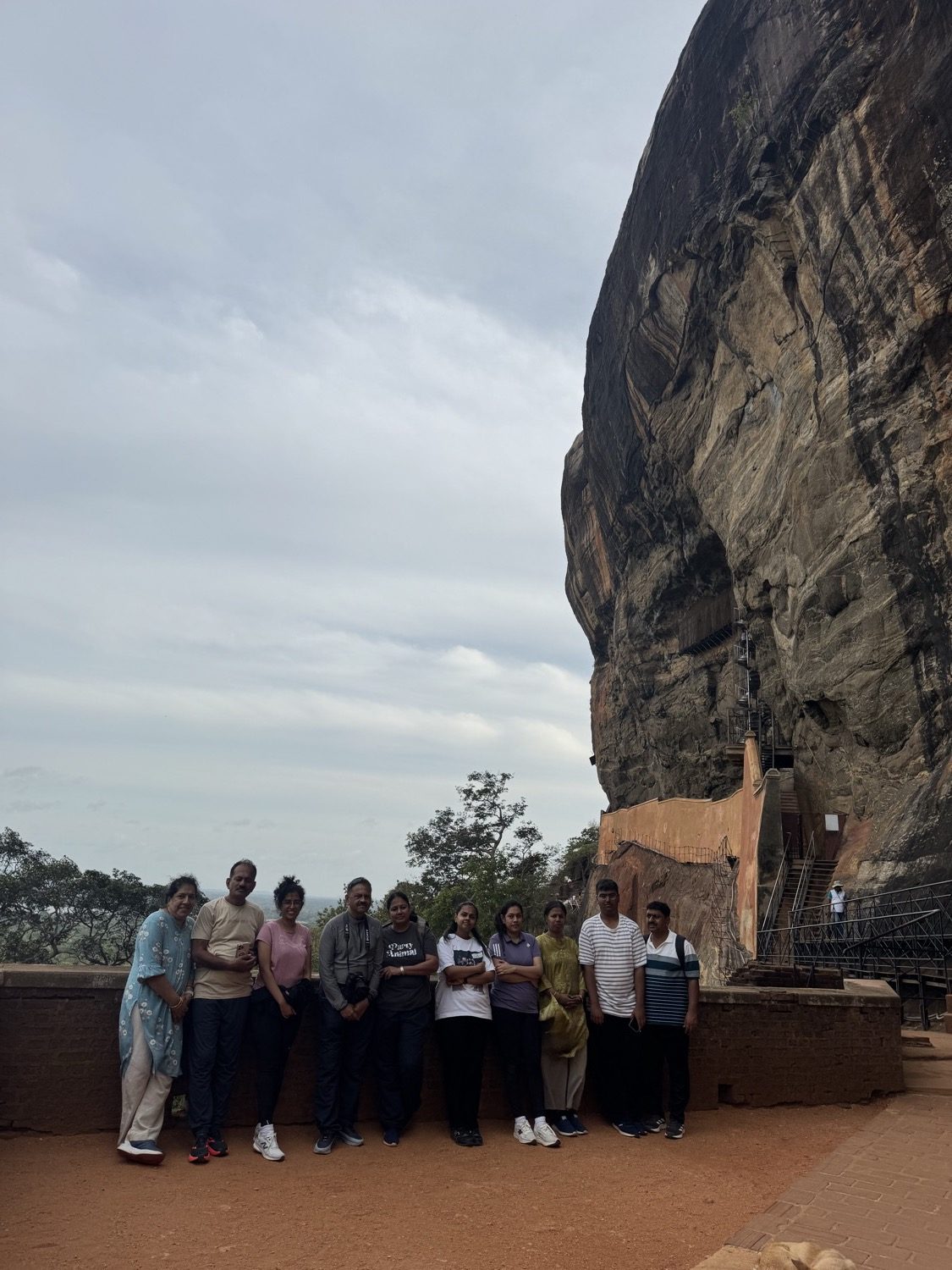
From the paws it is a steep, exposed climb — something like twelve hundred steps all told, the last stretch on metal stairways clipped to the open cliff, with the plain falling away green and enormous on every side. At the top is the summit itself: a terraced acre and more of brick foundations, rock-cut cisterns still holding water, and the footings of the buildings that once stood up here with nothing above them but weather. Whatever it was — palace, monastery, ceremonial height — it was a serious piece of construction carried up, stone by stone, by the route I had just hauled myself up with only a water bottle.
What an architect carries home
I sat on the summit for a long while, as everyone does, and tried to work out what I would take back to my own, far more ordinary work. Three things, in the end.
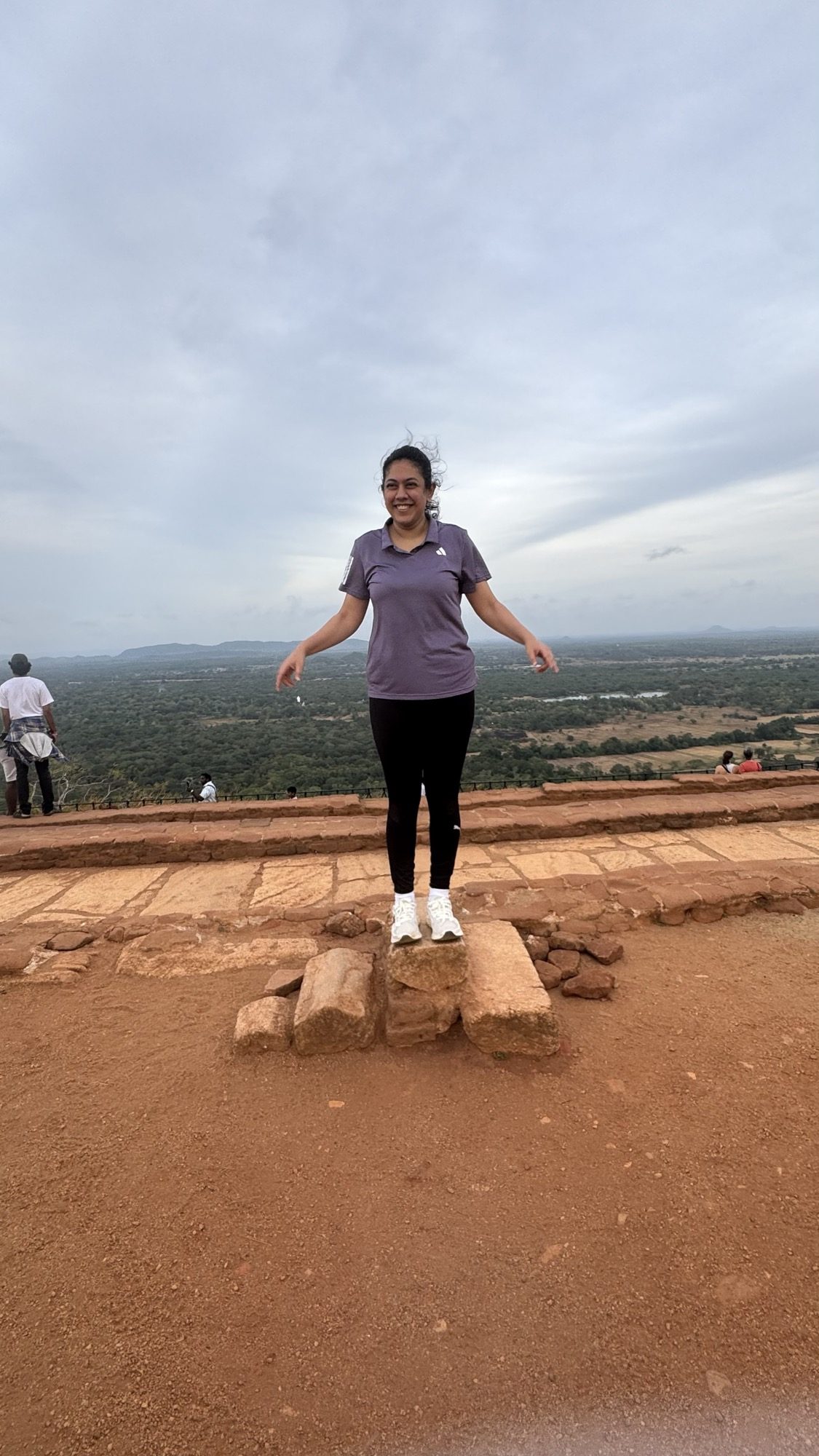
First, that water can be architecture, not just plumbing — that the most unforgettable thing at Sigiriya is a garden that runs on gravity, and the lesson of it is fifteen hundred years old and still basically unanswerable. Second, that a great site is composed, not merely built: the approach, the gardens, the painted cliff and the summit are one designed sequence, and the walk through them is as deliberate as any room. And third — the lesson I seem to carry home from every one of these places — that honesty about a building makes it bigger. Sigiriya is far more extraordinary as a contested, many-lived rock than it could ever be as a single tidy legend.
Water can be architecture, not just plumbing — and that lesson is fifteen hundred years old and still unanswerable.
The climb down is quieter than the climb up; the crowds thin, the light goes long and gold across the plain, and the fountains in the garden below — if you have timed your visit with the rains — are still running, patiently, on the same fall of water a king arranged for them in the fifth century. Understand the structure before you photograph it. That is very nearly the whole of what Sigiriya taught me, and it is very nearly the whole of what we try to do here.
For Amogh
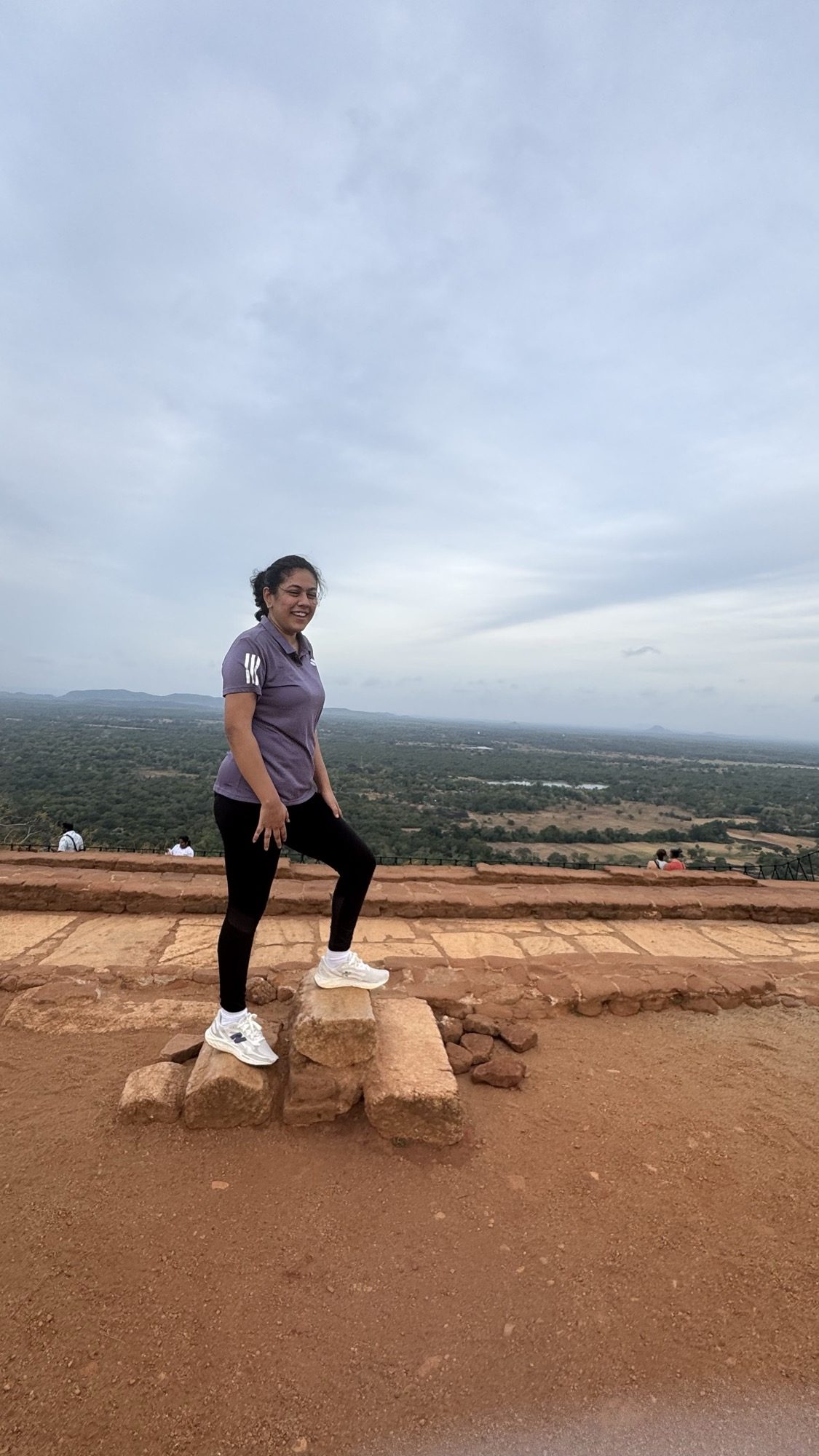
Studio Matrx exists because of Amogh N P, and this travel page has quietly become the place where we keep that in view. The wonders in it are the ones worth walking out to — and the way of looking we carry to them, understand deeply, design honestly, execute precisely, is his. I did not climb this rock with him. But I climbed it the way he taught us to look: slowly, honestly, and willing to let a place be more complicated than its postcard.
He is the reason this magazine would rather be accurate than impressive — the reason a field note about a rock in Sri Lanka still stops to separate what is documented from what is merely beloved. Studio Matrx is built in his memory. Every wonder we walk out to, we walk out to for him.