
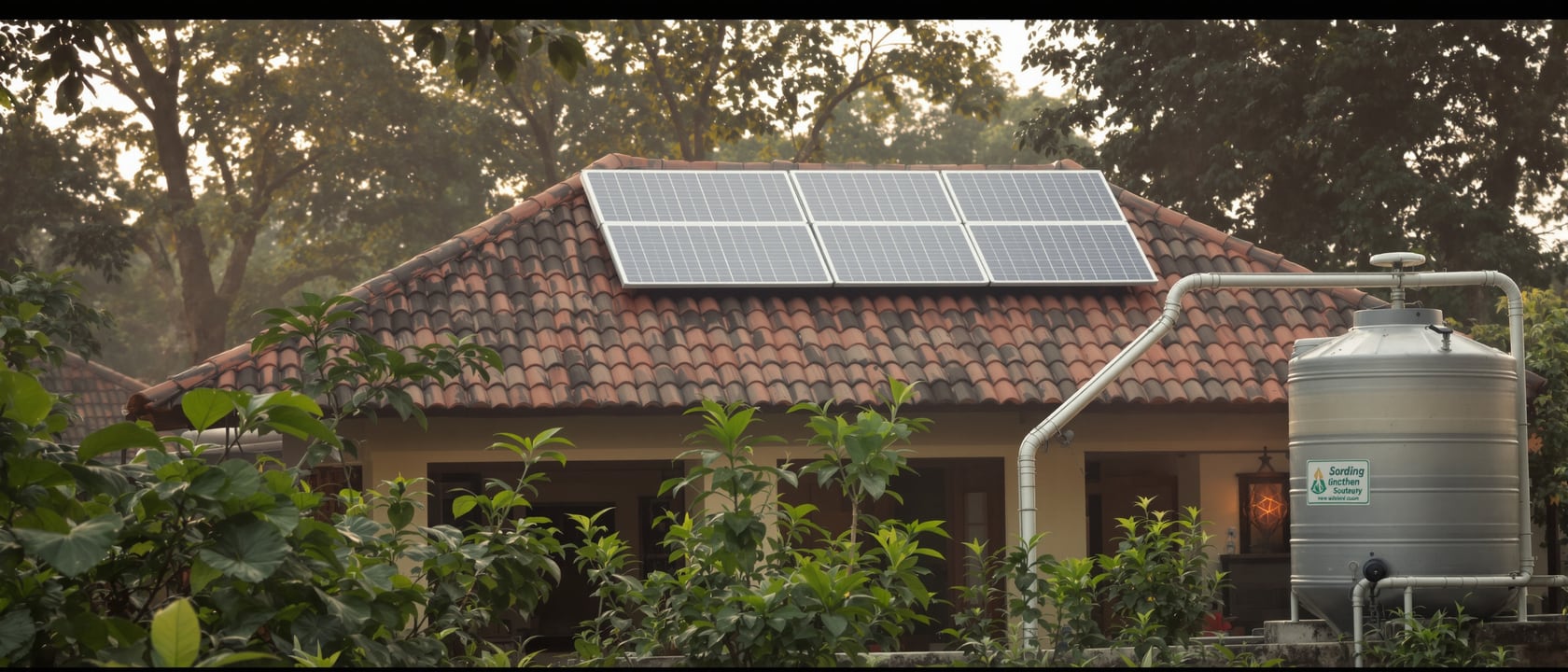
 Lesson 9.1
Lesson 9.1 · Growing, Sustaining & Protecting
The Sustainable Homestay
Low-impact hosting is the rare win that cuts your bills and wins the booking at the same time.
Going green is the one upgrade that pays you back twice - once on the bill, once on the booking.
Most homestay upgrades are a straight cost. Sustainability is different: it is the rare move that lowers your running costs and raises your appeal at the same time. Solar cuts the electricity bill; rainwater cuts the water bill; a kitchen garden cuts the grocery bill and feeds a better breakfast; cutting waste simply costs less. And every one of them is a line in your listing that a fast-growing share of travellers - especially the younger, higher-value guest - now actively looks for.
This is not about building an off-grid eco-resort. It is about the handful of practical, affordable measures that fit an ordinary Indian home, pay for themselves over a few years, and let you tell a true story rather than a greenwashed one. Done honestly, sustainability becomes part of your product, not a bolt-on - and it is increasingly how a homestay competes.
Green pays twice. Sequence by payback. Claim only what is true.
Why sustainability is a business decision, not a luxury
It is tempting to file 'green' under values - nice if you can afford it. For a homestay it is squarely a business decision, because the big measures attack your biggest running costs. Electricity, water, cooking fuel, groceries and waste disposal are exactly the recurring bills that eat a small operation's margin, and each has a sustainable answer that reduces it. A rooftop solar system turns your sunniest months - often your peak season - into near-free power. Rainwater harvesting and simple greywater reuse cut the water bill and protect you in a dry spell. A kitchen garden turns part of the plot into free, fresh produce and a better breakfast. Composting and buying local and in bulk cut both waste-disposal cost and grocery cost.
Stack these and the monthly outflow drops meaningfully, which matters most in the lean season when occupancy is low but fixed costs continue. Sustainability, in other words, is partly a resilience strategy - the same theme as the rest of this module. Model the saving for your own place alongside the build cost in the [ROI Calculator](/utilities/homestay-roi-calculator); treat each measure as an investment with a payback period, not a donation.
Green = lower bills + higher appeal. It attacks your biggest running costs, especially in the lean months.
Where to start: the measures that pay back fastest
You do not do everything at once. Sequence by payback and by what your site offers. For most Indian homestays the order looks like this:
- Efficiency first (cheapest). LED lighting, efficient fans and a 5-star AC and fridge, good insulation and shading, low-flow taps and dual-flush cisterns. These cost little and cut bills immediately - the fastest payback of all. - Solar (biggest win in sunny regions). A rooftop PV system sized to your load; in high-sun states the payback is often just a few years, and it shines brightest in the hot peak season when you run most. - Water (cheap and protective). Rainwater harvesting, a recharge pit, and greywater reuse for the garden - low cost, and real insurance against shortages. - Food and waste (daily saving). A kitchen garden and herb patch, composting your organic waste, and local bulk sourcing.
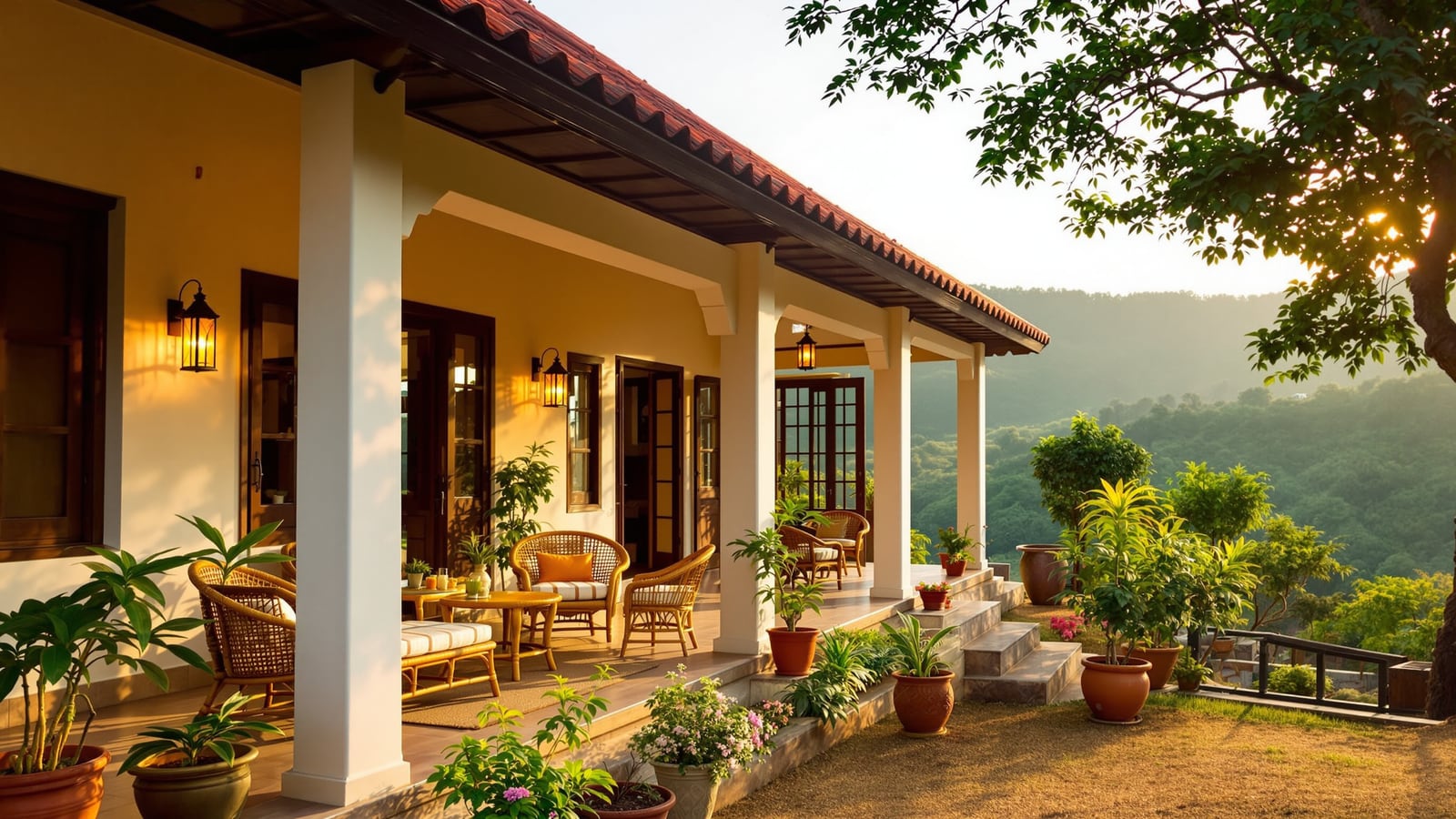
Start with efficiency, add solar and water when cash allows, and let the garden grow alongside. Each step is a smaller bill and another honest line for your listing.
Make the sustainability part of the guest experience
A measure that only sits on the roof saves you money; a measure the guest experiences also earns you bookings and reviews. The craft is to make your sustainability visible and delightful rather than preachy. Serve breakfast with vegetables, herbs and eggs from your own garden and say so - 'this tomato grew twenty feet away' is a story a hotel cannot tell. Offer filtered water in glass carafes instead of plastic bottles, good local soap instead of tiny plastic miniatures, and a simple note explaining the solar, the rainwater and the compost. Many guests will happily join in - sorting waste, refilling bottles - if you make it easy and gracious.
The tone matters enormously. Guests are on holiday; nobody wants to be lectured or made to feel guilty. Frame everything as part of the character and generosity of the place - 'we grow our own, we run on the sun, we waste little' - not as a set of rules. Done this way, sustainability becomes a reason people choose you and remember you, and a genuine, defensible point of difference in a crowded market.
Make it visible + delightful, never preachy. 'This grew twenty feet away' beats any eco-label.
Honesty: avoid greenwashing
One warning, because it is the easiest way to lose trust. Claim only what is true. 'Eco', 'green' and 'sustainable' are now marketing words so overused that savvy guests - exactly the ones who care - are quick to spot a hollow claim, and a 'plastic-free eco-stay' that hands out shampoo sachets earns a cutting review. It is far better to do three real things and describe them plainly than to slap an 'eco' label on an ordinary house. Be specific and modest: 'solar hot water, rainwater-fed garden, no single-use plastic in the rooms' is credible and checkable; 'a sustainable paradise' is not.
This honesty is also the Studio Matrx stance throughout the course and throughout hosting: say what you do, defer where you are unsure, and never oversell. Sustainability built this way compounds - each true, specific claim strengthens your reputation, while each exaggeration risks it. For the wider principle, see the [sustainable tourism](https://en.wikipedia.org/wiki/Sustainable_tourism) idea, and build your own measures up honestly over time.
In practice: greening a two-room hill homestay
Make it concrete. Picture a two-room homestay in a sunny hill town with a steep electricity bill (fans, geysers, a fridge, lights), a municipal water supply that falters in the dry months, and a kitchen that buys everything from the town market. Where would the measures land?
Year one, with little spent: swap every bulb for LED, add shading and heavy curtains to cut the afternoon heat load, fit low-flow aerators and a dual-flush cistern, and start a compost pit and a herb-and-vegetable patch in a sunny corner of the plot. Cost: modest. Effect: the electricity and grocery bills both tick down from month one, and breakfast quietly improves.
Year two, with the first peak season's profit: install a rooftop solar system sized to the daytime load, and a rainwater tank plumbed to a recharge pit and the garden. The solar carries the hot, busy season when the bills were worst; the rainwater cushions the dry months. Payback on both lands within a few years, after which they simply save money.
By year three the homestay runs markedly cheaper, especially through the lean months, and its listing can honestly say 'solar-powered, rainwater-fed garden, home-grown breakfast, no single-use plastic' - every word true and checkable. None of it required an eco-resort budget; it required sequencing by payback and building up over a couple of seasons. That is the realistic path for almost any Indian homestay, and the one to model against your own bills in the [ROI Calculator](/utilities/homestay-roi-calculator).
Rooftop solar (PV)
Photovoltaic panels generating your own electricity
Payback often a few years in high-sun states; strongest in the hot peak season when you run most. Size to your load.
Rainwater harvesting
Capturing roof runoff for use or groundwater recharge
Low cost, cuts the water bill and buffers dry spells. Often encouraged or required by local byelaws.
Greywater reuse
Reusing gentle wastewater (basins, showers) for the garden
Simple to plumb in new build; cuts fresh-water use for irrigation.
Greenwashing
Claiming more environmental virtue than is real
The fast way to lose the trust of the very guests who care. Claim only what is true and specific.
Workshop - your green quick-wins list
You do not need to spend anything yet. The skill is spotting, for YOUR home and site, which sustainable measures would both cut a bill and add to the guest experience - and in what order.
Your utility bills, a look at the roof and plot, and the ROI Calculator to size the bigger measures.
Goal: a sequenced, costed list of green measures for your homestay
Inputs: your last few utility bills + a look at your roof and plot
Time: ~30 minutes
- 1List your monthly running costs: electricity, water, cooking fuel, groceries, waste. Note the biggest two.
- 2For each big cost, write the sustainable measure that would cut it (e.g. electricity -> solar + LED; groceries -> kitchen garden).
- 3Walk your roof and plot: is there sun for solar? room for a tank and a recharge pit? a patch for a garden and compost?
- 4Mark each candidate measure Cheap/Medium/Big on up-front cost, and guess a rough payback (immediate / few years / long).
- 5Note which measures a guest would actually see or taste (garden breakfast, glass water, solar) - those earn bookings too.
- 6Pick two to start: the fastest-payback efficiency win, and one visible measure guests will love. Keep the list for later phases.
You’ll walk away with
A sequenced list of green measures for your homestay, each tagged by cost, rough payback, and whether the guest experiences it - with your first two chosen.
Three altitudes on the same idea
Read the band that fits you — or all three.
As the owner-host, treat each green measure as an investment with a payback, and sequence them. Start with cheap efficiency (LED, shading, low-flow, efficient appliances), add solar where the sun and your load justify it, and let rainwater and the kitchen garden follow. You already carry the bills, so you feel the saving directly - and you get to tell the story first-hand, which is worth as much as the rupees.
If you are designing a homestay for a client, build sustainability into the fabric, not the furnishings. Orientation, shading, cross-ventilation, insulation, a solar-ready roof, rainwater plumbing and a composting spot are cheapest designed in and painful to retrofit. Specify breathable local materials and durable finishes, and leave the client a home that runs cheap and reads authentic - a stronger brief outcome than any decorative 'eco' gesture.
If you are new to this, learn to separate real sustainability from the label. The measures that matter are the boring, physical ones - sun, water, waste, food, efficiency - not a green logo. Learn to size a small solar system, understand payback, and read a vernacular building's passive tricks. That literacy makes you a better host and a better designer, and it is exactly the skill the next decade of hospitality will reward.
“Making a homestay sustainable is an expensive luxury that only rich eco-resorts can afford.”
Do it yourself
Reason it through for your own place.
- 1Name one sustainable measure that cuts a bill AND adds to the guest experience, and explain both halves.
- 2Why is sustainability partly a resilience strategy for the lean season?
- 3In what order should you usually tackle efficiency, solar and water, and why?
- 4What is greenwashing, and why is it especially risky with eco-minded guests?
- 5Give one way to make your sustainability visible to a guest without being preachy.
The one line to carry out
Peer-reviewed journals & authoritative standards
- 01Sustainable tourism — Wikipedia, 2026.
- 02Ecotourism — Wikipedia, 2026.
- 03Homestay Profitability (Studio Matrx) — Studio Matrx, 2026.
Sustaining the place leads naturally to sustaining the community and culture around it - the subject of the next lesson on responsible, community-rooted hosting.
The author
Amogh N P
Architect, interior designer, and creative polymath. Studio Matrx began in his notebooks — his vision of design made honest, useful, and open to everyone. Its Academy is written and taught in his memory, and free, forever.
More about Amogh →