
 Lesson 7.4
Lesson 7.4 · Getting Guests
Direct Bookings and Repeat Guests
No homestay escapes OTA commissions by flipping a switch — it builds a quiet flywheel of great stays, honest reviews, saved WhatsApp numbers and real referrals that, over a few years, genuinely reduces how much of your margin a platform keeps.
A direct-booking business is not a switch you flip once you are tired of commissions — it is a flywheel you turn patiently, one great stay, one honest review and one saved WhatsApp number at a time.
Lesson 7.2 showed the maths plainly: a direct booking nets meaningfully more than the same night sold through an OTA, because there is no 15-20% commission sitting between the guest's payment and your account. Many owners read that maths, get excited, and make the common mistake of trying to abandon OTAs within their first year — which usually backfires, because a brand-new homestay has no reputation yet for a guest to find and trust independently.
The realistic path is slower and far more durable: build a genuine direct channel in parallel with your OTA presence from day one, turn your early OTA guests' good experiences into reviews and saved contacts, and let repeat stays and honest referrals compound gradually over a few years into a real, meaningful direct-booking share. This lesson covers exactly how — WhatsApp and a simple web presence, converting reviews into lasting relationships, caring properly for repeat guests, and holding a patient, honest expectation for how fast this actually grows.
A saved number and an honest ask at checkout, repeated on every stay, is the whole direct-booking strategy.
Why build a direct-booking business at all
The case for a direct channel is simple and was laid out in rupee terms in Lesson 7.2: a booking that bypasses OTA commission nets you meaningfully more per night, and over a season that difference is real money, not a rounding error. But the reasons go beyond margin alone. A direct relationship with a guest means you control the relationship, not a platform's algorithm or messaging rules — you can offer a returning guest a loyalty discount without a platform's terms interfering, remember their preferences without relying on a platform's message history, and stay in touch between stays in whatever way actually works for your guests, which in India overwhelmingly means WhatsApp. A meaningful direct channel is also a form of business resilience: if a platform changes its commission structure, its algorithm, or its policies in a way that hurts you, a homestay with zero direct relationships has nowhere to turn, while one with even a modest returning-guest base has some insulation.
There is also a quieter, longer-term benefit worth naming: a guest who books you directly, having already stayed once, tends to need far less hand-holding before arrival. They already know your check-in process, your house rules and what to expect, which means less time spent on repeat questions and more of your attention available for guests who are genuinely new to your home. Over a few years this compounds into a calmer, more predictable hosting rhythm, not just a slightly fatter margin.
The honest caveat, stated plainly so you do not over-correct: do not drop OTAs while you are young. A new homestay with no reviews and no reputation needs the discovery OTAs provide far more than it needs to save on commission in year one. Build the direct channel patiently, in parallel, and let it grow as a genuine share of your business over time — not as a replacement you force prematurely.
WhatsApp and a simple website
WhatsApp Business (the free app, not the ordinary consumer WhatsApp) is, for almost every Indian homestay, the single most effective and lowest-cost direct channel available. Set up a proper business profile with your homestay's name, a short description, your address and a few of your best photos; use the free catalog feature to show your rooms with prices, so a guest who messages you can see options without a long back-and-forth; save quick replies for your most common questions (check-in time, parking, pet policy) so you can respond fast even when busy; and, with explicit consent only, keep a broadcast list of past guests to occasionally share an honest off-season offer or a seasonal update — never spam, and always easy to opt out of.
A simple website does not need to be elaborate: a single page with your best photos, an honest description mirroring your listing, your price range, a clear WhatsApp contact button, and a Google Maps embed is enough for most homestays, especially paired with a complete Google Business Profile (which is free, appears in local search and Maps, and lets guests see your reviews and photos before they ever reach your site). You do not need to build or pay for online payment processing to accept direct bookings — most Indian homestays take a modest UPI or bank-transfer advance to confirm a direct booking, with the balance paid on arrival, which is simple, familiar to Indian guests, and avoids the cost and complexity of a full payment gateway integration for a small operation.
Keep both the WhatsApp presence and the website in the same honest voice as your OTA listing — the home-host-story value proposition from Module 1 should read consistently wherever a guest encounters you, not as a cheerier, more generic 'marketing' version of yourself. Guests who compare your WhatsApp replies, your website and your OTA listing side by side (and some will) should recognise the same host and the same home in all three, because inconsistency between channels quietly undermines the trust you are trying to build.
Reviews to referrals
The review a guest leaves on your OTA listing is not just feedback — it is the trust signal that lets a future stranger book you with confidence, and it is also the starting point of your direct-channel flywheel. Ask for a review in person, at checkout, while the guest is still present and the stay is fresh in their mind, rather than relying solely on a platform's automated post-stay email reminder, which is easy to forget or ignore days later; a simple, warm, direct ask ('If you enjoyed your stay, a review really helps us — would you mind leaving one before you head off?') converts far better than any automated nudge. At the same moment, with the guest's consent, save their WhatsApp number or email into your own simple guest list — a notebook or spreadsheet is entirely sufficient — so you have a way to reach them again that does not depend on any platform.
Referrals turn a single satisfied guest into several more. A small, genuine thank-you — a modest discount on a referred friend's first booking, or a small welcome gift on the referring guest's next stay — costs you far less than the commission you would have paid to find that same new guest through an OTA, and it rewards the exact behaviour (a guest telling their friends about you) that no amount of advertising can manufacture as convincingly. With explicit permission, feature a few real, specific guest testimonials on your simple website or social media — specific stories, not generic 'great stay!' quotes, do far more to build trust with a stranger who has never met you.
It helps to think of a review and a referral as two different outputs of the same good stay, each worth asking for separately rather than assuming one automatically produces the other. A guest can leave you five stars on an OTA and still never think to mention you to a friend unless you make that second ask easy — a simple line like 'if you know anyone else travelling this way, we would love to host them too' at checkout, alongside the review ask, plants that seed without being pushy about it.
Repeat-guest care and reducing OTA dependence over time
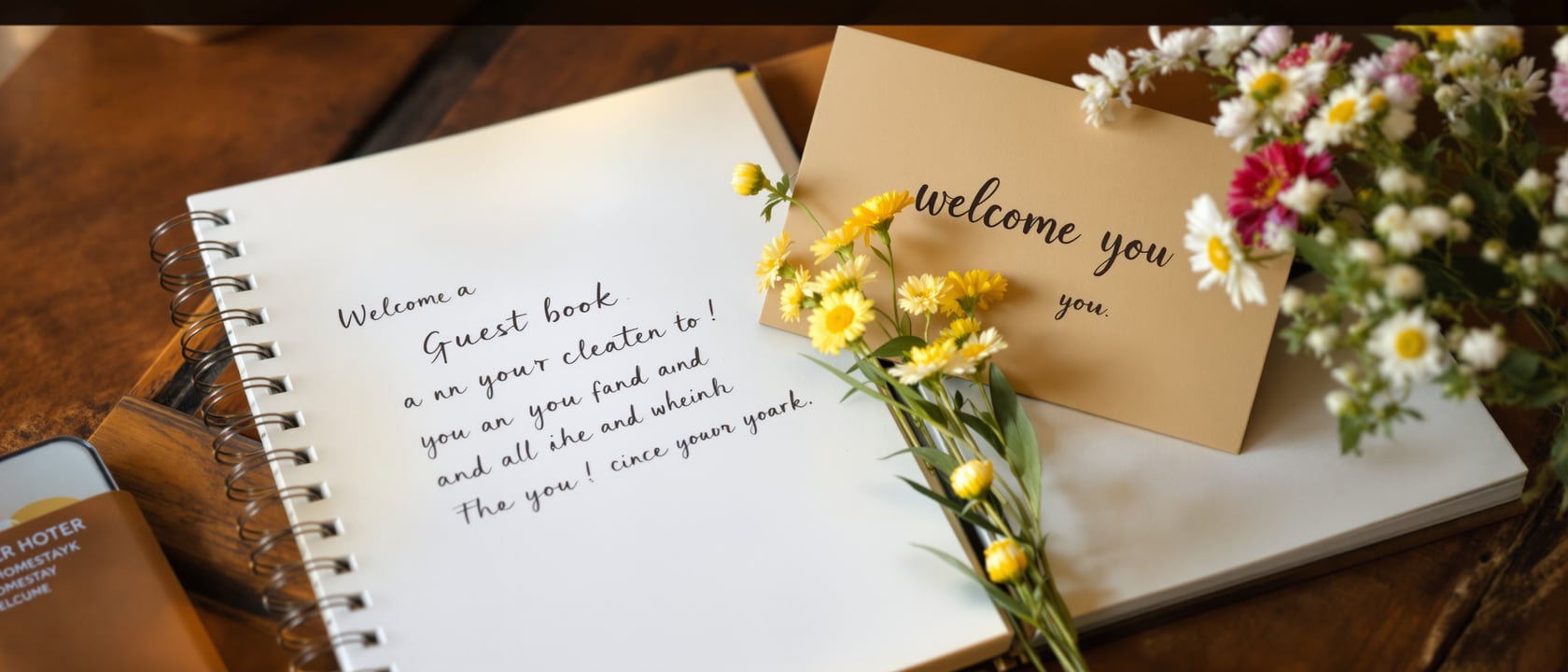
A simple guest book — even just a notebook with names, stay dates, preferences and any special requests or allergies noted — is a modest, almost-free habit that becomes a genuine competitive advantage over an anonymous hotel chain, because remembering a returning guest's name, their favourite breakfast item, or that they mentioned a bad back and prefer a firmer mattress, is exactly the kind of personal attention a homestay can offer and a two-hundred-room hotel structurally cannot. Repeat-guest perks do not need to be expensive to matter: a small welcome gesture on return, a late checkout when your calendar allows it, or a modest loyalty discount on a direct booking all cost you far less than the marketing or commission required to acquire an equivalent new guest from scratch.
Hold a patient, honest expectation for how this grows, because overnight transformation is not realistic and setting that expectation protects you from giving up too early. An indicative, illustrative trajectory many small Indian homestays experience: Year 1 often runs roughly 80-90%+ OTA-dependent simply because reputation and reviews are still being built; Year 2 to 3, as repeat guests and referrals compound, a direct-booking share of roughly 20-40% becomes realistically achievable for an attentive host, without ever abandoning OTAs entirely. This is a flywheel that gathers its own momentum through genuine hospitality, not a lever you can yank hard in month three — treat Lesson 7.1's honest listing, Lesson 7.2's channel discipline, Lesson 7.3's fair pricing and this lesson's patient guest care as one connected system, because each one quietly feeds the others.
Year one is mostly OTA, and that is normal, not a failure. The flywheel needs a few honest years to gather speed.
Direct booking
A booking made through your own channel (WhatsApp, website, phone, walk-in) with no OTA commission
Nets more per night, but depends on the guest already knowing you exist.
Repeat-guest rate
The share of your bookings that come from guests who have stayed with you before
A key measure of how well your guest care and referral habits are compounding.
Guest book / CRM-lite
A simple record (even a notebook) of past guests, their stay dates and preferences
Your low-cost equivalent of a hotel's loyalty database.
Referral booking
A new booking that arrives because a past guest recommended you to someone else
Often rewarded with a small, genuine thank-you discount for both parties.
Workshop — set up your WhatsApp Business and guest book this week
A short, practical setup exercise to put the two structural pieces of your direct channel in place, so the habit has somewhere to live from your very next guest onward.
A smartphone, your existing listing photos, a notebook or spreadsheet.
Goal: a working WhatsApp Business profile and a simple guest book
Inputs: a smartphone, your best listing photos, a notebook or spreadsheet
Time: ~45 minutes
- 1Download WhatsApp Business (separate from your personal WhatsApp) and set up a business profile with your homestay's name, address and description.
- 2Add 3-5 of your best photos and a simple catalog entry showing your room(s), price range and what is included.
- 3Write 3-4 quick-reply templates for your most common questions: check-in time, parking, pet policy, and how to confirm a direct booking.
- 4Create your guest book — a notebook or a simple spreadsheet with columns for name, stay dates, preferences/requests, and whether they have left a review.
- 5Set up or claim your free Google Business Profile with your address, photos and a link to your WhatsApp, if you have not already.
- 6Decide your exact in-person review ask — the actual sentence you will say at checkout — so it is a habit, not an improvisation.
You’ll walk away with
A live WhatsApp Business profile with a catalog, a started guest book, and a decided checkout-time review ask.
Three altitudes on the same idea
Read the band that fits you — or all three.
For you, the owner-host, start the habit from your very first guest, not your fiftieth. Ask for a review at checkout and save a WhatsApp number with consent on every single stay from day one, even while you are still almost entirely OTA-dependent — the flywheel only starts turning once you begin, and the owners who wait for 'enough' guests to bother usually never start the habit at all. Treat a repeat guest's return as worth celebrating, not just another booking.
If you are advising an owner, help them set up the structural pieces once, properly, rather than leaving it to memory. A Google Business Profile, a WhatsApp Business catalog, and a simple one-page website with a clear WhatsApp button are a few hours of setup work that then run themselves for years — a far better use of your time with the client than repeatedly reminding them to 'market more' with no concrete system in place.
If you are new to this, the two free habits to start with are the simplest and most important: ask every happy guest for a review in person at checkout, and save their contact with permission. Everything else in this lesson — the website, the referral discounts, the guest book — can be built up gradually around those two habits once you have a season of real guests behind you.
“Direct bookings are free money with no real cost, so I should push guests toward my own channel as hard and as fast as possible.”
Do it yourself
No tools needed — reason it through for your own situation.
- 1Why is it usually a mistake for a brand-new homestay to try to drop OTAs quickly in favour of direct bookings?
- 2What is the single lowest-cost, highest-value direct channel for most Indian homestays, and why?
- 3Why ask for a review in person at checkout rather than relying only on a platform's automated post-stay reminder?
- 4Give one example of a repeat-guest perk that costs little but can matter a lot to a returning guest.
- 5In indicative terms, roughly how OTA-dependent is a typical Year 1 homestay, and how does that commonly shift by Year 2-3?
The one line to carry out
Peer-reviewed journals & authoritative standards
- 01Hospitality industry — guest relationships, loyalty and service beyond the transaction — Wikipedia, 2026.
- 02Hospitality — the broader practice of welcoming and caring for guests — Wikipedia, 2026.
- 03Homestays — the full Studio Matrx guide hub for hosting in India — Studio Matrx, 2026.
- 04Homestay Profitability in India — how repeat and direct bookings shift the real numbers — Studio Matrx, 2026.
With your listing, your channels, your pricing and your guest relationships now in place, Module 7's work on getting guests is complete — the course continues into running the stay itself and the business day to day.
The author
Amogh N P
Architect, interior designer, and creative polymath. Studio Matrx began in his notebooks — his vision of design made honest, useful, and open to everyone. Its Academy is written and taught in his memory, and free, forever.
More about Amogh →