
The Homeowner's Guide to Buying Furniture in India: Start to Finish (2026)
The warm, plain-English capstone for the whole Furniture hub — how to furnish an Indian home from empty rooms to a finished, comfortable house: plan it, choose the supply model, pick materials that survive our climate, size and lay it out, buy well, keep it safe and healthy, and make it last.
Furnishing a home is one of the happiest and most expensive projects a household takes on — and one of the easiest to get wrong in a rush. You move into empty rooms, everything feels urgent, a festival sale is on, and within a fortnight you own a sofa that is too big for the lift, a bed that swallows the room, and a shoe rack already swelling in the monsoon. None of that is bad luck. It is what happens when you buy piece by piece instead of planning the whole home.
This is the capstone guide for the Studio Matrx Furniture hub — the one that ties every other guide together. It walks the full journey in the order you actually live it: plan the home, decide how each piece is supplied, choose materials that survive Indian heat and humidity, size and lay everything out, buy it well, keep it safe and healthy, and then maintain it so it lasts decades. At each step it hands you off to the deep guide and the tool that go further. Read this once end to end, then dip back into the specialist guides as you reach each decision. The single best companion to this page is the complete guide to furniture in India — the pillar that frames the whole subject.
Scope & how to read this. This is a planning and decision guide, not a price list. Every rupee band, dimension and material note here is indicative — meant to help you budget, size and brief a carpenter, retailer or interior designer, not to quote a firm figure. Confirm exact prices with local quotes, exact clearances against your own rooms, and treat child safety (anti-tip), fire behaviour and indoor-air-quality (VOC / formaldehyde emission) as serious, non-negotiable matters, not preferences. Where a piece is structural, load-bearing or built into the building, let a competent carpenter, manufacturer or designer specify and execute it.
Step 1 — Plan before you buy anything
The most valuable hour you will spend furnishing a home happens before you visit a single showroom. Plan the whole house on paper, then buy against the plan.
Start with four honest lists:
- Space. Measure every room, note window and door positions, socket points, and the width of your lift, staircase and main door. This last one saves heartbreak — a three-seater that will not enter the lift is a common, costly mistake.
- Needs, not wants. Who lives here, how many sit down to dinner, do you host, work from home, have young children or ageing parents? A home for a family of five that hosts weekly is a different brief from a couple's first flat.
- Lifestyle. Pets, small kids, heavy cooking, a joint family, frequent moves — each pushes you toward tougher, easier-clean, or more modular choices.
- Budget and phasing. Fix a realistic total, then split it. You do not have to furnish everything at once, and you should not — phasing (Step-by-step below) is the single biggest stress-reducer.
Turn the room plan into a rough budget with the furniture cost calculator, and if custom pieces are likely, the custom furniture estimator. For a clear-eyed view of what real homes spend, the furniture cost guide for India breaks costs down room by room. And before you fall in love with anything, build a look you can live with using moodboards — it is far cheaper to change your mind on a board than in a delivered sofa.
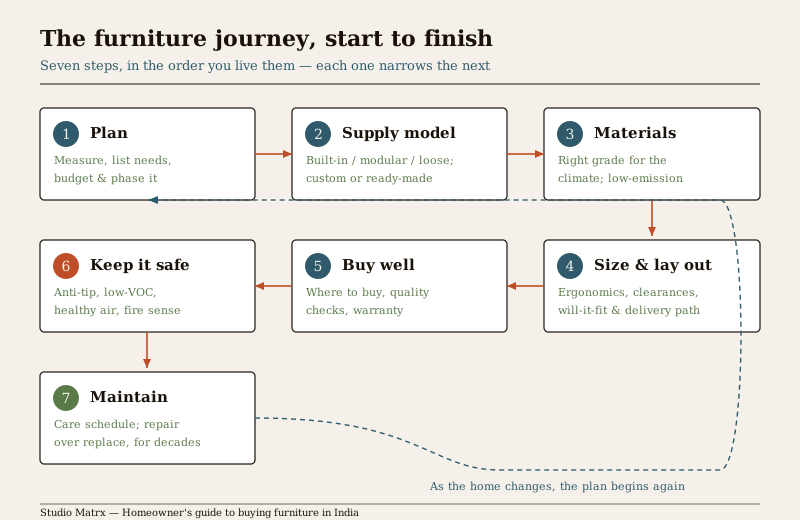
Step 2 — Decide how each piece is supplied
Before you choose a wood or a colour, decide how each piece comes into the home. This single decision shapes cost, flexibility and resale more than any style choice.
- Built-in (wardrobes, TV units, kitchen, study) — made to fit the wall, maximises storage, looks seamless, but is fixed: it stays when you move and costs more to change your mind.
- Modular — factory-made units (kitchens, wardrobes) assembled on site; a middle path between built-in neatness and loose flexibility.
- Loose (sofas, beds, dining sets, chairs) — free-standing, moves with you, easy to swap, but claims floor space and can look less tailored.
Get the full trade-off in built-in vs modular vs loose furniture. Running parallel to that is the make-or-buy question: custom furniture vs ready-made. Custom fits odd rooms and exact needs but takes weeks and depends on your carpenter's skill; ready-made (brands, marketplaces) is faster, warrantied and returnable but rarely a perfect fit. Most Indian homes end up a sensible mix: built-in storage where space is tight, ready-made loose pieces for the rest. For the whole-house view of how these choices fit a family home, see the residential furniture guide.
Step 3 — Choose materials that survive India
Indian homes fight heat, humidity, monsoon damp and termites. The right material is the one that lives well in your city — coastal Kochi, dry Jaipur and humid Kolkata are not the same brief. Here is the honest short version.
| Material | Where it shines | Watch out for | Go deeper |
|---|---|---|---|
| Solid wood (teak, sheesham, mango) | Beds, dining tables, heirloom pieces; ages beautifully | Cost, weight; needs seasoning or it warps | Solid wood furniture |
| Engineered wood (ply, MDF, particle board) | Wardrobes, cabinets, modular; stable and affordable | Grade matters — use BWR/BWP ply in wet zones | Engineered wood furniture |
| Upholstery (fabric, leather) | Sofas, headboards, comfort | Fabric stains; leather needs care in humidity | Upholstered furniture |
| Metal | Outdoor, industrial looks, sturdy frames | Rust in coastal air unless coated | Metal furniture |
| Cane and rattan | Light, breezy, verandahs | Brittle in dry heat; not for heavy daily loads | Cane and rattan furniture |
Three rules save most regrets. First, in kitchens, bathrooms and coastal or monsoon-heavy homes, insist on BWR/BWP grade plywood (to the relevant IS plywood standards) rather than commercial MR board — it is the difference between a cabinet that lasts and one that swells in three monsoons. Second, buy engineered boards in low-emission grades (E1, or E0 where you can get it) so the home's indoor air stays healthy — formaldehyde off-gassing from cheap board is a real, avoidable problem. Third, in termite country, treat and detail against it from day one; the termite and moisture protection guide shows how.
Step 4 — Size it and lay it out
The most common furnishing regret is not colour or material — it is scale. A room crammed with pieces that are individually lovely feels smaller and works worse than a room sized for how people actually move.
Learn the handful of numbers that matter — seat heights, table heights, walkway clearances, the gap between sofa and coffee table — in the furniture ergonomics guide. Then size the big pieces before you buy:
- Sofa — length, depth and the door/lift path it must travel. The sofa buying and sizing guide covers seat depth, firmness and Indian sitting habits.
- Bed and mattress — Indian sizes (single, queen, king) are not identical to Western labels; confirm both frame and mattress against the bed and mattress sizes guide.
- Dining — seats vs table length vs the pull-out room chairs need; see dining table sizing and seating.
- Work-from-home — desk and chair height set your back's fate for years; the home-office furniture and ergonomics guide has the numbers.
Sanity-check every piece against the furniture size chart and plan the arrangement — with real clearances — using the furniture layout designer. Always leave a clear walkway of roughly 60-90 cm through a room and around a dining table. If the home is compact, treat scale as the whole game: the furniture for small homes guide is built for exactly this.
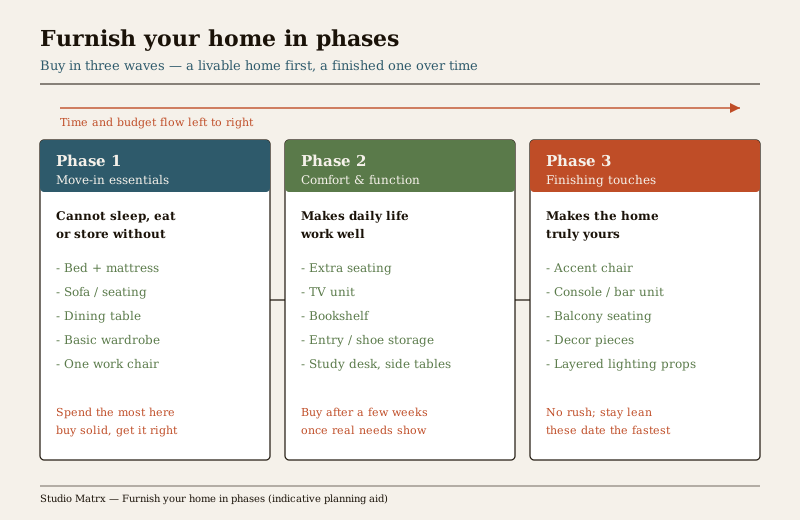
Furnish your home in phases
You do not need a finished home in week one — you need a livable one. Buy in three waves, and let the rooms tell you what they actually need before you commit budget to the nice-to-haves. Splitting spend this way also lets you buy each item better rather than panic-buying a whole house in one sale weekend.
| Phase | What it covers | Typical pieces | Why now (or later) |
|---|---|---|---|
| Phase 1 — Move-in essentials | The pieces you cannot sleep, eat or store without | Bed + mattress, a sofa or seating, dining table, basic wardrobe / storage, one work chair | You need these on day one; buy solid, get them right |
| Phase 2 — Comfort & function | The pieces that make daily life work well | Extra seating, TV unit, bookshelf, shoe/entry storage, study desk, side tables | Buy after living a few weeks and seeing real needs |
| Phase 3 — Finishing touches | The layer that makes it yours | Accent chair, console, bar unit, outdoor/balcony seating, decor pieces | No rush — let taste settle; these date fastest |
A good rule: spend the biggest share of your budget on the Phase 1 pieces you use most and longest — the bed and the primary seating — and stay lean on Phase 3, which changes with fashion and mood. If cash is tight, a well-chosen essentials set plus an empty, uncluttered room beats a fully-furnished home of compromises.
Step 5 — Buy well
With the plan, supply model, materials and sizes settled, buying becomes calm instead of chaotic. The full playbook — where to buy, what to inspect, warranties and delivery — lives in the furniture buying guide; here is the essence.
- Where to buy. Local carpenters and workshops (custom fit, negotiate, variable finish), brand showrooms and marketplaces (consistent quality, warranty, easy returns), and the online-only players (price, but inspect on delivery). The imported vs Indian furniture guide helps weigh the premium.
- Quality checks. Open and close every drawer and door; press joints and frames for wobble; check that ply edges are properly banded, not raw; on upholstery, unzip a cushion to see the foam grade; look under the piece, not just at the showroom face.
- Paperwork. Get the warranty in writing, confirm what it actually covers (structure vs fabric vs mechanism), keep the invoice, and confirm the delivery and installation terms before paying.
- Avoid the classic mistakes. Not measuring the lift/door path, buying the whole home in one sale rush, over-scaling the biggest room, choosing the cheapest board for a wet zone, and skipping the sit-test on a sofa or the lie-test on a mattress.
Match style to a coherent home rather than buying by impulse — the furniture styles guide and a saved moodboard keep the whole house speaking one language.
Step 6 — Keep it safe and healthy
This is the step people skip and should not. Furniture sits in your home for decades and shares your air and your floor with your children.
- Anti-tip is non-negotiable. Tall, top-heavy pieces — wardrobes, bookshelves, chests of drawers, TV units — must be anchored to the wall. Children climb open drawers, and unanchored furniture tips and kills. Fit the wall straps that come with modular units; ask your carpenter to add them if they do not.
- Indoor air. Prefer low-VOC finishes and low-formaldehyde (E1/E0) boards; air out new furniture well before heavy use, especially in a nursery or bedroom.
- Fire and stability. Understand basic fire behaviour of foams and fabrics, and keep bases stable. The furniture safety and regulations guide covers the Indian and international standards context (the IS furniture-safety and strength standards, BIFMA for commercial pieces) in plain language.
- Buy sustainably where you can. Certified wood, durable construction and low-emission materials are better for your home and outlive throwaway pieces — the sustainable furniture guide shows how to choose without greenwashing.
Safety here is cheap insurance: a few wall anchors and a preference for healthier materials cost almost nothing against the risk they remove.
Step 7 — Maintain it and make it last
Furniture is not a one-time purchase; it is a thirty-year relationship. A little routine care, and a bias toward repair over replacement, is how a home stays good-looking and how you get real value from what you bought.
Set a simple care rhythm — dust and wipe weekly, deeper seasonal care, and monsoon vigilance against damp and termites. Build it with the furniture maintenance scheduler and follow the material-specific routines in the furniture maintenance guide, the leather furniture care guide and the fabric upholstery care guide. When something wears — a loose joint, a scratched top, sagging foam — reach for the furniture repair and restoration guide before you reach for a replacement. A re-polished table or reupholstered sofa is often better made than a new budget one, and far kinder to your wallet and the planet.
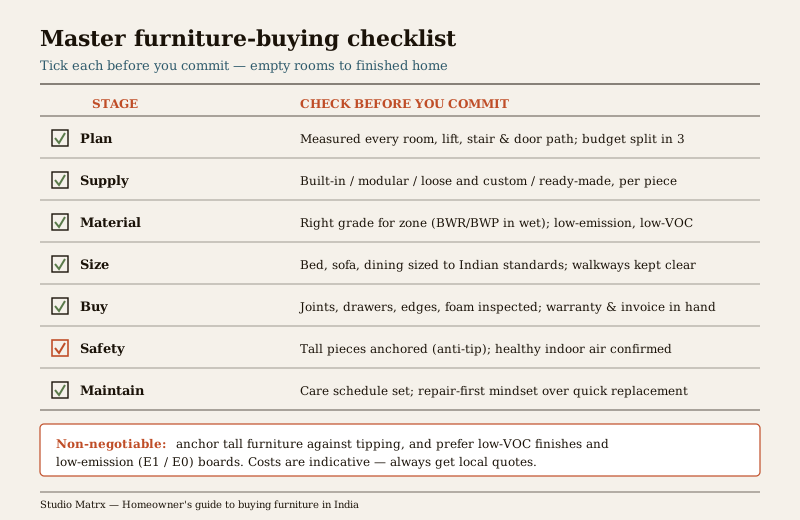
Master furniture-buying checklist
Keep this beside you from empty rooms to finished home. Tick each before you commit.
| Stage | Check before you commit | Confirm with |
|---|---|---|
| Plan | Measured every room, lift, stair and door path | Your tape + cost calculator |
| Plan | Budget fixed and split into three phases | Furniture cost guide |
| Supply model | Decided built-in vs modular vs loose per piece | Supply-model guide |
| Supply model | Decided custom vs ready-made per piece | Custom vs ready-made |
| Material | Right grade for the zone (BWR/BWP where wet) | Engineered wood guide |
| Material | Low-emission boards, low-VOC finishes | Sustainable furniture |
| Size | Big pieces sized to room and clearances | Furniture size chart |
| Size | Bed, sofa, dining sized to Indian standards | Ergonomics guide |
| Buy | Joints, drawers, edges, foam inspected | Furniture buying guide |
| Buy | Warranty, invoice and delivery terms in hand | Retailer / carpenter, in writing |
| Safety | Tall pieces anchored; anti-tip fitted | Safety & regulations |
| Maintain | Care schedule set; repair-first mindset | Maintenance scheduler |
How it connects
- Start at the complete guide to furniture in India for the big picture, then use this page as your step-by-step.
- Settle the supply model with built-in vs modular vs loose and custom vs ready-made; see it applied whole-home in the residential furniture guide.
- Choose materials with solid wood, engineered wood and upholstered furniture; size pieces with the ergonomics guide, sofa sizing and bed and mattress sizes.
- Buy and budget with the furniture buying guide, the furniture cost guide, the cost calculator and the custom furniture estimator.
- For compact homes, lean on furniture for small homes; protect the household with furniture safety and regulations and sustainable furniture.
- Make it last with the furniture maintenance guide and the maintenance scheduler; build the look on moodboards.
- Want to go deeper on the craft? The space planning and ergonomics and furniture construction and detailing courses teach the fundamentals behind these choices.
Key takeaways
- Plan the whole home before buying a single piece — measure rooms and the lift/door path, list real needs, and split the budget into phases.
- Decide the supply model first — built-in, modular or loose, and custom or ready-made — because it shapes cost and flexibility more than style does.
- Choose materials for your climate — BWR/BWP ply in wet zones, low-emission (E1/E0) boards, seasoned solid wood, and termite/damp detailing from day one.
- Scale is the biggest regret — size the bed, sofa and dining to Indian standards and leave real walkway clearances; use the size chart and layout tools.
- Buy calmly — inspect joints, drawers, edges and foam; get the warranty and delivery terms in writing; avoid the sale-weekend panic buy.
- Safety and health are non-negotiable — anchor tall furniture against tipping, prefer low-VOC finishes, and understand basic fire and air-quality behaviour.
- Maintain and repair — a care schedule and a repair-first mindset make good furniture last decades. Every figure here is indicative; get local quotes and defer fabrication to a competent professional.
References
- The IS furniture standards — furniture safety, strength and durability (named generally; confirm the current parts with BIS).
- IS plywood and board standards — plywood grades (BWR/BWP/MR context) and tests, particle board, MDF and blockboard (named generally).
- Formaldehyde emission classes (E0 / E1 / E2), in the CARB / EN 13986 context — indoor-air-quality guidance for engineered boards (named generally).
- BIFMA — furniture testing context for commercial/office pieces (named generally).
- IGBC / Indian Green Building Council and GreenPro-type eco-certification — sustainable furniture and low-emission material guidance (named generally).
- RPwD Act 2016 and the Harmonised Guidelines — accessible seating and dimensions where relevant.
All prices, dimensions, material notes and phasing suggestions here are indicative planning aids only; confirm exact figures with local quotes, verify safety and emission grades against the relevant IS and international standards, treat anti-tip anchoring and indoor-air-quality as non-negotiable, and let a competent carpenter, manufacturer or interior designer specify and execute any load-bearing or built-in work.
Export this guide
Related Guides — Deep-dive reading
The Complete Guide to Furniture for Indian Homes (2026)
The start-here master guide for furnishing an Indian home — what furniture actually does, the five families of pieces, the decisions in the order you face them (space and needs, loose vs modular vs built-in, materials, size and layout, budget, buy, maintain), an honest read on plywood, humidity and termites, and where every choice hands off to the carpenter, the brand or the fixer.
FurnitureResidential Furniture Guide: Every Room in an Indian Home (2026)
A room-by-room planning checklist for the whole house — the must-have pieces, one sizing rule per room, the mistake to avoid, and the buy-versus-build cut — with links out to the deep guide for each space instead of repeating it.
FurnitureFurniture Maintenance Guide: Keep Every Piece Lasting in India (2026)
The start-here routing guide to keeping furniture in good condition through Indian heat, humidity, monsoon, dust, hard water and termites — the one enemy and one habit for each material, a routine schedule you can actually follow, and where upkeep hands off to a professional.
FurnitureRelated Tools — Try Free
Apartment Furniture Size Chart
Standard furniture dimensions for Indian apartments — sofas, beds, tables, dining, storage.
Reference ChartCross-Ventilation Analyzer
Estimate airflow and air changes per hour (ACH) from room size, window areas, layout, and local wind — with NBC 2016 Part 8 compliance check.
Ventilation CalculatorDoor Cost Calculator
Estimate the all-in cost of a door — leaf, frame, hardware, fitting and GST — by type, material and size.
Door Calculator