
The Complete Guide to Furniture for Indian Homes (2026)
The start-here master guide for furnishing an Indian home — what furniture actually does, the five families of pieces, the decisions in the order you face them (space and needs, loose vs modular vs built-in, materials, size and layout, budget, buy, maintain), an honest read on plywood, humidity and termites, and where every choice hands off to the carpenter, the brand or the fixer.
Furniture is the layer of a home you actually touch. Walls and floors set the shell, but it is the sofa you sink into, the bed you sleep on, the wardrobe that swallows a family's clothes and the dining table where everyone gathers that decide whether a house feels like it works. It is also, quietly, one of the biggest discretionary line items you will ever spend on — a full home's worth of furniture in India can run from a modest sum to more than the cost of a small car, and unlike a phone it is meant to last a decade or two. Chosen well, it is an asset that ages gracefully; chosen badly, it warps in the monsoon, gets eaten by termites, or simply never fits the room.
This is the master, start-here guide for the Furniture hub. It walks the whole job in the order you actually face it, and points you to the deeper sibling guides at each turn: whether a piece should be built-in, modular or loose, whether to go custom or ready-made, how indoor and outdoor needs differ, and the setting-specific playbooks for homes and offices and shops.
Scope and how to read this. Every size, material note and rupee band here is typical and indicative — a planning and budgeting aid, not a quote or a specification. Confirm dimensions against the people who will use the piece, and confirm strength, safety and emissions against the relevant IS furniture standards and plywood/board codes (IS 303, IS 710, IS 3087, IS 12406 and their family). You choose, size and brief; the carpenter or manufacturer fabricates and warrants the joinery; and anything that is wall-hung, anchored against tipping, or load-bearing overhead is a safety detail — a tall wardrobe, a heavy wall shelf or a cot bunk must be fixed so it cannot fall on a child. Get local quotes for cost; prices move by city, timber, brand and season.
What furniture actually does
Before you shop, be honest about which jobs a piece must do — because they pull in different directions, and a piece optimised for one can be poor at another.
- Function. The core use: sitting, sleeping, eating, working, displaying. A dining chair that looks stunning but is agony after twenty minutes has failed its one job.
- Storage. Furniture is where a home's clutter goes. In compact Indian flats, storage is the single most valuable thing furniture provides — which is why wardrobes, smart storage and storage beds earn their keep. The whole discipline of it lives in the storage hub.
- Comfort and ergonomics. Seat heights, back support, mattress firmness, desk-to-chair ratios. Comfort is not luxury; a wrong-height study chair causes real back pain over years.
- Spatial definition. Furniture zones an open plan without walls — a sofa backs onto the dining area, a console splits the entry from the living room, a rug and low table make a conversation island. In small homes this is how one room does three jobs.
- Cost as an asset. Good furniture holds value and lasts; cheap furniture is bought twice. Spend where it is used hardest (the mattress, the everyday sofa, the main wardrobe) and economise where use is light.
- Look and mood. The pieces, their material and their arrangement set the whole character of a room — the reason the design-ideas galleries and moodboards are worth browsing before you commit.
Most pieces do several of these at once. Rank them for each room — a bedroom leans storage and comfort, a living room leans seating and spatial definition, a home office leans ergonomics — and let that ranking drive the choices below.
The five families of furniture
Almost everything in a home belongs to one of five families. Naming the family first makes every downstream decision — size, material, layout — fall into place.
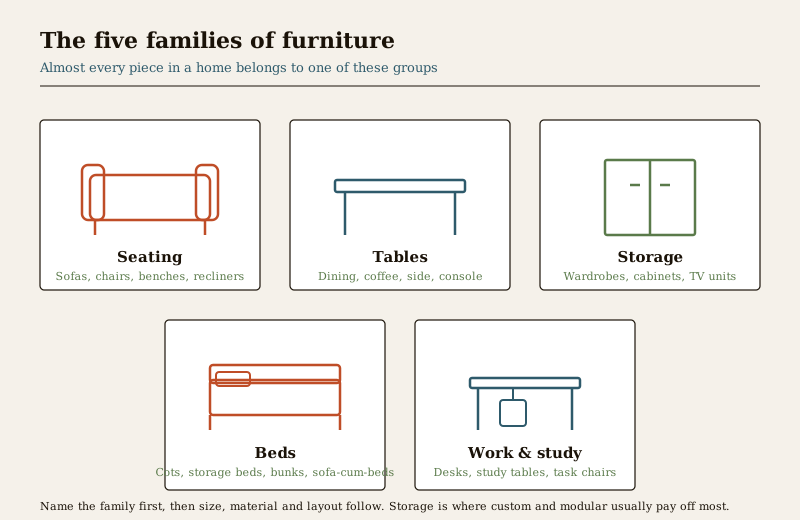
| Family | Everyday pieces | What decides it |
|---|---|---|
| Seating | Sofas, armchairs, dining chairs, benches, recliners, ottomans | Comfort, number of users, upholstery for the climate |
| Tables | Dining, coffee, side, console, study, folding | Size to the room and the walkway around it |
| Storage | Wardrobes, chests, cabinets, TV units, bookshelves, shoe racks | Volume needed, loose vs modular vs built-in |
| Beds | Cots, storage beds, bunks, sofa-cum-beds, headboards | Room size, mattress, whether it stores |
| Work and study | Desks, study tables, task chairs, home-office units | Ergonomics, cable routing, hours of use |
Storage is the family where the loose-versus-built decision matters most, and where custom joinery usually pays off — a wardrobe built wall-to-wall wastes nothing, where a bought one leaves dead gaps. Seating and beds are where comfort and the mattress dominate, and where buying a known brand or a well-reviewed piece de-risks the spend.
The decisions, in the order you face them
Furniture goes wrong when it is bought piece by piece with no plan — a sofa too big for the room, a wardrobe that blocks a window, a bed that leaves no walking space. Work the decisions in this sequence and each one narrows the next.
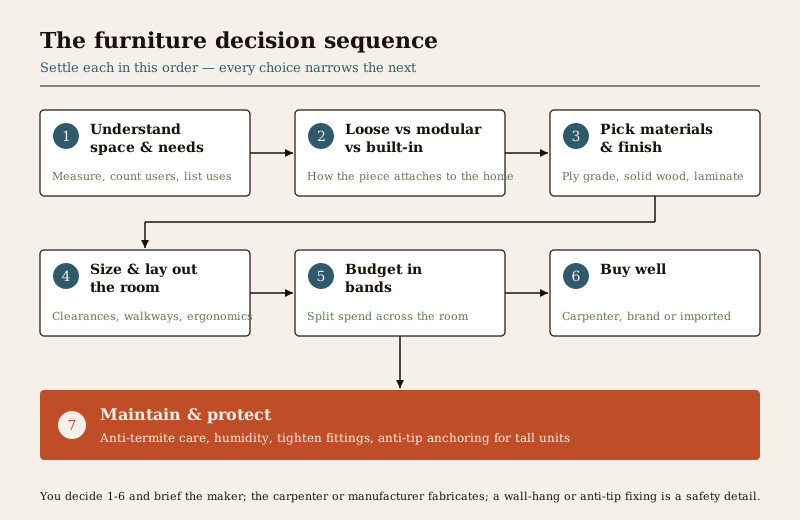
1. Understand your space and needs. Measure the room, mark doors, windows and switchboards, count who uses it and list what happens there. This is the survey the whole plan sits on — the furniture layout designer and layout planner let you test arrangements before anything is ordered.
2. Choose loose, modular or built-in. Decide how each piece attaches to the home before you pick a style — it changes cost, fit and whether the piece moves with you. This is the pivot the whole hub turns on; the deep dive is built-in vs modular vs loose.
3. Pick materials and finish. Solid wood, plywood, MDF, particle board, blockboard, metal, cane — each with a grade and a finish (laminate, veneer, PU, membrane). Get this right for India's humidity and termites (see below) using the plywood grades guide and marine ply vs HDHMR vs MDF.
4. Size and lay it out. Match each piece to standard sizes and leave the clearances a body needs — walkways, chair pull-out, wardrobe door swing. The furniture size chart and layout validator catch the classic mistakes.
5. Budget in bands. Split the room's spend across pieces, spending hardest where use is highest. Turn dimensions into an indicative figure with the furniture cost calculator, and price bespoke work with the custom furniture estimator.
6. Buy well. Local carpenter, brand-modular showroom, online retailer or imported — each spectrum has a place (below). Match the channel to the piece.
7. Maintain and protect. Anti-termite care, humidity control, tightening fittings, re-oiling wood, and anchoring tall units against tipping. The piece that lasts twenty years is the one that is looked after.
Who decides what
Furniture is a shared job, and clarity about who owns each part avoids both over-paying and unsafe corners.
| Stage | You (the owner) decide | The professional does |
|---|---|---|
| Space and needs | To measure, and to brief clearly | A designer can plan the room (layout planner) |
| Loose / modular / built-in | The approach per piece | The maker advises on feasibility |
| Material and finish | Budget, look, priorities | The carpenter/manufacturer sources graded board |
| Size and layout | Who uses it, how | An ergonomist or designer confirms fit |
| Fabrication | Nothing — you brief and approve | Carpenter or factory builds and warrants the joinery |
| Wall-hang / anti-tip | To insist it is done | Fixer anchors it safely to a sound wall — a safety detail |
| Comfort test | To sit, lie and try before buying | The seller lets you |
The rule is simple: you choose, size and brief; the carpenter or manufacturer fabricates and stands behind the joinery; and any fixing that stops a piece falling is a safety detail that must not be skipped to save an hour.
Choosing between built-in, modular and loose
This is the decision most people never consciously make — and it quietly sets cost, fit and flexibility for years.
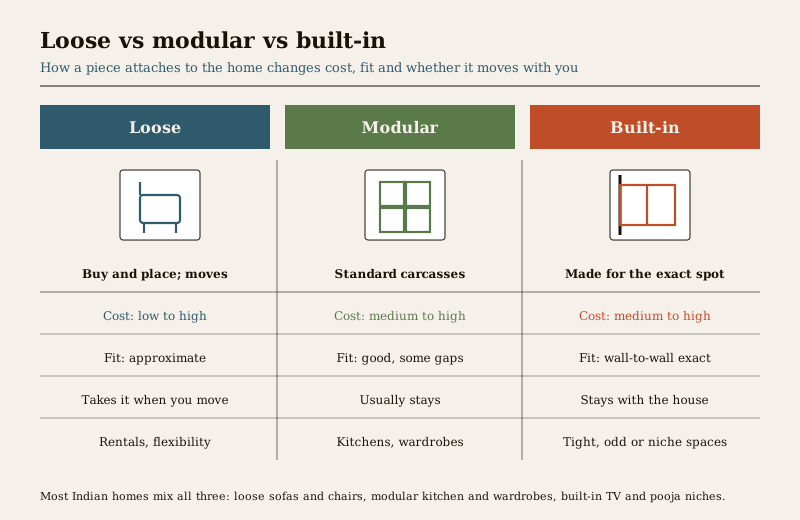
| Approach | What it is | Fit | Moves with you | Best for |
|---|---|---|---|---|
| Loose | Free-standing, bought and placed | Approximate | Yes | Sofas, chairs, rentals, flexible layouts |
| Modular | Standard carcasses combined | Good, some gaps | Usually stays | Wardrobes, kitchens, TV units |
| Built-in | Made for the exact spot, fixed | Wall-to-wall exact | Stays with the house | Tight, odd or niche spaces, pooja units |
Most Indian homes end up mixing all three — loose sofas and chairs, a modular kitchen and wardrobes, and built-in TV walls and pooja niches. The full trade-off, with cost and resale implications, is in built-in vs modular vs loose furniture; the modular route specifically is where the modular kitchen hub and wardrobe planning live.
An honest read on materials for India
Furniture in India lives with three enemies the glossy showrooms rarely mention: humidity, termites and formaldehyde. Plan for them.
- Plywood and boards, honestly. Most Indian furniture is not solid wood — it is engineered board with a laminate or veneer face. That is fine, provided you buy the right grade. BWR/BWP grades (IS 303, IS 710) resist moisture and belong in kitchens, bathrooms and coastal homes; MR (moisture resistant) ply is for dry interiors only. MDF (IS 12406) and particle board (IS 3087/3097) are smooth and cheap but swell badly if water reaches an unsealed edge; HDHMR and blockboard (IS 1659) sit in between. The full breakdown is in the plywood grades guide.
- Humidity. In coastal and monsoon-heavy regions, doors swell, drawers stick and unsealed board delaminates. Solid wood and BWP ply cope; particle board struggles. Cross-ventilation and not pushing wardrobes flush against a damp external wall both help.
- Termites. India's quiet furniture-killer. Buy treated timber and boards, insist on anti-termite treatment where furniture meets the floor and walls, and keep wood off perpetually damp surfaces. Solid teak and treated ply resist; untreated softwood and cheap board are a buffet.
- Formaldehyde and indoor air. Engineered boards and their adhesives can off-gas formaldehyde. Prefer lower-emission boards — the E1 (and E0) emission classes are the safer end — especially for children's rooms and closed bedrooms. Ask for the emission class the same way you ask for the ply grade, and look for GreenPro / IGBC-recognised or comparable low-emission products where it matters.
The carpenter-made, brand-modular and imported spectrum is the other honest axis. A skilled local carpenter gives you exact fit and repairability at the price of consistency and finish; a brand-modular showroom (Indian or global brands assembling standard carcasses) gives factory finish, hardware warranties and predictable timelines at a premium; imported and designer pieces buy a specific look and build quality at the highest cost and the longest lead time. None is simply best — match the channel to the piece, as the custom vs ready-made guide and bespoke furniture explained lay out.
Indicative cost bands
Treat these as relative planning bands, not quotes — timber, city, brand and finish move them a lot, so always get local quotes.
| Piece | Budget band | Mid band | Premium band |
|---|---|---|---|
| 3-seat sofa | Entry fabric | Branded fabric/leatherette | Designer/imported leather |
| Queen bed (no storage) | Basic ply/engineered | Solid-wood or storage bed | Designer solid wood |
| Wardrobe (per running foot) | MR ply, laminate | BWP ply, better hardware | Imported modular, veneer |
| Dining set (6-seat) | Engineered board | Solid wood mid-range | Solid teak/designer |
| Study desk + chair | Basic | Ergonomic chair + solid desk | Branded ergonomic |
The pattern that saves money without regret: spend hardest on what your body uses most — the mattress, the everyday sofa, the office chair — and economise on lightly used or decorative pieces. Run your own numbers with the furniture cost calculator before you set a room budget.
Sizing and laying out — the quiet make-or-break
A beautiful piece in the wrong size ruins a room. Two disciplines prevent it: standard sizes (so a piece suits the people using it) and clearances (so bodies can move around it). A dining table needs roughly a metre of pull-out and pass-behind space; a wardrobe needs door-swing or sliding clearance; a bed needs walking room on the sides it is used from; a sofa should not swallow the walkway. The furniture size chart, layout designer and layout validator turn this from guesswork into a checked plan, and the space-saving furniture guide is the playbook when every centimetre counts.
How it connects
- Start here, then branch on the core decision: built-in vs modular vs loose furniture, custom vs ready-made and indoor vs outdoor — with setting playbooks for residential and commercial spaces.
- Go deep on storage, the highest-value family: wardrobe planning, the wardrobe cost guide, wardrobe finish ideas, smart storage interiors, the storage planning discipline and the storage hub.
- For specific pieces, see modern TV unit ideas, dining space design, space-saving furniture, bespoke furniture explained and outdoor furniture planning.
- For material choices, read the plywood grades guide and marine ply vs HDHMR vs MDF, and browse the materials hub, wall finishes, modular kitchen and room-by-room hubs; for looks, the apartment living and luxury interiors hubs.
- Plan and budget with the furniture cost calculator, custom furniture estimator, furniture size chart, layout designer, layout validator, wardrobe storage capacity calculator and storage calculator.
- Get inspired in the living rooms, bedrooms, TV units, wardrobes and dining rooms galleries, and build a scheme in the moodboards library or the moodboard builder.
- To learn the craft properly, the furniture construction and detailing, space planning and ergonomics and small space design courses go far deeper than any single guide.
Key takeaways
- Furniture does six jobs at once — function, storage, comfort, spatial definition, cost-as-an-asset and mood — so rank them per room before you shop.
- Almost every piece is one of five families: seating, tables, storage, beds, work — name the family first and size, material and layout follow.
- Work the decisions in order: understand space and needs, choose loose vs modular vs built-in, pick materials, size and lay out, budget, buy, maintain.
- Decide how each piece attaches — loose, modular or built-in — before you pick a style; most homes mix all three.
- In India, plan honestly for humidity, termites and formaldehyde: buy the right ply grade (BWR/BWP for wet areas), insist on anti-termite treatment, and prefer low-emission (E1/E0) boards for bedrooms and kids' rooms.
- You choose and brief; the carpenter or manufacturer fabricates; a wall-hang or anti-tip fixing is a non-negotiable safety detail.
- Every size and cost band here is indicative — confirm against the IS furniture and board standards and get local quotes.
References
- IS furniture strength, safety and durability standards (the IS 4838 and IS 15785 / IS 17631 family) — named generally for furniture strength, stability and durability.
- Plywood and board codes — IS 303 and IS 710 (plywood and BWR/BWP grades), IS 1734 (plywood tests), IS 3087 / IS 3097 (particle board), IS 12406 (MDF), IS 1659 (blockboard) — named generally.
- Formaldehyde emission classes E0 / E1 / E2 (CARB and EN 13986 context) — general guidance for lower-emission engineered boards indoors.
- CRI GreenPro and the Indian Green Building Council (IGBC) — eco-certification context for low-emission, sustainable furniture and boards.
- BIFMA furniture performance testing and the RPwD Act 2016 Harmonised Guidelines — general references for commercial-grade durability and accessible seating heights.
- Local carpenters, modular manufacturers and mattress specialists — for exact sizes, current material availability and firm quotes.
All sizes, material notes and cost bands here are indicative planning aids only; confirm strength, safety and emissions against the relevant IS furniture and board standards, prefer lower-emission boards for enclosed rooms, get local quotes for cost, and have any tall, wall-hung or overhead piece anchored safely by a competent fixer.
Export this guide
Related Guides — Deep-dive reading
Space-Efficient Homes — A 2026 Working Reference for Compact Indian Apartments
Five spatial multipliers · Floor plan tricks · Dual-purpose furniture
Room PlanningThe Design Decisions With the Biggest Cost Consequences
A cost-leverage map of Indian home interiors — the handful of decisions that swing your total budget the most, so you spend your attention where a single choice has an outsized rupee impact.
Cost & MoneyFurniture Ergonomics: Sizes, Heights & Clearances for Indian Homes (2026)
The master reference for human-centred furniture dimensions — the seat, table, desk and counter heights, the clearances and walkways, and the reach zones that make a piece comfortable to use every day, tuned to Indian bodies, floor-seating habits and multi-generational homes.
FurnitureRelated Tools — Try Free
Cross-Ventilation Analyzer
Estimate airflow and air changes per hour (ACH) from room size, window areas, layout, and local wind — with NBC 2016 Part 8 compliance check.
Ventilation CalculatorApartment Furniture Size Chart
Standard furniture dimensions for Indian apartments — sofas, beds, tables, dining, storage.
Reference ChartDoor Swing Planner
Visualise a door's swing arc and dead floor, and check clearance against furniture and walls.
Planner