
Custom Furniture vs Ready-Made in India: Cost, Quality & When to Choose (2026)
A homeowner's decision guide to buying furniture in India — when a carpenter or bespoke workshop beats a retail or online piece, how the costs and quality really compare, how to brief a custom maker so you get what you pictured, and how to vet a ready-made piece before you pay.
Every piece of furniture in your home arrives by one of two roads. Either someone makes it for your space — a local carpenter on site, or a bespoke workshop to a drawing — or you buy it finished from a shop, a brand showroom or an online store. The two roads have completely different economics, timelines and risks, and the single most expensive furniture mistake Indian homeowners make is picking the wrong road for a given piece: a generic ready-made wardrobe wasted against a wall that needed a custom fit, or a costly bespoke sofa that a showroom model would have matched for half the price and a fraction of the wait.
This guide is the decision itself — custom furniture vs ready-made — for a homeowner buying in India in 2026. It sits under the complete guide to furniture and pairs with built-in vs modular vs loose furniture, which sorts how a piece attaches to your home. Here we sort who makes it and when each road wins.
Scope & how to read this. Every rupee figure below is an indicative band to help you plan and compare quotes, not a price — get local quotes and use the furniture cost calculator and custom furniture estimator for your own numbers. Material grades, safety and joinery are named against the Indian Standards generally (plywood, particle board, MDF, furniture strength); the actual fabrication and structural detailing is the carpenter's or manufacturer's craft — this guide helps you brief and vet them, not do their job. Treat child anti-tip safety, load ratings and formaldehyde emission as non-negotiable whichever road you pick.
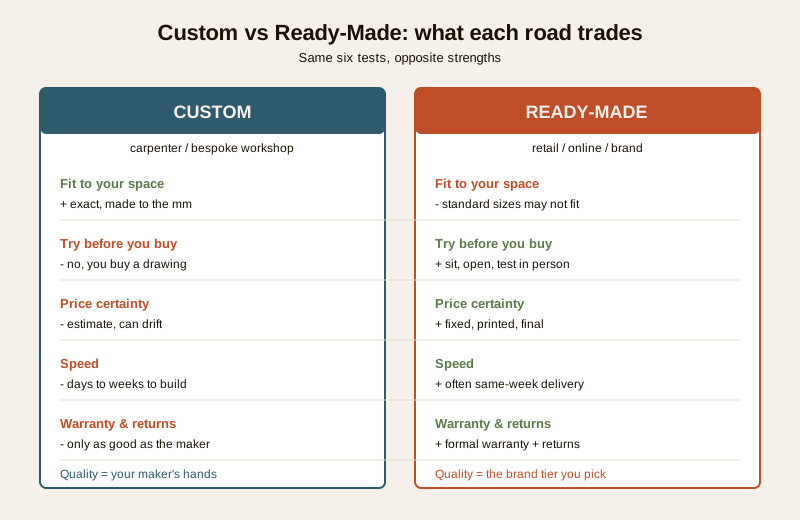
The two roads, in one look
Custom means the piece is built to your dimensions, style, storage plan and material choice — by a site carpenter, a modular fabricator or a bespoke furniture workshop. Ready-made means the piece already exists in a fixed size and finish and you buy it as-is from retail, a brand or an online marketplace.
Neither is "better." Each trades away exactly what the other is good at.
| Custom (carpenter / bespoke) | Ready-made (retail / online / brand) | |
|---|---|---|
| Fit to your space | Exact — made to the millimetre | Standard sizes; may not fit |
| Style & material control | Full — you choose everything | Pick from what exists |
| Awkward space (niches, lofts, odd corners) | Handles it — the main reason to go custom | Usually wastes it |
| Try before you buy | No — you buy a drawing | Yes — sit, open, test in person |
| Price certainty | Estimate; can move | Fixed, printed, final |
| Speed | Slower — days to weeks to build | Fast — often same-week delivery |
| Warranty & returns | Depends entirely on the maker | Formal brand warranty; return windows |
| Quality | Only as good as your maker | Consistent within a brand tier |
| Comparing quotes | Hard — no two quotes are alike | Easy — same SKU, compare price |
What custom really buys you — and costs you
The case for custom is fit and freedom. A wardrobe that runs floor-to-slab and wall-to-wall turns dead air above a standard unit into shelving; a TV unit built around your window reveal, switchboard and router looks intentional instead of improvised; a bed with drawers sized to your exact mattress uses every litre. In Indian flats with beams, ducting, odd column positions and generous slab heights, that reclaimed volume is often the whole reason to build in. Custom also lets you pick the carcass material and grade deliberately — boiling-water-resistant (BWR/BWP) plywood to IS-grade for a kitchen or bathroom-adjacent unit, moisture-resistant board elsewhere — a choice a sealed ready-made box rarely exposes. The plywood grades guide and marine ply vs HDHMR vs MDF explain what to specify.
The costs of custom are time, trust and comparability. You wait while it is built. You cannot sit on it or open a drawer before it exists — you are buying a drawing and a maker's word. Quality is entirely the maker: the same design from a careless carpenter and a good workshop are different objects. And because every maker quotes their own way — some by running foot, some lump-sum, some by "sheet" — three custom quotes are genuinely hard to compare unless you force a common specification (below). Poorly briefed custom work is where budgets and tempers break.
What ready-made really buys you — and costs you
The case for ready-made is certainty and speed. You try the exact object — sit in the chair, test the recliner, feel the sofa's firmness, open the drawer runners — then pay a fixed, printed price and often get it within the week. A branded piece carries a written warranty and a return window, and the finish is factory-consistent: what you saw is what arrives. For pieces where fit is not the problem — beds, sofas, dining sets, chairs, loose storage — this is usually the smarter road, and design-idea galleries like living rooms and bedrooms help you shortlist looks before you shop.
The costs of ready-made are fit and sameness. Standard sizes ignore your walls — a 6-foot wardrobe against a 7.5-foot wall leaves a gap that collects dust and looks unfinished, and nothing above it is used. The look is by definition shared with every other buyer of that SKU. And quality varies wildly by brand tier: an entry-level online flat-pack in bare particle board is a different lifespan from a mid-tier engineered-wood piece, which is different again from solid-wood or premium modular. Ready-made is only "safe" if you read the tier and check the piece — which is why the vetting checklist below matters as much for shop-bought furniture as the brief does for custom.
Cost: how the bands actually compare
There is no universal "custom is dearer" or "ready-made is cheaper" — it depends on the piece and the tier you compare. As indicative bands (get local quotes; confirm with the furniture cost calculator):
| Piece | Ready-made band | Custom band | Usual winner |
|---|---|---|---|
| Wardrobe (fitted, floor-to-ceiling) | Loose units rarely fit; buying several is clumsy | Mid — priced by running foot and finish | Custom — fit and top volume decide it |
| Sofa (3-seater) | Low to high across tiers; try before buying | Often higher for equal comfort; frame + foam are specialist | Ready-made — comfort is tested, not drawn |
| Bed | Wide ready-made range in every style | Custom pays only for odd sizes or integrated storage | Ready-made, unless size/storage is special |
| TV / media unit | Standard units seldom match wall + wiring | Mid — built around window, switchboard, router | Custom — it is a fit problem |
| Dining table & chairs | Strong ready-made range and value | Custom for a specific size or timber | Ready-made, usually |
| Study / pooja / utility niche | Rarely a stock fit | Custom fills the exact recess | Custom |
The pattern is consistent: beds, sofas, dining sets and loose chairs lean ready-made (comfort you must test, sizes that are standard, strong retail value), while wardrobes, TV units, kitchen and utility joinery, and anything built into a niche lean custom (fit and reclaimed volume are the whole point). For wardrobes specifically, budget with the wardrobe planning guide and cost with the custom furniture estimator; size any piece against the furniture size chart before you commit either way.
The decision factors, ranked
Weigh these for the specific piece in front of you, not furniture in general:
- Is it a fit problem? If the value comes from filling an exact space — wall-to-wall, floor-to-slab, around a beam or niche — custom almost always wins. If a standard size works, ready-made's speed and price usually win.
- The piece type. Comfort-and-standard pieces (beds, sofas, dining, chairs) lean ready-made; built-in and volume-reclaiming pieces (wardrobes, TV units, joinery) lean custom. This one factor decides most cases.
- Timeline. Moving in next week? Ready-made delivers. Renovating over weeks with the space empty anyway? Custom's build time costs you nothing.
- Budget certainty. If a fixed, final number matters more than a perfect fit, ready-made removes the risk of a custom estimate drifting.
- Warranty & recourse. A branded warranty and return window is real protection; a custom maker's "guarantee" is only as good as their reputation and your written agreement.
- Quality control appetite. Custom needs you (or your designer) to inspect and hold payment to milestones. If you cannot supervise, a good ready-made tier is lower-risk.
- Resale & moving. Loose ready-made moves with you and resells; built-in custom stays with the flat. Renting or likely to move soon tilts toward loose ready-made.
How to brief a custom maker
Bad custom furniture is nearly always a briefing failure, not a skill failure. Force these onto paper before any work starts, and share the same specification with every maker you quote so the quotes are finally comparable:
- Drawings with dimensions. Elevation and plan with real millimetres — height, width, depth, shelf and drawer positions. A sketch on the wall is not a brief. The furniture layout designer and layout planner help you set it out.
- Material specification. Name the carcass board and grade (for example BWR/BWP plywood to the relevant IS grade for wet zones), the shutter or laminate, and the edge-banding — not "good ply." See plywood grades.
- Hardware brand and model. Hinges, drawer channels/tandem boxes, handles, soft-close — named by brand and series. Hardware is where cheap custom quietly fails; it is worth specifying and paying for.
- Finish sample, signed off. Approve an actual laminate/veneer/paint chip, not a screen colour. Get the wardrobe finish ideas if you are undecided.
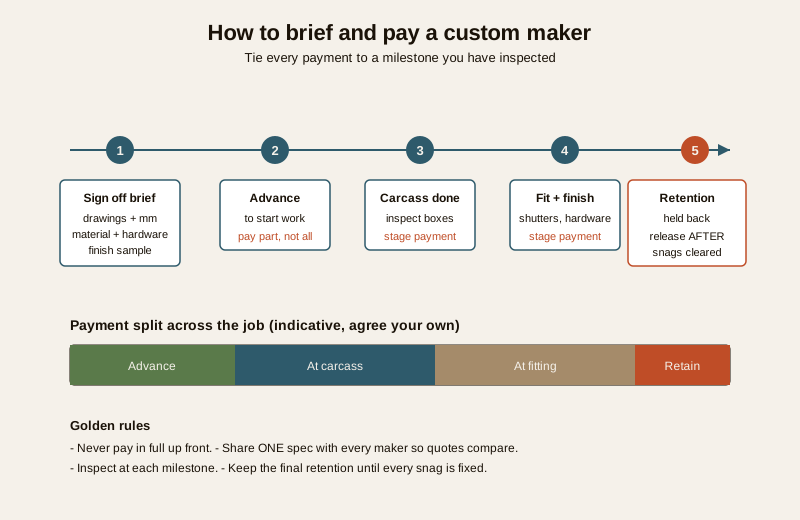
- Milestones and inspection points. Carcass done, shutters fitted, hardware installed, finished — with a look at each stage, not just at the end.
- Payment in stages tied to milestones. An advance to start, a stage payment at carcass, another at fitting, and a retention held until snags are cleared. Never pay in full up front.
Getting the brief and the drawing right is a discipline in itself — students go deep on it in furniture construction & detailing, and the same rigour is what separates a joinery you love from one you argue over.
How to vet ready-made quality
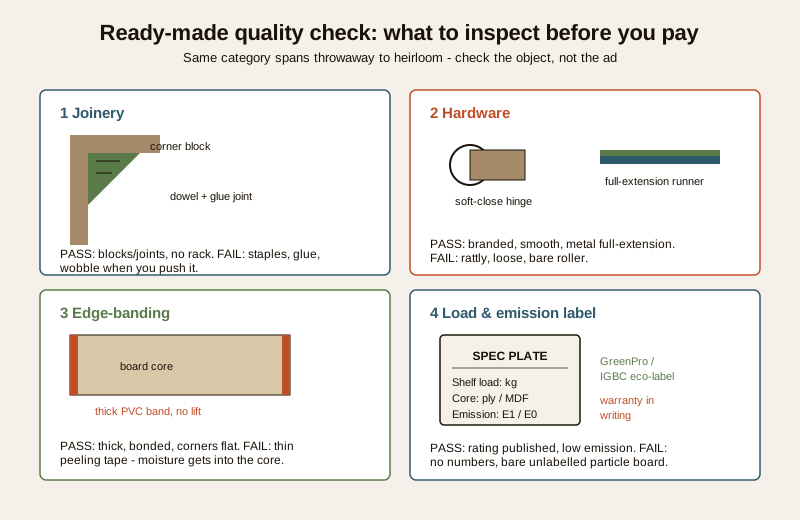
Ready-made removes the briefing risk but adds a tier risk — the same category spans throwaway and heirloom. Check the object, not the ad. Before you pay, inspect:
- Joinery. Look under and behind. Dowel-and-glue with corner blocks or proper joints beats staples and hot glue. Wobble the piece — a good frame does not rack.
- Hardware. Open and close every drawer and door a few times. Soft-close, full-extension metal runners and branded hinges signal a real tier; loose, rattly, or bare roller runners signal a cheap one.
- Edge-banding. Run a finger over every panel edge. Thick, well-bonded PVC edge-banding with no lifting corners keeps moisture out of the core — thin, peeling tape is a lifespan warning, especially in humid coastal and monsoon conditions.
- Load and weight ratings. Ask for the shelf and drawer load rating and the bed/sofa weight capacity. Reputable brands publish them; silence usually means they will not survive the number you were hoping for.
- Core material and emission. Ask what the board is — solid wood, plywood, engineered/particle board or MDF — and, for indoor air quality, prefer lower-formaldehyde boards (the E1/E0 emission classes) and any GreenPro/IGBC eco-label. Bare, unlabelled particle-board flat-packs are the bottom of the market.
- Warranty and returns in writing. Confirm the warranty length, what it covers, and the return/replacement window before you pay — not after.
Whichever road you take, run one non-negotiable safety pass: tall units and open shelving must be anti-tip anchored to the wall (a real child-safety hazard), fixings must be rated for the load, and boards should be low-emission for the air your family breathes. These are not upgrades — they are the baseline.
A clear rule: choose custom when / choose ready-made when
| Choose CUSTOM when | Choose READY-MADE when |
|---|---|
| The value is an exact fit — wall-to-wall, floor-to-slab, around a niche or beam | A standard size fits the space well enough |
| You want to reclaim awkward or top volume | You need it fast, this week |
| You need a specific style, timber or storage plan nothing stock matches | You want a fixed, final price with no drift |
| It is a wardrobe, TV unit, kitchen or built-in joinery | It is a bed, sofa, dining set or loose chair — comfort you must test |
| The space is empty and build time is free | You want a formal warranty and a return window |
| You have a good maker and can supervise milestones | You cannot supervise fabrication or hold to a brief |
| The piece will stay with the home | You rent or may move soon and want it to come with you |
Most homes are a mix: custom the wardrobes and TV unit and pooja niche, buy the bed, sofa and dining set ready-made. That blend — build what must fit, buy what must be comfortable and tested — is usually the smartest and most cost-effective whole-home strategy.
How it connects
- Start at the complete guide to furniture pillar, then read built-in vs modular vs loose to settle how each piece attaches, and bespoke furniture explained for the workshop road in depth.
- Going custom on storage? Plan it with wardrobe closet planning, specify the board via plywood grades and marine ply vs HDHMR vs MDF, and pick the look in wardrobe finish ideas.
- Budget either road with the furniture cost calculator and custom furniture estimator; size every piece against the furniture size chart.
- Shortlist looks in living rooms and bedrooms design ideas, and see where furniture sits in the residential furniture guide.
- Learn the briefing and joinery rigour behind good custom work in furniture construction & detailing, and see how bespoke pieces anchor a scheme in the luxury interiors hub.
Key takeaways
- Custom vs ready-made is a per-piece decision, not a whole-home one — most Indian homes are best served by a blend.
- Custom wins on fit and freedom (exact size, chosen materials, reclaimed awkward volume) but costs you time, comparability and a maker-dependent quality risk.
- Ready-made wins on certainty and speed (try before you buy, fixed price, fast delivery, formal warranty) but standard sizes may not fit and quality varies sharply by tier.
- Piece type decides most cases: beds, sofas, dining sets and loose chairs lean ready-made; wardrobes, TV units, kitchens and built-in joinery lean custom.
- Custom fails in the brief, not the build — force drawings, material and hardware specs, a signed finish sample, and milestone-linked staged payments with retention.
- Ready-made fails at the wrong tier — check joinery, hardware, edge-banding, load ratings, core material/emission and written warranty before you pay.
- Safety is non-negotiable on both roads — anti-tip anchoring for tall units, rated fixings, and low-formaldehyde boards.
- Every cost band here is indicative — get local quotes and use the calculators.
References
- The Indian Standards for furniture strength, stability and durability (residential and commercial furniture) — named generally for load, stability and anti-tip requirements.
- Plywood grades — IS 303 / IS 710 (BWR/BWP and MR plywood) and IS 1734 (plywood tests); particle board IS 3087 / IS 3097; MDF IS 12406; blockboard IS 1659 — for carcass and shutter material specification.
- Formaldehyde emission classes (E0 / E1 / E2, in the CARB / EN 13986 context) — named generally for indoor-air-quality guidance on engineered boards.
- CRI GreenPro / IGBC (Indian Green Building Council) eco-labels and BIFMA testing (commercial furniture) — named generally for certified, low-emission and durability-tested products.
- Local carpenters, bespoke workshops and furniture retailers — for actual quotes, warranties, hardware brands and material availability in your city.
All rupee bands, material notes and comparisons here are indicative planning aids only; confirm material grades and safety against the relevant Indian Standards, get local quotes for cost, insist on anti-tip anchoring and rated fixings, and treat fabrication, joinery and structural detailing as the carpenter's or manufacturer's certified craft.
Export this guide
Related Guides — Deep-dive reading
The Complete Guide to Furniture for Indian Homes (2026)
The start-here master guide for furnishing an Indian home — what furniture actually does, the five families of pieces, the decisions in the order you face them (space and needs, loose vs modular vs built-in, materials, size and layout, budget, buy, maintain), an honest read on plywood, humidity and termites, and where every choice hands off to the carpenter, the brand or the fixer.
FurnitureCustom vs Ready-Made Doors: Buyer's Guide India 2026
Factory ready-made, made-to-order from a brand, or carpenter-built on site — costs, lead times, fit and warranty compared for Indian homes.
Home Doors & EntrancesHow to Choose a Bathtub in India: Size, Material, Fit & Budget (2026 Buyer's Guide)
A buyer's decision guide to picking a bathtub for an Indian home — the first checks on bathroom size, floor load and geyser capacity, freestanding vs built-in vs corner by space, acrylic vs cast iron vs FRP, whether a whirlpool is worth it, good/better/best rupee tiers, delivery and install, warranty, and how to spot thin flexing acrylic.
BathroomsRelated Tools — Try Free
Window Hardware Cost Calculator
Estimate window hardware cost — hinges, handles, locks, rollers and multipoint gears.
Window CalculatorApartment Furniture Size Chart
Standard furniture dimensions for Indian apartments — sofas, beds, tables, dining, storage.
Reference ChartMaterial Comparison Sheet
India's interior material cheatsheet — plywood, finishes, hardware, countertops, paints, waterproofing.
Reference Guide