
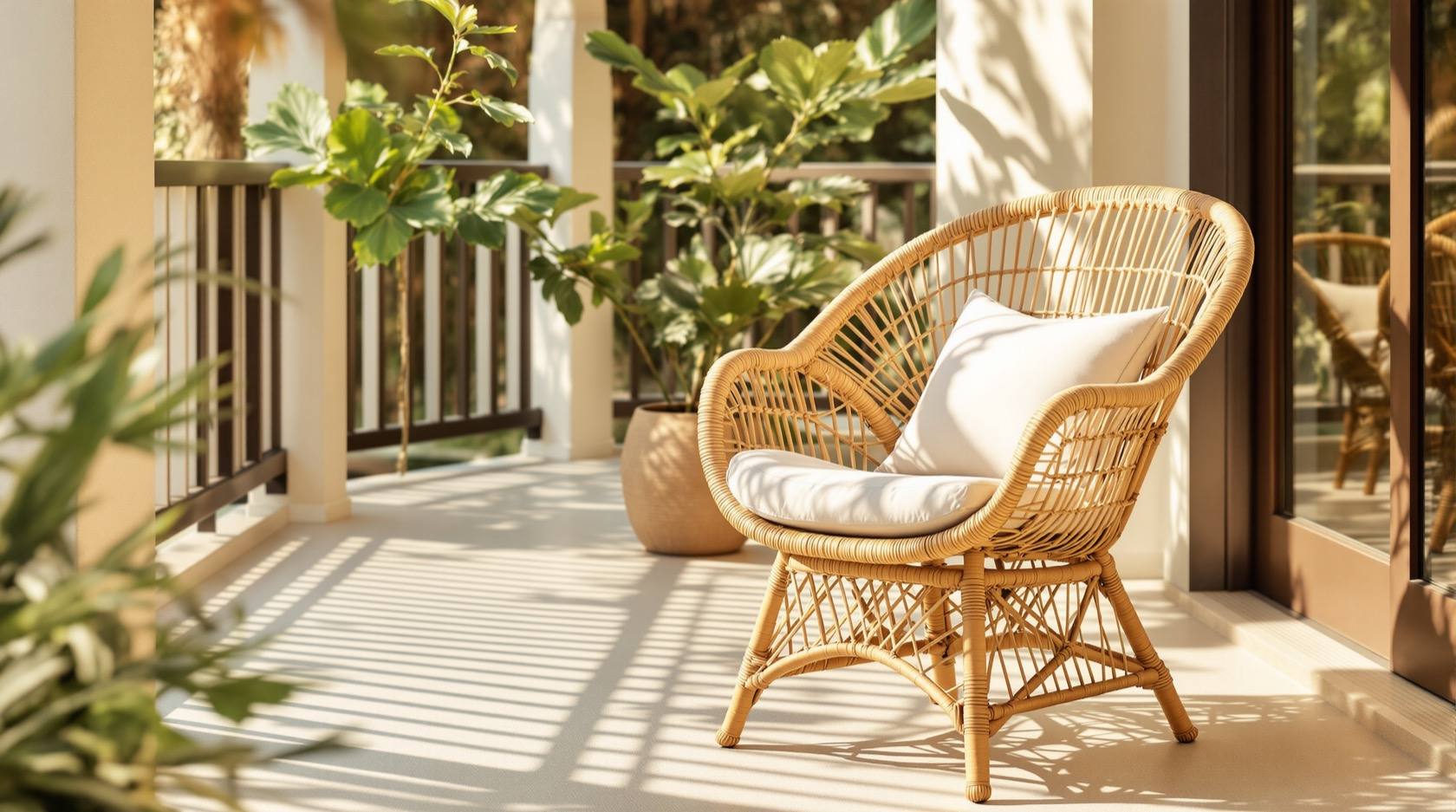
Cane & Rattan Furniture in India: Natural vs Synthetic, Care & Cost (2026)
A homeowner's guide to cane, rattan, bamboo and wicker furniture — the four words untangled, the big natural-versus-synthetic-resin split that decides indoor or outdoor, how to keep natural cane alive in Indian damp and AC-dry heat, load limits and re-caning, sustainability and honest cost bands.
Few materials feel as at home in India as cane. The woven armchair on the grandparents' verandah, the creaking jhoola on a summer afternoon, the peacock chair posing in every 1970s photograph — cane and rattan are woven into how the country furnishes itself. Then a second thing happened: a wave of "rattan" outdoor sets arrived that never crack, never mildew and live happily in the monsoon — because they are not plant at all, but plastic resin woven to look like cane. Understanding that split, and the words around it, is most of what you need to buy well.
This guide is part of the Studio Matrx Furniture hub. It sits beside the other material guides — solid wood, metal, glass and upholstered pieces — and its job is to help you choose between natural and synthetic weave, put each in the right room, and keep natural cane alive in a climate that is often either too wet or, under the AC, too dry.
Scope & how to read this. Everything here — weave types, load notes and cost bands — is indicative, to help you select, budget and maintain, not to certify a specific piece. Cane and rattan are woven crafts with wide quality variation, so judge the actual item: frame stiffness, weave tightness and joinery. Where a piece must carry real weight or take outdoor weather, confirm the frame material and load rating with the maker, and treat costs as ranges — always get local quotes. Weave and finish belong to the artisan or manufacturer; this guide helps you brief and buy them.
Four words that get muddled: rattan, cane, wicker, bamboo
Half the confusion in this category is vocabulary. These four words are used interchangeably in shops and listings, but they mean genuinely different things.
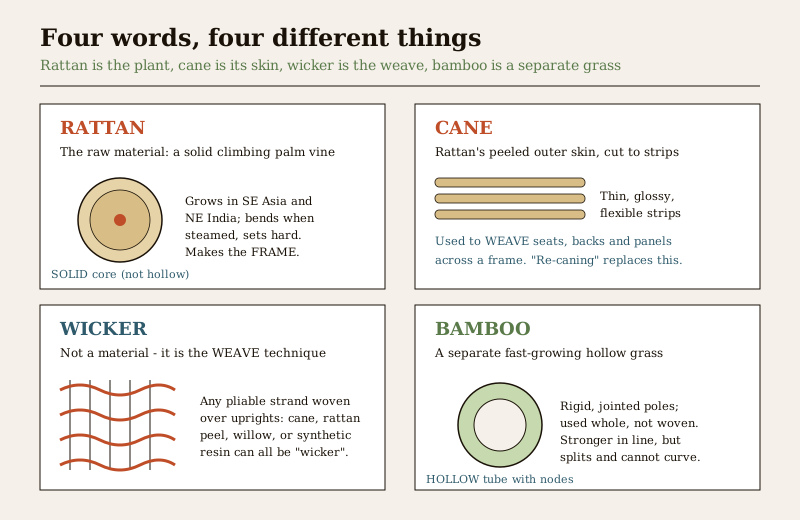
- Rattan is the plant — a solid, climbing palm vine that grows in Southeast Asia and parts of North-East India. Unlike bamboo it is solid all the way through, so it is strong yet bends beautifully when steamed and then sets hard. Rattan poles make the frame of most cane furniture.
- Cane is rattan's outer skin, peeled off and cut into thin, glossy, flexible strips. Cane is what gets woven into chair seats, backs and cabinet panels. When a seat wears out and you "have it re-caned", it is this woven skin that is replaced.
- Wicker is not a material at all — it is the weave technique. Any pliable strand woven over a set of uprights is wicker: cane, rattan peel, willow, seagrass or synthetic resin can all be described as "wicker". So "wicker furniture" tells you how it was made, not what it is made from.
- Bamboo is a different plant — a fast-growing, hollow, jointed grass. It is rigid and used mostly as whole poles rather than woven strips; it is strong in a straight line but splits along its length and will not curve like rattan.
Read a product that way and the marketing clears up fast: a "natural rattan armchair with hand-woven cane seat" is a rattan-pole frame with a cane-strip weave, made by the wicker technique. A "synthetic rattan" set is the wicker weave done in plastic — which brings us to the split that matters most.
The big split: natural cane versus synthetic (HDPE) rattan
This is the one decision that governs everything else — where the piece can live, how long it lasts and how you look after it.
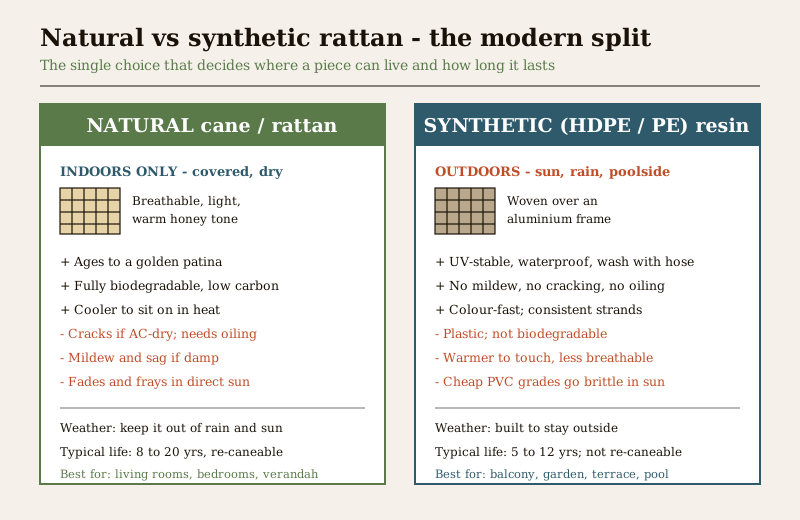
Natural cane and rattan are plant fibre. They are light, breathable, cool to sit on, and age to a warm golden patina that many people love. But that same natural fibre is fussy about climate: it cracks and goes brittle when it is kept too dry (a bone-dry air-conditioned room draws moisture out of it), and it grows mildew, darkens and sags when it stays damp. Direct sun fades and frays it. Natural cane is therefore an indoor / covered-verandah material.
Synthetic rattan — the good grades are woven from HDPE or PE resin strands over an aluminium or coated-steel frame — is engineered to solve exactly those weaknesses. It is UV-stable, fully waterproof, mildew-proof, needs no oiling, and wipes or hoses clean. That is why nearly all "rattan" balcony, garden and poolside sets are synthetic. The trade-offs: it is plastic (not biodegradable), warmer and less breathable to sit on, and the cheap PVC grades go brittle and chalky in a season or two of Indian sun — so grade matters enormously.
| Factor | Natural cane / rattan | Synthetic (HDPE / PE) rattan |
|---|---|---|
| Material | Plant fibre (rattan palm) | Plastic resin over metal frame |
| Where it belongs | Indoor, covered verandah | Balcony, garden, terrace, poolside |
| Weather resistance | Poor — hates rain and direct sun | Excellent — built for weather |
| Damp / mildew | Prone to mildew and sag | Immune |
| AC-dry heat | Cracks and goes brittle | Unaffected |
| Feel | Light, breathable, cool | Firmer, warmer, less airy |
| Ageing | Golden patina over years | Stays as bought (good grade) |
| Maintenance | Oiling, dusting, humidity control | Wipe or hose clean |
| Sustainability | Fast-renewable, biodegradable | Recyclable at best; still plastic |
| Repair | Re-caneable / re-weavable | Rarely repairable |
| Typical life | 8 to 20 yrs (indoor, cared for) | 5 to 12 yrs (grade-dependent) |
| Relative cost | Low to medium; artisan pieces higher | Medium; set-dependent |
The short rule: natural for indoors, synthetic for outdoors. If you want the cane look on an open balcony or in the garden, buy synthetic and buy a named HDPE grade — do not put natural cane out in the weather and expect it to survive an Indian monsoon and summer. For the full logic of siting furniture by exposure, see indoor vs outdoor furniture in India and the deeper outdoor furniture planning guide.
Frames: what the weave sits on
Cane and rattan furniture is almost always a woven skin stretched over a stiffer skeleton. The skin gives the look and comfort; the frame carries the load — so the frame material is what you should interrogate before you buy.
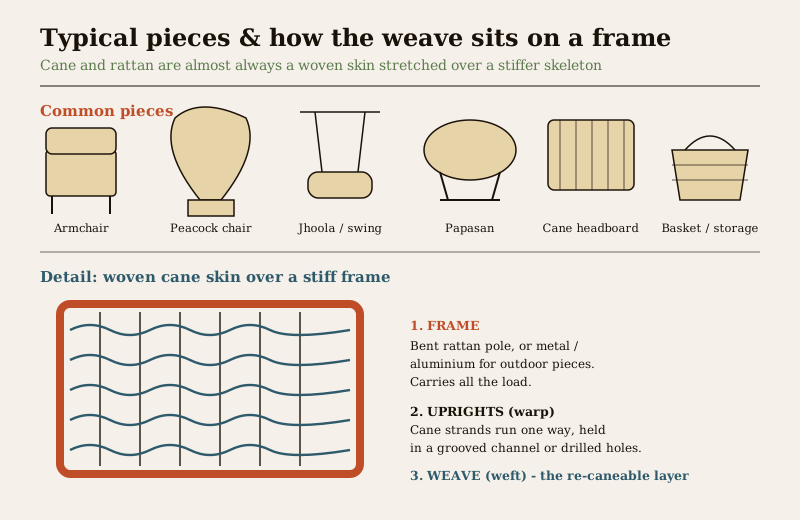
- Rattan-pole frame. The traditional choice: bent, steamed rattan poles lashed and pinned at the joints. Warm and all-natural, but only as strong as the joints and the pole thickness — the failure point on old cane chairs is almost always a loosened lashing, not the weave.
- Solid-wood or bamboo frame with a cane panel. Very common in India — a teak, sheesham or bamboo frame with a woven cane seat, back or door insert. This borrows the strength of solid wood and keeps cane for the breathable panel. Cane-insert wardrobe and sideboard doors are having a strong revival.
- Metal / aluminium frame (outdoor). The standard for synthetic sets: a powder-coated aluminium frame (rust-proof and light) woven over with HDPE strands. Aluminium is the right call for weather; see metal furniture in India for why coating quality decides its life.
Typical pieces you will meet: armchairs and lounge chairs, the dramatic high-backed peacock chair, hanging and standing jhoola swings, low-slung sofas and settees, the round cushioned papasan, woven cabinet and headboard panels, and endless baskets and storage. Cane's lightness is a real asset in small-space and apartment living — a cane chair is easy to lift, move and store, unlike a heavy wooden or upholstered equivalent.
Living with natural cane in Indian weather
Natural cane rewards a little care and punishes neglect — and India's climate makes both damp and dryness real threats, sometimes in the same home across seasons.
| Situation | What it does to natural cane | What to do |
|---|---|---|
| Monsoon / coastal damp | Mildew spots, musty smell, weave sags | Air-dry in sun occasionally; keep off wet floors; run a fan or dehumidifier |
| Bone-dry AC room | Fibres lose moisture, crack and splinter | Keep a little humidity; oil the weave 1 to 2 times a year |
| Direct sunlight | Bleaches, dries and frays the weave | Site away from harsh windows; use sheers |
| Everyday dust | Grime settles in the weave | Dust with a dry brush; vacuum with a soft head |
| A sagging seat | Weave has stretched with use and humidity | Lightly wet the underside and let it dry taut; re-cane if worn through |
| A cracked or broken strand | Usually dryness or a snag | Re-cane the panel; do not ignore — it spreads |
A few habits keep natural cane going for decades: dust it often, wipe spills quickly (never leave it wet), keep it out of direct sun and off damp floors, and oil the weave once or twice a year with a thin coat of linseed or a furniture oil to keep the fibre supple — especially important if it lives in an air-conditioned room. Synthetic rattan asks for almost none of this: a wipe-down, an occasional hose, and cushions brought in from heavy rain.
Strength, load limits and re-caning
Cane furniture is lighter-duty than solid wood, and honesty about that saves broken chairs. A well-made cane or rattan chair comfortably takes normal adult use, but the weave is not the load path — the frame and joints are. Watch for over-wide unsupported spans, thin frame poles and loose lashings, and take seating-height and comfort cues from the furniture size chart. For anything that must reliably carry heavier weight, ask the maker directly and favour a wood or metal frame with a cane panel over an all-cane frame.
The quiet superpower of natural cane is repairability. A woven seat that has worn through or snapped can be re-caned — the old weave stripped out and a fresh cane skin woven or pressed back into the frame — for a fraction of replacement cost, by artisans who still practise the craft across India. That single fact changes the lifetime maths: a good cane chair is not disposable the way a cheap synthetic set is. Synthetic rattan, by contrast, is rarely repairable — a snapped resin strand usually means living with it or replacing the piece.
Sustainability: cane's strong suit
If low-impact materials matter to you, natural cane and rattan are among the best furniture materials going. Rattan is fast-renewable — it grows quickly as a climbing palm and can be harvested without clear-felling forest, unlike slow-growing hardwood. It is light (so lower transport carbon), biodegradable at end of life, and it sustains traditional artisan livelihoods across India and Southeast Asia. Bamboo shares these virtues and grows even faster. Weigh this against synthetic rattan, which is a durable plastic — better than a piece that rots in one monsoon, but still fossil-derived and, at best, recyclable rather than compostable. For the broader material trade-offs, the Furniture pillar and the materials hub set cane beside wood, engineered board, metal and glass.
What it costs
Treat these as indicative bands, not quotes — cane pricing swings hugely with weave density, frame material, artisan skill and whether a piece is mass-made or hand-woven. A simple natural-cane dining or accent chair typically sits in a low band; a hand-woven peacock chair or jhoola swing climbs into a medium band on craftsmanship alone; a full synthetic-rattan outdoor set (sofa, chairs, table, cushions) is usually a medium band, with premium named-brand HDPE sets going higher. Re-caning an existing chair is generally far cheaper than replacing it — one of cane's best value stories. Put your actual pieces and room into the furniture cost calculator or the custom furniture estimator for a first-cut figure, then confirm with local makers.
How it connects
- Start at the complete guide to furniture in India for the whole material picture, then compare cane against solid wood, engineered wood, metal, glass and upholstered pieces.
- Decide where each piece lives with indoor vs outdoor furniture and outdoor furniture planning — the single most important choice for cane versus synthetic.
- Settle how you acquire it via built-in vs modular vs loose furniture (cane is classic loose furniture) and custom vs ready-made for hand-woven commissions.
- Browse the look in living-room design ideas and build a scheme on the moodboards; size seating with the furniture size chart.
- Budget it with the furniture cost calculator, and if you want to learn the craft behind it, the Academy course on furniture construction & detailing goes deeper.
Key takeaways
- Learn the four words: rattan is the solid palm plant, cane is its woven outer skin, wicker is the weave technique, and bamboo is a separate hollow grass.
- The decisive split is natural versus synthetic: natural cane is breathable, ageing and indoor-only; synthetic HDPE rattan is weatherproof, UV-stable and made for outdoors.
- Buy synthetic by grade — good HDPE lasts years; cheap PVC goes brittle and chalky in a season of Indian sun.
- Interrogate the frame, not just the weave — rattan pole, wood-with-cane-panel or aluminium for outdoors carries the real load.
- Natural cane needs climate care: keep it out of damp and direct sun, oil it once or twice a year against AC dryness, and it lasts decades.
- Re-caning is cane's superpower — a worn seat is repairable for a fraction of replacement, unlike synthetic resin.
- Sustainability favours the natural fibre: fast-renewable, biodegradable and artisan-made — one of the greener furniture choices.
- All costs and life spans here are indicative — judge the actual piece and get local quotes.
References
- The IS furniture standards — strength, stability and durability requirements for furniture and seating (named generally; confirm the current parts with the maker).
- BIFMA furniture performance tests — used for commercial seating durability where relevant (named generally).
- Bureau of Indian Standards and the National Building Code of India (SP 7:2026) — general material and safety context for interiors.
- Indian Green Building Council (IGBC) / GreenPro-type eco-certification — for assessing sustainable and rapidly-renewable materials (named generally).
- Local cane artisans, weavers and furniture makers — the authoritative source for weave quality, frame rating, re-caning and firm pricing.
Weave types, load notes, care intervals, life spans and cost bands here are indicative planning aids only; judge the actual piece for frame and weave quality, confirm load ratings and outdoor suitability with the maker, get local quotes for cost, and treat any figure as a starting point rather than a specification.
Export this guide
Related Guides — Deep-dive reading
Indoor vs Outdoor Furniture in India: Materials, Durability & Cost (2026)
Why outdoor furniture is a genuinely different product — engineered for India's hard sun, monsoon and humidity — how to read a material for the balcony, terrace, garden or poolside, what it should cost, and why putting an indoor sofa outside is false economy.
FurnitureAcrylic vs Cast Iron Bathtub: Which Is Better? (India, 2026)
A fair, India-first head-to-head between an acrylic bathtub and an enamelled cast-iron one — weighed on the factors that actually decide it here: slab load and handling, heat retention, durability, warmth to touch, repairability, price and installation — with a clear verdict by home type and budget.
BathroomsImported vs Indian Furniture: Quality, Cost & What to Buy (2026)
An honest, non-nationalist comparison for Indian homes — what imported furniture really is, why it costs more, whether it is actually better made, how European-built pieces cope with Indian humidity, and where local wins on service, fit and footprint.
FurnitureRelated Tools — Try Free
Apartment Furniture Size Chart
Standard furniture dimensions for Indian apartments — sofas, beds, tables, dining, storage.
Reference ChartWindow Maintenance Cost Calculator
Estimate annual window upkeep by frame material — yearly, per-window and 5-year cost.
Window CalculatorWindow Material Comparison Tool
Compare uPVC, aluminium, wood, steel and composite windows on cost, life, upkeep and insulation.
Compare