
Solid Wood Furniture in India: Species, Quality, Cost & Care (2026)
The definitive buyer's guide to natural solid-wood furniture in India — what "solid wood" really means versus veneer and engineered board, the species from teak to rubberwood, how to judge seasoning, joinery and grain, the finishes and termite realities, and where the premium is worth paying.
Solid wood is the oldest promise in furniture: a table, a bed or an almirah cut from natural timber that can outlive the person who bought it, be sanded back to new a dozen times, and gain character rather than lose it. It is also the most misunderstood — because "wooden furniture", "wood finish" and even "solid wood" are used loosely enough on Indian showroom floors and marketplace listings that many buyers pay a premium and take home a veneered engineered-board piece instead. This guide is the honest, India-specific reference for choosing real solid wood: what it is, which species to buy, how to judge quality, and how to keep it alive in our heat, monsoon and termite pressure.
This is a materials guide in the Furniture hub. Start with the complete guide to furniture in India for the whole map, and read this alongside its material siblings — engineered wood furniture, plywood furniture and the head-to-head engineered wood vs solid wood — to place solid timber against the alternatives before you spend.
Scope & how to read this. This guide helps you select, budget, buy and maintain solid-wood furniture — species, quality signals, finishes and care. All rupee figures are indicative bands to help you plan and brief a maker, not firm quotes; timber prices swing with species, grade, seasoning and region, so always get local quotes. Joinery and fabrication are the carpenter's or manufacturer's craft — we tell you what good work looks like so you can judge it, not how to cut it. Where strength, child-safety anti-tip fixing or indoor-air-quality matters, treat it seriously and follow the maker's and the IS furniture standards' guidance.
What "solid wood" actually means
Solid wood means every visible and structural part of the piece is cut from natural timber of a named species — the same wood all the way through, edge to edge, front and back. It is not a surface. That single fact is what separates it from the two things most often sold as its equal:
- Veneered furniture — a thin real-wood skin (roughly 0.5 to 1 mm) glued over a plywood or MDF core. It can look identical to solid wood on the face, and good veneer is a legitimate, often beautiful material — but it is not solid, cannot be deep-sanded, and the skin can chip at edges.
- Engineered / board furniture — MDF, particle board or plywood finished with a printed laminate, foil or paint. There may be no real wood in the decorative surface at all. Again, entirely legitimate for the right use and budget — but it is a different product with a different lifespan, covered fully in engineered wood furniture and MDF vs particle board.
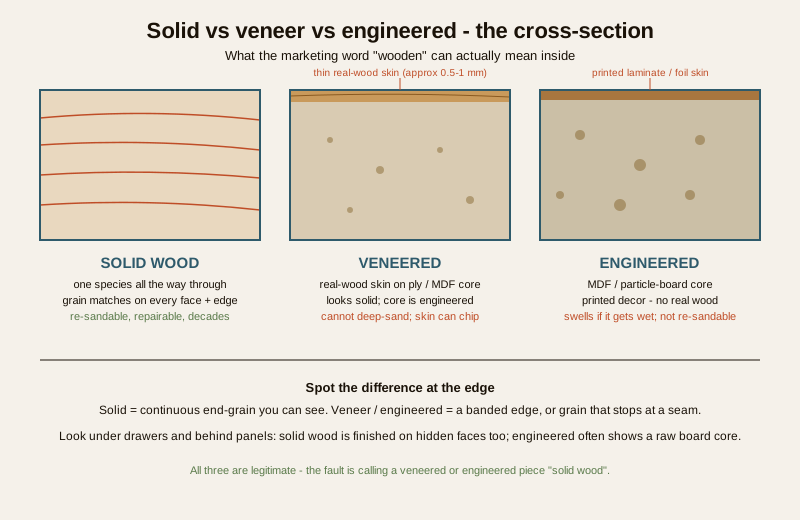
The marketing trap is language. "Solid sheesham" should mean the whole piece is sheesham; "sheesham finish" means it merely looks like sheesham and is almost certainly board. When a listing says "solid wood" but the price is startlingly low, or the photos never show an end-grain edge, be suspicious. All three materials have a place — the fault is only in mislabelling one as another. The buyer's checklist at the end of this guide gives you the physical tells that separate the real thing from board.
The Indian species — a working comparison
India buys furniture in a handful of timbers, plus a few imports. Each has a distinct hardness, look, price band and sweet-spot use. The table below is your shortlist tool; the notes after it add the nuance.
| Species | Hardness / durability | Look | Cost band | Best use |
|---|---|---|---|---|
| Teak (Burma) | Very high; oily, dimensionally stable | Rich golden-brown, straight grain | Premium+ | Heirloom dining, beds, outdoor-tolerant pieces |
| Teak (Indian / plantation) | High | Lighter, more variable than Burma | Premium | Everyday high-end furniture |
| Teak (Ghana / African) | High | Similar tone, slightly coarser | High | Value route to a teak look |
| Sheesham (Indian rosewood) | High; dense, heavy | Deep brown with dramatic dark streaks | Mid to high | Beds, dining, statement almirahs |
| Mango | Medium-hard | Warm, pale-to-honey with figure | Mid | Sideboards, coffee tables, casual dining |
| Sal | Very hard, heavy | Coarse, reddish-brown | Mid | Structural frames, doors, heavy-duty pieces |
| Acacia (babool family) | Hard; well-figured | Contrasty, marbled grain | Mid | Value hardwood tables and boards |
| Rubberwood | Soft-to-medium | Pale, plain, uniform | Budget | Entry-level frames; needs good treatment |
| Oak / walnut (imported) | High | Oak pale and open-grained; walnut dark, luxe | High to premium+ | Designer and imported-look interiors |
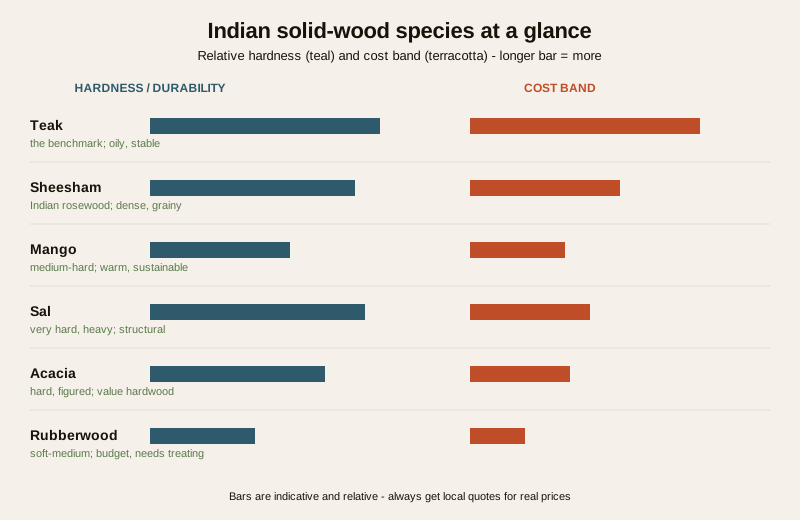
A few honest notes:
- Teak is the benchmark for a reason — its natural oils make it stable, water- and termite-resistant, and forgiving over decades. Burma teak is the gold standard and priced accordingly; plantation Indian and imported African teak give most of the benefit for less. It is the one timber that also earns its keep in semi-outdoor use; see indoor vs outdoor furniture.
- Sheesham (Indian rosewood, Dalbergia sissoo) is dense, heavy and beautifully streaked — the workhorse of North Indian solid-wood furniture. It is superb value for its hardness, but note the legality point below on the rosewood family.
- Mango is the sustainability story: it comes from orchard trees felled at the end of their fruiting life, so it is a genuinely responsible medium-hardwood with warm character and a friendly price.
- Sal is harder and heavier than most people expect — excellent for structure and doors, less common as fine furniture because it is coarse and unforgiving to work.
- Rubberwood is the budget solid wood behind many "solid wood" flat-pack and value pieces. It is real timber, but soft and prone to fungus and borer unless kiln-dried and chemically treated well — quality varies enormously.
Seasoning and moisture — the make-or-break in Indian humidity
More solid-wood furniture is ruined by bad seasoning than by bad species. Wood is hygroscopic: it takes up and gives off moisture with the air around it, and swells or shrinks as it does. If timber is built into furniture before it has been dried to a stable moisture content, it will keep drying — and moving — inside your home. In India's swing from dry summer to saturating monsoon, that movement is severe.
Poorly seasoned wood shows up as:
- Warping and cupping — tabletops that bow, doors that stop shutting flush.
- Cracking and checking — splits opening along the grain, especially at ends.
- Joints opening — gaps appearing where rails meet legs as parts shrink at different rates.
- Finish failure — a film finish cracking as the wood moves under it.
Good furniture uses timber that has been kiln-dried (or very patiently air-dried) to an interior-appropriate moisture content — broadly in the region of a single-digit-to-low-teens percentage, tuned to your climate zone. You cannot easily measure this in a showroom, so buy on proxies: a maker who talks confidently about seasoning, kiln-drying and acclimatising the wood; a brand with a warranty against warping; and construction that allows for movement (see the "floating panel" note in joinery below). Coastal and high-humidity homes should be especially fussy. If in doubt, ask the direct question — "how is your timber seasoned?" — and weight a specific answer heavily.
Joinery — where quality really hides
Two beds made of the same sheesham can differ by decades of life depending on how the parts are joined. Solid wood moves, so it must be joined with methods that hold under stress and accommodate that movement. This is the single most reliable quality signal you can check with your own hands.
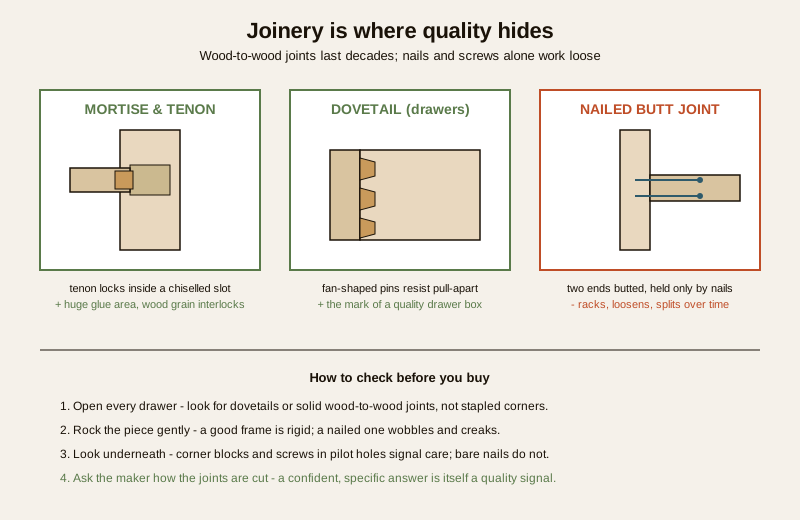
| Joint | Where you see it | What it signals |
|---|---|---|
| Mortise and tenon | Leg-to-rail, frames, bed junctions | Strong wood-to-wood joint with large glue area — the mark of proper furniture |
| Dovetail | Drawer boxes | Interlocking pins that resist pull-apart; a hallmark of a quality drawer |
| Dowel / domino | Cabinet frames, mid-range factory furniture | Sound when well made; acceptable in volume production |
| Floating panel in a frame | Cabinet doors, chest sides | Lets a solid panel expand and contract without splitting — good design |
| Nailed or stapled butt joint | Hidden corners of cheap "solid wood" | Weak — racks, loosens and splits over time; a red flag |
When you inspect a piece: open every drawer and look for dovetails or solid wood-to-wood joints rather than stapled corners; rock the frame gently — a good one is rigid, a nailed one creaks and wobbles; and look underneath for corner blocks and screws in pilot holes rather than bare nails. If you are having furniture made, the custom vs ready-made guide covers how to brief joinery, and the Academy's furniture construction & detailing course goes deep on why these joints work.
Grain, knots and reading the wood
Grain is both the beauty and the report card of solid wood. Straight, even grain is stable and prized; wild figure (burl, marbling in acacia, streaks in sheesham) is dramatic but can move more. A few pointers for judging a piece by eye:
- Continuous grain across a tabletop, and grain that wraps logically around edges and legs, signals solid timber. Grain that stops dead at a seam, or a suspiciously perfect repeating pattern, suggests veneer or print.
- Knots are natural and not a defect in themselves — a tight, sound knot adds character. Loose or cracked knots, or knots near a load-bearing edge, are a weakness.
- Sapwood (the paler outer wood) is softer and less durable than heartwood; a lot of pale streaking in a species that should be dark can mean lower-grade stock.
- End grain — the visible pores at a cut end — is the clearest solid-wood tell. Veneered and engineered edges are banded or wrapped; solid wood shows real, continuous end grain.
Finishes for solid wood
The finish protects the timber and sets its final look — matte and natural, or glossy and rich. The main options in India:
| Finish | Look & feel | Notes |
|---|---|---|
| PU (polyurethane) | Durable film, matte to high-gloss | Tough, water- and scratch-resistant; the mid-to-premium default. See PU vs laminate cost |
| Melamine | Thin, economical film | Common on mass-market solid wood; less durable than PU |
| Wax / oil (natural) | Soft, low-sheen, tactile | Shows the grain beautifully; needs periodic re-oiling; repairable in place |
| Duco (spray paint) | Opaque, colour, smooth | Hides the grain — usually a waste on good solid wood; better on board |
| Lacquer / French polish | Traditional deep sheen | Classic heirloom look; skilled application, less abrasion-resistant |
For solid wood, a natural oil or wax finish is the most repairable and most honest — scratches can be spot-treated at home. A PU finish trades that easy repairability for much tougher day-to-day protection. Duco and heavy paint hide exactly the grain you paid a premium for, so reserve them for engineered pieces. The wider finish menu is compared in best laminate finishes for Indian homes.
Termites, borer and treatment — the Indian reality
Solid wood is organic, and in much of India that means it is on the menu for termites and powder-post borer. This is not a reason to avoid solid wood — teak and well-treated timber resist it — but it is a reason to buy and site it well.
- Choose resistant species where risk is high: teak's natural oils make it the most termite- and moisture-tolerant common timber; sheesham and sal resist better than soft rubberwood or untreated sapwood.
- Insist on treatment for the vulnerable species — kiln-drying plus a proper preservative/borer treatment. Cheap rubberwood furniture that skips this can develop tell-tale fine dust piles (borer frass) within a year.
- Site it dry — keep solid wood off damp walls and floors, fix plumbing leaks fast, and ventilate. Termites travel through damp and darkness.
- Watch for early signs — mud tubes on legs, hollow-sounding timber, fine powder below the piece. Act early with a pest professional; a small treatment beats losing an heirloom.
Cost versus engineered wood — is the premium worth it?
Solid wood costs more up front than engineered board — often substantially. Whether that premium pays back depends on how you weigh a few honest trade-offs:
| Factor | Solid wood | Engineered / board |
|---|---|---|
| Up-front cost | Higher | Lower |
| Lifespan | Decades; often generational | Years to a decade, use-dependent |
| Repairability | Re-sand, re-finish, re-glue joints | Limited; swelling and chips are usually terminal |
| Moisture behaviour | Moves but survives; recoverable | Swells irreversibly if it gets wet |
| Resale / heirloom value | Real second-hand and heirloom value | Little to none |
| Look & feel | Authentic grain, weight, warmth | Uniform, can be very convincing |
| Weight & moving | Heavy | Lighter, easier to shift |
The rule of thumb: solid wood earns its premium on pieces you keep and stress — a dining table, a bed, a wardrobe frame you will own for twenty years — where repairability and lifespan compound in its favour. Engineered board is often the smarter spend on fast-changing, low-stress or rental pieces, and on large flat surfaces where cost scales fast. Model your own numbers with the furniture cost calculator and, for a made-to-order piece, the custom furniture estimator; the trade-off is argued in full in engineered wood vs solid wood.
Sustainability and legality
Buying solid wood responsibly matters — for the forest and for your legal safety.
- Look for FSC or credible chain-of-custody certification, which signals the timber came from responsibly managed forests. Mango wood, from spent orchard trees, is one of the most genuinely sustainable choices.
- Beware illegal rosewood. Several Dalbergia rosewoods are protected under international (CITES) and Indian wildlife trade rules. Indian sheesham (Dalbergia sissoo) is widely and legally traded, but exotic rosewoods can carry restrictions — buy from reputable sellers who can document the species and source, especially for imports.
- Prefer plantation and reclaimed timber where you can — plantation teak and reclaimed old wood reduce pressure on natural forests.
- Eco-labels help — GreenPro / IGBC-aligned and similar Indian green certifications on furniture indicate lower-impact materials and finishes.
How to spot real solid wood — a buyer's checklist
Take this to the showroom or run it against an online listing before you pay a solid-wood price:
| Check | Real solid wood | Warning sign |
|---|---|---|
| End grain at edges | Visible, continuous, natural pores | Banded or wrapped edge, no end grain |
| Grain continuity | Wraps logically around faces and legs | Grain stops at a seam; perfect repeat pattern |
| Hidden faces (under, behind) | Same timber, often finished | Raw board core, staples, a different material |
| Weight | Heavy for its size | Suspiciously light |
| Sound when tapped | Solid, dense knock | Hollow or "boardy" knock |
| Joints | Mortise-tenon, dovetails, screws in pilot holes | Bare nails, stapled corners |
| Listing language | "Solid teak / sheesham / mango" (species named) | "Wood finish", "engineered", "sheesham finish" |
| Price vs species | In the species' realistic band | Far below a real solid-wood price |
If a piece passes most of these, you are buying the real thing. If it fails several — especially the edge, hidden-face and language tests — you are almost certainly looking at veneer or board wearing a solid-wood price tag.
How it connects
- Anchor everything in the complete guide to furniture in India, then compare materials across engineered wood, plywood, metal and cane & rattan furniture.
- Settle the buy-or-build question with custom vs ready-made furniture, and weigh the material choice head-to-head in engineered wood vs solid wood.
- Explore finishes with best laminate finishes and PU finish vs laminate cost, and place solid wood in a high-end scheme via the luxury interiors hub and the materials hub.
- Budget it with the furniture cost calculator and the custom furniture estimator.
- Understand why the joints work in the Academy's furniture construction & detailing course.
Key takeaways
- Solid wood is one timber all the way through — not a veneer skin or a printed board. Learn the edge, hidden-face and language tells so you never pay a solid price for board.
- Species drives everything — teak for stability and heirloom life, sheesham for dense value, mango for sustainable warmth, sal for structure, rubberwood only when well treated.
- Seasoning is make-or-break in India's humidity — poorly dried wood warps, cracks and opens at the joints; buy from makers who talk seriously about kiln-drying and offer a warp warranty.
- Joinery is the truest quality signal — mortise-tenon and dovetails last decades; nailed and stapled joints do not. Check with your own hands.
- Match the finish to the wood — oil/wax for repairability, PU for toughness; don't bury good grain under Duco.
- Respect termites and legality — treat vulnerable species, site furniture dry, and buy FSC-certified timber while avoiding restricted rosewoods.
- Pay the premium where it compounds — long-life, high-stress pieces you will keep; consider engineered board for fast-changing ones. All prices here are indicative — get local quotes.
References
- The IS furniture standards — strength, stability, durability and safety of furniture (named generally; confirm the current parts with your maker).
- IS 303 / IS 710 — plywood grades (MR / BWR / BWP) and IS 1734 plywood tests, where solid-wood pieces use ply for backs, drawer bottoms or cores (named generally).
- Bureau of Indian Standards timber and seasoning guidance — species classification and moisture-content practice for furniture timber (named generally).
- Formaldehyde emission classes E0 / E1 / E2 (CARB / EN 13986 context) — relevant where a "solid wood" piece uses adhesives, ply or board components.
- CITES and Indian wildlife trade rules — protection status of Dalbergia rosewoods; buy documented, legal timber.
- FSC / GreenPro / IGBC — chain-of-custody and green-product certification for responsibly sourced wood and low-impact finishes (named generally).
All species notes, hardness and cost bands, seasoning ranges and finish guidance here are indicative planning aids only; timber prices and grades vary widely by species, source, seasoning and region, so get local quotes, verify species and legality with a reputable seller, and follow the maker's and the IS furniture standards' guidance for strength, treatment and child-safety anti-tip fixing.
Export this guide
Related Guides — Deep-dive reading
The Complete Guide to Furniture for Indian Homes (2026)
The start-here master guide for furnishing an Indian home — what furniture actually does, the five families of pieces, the decisions in the order you face them (space and needs, loose vs modular vs built-in, materials, size and layout, budget, buy, maintain), an honest read on plywood, humidity and termites, and where every choice hands off to the carpenter, the brand or the fixer.
FurnitureSustainable Furniture in India: Eco Materials, Certifications & Low-VOC (2026)
How to choose eco-friendly, healthy furniture for an Indian home — why durability is the biggest lever, which materials are genuinely responsible, how to read formaldehyde and VOC labels, and how to tell a real certification from greenwashing.
FurnitureTermite & Moisture Protection for Furniture in India (2026)
The two great destroyers of Indian furniture are termites and monsoon damp. This is the homeowner's field guide to spotting both early, choosing materials that resist them, and running a simple pre- and post-monsoon routine that adds years to every piece you own.
FurnitureRelated Tools — Try Free
Before vs After — Cost Reality Check
Compare what you expected to pay vs what you actually paid, category by category.
Reality CheckApartment Furniture Size Chart
Standard furniture dimensions for Indian apartments — sofas, beds, tables, dining, storage.
Reference ChartInterior Contract Clause Checklist
16 sections and 98 checkboxes covering scope, BOQ, milestones, penalties, warranty, and disputes.
Contract Checklist