
Sofa Buying & Sizing Guide for Indian Homes (2026)
How to pick the right sofa type and seat count, size it to your living room with the two-thirds wall rule, get the seat depth and height comfortable, and — the part everyone forgets — make sure it actually fits through your door, lift and stairwell.
A sofa is the single largest, most-used and most expensive piece of furniture most Indian homes ever buy — and the one people get wrong most often. The two classic mistakes are opposite sides of the same coin: buying a sofa that swallows a small living room and blocks every walkway, or buying one so cautious that the room feels empty and nobody has a comfortable place to sit. A third, peculiarly Indian mistake gets discovered on delivery day, when a beautiful rigid three-seater will not turn the half-landing of a stairwell and goes back on the truck.
This guide is the practical, start-here companion to choosing and sizing a sofa for an Indian living room. It sits alongside the furniture ergonomics guide (the comfort numbers behind every seat) and the master complete guide to furniture in India, and it hands the fabric-and-foam detail to the upholstered furniture guide. Read it before you fall in love with a showroom piece.
Scope & how to read this. Every dimension, seat count and rupee band here is typical and indicative — a planning and briefing aid, not a spec sheet. Real products vary by 5-15 cm and prices swing with fabric, frame and city, so measure the actual product and your actual room, and get local quotes. Comfort ranges draw on general IS furniture and ergonomic-seating standards and the RPwD accessibility guidance; treat frame strength, foam grades and joinery as the manufacturer's responsibility, and confirm anti-tip and child-safety for any tall or reclining piece.
Start with the sofa type and seat count
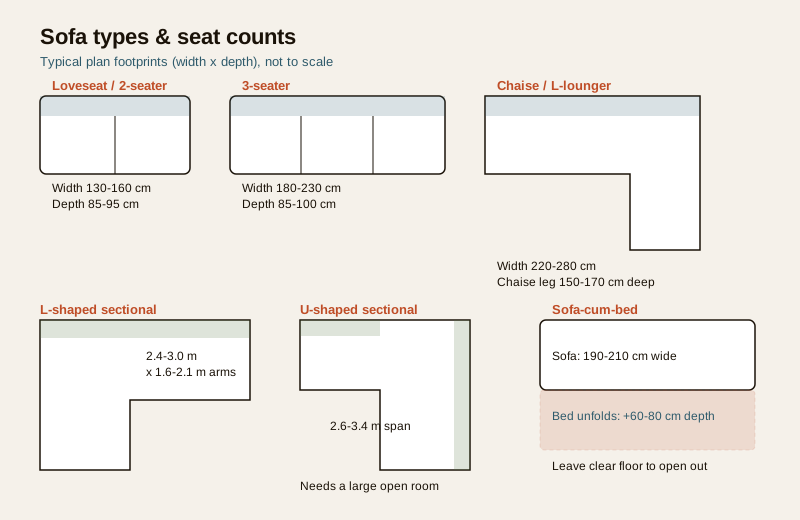
"Sofa" covers a family of shapes, each with a natural seat count and footprint. Pick the type from how the room is shaped and how many people actually sit together on an ordinary evening — not from the biggest thing that will technically fit.
| Sofa type | Seats | Typical width | Typical depth | Fits best in |
|---|---|---|---|---|
| Loveseat / 2-seater | 2 | 130-160 cm | 85-95 cm | Compact halls, studios, a reading corner, second seating |
| 3-seater | 3 | 180-230 cm | 85-100 cm | The everyday Indian living-room workhorse |
| L-shaped sectional (with chaise) | 4-5 | 2.4-3.0 m x 1.6-2.1 m | 95-105 cm | Corners; medium-to-large rooms; family lounging |
| U-shaped sectional | 5-7 | 2.6-3.4 m span | 95-105 cm | Large open living rooms and joint-family homes only |
| Chaise / lounger sofa | 3-4 | 2.2-2.8 m | 150-170 cm on the chaise leg | When one person likes to stretch out |
| Sofa-cum-bed | 2-3 seated | 190-210 cm | 90 cm sofa, +60-80 cm opened out | Guest rooms, studios, homes short on a spare bed |
A few honest notes. The 3-seater is the default for a reason — it seats the family, anchors the room and leaves space to move. Sectionals look generous in a showroom the size of a car park and overwhelming in a 3.3 m x 4 m Indian living room; measure hard before you commit. A sofa-cum-bed earns its keep in a studio or a home with no guest room, but remember it needs clear floor in front to fold out — size the room, not just the sofa. For very tight homes, pair this with the space-saving furniture guide.
Size the sofa to the room, not the other way round
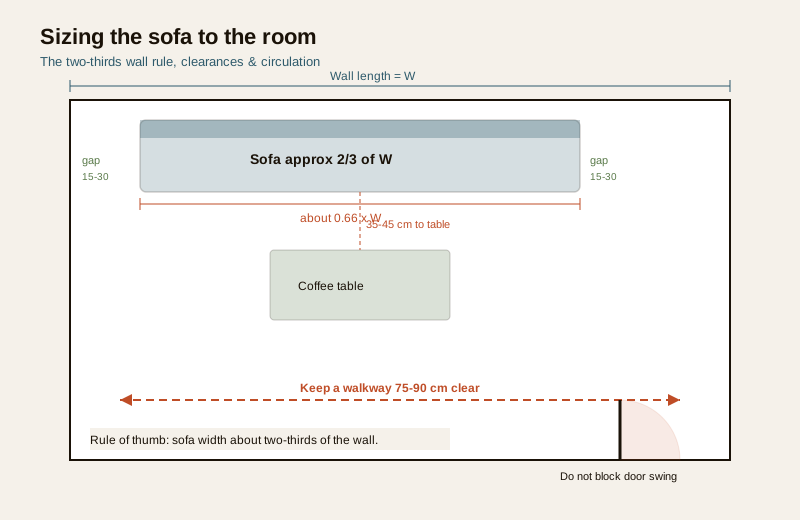
Here is the rule that prevents most regret: the sofa should be about two-thirds the length of the wall it sits against. A 300 cm wall wants a sofa around 200 cm; a 360 cm wall can take 240 cm. Any longer and the piece crowds the corners and the room reads as a furniture showroom; much shorter and it floats and looks lost.
Then protect the space around it:
| Clearance | Keep at least | Why |
|---|---|---|
| Sofa to coffee table | 35-45 cm | Legroom, and room to reach a cup without leaning |
| Walkway across the front / room | 75-90 cm | One person passes comfortably; the main circulation line |
| Sofa end to a side wall | 15-30 cm | Breathing space so it does not look wedged in |
| TV to sofa (viewing distance) | 1.5-2.5 x screen width | Comfortable viewing — size it with the tool below |
| Clear floor for a sofa-cum-bed to open | Bed depth + ~60 cm | So it actually unfolds without shoving the table away |
Two disciplines matter more than the exact centimetre. First, never let the sofa block a door swing, a passage or the natural walking line from the entrance to the rest of the home — circulation beats seating every time. Second, mark it out before you buy. Cut the sofa's footprint in newspaper or run painter's tape on the floor to the real width and depth, then live with it for a day: walk the room, sit where the sofa will be, open the doors. It costs nothing and catches the mistake while it is still free to fix. Let the sofa size calculator turn your wall length into a target sofa width, cross-check against the furniture size chart, and test whole arrangements in the furniture layout designer before anything is ordered.
Get the comfort dimensions right
A sofa that fits the room can still be uncomfortable if the seat is the wrong shape for the people using it. Two numbers do most of the work.
- Seat depth — the front-to-back of the cushion — usually runs 55-65 cm. Deep "lounge" sofas of 65 cm and up are luxurious to sprawl on but leave shorter users perched on the edge or unable to rest their back, and they are hard to get out of. If anyone in the house is on the shorter side (a common Indian reality), favour 55-58 cm and add a lumbar cushion, rather than a fashionable deep seat.
- Seat height — floor to the top of the cushion — sits around 40-45 cm. Too low and older knees struggle to rise; too high and shorter legs dangle. Around 43 cm suits most people.
- Seat-back height and arm height shape support and how the sofa looks — high backs read formal and cradle the head; low backs feel airy. This is comfort ergonomics, covered in depth in the furniture ergonomics guide.
The single best test is the oldest one: sit in it, for a few minutes, before you buy. Feet flat, back supported, easy to rise. A photograph cannot tell you this.
Single sofa, or modular?
A single-frame sofa (a fixed loveseat or 3-seater) is simpler, usually cheaper for the same size, and structurally sturdier — one welded or joined frame. A modular sofa is built from separate seats, corners and ottomans you arrange and re-arrange. Modular wins on three fronts that matter in Indian homes: you can reconfigure it when you move or re-plan the room, you can buy in stages as budget allows, and — crucially — the pieces come in through a narrow door, lift or stairwell and assemble inside. The trade-off is more joints (potential wobble over years) and usually a higher price per seat. Decide with the broader lens of the built-in vs modular vs loose furniture guide.
Configuration follows room shape:
- Against the long wall — the safe default; a 3-seater or loveseat parallel to the wall, walkway kept clear in front.
- Floating (off the wall) — works only in large or open-plan rooms; needs a console or rug behind to anchor it and enough space to walk all the way round.
- L in the corner — a sectional or chaise tucked into a corner uses dead space well and seats more, but eats a big footprint; measure both legs.
Upholstery and foam, in one breath
The look and the feel of a sofa are its fabric and foam, and these are the parts that wear. In short: choose a durable, cleanable fabric rated for high rub-count in a family home, treat it against India's humidity, dust and the occasional monsoon damp, and pick a firm high-density foam for the seat (it holds shape far longer than a soft low-density bun that sags in a year). Leather and leatherette look sharp but can feel hot and sticky in un-airconditioned rooms; performance fabrics and good weaves age more kindly. This is a whole subject on its own — the upholstered furniture guide covers fabric grades, foam density, cushion fill and maintenance, and the fabric and foam calculator helps estimate material for re-upholstery.
Will it fit — and will it get in?
This is the section that saves the purchase. A sofa has to clear two entirely different tests: will it fit in the room (sizing, above) and will it physically get from the truck to the room. The second fails more sofas than the first, especially in apartments with narrow lift lobbies and tight stairwell turns.
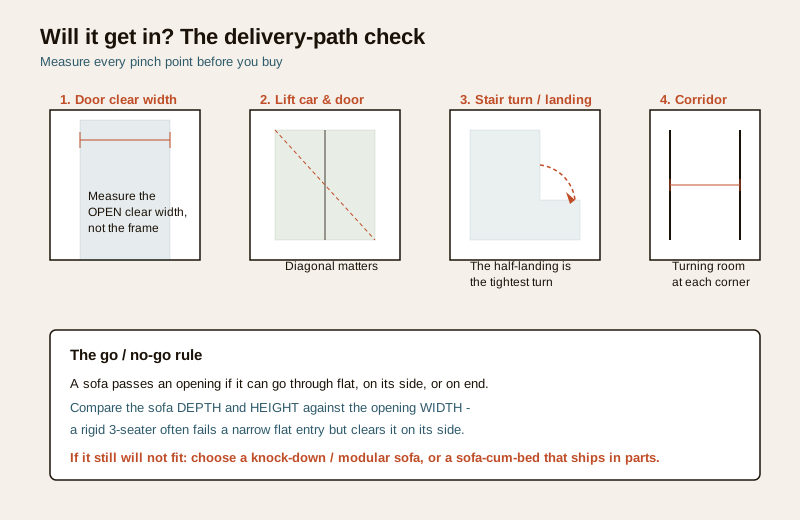
Walk the whole route with a tape before ordering, and check each opening against the sofa in every orientation it could pass — flat, on its side, or on end:
| Checkpoint | Measure | Passes if... |
|---|---|---|
| Main door (open) | Clear width with the door open, not the frame | Sofa depth or height clears the width on its side or end |
| Internal doors on the route | Clear opening width | Sofa passes on its narrowest face |
| Lift car & lift door | Car width, depth, height AND door width; check the diagonal | Sofa fits inside on some angle, or take the stairs |
| Staircase turns | Width, and the half-landing turning space | The frame can pivot the tightest turn |
| Corridors & lobbies | Width, plus turning room at each corner | There is room to swing the piece round the bend |
| Tight spots | Grille gates, meter cupboards, low beams, railings | Nothing narrower than the door blocks the path |
If the answer anywhere is no, you have three good options: choose a modular or knock-down sofa whose pieces come in separately and assemble inside; pick a sofa-cum-bed or two loveseats instead of one long rigid frame; or arrange rope/crane hoisting through a balcony (some sellers offer it — confirm the cost before buying). The one bad option is assuming it will "somehow" go in. Validate the whole plan — room fit and access — in the furniture layout validator.
Budget bands (indicative)
Prices swing enormously with fabric, frame and brand, so treat these as broad relative bands, not quotes, and always get local quotes:
| Band | Roughly | What you get |
|---|---|---|
| Entry | Lower range | Basic frame, standard foam, poly fabric; fine for a starter or low-use room |
| Mid | Middle range | Better hardwood/engineered frame, high-density foam, durable weave; the sensible family default |
| Premium | Upper range | Solid-wood frame, top foam and fills, performance fabric or good leather, branded modular systems |
A sofa is a long-term buy used daily for a decade, so the frame and foam — not the fabric colour — deserve the budget. A cheap frame and soft foam are a false economy that sag and creak within a year or two.
How it connects
- Anchor everything in the master complete guide to furniture in India, then get the comfort numbers from the furniture ergonomics guide.
- Choose fabric, foam and care in the upholstered furniture guide; place the sofa in the wider room with the residential furniture guide.
- Decide single vs modular with built-in vs modular vs loose furniture; squeeze a tight home with space-saving furniture; pair the sofa with the right coffee-table styling.
- Size and lay it out with the sofa size calculator, the furniture size chart, the furniture layout designer and the furniture layout validator; estimate re-upholstery with the fabric and foam calculator.
- For inspiration on whole schemes, browse living-room design ideas.
Key takeaways
- Pick the type by seats and room shape — a 3-seater is the everyday default; save sectionals and U-shapes for genuinely large rooms.
- Size to the wall: a sofa about two-thirds of the wall length, with 35-45 cm to the coffee table and a 75-90 cm walkway kept clear across the front.
- Never block a door, passage or the walking line — circulation beats an extra seat.
- Get the comfort numbers right — seat depth 55-65 cm (favour the shallow end for shorter users), seat height ~43 cm — and always sit in it before buying.
- Mark the footprint in tape on your floor and live with it for a day before ordering.
- Do the delivery-path check — door, lift, stairwell turn and corridor — because more sofas fail on access than on room fit; go modular or knock-down if the route is tight.
- Spend on frame and foam, not just fabric — they decide whether the sofa lasts a decade; all bands here are indicative, so get local quotes.
References
- IS furniture and seating standards (named generally) — strength, durability and stability requirements for domestic seating.
- General ergonomic-seating guidance and the RPwD Act 2016 Harmonised Guidelines — comfortable and accessible seat heights and depths.
- Formaldehyde emission classes (E0 / E1 / E2) for any engineered-wood sofa frame components — confirm the grade with the manufacturer.
- Manufacturer product specifications and local upholsterer — actual frame material, foam density, fabric rub-rating and exact product dimensions.
- Local retailers and carpenters — indicative price bands and delivery/hoisting options; always get written quotes.
All dimensions, seat counts, comfort ranges and cost bands here are indicative planning aids only; measure the actual product and your actual room, confirm comfort and safety against the relevant IS furniture standards and the manufacturer's specification, and get local quotes for price and delivery.
Export this guide
Related Guides — Deep-dive reading
The Complete Guide to Furniture for Indian Homes (2026)
The start-here master guide for furnishing an Indian home — what furniture actually does, the five families of pieces, the decisions in the order you face them (space and needs, loose vs modular vs built-in, materials, size and layout, budget, buy, maintain), an honest read on plywood, humidity and termites, and where every choice hands off to the carpenter, the brand or the fixer.
FurnitureDesigning Adaptable & Universal-Design Homes
Accessibility, Aging-in-Place, and the Multi-Stage Family — Code, Anthropometrics, and Plan-Stage Discipline for Indian Residential Architects
Room PlanningThe Complete Home Door Guide for Indian Homes (2026): Types, Materials, Cost, Security & Vastu
Everything an Indian homeowner needs to specify the right door for every opening — from main entrance to bathroom — with real 2026 prices, IS/NBC standards and Vastu sense.
Home Doors & EntrancesRelated Tools — Try Free
Apartment Furniture Size Chart
Standard furniture dimensions for Indian apartments — sofas, beds, tables, dining, storage.
Reference ChartFabric & Foam Calculator
Upholstery fabric metres and cushion foam for a sofa, chair or headboard, from seats, fabric per seat, cushion area and thickness.
Furniture CalculatorBefore vs After — Cost Reality Check
Compare what you expected to pay vs what you actually paid, category by category.
Reality Check