
Metal Furniture in India: Steel, Iron, Aluminium & Care (2026)
How to read metal furniture for an Indian home — mild steel, wrought iron, stainless steel, aluminium and brass accents — what each metal costs, weighs and looks like, why the powder-coat quality (not the metal) usually decides how long it lasts, and how to keep rust at bay.
Metal is the quiet workhorse of Indian furniture. It is under the sofa you sit on, in the bunk bed the kids climb, holding up the glass dining top, and standing in the corner as the steel almirah that has outlived three sets of curtains. It does the jobs wood cannot — surviving the balcony, shrugging off termites, carrying heavy loads on thin legs, and giving a room that clean industrial or loft edge. And yet most metal furniture is bought on looks and price alone, with almost no attention paid to the one thing that actually decides whether it lasts a decade or starts weeping rust in one monsoon: the finish.
This guide explains how to read metal furniture for an Indian home. It walks the metals themselves — mild steel and wrought iron, stainless steel, aluminium, and brass and copper as accents — with their strength, weight, rust behaviour, look and cost; then the finishes and rust protection that make or break them; the pieces metal suits best; how it trades off against wood; and how to care for it. It sits in the materials family of the Furniture hub alongside the solid wood and glass furniture guides, and under the complete guide to furniture in India.
Scope & how to read this. Every strength note, weight comparison and cost band here is indicative — a planning and buying aid, not a specification. Actual life depends on your microclimate (a Kochi seafront flat is brutal on steel; a dry Delhi bedroom is gentle), the metal grade and gauge you buy, and above all the finish quality. Judge frame strength and stability against the general IS furniture standards, ask sellers for BIS / BIFMA-type test backing, and defer the welding, load rating and any wall-anchoring of tall units to the manufacturer and fitter. Costs are relative bands — always get local quotes.
The metals — and how to tell them apart
"Metal furniture" hides at least four very different materials, and confusing them is how buyers overpay for the wrong thing or under-buy for the balcony. The differences that matter for furniture are strength (can it be thin and still stiff), weight (can you move it), rust behaviour (what happens in a wet Indian season), look, and cost.
- Mild steel (MS) and wrought iron. The everyday structural metal — cheap, strong, endlessly weldable and shaped into most bed frames, chair legs, table bases, racks and grilles. Its one weakness is decisive: bare steel rusts, so its entire outdoor and even indoor lifespan rides on the coating. "Wrought iron" in the Indian market usually means decoratively worked mild steel — scrolled railings, ornate garden sets, four-poster beds — not the historic low-carbon iron; it behaves like MS and rusts like MS.
- Stainless steel (SS). Steel alloyed with chromium so it resists rust without a coating. Grade is everything: SS 202 is cheaper, magnetic, and corrodes in humid or coastal air (fine for dry indoor legs and budget pieces); SS 304 is the food-grade, largely non-magnetic, genuinely rust-resistant grade worth paying for on kitchens, outdoor and coastal use. Both look bright and modern but cost well above mild steel.
- Aluminium. Light, naturally rust-proof (it forms its own protective oxide skin), and easy to cast or extrude into tube and slat — which is why it dominates good outdoor and balcony furniture. It is softer and less stiff than steel, so sections are chunkier for the same strength, but a person can lift a whole aluminium sofa with one hand. It costs more than mild steel, less trouble than stainless.
- Brass and copper. Accent metals, not structure. Used for legs, handles, frames and lamps to add warmth and a luxe glow. They tarnish (patina) rather than rust, are soft and heavy, and are priced as a finish, not a frame. Treat them as jewellery for furniture.
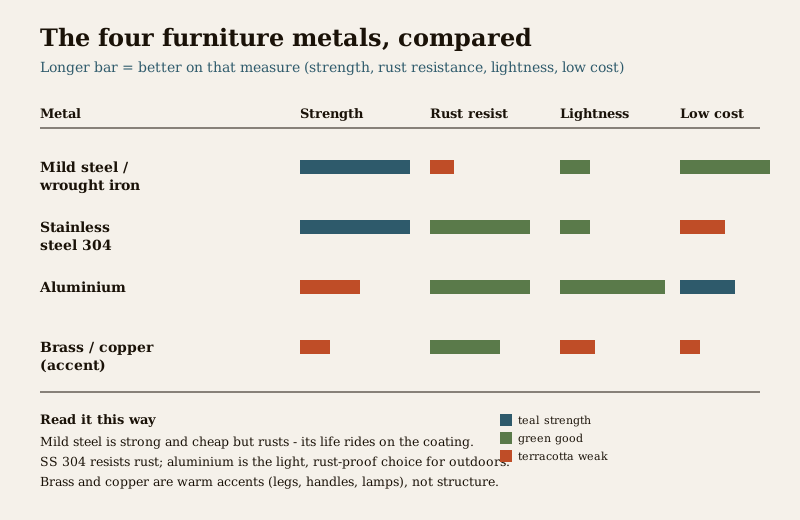
The table sets the four side by side. Read it as a shortlist tool, then let the finish (next section) and the piece decide.
| Metal | Strength / stiffness | Weight | Rust behaviour | Look | Relative cost |
|---|---|---|---|---|---|
| Mild steel (MS) / wrought iron | Very high; stiff even when thin | Heavy | Rusts fast once bare — lives or dies by its coating | Versatile: sleek tube to ornate scroll | Low |
| Stainless steel 202 | Very high | Heavy | Resists rust in dry air; corrodes in humid / coastal | Bright, modern | Medium |
| Stainless steel 304 | Very high | Heavy | Genuinely rust-resistant, food-grade | Bright, premium | Medium to high |
| Aluminium | Moderate; needs chunkier sections | Very light | Will not rust; self-protecting oxide | Clean, contemporary | Medium |
| Brass / copper (accents) | Low (soft) | Heavy for size | Tarnishes / patinas, does not rust | Warm, luxe glow | High (as accent) |
Finishes and rust protection — where lifespan is actually decided
Here is the single most useful thing to understand about metal furniture: on everything except stainless steel and aluminium, the coating is the product. A mild-steel bed is only as durable as the skin over it, because the moment bare steel meets Indian humidity it rusts. Two beds can look identical in the showroom and be a decade apart in real life purely on how they were finished. So learn to read the finish.
- Powder-coating. The gold standard for furniture. Dry pigment is electrostatically sprayed on and oven-baked into a tough, even, thick plastic-like skin — more durable, more uniform and less prone to chipping than liquid paint. Quality varies enormously: it depends on the surface prep (degreasing, phosphating or a zinc primer before coating), the coat thickness, and an even bake. A well-prepped powder coat lasts many years; a coat sprayed straight onto greasy, un-primed steel bubbles and lifts within a season no matter how good it looks on day one. This is why powder-coat quality, not the metal, usually decides lifespan.
- Galvanising. A zinc layer (hot-dip or electro-galvanised) bonded to the steel that sacrificially protects it even if scratched — the most corrosion-resistant base for steel used outdoors or coastally. Often galvanised first, then powder-coated over, for a belt-and-braces outdoor finish.
- Electroplating and chrome. A thin bright metal layer (nickel-chrome) deposited electrically, giving the classic shiny chrome chair-leg look. Decorative and reasonably hard, but thin: once it chips or the base wasn't prepped, rust creeps under and the plating flakes. Good indoors, risky in bathrooms and humid or coastal air.
- Liquid paint / enamel. The cheapest finish and the weakest — a brushed or sprayed enamel chips, scratches and lets water in at every knock. Fine for a low-cost indoor rack you will repaint; not for anything that matters or gets wet.
- Anodising (aluminium only). An electro-chemical thickening of aluminium's own oxide skin, optionally coloured — hard, integral and non-peeling. A quality mark to ask for on aluminium outdoor furniture.
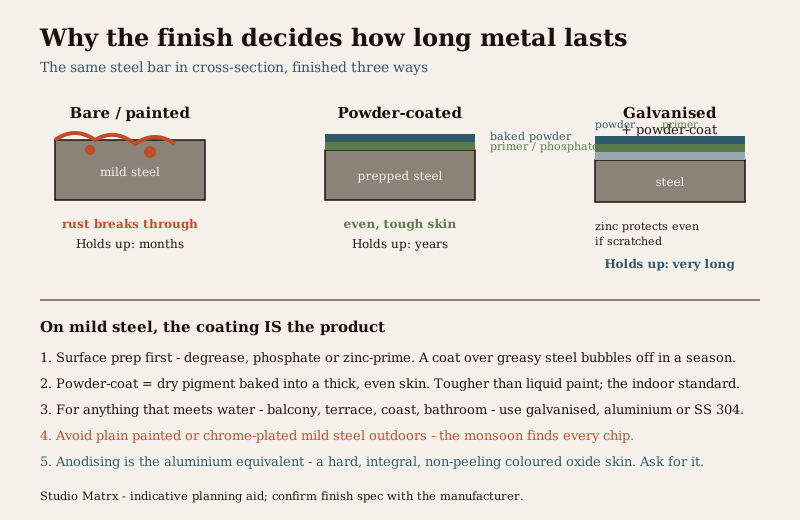
The table maps finishes to what they actually deliver — and where they fail.
| Finish | How it protects | Durability | Best for | Watch out for |
|---|---|---|---|---|
| Powder-coating (well-prepped) | Baked plastic-like skin over primed steel | Long — years | Beds, chairs, tables, racks, indoor and covered outdoor | Poor prep = bubbling, lifting; ask about phosphating / primer |
| Galvanising | Sacrificial zinc, protects even if scratched | Very long | Outdoor, coastal, garden steel | Bare-galv look is industrial; often coated over |
| Galvanised + powder-coat | Zinc base plus tough colour skin | Very long | The outdoor / coastal gold standard | Costs more; worth it near the sea |
| Electroplating / chrome | Thin bright metal layer | Medium indoors, poor if wet | Dry indoor chrome-leg look | Chips let rust creep under; avoid in wet rooms |
| Liquid paint / enamel | Surface film only | Short | Cheap indoor racks you will repaint | Chips and rusts at every knock |
| Anodising (aluminium) | Thickened integral oxide | Long | Aluminium outdoor and balcony | Aluminium only; confirm it is anodised, not just painted |
A practical buying rule: for anything indoor, insist on quality powder-coat over properly prepped steel; for anything that meets water — balcony, terrace, garden, bathroom — insist on galvanised or aluminium or SS 304, and treat plain painted or chrome-plated mild steel outdoors as a mistake waiting for the monsoon. The outdoor logic is worked through fully in the indoor vs outdoor furniture guide.
What metal is good at — the typical pieces
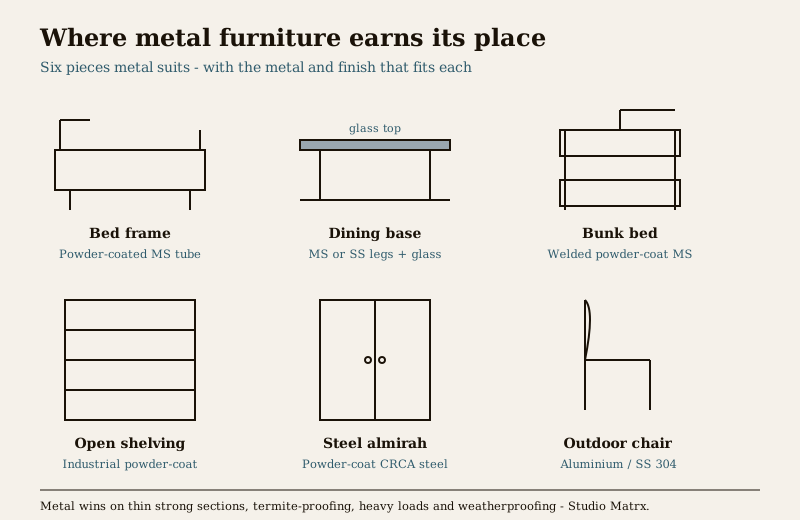
Metal earns its place in specific pieces, usually where it is stronger, thinner, cheaper or more weatherproof than wood would be.
| Piece | Why metal suits it | Typical metal + finish |
|---|---|---|
| Bed frames | Thin, strong, termite-proof; slim modern look | Powder-coated MS tube; wrought-iron for ornate |
| Dining and chair bases | Stiff thin legs carry heavy tops; pairs with glass | Powder-coated MS or SS; chrome for cafe look |
| Bunk beds | Strength-to-weight and safety at height | Powder-coated MS with welded joints |
| Shoe racks and open shelving | Cheap, ventilated, load-bearing, industrial look | Powder-coated MS or steel wire |
| Steel almirah / storage | Secure, fire- and termite-proof, long-lived | Powder-coated CRCA steel |
| Modular metal wardrobes | Knock-down, movable, damp-tolerant vs board | Powder-coated steel frame + panels |
| Outdoor and balcony sets | Survives sun, rain and humidity | Aluminium, galvanised steel, or SS 304 |
Two of these deserve a note. The steel almirah remains one of the most rational storage buys in India — it will not warp, will not feed termites, resists fire far better than a board wardrobe, and lasts decades — which is why it keeps its place even in modular homes; weigh it against board options in the built-in vs modular vs loose furniture guide. And metal-and-glass pairings — a steel or brass base under a glass top — are a whole design language of their own; get the glass side right with the glass furniture guide. Size any of these to your room before buying with the furniture size chart.
Metal vs wood — an honest trade-off
Metal and wood are not rivals so much as different tools; most good Indian homes use both. Choose by the job, not by taste alone.
| Factor | Metal | Solid / engineered wood |
|---|---|---|
| Durability & strength | Very high; thin sections carry heavy loads | High, but bulkier for the same strength |
| Termite & pest proof | Yes, immune | Vulnerable unless treated (see the wood guides) |
| Moisture / outdoor | Excellent if finished right (or SS / aluminium) | Poor for boards; only teak-class solid wood survives |
| Weight & moving | Steel is heavy; aluminium very light | Medium |
| Warmth & feel | Cool, hard, can feel clinical | Warm, tactile, softens a room |
| Repair | Weld, re-coat, touch up rust | Sand, fill, refinish |
| Look | Sleek, industrial, minimal | Natural, traditional, cosy |
| Cost | MS is low; SS and aluminium climb | Wide range; solid wood is premium |
The honest summary: metal wins where wood struggles — outdoors and on wet balconies, in humid coastal air, under heavy or high loads (bunks, mezzanine rails, heavy glass tops), against termites, and wherever you want an industrial or loft aesthetic with thin, minimal lines. Wood wins on warmth and feel — the tactile, room-softening quality metal cannot fake, and the traditional look many Indian homes want. For the wood side of this trade-off, read the solid wood furniture guide; for how the two combine across a whole home, the complete guide to furniture in India sets the frame.
Welds and joints — the quality you cannot see later
A metal piece is only as good as its joints, and those are the first thing to fail on cheap furniture. You do not need to weld anything — that is the manufacturer's craft — but you should know what to look and feel for before you buy.
- Continuous, clean welds. A good weld is smooth, evenly ground and consistent along the join; lumpy, pitted or spattered welds, or gaps you can see daylight through, signal rushed work that will crack under load.
- Ground and coated over. Welds should be dressed flush and then powder-coated with the rest, so no bare metal is left at the joint to become the first rust point. Run a hand over the joints — rough, unpainted weld beads are where rust and failure start.
- Reinforced high-stress points. Chair-leg-to-seat joints, bunk-bed rails and table-base junctions take the most stress; a gusset, sleeve or bolt-through reinforcement here is a mark of a serious maker.
- Bolted knock-down joints. Modular metal wardrobes and racks use bolts, not welds, so they can be flat-packed and moved — fine, provided the bolts seat into welded or reinforced brackets rather than thin folded tabs that splay. Students of the craft can go deeper in the furniture construction and detailing course.
Care and rust touch-up
Metal furniture is low-maintenance, not no-maintenance — and catching rust early is the whole game, because a chip left open in an Indian monsoon spreads under the coating and lifts it.
- Wipe and dust. A soft damp cloth for powder-coated and painted surfaces; avoid abrasive scourers that scratch the coating and open a rust path. Dry after cleaning.
- Inspect the vulnerable points. Feet standing on wet floors, weld joints, and any chip or scratch are where rust begins. Elevate pieces off damp floors on glides so legs are not sitting in water.
- Touch up chips fast. The moment you see bare metal or a rust speck: lightly sand or wire-brush the spot back to clean metal, wipe it dry, apply a rust-converter or metal primer, and over-coat with a matching enamel or touch-up powder. Done early it is a five-minute job; ignored, it becomes a re-coat.
- Stainless and brass. SS wipes clean with a mild cleaner (wipe with the grain); brass and copper can be left to patina or polished bright with a brass cleaner — never use steel-wool on either.
- Coastal homes. Rinse salt off metal periodically, favour SS 304, aluminium or galvanised-plus-powder, and inspect more often — salt air multiplies corrosion, exactly as with outdoor furniture.
Budget a scheme with the furniture cost calculator, which lets you weigh a cheap painted rack against a powder-coated or stainless one over its real life, not just its sticker price.
How it connects
- Anchor the whole decision in the complete guide to furniture in India, then read metal against its material siblings — solid wood furniture and glass furniture.
- For anything on a balcony, terrace or coast, pair this with the indoor vs outdoor furniture guide — where powder-coat, galvanising and aluminium really matter.
- Weigh a steel almirah or modular metal wardrobe against board options in built-in vs modular vs loose furniture, and see how a metal-and-glass dining set fits a room in the residential furniture guide.
- Go deeper on the material science in the materials hub, and on how metal joints are actually made in the furniture construction and detailing course.
- Budget and size before you buy with the furniture cost calculator and the furniture size chart, and gather looks from living room design ideas.
Key takeaways
- The finish, not the metal, usually decides lifespan — on mild steel the powder-coat is the product; good surface prep and an even bake mean years, a coat sprayed on greasy steel bubbles off in a season.
- Know your metal — mild steel and wrought iron are cheap, strong and rust-prone; stainless resists rust (buy 304, not 202, where it gets wet); aluminium is light and rust-proof for outdoors; brass and copper are warm accents, not structure.
- Match finish to exposure — quality powder-coat indoors; galvanised, aluminium or SS 304 for anything that meets water; never trust plain painted or chrome-plated mild steel outdoors.
- Metal wins where wood struggles — outdoors, humid and coastal air, heavy or high loads, termite-proofing and the industrial look; wood wins on warmth and feel.
- Joints are the hidden quality — insist on clean, ground, coated-over welds and reinforced stress points; rough bare weld beads are where rust and failure start.
- Catch rust early — inspect feet and joints, elevate off wet floors, and touch up any chip fast; a five-minute fix beats a full re-coat.
- Every figure here is indicative — confirm strength against the IS furniture standards, ask for BIS / BIFMA backing, and get local quotes.
References
- The IS furniture standards — general provisions for furniture strength, stability and durability of metal and metal-framed furniture (named generally; confirm the current parts with your seller).
- BIS provisions for structural and stainless steels and their grades — mild steel, stainless steel 202 and 304 characteristics and corrosion behaviour (named generally).
- BIFMA-type furniture testing and BIS conformance — evidence of load rating, durability and stability to ask sellers for on beds, chairs and storage.
- IGBC / GreenPro (Indian Green Building Council) eco-certification — responsible sourcing and low-emission finishes where relevant.
- Manufacturer material and finish documentation — steel grade and gauge, powder-coat thickness and surface-prep process, galvanising and anodising specifications, and warranty for the specific product.
All strength notes, weight comparisons and cost bands here are indicative planning aids only; real-world life depends on your microclimate, the metal grade and gauge you buy and above all the finish quality. Confirm strength and stability against the current IS furniture standards, ask sellers for BIS / BIFMA backing, defer welding and load rating to the manufacturer, and get local quotes for cost.
Export this guide
Related Guides — Deep-dive reading
Acrylic vs Cast Iron Bathtub: Which Is Better? (India, 2026)
A fair, India-first head-to-head between an acrylic bathtub and an enamelled cast-iron one — weighed on the factors that actually decide it here: slab load and handling, heat retention, durability, warmth to touch, repairability, price and installation — with a clear verdict by home type and budget.
BathroomsBathroom Accessories Buying Guide India: How to Choose Towel Bars, Hooks, Holders & Hardware That Won't Rust
A buyer's decision guide to bathroom accessories and hardware for Indian homes — which material actually survives humidity (SS304 vs SS202 vs brass vs zinc vs plastic), concealed vs exposed fixing, matching finishes, ready-made sets vs individual pieces, good/better/best budget tiers, warranty, and how to spot cheap chrome-plated plastic sold as steel.
BathroomsThe Complete Guide to Furniture for Indian Homes (2026)
The start-here master guide for furnishing an Indian home — what furniture actually does, the five families of pieces, the decisions in the order you face them (space and needs, loose vs modular vs built-in, materials, size and layout, budget, buy, maintain), an honest read on plywood, humidity and termites, and where every choice hands off to the carpenter, the brand or the fixer.
FurnitureRelated Tools — Try Free
Apartment Furniture Size Chart
Standard furniture dimensions for Indian apartments — sofas, beds, tables, dining, storage.
Reference ChartDoor Material Comparison Tool
Compare 2–4 door materials on cost, durability, maintenance, security and moisture resistance.
Comparison ToolDoor Paint Calculator
Estimate paint and primer litres and cost to paint your doors by size, number of doors, coats and paint type.
Door Calculator