
Furniture Maintenance Guide: Keep Every Piece Lasting in India (2026)
The start-here routing guide to keeping furniture in good condition through Indian heat, humidity, monsoon, dust, hard water and termites — the one enemy and one habit for each material, a routine schedule you can actually follow, and where upkeep hands off to a professional.
Furniture in India lives a hard life. The same piece faces 40-plus-degree summers, three months of monsoon damp, airborne dust for most of the year, harsh direct sun through un-shaded windows, hard water that leaves white rings, and a standing termite threat that no other climate demands you plan for. A sofa or a wardrobe is one of the larger things you buy for a home — a little routine care is the difference between a piece that looks tired in five years and one that is handed down in thirty.
This is the master, start-here guide for furniture upkeep. It does two things: gives you the single most important enemy and the single most important habit for each material, so you know where the risk really is — and then routes you to the deep sibling guides for the how-to. It is a hub, not an encyclopaedia: use it to diagnose what your furniture needs, then follow the link. For the whole story of choosing and living with furniture, start from the complete guide to furniture in India.
Scope & how to read this. Every interval, product hint and cost cue here is typical and indicative — a planning aid, not a warranty rule. Follow the manufacturer's care card first where you have one, and spot-test any cleaner on a hidden patch before using it. Some jobs are genuinely professional work — deep polishing and refinishing, structural repair, reupholstery, and above all termite treatment, which uses regulated chemicals and belongs with a licensed pest-control operator. We flag those hand-offs as we go; treat anything involving load-bearing joints, chemicals or a piece you cannot afford to ruin as a job to brief out, not to improvise.
Why maintenance is worth the effort
Maintenance is the cheapest money you will ever spend on furniture. A few honest reasons it pays:
- It roughly doubles useful life. Finishes fail from the outside in — sun, water and grit wear the protective coat, then the material underneath goes. Keep the coat intact and the piece underneath survives.
- It protects resale and hand-down value. A well-kept solid-wood or leather piece holds real second-hand value; a neglected one is scrap. Good solid wood furniture especially rewards care.
- It prevents small problems becoming structural ones. A loose joint tightened today is a ten-minute job; ignored, it racks the whole frame and becomes a carpenter's repair.
- It protects indoor air and hygiene. Dust-loaded upholstery and mould on damp wood are health issues, not just cosmetic ones — part of a healthy home.
The trap is treating furniture as "buy and forget." The homes where furniture lasts are not the ones with the most expensive pieces — they are the ones with a five-minute daily habit and a seasonal rhythm.
Material-by-material quick reference
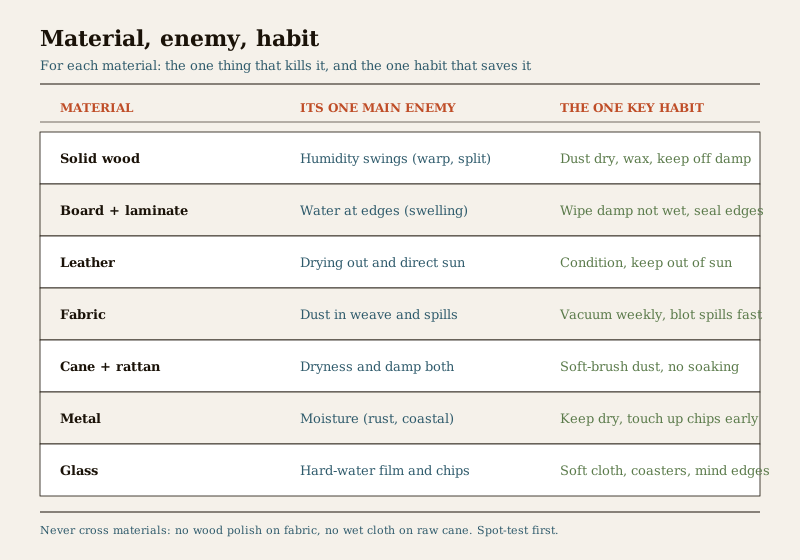
Different materials fail in different ways, so care that helps one can harm another — never take a wood polish to a fabric arm, or a wet cloth to raw cane. The table below is the diagnostic core of this guide: find your material, learn its one main enemy and one key habit, then follow the link for the full routine.
| Material | Its one main enemy | The one key habit | Go deep |
|---|---|---|---|
| Solid wood | Humidity swings (warp, split, mould) | Dust dry, wax/polish periodically, keep off wet floors | Wooden furniture care |
| Engineered board + laminate | Water at edges & unsealed cut edges (swelling) | Wipe damp not wet, seal edges, never let water pool | Engineered wood furniture |
| Leather | Drying out & direct sun (cracking, fading) | Dust, keep out of sun, condition a few times a year | Leather furniture care |
| Fabric upholstery | Dust deep in the weave & spills (staining, dust-mite) | Vacuum weekly, blot spills at once, rotate cushions | Fabric upholstery care |
| Cane & rattan | Dryness & damp both (brittle, or mould) | Dust with a soft brush, keep humidity moderate, no soaking | Cane and rattan furniture |
| Metal | Moisture (rust, especially coastal) | Keep dry, wipe after monsoon, touch up chips early | Metal furniture |
| Glass | Hard-water film & impact chips | Wipe with a soft cloth, use coasters, mind the edges | Glass furniture |
Two India-specific notes. First, engineered board (MDF and particle board) is far more water-sensitive than solid wood — a swollen, blistered kitchen or wardrobe edge is almost always water that sat on an unsealed joint; understand the trade-off in MDF vs particle board and plywood furniture. Second, hard water is a real enemy of glass and metal across much of the country — the white haze on a glass table or shower screen is mineral scale, best kept off by drying after cleaning rather than scrubbed off later.
A routine you can actually keep
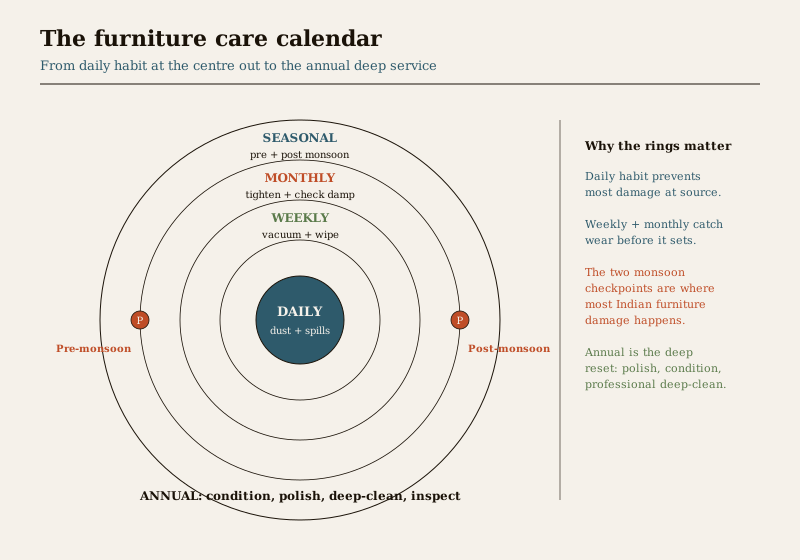
Maintenance fails when it is a vague intention. Turn it into a schedule and it becomes automatic. The table below is a realistic rhythm for an Indian home — scale it to what you own, and lean harder on the seasonal rows, because the monsoon is where most furniture damage in India actually happens.
| How often | What to do |
|---|---|
| Daily | Quick dry-dust of surfaces; wipe up any spill the moment it happens; don't leave wet glasses or hot vessels on wood or laminate |
| Weekly | Vacuum upholstery and under cushions; damp-wipe hard surfaces; brush cane; plump and rotate loose cushions |
| Monthly | Check and gently tighten screws, hinges and joints; move a few pieces to check for damp, mould or pest trails behind them; clean glass and mirrors |
| Pre-monsoon | Pull furniture a few inches off walls for airflow; check and re-seal exposed board edges; service or plan any termite protection; store or cover outdoor pieces |
| Post-monsoon | Dry out anything that got damp; inspect for mould, rust and swelling; re-wax wood that looks dry; deep-vacuum upholstery that held humidity |
| Annual | Condition leather; polish or re-wax solid wood; deep-clean upholstery (professional for large sofas); inspect for termites; touch up chips on metal and paint |
You do not have to remember all of this. The furniture maintenance scheduler turns your actual pieces and materials into a personal calendar of what to do and when — set it once and let it prompt you, especially around the two monsoon checkpoints.
The six universal enemies — and how to defend
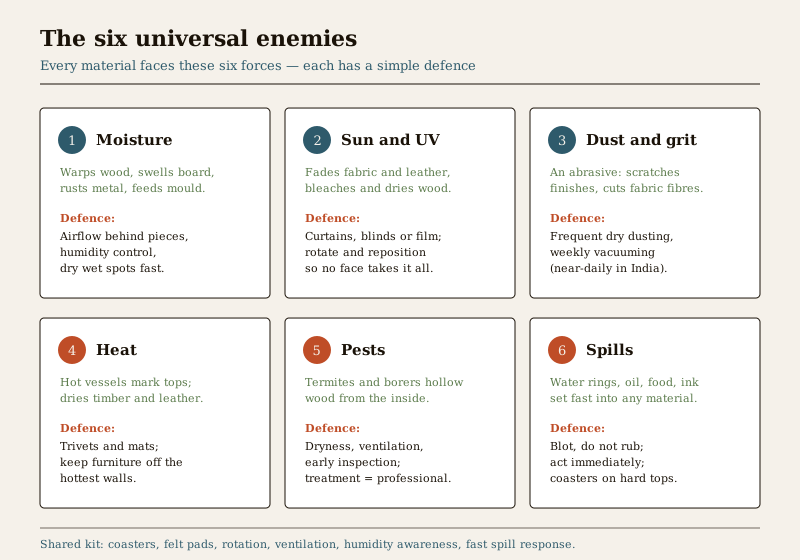
Behind the material-specific advice sit six forces that damage almost everything. Understand these and most care becomes obvious.
1. Moisture & humidity. The number-one enemy in India. It swells board, warps and mould-spots wood, rusts metal, and breeds dust mites in fabric. Defend with airflow (don't push everything flush to a damp wall), humidity control where you can, and by drying quickly anything that gets wet. This is also the gateway to termites — covered with moisture in termite and moisture protection.
2. Direct sun & UV. Fades fabric and leather, bleaches and dries wood, yellows some finishes. Defend with curtains, blinds or film on strong-sun windows, and by rotating and repositioning pieces so no one face takes all the light.
3. Dust & grit. More than cosmetic — grit is an abrasive that scratches finishes and glass, and works into fabric to cut fibres from within. Defend with frequent dry dusting and weekly vacuuming; in India this is a near-daily job for much of the year.
4. Heat. Hot vessels mark wood and laminate; sustained heat near a stove or a west wall dries out timber and leather. Defend with trivets and mats, and by keeping furniture off the hottest walls.
5. Pests — termites and borers. A uniquely serious Indian risk. Termites can hollow a wooden piece from inside with almost no outward sign. Defend with dryness, ventilation and early inspection; treatment itself is professional work.
6. Spills & stains. Water rings, oil, food, ink. The single most important rule across every material is blot, don't rub, and act immediately — a spill dealt with in seconds rarely stains; the same spill left overnight often does.
The general defences that cover most of these are simple and cheap: coasters and trivets on hard tops, felt pads under anything that gets moved, rotation of cushions and sun-facing pieces, ventilation behind and under furniture, humidity awareness, and a fast response to spills. Do these six things and you have handled most of what threatens furniture in an Indian home.
DIY versus calling a professional
Plenty of furniture care is genuinely a home job. Some of it is not — and knowing the line saves both money and pieces you cannot replace. As a rule: routine cleaning, dusting, conditioning, minor tightening and small touch-ups are yours; anything structural, chemical, or once-only-get-it-right belongs to a professional.
| Task | Do it yourself | Call a professional |
|---|---|---|
| Dusting, vacuuming, wiping | Yes — the whole point of routine care | — |
| Leather conditioning | Yes, with the right product and a test patch | Deep colour restoration or a torn hide |
| Tightening screws, hinges, glides | Yes, gently and regularly | Racked frames, broken joints, wobble that returns |
| Waxing / light polish top-up | Yes, on a sound existing finish | Full polishing and refinishing — stripping and re-coating |
| Small chip / scratch touch-up | Yes, with a matched pen or wax stick | Visible damage on a valued or antique piece |
| Structural repair | No | Repair and restoration — a carpenter or restorer |
| Reupholstery / new foam & fabric | No | Upholstery replacement |
| Termite treatment | No — regulated chemicals | Licensed pest-control operator only |
The two lines never to cross at home are termite treatment and structural repair on anything load-bearing or valued. Termiticides are regulated for good reason; a botched DIY treatment can be both ineffective and hazardous. And a chair or bed frame that fails under load is a safety issue — get it done properly. When a piece is past routine care but not beyond saving, the repair and restoration guide helps you judge whether it is worth restoring or replacing.
How it connects
- Start from the pillar, the complete guide to furniture in India, and come back here whenever a piece needs care.
- Follow your material to its deep guide: wooden furniture care, leather furniture care, fabric upholstery care, or the material profiles for solid wood and upholstered furniture.
- Handle the India-specific threats with termite and moisture protection.
- When care is no longer enough, move to repair and restoration, polishing and refinishing or upholstery replacement.
- Build your routine with the furniture maintenance scheduler, and keep the whole home healthy via the healthy homes hub.
Key takeaways
- Maintenance roughly doubles furniture life and protects resale value — it is the cheapest money you spend on furniture, and India's heat, humidity, monsoon, dust and termites make it non-optional.
- Learn your material's one main enemy and one key habit — humidity for wood, edge-water for board, drying and sun for leather, dust and spills for fabric, moisture for metal, hard water for glass — then follow the deep guide.
- Turn care into a schedule: daily dusting, weekly vacuuming, monthly checks, and above all the pre- and post-monsoon checkpoints, where most Indian furniture damage happens.
- The six universal enemies are moisture, sun/UV, dust, heat, pests and spills; the general defences are coasters, pads, rotation, ventilation, humidity control and a fast spill response.
- Blot, don't rub, and act immediately on every spill — a stain caught in seconds rarely sets.
- Know the DIY line: routine cleaning, conditioning and minor tightening are yours; termite treatment, structural repair and reupholstery are professional work.
References
- IS furniture standards — the Bureau of Indian Standards series on furniture strength, stability and durability (named generally); manufacturers' care instructions take precedence for a specific piece.
- IS plywood and board standards — IS 303 / IS 710 (plywood grades, BWR/BWP/MR), IS 3087 / IS 3097 (particle board), IS 12406 (MDF), IS 1659 (blockboard); relevant to how each board tolerates moisture (named generally).
- Formaldehyde emission classes (E0 / E1 / E2, CARB / EN 13986 context) — for indoor-air-quality awareness when refinishing or replacing boards (named generally).
- Licensed pest-control operator and manufacturer guidance — for termite treatment and any warranty-governed care regime.
All intervals, product hints and cost cues here are indicative planning aids only; follow the manufacturer's care card for your specific piece, spot-test any cleaner first, and use a licensed professional for termite treatment, structural repair and reupholstery.
Export this guide
Related Guides — Deep-dive reading
Termite & Moisture Protection for Furniture in India (2026)
The two great destroyers of Indian furniture are termites and monsoon damp. This is the homeowner's field guide to spotting both early, choosing materials that resist them, and running a simple pre- and post-monsoon routine that adds years to every piece you own.
FurnitureThe Complete Guide to Furniture for Indian Homes (2026)
The start-here master guide for furnishing an Indian home — what furniture actually does, the five families of pieces, the decisions in the order you face them (space and needs, loose vs modular vs built-in, materials, size and layout, budget, buy, maintain), an honest read on plywood, humidity and termites, and where every choice hands off to the carpenter, the brand or the fixer.
FurnitureDoor Maintenance Guide India: A Seasonal Care Routine to Keep Doors Smooth for Decades
Oil the hinges, tighten the screws, lube the lock, check the seals and re-coat the finish — a simple seasonal calendar that stops Indian doors from binding in the monsoon, sagging, tarnishing on the coast or falling to termites.
Home Doors & EntrancesRelated Tools — Try Free
Cross-Ventilation Analyzer
Estimate airflow and air changes per hour (ACH) from room size, window areas, layout, and local wind — with NBC 2016 Part 8 compliance check.
Ventilation CalculatorWindow Maintenance Cost Calculator
Estimate annual window upkeep by frame material — yearly, per-window and 5-year cost.
Window CalculatorMaterial Schedule Generator
Generate a room-wise finish schedule — walls, floors, ceilings, trim, and joinery by location.
Material Schedule