
Termite & Moisture Protection for Furniture in India (2026)
The two great destroyers of Indian furniture are termites and monsoon damp. This is the homeowner's field guide to spotting both early, choosing materials that resist them, and running a simple pre- and post-monsoon routine that adds years to every piece you own.
Two forces quietly eat Indian furniture, and neither sends an invoice until the damage is done. The first is biological — termites and wood borers that hollow out a wardrobe leg or a bed frame from the inside while the surface still looks perfect. The second is climatic — the humidity and monsoon damp that swells doors, lifts laminate, breeds mould in a closed almirah and rusts every screw and hinge. A piece can survive careless dusting for decades; it rarely survives an unchecked termite trail or three monsoons pressed against a damp wall.
The good news is that both enemies are predictable and both are largely preventable. You do not need chemistry or tools — you need to know the early signs, buy the right materials at the outset, keep wood dry and off damp surfaces, and run a five-minute check twice a year around the monsoon. This guide, part of the furniture maintenance hub, pulls the termite-and-damp story into one place so your wooden furniture care routine actually protects the wood, not just polishes it.
Scope & how to read this. This is a homeowner's prevention-and-early-detection guide — how to spot, avoid and manage termite and moisture damage, and when to stop and call a professional. It names treatment approaches generally: it does not prescribe any pesticide, brand, chemical or dosage. Anti-termite chemicals are regulated, restricted-use substances — soil treatment and structural infestations must be handled by a licensed pest-control operator. Material grades (BWR/BWP plywood, seasoned timber) are named per the relevant IS standards; confirm the exact grade on the product against IS 303 / IS 710 and get local quotes. When in doubt about an active infestation or a chemical, defer to a licensed applicator.
The two enemies, and why India is hard on furniture
India hands furniture a difficult brief: warm year-round, drenched for a season, and home to some of the most aggressive termite species anywhere. Coastal Mumbai, Chennai and Kochi combine salt air with month-long humidity; Kolkata and the Gangetic plain get soaking monsoons; even "dry" cities see damp basements and ground-floor flats wick moisture up through floors. Against that backdrop, understanding what each enemy does changes how you buy and how you care.
| Enemy | What it attacks | How fast it works | The tell-tale it leaves |
|---|---|---|---|
| Subterranean termites | Solid wood, ply, skirting, built-ins near floors/walls | Weeks to months, hidden | Mud tubes on walls/legs; hollow-sounding wood |
| Wood borers ("powder-post" beetles) | Sapwood of solid timber, bamboo, cane | Months to years, seasonal emergence | Tiny round holes + fine flour-like powder (frass) |
| Surface / bulk moisture | Joints, laminate/veneer bonds, foam, metal fittings | Days (spill) to a monsoon (chronic) | Swelling, delamination, mould, rust, musty smell |
Termites and borers destroy the wood itself; moisture destroys the glue, the finish and the fittings around it. Most furniture failures in India are one of these three lines — and all three announce themselves early if you know the signs.
Termites and wood borers: how to spot them
Termites are secretive; they eat wood from the inside and leave the painted or polished shell intact, so the first visible clue is rarely a hole — it is one of the signs below. Learn them, and a torch inspection twice a year catches infestations while they are still cheap to stop.
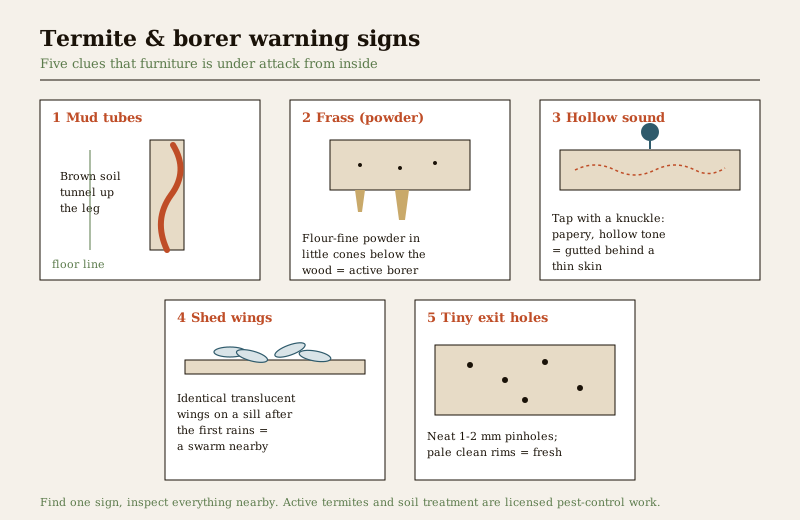
- Mud tubes. Pencil-thin brown tunnels of soil and saliva running up a wall, a wardrobe back or a table leg — subterranean termites' covered highway from the ground to the wood. A live tube is damp inside; this is the single clearest sign.
- Hollow-sounding wood. Tap along legs, rails and the base of built-ins with a knuckle. Healthy timber gives a solid thock; termite-eaten wood sounds papery and hollow because it is gutted behind a thin skin.
- Frass and fine powder. Wood borers push out flour-fine powder (frass) as they tunnel — little cones or drifts of it on the floor under a piece, or seeping from tiny holes, mean an active borer.
- Tiny round exit holes. Neat pinholes (roughly 1-2 mm) in solid timber, cane or bamboo are borer emergence holes; fresh ones show pale, clean wood at the rim.
- Discarded wings. After the first monsoon rains, winged termites swarm and then shed their wings — small piles of identical translucent wings on a windowsill or near a skirting are a swarm nearby.
- Blistered or rippled paint/veneer. A surface that bubbles or ripples along a line can be termites working just beneath it.
If you find one sign, check everything nearby — termites rarely limit themselves to a single leg. Which materials are at risk shapes how worried to be.
Which materials are vulnerable
No wood-based material is truly termite-proof, but they are not equally tasty. This matters when you buy, especially for built-ins and anything touching a floor or an external wall.
| Material | Relative vulnerability | Why |
|---|---|---|
| Solid wood sapwood (the pale outer wood) | High | Soft, starchy, a termite and borer favourite |
| Solid wood heartwood (teak, sheesham core) | Low-moderate | Dense, oily heartwood resists both; teak is the classic choice |
| Plywood (ordinary MR grade) | Moderate-high | Termites follow the glue lines and layers; untreated ply is prone |
| Boro-treated BWR/BWP plywood | Low | Boron treatment makes ply genuinely termite- and borer-resistant |
| MDF / particle board | Lower, not immune | Dense, resin-heavy and less palatable, but swells badly if damp |
| Engineered wood (laminated, factory-finished) | Lower than raw solid | Sealed surfaces and treated cores give fewer entry points |
The lesson runs through the material guides: prefer teak or well-seasoned heartwood in solid wood furniture, insist on boro-treated BWR/BWP grade in plywood furniture, and note in engineered wood furniture that a sealed factory finish is itself a mild barrier. Cheap untreated ply and raw sapwood are where infestations start.
Prevention, then treatment
Prevention is cheap and yours to do; treatment of an active infestation is chemical work best left to professionals.
Prevent (homeowner):
- Buy treated and seasoned. Specify boro-treated BWR/BWP plywood (per IS 303 / IS 710) and properly seasoned, kiln-dried solid timber — green, unseasoned wood carries both moisture and larvae.
- Keep wood off damp floors and walls. A few millimetres of air under legs and a small gap behind wardrobes deny subterranean termites their covered route and keep wood from wicking floor moisture.
- Ventilate and inspect. Air movement and light discourage both pests; a torch-and-knuckle check of legs, backs and built-in bases twice a year (see the furniture maintenance scheduler) catches trouble early.
- Seal and finish. A sound polish, paint or laminate closes the small cracks and end-grain that borers and damp exploit; touch up chips promptly, as covered in wooden furniture care.
Treat (mostly professional):
- Spot signs, isolated borer. A single small borer hole in loose furniture can sometimes be spot-managed and watched, but recurring frass means an active population that needs a professional.
- Active termites / mud tubes. Do not just wipe the tube away — that hides the problem. An active subterranean infestation and any soil treatment for built-ins and skirting is licensed pest-control work; anti-termite chemicals are restricted substances applied to the structure, not a DIY spray.
- Structural or spreading. Once termites are in skirting, door frames or built-in carcasses, treat it as a building problem: call a licensed pest-control operator, who will identify the species, treat the soil/structure and advise on prevention. Badly eaten pieces may be beyond saving — see furniture repair and restoration for what is salvageable.
Moisture and humidity: the slower destroyer
Where termites hollow, moisture warps and rots — and in an Indian monsoon it works on every material at once. The damage is less dramatic day to day but far more common, and it compounds: a swollen door won't close, a lifted laminate peels further, a musty wardrobe grows mould that stains clothes.
- Swelling and warping. Wood, MDF and particle board absorb humidity and expand; doors and drawers stick, panels bow, joints loosen. MDF and particle board swell worst and do not recover.
- Delamination. Persistent damp attacks the adhesive under laminate and veneer, so edges lift and bubble — the classic monsoon failure on ordinary ply and board furniture.
- Mould and mildew. Closed, unventilated wardrobes and the backs of pieces against damp walls grow black or white mould; it smells musty and marks fabric and leather.
- Rusting fittings. Hinges, handles, drawer slides and screws corrode in humid air, staining wood and eventually seizing.
- Foam and fabric mustiness. Sofa and mattress foam and upholstery hold humidity, breeding a damp smell and, over time, mildew — the reason upholstered furniture needs air and sun.
Moisture defences — a checklist
Most damp damage is prevented by air, distance and a little desiccant, not by expensive gear.
| Defence | What it does | How to do it |
|---|---|---|
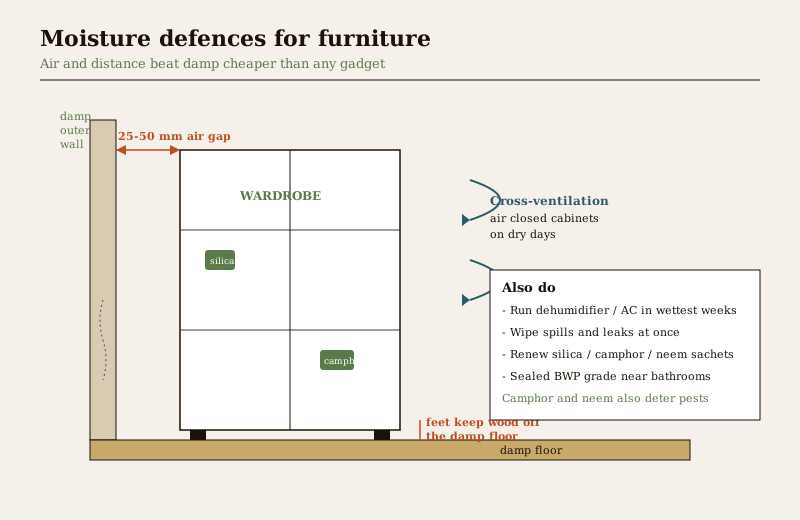
| Air gap from walls | Stops wall damp wicking into the back | Pull wardrobes/units 25-50 mm off external walls |
| Off the floor | Breaks ground-moisture contact | Legs, feet or a plinth; avoid frames flat on floor |
| Cross-ventilation | Dries trapped humidity | Open windows/doors on dry days; air closed cabinets |
| Desiccants in cabinets | Absorb shut-in moisture | Silica-gel packs, camphor or neem in wardrobes; renew |
| Dehumidifier / AC | Lowers room humidity in monsoon | Run in the wettest weeks, especially coastal homes |
| Prompt drying | Stops spills becoming swelling | Wipe spills and leaks at once; never let water pool |
| Waterproofing wet-area pieces | Resists constant damp | Sealed laminate/BWP grade near bathrooms, balconies |
Camphor and neem double as mild pest deterrents, which is why they earn their place in a wardrobe. For clothes storage specifically, pair this with wardrobe and closet planning, which builds ventilation and shelf gaps into the design.
The monsoon furniture checklist
The monsoon is when both enemies peak — swarming termites and soaking humidity arrive together. A short routine before the rains and again after them is the single highest-value habit for Indian furniture.
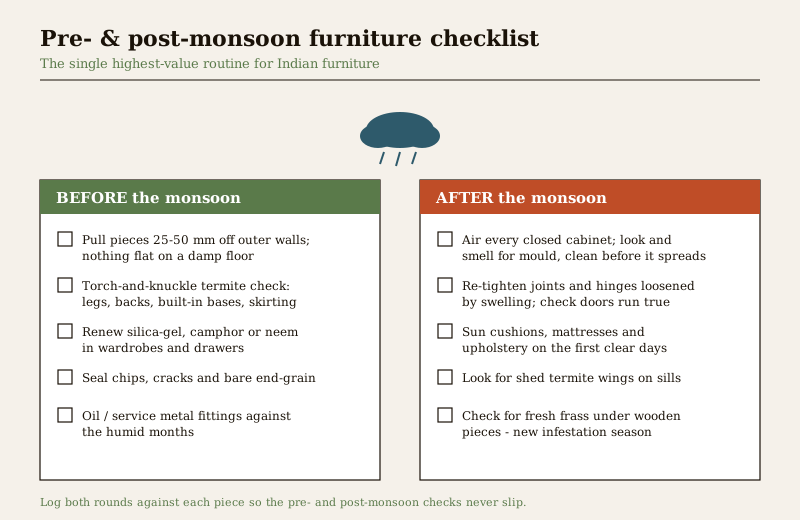
Before the monsoon:
- Pull heavy pieces 25-50 mm off external walls and confirm nothing sits flat on a damp floor.
- Do a torch-and-knuckle termite check — legs, backs, built-in bases, skirting — and clear any mud tubes to a professional's attention.
- Renew silica-gel, camphor or neem sachets in wardrobes and drawers.
- Seal chips, cracks and bare end-grain with polish or touch-up so damp and borers have no entry.
- Service or oil metal fittings so they resist the humid months.
After the monsoon:
- Open and air every closed cabinet; look and smell for mould, and clean any you find before it spreads to clothes.
- Re-tighten joints and hinges loosened by swelling, and check that doors/drawers still run true.
- Sun or air cushions, mattresses and upholstery on the first clear days to drive out held moisture.
- Look for shed termite wings on sills and fresh frass under wooden pieces — swarming season is when new infestations start.
Log these two checks against each piece; the furniture maintenance scheduler can hold the dates so the pre- and post-monsoon rounds don't slip.
Safety and health
The prevention here is homeowner-safe, but pest-control chemicals are not. Anti-termite and borer treatments are pesticides — designed to kill — and deserve respect:
- Ventilate during and after any treatment, and keep the area clear of food, utensils, children and pets until it is dry and aired as the applicator directs.
- Use licensed applicators for any chemical work; they hold the correct, approved products and know the safe dosages and re-entry times. Never improvise with agricultural or unlabelled chemicals indoors.
- Store nothing chemical near food or in children's reach, and follow every label instruction — this is the same indoor-air-quality care that runs through the furniture maintenance hub.
Prevention keeps you out of the chemical zone almost entirely; when treatment is unavoidable, a licensed professional keeps it safe.
How it connects
- This guide is the pest-and-damp chapter of the complete guide to furniture in India and sits inside the furniture maintenance hub alongside routine care.
- Do the routine cleaning and finishing in wooden furniture care; this guide adds the protection layer.
- Buy to resist trouble: choose seasoned heartwood in solid wood furniture, boro-treated BWR/BWP grade in plywood furniture, and note the sealed cores in engineered wood furniture.
- Design damp out of clothes storage with wardrobe and closet planning, and rescue pieces that are already damaged via furniture repair and restoration.
- Keep the pre- and post-monsoon checks on schedule with the furniture maintenance scheduler.
Key takeaways
- India's two furniture destroyers are termites/borers and monsoon moisture — both are predictable and largely preventable.
- Learn the termite signs — mud tubes, hollow-sounding wood, frass powder, tiny holes, shed wings — and torch-check twice a year; one sign means check everything nearby.
- Material choice is your first defence: seasoned heartwood over sapwood, boro-treated BWR/BWP ply over untreated, sealed engineered cores; MDF/board is less tasty but swells badly if damp.
- Beat moisture with air and distance — a gap from external walls, feet off the floor, cross-ventilation, and silica-gel/camphor/neem in closed cabinets — plus a dehumidifier or AC in the wettest weeks.
- Run the pre- and post-monsoon checklist — the highest-value routine for Indian furniture — and dry spills and leaks the moment they happen.
- Chemicals are for professionals: active termites, soil treatment and structural infestations are licensed pest-control work; ventilate, keep chemicals from food and children, and never DIY restricted pesticides.
References
- IS 303 / IS 710 — plywood grades and boiling-water-resistant (BWR/BWP) specifications, including preservative (boron) treatment; named generally, confirm the grade on the product.
- IS 1734 — methods of test for plywood (moisture and adhesion behaviour; named generally).
- IS furniture standards — general strength and durability provisions for wooden furniture (named generally, no clause numbers).
- Licensed pest-control operator — species identification, anti-termite soil/structural treatment, and approved-chemical application under the applicable pesticide regulations.
- Manufacturer and timber-supplier guidance — seasoning, treatment and finish specifications for your specific material.
All material notes, treatment approaches and routines here are indicative homeowner planning aids only; confirm plywood and timber grades against the relevant IS standards and product specification, and engage a licensed pest-control operator for any active termite infestation, soil treatment or use of restricted pesticides.
Export this guide
Related Guides — Deep-dive reading
Furniture Maintenance Guide: Keep Every Piece Lasting in India (2026)
The start-here routing guide to keeping furniture in good condition through Indian heat, humidity, monsoon, dust, hard water and termites — the one enemy and one habit for each material, a routine schedule you can actually follow, and where upkeep hands off to a professional.
FurnitureDoor Maintenance Guide India: A Seasonal Care Routine to Keep Doors Smooth for Decades
Oil the hinges, tighten the screws, lube the lock, check the seals and re-coat the finish — a simple seasonal calendar that stops Indian doors from binding in the monsoon, sagging, tarnishing on the coast or falling to termites.
Home Doors & EntrancesTermite Proof Door Guide India: Protect Door Frames from Termites in a Humid Climate
Why door frames are India's favourite termite meal — and how to beat them with the right material (WPC, uPVC, FRP, steel, properly seasoned teak), pre-construction and chemical anti-termite treatment of the wall and frame, boron treatment of timber, and keeping the frame off wet floors.
Home Doors & EntrancesRelated Tools — Try Free
Monsoon-Readiness Checklist
Pre-rain home audit across 9 categories — terrace, drains, waterproofing, electrical, HVAC, pest, vehicles, documents.
Seasonal AuditCross-Ventilation Analyzer
Estimate airflow and air changes per hour (ACH) from room size, window areas, layout, and local wind — with NBC 2016 Part 8 compliance check.
Ventilation CalculatorMaterial Schedule Generator
Generate a room-wise finish schedule — walls, floors, ceilings, trim, and joinery by location.
Material Schedule