
Furniture Styles Guide: Find Your Look for an Indian Home (2026)
A visual, decision-first tour of the furniture styles that matter in India — the materials, legs, silhouettes and finishes that define each look, how to identify the style you already lean toward, and how to mix a few without them clashing.
Most people cannot name their furniture style — but they know within seconds when a room feels "them" and when it feels like a hotel lobby. That instinct is really a reaction to a handful of design languages: the materials a piece is made of, the shape of its legs, the line of its silhouette and the finish on its surface. Learn to read those four cues and you can walk into any showroom, or scroll any listing, and place a piece in seconds — Scandinavian or mid-century, industrial or glam, contemporary or heritage.
This guide is deliberately furniture-first. It is about the pieces — the sofa, the chair, the sideboard, the bed — not about painting walls, choosing curtains or styling shelves. Whole-room decorating (colour schemes, moods, wall treatments) is a bigger subject that lives in the interior styles hub and the home decor hub; this one stays on the object you actually buy. Think of it as the field guide for choosing furniture that adds up to a look, then holding a few looks together without a clash.
Scope & how to read this. This is a style and selection guide, not a rulebook — every "signature" here is a typical cue, not a law, and real pieces blend. Treat material grades, cost bands and durability notes as indicative planning aids, and confirm construction quality, board grades and emissions against the relevant IS furniture and plywood standards (IS 303/IS 710 grades, IS 12406 for MDF) and formaldehyde E0/E1 classes with your maker. For fabrication and joinery, defer to your carpenter or manufacturer; this guide helps you choose and combine, not build.
The four cues that define any style
Before the style names, learn the grammar. Almost every furniture style is legible from four features:
- Material. Teak, oak, ash, steel, cane, velvet, marble, leather — the single strongest signal. Warm mid-brown wood reads mid-century; raw steel reads industrial; carved dark teak reads traditional Indian.
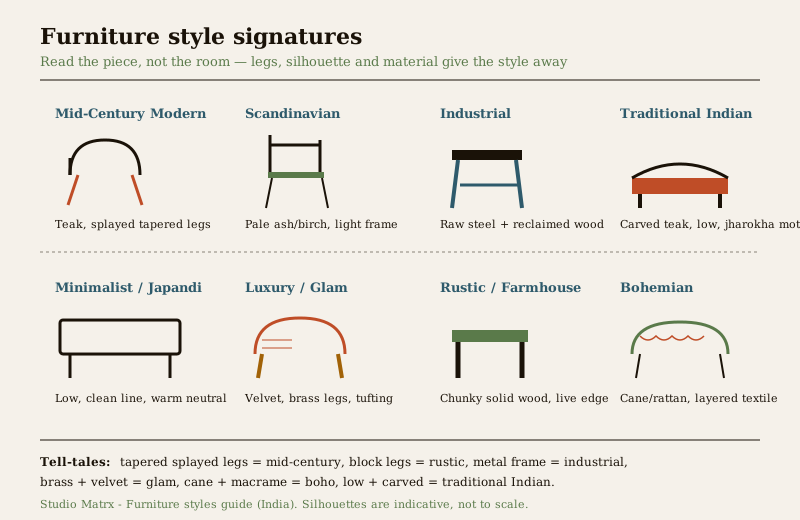
- Leg / base. The most reliable tell of all. Splayed tapered legs = mid-century. Slim round legs = Scandinavian. Black metal pipe = industrial. Turned or carved legs = traditional. Brass or gold = glam. Low floating bases = minimalist.
- Silhouette. The overall line — low and clean (Japandi, minimalist), boxy and grounded (rustic), curvy and tufted (glam, art deco), airy and woven (bohemian, coastal).
- Finish. Matt oiled wood, high-gloss lacquer, distressed paint, deep French polish, natural cane weave — the surface treatment that sits on top of the material.
The figure below plots these silhouettes so you can train your eye. Once you can read legs and material, style names become shorthand rather than mystery.
The styles that matter in India
Here are the design languages you will actually meet in Indian showrooms, online catalogues and inherited homes — each reduced to the furniture cues that give it away.
| Style | Signature material | Leg / base | Silhouette & finish |
|---|---|---|---|
| Modern | Neutral wood, leather, glass | Simple straight or floating | Clean, unfussy, matt — function-led |
| Contemporary | Whatever is current: mixed woods, metal, boucle | Slim, varied | Soft-edged, curved, of-the-moment |
| Minimalist | Oak, matt lacquer, single tone | Low block or hidden | Pared to essentials, no ornament |
| Scandinavian | Pale ash/birch, light wool | Slim round, splayed | Bright, cosy ("hygge"), natural |
| Japandi | Oak + warm neutral fabric, matt black | Low, grounded | Calm, low, Scandi warmth + Japanese restraint |
| Mid-Century Modern | Teak, walnut, tan leather | Splayed tapered wood | Curved shells, organic, oiled matt |
| Industrial | Raw steel + reclaimed wood | Black metal / pipe frame | Rugged, exposed hardware, distressed |
| Traditional Indian | Carved teak, sheesham | Turned / carved, often low | Ornate, jharokha & jaali motifs, deep polish, low seating |
| Colonial / British-Indian | Teak, cane, planter's cotton | Turned wood, cabriole | Planter chairs, four-posters, dark stain |
| Rustic / Farmhouse | Chunky solid wood | Trestle / block | Grounded, live-edge, distressed |
| Luxury / Glam | Velvet, marble, brass | Brass / gold metal | Tufted, curvy, high-gloss, statement |
| Art Deco | Lacquer, veneer, brass, mirror | Fluted / plinth | Bold geometry, symmetry, glossy |
| Bohemian | Cane, rattan, jute, layered textile | Low, woven, mixed | Relaxed, collected, colourful |
| Coastal | Whitewashed wood, cane, linen | Slim light wood | Airy, pale, breezy |
A few honest India-specific notes. Teak is our native luxury — it carries mid-century, colonial and traditional looks equally, which is exactly why Indo-modern fusion works so well. Cane and rattan are having a genuine revival across boho, coastal and contemporary; the cane and rattan furniture guide covers what lasts in our humidity. Velvet and deep upholstery look sumptuous but need thought in hot, dusty cities — see upholstered furniture. And raw-steel industrial pieces need a good coating or they rust in coastal and monsoon climates; the metal furniture guide has the detail.
How to identify your style
You do not choose a style from a menu; you discover the one you already lean toward. Three quick tests:
1. The save test. Pull ten rooms you have saved — on Pinterest, Instagram or our moodboards. Ignore the paint and plants; look only at the furniture. Are the legs mostly tapered wood? Mostly black metal? Mostly carved? The repeated cue is your lean.
2. The material test. Which material do you keep gravitating to — warm teak, pale oak, cane, leather, velvet? Your material is half your style already.
3. The comfort test. Do you relax into low, floor-close seating (Japandi, traditional Indian, boho) or upright, structured pieces (mid-century, contemporary)? Height and posture are a real style fork in Indian homes.
Run all three and a name usually falls out — and if two names tie, you are probably a natural mixer, which the next section is for. To go wider on the whole-room version of this question (mood, palette, wall treatment), branch to the interior styles hub; to gather references fast, build a board in the moodboard builder or browse living-room design ideas.
How to mix styles without clashing
"Eclectic done right" is the most common wish and the easiest to get wrong. The failure mode is giving every piece an equal, competing voice; the fix is hierarchy. Use a simple ratio and a single shared thread.
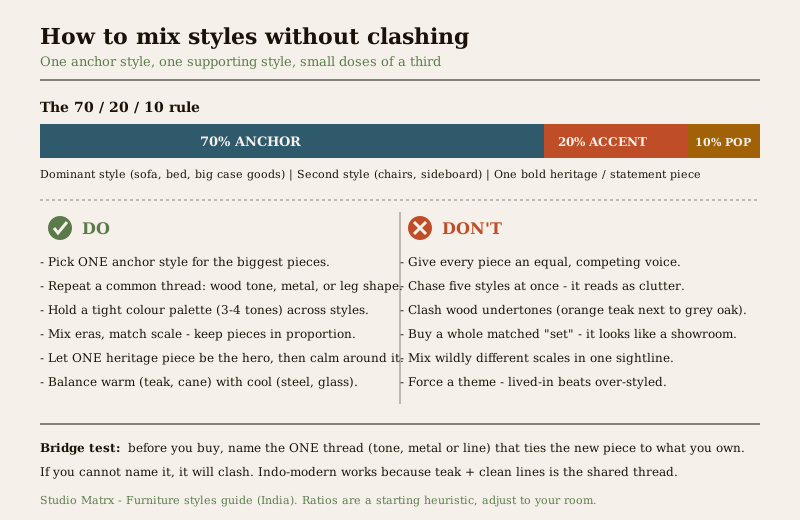
The 70 / 20 / 10 idea. Let one style dominate the big pieces (the sofa, bed, main case goods) — roughly 70%. Let a second style carry the supporting cast (chairs, a sideboard) — about 20%. Reserve 10% for a single bold statement, often a heritage or artisanal piece. This gives the eye somewhere to rest.
The shared-thread rule. Two very different pieces will co-exist if they share one obvious thread — a wood tone, a metal, a leg shape or a colour. Indo-modern works precisely because teak + clean lines is a thread that runs through both a modern sofa and a carved heritage chair.
| Do | Don't |
|---|---|
| Pick ONE anchor style for the biggest pieces | Give every piece an equal, competing voice |
| Repeat a common thread — wood tone, metal, leg shape | Chase five styles at once; it reads as clutter |
| Hold a tight palette of 3-4 tones across styles | Clash wood undertones (orange teak beside grey oak) |
| Mix eras but match scale and proportion | Buy a whole matched "set" — it looks like a showroom |
| Let ONE heritage piece be the hero, calm around it | Mix wildly different scales in a single sightline |
| Balance warm (teak, cane) with cool (steel, glass) | Over-theme it — lived-in beats over-styled |
The quick gate before any purchase: name the one thread that ties the new piece to what you already own. If you cannot name it — tone, metal or line — it will clash. If you can, it will read as intentional, not accidental.
Matching furniture style to your home & architecture
Furniture does not sit in a vacuum — it should answer the building it lives in. A few sensible pairings:
- New apartments (clean lines, compact). Modern, contemporary, Scandinavian, Japandi and minimalist all suit tight, straight-walled flats; low, leggy pieces keep small rooms feeling open. For genuinely small homes, the furniture for small homes guide and space-saving furniture matter more than style.
- Older homes with character (high ceilings, mouldings, teak doors). Traditional Indian, colonial and mid-century all flatter period architecture; the details rhyme with the joinery already there.
- Villas and farmhouses. Rustic, industrial and coastal earn their keep where there is space and a relationship to the outdoors; pair with outdoor furniture planning.
- Luxury interiors. Glam and art deco reward generous rooms and good light — see the luxury interiors hub for the whole-room treatment.
The principle is honesty: a heavy carved four-poster fights a minimalist glass-and-steel flat, while a low teak platform bed completes it. Let the architecture cast the first vote.
Indian fusion — Indo-modern done well
The most successful Indian homes right now are rarely "pure" anything; they are Indo-modern — a contemporary or mid-century base warmed by one or two heritage pieces: a carved teak swing (jhoola), a brass-inlaid chest, a low carved bench, a jaali screen. The reason it works comes straight from the mixing rules above: teak and clean geometry are the shared thread, so a 2026 sofa and a hundred-year-old chair speak the same language.
Practical route: choose a calm, contemporary anchor (a low neutral sofa, a simple platform bed), keep the palette to warm wood plus two or three neutrals, then introduce a single heritage hero and let it breathe. This is also the kindest approach to inherited furniture — one beloved old piece as the 10% statement, not a whole room of matched antiques. For the pieces themselves, solid wood furniture explains what teak and sheesham deliver.
Getting a look on a budget
Style is not a function of spend — proportion, restraint and a coherent palette cost nothing. Ways to get a look for less:
- Buy the anchor well, accent cheaply. Spend on the one big daily-use piece (sofa, bed); let the 20-30% accents be affordable or second-hand. The furniture buying guide and furniture cost guide show where money is worth it.
- Chase the leg and finish, not the label. A tapered-leg, matt-oiled piece reads mid-century whether it is designer or an engineered-wood lookalike — just confirm board grade and an E1/E0 emission class for indoor air.
- Recolour and refresh. A reupholster or a polish and refinish can shift a dated piece into your style for a fraction of replacement.
- Use cane, jute and cotton. Boho and coastal looks lean on inexpensive natural materials — an easy, affordable style entry.
- Plan before you spend. Gather references in the moodboard builder and browse living-room ideas so you buy with a plan, not on impulse.
Indicative only — get local quotes, because the same look spans a wide price range depending on material, maker and city.
How it connects
- Start with the complete guide to furniture in India — the pillar that frames every furniture decision, from type to material to budget.
- The style cues here are really material cues: go deep in solid wood furniture, metal furniture, cane and rattan furniture and upholstered furniture.
- For whole-room styling — mood, colour, walls — cross to the interior styles hub and the home decor hub; for the high end, the luxury interiors hub.
- Turn inspiration into a plan with the moodboard builder and our moodboards, or browse living-room design ideas.
- Once the style is set, cost and buy it with the furniture buying guide, the furniture cost guide and, for compact homes, furniture for small homes.
Key takeaways
- Read the four cues — material, leg/base, silhouette and finish — and you can name almost any furniture style on sight.
- Identify your lean with the save, material and comfort tests rather than picking a style from a menu; the repeated cue in rooms you love is your style.
- Mixing works with hierarchy, not equality: one anchor style (~70%), one accent (~20%), a single statement (~10%), all held by one shared thread — tone, metal or line.
- Indo-modern succeeds because teak + clean geometry is a thread that lets contemporary and heritage pieces coexist; use one beloved old piece as the hero.
- Let the architecture vote first — clean flats suit modern/Scandi/Japandi; period homes suit traditional/colonial/mid-century; villas suit rustic/industrial/coastal.
- Style is not about spend: buy the anchor well, accent affordably, chase the leg-and-finish not the label, and refresh existing pieces.
- Confirm construction quality, board grades and E1/E0 emission classes with your maker; treat all cost and durability notes here as indicative — this guide helps you choose and combine, not fabricate.
References
- IS furniture strength, stability and durability standards (Bureau of Indian Standards) — named generally for seating and case-goods quality.
- IS 303 / IS 710 plywood grades (MR / BWR / BWP) and IS 12406 for MDF — board suitability and moisture grade behind furniture surfaces.
- Formaldehyde emission classes E0 / E1 / E2 (CARB / EN 13986 context) — indoor-air-quality guidance for engineered-wood pieces.
- IGBC / Indian Green Building Council and GreenPro eco-labelling — for sustainably-made furniture, named generally.
- Manufacturer and carpenter specifications — the authority on construction, joinery and finish for any specific piece.
All style signatures, material notes, cost bands and durability guidance here are indicative planning aids only; real furniture blends styles, so confirm construction quality, board grades and formaldehyde emission classes with your maker, get local quotes for cost, and treat this as a guide to choosing and combining furniture rather than fabricating it.
Export this guide
Related Guides — Deep-dive reading
Bohemian Interiors — A 2026 Eclectic Style Guide for Indian Homes
Collected, layered, alive · Rust and jewel tones · Curated eclecticism, never clutter
Design StylesHow to Choose a Lighting Style for Your Home (2026)
The start-here decision guide for the style act of the Lighting hub — how to find a lighting style that fits your interior, read the signature of each look, follow the golden rules that cross every style, and mix styles without a clash.
LightingWarm Minimal Interiors — A 2026 Style Guide for Indian Homes
Restraint with warmth · Oat & oak & linen · Curated negative space
Design StylesRelated Tools — Try Free
Home Building & Interior Cost Calculator — 20 Cities
Construction + interior costs for 20 Indian cities across kitchen, wardrobes, flooring, painting, ceiling.
Cost CalculatorMaterial Decision Framework (M-Score)
Score 30+ Indian construction materials across cost, durability, climate fit, maintenance, and sustainability.
MaterialsMoodboard Builder
Build curated moodboards from your own images and a library of Indian-style references.
DesignAI