
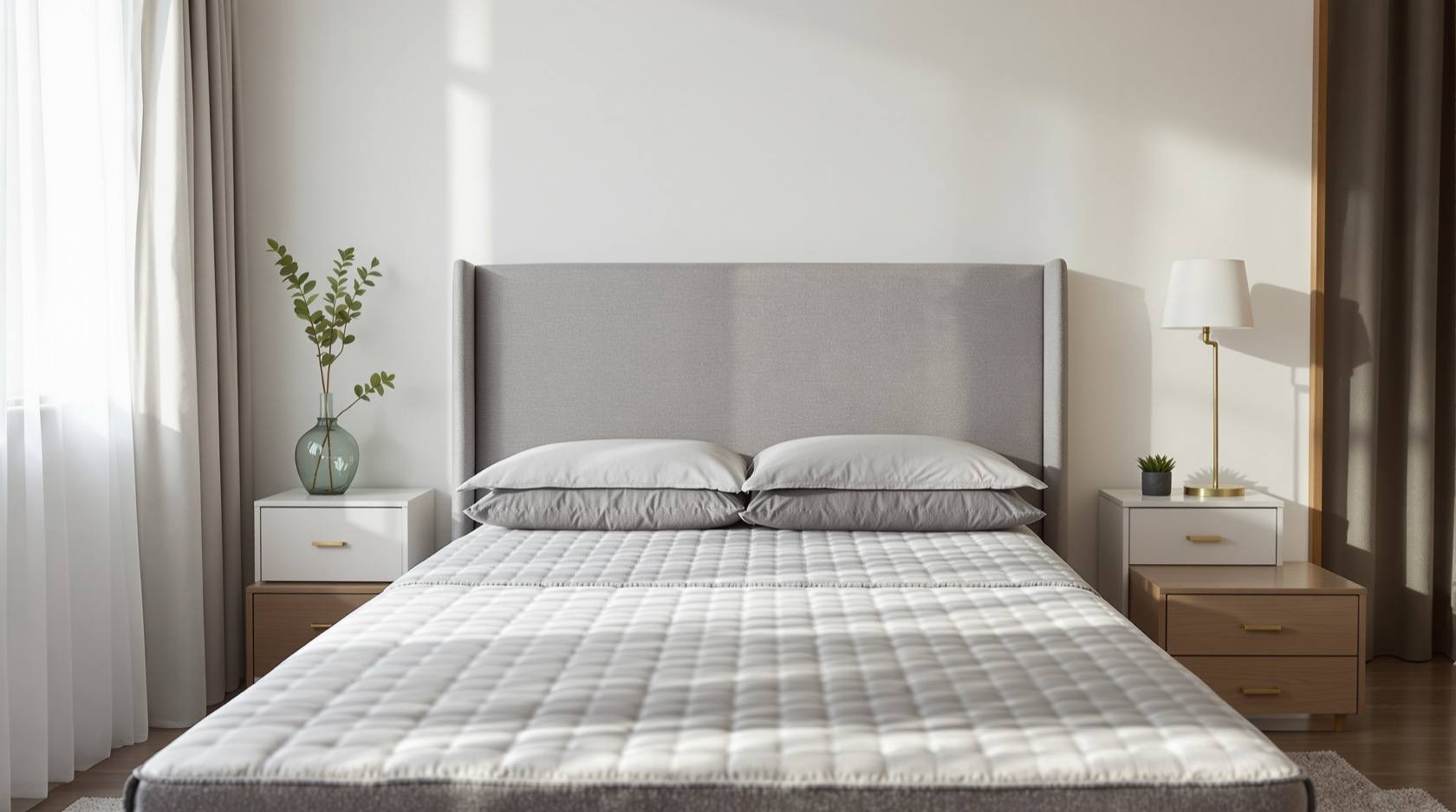
Bed & Mattress Sizes in India: Single to King, Room Fit & Buying (2026)
A homeowner's guide to Indian bed and mattress sizes — the real single, diwan, double, queen and king dimensions in inches and cm, why Indian king and queen are not standardised, how much room each bed needs with walking clearance, storage-bed and bed-height details, and how to measure before you buy.
The bed is the single largest thing you will put in your home, and buying it is where the most avoidable mistakes happen. A frame ordered online turns up two inches wider than the room's walkway allows; a "king" mattress bought to replace an old one arrives four inches short of the actual bed; a beautiful storage bed cannot lift its lid because the wardrobe door swings into the same air. Almost none of these are quality problems. They are sizing problems — and in India they are made worse by a genuine, frustrating fact: Indian bed sizes are not standardised the way US or UK sizes are. One brand's king is another brand's queen.
This guide is the definitive India bed-and-mattress sizing reference. It gives the real Indian dimensions in inches and centimetres, explains why king and queen vary by brand and what to do about it, and — the part most listings skip — tells you how much room each bed actually needs once you add a frame, headboard, walking clearance and a wardrobe that opens. It sits inside the Studio Matrx furniture library: the complete guide to furniture in India is the pillar, and the furniture ergonomics guide covers the human-comfort logic (heights, reach, clearances) that runs underneath everything here.
Scope & how to read this. Every dimension here is typical and indicative, meant to help you plan a room and shortlist a bed — not a spec sheet. Because Indian sizes are not standardised, the single most important instruction in this guide is: measure the actual bed frame (or the exact mattress you own) before ordering the other one. Treat brand size names as a rough label, never a promise. Costs, where mentioned, are relative bands — get local quotes. For anything structural (a loft bed, a wall-mounted foldaway, anti-tip fixing of a tall bunk) follow the maker's fitting instructions and the IS furniture safety standards.
Indian bed sizes are different — start here
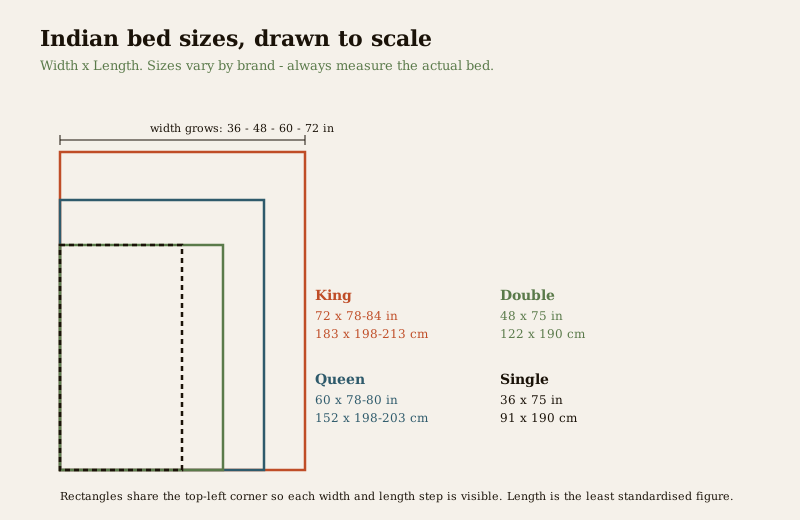
If you have read US or UK bed charts, unlearn them before you shop in India. A US Queen is 60 x 80 inches; a UK King is 60 x 78. Indian sizes overlap those numbers but do not match them, and — critically — Indian manufacturers do not agree with each other. The word "king" on an Indian product page can mean 72 x 78, 72 x 84, 72 x 75 or 78 x 78 depending on the brand and the region. Mattress makers and bed-frame makers often use different size charts, which is exactly why a new mattress so often fails to fit an existing bed.
So the size names below are the common Indian conventions — useful for talking to a carpenter or filtering a website — but the length varies more than the width, and both vary by brand. Width tends to cluster (36, 48, 60, 72 inches); length is the wild card (72, 75, 78, 80, 84 inches). Always confirm the actual figures.
The Indian bed & mattress size chart
Dimensions below are width x length (the way beds are quoted in India), in inches and centimetres, with the typical clear room a bed of that size needs to sit comfortably with access. "Room min" is the smallest room in which the bed works without feeling wedged — not a hard limit.
| Bed size (India) | Inches (W x L) | Centimetres (W x L) | Typical room min |
|---|---|---|---|
| Single | 36 x 75 | 91 x 190 | 8 x 8 ft (2.4 x 2.4 m) |
| Diwan / cot | 30-36 x 72-75 | 76-91 x 183-190 | 8 x 8 ft (day use, one side) |
| Small double / three-quarter | 42 x 75 | 107 x 190 | 8 x 9 ft |
| Double (standard) | 48 x 75 | 122 x 190 | 9 x 9 ft (2.7 x 2.7 m) |
| Queen | 60 x 78 (also 60 x 80) | 152 x 198 (152 x 203) | 10 x 10 ft (3.0 x 3.0 m) |
| King | 72 x 78 (also 72 x 84 or 72 x 75) | 183 x 198 (183 x 213 / 183 x 190) | 10 x 12 ft (3.0 x 3.7 m) |
| Super / Cal king | 78 x 84 | 198 x 213 | 12 x 12 ft+ (3.7 x 3.7 m) |
A few honest notes on this table:
- Single (36 x 75). The child's-room and guest-room default, and the module bunk and trundle beds are built from. Some "single" cots run only 72 inches long — a problem for a tall teenager.
- Diwan. A single-width daybed for seating that doubles as a bed; often 30-36 inches wide and frequently with storage underneath. Great for a study, guest room or living room.
- Double (48 x 75). Sleeps two adults but tightly — 24 inches each, narrower than a single. Fine for smaller rooms and couples who like to be close; the honest jump for comfort is to a queen.
- Queen (60 x 78/80). The Indian comfort default for a couple: 30 inches each. The best all-round choice for most master bedrooms of average size.
- King (72 x 78/84/75). Luxury width — 36 inches each, a whole single-bed's width per person — but this is where non-standardisation bites hardest. Never assume a king mattress and a king frame from two brands will match.
Frame size is bigger than mattress size
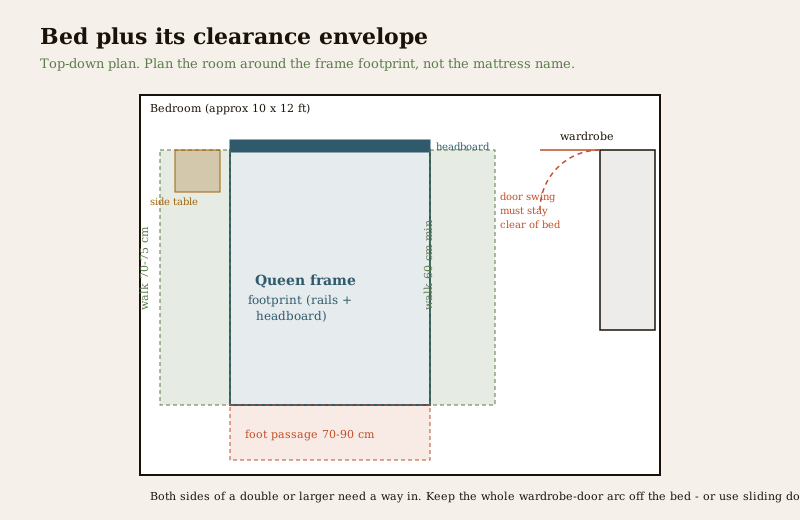
Here is the trap almost every online buyer falls into: the size on the listing is usually the mattress size, but the thing that has to fit your room is the outer frame. A bed frame adds material all the way round the mattress, and a headboard adds depth at the top:
- Side and foot rails add roughly 2-6 cm per side (more on a chunky solid-wood or upholstered frame, less on a slim metal one). A 60-inch queen mattress can sit in a frame with a 65-70 inch outer footprint.
- Headboard adds 5-15 cm of depth beyond the mattress at the head — more for a tall upholstered or storage headboard. That eats into the wall-to-wall length you need.
- Footboard (if any) adds depth at the foot and can block a walkway or a wardrobe door.
- Upholstered platform beds are the biggest offenders — a padded surround can add 10 cm+ on every side, turning a queen into a king-sized footprint.
The rule: plan the room around the frame's outer dimensions, not the mattress name. Ask the seller for the external length and width (including headboard), or measure the display piece. If you are choosing a bed against a room you already know, the furniture size chart and the furniture layout validator let you test the frame footprint against the walls before you buy.
How much room a bed really needs — clearances
A bed is only usable if you can walk around it, make it, and open the furniture beside it. Plan these gaps around the frame:
| Clearance | Comfortable | Tight (workable) | Why it matters |
|---|---|---|---|
| Main walking side(s) | 70-75 cm | 60 cm | Room to walk, make the bed, stand to dress |
| Second/access side of a double+ | 60-75 cm | 45-50 cm | Both partners need a way in and out |
| Foot of bed to wall/wardrobe | 70-90 cm | 60 cm | Passage + room for a wardrobe door to open |
| Bedside table beside bed | 45-60 cm wide | 40 cm | Table plus a slice of standing room |
| Wardrobe door / drawer swing | full door depth clear | — | A hinged door needs its whole width as clear air |
Two clearances quietly ruin more bedrooms than any other. First, the wardrobe swing: a hinged wardrobe door is often 45-60 cm deep when open, and if the bed sits inside that arc the wardrobe simply cannot be used — one reason sliding-door wardrobes suit tight bedrooms. Second, the second side of a double or bigger: a couple needs to get in and out from both sides, so a queen shoved against a wall to save space traps one person. Design a bedroom by placing the bed plus its clearance envelope first, then the wardrobe, then everything else. The furniture layout designer and layout planner are built for exactly this test.
Storage beds — footprint and lift clearance
Storage beds are a favourite in space-tight Indian homes, and rightly so — a queen storage bed swallows the volume of a small wardrobe. But they add two sizing questions a plain bed does not:
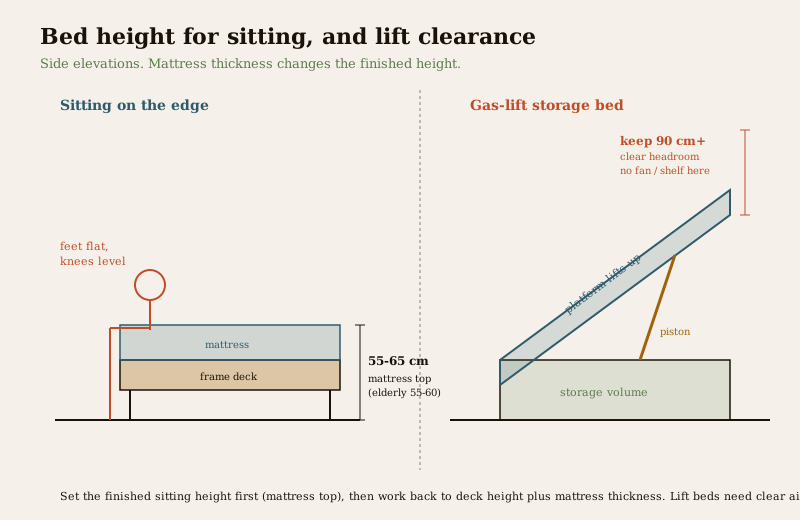
- Hydraulic (gas-lift) storage beds need the whole mattress and platform to swing up on a piston. That means clear air above the foot of the bed — no low ceiling detail, no fan directly over the foot, no shelf — and a person standing at the side to lift it. The lifted platform can rise to head height, so keep 90 cm+ of headroom above the foot.
- Box-storage beds (a fixed frame with a lift-up top, or side/front drawers) need drawer pull-out space instead — a front or side drawer needs 45-60 cm of clear floor to slide fully open, which competes with the same walkway you use to reach the bed.
- Divan / diwan storage (drawers under a daybed) is the most forgiving — shallow drawers, side access, no lifting overhead.
Storage beds are also heavier and rarely move once loaded, so get the position and clearances right on day one. And because the mechanism and platform sit under the mattress, the frame on a storage bed is almost always noticeably larger than the mattress — measure the outer box, not the mattress name. For where storage beds fit in a wider small-home strategy, see space-saving furniture and the bedroom retreat design guide.
Bed height — sitting, getting up, and older users
Width and length get all the attention, but bed height — the top of the mattress above the floor — decides how easy the bed is to get into and out of every single day. Too low and it is a deep squat to stand up; too high and short users perch or clamber.
| User / use | Comfortable mattress-top height | Notes |
|---|---|---|
| General adult | 55-65 cm (about 22-25 in) | Feet flat on floor when sitting on the edge |
| Elderly / limited mobility | 55-60 cm | Height of a chair seat; hips slightly above knees for easy standing |
| Children | 40-50 cm | Lower is safer for climbing in and out |
| Platform / low-modern look | 35-45 cm | Stylish but a hard stand-up for older users |
The catch is that mattress thickness changes the height after you buy. A frame designed for a 15 cm mattress will sit 10 cm higher if you drop a 25 cm pocket-spring mattress on it. So decide the finished sitting height (mattress top, when you sit on the edge feet should rest flat and knees roughly level with or just below hips), then work back to the frame deck height plus your mattress thickness. For an elderly parent's room this single number matters more than the bed's style. The broader "heights that fit the body" logic lives in the furniture ergonomics guide.
Headboard allowance: a headboard adds usable back support for sitting up to read, but adds 5-15 cm (tall upholstered ones far more) to the bed's length against the wall — count it in your room plan, and leave it clear of a window if the bed sits under one.
Kids, bunk and trundle beds
Children's beds are almost all built on the single (36 x 75) module, with a few size-specific cautions:
- Bunk beds stack two singles. The critical dimensions are ceiling clearance above the top bunk (a child must be able to sit up — leave 75-90 cm from top mattress to ceiling/fan) and guard-rail height. Anti-tip and guard-rail integrity are safety-critical: follow the maker's fitting instructions and the IS furniture safety standards, and keep young children off the top bunk.
- Trundle beds hide a second single (often on castors, sometimes a slightly lower/shorter mattress) under a main bed — brilliant for sleepovers and small rooms. Check the pull-out clearance in front, just like a drawer.
- Growing children: buy the length for the teenager, not the toddler — a full 75-inch single lasts far longer than a short 72-inch cot.
Which size for which room
Match the bed to the room, then confirm with the clearance table above. These are starting points, not rules — a well-planned 10 x 10 can take a queen, a badly planned 10 x 12 can choke a king.
| Room size | Comfortable bed | Stretch (plan carefully) | Watch out for |
|---|---|---|---|
| 8 x 8 ft (kids/guest) | Single or small double | Double | Wardrobe swing eats the walkway |
| 8 x 10 ft | Double | Queen (one side to wall) | Second-side access if a couple |
| 10 x 10 ft | Queen | King (tight sides) | 60 cm minimum each side |
| 10 x 12 ft (master) | King | Super king | Foot-of-bed passage to wardrobe |
| 12 x 14 ft+ | King / super king | King + bench + lounge chair | Balance — don't leave it cavernous |
The honest headline: most Indian master bedrooms are happiest with a queen. A king is glorious but demands a genuinely large room and the clearance on both sides — squeeze one into a 10 x 10 and you gain sleeping width but lose the ability to walk around it. If you love a king and the room is snug, a queen frame with a slim profile and a good mattress usually beats a king you have to sidle past.
Mattress thickness & type — a quick note
Mattress thickness changes bed height (above) and must suit the frame — a slatted or storage platform has minimum and maximum thickness the maker specifies. Common Indian ranges: 10-15 cm (firm foam/coir, budget and kids), 15-20 cm (the everyday sweet spot for foam, latex or bonnell-spring), 20-25 cm+ (premium pocket-spring, pillow-top, memory foam). A thicker mattress feels plush but raises the sitting height, so pair the choice with the height table. Type (coir, foam, latex, pocket spring, memory foam) is a comfort-and-budget decision beyond this guide's sizing scope — just make sure the size on the mattress matches your measured frame, not its brand name.
Measuring & delivery — before you buy
Two measurements save almost every bed-buying regret:
1. Measure the bed you are matching. Replacing a mattress? Measure the existing frame's inner rails (width and length) with a tape — do not trust the old size label. Buying a frame for a mattress you keep? Measure the mattress.
2. Measure the room and the route in. A king frame that fits the room may not fit through the door, down the corridor, round the stair turn or into the lift. Check the doorway width, corridor turns, staircase headroom and lift size against the bed's largest packed dimension. Solid-wood beds usually knock down into parts; upholstered platform beds often do not — ask before ordering.
Then plan the layout with the frame footprint plus its clearance envelope, using the furniture layout validator or layout planner, and browse real rooms in bedroom design ideas to see how the bed sits with its wardrobe and side tables.
How it connects
- Start with the pillar, the complete guide to furniture in India, and the sizing sibling it belongs to, the furniture ergonomics guide.
- Plan the bedroom around the bed with wardrobe & closet planning, the bedroom retreat design guide and warm minimal bedroom ideas.
- For the room's whole furniture set, see the residential furniture guide; for tight rooms, space-saving furniture.
- Test the fit before you buy with the furniture size chart, the furniture layout validator and the layout planner.
- Get inspired by real rooms in bedroom design ideas.
Key takeaways
- Indian bed sizes are not standardised — a "king" can be 72 x 78, 72 x 84 or 72 x 75 depending on the brand, and mattress and frame charts often differ. Size names are a rough label, not a promise.
- Measure the actual frame (or the exact mattress) before you order the other one — this single habit prevents the most common bed-buying mistake in India.
- Plan the room around the frame's outer footprint, not the mattress name — rails add 2-6 cm per side and a headboard 5-15 cm; upholstered platforms add far more.
- Clearance makes a bed usable — aim for 60-75 cm of walking room each usable side, both sides on a double or bigger, and keep the bed out of the wardrobe door's swing.
- Storage beds need lift or pull-out room — gas-lift beds need 90 cm+ of clear headroom over the foot; drawer beds need 45-60 cm of pull-out floor.
- Set bed height for daily use — 55-65 cm mattress-top for adults, chair-seat height for the elderly; remember a thicker mattress raises it.
- For most Indian master bedrooms, a queen is the comfort sweet spot; reserve a king for a genuinely large room with clearance on both sides.
References
- The IS furniture standards for domestic beds and furniture — strength, stability and safety (IS 4838 and the related furniture strength/durability standards; named generally, no clause numbers).
- Anthropometric and ergonomic good practice for seating and sitting heights — used here for bed-height and clearance guidance (named generally).
- Manufacturer size charts and fitting instructions — the authority for any specific bed, because Indian bed sizes are not standardised across brands.
- Studio Matrx furniture library — the complete guide to furniture in India and furniture ergonomics guide for the wider planning context.
All dimensions, heights, clearances and size names here are indicative planning aids only; Indian bed sizes are not standardised, so always measure the actual bed frame or mattress before buying the other, confirm the route into the room, and follow the manufacturer's own size chart and fitting instructions.
Export this guide
Related Guides — Deep-dive reading
Furniture Ergonomics: Sizes, Heights & Clearances for Indian Homes (2026)
The master reference for human-centred furniture dimensions — the seat, table, desk and counter heights, the clearances and walkways, and the reach zones that make a piece comfortable to use every day, tuned to Indian bodies, floor-seating habits and multi-generational homes.
FurnitureSofa Buying & Sizing Guide for Indian Homes (2026)
How to pick the right sofa type and seat count, size it to your living room with the two-thirds wall rule, get the seat depth and height comfortable, and — the part everyone forgets — make sure it actually fits through your door, lift and stairwell.
FurnitureWhy Scale Matters: Keeping Rooms Comfortable for Humans
How sizing furniture, art and lighting to the human body — not the showroom — keeps small Indian flats from feeling crushed and large halls from feeling empty.
Design PrinciplesRelated Tools — Try Free
Apartment Furniture Size Chart
Standard furniture dimensions for Indian apartments — sofas, beds, tables, dining, storage.
Reference ChartInterior Layout Planner — Printable Graph Grid
Printable graph grid to sketch room layouts to scale before committing to furniture placement.
Layout ToolAI Measurement Tool
Measure your room using voice, photos, or video sweep — no tape measure needed.
DesignAI