
Furniture Cost Guide India: What It Really Costs to Furnish a Home (2026)
An honest, indicative-bands guide to what furnishing an Indian home actually costs — what drives the price of a piece, relative cost bands per item, whole-home budgets for a 1/2/3 BHK, where to spend versus save, the hidden costs no quote shows you, and how to phase and compare it all without overpaying.
Ask five people what a sofa costs and you will get five answers an order of magnitude apart — and every one of them is "right" for a different sofa. Furniture pricing feels opaque because there is no single price; there is a wide band for every piece, driven by choices you control. This guide is the honest map of that band: what makes furniture cost what it does, roughly what each piece runs as a range, what a whole home comes to, and where your money genuinely buys longer life versus where it just buys a brand name. It is the money companion to the complete guide to furniture in India and the furniture buying guide.
Scope & how to read this. Every number here is a relative, indicative band — a planning aid to help you budget and read a quote, not a price list. Real prices swing with city, material grade, brand, finish, size and the day's timber and hardware rates. Never treat a band as a quote: get two or three local quotes for anything that matters, and run your actual sizes through the furniture cost calculator and the custom furniture estimator. Fabrication, joinery and structural soundness are the carpenter's or manufacturer's domain; this guide helps you budget and choose, not build.
What actually drives furniture cost
Two sofas that look identical in a photo can differ threefold in price, and the difference is rarely visible until you sit, open a drawer, or wait five years. Six levers move the number:
- Board / material grade. The single biggest swing on carpentry. Solid teak or solid wood sits at the top; plywood (especially BWP/BWR marine grade per the IS plywood standards) is mid-to-high; MDF and particle board are cheapest and least moisture-tolerant. The engineered wood family covers the whole middle.
- Finish. On the same carcass, a basic laminate is the floor, an acrylic or PU finish can double the surface cost, and veneer or lacquer higher still. Finish is often where a quote quietly inflates — see best laminate finishes for Indian homes.
- Brand tier. The same particle-board wardrobe carries a very different sticker from a local carpenter, a national retail brand, and an imported label. You are paying for design, warranty, showroom and marketing as much as material — the theme of imported vs Indian furniture.
- Custom vs modular vs loose. How the piece is made changes both price and what you get. Bespoke carpentry, factory-modular and ready-to-buy loose furniture price differently for the same function — the whole subject of built-in vs modular vs loose furniture and custom vs ready-made.
- Hardware. Hinges, channels, soft-close, handles and locks are invisible in a photo and huge over a lifetime. Branded soft-close hardware can add a meaningful share to a wardrobe or kitchen, and it is the first thing a cheap quote skimps on.
- Labour & city. Carpentry rates, transport and showroom overheads vary widely between a metro and a smaller town, and skilled polishing labour is its own line. The same brief costs differently in Mumbai and Coimbatore.
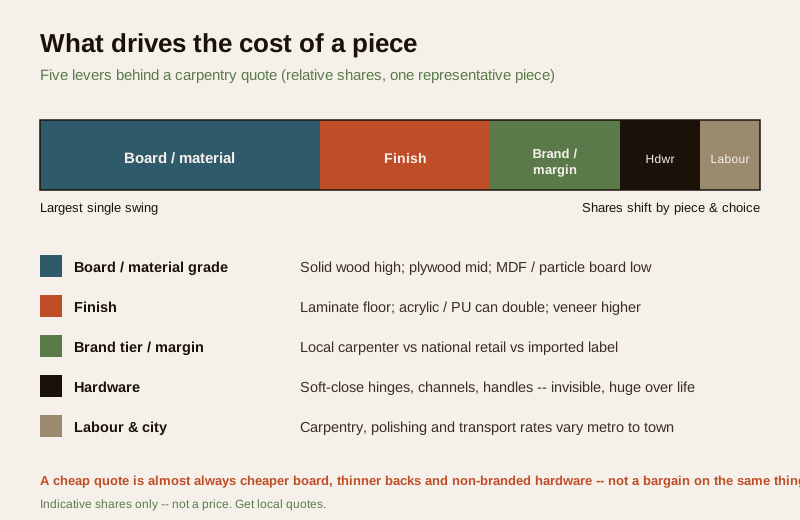
The practical takeaway: when a quote looks high or low, ask which lever moved. A cheap wardrobe is almost always cheaper board, thinner backs, and non-branded hardware — not a bargain on the same thing.
Cost bands by piece — read these as ranges
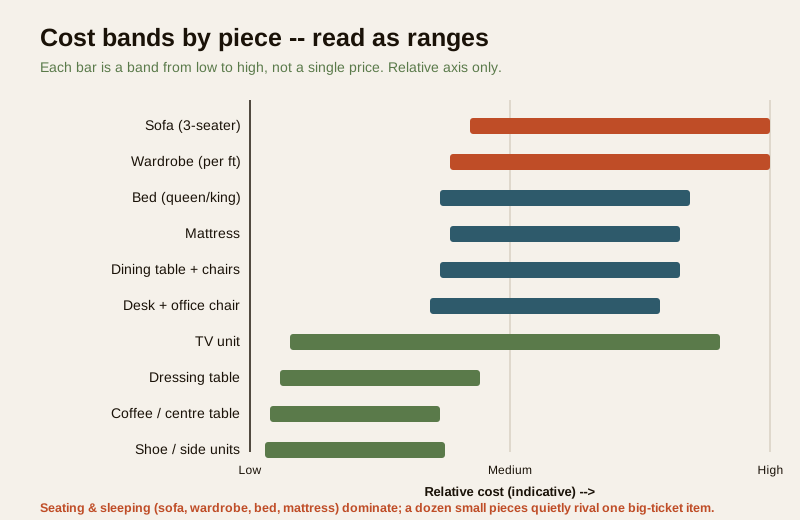
Below is a relative-band table for common home pieces. The bands are wide on purpose; a piece can sit low or high depending on the six drivers above. Use them to sanity-check a quote and to see which pieces dominate a budget, not to predict a price.
| Piece | Relative cost band | What pushes it up | Where it usually lands |
|---|---|---|---|
| Sofa (3-seater) | Medium to very high | Frame wood, foam density, leather/fabric, brand | A mid-tier fabric sofa is a home's typical big-ticket seat — see sofa buying and sizing |
| Bed (queen/king) | Medium to high | Solid wood vs engineered, storage, headboard | Storage beds and solid frames sit higher; see bed and mattress sizes |
| Mattress | Medium to high | Foam vs latex vs spring, thickness, brand | Often underbudgeted; a good mattress rivals the bed frame |
| Wardrobe (per running/sq ft) | Medium to very high | Board grade, finish, internal fittings, hardware | The biggest carpentry line in most homes — the wardrobe cost guide breaks it down |
| Dining table + chairs | Medium to high | Top material, seat count, solid vs engineered | Scales with seats; see dining table sizing and seating |
| TV unit | Low to high | Length, finish, wall-mount vs floor | Wide band by size and finish — modern TV unit ideas |
| Coffee/centre table | Low to medium | Material, glass, brand | Easy place to save; loose retail is fine |
| Study/office desk + chair | Medium to high | Ergonomic chair quality, desk material | Spend on the chair — home office furniture and ergonomics |
| Dressing table | Low to medium | Mirror, storage, finish | See dressing table and vanity |
| Shoe rack / crockery / side units | Low to medium | Custom vs modular vs loose | Prime candidates for loose or modular |
Two patterns fall out every time. First, seating and sleeping dominate — sofa, bed and mattress plus the wardrobe usually eat the majority of a furnishing budget. Second, the small stuff adds up: a dozen "small" pieces (racks, side tables, stools, a shoe cabinet) quietly rival one big-ticket item. Budget the small stuff as a category, not as afterthoughts.
Budgeting a whole home — by tier and size
The most useful question is not "what does a sofa cost" but "what does furnishing this home come to." That depends on home size and the tier you buy at. Read the table as relative envelopes, not totals — a budget-tier 2 BHK and a premium 2 BHK can differ several-fold for the same rooms.
| Home | Budget tier (loose + basic modular) | Mid tier (modular + some custom) | Premium tier (custom + brands + imports) |
|---|---|---|---|
| 1 BHK | Lowest envelope; loose furniture, few built-ins | Modular wardrobe + a good sofa/bed | Full custom, brand seating, designer pieces |
| 2 BHK | Modest; prioritise beds, one sofa, wardrobes | Custom wardrobes + mid sofa + dining | Bespoke throughout, imported accents |
| 3 BHK | Larger by room count alone | Whole-home modular + selective custom | High-custom, multi-brand, luxury interiors territory |
Three honesty notes. The tier matters more than the size — how you buy (loose vs custom, local vs brand vs import) swings the total further than one extra bedroom does. Wardrobes and kitchen (a separate budget — see the modular kitchen hub) are the carpentry heavyweights, so decisions there move the whole number most. And a realistic budget always includes a contingency — 10 to 15 percent for the piece you forgot, the size that changed, or the finish you upgraded on site. To turn these envelopes into a figure for your rooms and choices, the furniture cost calculator and the cost and budget hub are the right next stop.
Where to spend, where to save
Not every piece deserves the same money. The rule of thumb: spend on what your body touches daily and what is hard to replace; save on what is easy to swap, decorative, or lightly used.
| Spend on (buy-it-for-life) | Why | Save on (cheap is fine) |
|---|---|---|
| The sofa you use every evening | Foam density and frame decide 8-10 years of comfort | Guest-room and occasional seating |
| Mattress | Sleep and back health; poor foam sags fast | Decorative side tables, stools |
| Office chair | Hours a day; ergonomics is real | Coffee/centre tables |
| Wardrobe hardware (hinges, channels) | Fails first and is used daily | Wardrobe internal trays you rarely open |
| Dining chairs (if used daily) | Comfort and durability under real use | Shoe racks, utility storage |
| Kids' furniture safety (anti-tip, edges) | Non-negotiable — child safety | "Statement" decor pieces you may tire of |
The counter-intuitive part is hardware and foam — the invisible bits. A wardrobe with cheap hinges and a good laminate looks great in the showroom and fails in two years at the one point you touch daily. A sofa with low-density foam looks plump on day one and flat by year two. Pay for the parts that move and the parts you sit on; economise on the parts that just stand there. For small homes where every piece works harder, furniture for small homes and space-saving furniture show where multi-function earns its keep.
Cost of ownership — the number the sticker hides
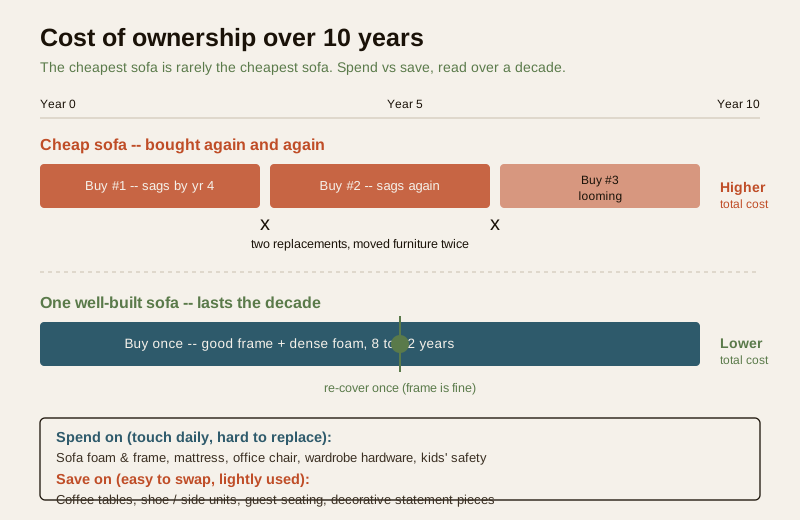
The cheapest sofa is rarely the cheapest sofa. A low-cost piece that sags, peels or wobbles gets replaced — and a piece bought twice is more expensive than one good piece bought once. Think in cost per year of good service, not sticker price.
- The replaced-twice trap. A cut-price sofa with thin foam and a stapled frame may give three or four years before it sags past comfort; a well-built one gives eight to twelve. Two cheap sofas over a decade can cost more, in money and hassle, than one good one — and you moved furniture twice.
- Foam and upholstery fade first. Low-density foam compresses; cheap fabric pills and stains. Often the frame is fine and only the upholstery needs replacing — a good frame is worth re-covering, a bad one is not.
- Laminate peels, edges chip. On engineered board, poor edge-banding lifts in humid coastal air and cheap laminate delaminates near water. Termite and moisture realities in much of India punish the cheapest board hardest.
- Maintenance is a cost too. Solid wood wants occasional polishing and refinishing; leather wants care. Budget a little upkeep — the furniture maintenance guide and the maintenance scheduler keep good pieces lasting.
The hidden costs a quote does not show
The piece price is not the paid price. Before you compare two quotes, make sure both include — or both exclude — these:
| Hidden cost | What it is | Watch for |
|---|---|---|
| GST | Tax on furniture varies by category and is often quoted separately | "Plus taxes" at the bottom of a quote |
| Delivery & lift | Transport, and hauling to a high floor without a lift | Long-distance or bulky-item surcharges |
| Installation | Fitting built-ins, wall-mounting, assembly | Flat-pack "assembly extra"; on-site carpentry |
| Hardware upgrades | Soft-close, branded channels beyond the base spec | Base quote uses cheapest hardware |
| Design / consultation fee | Custom design, drawings, site visits | Whether it is refundable against the order |
| Site work | Electrical points for a TV unit, wall prep | Not the furniture-maker's scope |
| Old-furniture disposal | Moving out or dumping the old piece | Rarely quoted; you arrange it |
Two quotes are only comparable when they include the same scope. A "cheaper" custom wardrobe that excludes soft-close hardware, delivery and installation can end up dearer than the "expensive" modular one that includes all three. Always ask what is in the number.
How to compare quotes — custom, modular, retail
The three ways to buy price differently, so comparing them fairly needs a common basis:
- Custom carpentry is usually quoted per square foot of the finished piece (or per running foot for wardrobes/kitchens), with material grade and finish as separate line items. Pin down the board grade (BWP ply vs MDF), the finish, the hardware brand and the back-panel thickness — the custom furniture estimator helps you build this up and reason about the per-sq-ft rate.
- Factory modular is quoted per unit or per module with a defined spec sheet — easier to compare because the spec is fixed, but check whether installation and delivery are in.
- Retail / loose is a fixed shelf price — simplest of all, but you take the size and finish as given.
To compare fairly: normalise to the same thing. Convert everything to finished-piece cost including delivery, installation and the same hardware grade, then compare like for like. A per-sq-ft custom rate means nothing until you know the board, finish and hardware behind it. The tension between the three routes — control, price and lead time — is exactly what built-in vs modular vs loose and custom vs ready-made exist to untangle.
Phasing and financing — buy in the right order
You do not have to furnish a home in one cheque, and often you should not. Phasing spreads cost and lets you learn the home before committing to the big pieces.
- Phase what can wait. Beds, a sofa to sit on, wardrobes and a dining table are day-one essentials. A second sofa, a bar unit, a study, decorative pieces — these can wait months without pain.
- Buy the built-ins first. Anything that needs carpentry, wall work or fits a specific niche (wardrobes, TV unit, kitchen) is cheapest done before you move in and hardest to add later. Loose pieces can be added any time.
- Let the room teach you. Living in a space for a few weeks reveals how you actually use it — where light falls, where you sit — and saves you from buying the wrong thing twice.
On EMI and financing: treat it with caution. Zero-cost EMI on furniture is common and can be sensible for one essential big-ticket piece, but financing a whole home's furniture stretches a discretionary purchase into a monthly liability, and "no-cost" schemes sometimes bake the interest into a higher price or forgo a cash discount. If you finance, finance the one durable piece you would have bought anyway — not the impulse upgrades. A phased cash plan almost always beats a financed splurge.
How it connects
- Start at the complete guide to furniture in India, then pair this with the furniture buying guide and the homeowner's guide to buying furniture for the how-to-buy side.
- Decide how to buy each piece with built-in vs modular vs loose furniture and custom vs ready-made; the biggest carpentry line gets its own wardrobe cost guide.
- Put real numbers on your own rooms with the furniture cost calculator and the custom furniture estimator, inside the wider cost and budget hub.
- Stretch a small budget further with furniture for small homes and space-saving furniture.
- Protect the cost-of-ownership case with the furniture maintenance guide, upholstery replacement and the maintenance scheduler.
Key takeaways
- There is no single furniture price — every piece is a wide band moved by six levers: board grade, finish, brand tier, custom/modular/loose, hardware and city labour. When a quote surprises you, ask which lever moved.
- Seating and sleeping dominate a budget — sofa, bed, mattress and wardrobe usually eat most of it — while a dozen small pieces quietly rival one big-ticket item.
- Budget a whole home by tier and size, add a 10-15 percent contingency, and remember the tier (how you buy) swings the total more than one extra room does.
- Spend on what you touch daily and cannot easily replace — sofa foam, mattress, office chair, wardrobe hardware, child safety; save on decorative and lightly used pieces.
- Think in cost of ownership, not sticker: a cheap piece bought twice can cost more than one good piece — foam sags, laminate peels, hardware fails first.
- Hidden costs — GST, delivery, installation, hardware upgrades, design fees — make two quotes comparable only when both include the same scope.
- Every figure here is indicative — normalise quotes to the same finished, installed spec, get two or three local quotes, and finance cautiously if at all.
References
- The IS furniture standards — general provisions for furniture strength, stability and durability (named generally; confirm the current parts with BIS).
- IS 303 / IS 710 — plywood grades (MR / BWR / BWP) and IS 1734 plywood test methods; IS 3087 / IS 3097 particle board; IS 12406 MDF; IS 1659 blockboard — the board-grade standards that drive material cost (named generally).
- Formaldehyde emission classes E0 / E1 / E2 (CARB / EN 13986 context) — indoor-air-quality grade, a cost and health factor (named generally).
- BIFMA furniture testing and CRI GreenPro / IGBC (Indian Green Building Council) eco-certification — quality and sustainability marks that carry a price premium (named generally).
- Bureau of Indian Standards (BIS) — for the current status and scope of any IS furniture, plywood or board standard.
- Local carpenters, modular manufacturers and retailers — the only source of an actual, current price for your city, size and spec.
All cost bands, tiers and lifecycle figures here are indicative planning aids only, not quotes or prices; real costs vary widely by city, material grade, brand, finish and size. Get two or three local quotes, normalise them to the same installed spec, run your own dimensions through the linked calculators, and treat any financing with caution.
Export this guide
Related Guides — Deep-dive reading
The Truth About Cost Per Square Foot
Why a ₹/sqft interior quote is the most misleading number in Indian home costing — and how to convert it into a real BOQ
Cost & MoneyThe Complete Guide to Furniture for Indian Homes (2026)
The start-here master guide for furnishing an Indian home — what furniture actually does, the five families of pieces, the decisions in the order you face them (space and needs, loose vs modular vs built-in, materials, size and layout, budget, buy, maintain), an honest read on plywood, humidity and termites, and where every choice hands off to the carpenter, the brand or the fixer.
FurnitureThe Design Decisions With the Biggest Cost Consequences
A cost-leverage map of Indian home interiors — the handful of decisions that swing your total budget the most, so you spend your attention where a single choice has an outsized rupee impact.
Cost & MoneyRelated Tools — Try Free
Apartment Furniture Size Chart
Standard furniture dimensions for Indian apartments — sofas, beds, tables, dining, storage.
Reference ChartModular Kitchen Budget Calculator
Live breakdown by running feet, countertop area, material tier and city — with wastage, design fee, GST.
Kitchen CalculatorWindow Hardware Cost Calculator
Estimate window hardware cost — hinges, handles, locks, rollers and multipoint gears.
Window Calculator