
B.Arch CurriculumFree, forever
A tribute to Amogh N P
Furniture Construction & Detailing
The furniture-maker's course — how furniture is really built and detailed, in wood and wood-based panels, from the material up through joinery, construction, modular systems and finishes. It follows the syllabus's emphasis on wood as the construction medium, and it is honest about the craft, because furniture carries as much workshop folklore as any trade. The spine that runs through all of it is one fact most beginners miss: wood is a LIVING, MOVING material. It is hygroscopic — it takes up and gives off moisture with the humidity around it, swelling and shrinking for its whole life, and it moves far more across the grain than along it, and more tangentially than radially. So the first law of furniture construction is to design WITH that movement, not against it: a solid panel must be allowed to float, a wide top needs breadboard ends or buttons, and a joint that pins wood rigidly across the grain will eventually split it. From there the course corrects the rest of the folklore, all from the evidence. 'Hardwood' and 'softwood' are a BOTANICAL split — broadleaf (angiosperm) versus conifer (gymnosperm) — not a statement about hardness; balsa is a hardwood and some softwoods out-harden some hardwoods, so you specify the actual species, not the label. Engineered boards are not cheap rubbish and solid wood is not automatically better: plywood, MDF, HDF, particle board and blockboard each have a right job, and because boards are dimensionally STABLE where solid wood moves, the wide flat panels of a good wardrobe, kitchen or veneered door are usually board, not solid — the reason 'solid wood is always superior' is a myth. Veneer is a thin slice of REAL wood, often the finest figured timber too rare or unstable to use solid, laid over a stable substrate — historically the mark of the very best furniture — and it is not the same thing as laminate (the printed 'Sunmica' plastic sheet), which only looks like wood. In joinery the course teaches why the joints exist at all: glue behaves by grain direction, so a long-grain edge joint is stronger than the wood itself while an end-grain glue joint is weak and screws into end grain hold poorly, which is exactly why mechanical interlocking joints — the mortise-and-tenon that keeps a chair from racking, the dovetail that resists a drawer being pulled apart — were invented, and why 'modern glue makes joinery obsolete' is false. It treats measurement and construction concretely, building up drawers, chairs, sofas, sideboards and cots and drawing them properly in plan, section and elevation, and it ties comfort to anthropometry — the roughly 450 mm seat, 750 mm table and 900 mm counter are guidelines derived from the body, best checked against Indian-population data and the actual user rather than obeyed as laws. It is even-handed about modular versus custom: these are two different logics, not better and worse, and the 32 mm system — columns of 5 mm holes at 32 mm centres, born from the geometry of line-boring machines and popularised worldwide — is genuine standardisation engineering that makes a modular kitchen or wardrobe reconfigurable and efficient, while custom work fits the odd space and the bespoke idea; 'modular is cheap and inferior' is a myth. And it ends on finishing, hardware and models, insisting that a finish is not only cosmetic — it seals the wood against moisture, slowing the very movement the whole course is about, and protects the surface — while being clear that 'waterproof wood finish' is a myth (finishes slow water, they do not stop movement), that film finishes like PU and lacquer differ from penetrating oils and waxes, and that engineered boards off-gas formaldehyde so the E1/E0/CARB grade matters. Throughout, the wood is understood as a living material, and the folklore is named as folklore.
Course byAmogh N P· Architect & interior designer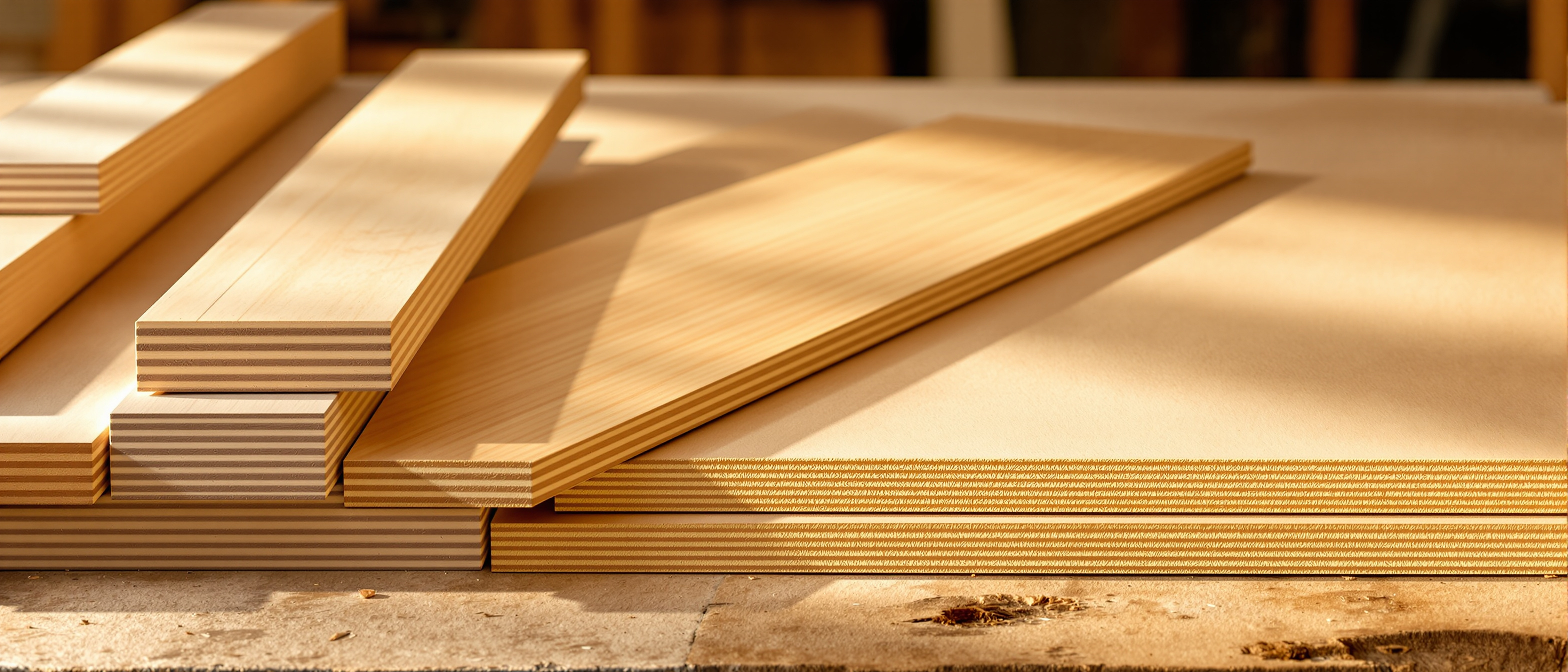
The syllabus
5 units · 5 liveThe furniture-maker's craft — wood and boards, joinery, construction, modular systems and finishes, with wood as the construction medium. All 5 units are live as full interactive lessons, each with original zoomable diagrams, a self-assessment quiz and a studio task — and each honest about the folklore: that wood is a living material that moves (so you design with it); that 'hardwood' is a botany, not a hardness; that a good board is often the right choice over solid wood, and veneer is real wood; that joints exist because glue behaves by grain; that modular and custom are two logics, not better and worse; and that a finish seals as well as beautifies, while 'waterproof wood' is a myth.
Unit 1 — Wood & Wood-Based Panels
LiveWood as a living, moving material; hardwood/softwood as a botany not a hardness; plywood, MDF, HDF, particle board and blockboard; solid vs board; veneer vs laminate; formaldehyde grades.
Unit 2 — Furniture Joinery
LiveWhy joints exist (glue behaves by grain); butt and edge joints; dowel and biscuit alignment; the mortise-and-tenon and dovetail; knock-down fittings and pocket-holes for flat-pack and modular.
Unit 3 — Furniture Construction & Detailing
LiveMeasurement and carcase construction; drawers, chairs, sofas, sideboards and cots; plan, section and elevation working drawings; furniture anthropometry (~450/750/900 mm) as guidelines.
Unit 4 — Modular Systems & the Modular Kitchen
LiveModular vs custom as two logics; the 32 mm standardisation system; carcase-and-hardware modular furniture; the modular kitchen (layouts, work triangle, tall units, carousels); block models.
Unit 5 — Finishes, Hardware & the Maker's Craft
LiveFinishes that seal as well as beautify (film vs penetrating); the 'waterproof wood' myth; furniture hardware (soft-close hinges and slides); model-making and the furniture-maker's craft.
Course outcomes
What you will be able to doIdentify and select furniture timbers and wood-based boards, understanding that wood is a living, moving material.
Choose and detail the right joinery for a load and a look — mechanical joints, glued joints and knock-down fittings.
Construct and detail real furniture pieces, and represent them properly in plan, section and elevation.
Design with the modular logic (the 32 mm system) and the custom logic, including a small modular kitchen.
Specify finishes, hardware and models honestly, and match furniture to human anthropometry and comfort.
The author
Amogh N P
Architect, interior designer, and creative polymath. Studio Matrx began in his notebooks — his vision of design made honest, useful, and open to everyone. Its Academy is written and taught in his memory, and free, forever.
More about Amogh →Is solid wood always better than board?
No. Solid wood is a living material that swells and shrinks with humidity and can cup or crack across a wide panel, while engineered boards stay flat — so the wide, stable panels of a good wardrobe, kitchen or veneered door are usually board, not solid, and that is the right engineering choice, not a compromise. That precision is the spirit of this course: 'hardwood' is a botany not a hardness; veneer is real wood, not fake; joints exist because glue is strong on long grain and weak on end grain; the 32 mm system is genuine standardisation engineering; and a finish seals against moisture as much as it beautifies, because 'waterproof wood' is a myth. Read the five units, try the board-and-timber decoder and the joint explorer, and learn to read wood as the living material it is.
The curriculum is free, forever