
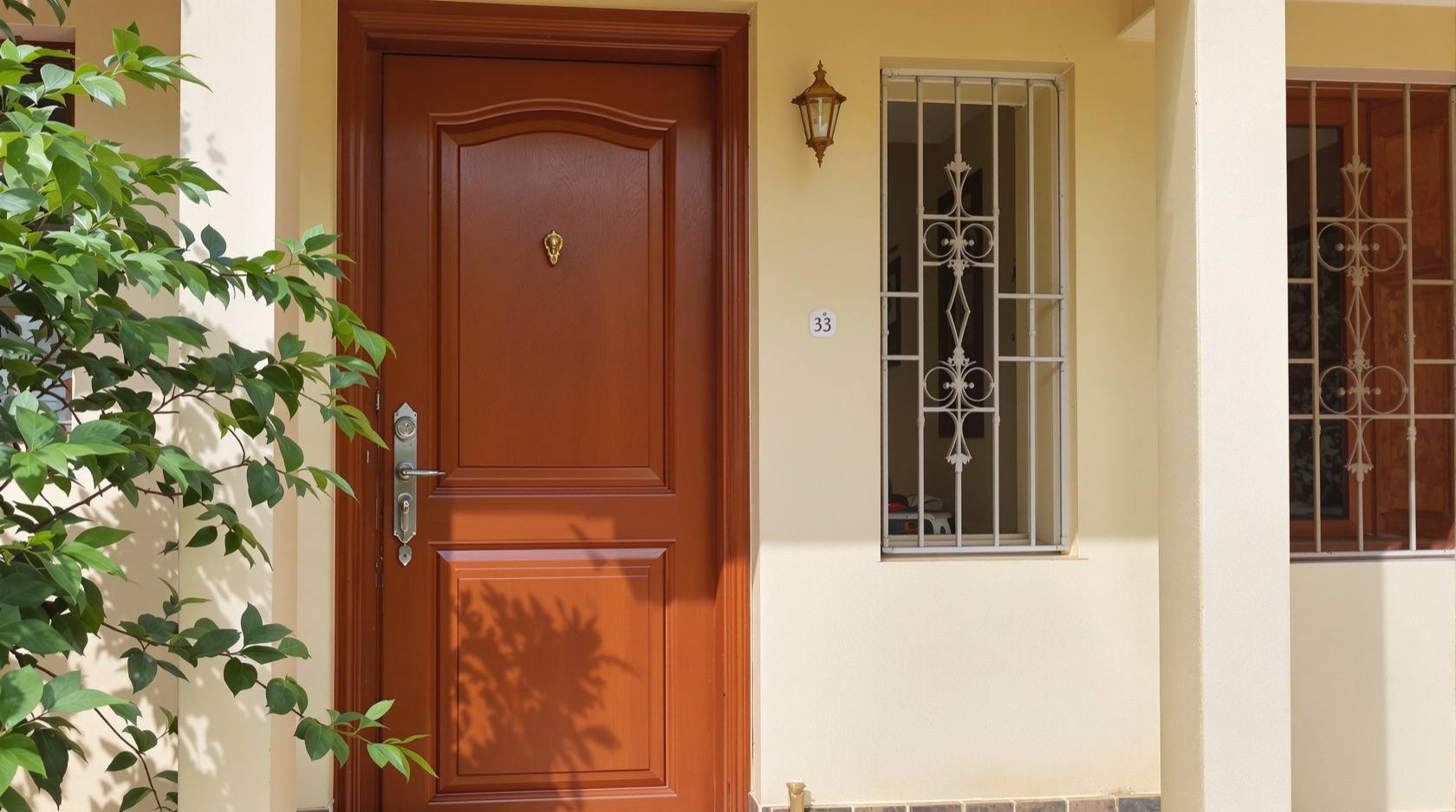
The Complete Guide to Door and Window Security in India (2026)
The pillar reference for every opening in your home — how to think about doors, windows and glazing as a system, why the weakest opening decides your safety, and where each part of the library takes the detail further.
A burglar does not break into your house. He breaks into your weakest opening — and everything else you spent money on does not matter. The reinforced main door with the five-lever lock is irrelevant if the bathroom ventilator has no grille, or if there is a glass panel beside the latch he can reach through, or if the kitchen window closes on a hook a child could lift. Security is not a product you buy for the front door. It is a property of every opening in the building, and it is only as strong as the worst one.
This is the pillar guide in Studio Matrx's door-and-window security series — the map that frames the whole problem and points you to the detailed spoke for every part. If you read only one page before you start spending, read this one, then follow the links to the guide that matches your specific opening. For the wider strategy across the whole property, start with the complete home security guide; for the sub-hub that collects every openings guide in one place, see the openings library inside the security hub.
Scope and safety. This guide helps you choose and harden your own openings — it is strictly defensive. It never explains how to defeat, force, pick or bypass a door, lock or window. And it holds one line above all others: an opening must never trap you inside. Bars, grilles and locks that stop a burglar getting in must not stop you getting out in a fire. Egress beats security every single time. Where structure, fire-rating or egress is involved, plan it yourself but have it designed and certified by a qualified professional against the current National Building Code (SP 7:2026, BIS) and your local bye-laws.
Your house is a set of openings
Walls, floor and roof are the parts of a home almost nobody attacks — they are slow, loud and hard. Every real intrusion comes through a designed hole in that shell: a door, a window, a ventilator, a grille, a skylight, a service hatch. So the useful way to think about security is not "how safe is my house" but "how safe is my weakest opening, and do I even know which one that is?"
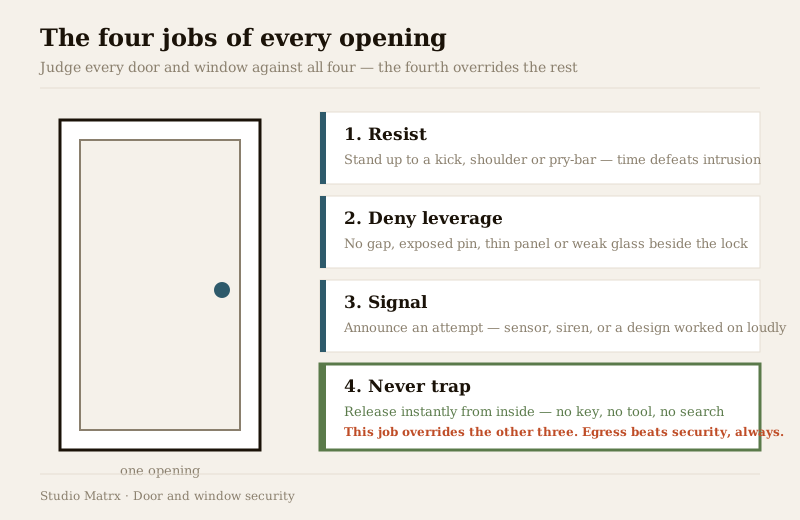
Every opening — expensive or cheap, door or window — has exactly four jobs. Judge each one against all four:
1. Resist. Stand up to a kick, a shoulder, a crowbar or a jack for long enough to matter. Resistance buys time, and time is what defeats most opportunistic break-ins.
2. Deny leverage. Give an attacker nothing to pry against — no exposed hinge pins, no gap at the frame, no thin panel beside the lock, no weak glazing bead. Most locks are not picked; the frame or the glass beside them is simply levered or reached past.
3. Signal. Announce an attempt — a contact sensor, a glass-break sensor, a barking-dog-loud siren, or simply a design that cannot be worked on quietly. An intrusion that makes noise usually stops.
4. Never trap. Release instantly from the inside, without a key, tool or search, so the opening is an escape route in a fire — not a cage. This job silently overrides the other three whenever they conflict.
The fourth job is the one India gets wrong most often and most fatally. Hold it in your mind through everything that follows.
The one rule: the weakest opening decides
Security does not average. If you have a bank-vault front door and one un-grilled ground-floor window left on the latch, your security level is that window — not the average of the two. Attackers are rational: they walk the perimeter and pick the easiest way in. This is why a scattershot spend (a great lock here, nothing there) buys far less safety than an even, deliberate spend across every opening.
That single principle reorganises everything:
- Audit before you buy. You cannot harden the weakest opening until you know which one it is. Walk your own home as an intruder would and rank every opening. The door and window security assessment guide walks the method; the door security rating tool scores an individual door in minutes, and the home security risk scorecard turns the whole-house worry into a prioritised list.
- Spend to raise the floor, not the ceiling. The next rupee should always go to your current weakest opening, not to further gold-plating the strongest.
- Small openings count. Ventilators, transom lights, pet flaps, the gap a slim adult can pass, the AC cut-out — a hole a child can pass is a hole an intruder can pass a child through. Do not skip them because they seem small.
The anatomy of a secure door
A door is a system, not a slab. Four sub-systems must all be strong together, because an attacker exploits whichever is weakest.
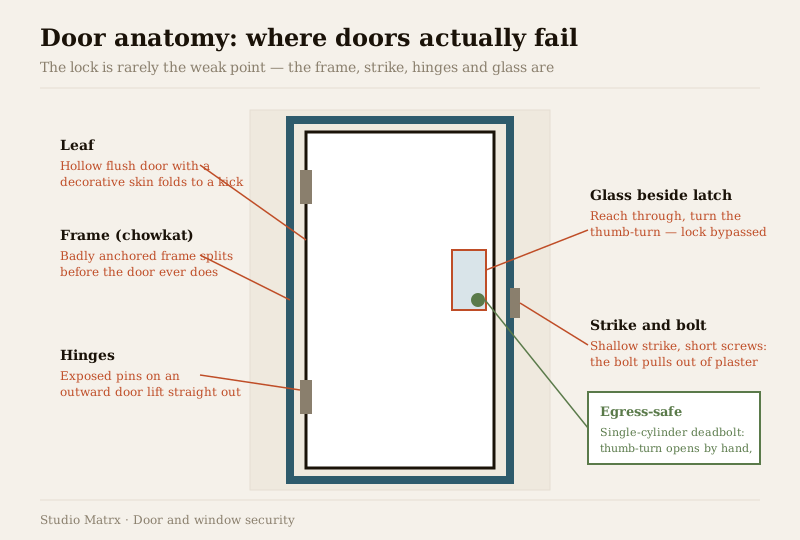
| Sub-system | What it is | The classic Indian failure | Where the detail lives |
|---|---|---|---|
| The leaf | The door slab itself | A hollow flush door with a decorative "security" skin — looks solid, folds to a kick | Burglar-resistant doors, steel doors, door reinforcement |
| The frame | The chowkat and its fixing into the wall | A strong door hung on a weak or badly-anchored frame; the frame splits, not the door | Door frame anatomy |
| The lock and strike | The bolt, cylinder and the plate it throws into | A good lock into a shallow strike with short screws — the bolt pulls straight out of soft plaster | Multipoint locking doors, smart locks |
| The hardware | Hinges, viewer, chain, glass panels | Exposed hinge pins on an outward door; a glass panel beside the latch | Door viewers and peepholes |
The recurring lesson: the lock is rarely the weak point. Doors fail at the frame, at a shallow strike, at exposed hinges, or through a glazed panel the size of a hand set right beside the latch — reach through, turn the thumb-turn, done. A ten-thousand-rupee lock earns nothing if it is fitted to any of those. Start with the main door security checklist and the anti-theft door guide; if you want a graded, comparable spec rather than a shop's word, read security door grades and the note on standards below.
The double-cylinder egress trap
The most dangerous "upgrade" a shop will sell you is a double-cylinder deadbolt — one that needs a key on the inside as well as the outside. It defeats the reach-through-the-glass attack, which sounds clever. But it also means that in a fire, in smoke, in the dark, your family must find a key to unlock their own front door to get out. People have died a metre from an unlocked-looking door because the key was not on its hook.
The correct answer is almost always a single-cylinder deadbolt — key outside, a simple thumb-turn inside that opens instantly by hand — combined with fixing the glass problem itself: no glazing within arm's reach of the thumb-turn, or laminated safety glass there (see glazing, below). Solve the leverage problem at the glass, never by locking your own family in. This is job four overriding job two, exactly as the four-jobs rule warns.
The anatomy of a secure window
Windows carry the same four sub-systems as doors, in a different order of importance — because a window's job is usually to be opened (for light, air and escape), which pulls it in two directions at once.
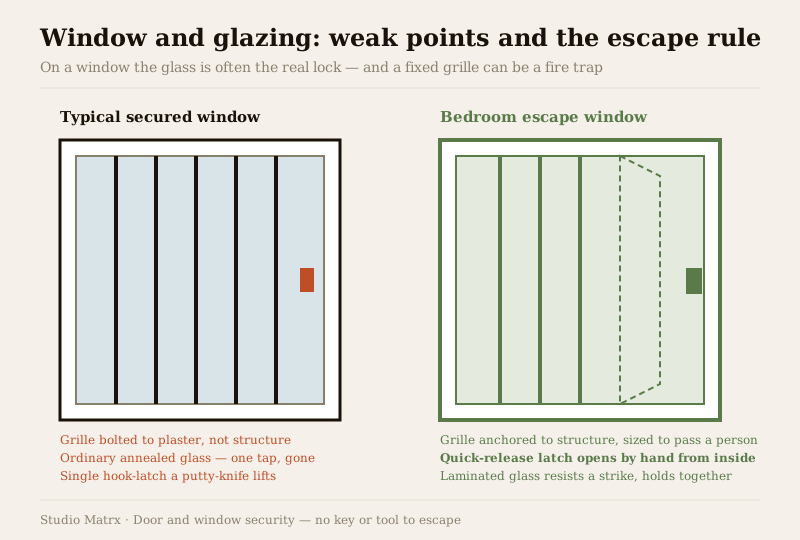
| Sub-system | What it is | The classic Indian failure | Where the detail lives |
|---|---|---|---|
| The grille / bars | The steel barrier over the opening | A decorative grille bolted to plaster, not anchored to structure; or a fixed grille over the only escape window | Window grille design, burglar-resistant windows |
| The glazing | The glass itself | Ordinary annealed glass — one tap and it is gone, silently | Safety glass for homes, laminated glass, toughened glass |
| The lock and hardware | Handles, latches, restrictors | A single hook-latch a putty-knife lifts; sliding sashes with no anti-lift block | Window locks and hardware |
| The sensor | The electronic announcement | No sensor at all on the actual entry points | Window sensors, glass-break sensors |
Two failure modes deserve naming on their own.
The glass is often the real lock. A beautiful mortise lock on a window is decoration if the pane beside it is ordinary annealed glass — an intruder ignores the lock and takes the glass. If a window must resist, the resistance usually has to live in the glazing (laminated glass holds together when struck) or in a properly anchored grille, not in the latch. The window security guide ties these together.
Grilles that trap. India's default answer to window security is a welded steel grille — and on most windows that is fine. But a fixed, unopenable grille over a bedroom's only escape window is a fire trap that has killed whole families. Every sleeping room needs at least one opening that a person can get out of quickly — and if that opening is grilled, the grille needs a quick-release / internal-latch mechanism that opens by hand from inside without a key or tool. This is not optional and it is not a place to save money. The emergency escape window requirements guide covers what an escape opening must do; the child-safe window design guide reconciles it with keeping small children from falling — a restrictor that limits normal opening but releases fully for escape.
The four things every opening must do — as a checklist
Bring it back to the four jobs and apply them to every opening you own, door or window:
| Job | Ask of every opening | If it fails |
|---|---|---|
| Resist | Would a kick, shoulder or short pry-bar get through quickly? | Upgrade the leaf/grille and, crucially, the frame and strike behind it |
| Deny leverage | Any gap, exposed pin, thin panel or ordinary glass beside the lock? | Close the gap, hide the pins, fix the glazing — do not just add a bigger lock |
| Signal | Would an attempt here be heard or reported? | Add a contact or glass-break sensor on real entry points |
| Never trap | Can a child or elderly person get out of here, in smoke, without a key or tool? | Fix this first — single-cylinder lock, quick-release grille, keep the key off the door |
If any opening fails "never trap," fix that before you spend a rupee on the other three. A safe home that becomes a coffin in a fire is not secure — it is the opposite.
The map of this library
This pillar is deliberately shallow — it frames the problem. Each spoke below goes deep on one opening. Use the audit to find your weak point, then jump straight to the spoke that fixes it.
- Start here (whole-property): complete home security guide · building security systems guide · security for gated communities
- Doors — the leaf and frame: main door security checklist · burglar-resistant doors · burglar-proof doors · anti-theft door guide · steel doors · security door grades · door reinforcement · door frame anatomy · fire-rated doors
- Doors — lock and hardware: multipoint locking doors · complete smart locks guide · deadbolt smart locks · mortise smart locks · door viewers and peepholes
- Windows — grille and glazing: window security guide · window grille design · burglar-resistant windows · safety glass for homes · laminated glass windows · toughened glass windows
- Windows — lock, sensor and safety: window locks and hardware · emergency escape window requirements · child-safe window design · window sensors · glass-break sensors · door sensors
- The audit: door and window security assessment · door security rating tool · home security risk scorecard
A note on grades and standards
You will hear "high-security," "burglar-proof" and "grade" used loosely by shops. Two anchors help you read a claim honestly:
- EN 1627 / classes RC1 to RC6 is a European burglar-resistance standard that grades a complete door or window set (leaf, frame, lock and glazing tested together) against defined tool sets and times. It is widely referenced in India for specification even though it is not an Indian standard — say so when you ask a vendor "which RC class, tested as a set?" A door leaf alone has no RC class; the assembly does. The security door grades guide explains the ladder.
- Fire and egress are governed in India by the National Building Code (SP 7:2026, BIS) and your local municipal bye-laws — these decide what an escape route and a fire door must do, and a fire-rated door is a specific certified product (see fire-rated doors). Always verify the current edition via the BIS catalogue and confirm the local bye-law, because life-safety requirements are not something to take from a forum post.
Where a number matters — a glass thickness, a bolt throw, a resistance class, a fire rating in minutes — specify it to the vendor against the standard and get it in writing, rather than trusting an unverifiable "it is very strong." A claim you cannot check is a claim that is not there.
Verify, then admit. Plan, then harden.
Two habits carry the whole subject:
- Verify, then admit. Before an opening ever lets a person through, know who they are — a viewer or video door phone on the main door, a habit of not opening to strangers, a household rule the children and domestic help both understand. The best door is undone by opening it to the wrong person.
- Plan, then harden. Do not buy the shiny thing first. Audit, find the weakest opening, check it against all four jobs (especially "never trap"), then spend there. Repeat. Security built this way is even, honest and — most importantly — never turns your home into a trap.
Key takeaways
- Your home is a set of openings, and your security level equals your weakest opening, not the average — audit first, then spend on the worst one.
- Every opening has four jobs: resist, deny leverage, signal, and never trap. The fourth overrides the other three whenever they conflict.
- Doors fail at the frame, strike, hinges or a glass panel beside the latch — rarely at the lock. A great lock on a weak frame or beside ordinary glass is decoration.
- On windows the glazing is often the real lock; and a fixed grille over the only escape window is a fire trap — use single-cylinder deadbolts and quick-release grilles so an opening is never a cage.
- Read a claim against EN 1627 / RC classes (tested as a set) and check fire and egress against SP 7:2026 and local bye-laws — get any number that matters in writing.
Where to go next
- Door and window security assessment — find your weakest opening first
- Door security rating tool — score an individual door in minutes
- Home security risk scorecard — prioritise the whole house
- Main door security checklist — the highest-traffic opening
- Window security guide — grilles, glazing, locks and escape together
- Emergency escape window requirements — the "never trap" rule in detail
- Complete home security guide — the whole-property strategy
- The openings library and the security hub
References
- National Building Code of India (SP 7:2026), Bureau of Indian Standards — fire and life-safety provisions governing means of egress and fire-rated openings; verify the current edition and any part status via the BIS catalogue: https://www.services.bis.gov.in/
- EN 1627 (burglar-resistance classes RC1 to RC6 for pedestrian doorsets, windows and shutters) — a European standard referenced in India for specifying tested door and window assemblies; confirm the current version with your supplier.
- Your local municipal building bye-laws for egress, escape-window and fire-safety obligations, which take precedence for compliance.
This is an educational overview and strictly defensive. It never describes how to defeat any door, lock or window. Structural, fire-rating and egress decisions are qualified professional tasks — engage licensed professionals and verify any standard's current status via the BIS catalogue and your local bye-laws before relying on it. Never sacrifice an escape route for security.
Export this guide
Related Guides — Deep-dive reading
Door and Window Security Assessment for Indian Homes
Go opening by opening and rate the hardware itself — leaf and frame, hinges and locks, strike plates, grilles, glazing and latches — so you can grade each door and window's real resistance while never trapping anyone behind it.
SecurityReinforced Wooden Doors in India (2026): Making the Timber Main Door Actually Secure
A homeowner's decision guide to choosing or upgrading the wooden main or flat door most Indian homes actually have, so it genuinely resists a break-in, without pretending a hollow flush door is secure.
SecurityWindow Security Guide
The layered-defence model for Indian homes — frame, glass, locks, grille and sensors working together
Windows & GlazingRelated Tools — Try Free
Door Security Rating Calculator
Score your main door out of 100 across leaf, frame, lock and hardware — and see the top upgrades.
Security ToolChild & Elder Home-Safety Audit
Room-by-room safety audit for households with children or seniors — 10 categories, 70+ checkpoints tagged by audience.
Safety AuditDoor Lock Selector
Answer a few questions and get the right lock type — mortise, multipoint, deadbolt, privacy or smart — for any door.
Door Tool