
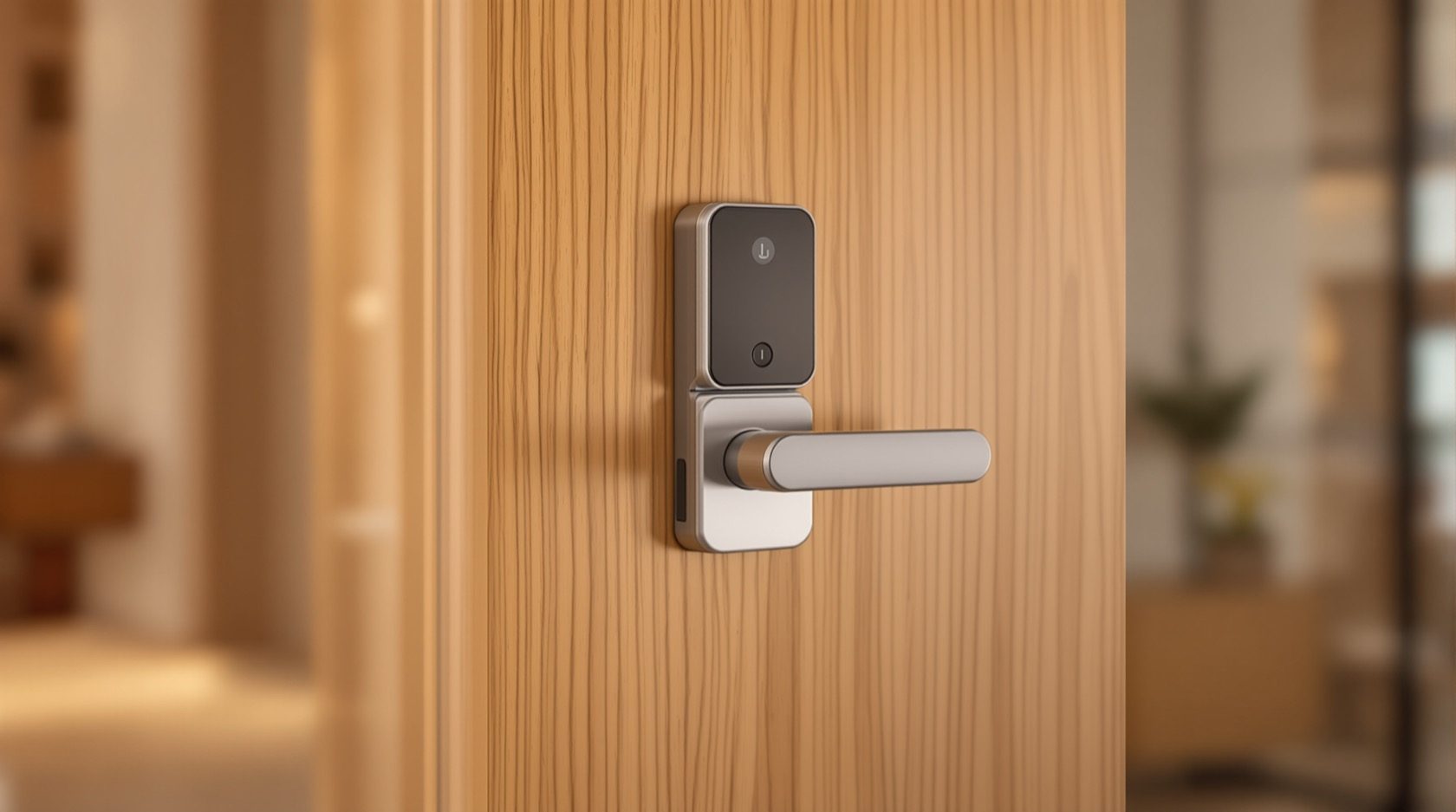
Deadbolt Smart Locks in India (2026): The Retrofit Format and Where It Fits
How a motorised deadbolt works, why it is the world's most popular retrofit smart lock, and the India catch: most main doors take a mortise, not a deadbolt, so this format usually suits secondary and apartment doors.
Walk through any global catalogue of smart locks and one shape dominates: the deadbolt smart locks you screw onto a door in twenty minutes, keeping a keypad or key on the outside and a simple thumb-turn on the inside. In the United States, where almost every front door already carries a deadbolt, this is the smart lock. It reuses the holes the old lock left behind, the outside of the door barely changes, and you are automating your entrance by dinner time.
That story is real, but it does not transplant cleanly to India. Most Indian main doors are not built around a deadbolt at all. So this guide does two jobs: it explains the deadbolt format honestly, and it tells you exactly where it fits on an Indian door and where you should reach for a different form instead. It is a spoke off the complete guide to smart locks in India and part of the Smart Locks and Access Control hub.
Scope and safety. This guide helps you choose the right lock body and plan the fit. Actually cutting the door, boring holes, or wiring anything to a fire-alarm or mains supply is a licensed carpenter's or electrician's job. On any door people escape through, the inside must open by a single hand movement with no key or app, a mechanical key override must exist on the outside, and you must never fit a lock that can trap someone in a fire. This is educational guidance, not legal advice.
What a deadbolt actually is
A deadbolt is the simplest, strongest lock idea there is: a solid metal bolt that slides sideways out of the door edge and lands in a pocket (the strike) cut into the frame. Unlike a spring latch, it does not retract when you push the door, so it cannot be shoved back with a card or a shim. "Dead" means it only moves when you deliberately throw or retract it.
A smart deadbolt simply puts a small electric motor behind that bolt. Your credential tells the motor to turn, the motor drives the bolt out (lock) or pulls it back (unlock), and everything else about the lock is unchanged. The credential can be a PIN keypad, a fingerprint reader, a phone app or a fob, but the muscle underneath is always the same throw-and-retract bolt.
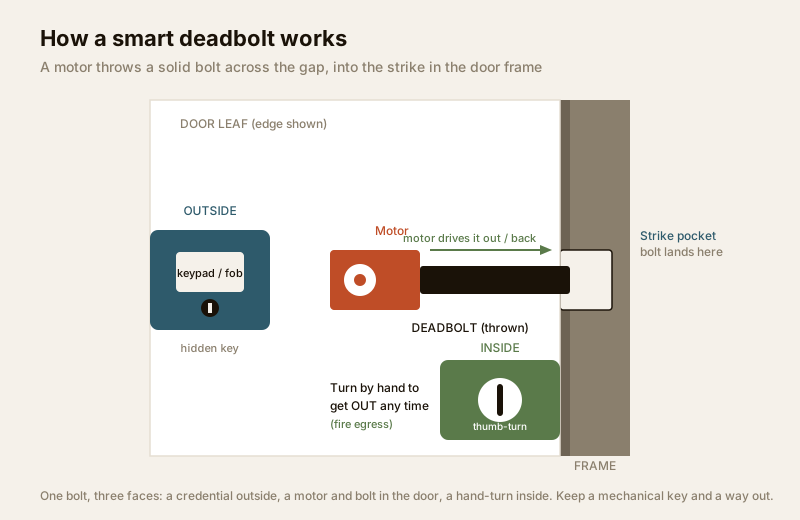
The three faces of the lock map neatly onto how you use it:
- Outside: the credential you present, plus a discreet mechanical keyway as a fallback.
- In the door: the motor and the bolt, powered by batteries in the inside unit.
- Inside: a thumb-turn you rotate by hand, so you can always let yourself out.
Why the deadbolt is the world's favourite retrofit
The reason this format took over globally is retrofit convenience. A tubular deadbolt sits in two simple, standardised holes: a round bore through the face of the door and a smaller cross-bore through the edge for the bolt. Almost every US and many export-market doors are pre-bored to the same dimensions. So a smart deadbolt is a genuine swap: unscrew the old one, slot the new one into the same holes, and the outside of the door still looks like an ordinary lock to anyone in the corridor.
| Deadbolt strength | What it means for you |
|---|---|
| Reuses existing door prep | Often a screwdriver-only swap on a pre-bored door; no fresh cutting |
| Outside looks unchanged | A keypad is discreet; no bulky rim box on the corridor face |
| Solid throw bolt | Genuinely resists being forced back, not just a spring latch |
| Huge global range | The most models, credentials and price points of any format |
| Simple mechanics | Fewer moving parts than a full mortise handle-set to go wrong |
That last point matters in India, where a simpler mechanism copes better with dust, humidity and heat. But the same trait that makes the deadbolt easy elsewhere is exactly what trips it up here.
The India catch: your main door is probably a mortise
Here is the honest caveat that shapes this whole guide. Most Indian main doors are not pre-bored for a tubular deadbolt. The traditional solid-wood entrance door in India carries a mortise lock: a rectangular lock body slid into a deep pocket routed into the edge of the door, worked by a handle and a lever. There are no standard round bores to reuse, and the door is often thick, heavy timber.
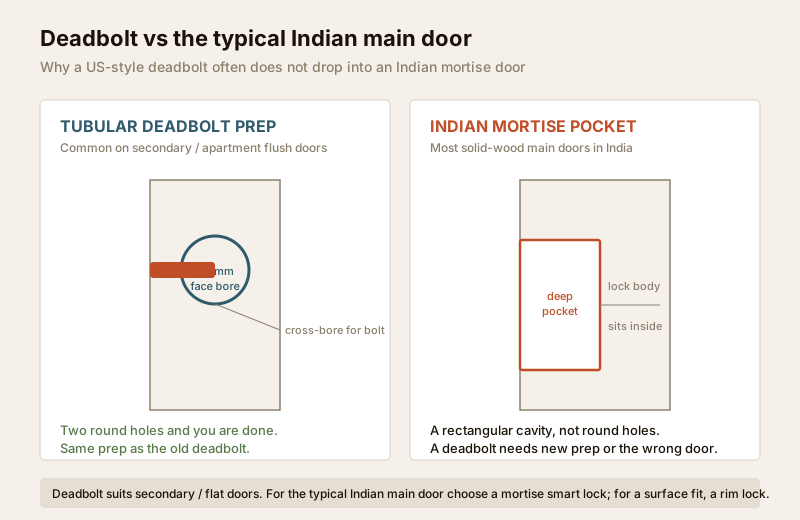
So a smart deadbolt on a typical Indian main door means one of two things: either fresh boring and door prep by a carpenter to create the round holes the deadbolt needs, or accepting that this format is simply not the right one for that door. In practice, the deadbolt format lands best on:
- Apartment and flat entrance doors built as lighter flush doors, which are more often bored or easily bored for a tubular lock.
- Secondary doors such as a bedroom, study, terrace, back or utility door, where you want smart access without the cost of a full handle-set.
- New doors you are specifying from scratch, where you can ask for deadbolt prep up front.
For the classic Indian solid-wood main door, the natural retrofit is a lock that matches the door you already have:
- Mortise smart locks replace the existing mortise lock body inside that same edge pocket, usually with a full handle-set. This is the default for the typical Indian main door.
- Rim smart locks surface-mount onto the inside face of the door with minimal cutting, which is the easiest retrofit of all when you do not want to touch the door's structure.
If you are unsure which body your door takes, run it through the smart lock selector and check the fit before you buy, not after.
Single vs double cylinder, and why it decides fire safety
Deadbolts come in two configurations, and the choice is not cosmetic. It decides whether the lock can save your life or trap you.
- Single cylinder has a credential or keyway on the outside and a plain thumb-turn on the inside. Anyone inside opens the door with one hand movement, no key, no code.
- Double cylinder needs a key on both sides. There is no free thumb-turn inside; you must present a key to get out too.
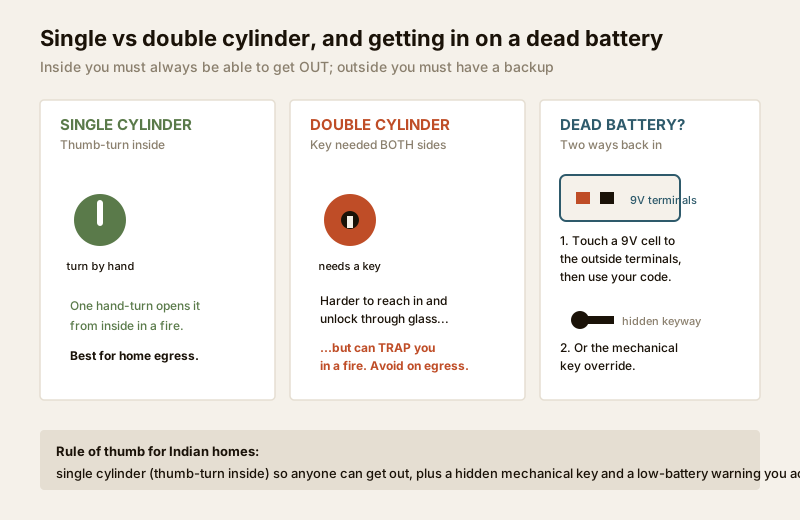
Double cylinders exist because they stop an intruder reaching through a broken glass panel beside the door and simply turning the knob. But that same locked-both-sides behaviour means that in a fire, in smoke, in the dark, someone inside has to find a key to escape. For any door people sleep behind or escape through, that is the wrong trade. On a home egress door, choose a single cylinder with an inside thumb-turn, and solve the glass-panel worry a different way (laminated glass, a grille set back from the lock, or moving the lock). Fire and egress interlocks on a shared or commercial escape route are governed by the National Building Code and are a coordinated, licensed job, not a DIY choice.
| Configuration | Inside opens by | Egress verdict | Where it belongs |
|---|---|---|---|
| Single cylinder | Thumb-turn, one hand | Safe, always openable | Home doors, escape routes, bedrooms |
| Double cylinder | Key required | Can trap in a fire | Rare; only where a licensed pro signs off and never on an egress door |
Getting in when the battery dies
Every smart lock in India has to answer one question before you buy it: how do you get in when the power and the batteries are gone? Deadbolts handle this well, and it is worth confirming both fallbacks are present:
- Emergency power jump-start. Most keypad deadbolts have two small metal terminals on the outside. Touch a 9V battery to them and the lock wakes up just long enough to accept your PIN and open. Keep a spare 9V cell in your car or bag.
- Mechanical key override. A hidden keyway on the outside opens the bolt with a physical key regardless of battery state. Keep this key somewhere you can actually reach, not locked inside the flat.
Most importantly, act on the low-battery warning rather than ignoring it. Locks flash, beep or push an app alert for days before they die. Fresh alkaline cells and a simple habit of swapping them the moment the warning appears means you almost never meet the emergency fallback at all. This mirrors the advice in the complete smart-lock guide, and it applies to every credential you choose.
Auto-lock, jamming and Indian door reality
Two convenience features and one failure mode dominate day-to-day life with a deadbolt.
Auto-lock throws the bolt automatically a set number of seconds after the door closes, so you are never left unlocked because someone forgot. It is genuinely useful, with one caution: if the door is not fully shut, the motor can drive the bolt against the frame instead of into the strike, and either jam or leave you thinking you are locked when you are not. Set a sensible delay and make sure the door self-closes properly.
Jamming and misalignment are the most common real complaint, and on Indian doors there is a specific cause. Solid timber doors swell in the monsoon and shift with heat, so a strike pocket that lined up perfectly in April can bind in July. A motorised bolt that meets resistance draws heavy current, drains batteries fast, and eventually fails to throw. The fixes are all about alignment, not the electronics:
- Get the strike pocket aligned so the bolt slides in with zero resistance; the motor should never have to force it.
- Choose a lock rated for your door thickness; Indian solid doors are often thicker than the export default, and an undersized spindle or bolt will not seat.
- Confirm the IP or weather rating if the door is even partly exposed to rain or dust, and prefer a keypad that stays readable in bright sun and does not corrode.
- Fit it to a solid, stable door; a bolt is only as strong as the frame it lands in, so a weak frame undoes the whole point of a deadbolt.
Getting alignment right is precisely why the fitting itself belongs to a carpenter who does this daily, even when the lock markets itself as DIY.
What it costs and what to check before buying
Smart deadbolts span a wide range in India, and price mostly tracks the credential and the brand rather than the bolt itself. As a rough guide, a basic keypad or app deadbolt sits in the lower band, a fingerprint-plus-keypad model in the middle, and a connected model with Wi-Fi or camera features at the top. Put your shortlist through the smart lock cost calculator with fitting included, because carpentry to prep an unbored Indian door can add meaningfully to a "cheap" lock.
A quick pre-purchase checklist:
| Check | Why it matters |
|---|---|
| Does my door take a tubular deadbolt at all? | If it is a mortise door, choose mortise or rim instead |
| Single cylinder with inside thumb-turn? | Life safety; never trap someone in a fire |
| Mechanical key AND jump-start present? | Guaranteed entry on a dead battery |
| Rated for my door thickness? | Indian solid doors are often thicker than default |
| Auto-lock delay adjustable? | Avoid bolt-against-frame jams |
| Weather or IP rating if exposed? | Monsoon, dust and sun on any outer door |
When to bring in a professional. Have a carpenter confirm the door type and thickness and set the strike alignment; have an electrician handle any wiring to a bell, video door phone or fire-alarm interlock. Any lock on a shared corridor, stairwell or other escape route touches the National Building Code's egress rules and must be selected and interlocked by a licensed professional so it fails safe and never blocks the way out. If in doubt about whether your door can even take a deadbolt, get the fit checked before you buy.
Key takeaways
- A smart deadbolt motorises the solid throw-bolt your door drives into the frame; it is the world's most popular retrofit smart lock because it reuses standard door prep.
- The India catch is decisive: most main doors are mortise, not deadbolt, so this format best suits apartment, secondary and new doors, while the typical Indian main door wants a mortise or rim lock.
- Choose a single cylinder with an inside thumb-turn so anyone can always get out; a double cylinder can trap people in a fire and does not belong on an egress door.
- Insist on both a mechanical key override and a 9V jump-start, and swap batteries the moment the low-battery warning appears.
- Most deadbolt trouble in India is alignment, not electronics: monsoon swelling and thick doors cause jamming, so pay a carpenter to set the strike true.
References
- Digital Personal Data Protection Act, 2023, Ministry of Electronics and Information Technology, Government of India: https://www.meity.gov.in/data-protection-framework
- National Building Code of India (Part 4, Fire and Life Safety, on egress and escape routes), Bureau of Indian Standards: https://www.services.bis.gov.in/
- Manufacturer installation and fitting datasheets for tubular smart deadbolts (door thickness, backset, strike alignment and IP ratings) as specified by each brand at purchase.
This guide is educational and general in nature, not legal, fire-safety or engineering advice; confirm door compatibility, egress compliance and any wiring with licensed professionals for your specific door and building.
Export this guide
Related Guides — Deep-dive reading
Fire-Egress Compatibility for Smart Locks in India (2026): Never Trap Anyone
How to make sure a smart lock or access-controlled door on an escape route always lets people out in a fire or emergency: fail-safe hardware, free egress, fire-rated doors, and the fire-alarm interlock.
SecuritySmart Locks in India (2026): The Complete Guide to How They Work, How to Choose and How to Fit One Safely
The umbrella guide to smart locks for Indian homes: what a smart lock actually is, the credential that opens it, the lock body it lives in, and the safety, power and privacy calls every buyer must make.
SecurityAccess Control Maintenance in India (2026): Readers, Locks and Fail-Safe Egress
How to keep a card, keypad, fingerprint or face access-control system reading reliably and locking securely — and, above everything, how to test that its doors still release on a fire alarm and on power loss, so an access-controlled door never becomes a life-safety trap.
SecurityRelated Tools — Try Free
Smart Lock Door Compatibility Checker
Tell us your door build, existing lock or prep, thickness and location and find out which smart-lock form factor fits — mortise, deadbolt, rim, gate or a special case — plus the measurements to take.
CompatibilityDoor Lock Selector
Answer a few questions and get the right lock type — mortise, multipoint, deadbolt, privacy or smart — for any door.
Door ToolVideo Door Phone Feature Selector
Tick what you want the door phone to do — app, night vision, two-way audio, smart lock, access control or facial recognition — and get the features and integrations to spec, with the privacy and safety caveats.
Feature Selector