
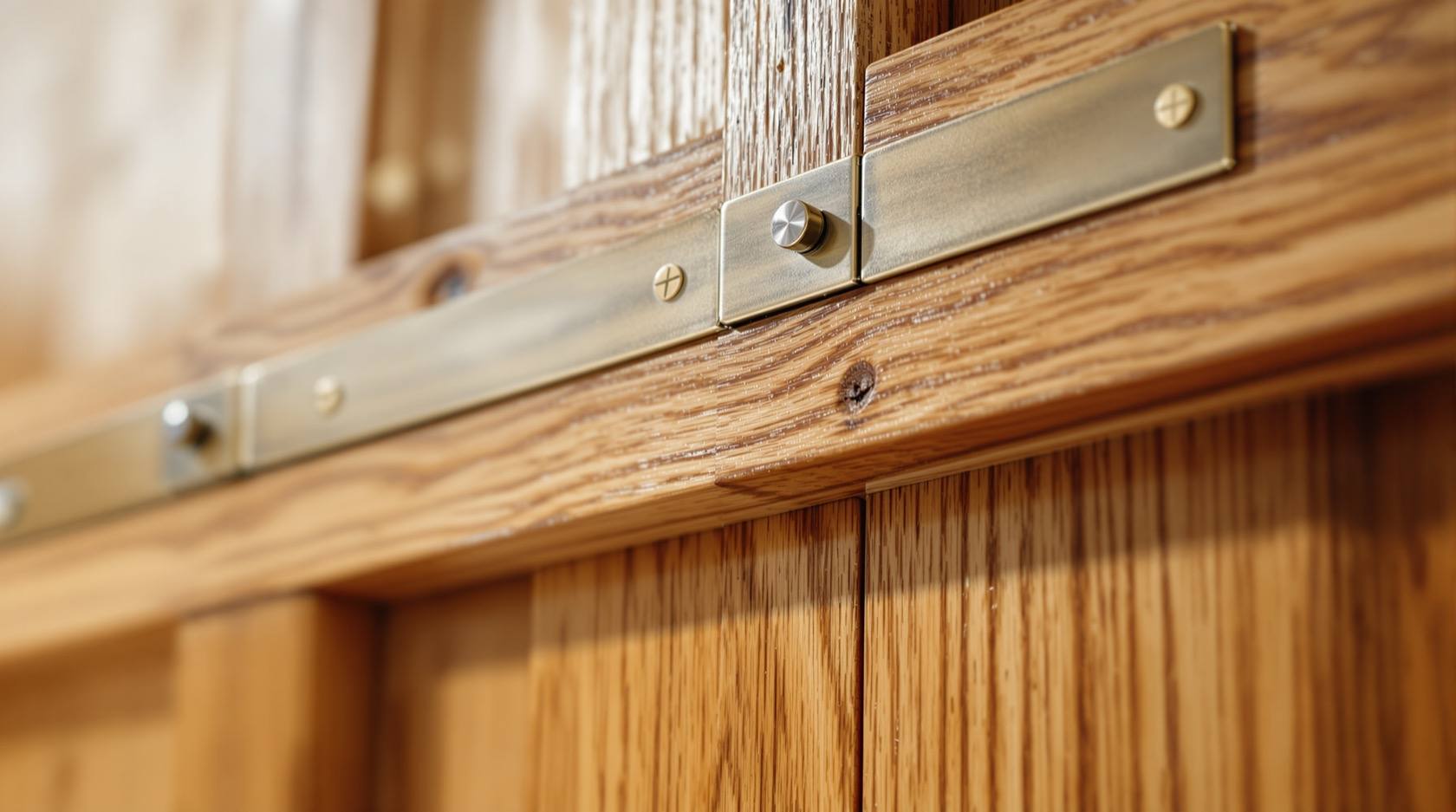
Reinforced Wooden Doors in India (2026): Making the Timber Main Door Actually Secure
A homeowner's decision guide to choosing or upgrading the wooden main or flat door most Indian homes actually have, so it genuinely resists a break-in, without pretending a hollow flush door is secure.
Almost every home in India is entered through a wooden door. The main door of a house, the entrance to a flat, the door a family locks behind them at night — timber, in one form or another, is what stands between the household and the street. And that is exactly why the wooden door deserves an honest, security-minded look, because a great many of the doors we trust our safety to are not doors that stop anyone at all.
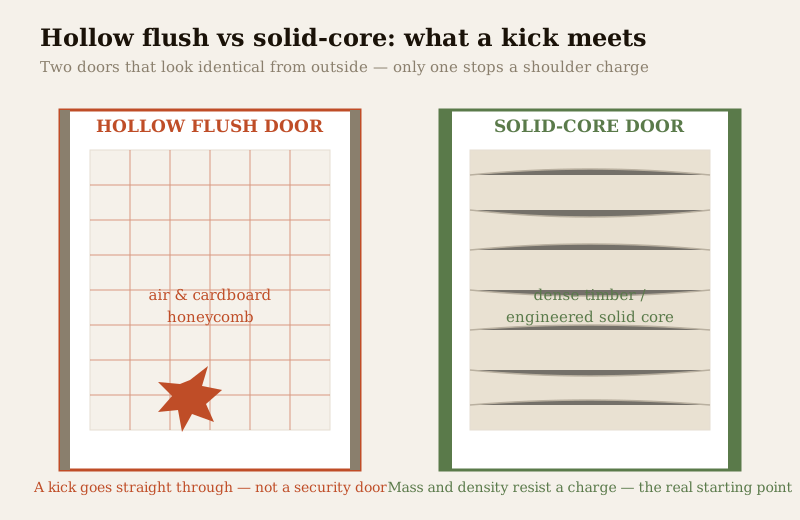
The hard truth first: a large share of "wooden" doors sold and fitted in Indian homes today are hollow flush doors — two thin plywood or veneer skins over a frame filled with air and cardboard honeycomb. They look solid. They are painted, polished, sometimes handsome. But a single hard kick can put a foot straight through the middle of one, and no lock, however expensive, matters once the panel it is bolted to has caved in. This guide is about the difference between a door that looks like a door and a door that behaves like one — and how you, as a homeowner, choose or upgrade toward the second without pretending the first is secure.
Scope & safety. This guide helps you specify, choose and harden your own wooden door so it resists a break-in, and it points you to the right professionals for the work. It never explains how to defeat, force or bypass anyone's door. One rule overrides every security choice here: the door your family leaves by in a fire must open from the inside without hunting for a key. Never fit a lock that can trap people in — security must never cost you your escape. Where a strength or a rating matters, we say "specify it with the maker to the resistance you want" rather than quote a number as a guarantee; hanging a heavy door true, cutting mortises and setting a frame square are skilled carpentry, and life-safety egress and fire compliance are professional matters under the National Building Code of India and local bye-laws.
Start honest: solid-core versus hollow flush
This is the single most important decision, and it is made before you ever think about locks. Everything else — hinges, plates, the frame — is built on the leaf itself. If the leaf is hollow, you are decorating a weakness.
| Hollow flush door | Solid-core / solid timber door | |
|---|---|---|
| What is inside | Air, cardboard honeycomb, a light internal frame | Dense timber, engineered solid core, or blockboard through the whole leaf |
| Weight in the hand | Light, easy to lift | Noticeably heavy, feels substantial |
| The tap test | Sounds hollow and drum-like when knocked | Sounds dull and dead, solid all the way |
| Resistance to a kick | A foot can go through the centre | Mass and density resist a shoulder charge |
| Honest role | Fine for a bedroom, bathroom or cupboard inside the home | The right starting point for a main or flat entrance door |
The plainest field test costs nothing: knock on the middle of the door with a knuckle. A hollow flush door rings hollow; a solid door answers with a dull, dead thud. Lift it on its hinges if you can — a solid leaf is heavy in a way a hollow one never is. If your current main door sounds like a drum, no lock upgrade will save it, and the honest move is to plan a replacement rather than spend on hardware bolted to cardboard.
What to specify to the maker (and what not to invent)
When you buy or commission a solid entrance door, you are really writing a short specification for the carpenter, dealer or manufacturer. The honest way to do this is to describe the resistance you want and let them meet it with a species and construction they can stand behind — not to memorise a magic millimetre figure off the internet and treat it as a guarantee.
Things worth specifying and discussing with the maker:
- A genuinely solid leaf — seasoned hardwood, a good engineered solid core, or full blockboard, not a flush door with a hollow centre. Ask them to confirm the construction in writing on the quote.
- A hardwood species suited to a security door — well-seasoned Indian hardwoods such as teak (sagwan), sal or similar dense timbers are traditional for good reason; ask the maker what they recommend for strength and for your climate, and confirm it is properly seasoned so it will not warp or crack.
- Adequate leaf thickness — a security entrance door should be appreciably thicker and heavier than an internal door. Rather than fixate on a single number, tell the maker "I want this to resist a forced entry" and agree a thickness and construction together; a reputable maker will not sell you a thin flush leaf for a main door once you say that.
- A door and frame designed as a set — the leaf and the chowkhat (frame) should be sized and rebated to work together, so the door closes into a deep, tight stop rather than sitting proud where a lever can get behind it.
A note on standards, honestly stated: in India there is no single household "burglar-resistance grade" stamped on wooden doors the way there is for, say, cement grades. The framework most often referenced for graded resistance is the European standard EN 1627, with classes RC1 to RC6 (RC standing for resistance class) — it is a European specification, not an Indian code, but it is the vocabulary a serious supplier of graded security doors will speak. If a vendor quotes you an RC class, that is meaningful; if a vendor quotes you an invented "IS rating" for a wooden burglar door, be sceptical and ask to see the actual test certificate. For the deeper treatment of what those classes mean and when they matter, see the door grades guide and the burglar-resistant doors guide.
The frame is half the door
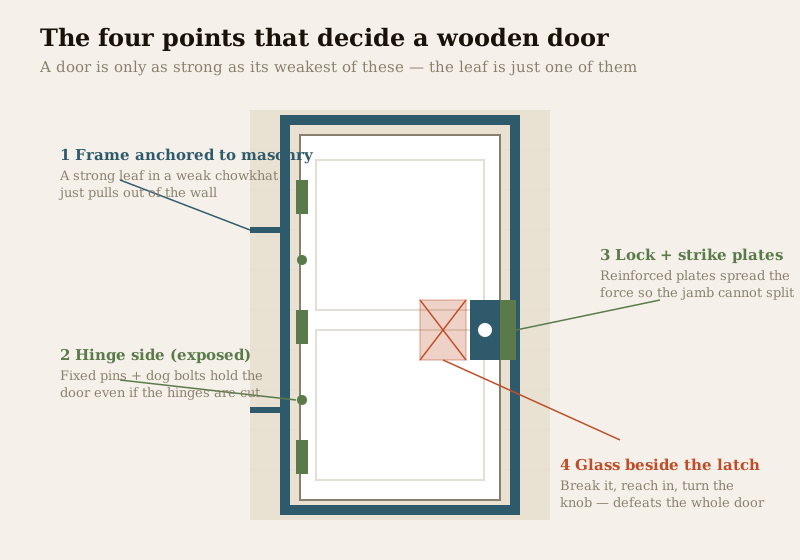
Here is the mistake that undoes more good doors than any other: a homeowner spends well on a heavy hardwood leaf and a strong lock, then hangs it in the same thin, poorly-fixed chowkhat that came with the flat. Under a determined shove, it is not the leaf that fails — it is the frame, which splits or pulls straight out of the wall, taking the whole door with it. A strong leaf in a weak frame is a strong door that leaves the building.
A wooden security door is only as good as the frame it hangs in and the wall that frame is fixed to. When you specify or upgrade, treat these as one system:
- The frame must be solid and well-anchored — a substantial timber (or, increasingly, a steel or reinforced) frame, fixed into the masonry at several points down each side with proper fasteners, not a couple of nails into crumbling plaster.
- The fixings go into the structure, not the plaster — anchors should reach real masonry or concrete so the frame cannot be levered out.
- The stop and rebate should be deep — so the door seats well inside the frame and a lever or bar cannot easily get purchase behind the leaf edge.
For how a frame is actually built and detailed, read the door frame anatomy guide; for the specific hardware and plates that tie leaf and frame together against force, the door reinforcement guide is the companion to this page. Do not upgrade one without the other.
The hinge side is a security side too
We obsess over the lock and forget that a door has two vertical edges, and the other one carries the hinges. On many Indian main doors the hinges are on the outside face, fully exposed — which means the pins can, in principle, be attacked from outside, and if the hinge knuckles give way the door can be lifted off entirely, lock intact and irrelevant.
You do not need to know how that attack works to defend against it — you only need the door to hold on the hinge side even if the hinges are compromised:
- Fixed (non-removable) hinge pins on an entrance door, so the pin cannot simply be driven out.
- Hinge-side dog bolts — fixed studs on the hinge edge of the leaf that seat into matching holes in the frame when the door is closed. Even if every hinge is cut, the door is still trapped in the frame on that edge and cannot swing free. These are a modest, high-value addition a good carpenter can fit.
- Enough sturdy hinges, well screwed into solid timber — with long screws reaching the frame proper, not short screws biting only into a thin architrave.
This is exactly the kind of quiet reinforcement covered more fully in the door reinforcement guide, and it is a natural upgrade to make at the same time as the lock.
Reinforce where the lock lives
A deadbolt is only as strong as the timber it throws into. On an un-reinforced wooden door and frame, the weak point is not the bolt — it is the wood around the strike, which can split under force, letting the whole latch tear out. The fix is to spread the load with steel plates so no single piece of timber has to take the blow alone.
| Point | Weakness if left plain | The reinforcement |
|---|---|---|
| Lock area on the leaf | Timber around the mortise can split | A reinforcing plate or wrap around the lock case spreads the force |
| Strike / keeper on the frame | Short screws into thin jamb wood pull out | A long, heavy strike plate fixed with long screws into the structure behind |
| The bolt throw | A shallow bolt gives little to hold | Ask for a deep throw seating into a reinforced keeper |
| Multiple points | One lock point concentrates all force | Consider a multipoint lock that bolts the leaf top, middle and bottom |
For homes wanting the strongest version of this, a multipoint locking door throws several bolts into the frame at once and is far harder to force than a single central latch. Whatever lock you choose, the principle is the same: reinforce the wood, use long screws into real structure, and never rely on a strong bolt seated in weak timber. The main-door security checklist walks the whole entrance point by point.
The glass panel that quietly defeats everything
Look at a great many Indian flat and main doors and you will find a decorative glass panel — a slim vertical light beside the lock, or glazing set into the leaf near the handle. It is elegant. It is also, on a security door, often the single detail that undoes the rest: if there is breakable glass within arm's reach of the latch or thumbturn, then the strongest lock in the country protects nothing, because the door can be opened by reaching through the glass and simply turning the handle from inside.
You do not fix this by adding a bigger lock. You fix it by removing the reach:
- Keep glass away from the latch. On a security entrance door, glazing beside or in easy reach of the lock is a weakness, not a feature. If you are commissioning a new door, site any glazing where a hand cannot reach the handle through it.
- If you keep or want glass, make it the right glass. Laminated or toughened safety glass resists casual breakage and, in the case of laminated glass, tends to hold together rather than fall away — see safety glass for homes, laminated glass windows and toughened glass windows. But treat this as reducing the risk, not removing it: the surest answer on a security door is to keep breakable glass out of reach of the lock in the first place.
- Watch the same trap on the frame and sidelight. A glazed sidelight beside the door, or a fanlight above it, can offer the same reach-through if it is close to the handle.
Upgrade what you have, or replace it?
Not every home needs a new door. The right move depends honestly on what you are starting from. Use this as a rough guide, then get a carpenter or door specialist to look at the actual door.
| Your current door | Honest recommendation |
|---|---|
| Solid hardwood leaf, sound frame, weak lock only | Upgrade — new lock, reinforcing plates, dog bolts, long screws; excellent value |
| Solid leaf but thin or badly-fixed frame | Upgrade the frame too — a strong leaf in a weak chowkhat is not secure; do both together |
| Hollow flush door as the main entrance | Replace — no hardware makes a hollow leaf secure; plan a solid-core or graded door |
| Old, warped, cracked or ill-fitting timber | Replace — gaps let levers in and the timber may already be failing |
| High-risk location, ground floor, prior break-in | Consider a graded or steel door (see next section) rather than patching timber |
Upgrading a genuinely solid door is usually the best-value security spend a homeowner can make: better lock, reinforced strike, dog bolts, long screws into structure, and glass moved away from the latch, all fitted in a day by a good carpenter. Replacing is the honest call only when the leaf itself, or the frame, cannot be made sound. The security upgrades for existing homes guide puts this door decision in the context of the whole house.
When a steel or graded door is the better call
A well-made reinforced wooden door is secure enough for most Indian homes, and it keeps the warmth and looks people rightly love. But there are situations where timber is fighting a losing battle and the honest advice is to step up to a different door entirely:
- A ground-floor flat or independent house entrance in a higher-risk area, especially after a break-in on the street.
- A door you want to carry a stated resistance class (an EN 1627 RC rating), where a purpose-built steel security door or a factory-graded door gives you a tested, certificated answer rather than a bespoke carpentry job.
- A situation needing both fire and security performance, where a fire-rated door to IS 3614 (the Indian standard for fire-check doors) is required by the building — never confuse a fire door with a security door; they are certified for different things, and a door may need to be both.
There is no shame in choosing steel where it fits; equally, a reinforced hardwood door is a perfectly serious security choice for most homes. Read the burglar-resistant doors guide and the door grades guide to weigh a graded door against a well-upgraded timber one, and put a number on where your current door stands with the door security rating tool.
The egress rule you never break
Everything above is about keeping intruders out. This last point is about keeping your family alive, and it overrides every security decision on the page: the door your household escapes by in a fire must open from the inside without a key.
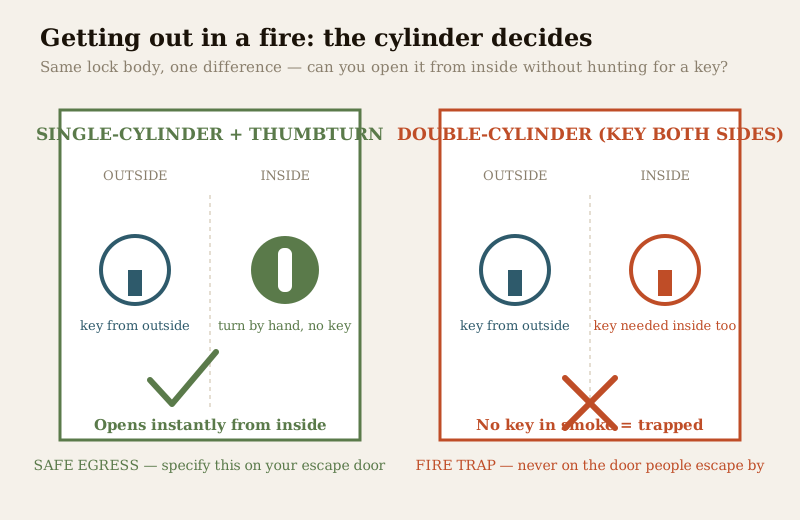
The trap has a name. A double-cylinder deadbolt takes a key on both sides — outside and inside. It feels extra-secure, and it is sold as such. But in a fire, in smoke, in the dark, if the person at the door cannot instantly find the right key, that lock holds them inside a burning home. People have died this way. On an escape door, it is not a security feature; it is a hazard.
The safe choice is a single-cylinder deadbolt with a thumbturn on the inside — key from outside, but a simple hand-turned knob inside that opens the door in one motion, no key, no fumbling. That is what belongs on any door your family might have to leave by in an emergency.
| Lock on your escape door | In everyday use | In a fire, from inside |
|---|---|---|
| Single-cylinder + inside thumbturn | Locks securely from outside with a key | Opens instantly by hand — safe egress |
| Double-cylinder (key both sides) | Feels very secure | Traps people who cannot find the key — a fire trap |
If you are tempted by a double-cylinder lock precisely because of a glass panel beside the door, stop: the correct fix is to deal with the glass (move it, or make it safety glass out of reach of the latch), not to fit a lock that can trap your family. Never trade your escape for a little extra security. This is the same life-safety principle that runs through every opening in the home — see emergency escape window requirements — and it is non-negotiable.
Key takeaways
- Solid beats hollow, and it is decided before the lock. Many Indian "wooden" main doors are hollow flush doors a kick goes through; knock on the middle, and if it rings hollow, plan to replace it rather than bolt hardware to cardboard.
- Specify resistance to the maker, do not invent numbers. Ask for a genuinely solid hardwood or engineered-core leaf of adequate thickness and confirm the construction in writing; if a graded door is wanted, look for an EN 1627 RC class (a European framework, not an Indian code), not a made-up "IS rating".
- The frame is half the door, and the hinge side is a security side. A strong leaf in a weak chowkhat pulls out of the wall; anchor the frame into real masonry, use fixed hinge pins and dog bolts, and reinforce the lock and strike with long screws into structure.
- Glass beside the latch defeats the whole door. Keep breakable glass out of reach of the handle; if you keep it, use safety glass, but moving it away is the surer fix.
- Never trade escape for security. The door your family leaves by in a fire must open from inside without a key — a single-cylinder deadbolt with an inside thumbturn, never a double-cylinder lock that can trap people in.
Where to go next
- Complete guide to door and window security — the pillar this door guide sits under.
- Door reinforcement guide — the plates, bolts and fixings that harden a timber door.
- Door frame anatomy guide — how a frame is built and why it matters as much as the leaf.
- Main-door security checklist — the whole entrance, point by point.
- Steel doors, security door grades and burglar-resistant doors — when to step up from timber.
- Door security rating tool and the home security risk scorecard — put a number on where you stand.
- The openings sub-hub and the security hub, and the ultimate guide to home security.
References
- EN 1627 and its resistance classes RC1 to RC6 — the European standard framework for the burglar resistance of doors, windows and shutters, referenced in India by suppliers of graded security doors; it is a European specification, not an Indian code. Confirm any quoted class against the maker's actual test certificate.
- IS 3614 (Bureau of Indian Standards) — the Indian standard for fire-check / fire-rated doors, relevant only where a door must also resist fire; a fire door and a security door are certified for different things. Verify the current part and edition via the BIS catalogue: https://www.services.bis.gov.in/
- National Building Code of India (SP 7, Bureau of Indian Standards) and your local municipal bye-laws — for means of egress and life-safety, including the requirement that escape doors open freely from inside; always verify the current edition.
- Manufacturer and vendor specifications — ask any door or lock supplier to confirm the leaf construction, species, seasoning, frame fixing and lock cylinder type in writing before you buy or upgrade.
This is an educational overview for homeowners, not legal, fire-safety or engineering advice. Hanging and fitting a heavy security door, setting and anchoring a frame, and ensuring your escape doors comply with life-safety egress are qualified professional tasks — engage a good carpenter or door specialist and, for egress and fire, a licensed consultant, and verify any standard's current status via the BIS catalogue before relying on it.
Export this guide
Related Guides — Deep-dive reading
Door Frame Security in India (2026): Anchoring the Chowkhat Break-Ins Actually Exploit
A homeowner's guide to the real weak point behind most forced entries: the frame, not the leaf or the lock, and how to anchor, pack and reinforce a chowkhat so a strong door genuinely stays in the wall.
SecurityDoor and Window Security Assessment for Indian Homes
Go opening by opening and rate the hardware itself — leaf and frame, hinges and locks, strike plates, grilles, glazing and latches — so you can grade each door and window's real resistance while never trapping anyone behind it.
SecurityThe Complete Guide to Door and Window Security in India (2026)
The pillar reference for every opening in your home — how to think about doors, windows and glazing as a system, why the weakest opening decides your safety, and where each part of the library takes the detail further.
SecurityRelated Tools — Try Free
Door Security Rating Calculator
Score your main door out of 100 across leaf, frame, lock and hardware — and see the top upgrades.
Security ToolWindow Hardware Cost Calculator
Estimate window hardware cost — hinges, handles, locks, rollers and multipoint gears.
Window CalculatorCross-Ventilation Analyzer
Estimate airflow and air changes per hour (ACH) from room size, window areas, layout, and local wind — with NBC 2016 Part 8 compliance check.
Ventilation Calculator