
Glass-Break Sensors in India (2026): Catching a Smashed Pane Before Entry
How acoustic glass-break sensors listen for the twin sound of breaking glass, why they cover what door and window contacts miss, and how to place one sensor to protect a whole room of windows in an Indian home or shop.
Most intrusion sensors wait for something to move. A door contact waits for the door to open; a motion sensor waits for a warm body to cross a room. But a determined intruder facing a large plate-glass window or a glass shop-front does not always open anything — sometimes they simply break the glass and step through the hole. At that moment, every "opening" sensor in the house stays silent, because nothing was opened. The glass was destroyed instead.
Glass-break sensors close exactly that gap. They are acoustic detectors that listen for the distinctive sound of a pane shattering and trigger the alarm the instant the glass goes — ideally while the intruder is still outside, reaching through, rather than already in the room. In an Indian home full of large windows, sliding glass doors and balcony glazing, or a shop with a glass front, they are the partner that makes your window contacts complete. This guide is part of Studio Matrx's burglar-alarm hub: it explains how these sensors actually detect a break, where one unit can cover a whole room, and how to place one so it catches real breaks without crying wolf at every dropped plate.
Scope & safety. This guide helps you choose and place glass-break sensors well, and understand how they work alongside your other detectors. Mounting a sensor on a wall or ceiling is homeowner-friendly; mains wiring for a wired panel, or anything at height or near the electrical board, belongs to a licensed electrician — see the electrical hub. A sensor is a detection layer, not a barrier: it warns you that glass has broken, it does not stop the break. Most Indian alarms are self-monitored (a siren plus a GSM or app alert to you or the guard), so plan for who responds. This is educational guidance, not legal advice.
What a glass-break sensor actually does
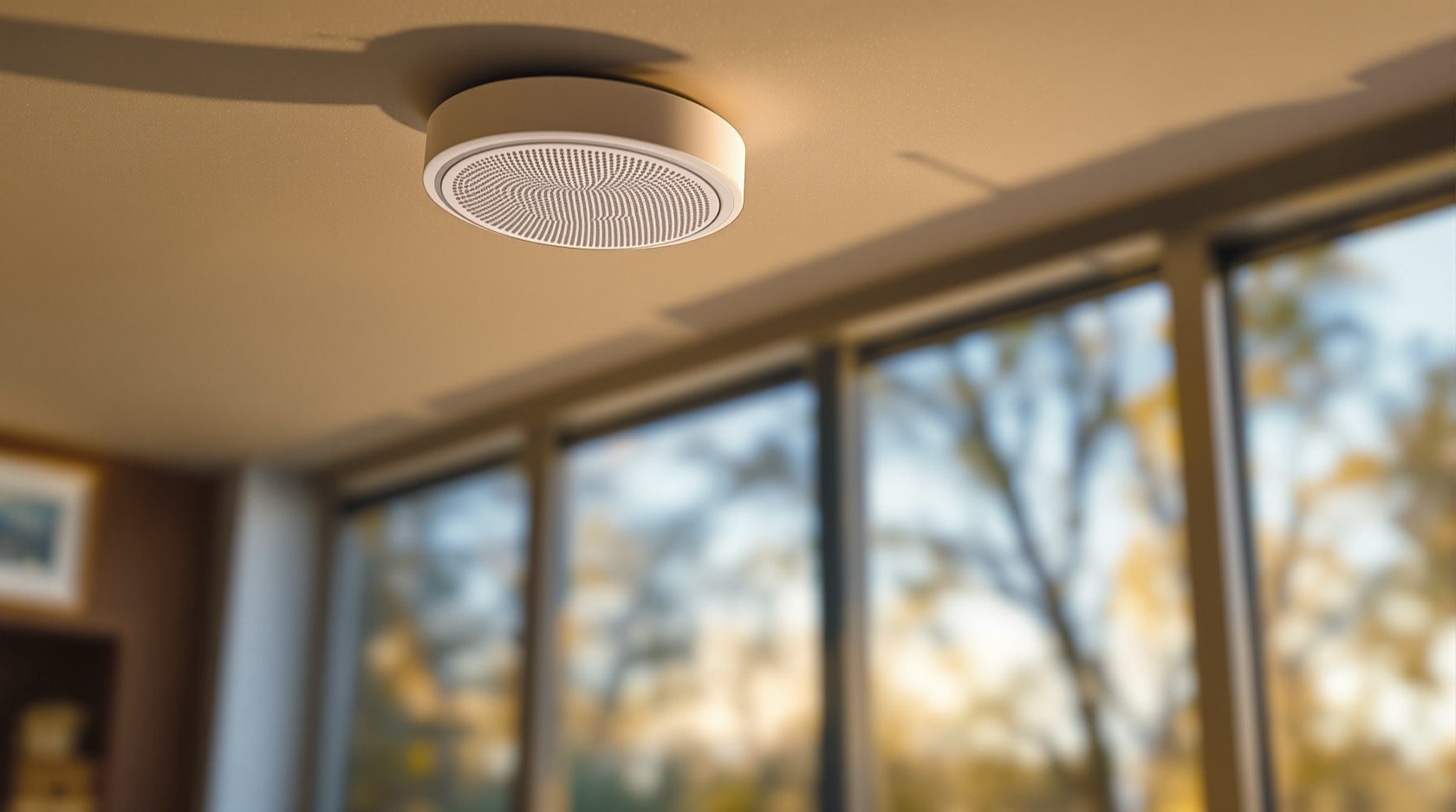
A glass-break sensor is a small microphone-and-processor unit, usually mounted on the ceiling or a wall opposite the glass it protects. It does one job: constantly listen to the room, and fire only when it hears the very specific sound-shape of glass breaking. It does not care whether a window is opened, closed or locked — it cares only about the sound of the pane itself failing.
That is a fundamentally different trigger from every "opening" sensor, and it is why the two belong together:
| Sensor | What it detects | What it misses |
|---|---|---|
| Door/window contact | The window or door being opened (a magnet separating) | A pane smashed while the frame stays shut and locked |
| Glass-break sensor | The sound of glass shattering anywhere in range | A window quietly opened without breaking glass |
| Vibration / shock sensor | The impact/vibration in the frame or grille | Depends on tuning; less about the airborne sound |
| Motion sensor | A body moving inside the room | Anyone still outside; fires only after entry |
Read that table across and the logic is obvious: a contact and a glass-break sensor cover each other's blind spots. Lock and arm a window with only a contact, and a burglar can break the glass and reach through to the latch — or climb through the hole — without ever separating the magnet. Add a glass-break sensor to the same room and the alarm now fires on the sound of the break itself, typically before a hand is even inside. That is why professional designs treat glass-break detection as the natural companion to door and window sensors, not an alternative to them.
How it tells a break from a bump: the dual signature
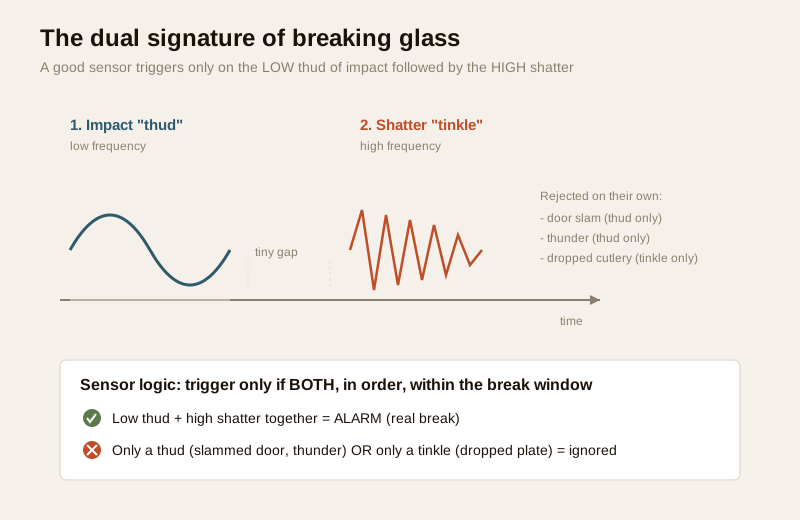
The clever part — and the whole reason a good glass-break sensor does not false-alarm every time you clap or drop a spoon — is that breaking glass has a two-part acoustic fingerprint, and a quality sensor insists on hearing both parts, in the right order, before it triggers.
When a pane is struck hard enough to break, two very different sounds happen in quick succession:
1. The low-frequency "thud" of impact. The blow that hits the glass produces a dull, low-frequency shock — the flex and thump of the pane being struck. This is the impact signature.
2. The high-frequency "shatter" of the pane. A fraction of a second later, the glass actually fails and the fragments fall, producing a bright, high-frequency tinkle and crash — the breakage signature.
A single-technology sensor that listened for only one of those would be trouble. Listen for only the low thud and it fires when a door slams; listen for only the high tinkle and it fires when cutlery clatters in the sink. So a good dual-signature (sometimes called dual-stage or "flex-and-shatter") sensor is engineered to trigger only when it detects the low-frequency impact first and the high-frequency shatter immediately after, within the narrow time window that a real break produces. One without the other is ignored. That single design choice — demanding the whole fingerprint, not a fragment of it — is what makes modern acoustic glass-break sensors reliable enough to arm at night without dreading a false trip.
Two further points worth knowing when you shop:
- Glass type matters to some sensors. Plate glass, tempered glass, laminated glass and wired glass each shatter with a slightly different acoustic character. Better sensors are tuned to recognise the common types; a few let you select the glass type or have a wider profile. If you have laminated or double-glazed units, check the datasheet says they are supported.
- A test tool exists for a reason. Reputable sensors are commissioned with a small hand-held glass-break simulator (or a phone test tone) so the installer can confirm coverage from the mounting point without breaking a window. Ask that this test is done at handover and note which windows passed.
Range, line of sight, and one sensor for a whole room
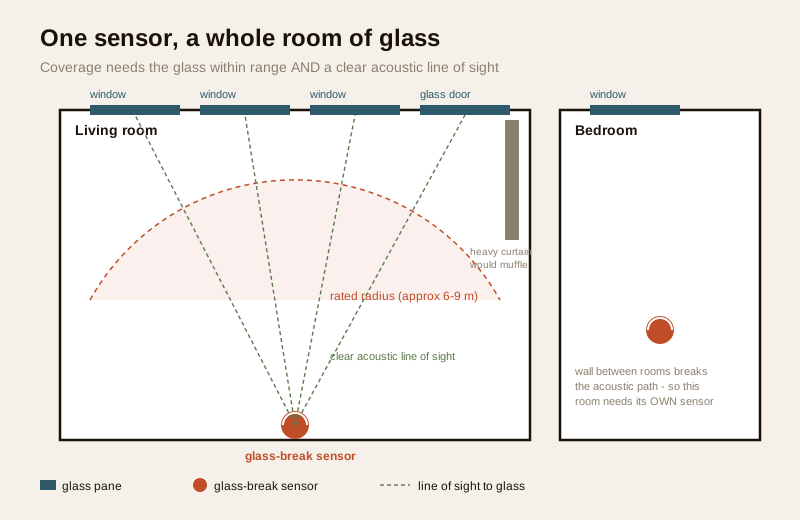
Because a glass-break sensor detects sound travelling through the air, a single well-placed unit can protect several windows in the same room at once — you do not need one per window the way you would with contacts. This is what makes them cost-effective for a living room with a wall of glazing or a shop with a run of display windows.
Two things govern the coverage:
- Range. Typical acoustic glass-break sensors are rated for a listening radius of roughly 6 to 9 metres (about 20–30 feet) from the sensor to the glass, depending on the model. Every window you want protected must sit inside that radius.
- Line of sight (acoustically). The sound must reach the microphone without being muffled. The sensor should "see" the glass — mount it so there is a clear acoustic path, not blocked by a heavy curtain fold, a tall cupboard, a partition or a closed internal door between it and the window.
| Placement factor | Aim for | Why |
|---|---|---|
| Distance to farthest glass | Within the model's rated radius (often 6–9 m) | Beyond range, a real break may be too faint to trigger |
| Acoustic line of sight | Clear path sensor-to-glass | Heavy drapes, partitions and closed doors muffle the sound |
| Mounting surface | Firm wall or ceiling, opposite or adjacent to the glass | Stable, unobstructed listening position |
| Room type | Hard-furnished rooms carry sound well | Very soft rooms (thick curtains, deep carpet, heavy upholstery) absorb sound — mount closer |
A practical rule for an Indian home: one glass-break sensor on the ceiling or high on the wall of a living room can usually cover the whole bank of windows and the balcony sliding door in that room, provided they are all within range and not hidden behind heavy curtains. A separate room with its own glazing needs its own sensor, because a wall between rooms breaks the acoustic path.
Where they earn their place in India
Glass-break sensors are not for every window in the house — they shine where there is a lot of glass an intruder could smash:
- Living rooms and drawing rooms with large windows or picture windows — the classic case, where one sensor covers the whole glazed wall.
- Balcony and terrace sliding glass doors — a large, tempting pane at ground or first-floor level.
- Ground-floor and stilt-level rooms — anything reachable from the compound, garden or street is the priority; upper floors matter far less unless a flat roof, parapet or tree gives access.
- Shop fronts and showrooms with glass shutters or display glazing — a run of display windows is exactly what one or two ceiling sensors are made for, and the break happens at the storefront before stock is reached.
- Glass-fronted offices, clinics and glass facades — increasingly common in Indian commercial buildings.
- Farmhouses and villas with expansive glazing — pair room glass-break sensors with a perimeter alarm at the compound and beam sensors across long approaches.
Think of it as a layered plan: the compound and gate is the outer layer, contacts on doors and windows are the skin of the building, glass-break and motion sensors are the inner net, and CCTV verifies what tripped. The layered-security design guide puts all of this together.
Placing a sensor to avoid false alarms
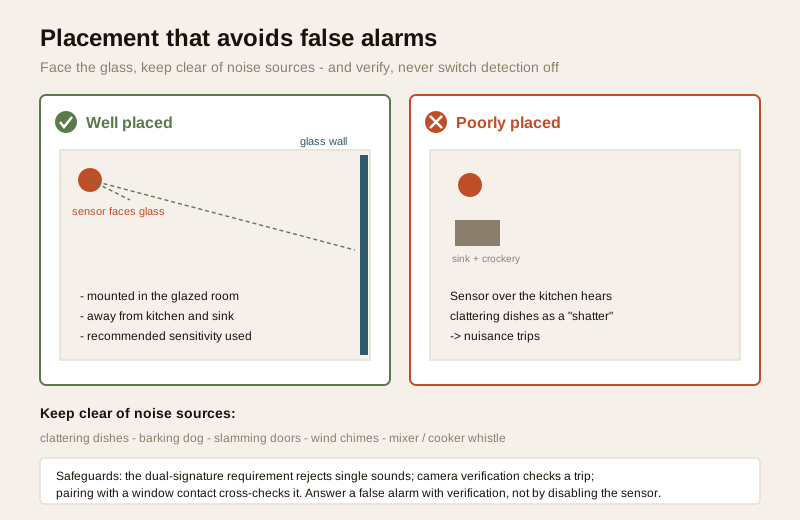
A glass-break sensor listens to the whole room, so the honest design question is: what else in that room makes a sound the sensor might mistake for a break? Good placement is mostly about keeping the sensor away from those noise sources so that only real glass reaches it clearly. None of this is about hiding a break from the sensor — it is the opposite, making sure the sensor hears real breaks and ignores everyday clatter.
Common household and shop sounds that a poorly placed sensor can be provoked by — and how placement handles each:
| Noise source | Why it can matter | Placement response |
|---|---|---|
| Clattering dishes / cutlery | High-frequency tinkle resembles the shatter half of the signature | Keep the sensor out of the kitchen / away from the sink and crockery shelves |
| Clapping, whistling, keys | Sharp high sounds | Don't mount directly over a sofa or dining area where this happens constantly |
| Barking dogs, TV, music | Loud, variable sound | Rely on the dual-signature requirement; keep sensitivity at the recommended setting |
| Slamming doors, thunder | Low-frequency thud (impact half) | The sensor needs the shatter too, so a thud alone is rejected |
| Pressure-cooker whistle, mixer | Sustained high tones | Keep the sensor out of the kitchen zone |
| Wind chimes, metal blinds | Bright metallic tinkle near the glass | Position away from chimes and rattling blinds |
The dual-signature design already rejects most single sounds — a thunderclap is a thud with no shatter; a dropped glass on a soft rug is a shatter with no matching impact. Placement handles the rest:
- Mount in the glazed room, not the kitchen. Put the sensor in the living or display room it protects, and keep it away from the kitchen, sink and crockery, where high-frequency clatter lives.
- Face the glass, not the noise. Aim the sensor toward the windows and away from the TV wall, sound system or a busy road-facing side if that creates constant loud noise.
- Use the recommended sensitivity. Turning sensitivity to maximum "to be safe" invites false trips; the datasheet's default is tuned for the rated range. If a large very-hard-surfaced room over-triggers, a small step down (still covering the glass on the test tool) is the fix.
- Zone it. On the panel, put glass-break sensors in a zone you can see and, ideally, verify with a nearby camera so a trip can be checked before anyone is dispatched — the honest answer to a false alarm is verification, not switching the sensor off.
- Pair, don't replace. Because a glass-break sensor and a window contact fail differently, keeping both means a false trip on one is cross-checked by the other and by motion/CCTV, so you can respond with confidence.
Wired, wireless, and fitting into your system
Glass-break sensors come in the same two flavours as the rest of your alarm, and the choice follows the same logic as it does for the whole system:
| Type | Best for | Notes |
|---|---|---|
| Wireless (battery) | Retrofits, finished rooms, rented shops | Easy to mount; check battery life and low-battery alerts; pairs to a wireless or hybrid panel |
| Wired | New builds, permanent commercial installs | No batteries to change; needs cabling back to the wired panel — plan during construction |
| Combination units | Rooms wanting motion + glass-break in one | Some dual-technology detectors add glass-break to a PIR |
For most Indian homes retrofitting security, a wireless glass-break sensor on a wireless or hybrid panel is the practical route: mount it, pair it, walk-test it. In a shop fit-out or a new build, wired units cabled to the panel during construction are cleaner and maintenance-free. Either way, register the sensor in a named zone, and remember that in a self-monitored setup the siren and the app or GSM alert are what actually summon a response — so decide in advance who acts on it.
Indian-context essentials:
- Power cuts. A glass-break sensor is only as available as the panel it reports to. Make sure the panel and any hub have battery backup so a load-shedding evening does not leave the room unprotected.
- Cost. As a rough guide, a single wireless glass-break sensor runs roughly ₹1,500–₹5,000 depending on brand and features; because one unit covers several windows, the per-window cost is often lower than fitting a contact to each pane. Verify current prices and specs on the manufacturer's datasheet.
- Verification. Pairing glass-break zones with a camera view turns "the alarm went off" into "here is what happened," which is the difference between a useful system and one people stop trusting.
Use the burglar-alarm system selector to see where glass-break detection fits in a full plan, and read the complete burglar-alarm guide for how the panel, sensors, siren and alerts come together. For property-specific plans, see the guides for villas and independent houses, apartments and gated communities, or the broader home-security overview.
When to bring in a professional. Mounting a wireless sensor and running the walk-test is homeowner-friendly. Bring in a licensed installer or electrician for mains-powered or wired panels, any work at height, cabling, and integrating glass-break zones with CCTV verification — and see the electrical hub. Ask the installer to prove coverage with a glass-break test tool at handover, confirm which windows passed, and set the sensitivity to the datasheet's recommended level rather than maximum. For a shop or society, insist the commissioning and zone map are documented.
Key takeaways
- A glass-break sensor hears the pane smashed — it fires on the sound of breaking glass, catching a break that a window contact misses because nothing was opened, ideally before an intruder is inside.
- The dual signature is what makes it reliable — a good sensor triggers only on the low-frequency impact "thud" followed by the high-frequency "shatter," so a slammed door or a dropped plate alone is ignored.
- One sensor can cover a whole room of windows within its rated 6–9 m radius and clear acoustic line of sight — cost-effective for glazed living rooms, balcony doors and shop fronts.
- Place it to avoid false alarms: mount it in the glazed room facing the glass, keep it away from kitchens, dishes, chimes and other noise sources, use the recommended sensitivity, and verify trips with a camera — never respond to nuisance by switching detection off.
- Pair, don't replace — glass-break sensors complete door and window contacts, motion sensors and CCTV as one layered plan; plan panel battery backup for India's power cuts.
References
- Manufacturer specifications — confirm the listening radius, supported glass types (plate, tempered, laminated, wired), dual-signature detection, sensitivity settings and battery life on the maker's own datasheet before buying or placing a glass-break sensor.
- Digital Personal Data Protection Act, 2023 — where a glass-break zone is verified by a camera, the recording is personal data; restrict who may view footage and keep access controlled, in line with the Act.
- National Building Code of India (SP 7), Bureau of Indian Standards, and local municipal bye-laws for any electrical or life-safety aspect of a wired panel or mains-connected install; verify the current edition via the BIS catalogue: https://www.services.bis.gov.in/
This is an educational overview, not legal advice. Mains wiring, work at height and any electrical work are qualified professional tasks — engage licensed installers and verify any standard's current status via the BIS catalogue before relying on it.
Export this guide
Related Guides — Deep-dive reading
How to Choose a Burglar Alarm in India (2026): Sensors, Alerts and What Actually Matters
A homeowner's guide to selecting an intruder alarm that fits your flat, villa or shop and alerts you the way you want — matching the sensor mix, control panel and the big siren-versus-monitored decision to your real risk, and dodging the false-alarm traps that make people switch systems off.
SecurityFalse Alarm Prevention for Burglar Alarms in India: Causes & Fixes (2026)
Why home alarms cry wolf — ceiling fans, pets, heat, insects, weak batteries, power blips and poor door alignment — and how correct placement, the right sensors and simple upkeep keep the system trusted and armed.
SecurityWindow Security Guide
The layered-defence model for Indian homes — frame, glass, locks, grille and sensors working together
Windows & GlazingRelated Tools — Try Free
Acoustic Privacy (STC) Visualizer
Indian healthcare acoustic visualizer — compare wall assemblies and noise sources, see received SPL after STC attenuation, and check FGI 2018 / IS 1950 / NABH speech-privacy compliance with live dual-canvas waveform.
Acoustic ToolCCTV System Type Selector
Answer five questions and get the right CCTV setup — analog / IP / hybrid, wired / wireless, local / cloud — with reasons.
CCTV SelectorWindow Grill Design Selector
Pick a window grille style and material by priority — security, looks, budget, view — and estimate cost.
Window Tool