
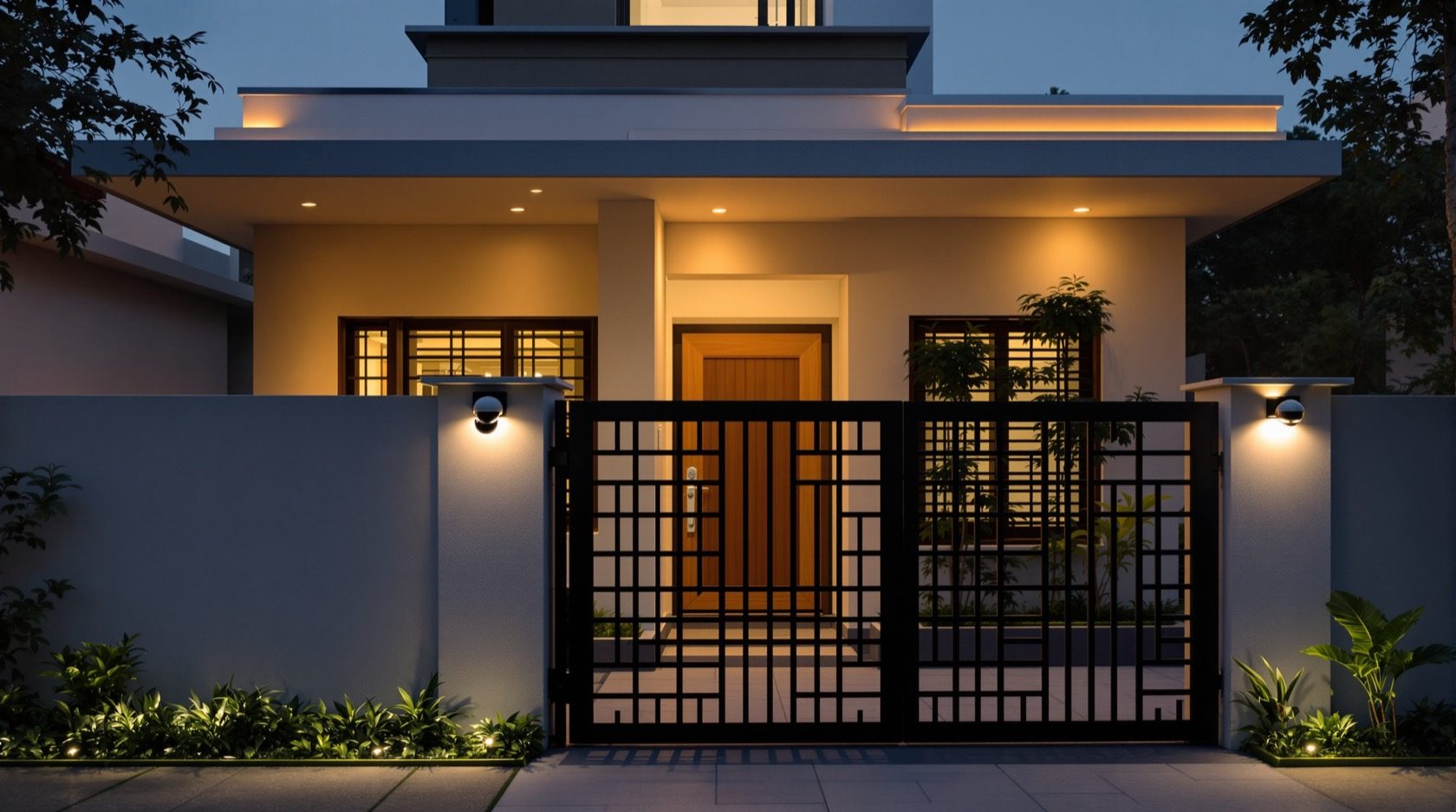
The Ultimate Guide to Home Security in India
The one guide that makes home security make sense — why it matters here, the Deter-Detect-Delay-Respond mental model, the five layers of a protected home, the physical, electronic and procedural measures, and a tiered budget to start from. Plain language, India-grounded.
Home security is the part of a house nobody thinks about until the night it fails. A good set of defences is quiet, almost invisible, and works precisely because it is never tested. The trouble is that most Indian homes are secured by accident rather than design — a lock here, a grille there, one camera aimed at nothing in particular — and the gaps only show up in hindsight.
This is the anchor of the Studio Matrx Security Knowledge Hub: a plain-language, India-grounded map of the whole subject. It will not turn you into a security consultant, and it deliberately avoids anything that could help a wrongdoer. What it will do is let you assess your risk, understand how protection actually works, plan it in layers, choose the right systems, and coordinate the trades and neighbours who make it stick — and know exactly which decisions are yours and which belong to a licensed professional.
Scope & safety. This guide helps you plan, decide and coordinate. Fire detection and alarm systems, electronic access control and electric locks, mains electrical work, and structural perimeter elements (grilles, gates, safe rooms) are life-safety-critical: specify them, then have a licensed professional design, install and certify them. Nothing here is a substitute for a site-specific assessment.
Why home security matters in India
India is not uniquely dangerous, but its housing patterns create specific, predictable risks. Most residential break-ins are opportunistic, not sophisticated — a would-be intruder looks for the easy home on the street, not the hard one. The job of security is simply to make yours the hard one.
The common entry points are remarkably consistent across cities and towns:
- The main door — forced, or more often walked through because it was left unlocked, poorly locked, or opened to a stranger.
- Ground-floor and stilt-floor windows — especially those without grilles, facing a lane, a service duct, or a dark side-setback.
- Balconies and sit-outs — reached from a boundary wall, a drainpipe, a parked vehicle, or an adjacent terrace, then used to enter through an unlatched door.
- Boundary walls and gates — a low, un-topped compound wall with an unlit setback behind it is an open invitation.
- Unoccupied homes — the single biggest risk multiplier is a house that is obviously empty for days (festivals, holidays, second homes).
Indian conditions add their own texture. Power cuts can disable poorly-designed systems, so backup matters. Dust and monsoon shorten the life of cheap outdoor cameras and locks. Gated communities and flats shift some layers (the boundary, the gate, the guard) onto the society or RWA, while leaving the front door squarely with you. A realistic plan starts by naming your own weak points — the fastest way to do that is the home security risk scorecard, and the deeper method is in the security risk assessment guide.
The mental model: Deter, Detect, Delay, Respond
Every worthwhile security measure does one of four jobs. Professionals call this defence in depth, and the four jobs are the four D's.
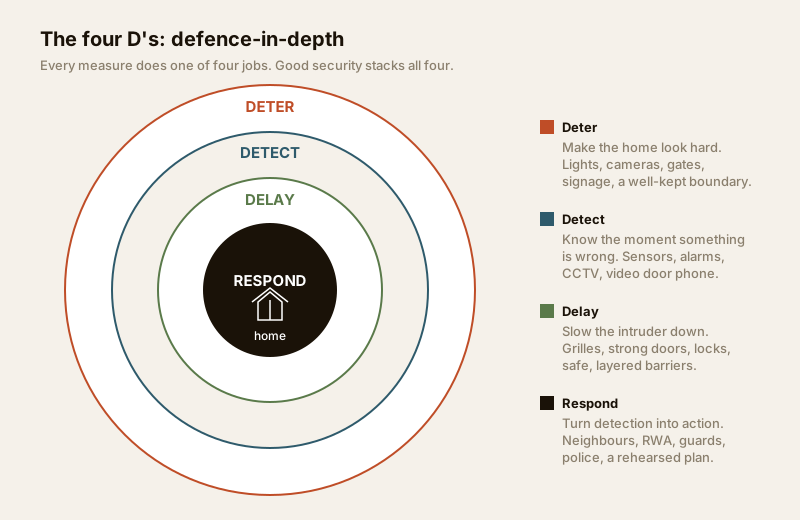
- Deter — make the home look like more trouble than it is worth. Visible cameras, a lit and well-kept boundary, a locked gate, a barking dog, signage. Most intruders leave at this stage; deterrence is the cheapest security you can buy.
- Detect — know the moment something is wrong. Sensors, alarms, a video door phone, CCTV that you actually monitor. Detection turns a silent intrusion into a known event.
- Delay — slow an intruder down long enough for the response to arrive. Grilles, a strong door, good locks, layered barriers, a safe. Delay buys the minutes that everything else depends on.
- Respond — turn a detection into action. A phone alert is useless if nobody acts on it. Response is your neighbours, your RWA or guards, the local police, and a simple plan everyone in the house has rehearsed.
The insight is that no single measure is enough. A great lock with no alarm, or a wall of cameras nobody watches, each fails alone. Stack all four D's — even modestly — and you have real security. Skip one and you have a gap an opportunist will find.
The five layers of a protected home
Defence in depth becomes concrete when you map it onto your actual home as concentric layers. An intruder has to beat each one in turn, and each buys warning and time for the next.
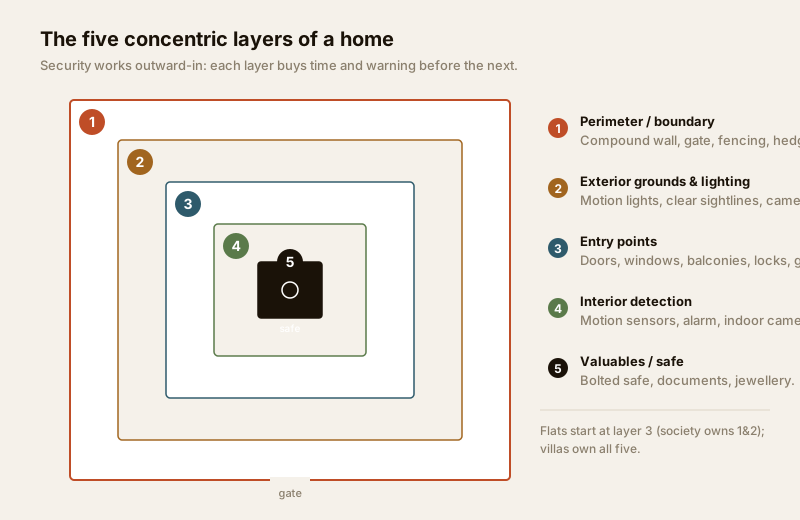
1. Perimeter / boundary. The compound wall, gate, fence or hedge that marks where your property begins. In a flat this layer belongs to the society; in a villa it is yours to own.
2. Exterior grounds & lighting. The setbacks, garden, driveway and approach — kept clear of hiding spots, well-lit with motion lighting, and watched by outdoor cameras.
3. Entry points. Every door, window, balcony and skylight — the shell of the building. This is where physical hardening (locks, grilles, strong doors) does its work.
4. Interior detection. Inside the shell — motion sensors, an alarm, an indoor camera in a hallway — so that even a breach is caught quickly.
5. Valuables / safe. The innermost layer: a bolted-down safe for jewellery, cash and documents, so that even a successful intruder leaves with little.
The layers you own depend on your home type. A standalone villa owns all five and must plan each. A flat in a gated community effectively starts at layer 3 — the society runs the boundary, gate and much of the grounds — which is why coordinating with your RWA on the shared layers is as important as securing your own door. The building security systems guide works through the shared-and-common layers in detail.
The three families of measures
Everything you can do falls into three families. A balanced plan uses all three — most people over-invest in one (usually cameras) and neglect the other two.
1. Physical measures — the hardware that delays
These are the passive barriers, and they are the foundation. No amount of electronics compensates for a flimsy door.
- Doors — a solid main door (seasoned hardwood, engineered, or a certified steel security door) in a strong, well-anchored frame. The frame and hinges matter as much as the leaf.
- Locks — a good-quality mortise lock plus a deadbolt on the main door; avoid cheap surface padlocks as a sole defence, which fail under simple force. Rekey or replace locks when you move in or lose a key.
- Grilles and gratings — on ground-floor and accessible windows, and often on balconies. In India these double as monkey and intruder protection. Design at least one as an escape-openable grille for fire safety.
- Gates and boundary walls — a wall high enough not to be casually vaulted, a gate that actually locks, and no climbing aids (bins, low sheds, tree limbs) left against it.
- Safe — a fire-and-burglary safe, bolted to the structure, for valuables and documents.
Physical hardening is the Delay layer, and much of it is structural work — grilles, security doors, gates and safe rooms should be specified by you and installed by a competent fabricator or the structural-safety trades, not improvised.
2. Electronic measures — the systems that detect
Electronics are the Detect layer (and part of Deter). They warn, record and alert.
- CCTV — cameras covering the gate, main door, and any blind approach, feeding a recorder (DVR/NVR) with enough storage, and viewable on your phone. Coverage and placement matter far more than megapixels.
- Video door phone — see and speak to whoever is at the gate or door before opening it. One of the highest-value, lowest-cost upgrades for an Indian home.
- Burglar alarm — a control panel with door/window contacts and a siren, wired or wireless, that raises the alarm on a breach.
- Motion sensors — indoor PIR sensors that detect movement inside the shell, tied into the alarm.
- Smart locks — keyless main-door locks with PIN, fingerprint or app access, and an audit log of who came and went. Convenient and secure when chosen and installed well.
For anything that overlaps with life-safety or the mains — electronic access control, electric strikes and locks, integrated alarms and fire detection — treat design and installation as licensed work. The access control system designer and access control cost estimator help you scope it before you brief a professional, and the wider smart layer is covered in the smart home security systems guide.
3. Procedural measures — the habits that hold it together
The cheapest and most-neglected family. Systems fail without discipline.
- Key & access discipline — no keys under the mat, limited copies, rekeying on staff changes, and revoking app or PIN access when someone leaves.
- Locking habits — the majority of break-ins exploit an unlocked door or window. A nightly and leaving-home lock-up routine beats most hardware.
- Neighbourhood / RWA coordination — neighbours who watch each other's homes, a WhatsApp alert group, verified guards and visitor logs, and a working relationship with the local police station.
- Managing absence — timers on lights, a held or forwarded newspaper and post, a trusted person checking a home left empty for festivals or holidays.
- Vetting help — verifying domestic staff, drivers, delivery and service people, and never announcing travel plans publicly.
A table view helps show how the three families map onto the four D's:
| Measure family | Deter | Detect | Delay | Respond |
|---|---|---|---|---|
| Physical (doors, locks, grilles, gates, safe) | Visible hardening | — | Core strength | — |
| Electronic (CCTV, alarm, sensors, VDP, smart lock) | Visible cameras | Core strength | Slight (smart locks) | Alerts trigger it |
| Procedural (habits, RWA, keys, absence) | Lit, lived-in look | Neighbour vigilance | — | Core strength |
The lesson: only a blend covers all four D's. Cameras alone leave Delay and Response weak; grilles alone leave Detect and Respond weak.
A tiered starter budget
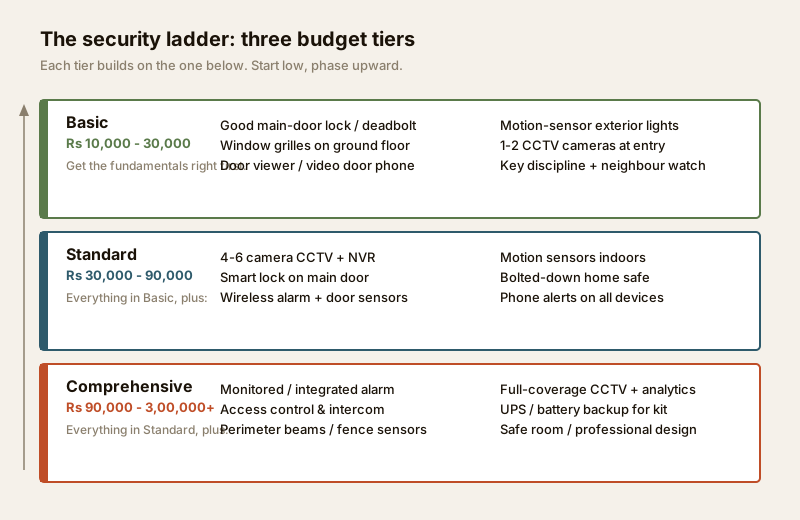
You do not need to do everything at once. The right approach is to build a ladder — get the fundamentals right cheaply, then add depth as budget allows. The ranges below are indicative all-India figures for a typical home; a villa or a large flat sits at the upper end, and prices shift with brand, quality and installation.
| Tier | Typical spend | What it buys | Best for |
|---|---|---|---|
| Basic | Rs 10,000 - 30,000 | Good main-door lock and deadbolt, ground-floor window grilles, a video door phone, 1-2 entry cameras, motion-sensor lights, and solid locking habits | Renters, small flats, tight budgets, a strong first line |
| Standard | Rs 30,000 - 90,000 | Everything above, plus a 4-6 camera CCTV set with recorder, a smart lock, a wireless alarm with door/window sensors and indoor motion, a bolted safe, and phone alerts | Most owned flats and small independent homes |
| Comprehensive | Rs 90,000 - 3,00,000+ | Everything above, plus a monitored or integrated alarm, access control and intercom, perimeter beams or fence sensors, full-coverage analytics CCTV, battery/UPS backup, and a professionally designed safe room | Villas, second homes, high-value contents, high-risk sites |
Notice that each tier contains the one below. Do not skip Basic to buy a fancy camera — a Rs 40,000 camera on an unlocked flimsy door is worse value than a Rs 3,000 deadbolt.
How to begin: assess, prioritise, phase
Faced with the whole subject, work in three simple steps.
1. Assess. Walk your home as an intruder would, at night. Where is it dark? Which window has no grille? Is the boundary climbable? Is the main door strong? Run the home security risk scorecard to score each layer honestly and get a ranked list of gaps.
2. Prioritise. Fix the cheapest, highest-impact gaps first — almost always the main door, ground-floor windows, lighting, and locking habits. These are the Basic tier, and they close the doors an opportunist actually uses.
3. Phase. Add depth over months, not in one anxious weekend. Layer outward: harden entry points, then add detection, then extend to the perimeter and monitoring. Coordinate the shared layers with your RWA in parallel.
The path differs by situation. Building or buying new? You can bake security into the design cheaply — see security planning for new homes. Retrofitting an existing home? Sequence upgrades for maximum effect per rupee — see security upgrades for existing homes. Designing for clients as a professional? The security design guide for architects puts these layers into drawings and specifications.
When to bring in a professional
Plan and decide these yourself — but do not design, wire or certify them yourself:
- Fire detection and alarm — life-safety-critical; must be designed and commissioned per the National Building Code fire and life-safety provisions and local municipal bye-laws.
- Electronic access control and electric locks — poorly installed electric locks can trap people in a fire; specify, then use a licensed installer.
- Any mains electrical work — cameras, gates and alarms often need proper wiring; use a licensed electrician (see the electrical hub).
- Structural perimeter — grilles, security gates and safe rooms must be anchored and fire-escapable; use a competent fabricator working to a proper detail.
Your job is to assess the risk, set the brief, choose the systems and coordinate the trades. Their job is to make it safe, code-compliant and reliable.
Key takeaways
- Security is layered, not a single gadget. Do all four D's — Deter, Detect, Delay, Respond — even modestly, and you have real protection; skip one and you have a gap.
- The entry points are predictable — main door, ground-floor windows, balconies and the boundary. Harden those first.
- Use all three families — physical, electronic and procedural. Most homes over-buy cameras and neglect locks, habits and response.
- Build a ladder. Get the cheap fundamentals right (Basic) before spending on advanced systems, and phase upward as budget allows.
- Assess, prioritise, phase — start with the risk scorecard, and route life-safety work to licensed professionals.
Where to go next
- Assess your own risk: Home Security Risk Assessment Guide and the risk scorecard tool.
- Understand the systems: Building Security Systems Guide.
- Plan a new home: Security Planning for New Homes.
- Upgrade an existing home: Security Upgrades for Existing Homes.
- Design for clients: Security Design Guide for Architects.
- Related: Smart Home Security Systems and Smart Home Privacy & Security, or browse all guides.
References
- National Building Code of India (SP 7), Bureau of Indian Standards — fire and life-safety provisions relevant to alarms, egress and safe rooms; verify the current edition via the BIS catalogue.
- Local municipal building bye-laws and your housing society bye-laws — govern boundary walls, gates, CCTV in common areas, and guard arrangements; check your city and society rules.
- Local police station and residents' welfare association (RWA) guidance on neighbourhood watch, visitor logs and verified staff.
This is an educational overview for planning and decision-making. Fire detection and alarm, electronic access control, mains electrical work and structural perimeter elements are qualified professional work — engage licensed professionals for design, installation and certification, and verify any standard's current status via the BIS catalogue before relying on it.
Export this guide
Related Guides — Deep-dive reading
Security Guide for Villas and Independent Houses in India
Securing a standalone house where the entire perimeter and every entry point is yours to own. The layered Deter-Detect-Delay-Respond model applied to a full villa: boundary wall and gate, garden and approach, ground-floor and upper doors and windows, terrace and garage, service entries, domestic help, and the empty-house problem.
SecurityLayered Security Design: A Defence-in-Depth Guide for Indian Homes
Why no single lock, camera or wall is ever enough — and how concentric layers cover each other's failures. The five rings of a protected home, how each maps to Deter-Detect-Delay-Respond, designing redundancy, weakest-link thinking, and balancing physical, electronic and procedural measures across flats, villas and communities.
SecurityApartment Security in India: The Resident's Security Guide
Securing a flat is a shared job. This guide draws the line between what you control from your own front door inward and what the society, RWA or facility manager runs outside it — the flat-specific threats, the checklist by zone, and how to raise security at the AGM. India-grounded, renter-aware.
SecurityRelated Tools — Try Free
Home Security Risk Scorecard
Score your home across six security layers — perimeter, entry points, lighting, detection, alarm and habits — and get a prioritised action plan.
Security ScorecardSecurity System Cost Estimator
Estimate the all-in capex with GST, annual running cost and 5-year total cost of ownership of a home or building security system.
Cost EstimatorAccess-Control Battery-Backup Calculator
Size the standby battery so an access system keeps running through a power cut, with an egress life-safety note.
Battery Backup